



After confirming payment terms with a US client, you will typically receive your payment via wire transfer or ACH. While both options let you receive USD from a US bank account, they share little in common. How the money moves, how much it costs, and how long it takes vary significantly.
In short, ACH is cheaper and works within the US banking system, usually taking one to three business days. A wire transfer is faster for urgent or large payments and works internationally, but costs more and is very hard to reverse. This article compares the two on speed, cost, limits and reversibility, and shows which is cheaper if you want to keep more of your earnings.
What is the difference between ACH and wire transfer?
Here is a table that gives you a quick overview of the differences between ACH and wire transfers.
| Feature | ACH transfer | Wire transfer |
|---|---|---|
| Processing method | Batch processing through ACH network | Individual, real-time gross settlement |
| Speed | 1 to 3 business days; Same Day ACH available for qualifying transactions | Same day (domestic Fedwire); 1 to 5 days (international SWIFT) |
| Cost | Often free; $0 to $1 for outgoing at most banks; $25 per month for same-day ACH at some banks | $15 to $50 (domestic); $25 to $75 (international) |
| Reversibility | Returnable within defined windows (up to 60 days for unauthorised consumer debits) | Very difficult to reverse once settled |
| Domestic / international | US domestic only | Domestic and international |
| Transaction limit | Daily limits typically $5,000 to $100,000 depending on bank and account type | No universal limit; large transfers require documentation |
| Security | Bank-level encryption; regulated by Nacha and Electronic Fund Transfer Act | Bank-level encryption; regulated by Fedwire/SWIFT compliance standards |
| Best for | Payroll, bill payment, recurring transfers, everyday business payments | Real estate, international payments, urgent large-value transfers |
How wire transfers work
A wire transfer is a direct instruction from one bank to another to initiate a transaction. When your US client wants to pay you:
- The sender bank sends a payment instruction through the SWIFT network.
- The money passes through one or more intermediary banks
- Each bank deducts a processing fee before forwarding the remaining funds
- The money is converted to your local currency at your bank's rate that includes some margins.
- The money will be deposited into your account in 2 to 5 business days.
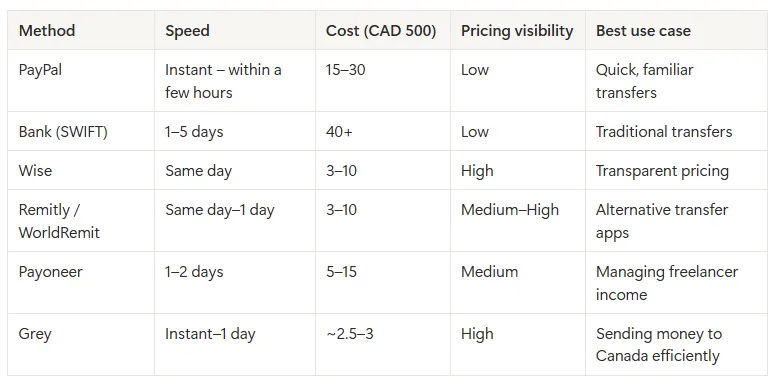
Total deductions can range from $30–$75, plus $25–$45 charged by the sender’s bank. Hence, the exact fees are often unpredictable until the money arrives. It is usually difficult to tell how many banks will be involved in a wire transfer. It depends on the specific institutions, the currencies involved, and the destination country.
How ACH transfers work
ACH stands for Automated Clearing House. It is an electronic network that operates entirely within the US banking system. When a US client sends money to your USD account via ACH, the funds move from their bank to yours via the network.
Unlike SWIFT, ACH is not a messaging system, and money is not being passed through different banks. This means:
- No intermediary fees between the sender's bank and the recipient's bank.
- Faster processing, typically within 3 days.
- Little or no charge on transfers, at most a nominal flat fee under $1.
- No forced conversion
Many banks now offer same-day ACH, meaning you can receive your payment within a few hours.
If it is that straightforward, why doesn’t every global remote worker use it?
The problem is that ACH only works within the US banking system. For a client to pay you via ACH, you need a USD account with a US routing number and account number. Without those details, ACH is not an option, regardless of how much both parties would prefer it.
Also read: Digital banks vs traditional banks for non-US residents
Which is faster, ACH or wire transfer?
Wire transfers are generally faster than ACH transfers, especially for urgent payments. However, Same Day ACH makes the difference less obvious.
- Standard ACH: Usually takes one to three business days. The exact timing depends on when the payment is submitted, as ACH transactions are processed in batches several times throughout the business day.
- Same Day ACH: Eligible payments submitted before the bank's cut-off time (typically around 2:45 pm ET) can settle on the same business day. Availability varies by bank and transaction type.
- Domestic wire transfers: Processed individually through Fedwire or CHIPS and usually arrive the same business day if sent before the bank's cut-off time (often between 4 pm and 6 pm ET). Once completed, a wire transfer is generally final and cannot be reversed.
- International wire transfers: Typically take one to five business days, depending on the countries involved, the currencies being transferred, and whether intermediary banks are part of the payment route. Transfers between major currencies such as USD and GBP or USD and EUR often arrive within one to two business days.
So, if speed matters, choose domestic wire transfer or Same Day ACH for urgent payments within the US and international wire transfer for cross-border payments.
If time is on your side, then a standard ACH is usually the better option. It works fine for payrolls, recurring bills, supplier payments, and routine invoices where waiting an extra day or two is not a problem.
The cost comparison in real numbers
The difference between wire and ACH becomes more real when you apply it to an actual transaction. So, let’s use some numbers to illustrate.
Let’s say you have sent a $1,500 invoice to a US client and are expecting payment.
Using international wire: your client’s bank charges $35 to initiate the transfer. One correspondent bank deducts $20 in transit. Your receiving bank may charge an inward transfer fee of $10 to $15. The total deducted from that $1,500 before it reaches your account is $65 to $70, close to 5% of the invoice amount.
Using ACH to a virtual USD account: your client pays nothing or a nominal fee under $1. No correspondent banks are involved. The full $1,500 lands in your account, or, let’s say, $ 1,499. Your payment platform may charge a deposit fee, typically 0.35% to 1%. There might be a flat fee for withdrawing the money to your local bank. Total cost on your end: $5.25 to $15 on a $1,500 payment, or 0.35% to 1%.
On a $1,500 transaction, that is a difference of $50 to $65. On $1,500 received monthly, that is $600 to $780 in avoidable costs per year.
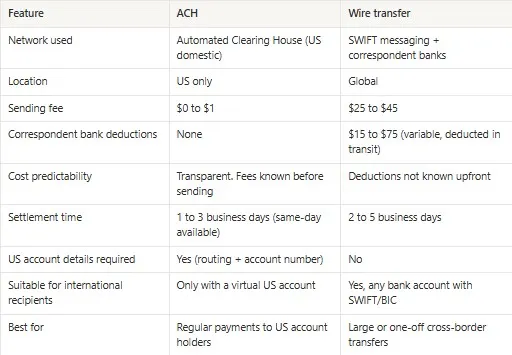
Here is a table comparing ACH and wire transfers:
Why wire transfers still exist
If ACH is cheaper and more predictable, you might wonder why anyone still uses wire transfers for international payments. ACH works only in the US. If your client’s bank is in the UK, Germany, or Japan, they cannot initiate an ACH transfer regardless of what account details you provide. For those clients, SWIFT wire is the only direct bank-to-bank option.
For US clients, wire transfers are often used for large transactions, with higher fees accepted as a cost of doing business. For regular freelance or consulting payments of $1,000 to $5,000, wire transfers are rarely the better choice when ACH is available.
Also, some international companies have rigid payment structures built around wire transfers, which can be an administrative hassle to change. They might stick with the traditional wire transfer, which they are more familiar with.
Getting an account that accepts ACH
Opening a traditional US account requires having a US address and a Social Security Number or an Individual Taxpayer Identification Number. This might not be possible if for a Filipino developer working with a San Francisco startup, a Kenyan designer invoicing a Boston agency, or an Indian consultant serving US clients.
How then can you get a US routing number and account number for ACH transactions?
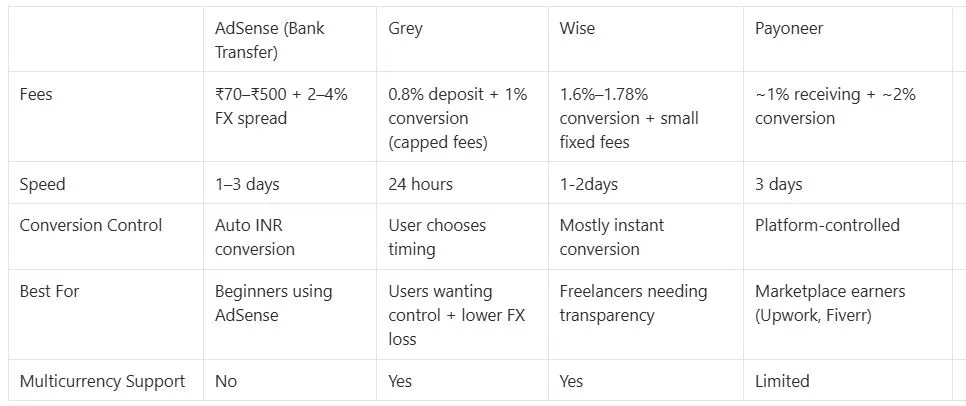
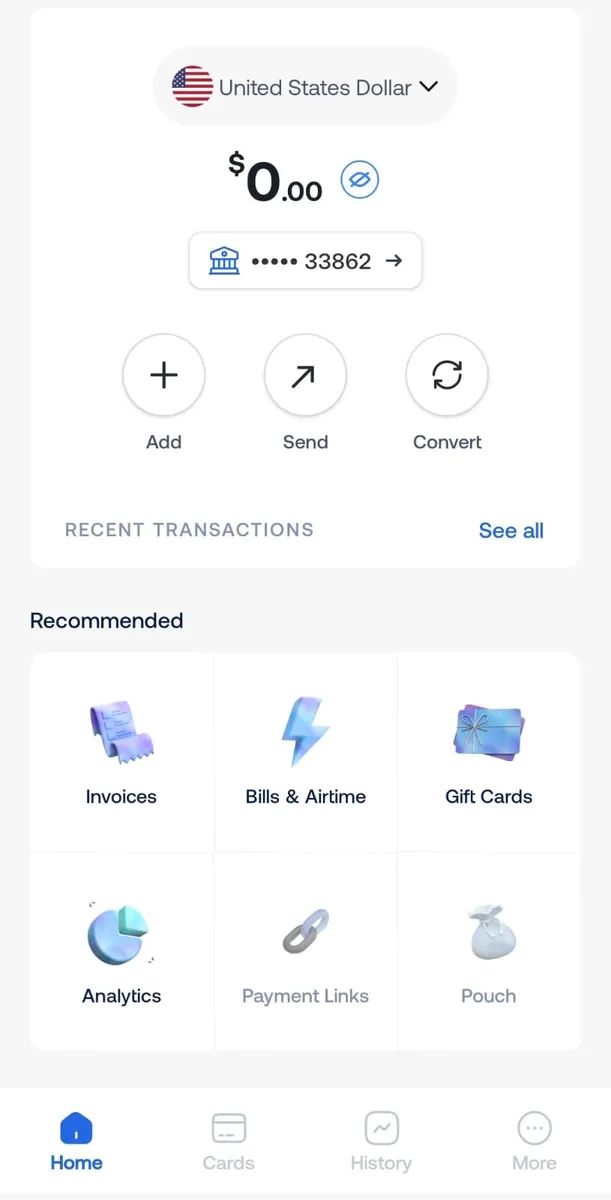
Virtual USD accounts issued by regulated fintech platforms solve this directly. When you open a virtual USD account through a platform like Grey, Wise, or Raenest, you get a real US routing number and account number from a US banking partner. These details are similar to those for any other US bank account. Your client initiates an ACH transfer from their end, the funds move through the ACH network, and they arrive in your virtual account without any intermediary bank taking a cut.
Also read: Virtual US accounts explained: who they work for
Receiving USD via ACH with Grey
Grey gives freelancers, consultants, and remote workers virtual USD accounts with real US routing numbers and account numbers that accept ACH transfers directly. The deposit fee on Grey’s USD account is 0.8% of the amount received, capped at $10. You can keep the USD in your account or convert to your local currency at mid-market exchange rates. Grey shows you the exact cost of each transaction and accounts for any deduction. Its multi-currency feature makes it easy to manage GBP and EUR on the same platform.
With a virtual USD bank account, you can now receive ACH payments and maximise your earnings. Sign up on Grey and download the app to get your USD account details today.
Frequently asked questions
Can an ACH transfer be reversed?
Yes, within defined windows. ACH credits (money sent to a recipient) can be reversed within five banking days if they were sent in error. ACH debits (money pulled from a payer's account) can be returned by the receiving bank within two business days for administrative reasons, and consumers have up to 60 days to dispute an unauthorised ACH debit under EFTA protections. Business accounts have shorter windows governed by contract rather than EFTA.
Is a wire transfer safer than ACH?
Both are highly secure, but they have different risk profiles. Wire transfers are final once settled, which protects the recipient against returns but offers the sender no recourse if they make an error or are defrauded. ACH transfers are returnable within defined windows, which gives senders some recourse but also means recipients should wait for transfers to fully clear before releasing goods or services of significant value. For verified, expected transactions, both are safe.
What is the ACH transfer limit per day?
Limits vary by bank and account type. Most US retail bank accounts limit outgoing ACH transfers to $5,000 to $25,000 per day and $25,000 to $100,000 per month for standard accounts. Business accounts typically have higher limits. Premium or verified accounts may have limits up to $500,000 or higher. Contact your bank to confirm your specific account limits.
How do I send a wire transfer internationally?
Contact your bank via online banking, mobile app, or branch visit. You will need: the recipient's full name, their bank account number or IBAN, the bank's SWIFT code or BIC, the bank's name and address, the amount and currency, and your reason for the transfer. Some banks require identity verification or additional documentation for international wires above certain amounts.
Does Grey use ACH or wire transfer?
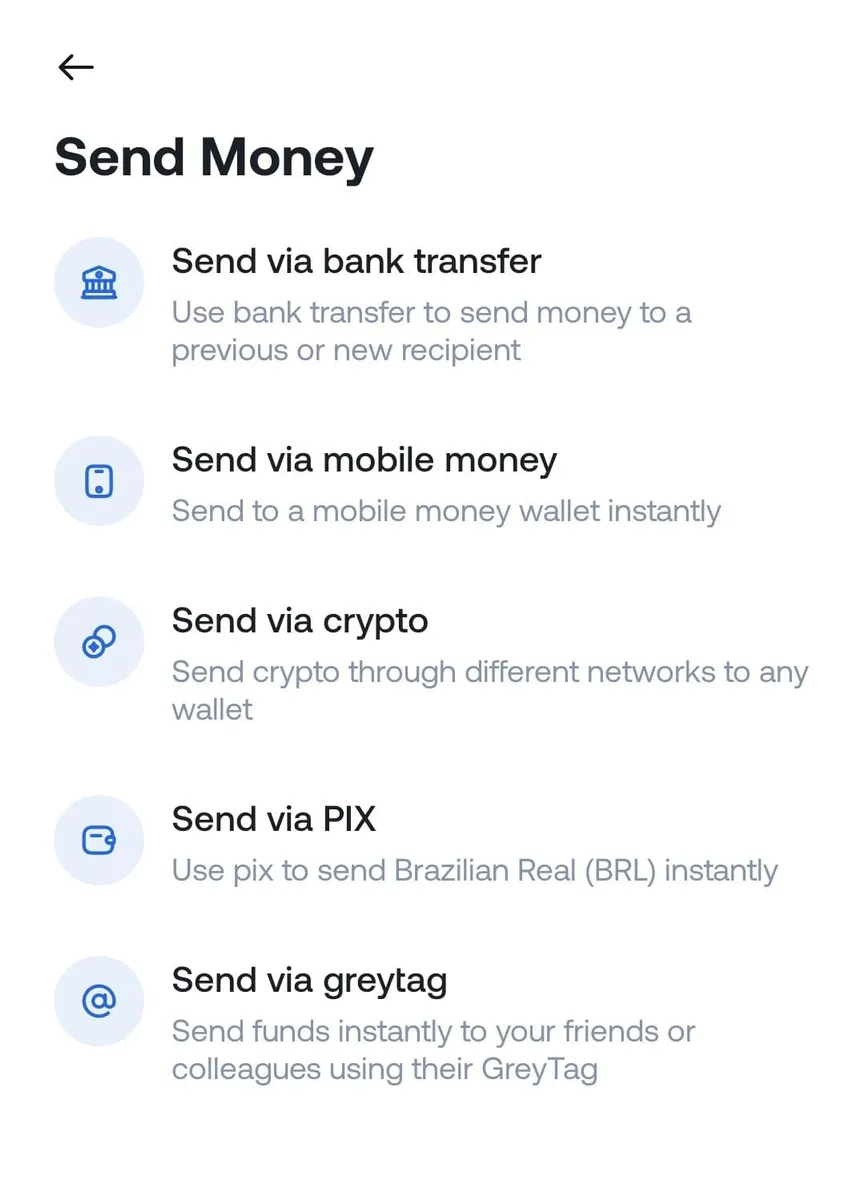
Grey routes transfer through the most appropriate local payment network for each corridor. For payments to or from US bank accounts, Grey uses ACH. For UK transfers, Grey uses Faster Payments. For EU transfers, Grey uses SEPA. This removes correspondent banks from the chain and avoids the deductions associated with SWIFT international wires. Grey also supports international wire transfers where local network routing is not available.
What happens if a wire transfer is sent to the wrong account?
Contact your sending bank immediately. The bank will initiate a recall process via the SWIFT gpi tracking system or domestic wire network, requesting that the receiving bank return the funds. Recovery success depends on whether the recipient bank is cooperative and whether the funds have been further moved. This process can take weeks and is not guaranteed to succeed. Always verify account details with the recipient before initiating any wire transfer.
Send money internationally with Grey and avoid correspondent bank deductions and undisclosed fees.