11 best business bank accounts to have in the US
Compare the best business bank accounts in the US on fees, minimums and tools. All 11 ranked with the trade-offs named. Open the right one today.
Tunde Aladeloba
•
October 23, 2026
•
2 min read



From cash and M-Pesa to mobile wallets and PAPSS, see how money really moves across Africa, and send it across borders for less with Grey. Send.

Tunde Aladeloba
•
10 min read
In Douala’s busy markets, a supplier’s next order depends on getting paid for the last one. Not long ago, a trader sending money across a border might have relied on a travelling relative, a trusted intermediary or a bank transfer that took days to clear. Today, digital payment services are changing that reality, allowing money to move across borders in seconds along supported payment routes.
The significance goes beyond speed. When a trader can pay a supplier on time, stock arrives sooner. When a freelancer receives an international payment and can access the money locally, distance becomes less of a barrier to earning a living. These are everyday transactions, but together they are changing how people work, trade and do business across Africa.
Grey is part of this shift, connecting international transfers with local financial systems, including mobile money in supported markets such as Cameroon. For users, the value is practical: paying a collaborator, restocking a shop or supporting family abroad without having to navigate the process alone.
Africa’s money-moving story has travelled from cash carried on buses to transfers initiated on a phone. Yet the digital economy presents an interesting contrast: information can cross the world almost instantly, but moving money still involves national borders, different currencies, regulations and financial networks. The next chapter is not simply about making payments faster. It is about making cross-border transactions work as naturally as the trade, work and family relationships that already connect the continent.
Money has always moved across Africa, but the systems for moving it have rarely been simple.
For much of the continent's history, formal banking was concentrated in major cities and commercial centres. Large parts of the population operated outside the formal financial system, relying heavily on cash and informal networks to earn, save and transfer money.
Then there is the question of currency. Africa is home to more than 40 currencies, each operating within different monetary systems and financial regulations. Moving money between two African countries can involve currency conversion, intermediary banks and additional transaction fees. For example, Cameroon uses the Central African CFA franc (XAF), Côte d’Ivoire uses the West African CFA franc (XOF), while Rwanda uses the Rwandan franc (RWF). To make cross-border transactions easier, Grey has expanded into these markets, supporting regional currencies such as XAF and XOF and enabling users to move money across borders.
That fragmentation has had consequences for ordinary people as well as businesses. A family might have relatives living in another country. A trader might buy stock from across the border. Someone working in a city might earn their income hundreds of kilometres away from where their family lives.
As Africans moved across borders for work, trade and family, money had to follow. A trader in Lagos paying a supplier in Accra, for instance, could face currency conversion, intermediary banks and transfer fees before the money reached its destination. Historically, people relied on travelling relatives, traders and informal agents to bridge this gap.
Digital payments have changed how money moves, but sending money across African borders can still be costly and complicated. Grey helps simplify this process by enabling users to hold and exchange multiple currencies and make international transfers without relying on the traditional chain of intermediaries for every transaction. The goal is to make moving money across borders more accessible, convenient and transparent.
The arrival of mobile money changed the African financial landscape.
Mobile money has transformed financial access across Africa, and Kenya’s M-Pesa is one of its most successful examples. Launched in 2007, it allows people to send, receive and store money using their phones, with local agents providing cash-in and cash-out services. By March 2022, M-Pesa had reached 52.4 million customers across its African markets, processing more than 19 billion transactions that year. Its growth shows how mobile technology, agent networks and everyday payment services can bring financial services to people beyond traditional bank branches.
But sending money within Kenya is different from paying someone in another country. A freelancer in Nairobi paying a supplier in London or supporting family in Lagos needs a way to convert shillings and deliver the money to a foreign bank account. Grey lets users in Kenya fund their accounts through M-Pesa or a bank transfer and send money internationally. This includes Kenyan shillings to British pounds, euros to 30 European countries through SEPA, and Nigerian naira. SEPA, or the Single Euro Payments Area, is a payment network that standardises euro bank transfers across participating countries. Grey shows the exchange rate and fee before users confirm the transfer.
At the same time, infrastructure such as the Pan-African Payment and Settlement System (PAPSS), is being developed to make payments between African countries easier and reduce some of the dependence on international intermediary currencies.
The result is a financial system that looks increasingly different from the one that existed just two decades ago.
There is no single African way of sending money.
In Nigeria, instant bank transfers have become part of everyday life. The country’s fintech industry has also created a large network of digital payment services and agent banking, making it possible to move between bank accounts, wallets and cash.
Kenya’s story is more closely associated with mobile money. M-Pesa became deeply embedded in everyday transactions, from sending money to family to paying businesses.
In Rwanda, services such as MTN MoMo allow people to send money, pay bills and make purchases using their phones. The country’s 2024 FinScope survey found that 86% of Rwandans had used mobile money, showing how widely these services have been adopted. For international transfers, Grey supports sending money to Rwanda, making it easier to move funds across borders.
Ghana has also embraced mobile money, with approximately 73 million registered accounts by the end of 2024. Its payment infrastructure allows users to transfer funds across different mobile money providers and bank accounts. Grey also supports transfers to Ghana, connecting international payments with local receiving methods.
In South Africa, where bank transfers are already part of everyday life, the next step is to make it easier to move money out of the country. Grey enables users to send and receive money internationally without relying solely on traditional banking channels.
A person sending money from Nigeria may be using a bank account. The recipient in Cameroon may be using MTN MoMo. Someone in Kenya may expect the money to arrive through M-Pesa.
For the payment to work smoothly, all those systems have to communicate.
The differences are not accidental.
Each country has developed its payment ecosystem around its own regulations, infrastructure, economy and consumer behaviour.
Kenya’s mobile-money success was helped by an environment in which telecommunications companies could play a major role in financial services. Other markets have placed greater emphasis on commercial banks and licensed fintech companies.
Infrastructure also shapes behaviour. Where bank branches and formal financial services are easily accessible, consumers have more options. Where banking access is limited, mobile money agents can become a practical alternative.
Currency conditions matter too.
In countries experiencing significant currency volatility, people may look for ways to hold or receive money in stronger foreign currencies. For businesses operating across borders, access to foreign-currency accounts and efficient conversion can become particularly important.
This is why there cannot be a single solution for the entire continent. A payment product has to fit the market it enters, and increasingly, it also has to connect that market to others.
Behind all this infrastructure are very ordinary transactions.
A parent sends money to a child studying in another city. Someone working in construction sends part of their wages home. A trader pays a supplier. A family member abroad sends money to relatives. A small business receives payment from a customer in another country.
The amounts may vary enormously, but the importance of the transaction does not necessarily depend on its size. For someone running a market stall, a delayed payment can mean missing the chance to buy stock. For a family, it can mean waiting for money needed for food, transport or school fees. This is why the development of digital payments has been so significant. It is not simply making financial transactions faster. It is changing how people organise their economic lives across distance.
The next challenge is connecting all these systems.
Cameroon provides a useful example. Mobile-money services such as MTN MoMo and Orange Money have become important parts of the country's financial ecosystem. International remittance services can increasingly connect people outside Cameroon with recipients using these local wallets.
That creates a very different experience from the traditional bank wire. A recipient does not necessarily need a conventional bank account. Money can be deposited directly into the mobile wallet already used for everyday transactions. Grey is part of this emerging cross-border infrastructure, enabling supported users to send money to Cameroon via local payment networks, including MTN and Orange mobile money wallets.
One of the biggest challenges when moving money across Africa is that cross-border payments can be more complicated than they should be. A Nigerian business paying a supplier in Cameroon, for example, may face currency conversion requirements, intermediary banks, additional fees and delays, depending on the banks and payment route involved.
The Pan-African Payment and Settlement System (PAPSS), developed by Afreximbank in collaboration with the African Union, was created to address this problem. It connects participating banks and payment systems, allowing payments between African countries to be processed in local currencies without always routing them through third-party currencies such as the US dollar. PAPSS is expanding its network of participating countries and financial institutions to make cross-border payments easier and support trade under the African Continental Free Trade Area (AfCFTA). The goal is to make it easier for African businesses to buy and sell across borders without the cost and complexity of traditional international payment routes.
The significance of these developments goes beyond remittances. If money can move more easily between African countries, businesses can trade more easily. Freelancers can work for clients in other markets. Families can support relatives across borders. Traders can buy stock without relying on someone to physically carry cash. Africa’s payments story began with people finding ways to move money when formal systems could not do so easily.
It moved from cash carried by people, to money sent through mobile phones, to digital wallets and increasingly connected payment networks. The next stage is not simply about making transfers faster. It is about making the continent’s different financial systems work together.
And when that happens, sending money across Africa may finally become less about crossing borders, and more about simply moving money where it is needed.

Compare the best business bank accounts in the US on fees, minimums and tools. All 11 ranked with the trade-offs named. Open the right one today.
Tunde Aladeloba
•
October 23, 2026
•
2 min read
Choosing the right business account in the US can make a real difference in how you manage your company’s money, from receiving customer payments to paying suppliers and tracking everyday expenses. However, with so many banks and financial platforms offering different account types, fees and features, knowing which one fits your business can be difficult.
The best business bank accounts pair low or waivable monthly fees with strong online banking, cards and integrations. The right one depends on your size, transaction volume and whether you handle international payments. Compare fees, minimums and features side by side before opening one.
For example, a freelancer receiving occasional payments may prioritise low fees and simple digital banking, while a growing company may need higher transaction limits, cash deposit options and tools for managing payroll. If you work with international clients or suppliers, access to cross-border payments and multiple currencies may also influence your decision.
This guide compares 11 business bank accounts available in the US, highlighting their fees, minimum balance requirements, key features and suitability to help you choose an account that works for your business.
Also read: Best business bank accounts for an LLC
Choosing a business bank account starts with understanding how your business earns, spends and manages money. The right account should support your daily operations without adding unnecessary costs or making payments difficult to track.
Fees and charges: Compare monthly maintenance fees, transaction limits, cash deposit charges, wire transfer costs and ATM fees. An account advertised as free may still charge for certain services.
Minimum balance requirements: Check the opening deposit and ongoing balance requirements. If your cash flow fluctuates, choose an account with no minimum balance or an achievable fee waiver.
Banking tools: Look for reliable online banking, mobile cheque deposits, debit cards, accounting software integrations and payment processing. Growing businesses may also benefit from payroll support and cash management tools.
Access and eligibility: Confirm that your business structure qualifies, whether you can apply online and which documents you need. Some providers require a US address, while others have additional residency restrictions.
If you receive international payments, compare foreign exchange rates, supported currencies and transfer fees before deciding. Your account should fit your current needs while leaving room for your business to grow.
The following comparison ranks 11 business banking options by monthly fees, key features, limitations and suitability, helping you identify the right fit for your company's size, cash flow and banking needs.
When choosing a business bank account for your LLC, consider how you receive payments, manage expenses, and access your money. Traditional banks and online providers offer different benefits, so the right choice depends on how your business operates.
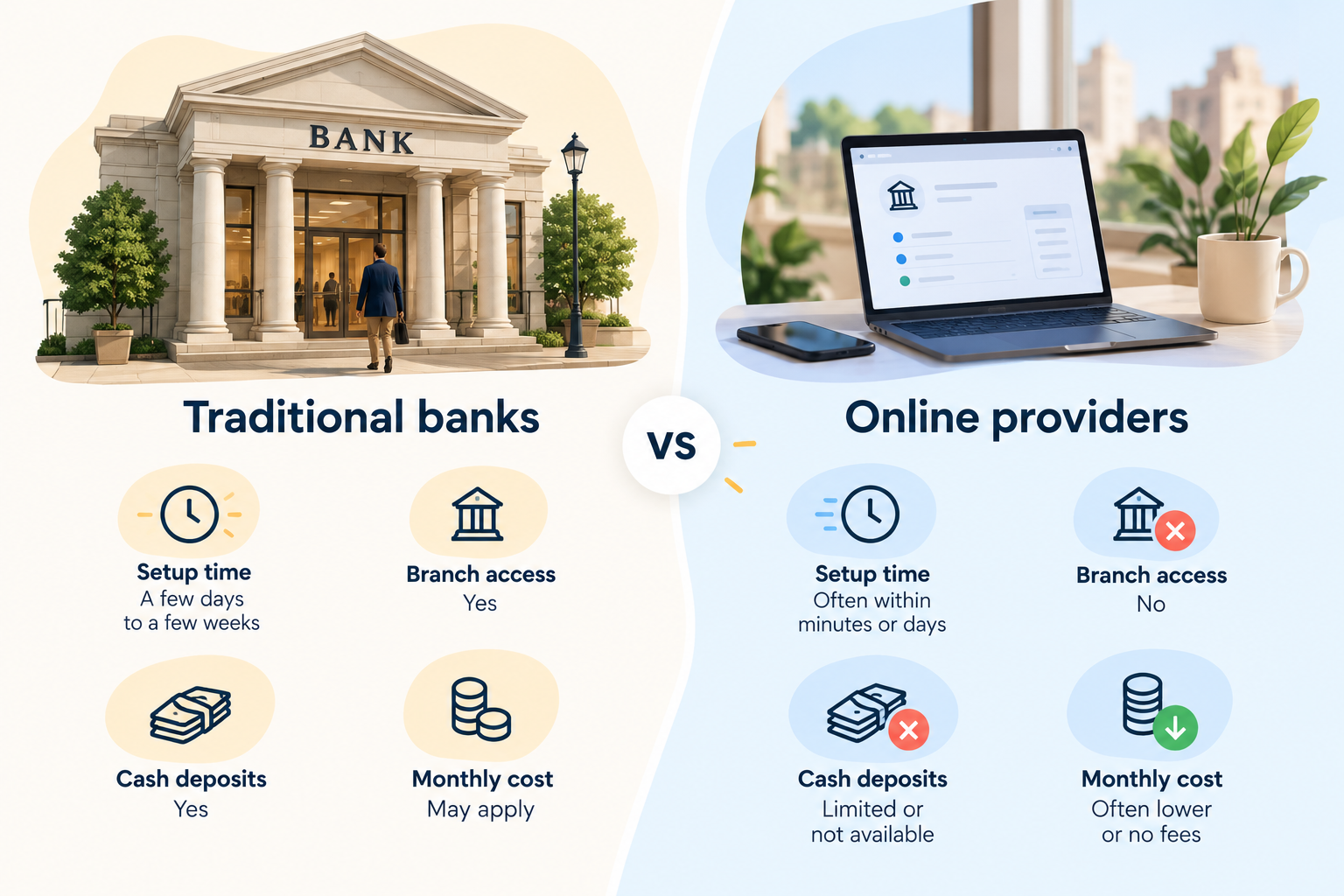
Traditional banks such as Chase, Bank of America, and U.S. Bank give you access to physical branches. You can deposit cash, speak with bank staff, and explore business loans or other financial services. However, some accounts charge monthly maintenance fees unless you meet specific requirements.
Online providers such as Bluevine, Mercury, Relay, and Grey let you manage your finances digitally. While Bluevine, Mercury, and Relay offer business banking tools, Grey supports cross-border payments, making it useful for businesses that send or receive money internationally. Online providers may offer lower fees, faster account setup, and convenient payment management. However, cash deposits and in-person support may be limited.
Before you decide, compare monthly fees, transaction limits, deposit options, and eligibility requirements. If you need branch access, a traditional bank may suit you better. If you value convenience and digital payments, an online provider may be the better fit.
Also read: Can non-residents open a US bank account online in 2026?
Opening an LLC in the US can help you establish your business, but what happens when your customers, suppliers, or team are in different countries? You need a simple way to move money across borders without disrupting your day-to-day operations.
That is where Grey comes in. With Grey, you can send and receive money from the US to support international business transactions, whether you are collecting payments from clients or paying partners overseas. Instead of relying on your traditional business bank account for every cross-border transaction, you can add a dedicated payment solution to your setup.
To get started, open a Grey Business account and explore the options available for your business.
The best business bank account depends on your LLC’s needs. Chase and Bank of America offer branch access, while Bluevine, Mercury, and Relay provide digital banking tools. Compare fees, transaction limits, payment options, and eligibility requirements to find an account that suits your business.
Online providers such as Bluevine, Mercury, and Relay offer business accounts with no monthly maintenance fees on certain plans. However, other charges may apply for specific transactions or services. Compare each provider’s fee schedule and account requirements before making your decision.
Yes, many banks and online providers let you apply for a business bank account online. You will typically need your LLC formation documents, identification, and business details. Approval times and requirements vary by provider, so check the application process before applying.
Many banks require an Employer Identification Number (EIN) to open an LLC business account. Some single-member LLCs may qualify to use other tax identification details, depending on the bank’s policies. Check the provider’s requirements and obtain an EIN from the IRS if needed.
If your LLC works with overseas clients or suppliers, look for accounts that support international transfers and multiple currencies. Grey can complement your business banking setup by helping you send and receive money from the US. Compare transfer fees, exchange rates, supported currencies, and eligibility before choosing a provider.
Online business accounts can offer strong security features, including encryption, multi-factor authentication, and transaction monitoring. However, protections vary by provider. Check whether deposits are held at an FDIC-insured bank, understand applicable coverage limits, and review the provider’s security policies before opening an account.

Italy's currency is the euro (EUR, €). See the notes and coins, when you still need cash, and how to pay in Italy without extra fees. Plan your trip today.
Tunde Aladeloba
•
October 23, 2026
•
2 min read
The currency of Italy is the euro, identified by the code EUR and the symbol €. If you are planning a trip to Rome, shopping in Milan or sending money to someone in Italy, understanding the local currency can help you manage your money and avoid unnecessary charges.
Imagine arriving in Italy, ready to explore its historic streets, enjoy a meal at a local restaurant or pay for your hotel. You will need euros for everyday purchases, whether you are paying by card or carrying cash. Euro banknotes come in different denominations, while coins are available in cents and euros. Although cards are widely accepted, having some cash can be useful for smaller purchases and places that prefer cash payments.
Currency exchange fees, ATM charges and your bank's foreign transaction fees can increase your spending without you noticing if you always have to convert. If you need to send money to Italy, exchange rates and transfer fees affect how much your recipient receives. This guide explains the Italy currency, its symbol and code, and practical ways to spend and transfer money while keeping costs down.
Italy uses the euro (€) as its official currency. Whether you are visiting Rome, shopping in Milan or paying for accommodation in Venice, you will use euros for everyday transactions. The currency is shared by many European countries, making travel and payments across participating nations more convenient.
The euro’s official currency code is EUR, while its symbol is €. You will see the symbol before prices in many Italian shops, restaurants and online stores. One euro is divided into 100 cents. Euro banknotes are available in different denominations, alongside coins ranging from one cent to two euros, which you can use for smaller purchases.
The European Central Bank (ECB), working with the national central banks of eurozone countries, is responsible for monetary policy and maintaining price stability across the euro area. It helps manage the euro’s value by setting key interest rates and using other monetary policy tools.
Italy is a member of the eurozone, the group of European Union countries that use the euro as their official currency. This means you can generally use the same currency when travelling between Italy and other eurozone destinations, although your bank may still charge fees for certain transactions.
When you visit Italy, you will use euro banknotes and coins for everyday purchases, from buying coffee to paying for meals and transport. Euro banknotes come in denominations of €5, €10, €20, €50, €100 and €200. Although the €500 note is no longer issued, existing notes remain valid. Banknotes share common designs across the eurozone, featuring architectural styles from different periods in European history.
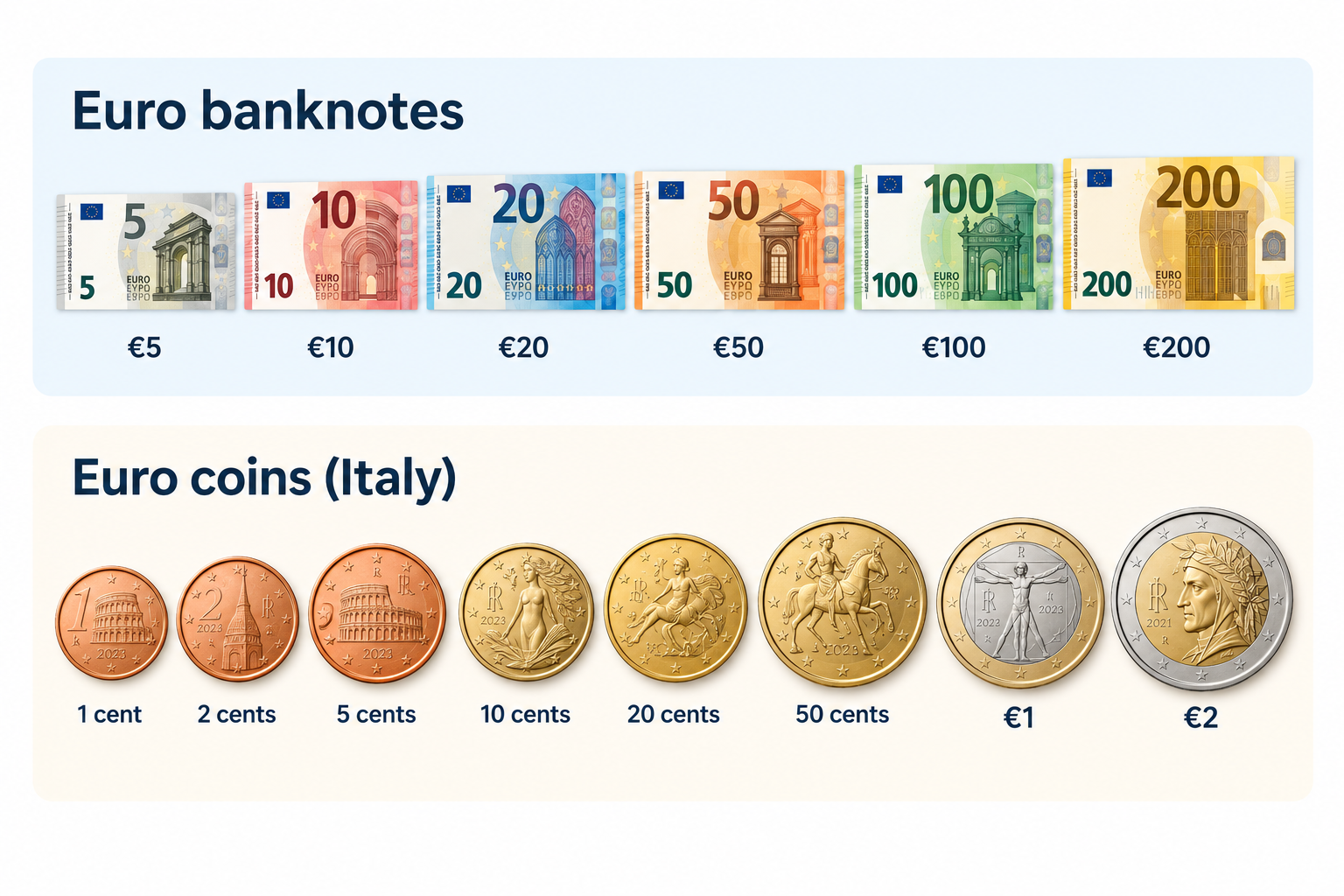
Euro coins come in eight denominations: 1, 2, 5, 10, 20 and 50 cents, plus €1 and €2. Each coin has a common European side and a national side featuring designs selected by its issuing country. All euro coins can be used across the euro area.
Italy’s national coin designs reflect its rich artistic and cultural heritage. The €1 coin features Leonardo da Vinci’s Vitruvian Man, his famous drawing illustrating the proportions of the human body. Other denominations showcase Italian landmarks and masterpieces, including Dante Alighieri, the Colosseum and Sandro Botticelli’s Birth of Venus. These designs celebrate Italy’s contribution to European art and history. The European Central Bank oversees euro banknotes and contributes to maintaining confidence in the currency across participating countries.
When travelling around Italy, you can pay by card at most hotels, restaurants, supermarkets and shops in major cities, where Visa and Mastercard are widely accepted. However, keeping some euros in your wallet can help when shopping at local markets, making small purchases or visiting places where card payments are unavailable. Before travelling, check your bank’s foreign transaction fees so you know how much you could spend on charges.
You are not expected to tip everywhere in Italy, as tipping is not compulsory, but you can leave a small amount or around 5–10% when you receive particularly good service. Check your bill for any service charge before deciding what to leave.
To manage your spending digitally, you can use a Grey virtual card for eligible purchases in euros, including online bookings and payments at merchants that accept Visa. Depending on your card setup, you may also be able to add it to Apple Pay or Google Pay for contactless payments. Check applicable fees and currency conversion rates before spending.
Before travelling to Italy, decide how you will access euros for meals, transport, shopping and accommodation while keeping exchange costs low. You can exchange money before departure, withdraw euros from ATMs in Italy or use a payment card that supports euro spending.
ATMs operated by established banks are convenient for withdrawing cash, but check your bank’s withdrawal charges and any fee displayed by the ATM before confirming. Exchange bureaux are another option, although you should compare exchange rates and commissions to avoid paying more than necessary.
To avoid unnecessary conversion costs, choose euros rather than your home currency whenever an ATM or card terminal offers dynamic currency conversion. This allows your card provider to handle the conversion instead of accepting the machine’s potentially unfavourable rate. You should also check whether your bank charges foreign transaction fees.
A Grey virtual card offers another way to pay for eligible purchases in euros. Check Grey’s card fees and exchange rates, and compare them with your bank’s charges to find a cost-effective way to spend while travelling.
Also read: Italy digital nomad visa: Requirements, costs and process
Whether you are supporting a family in Italy, paying tuition fees or covering accommodation and other expenses, you need a reliable way to send money in euros without losing track of exchange rates and transfer costs. Grey makes cross-border transfers easier by allowing eligible users to send money from Nigeria to European bank accounts in EUR. You can fund your Grey account, review the available exchange rate and fees, and transfer euros directly to your recipient’s bank account.
Grey is also a multi-currency platform, allowing you to hold and convert supported currencies to manage international payments in one place. This can be useful when you earn in one currency but need to pay expenses in euros. Before confirming a transfer, check the live exchange rate, applicable fees and the final amount your recipient will receive.
Italy uses the euro (€) as its official currency, not the Italian lira. The lira was replaced by the euro in 1999 for accounting purposes, with euro banknotes and coins entering circulation in 2002. Today, you need euros to pay for everyday purchases, transport, meals and accommodation in Italy.
The euro symbol is €, and its official three-letter currency code is EUR. You will see these used on Italian price tags, restaurant menus, receipts and online bookings. One euro is divided into 100 cents. When exchanging money or sending payments to Italy, use EUR to identify the currency correctly.
US dollars are not generally accepted for everyday purchases in Italy because the euro is the official currency. You should exchange dollars for euros or withdraw euros from an ATM. Some tourist businesses may accept other currencies, but their exchange rates may be unfavourable. Paying in euros usually makes costs easier to compare.
Cards are widely accepted in Italian cities, hotels, restaurants and shops, making them convenient for everyday spending. However, carrying some euros is useful for markets, small purchases and places that do not accept cards. Check your bank's foreign transaction fees and choose euros rather than your home currency when prompted at payment terminals.
The amount depends on your travel plans, accommodation and spending habits. For many travellers, carrying around €50–€100 for initial expenses and small purchases is a reasonable starting point, while using a card for larger payments. You can withdraw additional euros as needed, but check ATM charges and your bank's withdrawal limits first.
You can send money to Italy through a bank transfer or an international money transfer service. Compare exchange rates, transfer fees and delivery times before choosing. Grey supports eligible cross-border transfers and multi-currency services, allowing users to send money in euros to supported destinations. Check availability, fees and recipient requirements before confirming your transfer.
The PNC Bank business account explained: checking tiers, monthly fees and how to open one. Grey adds the cross-border layer on top. Compare your options.
Tunde Aladeloba
•
October 23, 2026
•
2 min read
Choosing the right business bank account can make it easier to manage daily expenses, receive customer payments and keep your business finances organised. However, monthly maintenance fees, transaction limits and minimum balance requirements can affect how much you pay for banking services. If you are considering a PNC Bank business account, understanding these costs and features can help you decide whether it suits your business needs.
PNC offers several business checking accounts designed for businesses with different transaction volumes and banking needs. Each account comes with its own fee structure, transaction allowances and requirements for waiving monthly maintenance fees. Depending on the account you choose, maintaining a qualifying balance may help you avoid these charges.
Opening an account is also relatively straightforward, with options to apply online or visit a branch. You will generally need your employer identification number (EIN), business formation documents and valid identification. This guide covers PNC business account fees, key features, eligibility requirements and how to open an account, helping you understand what to expect before applying.
Also read: Best business bank accounts for an LLC
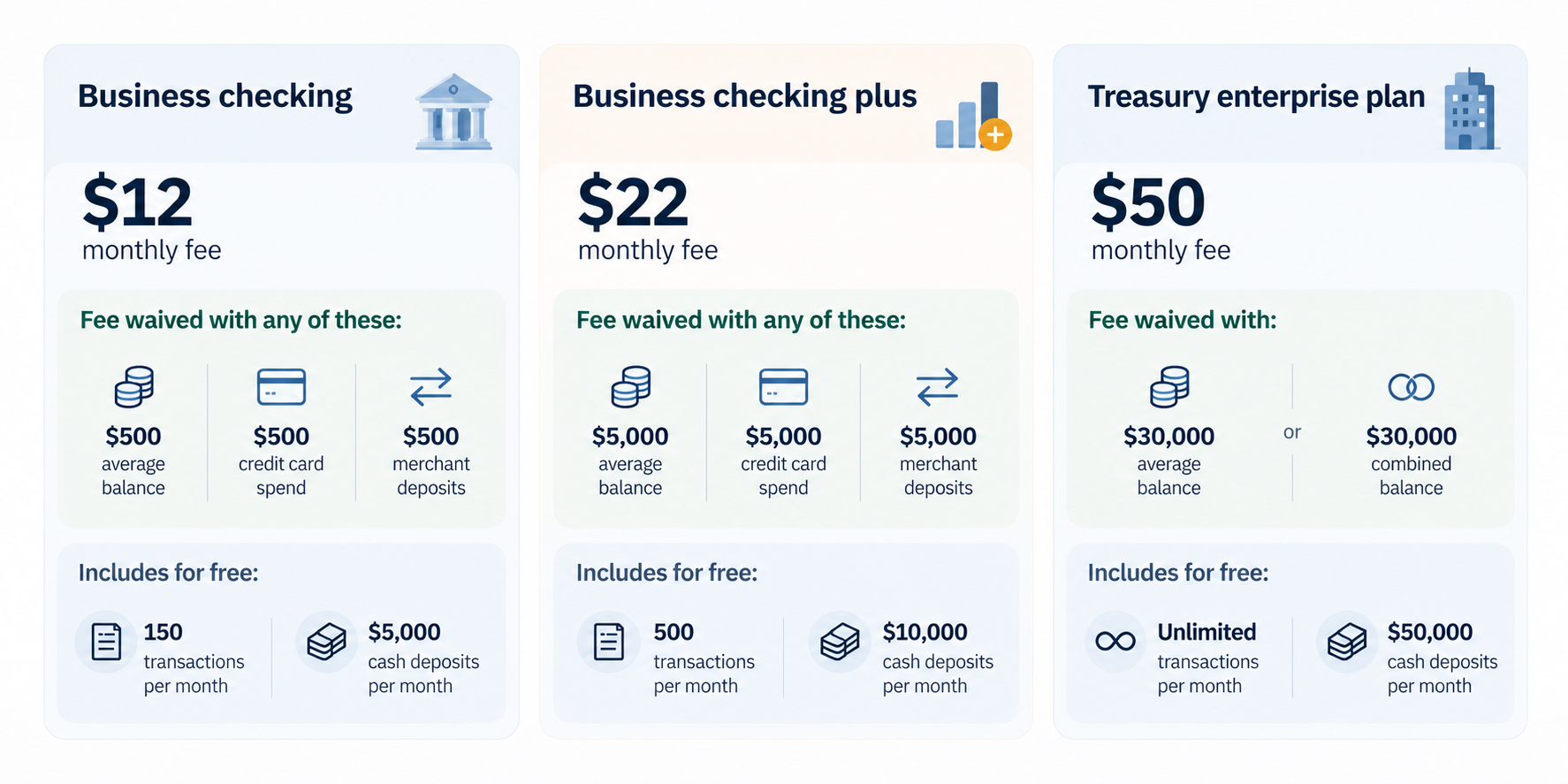
PNC offers several business checking options designed for different transaction volumes, cash handling needs and business sizes. Choosing the right tier depends on your monthly activity, available balance and financial management needs.
Business Checking: Best for freelancers, sole proprietors and micro-businesses with fewer transactions. Its $500 balance waiver threshold can help eligible account holders avoid the monthly maintenance fee.
Business Checking Plus: Suits local retailers, storefronts and growing businesses that handle more payments. It accommodates up to 500 monthly items and $10,000 in cash deposits before additional charges may apply.
Treasury Enterprise: Designed for businesses managing multiple entities or accounts. It allows up to four linked accounts to qualify toward a combined $30,000 balance requirement.
Analysis: Best suited to large enterprises with substantial cash flows. Earnings Credits can help offset eligible account service charges, making it worth considering for businesses with complex treasury management needs.
How to avoid the fee:
How to avoid extra charges:
How to avoid the fee:
How to avoid extra charges:
How to avoid the fee:
How to avoid extra charges:
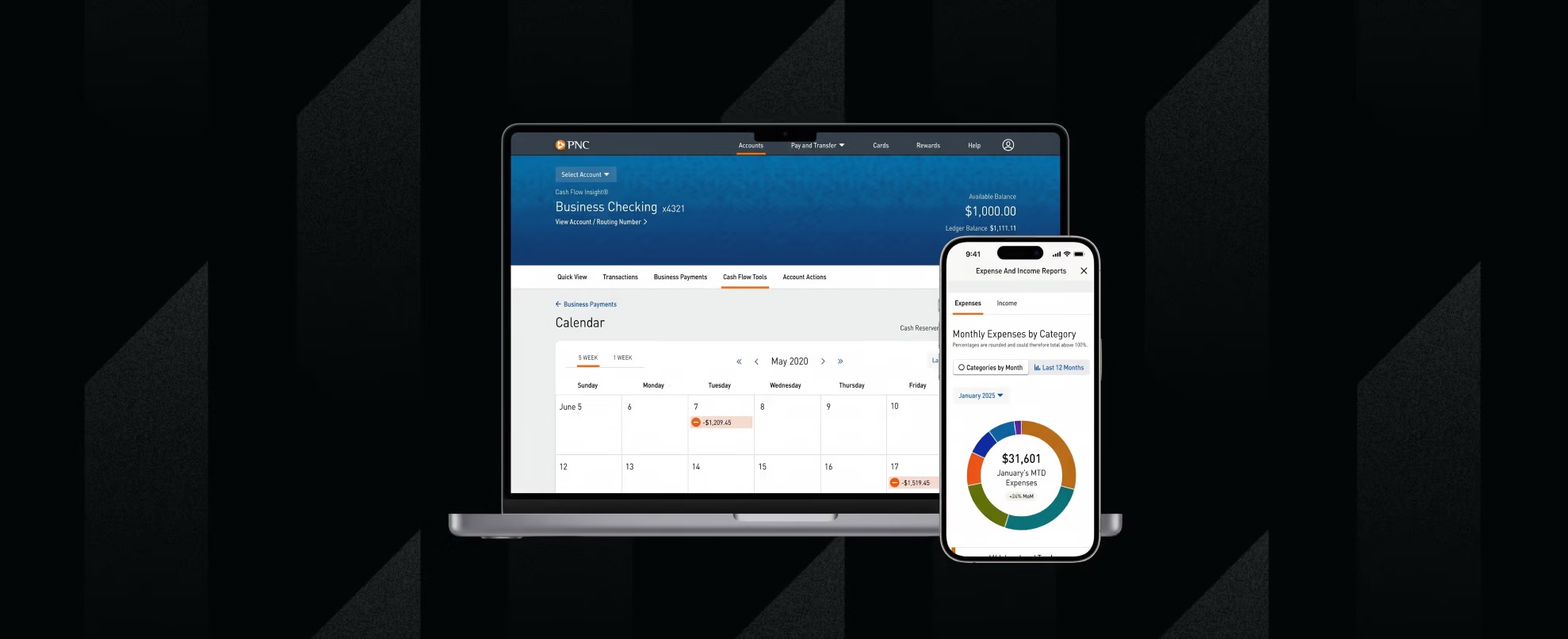
PNC provides digital banking, business debit cards, payment processing and cash management tools to help businesses handle everyday transactions, monitor cash flow and manage finances more efficiently.
Digital tools: PNC Business Online Banking and mobile deposit capabilities help business owners check balances, review transactions, deposit eligible checks and manage accounts without visiting a branch.
Cards: Eligible account holders can access PNC Bank Visa Business Debit cards for convenient business purchases. The Purchase Payback® programme may offer cash-back rewards on qualifying purchases from participating merchants, subject to applicable terms.
Integrations: Businesses with more complex financial needs can use PINACLE®, PNC's treasury management platform, to access cash management services and tools that support cash-flow forecasting, payment management and account visibility.
Payment processing: PNC Merchant Services helps businesses accept customer payments and manage transactions. When used alongside available cash-flow tracking tools, these services can make it easier to monitor incoming payments, reconcile transactions and manage accounts receivable.
Together, these features give businesses tools to manage routine banking, track incoming funds and oversee payments. Availability, eligibility and fees may vary by account type and service, so review PNC's current terms before enrolling.
Also read: How to open a business bank account
While a PNC business account can help you manage everyday banking in the US, businesses working with international clients, suppliers or remote teams may need additional options for cross-border payments. This is where Grey can complement your banking setup.
With a Grey Business account, eligible businesses can send and receive money from the US, making it easier to manage international payments when working with American clients, paying overseas suppliers or serving customers across borders.
Grey adds a multi-currency layer to your financial operations, helping you handle international transactions alongside your regular business banking. Before choosing a service, review supported currencies, transfer fees, exchange rates and account eligibility to understand the costs involved.
PNC offers several business checking options, including Business Checking, Business Checking Plus, Treasury Enterprise Plan and Analysis Business Checking. Each serves different needs, from freelancers and small businesses to larger companies managing substantial cash flows. The right account depends on your transaction volume, cash deposits and treasury management requirements.
Monthly maintenance fees vary by account tier. Business Checking costs $12, Business Checking Plus costs $22, and Treasury Enterprise Plan costs $50, based on the fee schedule outlined above. Analysis Business Checking has variable fees. Eligible accounts may qualify for waivers by meeting balance or other requirements. Transaction and cash deposit limits may also trigger additional charges.
Yes, PNC allows eligible customers to apply for certain business checking accounts online. You can also visit a branch to complete the application. Availability may depend on your business structure, location and eligibility. Before applying, review the account requirements and prepare the necessary identification and business documents to help avoid delays.
PNC generally requires your business Tax Identification Number (TIN), or Social Security number for eligible sole proprietors, business registration documents and proof of authority to operate the business. You will also need identification. Online applicants need a valid email address. Requirements vary by business structure.
PNC Business Checking has a $100 minimum opening deposit. This differs from the $500 average monthly balance that can waive its $12 maintenance fee. Other account tiers have different waiver requirements. You may avoid monthly fees through qualifying linked credit card purchases or merchant deposits, depending on the account.
You can use PNC international wire transfers to send money overseas or receive payments from abroad, although transfer fees and currency conversion costs may apply. For additional cross-border flexibility, eligible businesses can use a Grey Business account to send and receive money from the US. Compare fees and supported currencies before choosing a service.
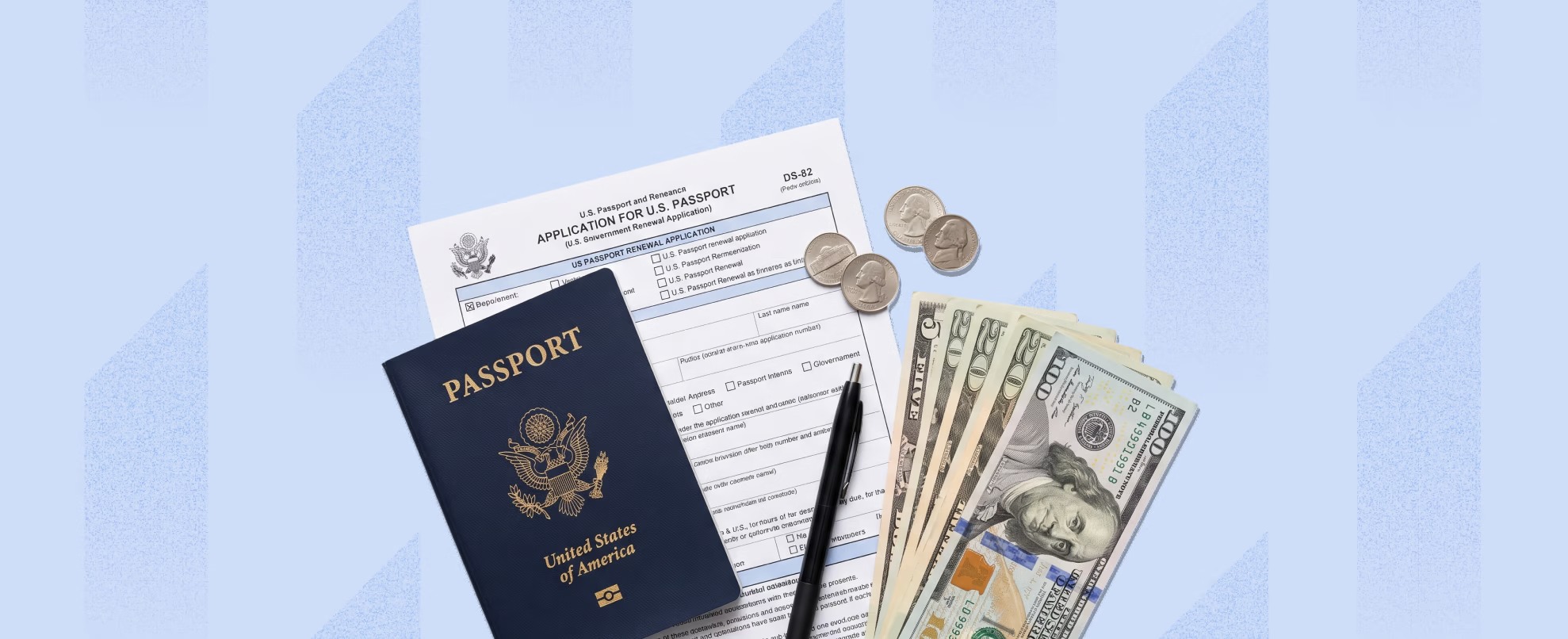
Find the current US passport cost for a new book, card, renewal or expedited service. Every fee is checked at source. Get your travel money sorted.
Tunde Aladeloba
•
October 22, 2026
•
2 min read
How much you'll need to pay for a US passport depends on your age, the type of passport you need and how quickly you want it processed. Whether you are applying for your first passport, renewing an expired document or replacing a lost one, understanding the fees helps you prepare your budget and avoid unexpected expenses.
A US passport has two main charges: an application fee and an execution fee. A new adult passport book costs more than a renewal, and expedited service adds an extra fee. A passport card is cheaper than a book
Your total cost may also depend on whether you apply in person, request faster processing or need additional services, such as overnight delivery. Children have different application fees and requirements from adults, while passport cards and books serve different travel purposes.
This guide breaks down US passport fees, renewal costs, expedited processing charges and the differences between passport books and cards, helping you understand what you may need to pay before applying.
The cost of a US passport depends on whether you are applying for the first time or renewing an existing passport. A first-time adult passport book costs $165, while an adult renewal costs $130. These fees cover the standard passport book application and do not include optional expedited processing or delivery services.
First-time adult applicants must pay two separate fees:
Together, these fees bring the total cost of a first-time adult passport book to $165. Adult renewals generally cost less because eligible applicants can apply by mail or online without paying the separate execution fee. Before applying, confirm the current fees and payment methods on the official US Department of State website.
The cost of a first-time US passport depends on your age and whether you apply for a passport book, a passport card or both. Applicants must pay an application fee to the US Department of State and a separate $35 execution fee to an authorised acceptance facility.
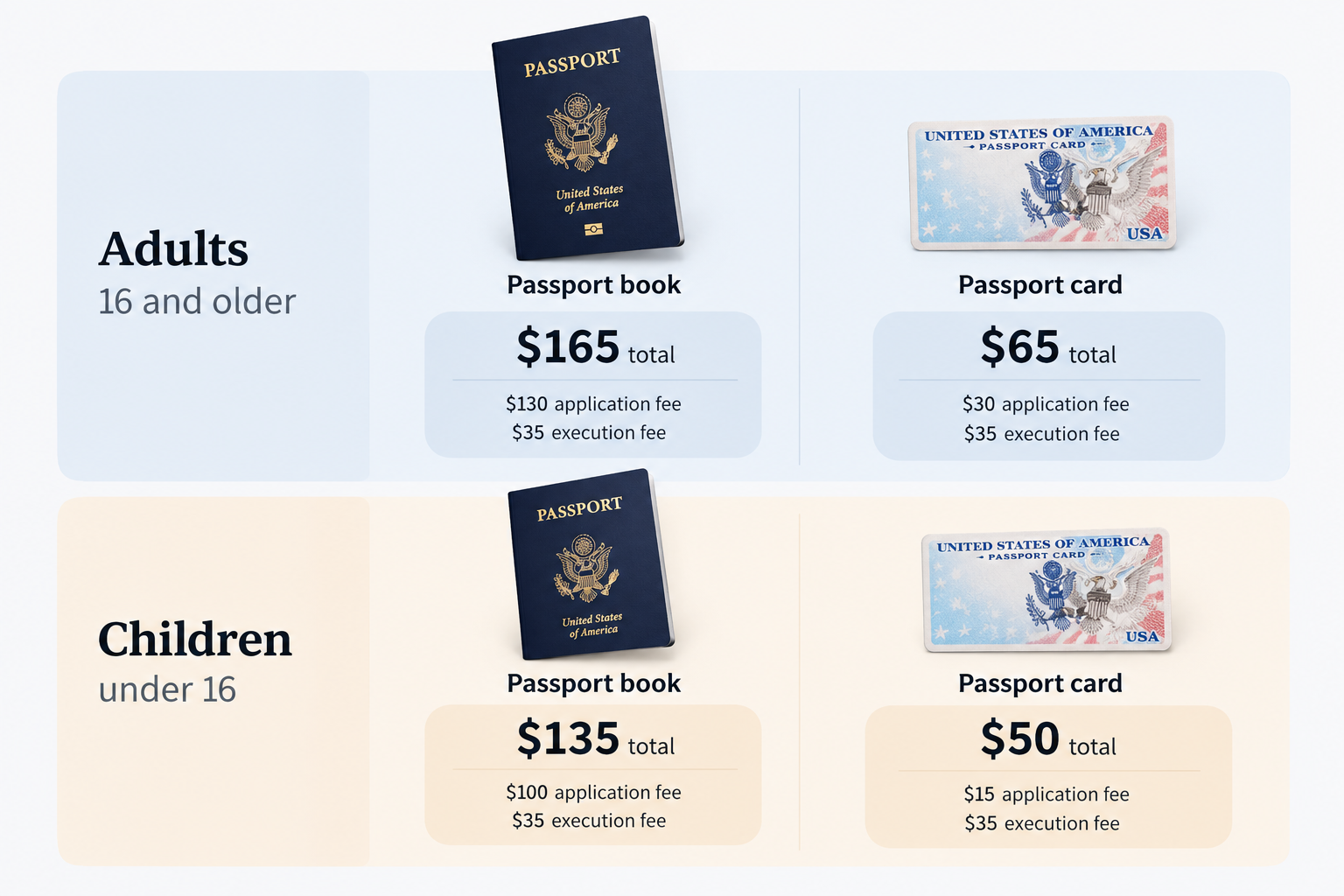
Adults aged 16 and older:
Children under 16:
A passport book allows international travel by air, land and sea, while a passport card is limited to eligible land and sea crossings, primarily between the United States, Canada, Mexico, Bermuda and Caribbean countries. It cannot be used for international air travel. Check the official US Department of State website for current fees, eligibility requirements and application instructions.
Renewing a US passport generally costs less than applying for a first passport because eligible adult applicants do not pay the separate execution fee. An adult passport renewal costs $130 for a passport book or $30 for a passport card. These fees cover standard processing, while expedited service and optional delivery services may cost extra.
You can renew your US passport by mail if your most recent passport is undamaged, was issued within the last 15 years, and you were at least 16 years old when it was issued. Your passport must also display your current legal name, or you must provide official documentation confirming your name change.
If you are a Canadian citizen, the renewal process and fees are different. Check the requirements for renewing a Canadian passport to understand eligibility, application methods and current charges before submitting your documents. Always verify the latest fees through the relevant government website.
If you need your US passport sooner than the standard processing time allows, you can pay extra for expedited service. The additional fee is $60, which is added to your regular passport application cost. This option may be useful if you have an upcoming trip and cannot wait for routine processing, but you should still check the current processing estimates before applying.
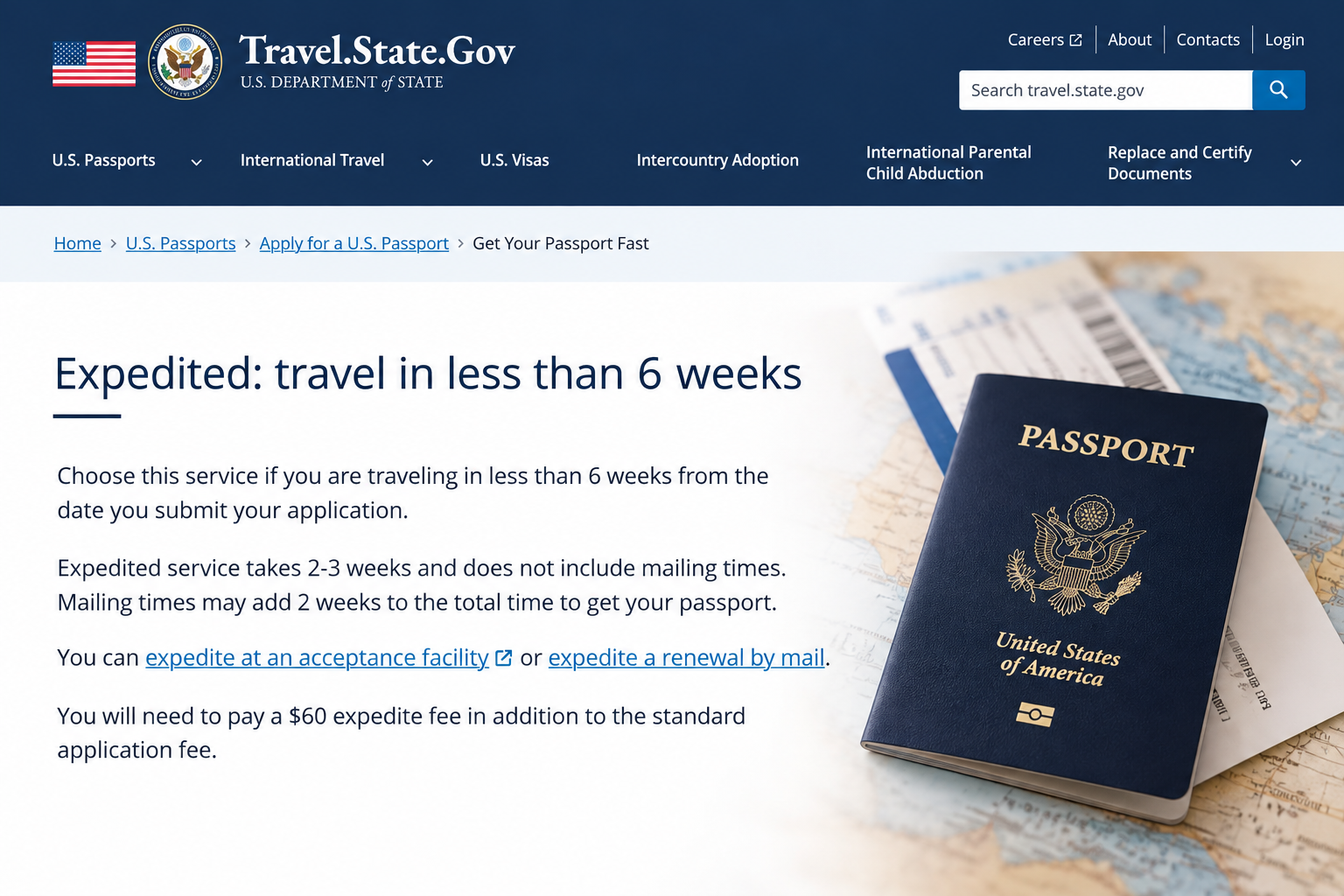
You can also pay $21.36 for 1–2 day delivery of your completed passport book to your home address. This fee covers faster delivery after your passport has been issued; it does not guarantee that your application will be processed within one or two days.
Remember to budget for passport photographs if you do not take an acceptable photo yourself. A local retail store or post office may charge around $15 for passport photos, although prices vary by location. Before submitting your application, review the latest fees on the US Department of State website to confirm the amounts and available services.
Spending abroad can cost more than expected when card charges and unfavourable exchange rates add up. Before travelling, check whether your credit card charges foreign transaction fees, which typically range from 1% to 3% per purchase. A card with 0% foreign transaction fees can help you keep more of your travel budget.
If you are travelling from the US to the UK, you may also need to move money across borders before your trip. Grey makes it easier to send money from the US to the United Kingdom, so you can organise your funds before departure. Check the applicable transfer fees and exchange rate to understand the total cost.
Once you arrive, Grey’s virtual card for spending abroad offers another payment option for eligible purchases. Check its fees and supported currencies before using it to understand how to avoid foreign transaction fees where applicable.
When paying at shops or restaurants, choose to pay in the local currency rather than your home currency. This helps you avoid dynamic currency conversion, which may come with an unfavourable exchange rate.
A first-time adult US passport book costs $165, including the $130 application fee and $35 acceptance fee. If you apply for a passport card instead, the total is $65. Your final cost may increase if you choose expedited processing or faster delivery. Check official passport fees.
Renewing an eligible adult US passport costs $130 for a passport book or $30 for a passport card. You do not pay the separate $35 acceptance fee when renewing by mail or online. Expedited processing and optional delivery services cost extra. Check your eligibility before submitting your renewal application.
A first-time adult US passport card costs $65, including the $30 application fee and $35 acceptance fee. Eligible adult renewals cost $30. The card supports qualifying land and sea travel to destinations such as Canada, Mexico, Bermuda and the Caribbean, but it cannot be used for international air travel.
Expedited US passport processing costs an additional $60 per application. This fee is added to your standard passport charges for faster processing, currently estimated at two to three weeks. Optional one-to-three-day delivery of an issued passport book costs extra. Check current processing times before paying, as mailing time is separate.
Yes, if you qualify for online renewal. Eligible applicants can pay using a credit or debit card through the official government renewal portal. First-time applicants generally need to apply in person and pay using the accepted methods. Avoid unofficial websites that charge additional fees or claim to process applications on the government’s behalf.
To reduce travel costs, choose a payment card with 0% foreign transaction fees and check its terms before travelling. At payment terminals, select the local currency to avoid potentially unfavourable dynamic currency conversion rates. If you use Grey’s virtual card, review its applicable fees and supported currencies before making international purchases. Compare transfer charges and exchange rates before sending money abroad.
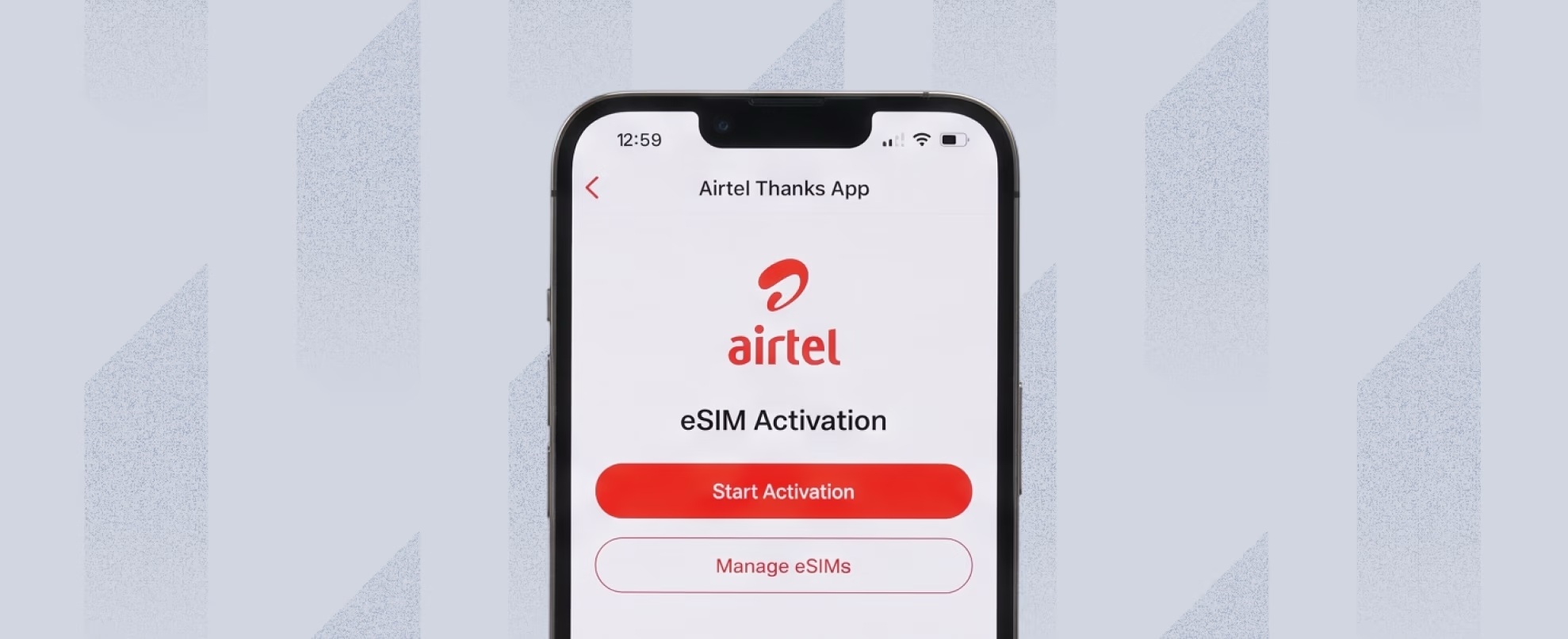
Convert your Airtel SIM to an eSIM by SMS or in the Airtel Thanks app, with no store visit. See the steps and timings. Start the switch today.
Tunde Aladeloba
•
October 22, 2026
•
2 min read
Switching to an Airtel eSIM lets you use your mobile number without inserting a physical SIM card into your phone. Instead, your device stores the SIM profile digitally, making it easier to activate your line on a compatible smartphone and manage your mobile connection.
If you want to convert your existing Airtel SIM to an eSIM, you'll typically need to send a text message, confirm your request and scann a QR code sent to your email address. The exact steps and eligibility requirements may vary depending on your country and Airtel’s current eSIM service.
Before you begin, check that your phone supports eSIM technology and that your Airtel line qualifies for conversion. You should also have access to the email address linked to your request and a reliable internet connection to download your eSIM profile. This guide explains the steps to follow and what to know before switching.
Before converting your Airtel SIM to an eSIM, make sure you have a compatible smartphone, an active Airtel number and access to a registered email address. These are essential for completing the conversion and receiving the eSIM activation details.
1. An eSIM-compatible smartphone
Your phone must support eSIM technology. Common eSIM-capable devices include the iPhone XS, XS Max and newer models, selected Samsung Galaxy S20 and newer models, Google Pixel 4 and newer models, and certain newer Motorola devices. However, compatibility varies by model, region and carrier, so confirm that your specific handset supports eSIM.
2. A registered email address
You need a working email address to receive the eSIM QR code and activation instructions from Airtel. Check that you can access your inbox before starting the process.
3. An active Airtel number
Keep your existing Airtel SIM active so you can send the conversion request and confirm it when prompted. You may also need your phone to receive verification messages during activation.
Check Airtel’s local requirements before beginning, as procedures differ by country.
Convert your Airtel SIM to an eSIM by texting Airtel, confirming your request, waiting for activation and scanning the emailed QR code.
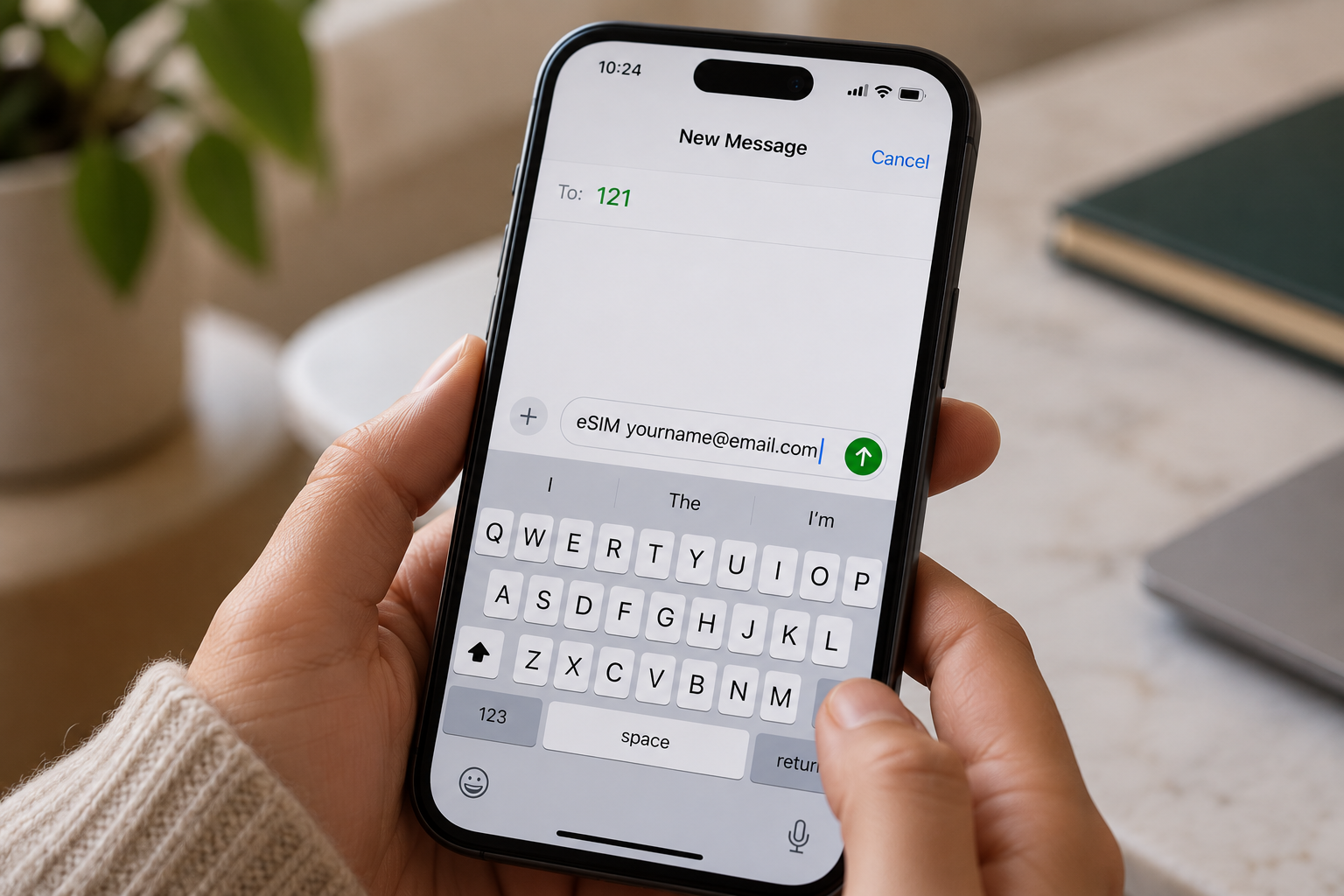
You can convert your physical Airtel SIM to an eSIM through the Airtel Thanks app without visiting a store, provided your number and device are eligible. The steps below apply to Airtel India; menu options may vary by app version.
To activate your Airtel eSIM, scan the QR code provided by Airtel using your phone’s mobile network settings. Keep your phone connected to Wi-Fi during setup, as the eSIM profile needs an internet connection to download.
If you’re moving to a new iPhone, follow this guide to transfer an eSIM from one iPhone to another.
After the eSIM activates, your physical Airtel SIM for that number is deactivated. You can remove it from your phone. If activation fails, contact Airtel before deleting any installed eSIM profile
Your Airtel eSIM may fail to activate because of a problem with your identity verification, phone compatibility, registered email address or activation timing. Identifying the specific issue helps you determine the right fix without unnecessarily repeating the conversion process.
If you need mobile connectivity while travelling, Grey lets you top up airtime and buy eSIMs. You can also manage cross-border expenses by using Grey to send money from the US to India or send money from the UK to India, helping you handle payments while staying connected abroad
An Airtel eSIM usually activates within two hours after you download and enable the eSIM profile on your compatible phone. During processing, your physical SIM may continue working. Keep your device connected to Wi-Fi and follow Airtel’s instructions to complete activation. Timings may vary by country and request.
No, converting your existing Airtel physical SIM to an eSIM generally keeps your current mobile number. The process replaces the physical SIM with a digital profile linked to the same line. You can continue using your number for calls, messages and mobile data once activation is complete.
Yes, eligible Airtel prepaid customers can convert their physical SIM to an eSIM in supported markets. However, the process differs by country. Airtel India provides an app-based conversion process, while Airtel Nigeria directs customers to a service centre for assistance. Confirm your line’s eligibility before starting.
Once your Airtel eSIM activates successfully, the physical SIM linked to that number becomes inactive. You can remove it from your phone because the eSIM now provides your mobile connection. Keep the physical SIM in place until activation is confirmed to avoid losing service during the transition.
Yes, you can generally switch your Airtel eSIM back to a physical SIM by requesting a SIM replacement. In India and Nigeria, Airtel directs customers to a service centre or showroom for assistance. Bring the required identification and complete any verification steps before using the replacement SIM.
The cost depends on your country and Airtel’s current policy. Airtel Nigeria currently states that eSIM activation has no charge, while other SIM replacement services or markets may have different fees. Before converting, check with your local Airtel provider whether activation, replacement or related services incur additional costs.

Dual citizenship brings double tax filing, military duty and travel limits in some countries. See the real costs before applying. Compare your options.
Tunde Aladeloba
•
October 22, 2026
•
2 min read
Dual citizenship allows you to be a legal citizen of two countries at the same time. It can give you more freedom to live, work and travel, but it also comes with responsibilities that may affect your finances, legal status and personal choices.
Before applying for a second nationality, it is important to understand the potential downsides of dual citizenship. You may need to file tax returns in both countries, meet military service obligations or follow different laws depending on where you live. You could also face limits on consular assistance while in your other country of citizenship.
In some cases, holding two nationalities can make it difficult to renounce one later. Certain countries also restrict dual citizenship or may withdraw your original nationality when you acquire another. Understanding these rules before making a decision helps you weigh the benefits against the possible risks and avoid unexpected legal or financial complications.
Dual citizenship taxes can be confusing because you may have tax obligations in both countries. Filing two tax returns is common, but paying tax twice on the same income usually is not. Whether you owe taxes in both countries depends on the tax laws of both countries, where you live, where your income comes from, and your citizenship status. Some countries tax residents on worldwide income, while others also tax citizens living abroad.
Tax treaties between countries can help reduce double taxation. These agreements may determine which country has the primary right to tax certain income or allow you to claim relief for taxes paid elsewhere. However, not every country has a tax treaty with every other country, and the rules differ by agreement. A treaty may reduce your tax burden without removing every filing requirement.
If you are a US citizen living abroad, the foreign earned income exclusion may allow you to exclude qualifying foreign-earned income from US federal income tax if you meet specific requirements. It does not automatically eliminate all US tax obligations. Before making decisions, check the rules in both countries and consult a qualified tax professional for guidance on your circumstances.
Countries have different rules on dual citizenship, with some prohibiting it altogether or withdrawing nationality when citizens voluntarily acquire another citizenship. Here are some countries that do not allow dual citizenship or impose restrictions on it:
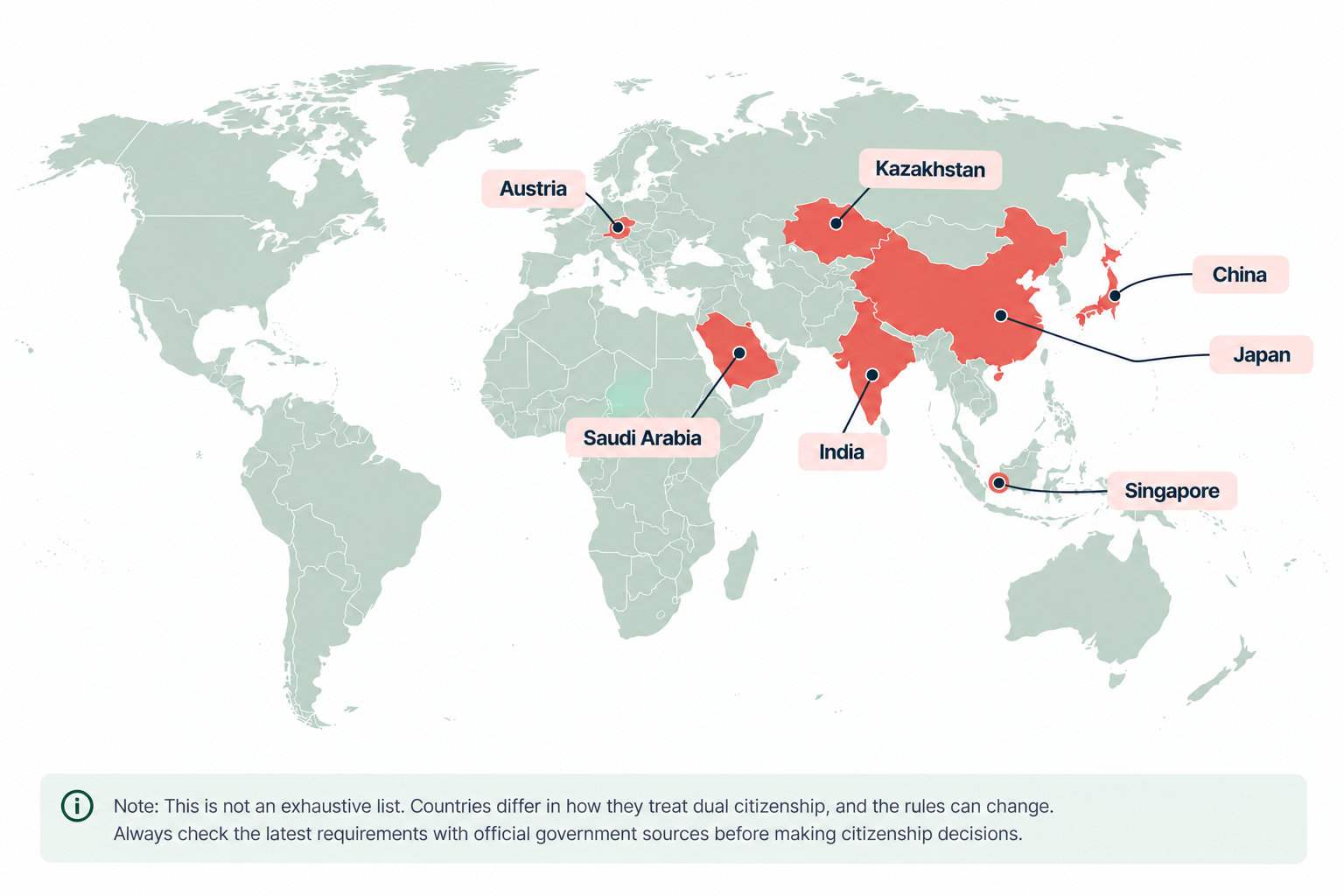
China does not recognise dual nationality under its Nationality Law. Chinese citizens who voluntarily settle abroad and acquire foreign nationality may automatically lose Chinese nationality. However, the application of this rule depends on legal circumstances, so verify current requirements before pursuing another citizenship.
India does not permit full dual citizenship. Indian citizens who voluntarily acquire another country’s citizenship generally lose Indian citizenship and must surrender their Indian passport. The Overseas Citizen of India (OCI) scheme offers eligible foreign citizens of Indian origin certain benefits, but it is not citizenship.
Japan generally requires people with multiple nationalities to choose one nationality under its Nationality Act. Those who acquire another nationality voluntarily may lose Japanese nationality. People who hold dual nationality from birth face a nationality-selection requirement, with deadlines and procedures depending on their circumstances.
Singapore generally prohibits adult citizens from holding dual citizenship. People who acquire Singapore citizenship may need to renounce their foreign nationality, while Singapore citizens who voluntarily acquire another nationality risk losing Singapore citizenship. Rules for minors differ, so check official requirements before making citizenship decisions.
Saudi Arabia restricts dual nationality. Saudi citizens generally require prior permission to acquire another nationality, and obtaining foreign citizenship without approval may lead to loss of Saudi citizenship under applicable law. The consequences depend on individual circumstances, so confirm current rules with Saudi authorities before applying.
Also read: How to receive international freelance payments in Saudi Arabia
Austria generally withdraws Austrian citizenship when a citizen voluntarily acquires another nationality, unless they obtain permission to retain Austrian citizenship beforehand. Exceptions may apply in specific circumstances, including certain cases involving citizenship by birth. Always check the legal requirements before pursuing naturalisation in another country.
Kazakhstan does not recognise dual citizenship under its nationality laws. Citizens who acquire another nationality are generally required to report it and surrender their Kazakh documents within the applicable period. Failure to comply may result in penalties, so confirm the current reporting and citizenship-loss rules with official authorities.
Consular protection is assistance your government provides when you encounter problems abroad, such as arrest, illness, lost travel documents or an emergency. If you hold dual citizenship, you may expect both countries to help you when something goes wrong. However, your ability to receive assistance from one country can be limited when you are inside the other country where you are also a citizen.
For example, if you are a dual citizen of the United States and Nigeria and face arrest while in Nigeria, US officials may be unable to intervene on your behalf. Nigerian authorities may treat you solely as a Nigerian citizen and may not recognise your American nationality. This can limit access to US consular assistance, including visits or representations to local authorities.
These restrictions do not mean you lose all consular protection whenever you travel. Your options depend on the countries involved, their laws and any applicable agreements. Before travelling, check your government’s guidance on dual nationality, local laws and emergency contacts so you understand what support may be available.
Dual citizenship can bring legal responsibilities in both countries, even when you live permanently in one. Depending on each country’s laws, you may be required to complete military service, respond to jury duty summons or meet compulsory voting requirements while living abroad.
Military conscription can be particularly important if one of your countries requires eligible citizens to serve in its armed forces. Some countries provide exemptions, deferments or alternative service arrangements, but these depend on factors such as your age, residency and circumstances. Jury duty and voting obligations also vary, and some countries allow citizens overseas to fulfil these duties remotely or qualify for exemptions.
Ignoring a legal obligation may lead to fines, travel restrictions, difficulties renewing documents or other penalties, depending on the country and the specific law. Before acquiring a second nationality, check the civic duties attached to both citizenships. Understanding these requirements can help you avoid unexpected obligations when travelling, relocating or returning to either country.
Also read: D7 visa Portugal: Requirements and how to apply
Renouncing citizenship is not always straightforward. The process depends on the country’s laws, and you may need to apply through an embassy or consulate, attend an appointment, submit original documents and prove that you hold another nationality. Some countries will not allow you to renounce citizenship if doing so would leave you stateless.
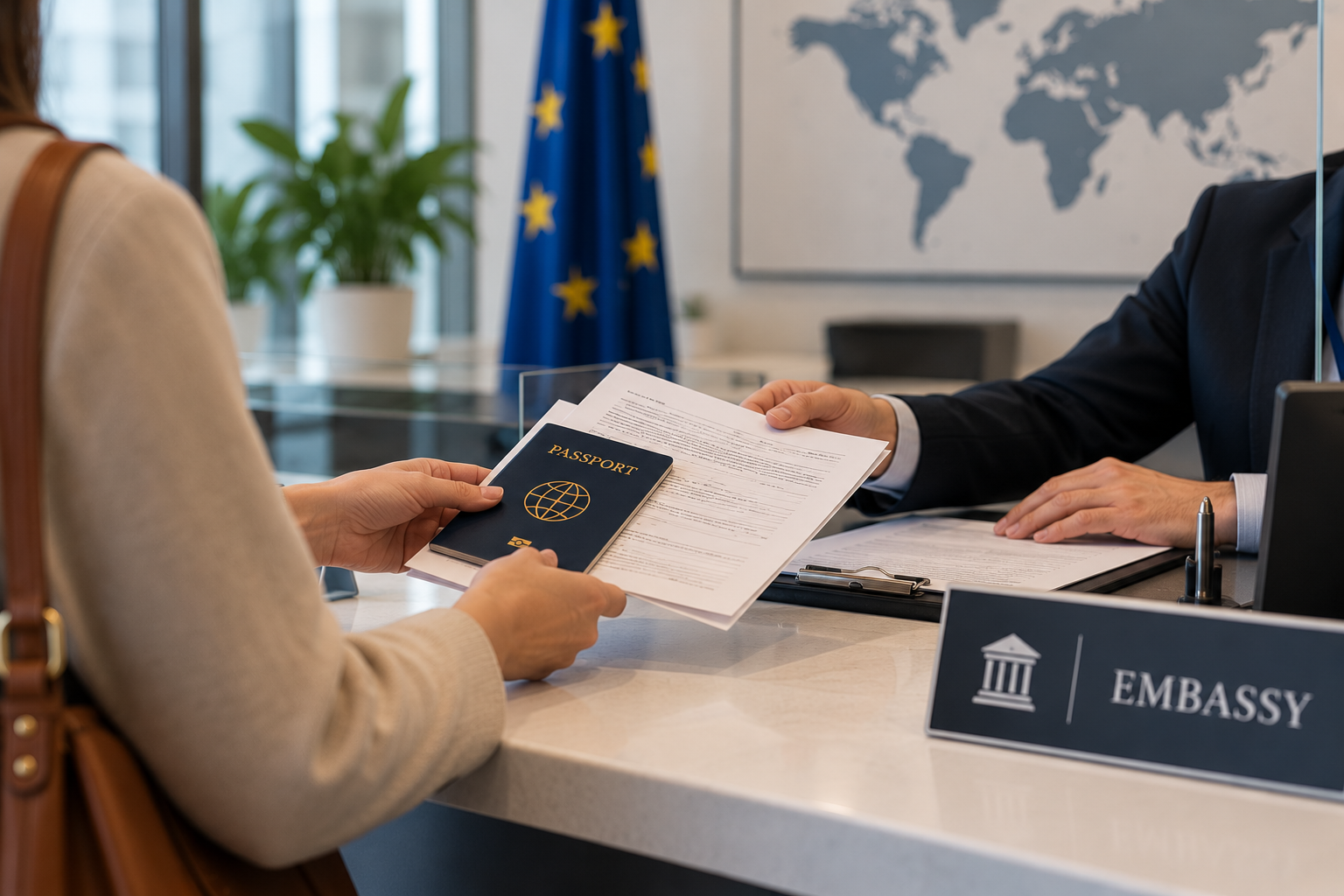
Fees and waiting times vary considerably. You may pay an application or administrative fee, cover document certification and translation costs, and wait several months or longer for approval. In some cases, additional checks or incomplete paperwork can delay the process.
Tax obligations can make renunciation more complicated. For example, the United States generally requires certain citizens who renounce their nationality to complete final tax filings, and some may face an expatriation tax if they meet specific criteria. Other countries may impose outstanding tax obligations or departure-related requirements, depending on their laws. Renouncing citizenship does not automatically erase unpaid taxes or other liabilities. Before proceeding, check the official requirements of your country and consider seeking qualified legal or tax advice.
Yes, dual citizens may have tax obligations in both countries, depending on residency, citizenship and income sources. The United States taxes citizens on worldwide income, even when they live abroad. Tax treaties and foreign tax credits can help reduce double taxation, although filing requirements may still apply.
Countries such as China, India, Japan and Singapore restrict or generally prohibit dual citizenship under specific circumstances. Saudi Arabia, Austria, Kazakhstan and Indonesia also impose restrictions. However, rules and exceptions vary, so check each country’s current nationality laws before applying for another citizenship.
Yes, some countries may withdraw your original citizenship when you voluntarily acquire another nationality. India generally ends Indian citizenship upon voluntary acquisition of foreign citizenship, while China does not recognise dual nationality and applies specific rules to citizens who settle abroad and acquire foreign citizenship.
Yes, dual citizens may face military service obligations in either country, depending on its laws. Requirements can depend on age, residency and nationality status. Some countries have exemptions or agreements to prevent double service, so check the rules before travelling or relocating.
Dual citizens may need to use a particular country’s passport when entering or leaving that country. For example, US citizens generally must use a US passport to enter and leave the United States. Check both countries’ requirements and use the appropriate passport for international travel.
Renouncing citizenship can involve application fees, official documents, interviews and waiting periods. US citizens must generally complete an in-person renunciation appointment and may have tax filing obligations, including potential expatriation tax. Other countries have different procedures, so confirm the requirements before beginning.
Managing money across borders becomes easier when you have the right tools. With Grey, you can send money internationally, including transfers from the US to Canada, while holding and managing multiple currencies. Whether you’re travelling, working remotely or receiving payments from abroad, Grey helps you manage international payments and access your money across borders with greater convenience and flexibility.

Compare 11 virtual PO box and mail scanning services for digital nomads on price, locations and forwarding. See which suits life on the road. Pick yours.
Tunde Aladeloba
•
October 21, 2026
•
2 min read
A virtual PO box, or virtual mailbox, gives you a real street address where a provider receives your post, scans it and forwards or shreds it on request. Digital nomads use one to keep a stable address for banks, tax letters and deliveries, even when they move between countries.
Without a permanent home, managing important mail can become complicated. You might miss a bank statement, struggle to receive a replacement card or need an address to register a business. A virtual mailbox helps you handle these tasks without relying on friends or family to collect your post.
However, providers differ in their locations, monthly fees, mail-scanning limits, forwarding options and international shipping costs. Some offer additional services, such as check deposits and package consolidation.
This guide covers 11 virtual mailbox services worth considering, helping you compare their features, pricing and availability to find an option that fits your travel routine and mailing needs.
A virtual PO box is a mail-handling service that gives you a physical mailing address without requiring you to rent or visit a mailbox in person. As a digital nomad, you can use it to receive letters, bank statements and packages while travelling or living abroad.
Unlike a traditional PO box, a virtual mailbox typically provides a real street address. When you sign up, your provider assigns you an address at its mail-handling facility. You can use this address for eligible correspondence, and the provider receives your mail on your behalf.
Your address may include a private mailbox (PMB) number, such as 123 Main Street, PMB 456. This identifies your individual mailbox within the provider’s facility. The exact format varies by provider, and you should follow its instructions when entering your address on forms.
A USPS PO box, by contrast, is rented directly from the United States Postal Service and usually uses a PO box number rather than a street address. A virtual mailbox may accept deliveries from multiple carriers, depending on its policies, and lets you view scanned mail online, request forwarding or arrange secure shredding.
The 11 best virtual mailbox services offer different address locations, mail scanning features, forwarding options and pricing plans. Whether you travel frequently, live abroad or run a remote business, compare each provider’s features to find a mailbox service that fits your needs.
Choosing a virtual mailbox starts with understanding how much mail you receive and how you want to manage it. Compare each provider’s scanning allowance, including the number of incoming envelopes covered and the cost of opening and scanning their contents. If you receive important documents regularly, a plan with generous scanning limits may offer better value than a cheaper subscription with extra fees.
Next, consider forwarding costs. Providers may charge handling fees in addition to postage, and international deliveries can become expensive. Look for options such as mail consolidation, which combines multiple items into one shipment, and check whether storage limits apply before forwarding.
Your address type also matters. A commercial address may suit general correspondence and business mail, but some banks or government agencies require a residential address. Confirm that the address meets the requirements of the organisations where you intend to use it.
Finally, check the provider’s process for USPS Form 1583. This form authorises a commercial mail receiving agency to handle your mail. You generally need to provide identification and complete the required notarisation or identity verification process before your mailbox becomes active.
Also read: Virtual US accounts explained: Who they work for
Yes, you can use a virtual mailbox for some banking and business purposes, but acceptance depends on the bank, service provider and intended use. Many virtual mailboxes provide a business mailing address for receiving bank statements, tax notices and official correspondence. However, a mailing address is not necessarily accepted as proof of your physical residential address. Before applying, review the bank’s address requirements and its rules for opening a business account.
Banks may flag a virtual mailbox as a commercial mail receiving agency (CMRA), which means it may not satisfy their physical-address verification requirements. This does not automatically prevent you from opening an account, but you must provide accurate details and any additional documents requested.
For business registration, a virtual mailbox may serve as your mailing address, depending on state rules. An LLC may also need a registered agent with a physical address in its state of registration to receive legal notices. Before applying, review this guide on how to open a business bank account and confirm the bank’s requirements.
Managing money while travelling can get complicated when your income, savings and expenses involve different currencies. You might earn dollars from a US client, pay for accommodation in another country and still need money for expenses back home. Keeping track of exchange rates, transfer fees and spending limits can quickly become frustrating.
Grey helps simplify cross-border money management by giving you a way to receive international payments and manage multiple currencies. Instead of constantly converting money whenever you get paid, you can hold supported currencies and exchange them when it suits your needs.
When you need to pay for flights, accommodation or online subscriptions, Grey’s virtual card for spending abroad gives you another way to make international payments. And if you’re travelling while working remotely, you can get paid from the US while abroad by sharing your Grey USD account details with clients. That way, earning and spending across borders becomes easier to manage
A virtual PO box, also called a virtual mailbox, gives you a mailing address where a provider receives your letters and packages. You can view scanned images of incoming mail online and choose to have items forwarded, stored or shredded. It is useful for travellers, remote workers and businesses that need reliable mail access.
Yes, virtual mailboxes are legal in the United States when used in accordance with applicable laws and postal regulations. Providers receiving USPS mail on behalf of customers operate as Commercial Mail Receiving Agencies (CMRAs) and must follow USPS requirements. You must provide accurate identification, complete required forms and avoid using the address for unlawful activities.
You can use a virtual mailbox as a long-term mailing address, even when you travel frequently. However, it may not qualify as your legal residence or physical address for every purpose. Government agencies, banks, insurers and licensing authorities may require a residential address, so check their specific rules before using one.
Some banks accept virtual mailbox addresses for mailing statements and correspondence, but others may reject them for account verification. A virtual mailbox is generally a commercial mailing address, not proof of where you live. Banks may require a separate residential or physical business address to meet identity-verification and compliance requirements.
USPS Form 1583 is an application that authorises a Commercial Mail Receiving Agency to receive mail on your behalf. You must provide identifying information and acceptable identification documents. Your signature must be witnessed by the provider or an authorised employee, or acknowledged before a qualified notary. Requirements should be confirmed with your mailbox provider.
A virtual mailbox typically costs around $5 to $40 per month, depending on the provider, address location and plan features. Basic plans may include limited mail scanning, while higher-priced options offer more scans, storage or business services. Budget for additional charges such as postage, forwarding, document scanning, package handling and international shipping.

USDC does not pay interest by default. See how exchange programmes, lending platforms and DeFi protocols compare on rate and risk. Compare options.
Tunde Aladeloba
•
October 21, 2026
•
2 min read
USDC is a stablecoin designed to maintain a value close to one US dollar, making it an option for people who want to hold digital dollars without the usual price swings associated with cryptocurrencies like Bitcoin. However, holding USDC in a wallet does not automatically generate interest. To earn a return, you need to invest your holdings in a programme or platform that pays a yield.
USDC itself pays no interest. Yield comes from lending it out through a centralised exchange programme, a crypto lending platform, or a DeFi protocol such as a lending pool or liquidity pair. Rates ranged from about 2 to 8% APY in 2026, depending on the platform, strategy and market conditions.
Each option comes with different levels of risk, access requirements and withdrawal conditions. Before choosing where to earn yield, understand how returns are generated, whether your funds are protected, and what could happen if a platform fails or a smart contract is exploited.
No, holding USDC in a crypto wallet does not earn interest by itself. USDC is a stablecoin designed to maintain a value close to one US dollar, but simply owning it does not generate additional income. Whether it sits in a personal wallet or an exchange account, your balance remains unchanged unless you receive additional USDC through another transaction or service.
To earn yield, you need to use a separate financial product built on top of USDC. These products generate returns through activities such as lending your stablecoins to borrowers, supplying liquidity to decentralised finance (DeFi) protocols, or participating in yield programmes offered by cryptocurrency exchanges.
Each option works differently and carries its own risks. A lending platform may pay interest from borrower repayments, while a DeFi protocol may distribute fees or lending revenue to participants. Centralised exchanges may offer promotional rates or rewards under specific conditions.
Before depositing USDC into any yield product, understand how returns are generated, what fees apply, and whether you can withdraw your funds when needed. Yield is never guaranteed.
Also read: How USDC compares with USDT
Centralised exchanges and crypto lending platforms allow you to earn yield by depositing your USDC into programmes that generate returns. Exchange earn programmes may lend your USDC to borrowers or use other permitted strategies to generate revenue, sharing a portion of the earnings with you.
Crypto lending platforms work similarly, connecting you with borrowers and paying interest on the funds you supply.
The annual percentage yield (APY) you receive depends on the platform, market demand, lending activity and programme conditions. Rates can change, and promotional offers may have limits or eligibility requirements.
Custody is another important consideration. When you deposit USDC into a centralised platform, the platform typically controls your assets rather than you holding the private keys directly. It may lend, transfer or otherwise use your deposited coins according to its terms.
This exposes you to counterparty risk. If the platform becomes insolvent, freezes withdrawals or suffers a hack, you may struggle to access your funds or lose them entirely. Before depositing your USDC, review the withdrawal terms, fees, security measures and how the platform uses your assets.
Decentralised finance (DeFi) offers another way to earn yield on USDC without relying on a traditional financial intermediary. Two common options are lending pools and liquidity pairs, each generating returns in different ways.
With a lending pool, you deposit USDC into a protocol where borrowers can access the funds and pay interest. A portion of that interest is distributed to depositors as yield. Your returns depend on borrowing demand, utilisation rates and the protocol’s rules.
With a liquidity pair, you deposit USDC alongside another cryptocurrency into a trading pool. Traders use this pool to swap assets, and liquidity providers may earn a share of trading fees. However, the value of the two deposited assets can change relative to each other, creating impermanent loss.
Both strategies carry risks. Smart contract bugs can expose deposited funds to theft or loss. Impermanent loss can reduce returns compared with simply holding the assets. Depegging occurs when USDC falls below its intended one-dollar value, reducing the value of your holdings even when the yield remains positive.
When you earn yield on USDC, your biggest risks depend on where you deposit your funds and how the platform generates returns. Counterparty risk, smart contract risk and depeg risk can all affect how much you earn and whether you recover your initial deposit.
Counterparty risk arises when you trust a centralised exchange or lending platform with your USDC. If the provider fails or freezes withdrawals, you may lose access to your funds. Smart contract risk affects you when a vulnerability in a DeFi protocol allows your deposited funds to be stolen or lost. Depeg risk means your USDC falls below its intended $1 value, reducing the value of your holdings.
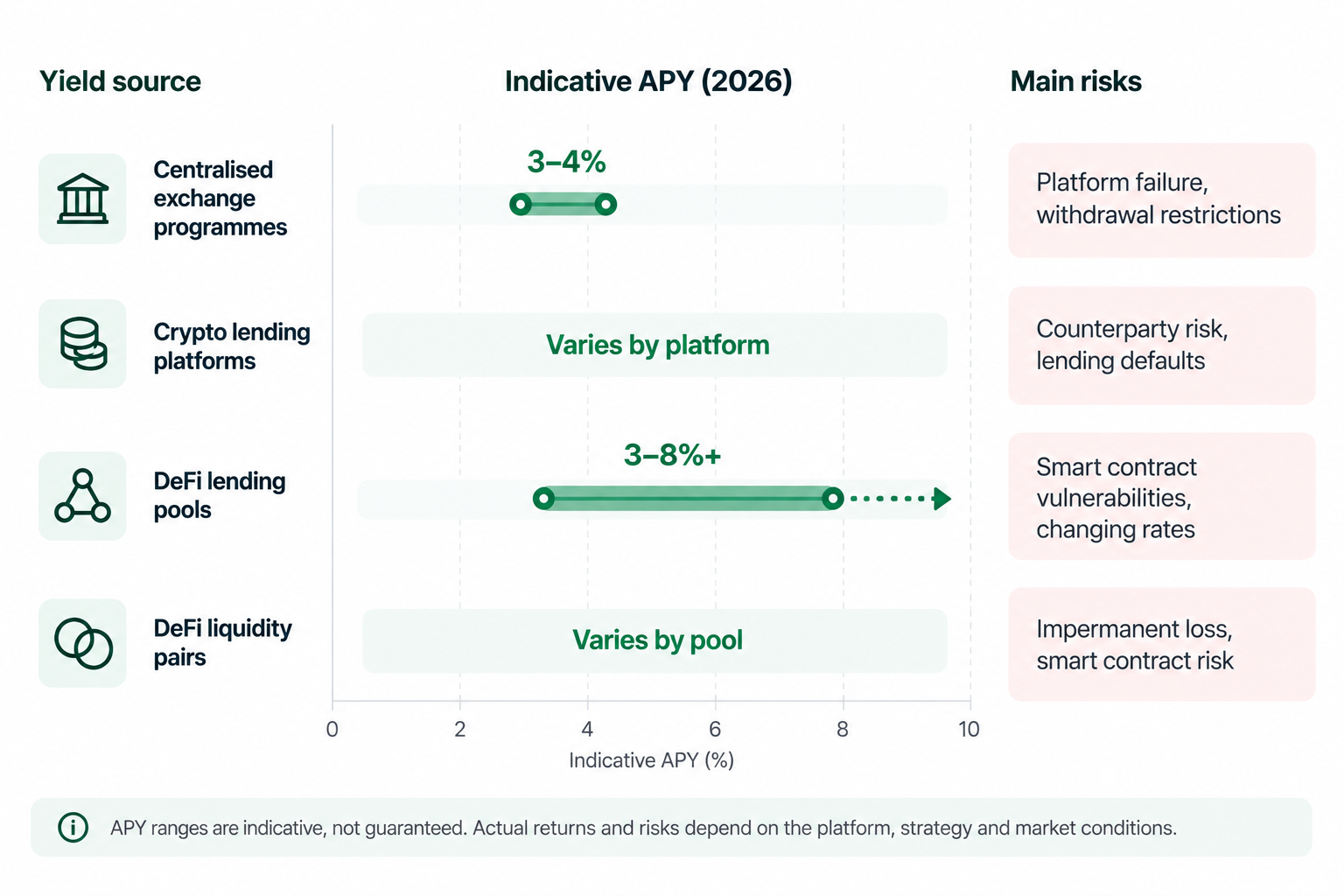
There is no universal ranking because your exposure depends on the product you choose. However, higher advertised APY usually means higher risk. Before depositing, consider how returns are generated, who controls your funds and what could go wrong.
Your choice of blockchain also matters. Learn how USDC on Solana compares with Ethereum when considering transaction fees, network activity and the platforms available to you.
USDC yield can offer a potentially higher return than a regular savings account, but you give up an important protection: USDC does not have government-backed deposit insurance. Your returns depend on the platform and strategy you use, and higher yields often come with greater risk. A bank savings account may offer less, but eligible deposits have protection and more predictable access to your money.
Before choosing USDC for yield, consider whether you can afford the risks, including platform failure, smart contract vulnerabilities and changes in USDC’s value. It is generally better to keep emergency funds in an insured bank account rather than expose money you need urgently to crypto-related risks.
USDC can also make moving money across borders easier. For example, if you need to send money from the US to Nigeria, you can use a platform that supports USDC transfers and local withdrawals. With Grey, you can send, receive and spend USDC, then convert your balance and withdraw funds to a supported local bank account.
The right choice depends on your priorities: bank deposits for protection, USDC for global access and potential yield.
Earning yield on USDC carries risks, including platform failure, smart contract vulnerabilities and loss of funds. Although USDC is designed to maintain a one-dollar value, your investment is not guaranteed. Review the platform’s security, withdrawal terms and yield strategy before depositing funds, and never invest money you cannot afford to lose.
USDC yield varies by platform, market conditions and strategy. In 2026, some centralised reward programmes offer around 3–4% APY, while DeFi lending may offer approximately 3–8% or more. These are indicative ranges, not guaranteed rates. Check current offers, fees and risks before choosing a platform.
Yes, USDC yield may be taxable, depending on your country’s tax laws and how you earn it. In the United States, rewards are generally reportable as income. Keep records of payments, dates and amounts, and consult a qualified tax professional to understand your reporting obligations.
Yes, you can lose some or all of your USDC principal. Platform insolvency, lending defaults, smart contract exploits and liquidity problems can prevent withdrawals or cause losses. USDC can also trade below one dollar. Assess the risks carefully, diversify where appropriate and avoid committing essential savings.
USDC yield usually comes from lending, reward programmes or providing liquidity through a platform or DeFi protocol. Staking typically involves locking cryptocurrency to support a proof-of-stake blockchain. USDC does not use proof-of-stake itself, so products marketed as USDC staking generally involve a different yield-generating mechanism.
First, withdraw your USDC and earn rewards to a supported exchange or financial platform. Convert the balance into your preferred currency, then withdraw it to an eligible bank account or payment method. With Grey, you can send, receive and spend USDC, subject to supported services, currencies and applicable fees.
While USDC yield offers the potential for higher returns, a bank savings account provides greater protection for eligible deposits. For international transactions, Grey gives you a practical way to send, receive and spend USDC, with access to supported currencies for your everyday financial needs.

The currency in France is the euro (EUR, €). See the notes and coins, where the CFP franc still applies, and how to pay without extra fees. Plan ahead.
Tunde Aladeloba
•
October 19, 2026
•
2 min read
The currency in France is the euro, represented by the symbol € and the ISO currency code EUR. If you are travelling to Paris, shopping in Lyon or paying for accommodation in Nice, you will use euros for everyday transactions. France replaced the French franc with euro banknotes and coins in 2002, making the euro its official currency.
The euro is used across mainland France and its outermost regions, including Guadeloupe, Martinique, Réunion, French Guiana and Mayotte. However, not all French territories use the euro. French Polynesia, New Caledonia and Wallis and Futuna use the CFP franc (XPF), a separate currency pegged to the euro at a fixed rate.
When budgeting for a trip, remember that prices are generally displayed in euros, whether you are paying for meals, transport or shopping. If your money is in another currency, check the exchange rate and any conversion fees before making payments. Using a suitable travel card or payment service can also help you manage spending abroad.
France uses the euro (€), with the ISO currency code EUR. If you are planning a trip to Paris, exploring the French Riviera or shopping in Marseille, you will pay for most goods and services in euros.
France previously used the French franc as its national currency. The country adopted the euro for electronic and financial transactions in 1999, before euro banknotes and coins entered circulation on 1 January 2002. The franc was then gradually withdrawn, completing France’s transition to the shared European currency.
When checking prices during your visit, look for the € symbol, which usually appears before or after the amount depending on the format. For example, €25 represents twenty-five euros. If you are converting money from naira, pounds or US dollars, the amount you receive will depend on the current exchange rate and any fees charged by your bank or payment provider.
Before travelling, compare conversion costs and payment options so you can manage your spending in France more confidently.
France no longer uses the French franc as its official currency. The euro (€), code EUR, replaced it, with euro banknotes and coins introduced in 2002. However, France still uses a different franc in some of its Pacific territories: the CFP franc (XPF).
If you travel to French Polynesia, New Caledonia or Wallis and Futuna, you will encounter the CFP franc rather than the euro for everyday payments. Although these territories are French, they have a separate currency arrangement suited to their regional economies.
The CFP franc is linked to the euro at a fixed exchange rate of €1 = 119.3317 XPF. This means its value against the euro does not fluctuate with ordinary market exchange-rate movements. However, when converting your money from another currency, such as US dollars or Nigerian naira, the amount you receive can still change with exchange rates and provider fees.
If you are visiting these Pacific territories, check whether your bank card supports local payments and compare conversion charges before travelling. The CFP franc remains distinct from the former French franc, despite sharing the name.
When paying in France, you can use euro banknotes, coins and payment cards. Euro banknotes come in €5, €10, €20, €50, €100 and €200 denominations, while coins range from 1 cent to €2. Prices are displayed in euros, so check the total before paying.
Debit and credit cards are widely accepted in shops, hotels, restaurants and supermarkets. Contactless payments are common, allowing you to tap your card or compatible phone at checkout. However, some transactions may require a PIN, and individual merchants can set minimum card payment amounts where permitted.
Cash remains useful when visiting local markets, buying from smaller vendors, using certain public facilities or making purchases at businesses that do not accept cards. Keeping a little cash available can help you avoid payment difficulties.
If you need a convenient way to pay while travelling, Grey’s virtual card can help you make online and supported card payments in euros. Before your trip, check the card’s currency conversion rates, applicable fees and acceptance conditions so you can plan your spending with confidence.
Also read: Cheapest cities in France for international students
You can get euros for your trip to France through bank ATMs, currency exchange bureaux or your bank before departure. Withdrawing euros from an ATM in France can be convenient, but check your bank’s foreign transaction fees and the ATM operator’s charges. Use ATMs attached to established banks where possible.
Exchange bureaux at airports and tourist areas are easy to find, but they may offer less favourable rates. Compare the final amount you will receive after fees rather than relying only on advertised exchange rates.
When paying by card or withdrawing cash, you may be asked whether you want to pay in euros or your home currency. Choose euros to decline dynamic currency conversion. This usually lets your card provider handle the conversion, which may offer a better rate, although your provider’s fees still apply.
For cross-border payments, Grey offers a way to send money from the US to France. Compare the available exchange rate, transfer fees and delivery times before sending funds, so you can budget for your trip and manage your euros more effectively.
Whether you are paying rent, covering tuition or supporting family, choosing the right transfer service can help you manage international payments to France. Grey supports cross-border money transfers, allowing you to send money from the UK to France and manage international payments through its platform.
Before sending money, compare exchange rates, transfer fees and delivery times to understand how much your recipient will receive. Bank transfers can include intermediary charges, while card payments may attract foreign transaction fees depending on your provider.
Grey’s multi-currency account helps you hold and manage supported currencies in one place, making it easier to organise international finances. Its virtual card also lets you make eligible online payments and pay for supported purchases in euros. Depending on your card terms and transaction, this may help you avoid certain foreign transaction fees.
France uses the euro as its official currency. The French franc was replaced by euro banknotes and coins in 2002. However, some French Pacific territories still use the CFP franc, a separate currency linked to the euro at a fixed exchange rate.
The euro symbol is €, and its three-letter ISO currency code is EUR. You will see the symbol on price tags, receipts and menus across France. For example, €50 means fifty euros. When exchanging money, use EUR to identify the currency correctly.
US dollars are not generally accepted for everyday purchases in France. You will usually need euros to pay for meals, transport, shopping and accommodation. Exchange your dollars before travelling or withdraw euros from an ATM. Check conversion rates and fees to manage costs.
Cards are widely accepted across France, including in hotels, restaurants and shops. Contactless payments are common, making cards convenient for everyday spending. However, cash remains useful at local markets and smaller businesses. Carrying a little of both gives you greater flexibility during your trip.
French Polynesia uses the CFP franc, abbreviated XPF, rather than the euro for everyday transactions. The currency is pegged to the euro at a fixed rate of €1 = 119.3317 XPF. Check your card’s international payment fees before travelling to the islands.
You can send money to France through a bank or an international transfer service. Compare exchange rates, transfer fees and delivery times before choosing. Grey supports cross-border payments, including transfers from the US to France. Confirm service availability and recipient details before sending.

The IRS lets you gift up to the annual exclusion per recipient with no tax owed and no form to file. See the current limits. Check the limits.
Tunde Aladeloba
•
October 19, 2026
•
2 min read
Giving money to another person may seem straightforward, but large financial gifts can come with tax reporting requirements. In the United States, the Internal Revenue Service (IRS) determines how much you can give each year before you may need to report the gift. Understanding these rules is particularly important when transferring substantial sums, sharing wealth, or planning your finances.
The good news is that exceeding the annual gift tax limit does not automatically mean you owe tax. The IRS provides a lifetime exemption that allows you to give more than the annual limit before gift tax becomes payable. Knowing the difference between the annual exclusion, reporting requirements and lifetime exemption can help you make informed financial decisions.
The IRS annual gift tax exclusion lets you give up to a set amount per recipient each year with no tax owed and no form to file. Gifts above that amount count against your lifetime exemption and require Form 709, though tax is rarely owed until the lifetime exemption itself is used up.
For 2026, you can give up to $19,000 per recipient per year without owing federal gift tax or generally needing to file a gift tax return. This annual exclusion applies to qualifying gifts of money or property under US Internal Revenue Service (IRS) rules.
The limit resets every calendar year, beginning January 1. This means gifts made in 2026 are counted separately from gifts made in 2025. You can give money to multiple recipients in the same year, provided each recipient’s total qualifying gifts from you stays within the annual limit.
The exclusion applies per giver and per recipient, rather than as one combined limit for all your gifts. For example, you could give $19,000 each to three people in 2026, totalling $57,000, without exceeding the annual exclusion for any recipient. If two spouses each give the same recipient $19,000, their combined gifts can reach $38,000 under their separate exclusions, subject to applicable IRS rules.
For 2026, the US lifetime gift and estate tax exemption is $15 million per individual. This is the total amount an individual can transfer through qualifying gifts during their lifetime and leave to beneficiaries at death before federal gift or estate taxes generally apply, subject to applicable rules.
The lifetime exemption works alongside the annual gift tax exclusion. While the annual exclusion allows qualifying gifts of up to $19,000 per recipient in 2026 without using the lifetime exemption, larger gifts generally count toward the $15 million limit. Gifts exceeding the annual exclusion may require you to file IRS Form 709, even when no tax is due.
The important distinction is that the lifetime gift tax exemption and estate tax exemption are shared, not separate allowances. For example, if you make $2 million in taxable gifts during your lifetime, that amount generally reduces the exemption remaining for your estate. Any unused exemption may apply to assets transferred at death, helping determine whether your estate owes federal estate tax.
You generally need to file IRS Form 709 if you give more than $19,000 to one person in 2026, unless a specific exception applies. The form reports gifts exceeding the annual exclusion and helps the IRS track your use of the lifetime gift tax exemption.
The filing requirements, deadline and potential tax implications are important to understand before submitting your return.
Who Must File Form 709?
The person giving the gift is generally responsible for filing. You may need to file if your gifts to one recipient exceed the annual exclusion, you transfer certain future interests, or you elect to split gifts with your spouse.
When Is Form 709 Due?
The deadline is generally April 15 of the year following the gift. For gifts made in 2026, the filing deadline is April 15, 2027. An extension may be available, but it does not automatically extend the deadline for paying tax owed.
Does Filing Form 709 Mean You Owe Tax?
No. Filing the form does not automatically mean you owe gift tax. Gifts above the annual exclusion generally reduce your lifetime gift and estate tax exemption. Federal gift tax is typically payable only after your available exemption has been exhausted.
Gift tax and estate tax share one combined lifetime exemption. In 2026, the federal gift and estate tax exemption is $15 million per individual. This means large gifts made during your lifetime and assets transferred after your death generally count toward the same exemption.
If you give a substantial amount of money while alive, the portion exceeding the annual gift tax exclusion generally reduces the exemption remaining for your estate. For example, if you make $2 million in taxable gifts, that amount generally reduces your remaining exemption to $13 million, assuming no other taxable transfers or adjustments.
Alternatively, leaving the money in your estate means its value may be considered when calculating estate tax after your death. If your total taxable estate and applicable prior gifts remain within your available exemption, federal estate tax generally will not be due.
The main difference is when the transfer happens and how the assets are valued. Lifetime gifting can help transfer wealth earlier, but the best approach depends on your financial circumstances, future needs and estate planning goals.
If you're sending money as a gift to family members abroad, it's also worth considering transfer fees and exchange rates. For example, you can send money from the US to Mexico or send money from the US to India using available international transfer services. Just remember that sending money internationally doesn't automatically exempt a gift from US tax reporting requirements.
Generally, no. Under US federal tax rules, the recipient does not pay income tax on money received as a gift. The person giving the gift is usually responsible for any applicable gift tax reporting and payment. However, income generated by gifted assets may be taxable to the recipient.
Yes. Gifts exceeding the 2026 annual exclusion of $19,000 per recipient may require you to file Form 709. However, the excess generally reduces your lifetime gift and estate tax exemption rather than triggering immediate tax. Gift tax usually becomes payable after the available exemption is exhausted.
Generally, gifts to a US-citizen spouse qualify for the unlimited marital deduction and do not count toward the annual exclusion. Gifts to a non-US citizen spouse have a separate annual limit, which is $194,000 for 2026. Special rules may apply depending on the circumstances.
Yes. Money sent to relatives abroad may qualify as a gift under US tax rules. If the giver is subject to US gift tax, the annual exclusion and reporting requirements may apply regardless of where the recipient lives.
You may need to. US persons who receive gifts exceeding $100,000 in total from a nonresident alien individual or foreign estate generally must report them on Form 3520. Different thresholds apply to gifts from foreign corporations or partnerships.
Failure to file Form 709 when required may result in penalties based on the unpaid gift tax, generally 5% per month, up to 25%. If no tax is due, penalties may differ, but the IRS can still assess consequences for noncompliance. Filing requirements should be checked carefully.
Managing money across borders involves more than understanding gift tax. Whether you are supporting family abroad, making international payments or managing everyday expenses, having the right financial tools matters. Grey offers multi-currency accounts and virtual cards that make it easier to manage international finances, pay for online services and handle supported cross-border transactions.

See who qualifies for the UAE Golden Visa and how to apply. Routes, thresholds and steps, checked against official sources. Start planning your move.
Tunde Aladeloba
•
October 15, 2026
•
2 min read
The UAE Golden Visa offers long-term residency to investors, entrepreneurs, skilled professionals and individuals with exceptional talent who want to live and build their future in the United Arab Emirates. Depending on the eligibility category, the visa is typically valid for five or ten years and can be renewed.
Unlike standard residency permits, the UAE Golden Visa allows eligible holders to live, work and study in the country without requiring a national sponsor. It also offers greater flexibility for individuals seeking long-term stability, career opportunities and business growth in the UAE.
Eligibility depends on factors such as professional qualifications, salary, investment value, business ownership or recognised achievements. Applicants must meet the specific requirements for their chosen category and provide supporting documents.
The application process generally involves identifying the appropriate eligibility route, gathering the required documents and submitting an application through the relevant UAE government authority or approved channel.
Understanding the eligibility criteria, documentation requirements and application process can help prospective applicants make informed decisions before applying for the UAE Golden Visa.
The UAE Golden Visa is a long-term residence permit introduced by the United Arab Emirates to attract investors, entrepreneurs, skilled professionals, scientists and individuals with exceptional talents. It allows eligible foreign nationals to live in the country and pursue career, business or educational opportunities without needing a traditional national sponsor.
The visa is generally issued for five or ten years, depending on the applicant’s eligibility category and the applicable requirements. It is renewable, provided the holder continues to meet the relevant conditions. The validity period offers greater stability for individuals and families planning to establish long-term roots in the UAE.
One of the key benefits of the UAE Golden Visa is self-sponsored residency. Unlike many standard employment-based residence permits, holders do not need an employer or UAE national to sponsor their residency. This provides greater independence when changing jobs, managing businesses or exploring professional opportunities.
For eligible applicants, the UAE Golden Visa offers more than extended residency. It provides flexibility to build a career, invest, study and plan for the future in one of the Middle East’s leading business and lifestyle destinations, subject to applicable laws and visa conditions.
Your eligibility for the UAE Golden Visa depends on your professional achievements, investments, qualifications or exceptional abilities, with specific requirements for each applicant category.
Investors may qualify through eligible public investments or real estate investments that meet the UAE’s financial and regulatory requirements. Applicants must provide supporting documents to demonstrate that their investments satisfy the applicable criteria.
Entrepreneurs may qualify through business ownership, approved projects or demonstrated entrepreneurial achievements, depending on the relevant eligibility category. Applicants must meet the applicable conditions and provide evidence of their business activities or project qualifications.
Skilled professionals may be eligible based on their occupation, educational qualifications, employment status, salary and other requirements. Eligibility depends on the applicant’s professional category and the relevant government regulations.
Outstanding students and graduates may qualify based on academic performance, examination results and recognised institutional criteria. Specific requirements apply depending on their educational background and the relevant eligibility pathway.
Individuals with exceptional abilities in fields such as science, technology, arts, culture and sports may qualify through relevant approvals. Applicants may need to demonstrate recognised achievements, specialised expertise or professional distinction, depending on their field.
The UAE Golden Visa offers long-term residency to eligible investors through property ownership and qualifying capital investments. The minimum investment threshold for these routes is generally AED 2 million, subject to the applicable eligibility criteria and documentation requirements.
The property investment route requires real estate with a combined value of at least AED 2 million. Multiple properties may be combined to meet the threshold. Certain off-plan and mortgaged properties may qualify, depending on the emirate and applicable conditions.
Investors may qualify by investing at least AED 2 million in an eligible UAE investment fund or qualifying business. An approved bank deposit may also meet the requirements, subject to the relevant regulations and supporting documentation.
Online claims about a UAE Golden Visa costing approximately ₹23 lakh, or AED 100,000, have caused confusion. This amount should not be mistaken for the standard investment threshold for the Golden Visa. Any offer promising residency at a significantly lower cost should be verified through official UAE government channels before payment.
Also read: How UAE freelancers save on currency exchange with Grey
1. Check your eligibility and apply
Choose the appropriate Golden Visa category and submit your application or nomination request through the relevant authority. Upload supporting documents, such as your property title deed, investment evidence or salary certificate, as required.
2. Obtain an entry permit if required
If you are applying from outside the UAE, check whether you need an entry permit to complete the residency process. Eligible applicants may use a six-month multiple-entry permit, subject to approval and applicable rules.
3. Complete your medical fitness test
Once in the UAE, complete the required medical fitness examination at an authorised centre. This typically includes a blood test and chest X-ray.
4. Submit your final application
Provide the remaining documents, including your medical fitness results and proof of health insurance, where required. Pay the applicable fees and wait for the authorities to process your application.
5. Complete biometrics and receive your Emirates ID
Attend your biometrics appointment if required. Once your application is approved, your Emirates ID and Golden Residency will be processed.
You can submit your UAE Golden Visa application online through the relevant government portal or get assistance in person at an authorised service centre.
Prepare the following documents before applying. Additional requirements depend on your eligibility category.
Read also: How to open a virtual bank account as a freelancer in the UAE
The UAE dirham (AED) is the country’s official currency and is pegged to the US dollar. Understanding money and banking in the UAE helps you manage everyday expenses, receive your salary and plan your finances. Opening a local bank account typically requires identification, residency documents and other information, depending on the bank.
If you manage money across countries, a multi-currency account makes it easier to handle international finances. Grey offers a convenient way to manage multiple currencies, giving you greater flexibility when receiving, holding and moving money across borders.
When you need to send money from the UAE to Nigeria, Grey provides a practical solution for cross-border transfers. Its multicurrency services help simplify international money management, whether you are supporting family, handling personal expenses or managing business payments. With Grey, you can streamline your international finances and make cross-border money transfers more convenient.
Eligible applicants include real estate investors, entrepreneurs, skilled professionals, exceptional talents and outstanding students. Each category has specific financial, academic or professional requirements. Applicants must meet the relevant criteria and provide supporting documents to qualify for long-term UAE residency.
The UAE Golden Visa is generally valid for five or ten years, depending on your eligibility category. It can be renewed if you continue to meet the applicable requirements. This long-term residency offers greater stability for professionals, investors and families planning to live in the UAE.
The minimum investment threshold for qualifying property and capital investment routes is generally AED 2 million. Skilled professionals may qualify through a separate route, subject to salary, qualification and employment requirements, including a monthly salary threshold of AED 30,000 for eligible categories.
Yes. Golden Visa holders can sponsor eligible family members, including their spouse and children, subject to applicable requirements. They may also sponsor domestic workers under the relevant rules. This allows families to enjoy greater stability while living together in the UAE.
Applications can be submitted through the relevant government authority, including ICP or GDRFA Dubai, depending on your emirate and category. Prepare your supporting documents, submit the application, complete required medical checks and biometrics, and pay applicable fees.
You can transfer funds to the UAE through international bank transfers or authorised money transfer providers. A local UAE bank account can help manage incoming funds and everyday expenses. Keep supporting documents for larger transfers and comply with applicable banking and anti-money laundering requirements.
Convert an eSIM back to a physical SIM without losing your number, whichever carrier you use. See what each one asks for. Start the swap today.
Tunde Aladeloba
•
October 15, 2026
•
2 min read
A phone upgrade is usually a straightforward process, until the SIM becomes part of the equation. Let's say the new device supports an eSIM, the number transfers successfully, and everything seems ready to go, then comes a trip abroad, a change of network or an older mobile phone that only accepts a physical SIM card.
At that point, the question is simple: what happens to the eSIM?
Unlike changing a setting on the phone, moving from an eSIM back to a physical SIM is handled by the mobile carrier. The network provider needs to deactivate the existing eSIM and issue a replacement physical SIM linked to the same mobile number. The exact process can vary, but most carriers allow the request through an app, over the phone or at a physical store.
The switch itself is usually straightforward once the replacement SIM arrives. After activation, the physical SIM takes over the number and the old eSIM profile can be removed from the device.
Also read: How to activate an eSIM: Step-by-step guide
Yes, you can switch from an eSIM to a physical SIM through your mobile carrier. However, your phone cannot make this conversion on its own. You'll need to contact your carrier to request a physical SIM card and transfer your number to it.
An eSIM is a digital SIM profile stored securely within the phone, while a physical SIM is a separate chip that needs to be issued and activated by the mobile network. Your carrier controls the connection between your mobile number, account and SIM credentials, so the switch has to happen on the network provider’s side.
The process is usually treated as a SIM swap or SIM replacement. Your carrier deactivates the existing eSIM and issues a physical SIM linked to the same number and account. Depending on the provider, the request may be available through its app, customer service team or a physical store.
Once the replacement SIM is activated, the old eSIM can be removed from your device.
Requesting a physical SIM from your mobile carrier usually involves choosing a replacement method, completing an identity check, receiving the SIM and activating it on your existing number.
Before removing your eSIM, make sure the replacement physical SIM is fully activated and working. Test it by making a call, sending a text message and checking that mobile data works. Deleting the eSIM too early could leave your phone without cellular service if the physical SIM has not yet been activated.
The wording can vary slightly depending on your iOS version and region:
Android settings differ between manufacturers, so the menu names may not be identical on every device:
Afterwards, check that your physical SIM remains selected for calls, texts and mobile data. If anything stops working, contact your carrier before making further changes.
Also read: eSIM vs Google Fit: Which is better for international travel?
Choosing between an eSIM vs a physical SIM often comes down to how, where and why a phone is being used. An eSIM is convenient for digital setup and travel, but a physical SIM still has practical advantages that can make it the better option in certain situations.
Selling or handing down a handset is one example. A physical SIM can simply be removed before the phone changes hands, leaving the new owner to insert their own SIM. This makes the separation between your mobile number and the device straightforward, particularly when the phone is being resold.
Travel is another consideration. Some dual-SIM phones make it easy to combine a physical SIM with an eSIM, allowing a local travel SIM to work alongside a primary number. This can be useful when moving between countries while keeping the main line active.
In some regions, eSIM support remains limited across carriers, plans and devices. A physical SIM can therefore provide greater flexibility when travelling or changing networks. For anyone comparing eSIM vs physical SIM, checking carrier and country compatibility before switching can prevent unexpected connectivity problems.
The quickest way to replace your eSIM with a physical SIM is usually a store visit, but ordering online can be more convenient. Here is what you can generally expect from major US carriers:
While ordering your replacement SIM, you may also need to make a payment. Grey can make that easier, with a multi-currency account and virtual card for international payments. If you're travelling, you can also buy an eSIM through Grey and manage your connectivity and spending from the same platform.
No, your phone number remains exactly the same. Your carrier simply transfers your existing mobile account and number from the eSIM to the new physical SIM. Once the replacement card is activated, you can continue making calls, sending messages and using mobile data as before.
Replacement fees vary by carrier, location and how you request the SIM. In many cases, you may pay between $0 and $25. Some major networks provide replacement cards free at corporate stores, while budget or prepaid providers may charge a separate SIM replacement fee.
No, you generally cannot keep both SIM profiles active on the same number. Your carrier links the number to the newly activated SIM during the replacement process, which deactivates the previous eSIM. Your phone may support two SIMs, but they cannot share one number simultaneously.
An in-store SIM replacement can often be completed within 10 to 15 minutes once your identity and account details have been verified. Ordering a physical SIM online usually takes longer, with standard delivery commonly taking around 3 to 5 business days, depending on your carrier.
No. Keep your eSIM active until the replacement physical SIM has arrived, been activated and successfully connects to the network. Deleting the eSIM too early can leave your phone without mobile service, particularly when the new SIM has not yet been activated.
Many carriers still offer physical SIM cards, but availability depends on the network and your device. Before requesting one, check that your handset has a physical SIM tray. Some newer phones, including certain regional models, are designed as eSIM-only devices and cannot accept a physical card.