

The way people work has changed, and so has the language we use to describe independent work. Today, someone can earn a living designing websites for clients in three different countries, while another person works with a single company on a six-month project without becoming a permanent employee. Both may work remotely, set their own rates and enjoy a level of independence that traditional employment rarely offers. Yet, one is often described as a freelancer and the other as a contractor.
A freelancer works with multiple clients on short-term projects, usually setting their own rates and working hours. A contractor typically works with one client for an agreed period, often under a fixed contract. Both work independently, but contract work generally offers more predictable income.
The difference matters more than you might think, especially if you're trying to build a sustainable career outside the traditional 9-to-5. Your working arrangement can influence how you find clients, negotiate payments, manage your workload and plan your finances. It can also determine the kind of agreements you sign and the responsibilities you take on.
Understanding freelance vs contract work is important before accepting your next remote opportunity or deciding how to offer your services. Although both arrangements have plenty in common, they are not interchangeable. Here's what separates them and how to decide which arrangement works best for you.
What is the difference between a freelancer and a contractor?
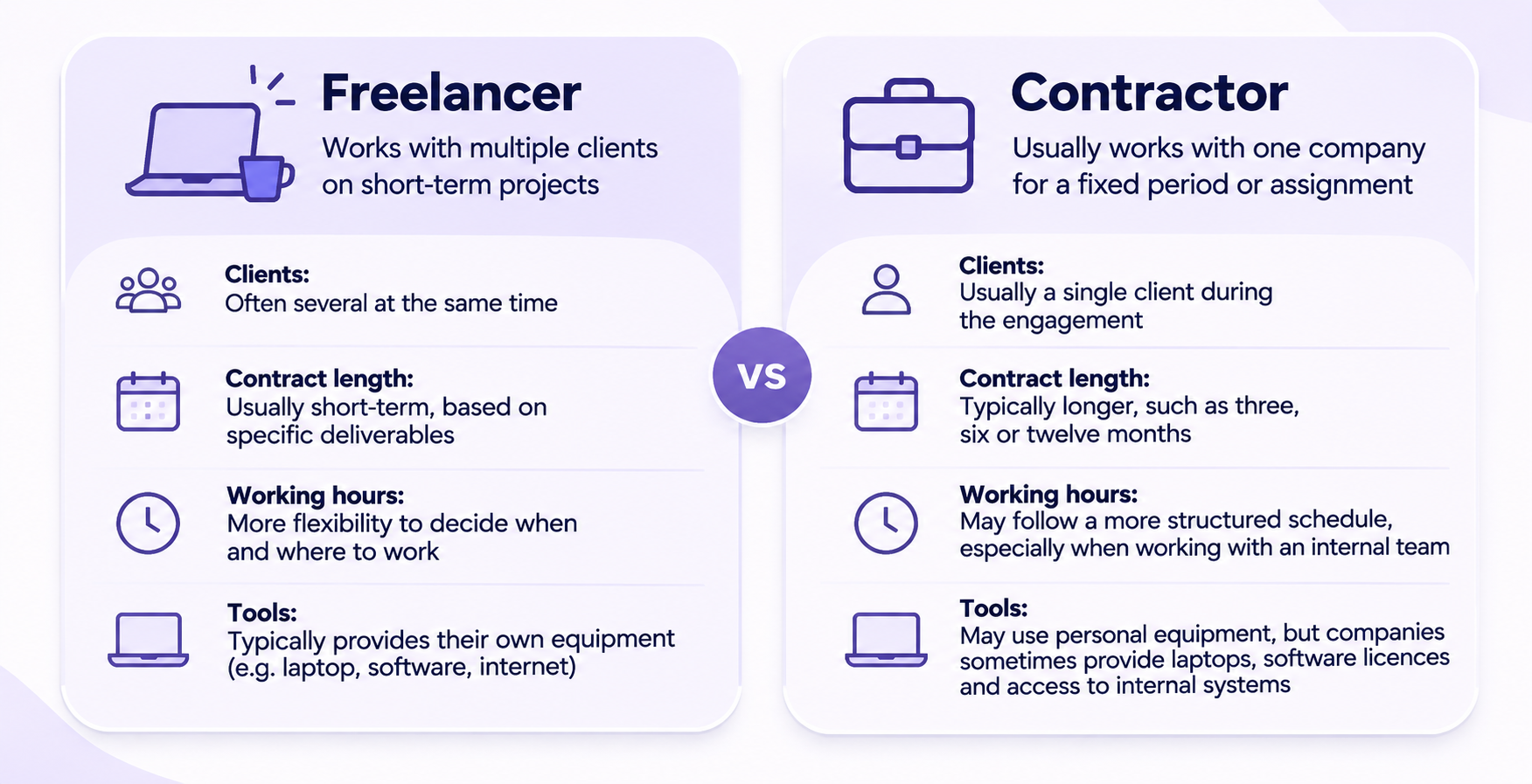
The main difference between a freelancer and a contractor is how they work with clients, how long their engagements last and how much control they have over their daily responsibilities. While both are self-employed and offer services to businesses, their working arrangements are not quite the same. A freelancer typically works with several clients on short-term projects, while a contractor is usually hired by one company for a fixed period or specific assignment.
Here are four important differences to understand:
1. Number of clients
Freelancers often work with several clients at the same time. For example, a freelance graphic designer might create social media designs for three businesses while managing other projects. Contractors, on the other hand, usually dedicate their time to a single client during an agreed-upon engagement, although they can take on additional clients if their contracts permit.
2. Contract length
Freelance projects are often shorter and based on specific deliverables. A client might hire a freelance writer to produce five articles or a designer to create a brand identity. Contractors typically sign agreements covering longer periods, such as three, six or twelve months. Some freelancers also work on ongoing arrangements, including freelance retainer agreements , where clients pay regularly for an agreed amount of work.
3. Control over working hours
Freelancers generally decide when and where they work, provided they meet deadlines. Contractors may have more structured schedules, particularly when working closely with a company's internal team or following its operational hours.
4. Who supplies the tools?
Freelancers typically provide their own laptops, software, internet connection and other equipment. Contractors may also use personal equipment, but companies sometimes provide work laptops, software licences and access to internal systems, depending on the agreement.
How tax works for freelancers and contractors
One thing freelancers and contractors quickly discover is that earning money independently also means taking responsibility for their taxes. Unlike traditional employees, whose employers deduct income tax from their salaries through payroll systems such as PAYE, independent workers generally receive their payments without tax deductions. This means you must calculate what you owe and make the necessary payments yourself.
In the United States, freelancers and contractors are generally treated similarly for federal tax purposes when they operate as self-employed individuals. According to the IRS rules on independent contractors, their tax responsibilities typically involve four important areas:
1. No PAYE-style tax withholding
Clients generally pay your agreed fees without deducting income tax or Social Security and Medicare contributions. You are responsible for reporting your earnings and settling your tax obligations. Unlike salaried employees, you must set aside money from each payment to cover your tax bill and avoid unexpected financial pressure when filing your annual returns.
2. Form 1099-NEC
Businesses may issue Form 1099-NEC to report payments made to independent contractors for services. This document helps the IRS track nonemployee compensation, although you must report all taxable income even if you don't receive one. Generally, businesses use it when they pay an independent worker $600 or more during the tax year for qualifying services.
3. Self-employment tax
Self-employed individuals generally pay both the employer and employee portions of Social Security and Medicare taxes. This is known as self-employment tax and is calculated based on qualifying net earnings, separately from federal income tax.
4. Quarterly estimated tax payments
Because taxes aren't automatically deducted from your earnings, you may need to make estimated tax payments four times a year. This helps you avoid accumulating a large tax bill and potential underpayment penalties when filing your annual return.
Ultimately, whether you freelance or work on contract, understanding your tax obligations helps you price your services properly, manage your earnings and avoid unpleasant surprises during tax season
How pay and rates compare
The way freelancers and contractors earn money often comes down to how they price their services and structure agreements with clients. While freelancers have more freedom to choose how much they charge and how they get paid, contractors typically negotiate an hourly or daily rate for an agreed period. Neither arrangement guarantees a higher income; it depends on the work, experience, client budget and ability to negotiate.
Here are four ways their payment structures differ:
1. Project rates
Freelancers often charge a fixed amount for completing a specific task or deliverable. For example, a freelance writer might charge $300 for five articles, while a graphic designer could charge $500 for a complete brand identity. This arrangement allows experienced freelancers to earn more when they complete projects efficiently without compromising quality.
2. Hourly rates
Both freelancers and contractors can charge by the hour. This model works particularly well when the workload is unpredictable, or the client needs ongoing support. The client pays for the actual hours worked, making it easier to account for additional tasks, revisions and meetings.
3. Day rates on contracts
Contractors frequently negotiate daily rates, particularly when working with companies on longer engagements. Instead of charging for individual deliverables, they receive an agreed amount for each working day. This arrangement can provide more predictable earnings throughout the contract period.
4. Pricing for gaps between contracts
Freelancers must account for periods when they have no paying projects. Time spent pitching clients, marketing their services, handling administration and waiting for new assignments can affect their income. This is why experienced freelancers build these unpaid periods into their rates rather than charging only for hours spent working.
Whether you're freelancing or contracting, having clear payment terms matters. A well-written freelance contract helps establish agreed rates, payment schedules, deliverables and expectations before work begins.
How to get paid by international clients
Working with clients overseas means thinking beyond simply agreeing on a price. You also need a reliable way to invoice clients, receive payments and avoid losing too much money to conversion fees. Start by agreeing on your payment currency, whether USD, GBP or EUR, and include your rates, payment deadlines and preferred payment method on every invoice.
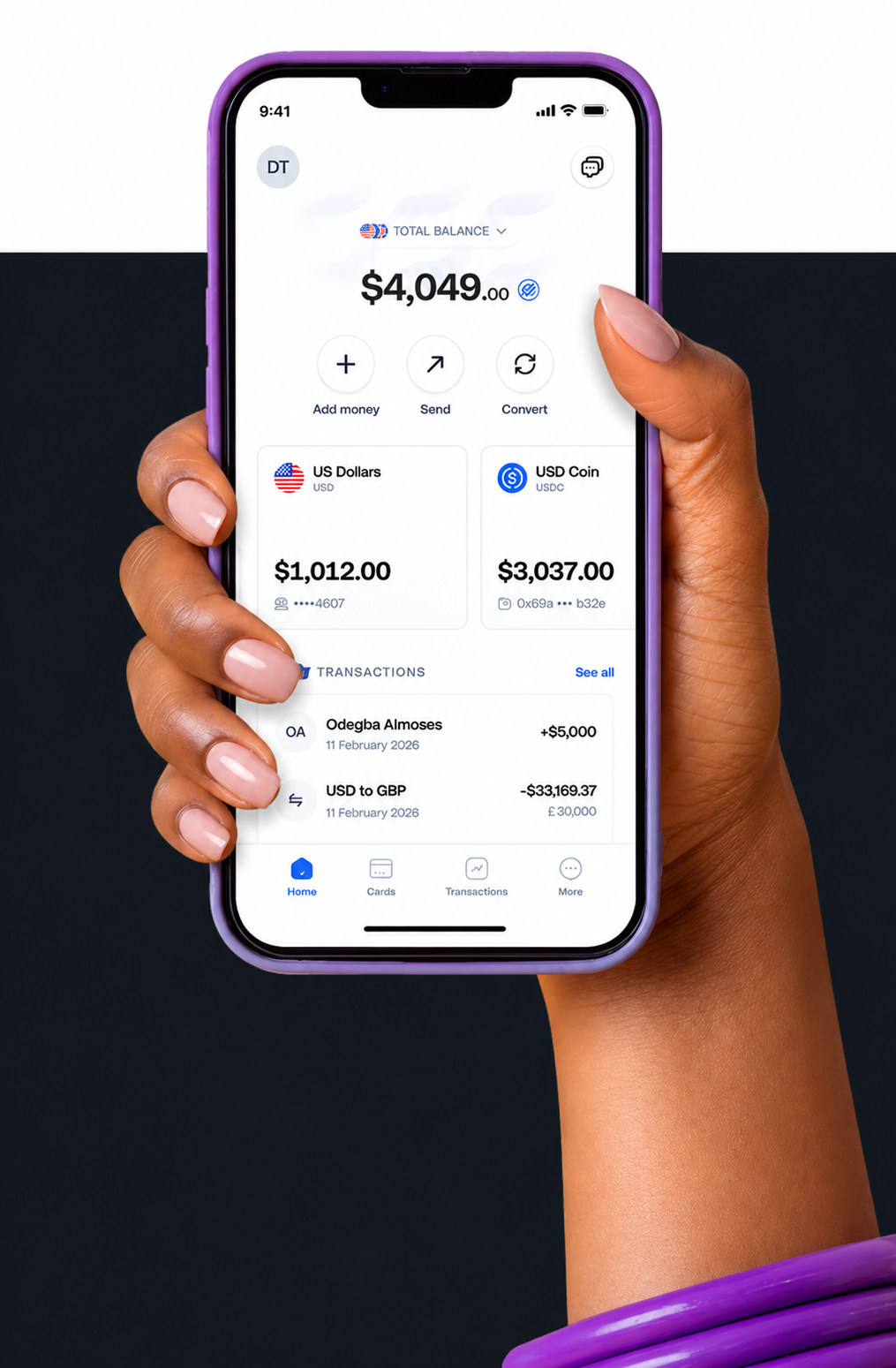
Grey makes receiving international payments easier. You can open a multi-currency account to receive and hold supported currencies without needing a traditional local bank account in your client's country. You can also send an invoice to an overseas client to request payment professionally.
Before converting your earnings, compare exchange rates and fees, as currency spreads can reduce the amount you receive. Also, check transfer processing times so you can plan around payment deadlines and cash flow.
Which model suits you?
Choosing between freelancing and contracting depends on what you want from your career, how comfortable you are with income fluctuations and how much independence you need. Neither option is automatically better; the right choice comes down to your financial priorities, preferred working style and long-term goals.
The table below compares both arrangements across four important factors to help you decide.
The bottom line: Choose freelancing if independence, flexible schedules and working with multiple clients matter most to you. Contracting may suit you better if you prefer longer engagements, structured assignments and more predictable earnings.
Frequently asked questions about freelancers and contractors
1. Is a freelancer the same as an independent contractor?
Not exactly. Both are generally classified as self-employed workers rather than traditional employees. However, freelancers typically work with multiple clients on shorter projects, while independent contractors often take on longer assignments with one company. The distinction is mainly about working arrangements rather than a separate legal employment status.
2. Do freelancers and contractors file the same tax forms?
In the United States, both generally follow self-employment tax rules when operating as independent workers. They may receive Form 1099-NEC from clients reporting their nonemployee compensation and typically report business income and expenses on Schedule C. However, receiving a 1099-NEC is not compulsory for reporting taxable earnings.
3. Can you be a freelancer and a contractor at the same time?
Yes. You can work as a contractor for one company while taking on freelance projects for other clients. For example, a software developer might have a six-month contract with a technology company while building websites for smaller businesses. Just check your main contract for exclusivity, confidentiality and conflict-of-interest clauses.
4. Who earns more, a freelancer or a contractor?
Neither automatically earns more. Contractors may enjoy more predictable earnings through longer engagements and negotiated hourly or daily rates. Freelancers, however, can increase their income by working with multiple clients, specialising in high-demand skills and charging premium project rates. Ultimately, experience, industry, pricing and client demand determine earning potential.
5. Do contractors get benefits?
Independent contractors generally don't receive the same employer-sponsored benefits as permanent employees. This means you're usually responsible for arranging your own health insurance, retirement savings, paid holidays and sick leave. Some clients offer additional benefits through specific agreements, but these aren't guaranteed. Always review your contract before accepting an assignment.
6. How do freelancers get paid by international clients?
Freelancers can receive international payments through platforms like Grey, which makes working with overseas clients easier. With Grey, you can open multi-currency accounts, receive payments in USD, GBP and EUR, and hold funds without needing a traditional bank account in your client's country.