<script type="application/ld+json" data-schema-version="grey-blog-v4"> [{"@context":"https://schema.org","@type":"BlogPosting","@id":"https://grey.co/blog/how-to-receive-and-convert-foreign-currencies-to-usdc-in-lithuania#article","headline":"How to receive and convert foreign currencies to USDC in Lithuania","description":"Discover how freelancers in Lithuania can easily receive and convert foreign currencies to USDC with Grey","inLanguage":"en","url":"https://grey.co/blog/how-to-receive-and-convert-foreign-currencies-to-usdc-in-lithuania","mainEntityOfPage":{"@id":"https://grey.co/blog/how-to-receive-and-convert-foreign-currencies-to-usdc-in-lithuania#webpage"},"datePublished":"2024-11-29T12:15:51.610Z","dateModified":"2026-06-15T17:45:22.594Z","author":{"@type":"Person","@id":"https://grey.co/authors/olayoyin-olorunmota#person","name":"Olayoyin Olorunmota","url":"https://grey.co/authors/olayoyin-olorunmota","jobTitle":"Content Writer","sameAs":["http://www.linkedin.com/in/olayoyinolorunmota","http://x.com/yoyin_michael"]},"publisher":{"@type":"Organization","@id":"https://grey.co/#organization","name":"Grey","url":"https://grey.co","logo":{"@type":"ImageObject","url":"https://cdn.prod.website-files.com/6360022338a81bd6fdbb1145/6564ae1077a67e39d3c491a6_Grey%20Logo%20Lockup%20Black.svg"}},"image":{"@type":"ImageObject","@id":"https://grey.co/blog/how-to-receive-and-convert-foreign-currencies-to-usdc-in-lithuania#primaryimage","url":"https://cdn.prod.website-files.com/636a85d290ee58e70c17e1c0/6a301878ee103d2c91bd31f9_6a301877d61be9a66a7532f1_how-to-receive-and-convert-foreign-currencies-to-usdc-in-lithuania__header-image.webp","contentUrl":"https://cdn.prod.website-files.com/636a85d290ee58e70c17e1c0/6a301878ee103d2c91bd31f9_6a301877d61be9a66a7532f1_how-to-receive-and-convert-foreign-currencies-to-usdc-in-lithuania__header-image.webp","width":1200,"height":675}},{"@context":"https://schema.org","@type":"WebPage","@id":"https://grey.co/blog/how-to-receive-and-convert-foreign-currencies-to-usdc-in-lithuania#webpage","url":"https://grey.co/blog/how-to-receive-and-convert-foreign-currencies-to-usdc-in-lithuania","name":"How to receive and convert foreign currencies to USDC in Lithuania","description":"Discover how freelancers in Lithuania can easily receive and convert foreign currencies to USDC with Grey","inLanguage":"en","primaryImageOfPage":{"@id":"https://grey.co/blog/how-to-receive-and-convert-foreign-currencies-to-usdc-in-lithuania#primaryimage"},"breadcrumb":{"@id":"https://grey.co/blog/how-to-receive-and-convert-foreign-currencies-to-usdc-in-lithuania#breadcrumb"}},{"@context":"https://schema.org","@type":"BreadcrumbList","@id":"https://grey.co/blog/how-to-receive-and-convert-foreign-currencies-to-usdc-in-lithuania#breadcrumb","itemListElement":[{"@type":"ListItem","position":1,"name":"Home","item":"https://grey.co/"},{"@type":"ListItem","position":2,"name":"Blog","item":"https://grey.co/blog"},{"@type":"ListItem","position":3,"name":"How to receive and convert foreign currencies to USDC in Lithuania","item":"https://grey.co/blog/how-to-receive-and-convert-foreign-currencies-to-usdc-in-lithuania"}]}] </script>

How to receive and convert foreign currencies to USDC in Lithuania

Olayoyin Olorunmota

TABLE OF CONTENT

SHARE THIS POST

For freelancers in Lithuania, receiving foreign payments efficiently has become necessary. USD Coin (USDC) offers a stable and practical solution for managing international transactions, and Grey simplifies the process.

Here’s how you can seamlessly receive foreign payments, convert them to USDC, and manage your finances from Lithuania.

Also read: How to receive and convert foreign currencies to USDC

Why convert foreign currencies to USDC as a freelancer in Lithuania?

For freelancers in Lithuania working with international clients, converting foreign currencies to USDC offers several advantages:

  • Stable value: USDC is a stablecoin tied to the U.S. dollar, offering predictable value and avoiding the volatility of other cryptocurrencies.
  • Low fees: Compared to traditional bank transfers, USDC transactions come with significantly lower fees.
  • Quick access to funds: Blockchain technology ensures near-instant processing, so you get paid faster.
  • Flexible currency management: Freelancers can hold USDC until exchange rates are favourable or convert it to euros (EUR) when needed.

Also read: Send instant USDC payouts to 40+ countries with Grey

How to receive and convert foreign currency to USDC

Grey offers a seamless way to receive and convert foreign currencies into USDC. Here's how:

Open the Grey app

Log in to your Grey account via the app or website to securely access your USD and other currency balances.

Select your USD balance

Navigate to the “Accounts” section and select your USD balance to initiate a USDC transfer.

How to receive and convert foreign currencies to USDC in Lithuania

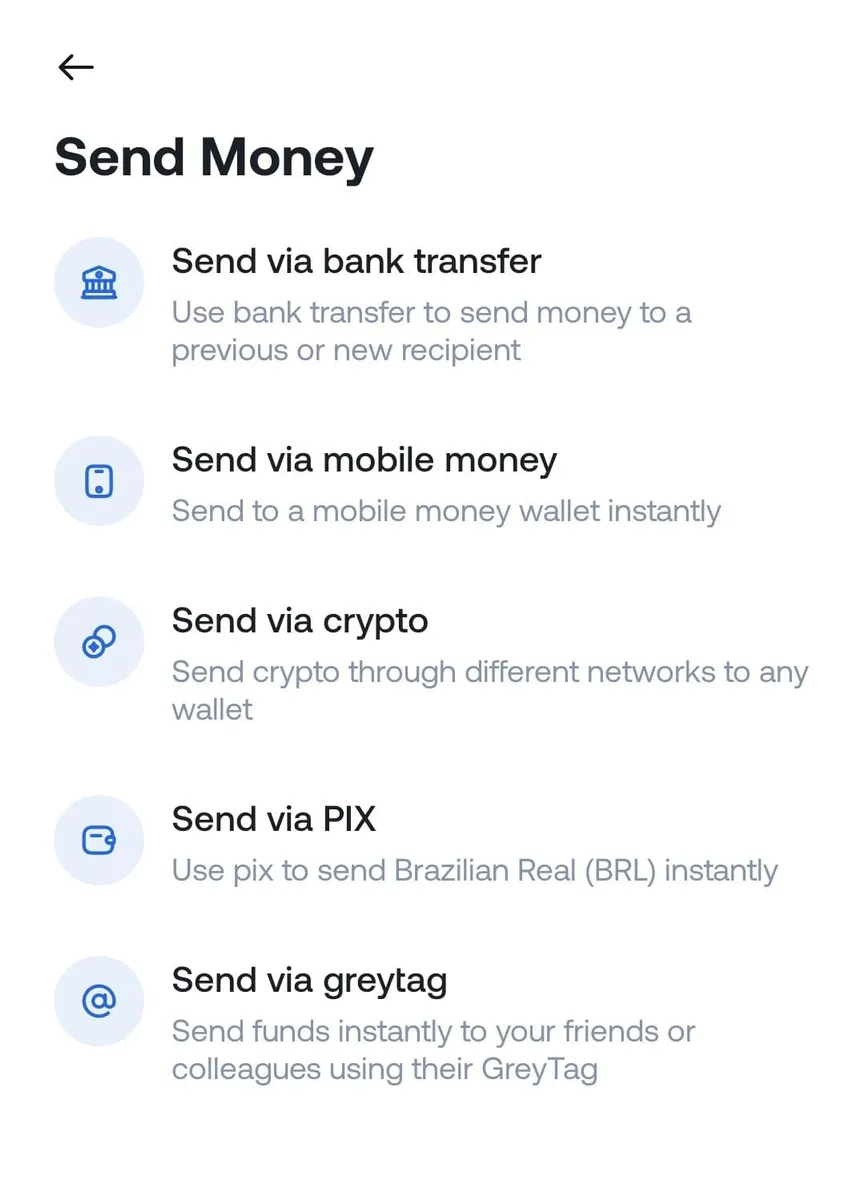
Tap “Send via crypto”

Select “Send money,” then choose “Send via crypto” to begin the process of sending USDC.

How to receive and convert foreign currencies to USDC in Lithuania

Enter transaction details

Carefully input the recipient’s wallet address and choose the correct network (Solana or Binance Smart Chain) to ensure a successful transfer.

receive USDC with Grey

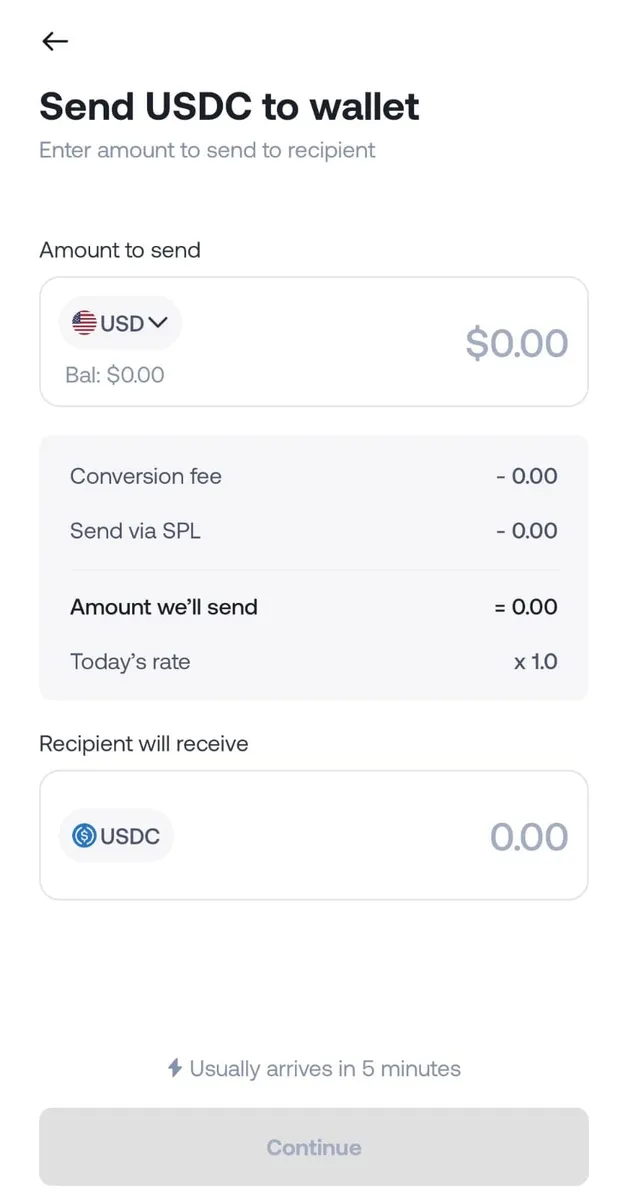
Input the transfer amount and review the details

Enter the amount of USDC to send. Double-check all information, including the wallet address and network, before proceeding.

How to receive and convert foreign currencies to USDC in Lithuania

Confirm and complete the transfer

Once all details are verified, tap “Send” to complete the transaction. Grey will request two-factor authentication (2FA) for added security.

Transaction success

The recipient will receive the USDC shortly after processing. They can hold it, convert it to local currency, or use it for other purposes.

Also read: How to receive and convert foreign currencies to USDC in Togo

How to convert USDC to euros (EUR)

To convert USDC to EUR, use a crypto exchange or local platform supporting USDC-to-EUR transactions. Some exchanges provide direct conversions, while others may require intermediary steps involving USD or BTC.

What are the considerations for freelancers holding and converting USDC?

While holding USDC is convenient, here are a few factors to consider:

  • Network compatibility: Ensure the network used for USDC matches your wallet and the conversion service you use.
  • Fee awareness: Although USDC transactions generally have low fees, network charges can vary.
  • Tax compliance: Cryptocurrency is considered an asset in Lithuania, so consult a local tax advisor to understand your obligations when handling USDC.

Also read: How to receive and convert foreign currencies to USDC in the United Kingdom

Using Grey to simplify USDC management

With Grey, you can send USDC to supported wallets, manage funds with ease, and take advantage of robust security measures like two-factor authentication (2FA).

Create your Grey account today to unlock the full potential of USDC as a freelancer in Lithuania.

‍

Last updated:

October 2, 2026

Open a free Grey account to get startedJoin 1 million digital nomads
IF YOU ENJOYED THIS, CHECK THESE OUT

How to spend globally with the new Grey Virtual Card

•

•

2 min read

What should a truly modern global card feel like?

That question guided every decision behind the new Grey virtual card. We wanted to raise the bar of what your card can do and make everyday spending feel lighter, faster, and more intuitive.

Grey’s new card was designed to simplify global payments, connect directly to your foreign currency balances, enhance security, and seamlessly integrate with Apple Pay and Google Pay.

If your life spans different countries and currencies, this card was built with you in mind.

What makes the new virtual card better

This card was built for the way global citizens actually move, earn, and spend. Here’s what makes it quietly powerful.

Spend directly from your balance

Gone are the days of pausing mid-payment to top up your virtual card.

Your Grey card is automatically connected to your available balances. When you pay, it pulls straight from the right currency, whether that’s USD, EUR, GBP, or NGN. If the funds are there, the payment goes through.

You can book a flight, pay for software, grab lunch abroad, or renew your favourite subscription; your card keeps up without asking you to do extra work.

Add your card to Apple Pay or Google Pay

You can now use Apple Pay and Google Pay (in supported regions) with your Grey Plus Card. That means fast, secure, contactless payments online and in-store, everywhere Visa is accepted.

Tap to pay for groceries.

Tap to board public transport.

Tap to check out online.

Wherever life takes you next, your virtual card is always with you, in your smartphone.

Create multiple spend cards for different needs

You use your money in different ways, so your card should work for all of them.

With Grey, you can create multiple virtual cards for:

Each card can have its own limits and settings, helping you manage your money with clarity and confidence.

Built-in 3D Secure (3DS) protection

With 3D Secure, you’ll be asked to verify transactions yourself, making it much harder for anyone else to use your card without permission. It helps block suspicious activity, prevent fraud, and keep your money protected, all while giving you more control over your payments.

Accepted everywhere Visa works

And of course, the Plus Card is globally accepted, online, on apps, and in physical stores.

You also get access to Visa’s global protections and benefits.

Whether your day involves an airport lounge, an online meeting, or a street market in a city you’re just getting to know, your virtual card is ever ready to complete payments.

Designed with you at the centre

More than anything, this new card reflects how we build at Grey: by listening, improving, and creating tools that match the pace of the world you live in. Your feedback helped shape this upgrade. Your experience guided every decision.

The result is a card that feels lighter, smarter, and more flexible, ready for your next move, whatever and wherever it may be.

Pay from anywhere, in anything

Your new Grey card was made for the kind of days that don’t fit neatly into one country. Maybe you’re earning in dollars this morning, shopping in another currency by lunch, and racing through a couple of airports before dinner. It bends with your plans, slips easily into your routine, and crosses borders as much as you do.

Request your Grey card and enjoy how easy global spending can be.

‍

How international clients usually pay freelancers in Morocco

•

•

2 min read

The life of a Moroccan freelancer. You’ve done the work, sent the invoice, and now you’re waiting for money that might take ages to arrive, shrink because of fees you didn’t expect, or get converted to dirhams at rates that make you wince. That’s the reality for many, but should it?

Morocco’s freelance economy is experiencing rapid growth. More professionals are working remotely for clients in the US, Europe, and beyond, earning in USD, EUR, and GBP. However, Morocco’s strict currency controls and banking system make receiving international payments less straightforward. Understanding how clients typically pay and what each method actually costs you can save you time, money, and frustration.

This article breaks down the most common ways international clients pay Moroccan freelancers, what you need to know about each method, and how to protect your earnings along the way.

Also read: Morocco’s growing appeal for European remote workers

Why payment methods matter

Your payment method determines more than just when money arrives. It affects how much you actually receive, how quickly you can access it, and whether you have control over currency conversion.

Here’s what happens in practice: a client pays you $1,000. Depending on how they send it, you might receive 9,200 MAD one week or 9,100 MAD three weeks later. Such a difference lies in the fees, exchange rates, and the way the payment system operates. For Moroccan freelancers, common pain points include being forced to convert to dirhams at unfavourable rates, experiencing long delays, and having limited access to holding foreign currency. Choosing the proper payment method is crucial because it directly affects your income.

Also read: Top digital nomad hotspots in Morocco for remote workers

Common ways international clients pay freelancers in Morocco

International bank transfers (SWIFT)

Many clients default to bank transfers because it seems straightforward. However, in practice, SWIFT transfers are one of the slowest and most expensive options for Moroccan freelancers.

How SWIFT works: Your client sends USD or EUR to your Moroccan bank account via the SWIFT system. The money passes through intermediary banks before reaching Morocco, where it’s automatically converted to dirhams.

Fees and delays: SWIFT transfers can take anywhere from one to five business days, and sometimes longer. Your client’s bank may charge $25 - $50 for the transfer. Intermediary banks charge an additional $10 - $30. Your Moroccan bank applies its own exchange rate, which is typically two to four per cent worse than the actual market rate. By the time the money reaches you, a $1,000 payment might be worth 9,000 MAD instead of, say, 9,200 MAD.

When SWIFT makes sense: SWIFT works for large payments where percentage-based fees matter less, or if your client insists on using their bank. For smaller, regular payments, SWIFT can be expensive and slow.

PayPal

PayPal is popular with international clients because it’s fast and familiar. For Moroccan freelancers, it’s a complicated matter.

How PayPal works: Clients send money to your PayPal account. You can hold USD, EUR, or GBP in your PayPal balance, but withdrawing to a Moroccan bank account forces conversion to dirhams.

Fees and delays: PayPal charges around 3.9% + a fixed fee per transaction for receiving international payments. When you withdraw funds to your Moroccan bank account, PayPal applies its own exchange rate, which includes a three to four per cent markup above the mid-market rate. Withdrawals take three to five business days.

If a client sends you $1,000, PayPal takes roughly $40 in transaction fees.

When PayPal makes sense: PayPal works well if your client is already using it and speed is more important than cost. It’s not ideal for receiving regular incomes because the fees add up quickly.

Payoneer

Payoneer is widely used by Moroccan freelancers working on platforms like Upwork and Fiverr. It’s more affordable than PayPal but still involves conversion losses.

How Payoneer works: You receive payments into your Payoneer account, which can hold USD, EUR, or GBP. You can spend using a Payoneer card or withdraw to your Moroccan bank account in dirhams.

Fees and delays: Payoneer doesn’t charge receiving fees for most payments. However, withdrawing to your Moroccan bank involves a two to three percent currency conversion fee. Withdrawals typically take 2 - 3 business days.

For a $1,000 payment, you’d lose around $20 - $30 in conversion fees, leaving you with approximately 9,500 - 9,600 MAD.

When Payoneer makes sense: Payoneer is solid for freelancers earning regularly from international clients or platforms. It’s cheaper than PayPal, but you still lose money on conversion.

LDMAG1

Wise

Wise is known for transparent pricing and real exchange rates. It’s one of the better options for Moroccan freelancers.

How Wise works: Clients send money to your Wise account. You can hold USD, EUR, GBP, and other currencies. When you’re ready, you can convert to MAD at the mid-market rate and withdraw funds to your Moroccan bank account.

Fees and delays: Wise charges a small upfront fee (usually 0.5–1% depending on the currency) and converts at the real exchange rate with no hidden markup. Withdrawals to Moroccan banks take one to three business days.

When Wise makes sense: Wise works well if your client is comfortable using the service and you want better rates. It’s transparent and affordable.

Grey

Grey is designed specifically for freelancers and businesses for receiving international payments. It provides virtual EUR and GBP accounts, so clients can pay you directly as if you had local bank accounts in Europe or the UK.

How Grey works: Your client sends money to your Grey EUR or GBP account, and you can hold those funds in the original currency until you’re ready to convert. When you do convert, Grey uses transparent rates without the hidden markups traditional banks apply. You can withdraw funds to your Moroccan bank account quickly, or spend directly with your Grey card.

When Grey makes sense: Grey works exceptionally well for Moroccan freelancers earning regularly from European or international clients. Unlike other methods, which force immediate conversion or charge high fees, Grey gives you multi-currency accounts with control over your money. You’re not locked into poor conversion timing, and clients find it easier to pay you since they’re sending EUR or GBP to what looks like a local European account. It’s particularly valuable if you work with multiple clients across different countries, one system handles everything efficiently.

Freelance platforms (Upwork, Fiverr, etc.)

If you’re working through platforms like Upwork or Fiverr, the platform handles payments. Clients pay the platform, and you withdraw earnings through the platform’s supported methods.

How it works: Platforms hold your earnings until you request a withdrawal. You can usually withdraw via PayPal, Payoneer, bank transfer, or sometimes Wise.

Fees and delays: Platforms take their cut first. Upwork charges 5 - 20% depending on your earnings with a client; Fiverr takes 20%. After that, you pay withdrawal fees depending on your chosen method. Total costs can be significant.

When it makes sense: Platforms offer security and consistent work, but they’re expensive. The platform fee plus withdrawal fees can cost 25 - 30% of your earnings. They’re best for building your portfolio or finding steady clients, not necessarily maximising income long-term.

Also read: Highest-paying remote jobs for professionals in Morocco

Common challenges Moroccan freelancers face

Moroccan freelancers deal with challenges that most international freelancers don’t think about.

Forced conversion to dirhams: Morocco’s currency regulations mean you can’t easily hold USD, EUR, or GBP in local bank accounts. Most payment methods require immediate conversion, which means you lose control over timing and rates.

High FX margins and hidden fees: Banks and payment providers apply their own exchange rates, which are almost always worse than the real rate. A two to four per cent markup doesn’t sound like much, but if you’re earning $2,000 per month, that’s $40 - $80 lost every month, nearly $1,000 per year.

Slow settlement times: Waiting long periods for a bank transfer to clear is common. For freelancers managing cash flow, delays create unnecessary stress.

Managing multiple payment tools: Different clients prefer different methods. You end up juggling PayPal for one client, Payoneer for another, and bank transfers for a third. It’s messy, and each tool has its own fees.

What freelancers should look for in a payment solution

The right payment tool should make your life easier, not harder. Here’s what matters:

Ability to receive and hold foreign currencies: Holding USD, EUR, or GBP gives you control. You can convert when rates are favourable, not when a bank forces you to.

Transparent fees: Hidden charges and poor exchange rates eat into your income. Look for tools that show exactly what you’re paying upfront.

Speed and reliability: Waiting weeks for payments disrupts cash flow. Faster transfers mean you can plan more effectively and manage expenses with less stress.

Control over conversions: If you’re forced to convert immediately, you lose flexibility. The best tools let you decide when to convert and at what rate.

A simpler way to receive international payments

Grey helps freelancers and businesses receive payments from abroad. It provides you with EUR and GBP accounts, allowing international clients to pay you directly without the complications associated with traditional banks.

Here’s how it works: your client sends money to your Grey account in their currency. You hold those funds until you’re ready to convert, and when you do, you get transparent rates without hidden markups. You can withdraw to your Moroccan bank account quickly, or spend using a Grey card.

Grey isn’t a freelance platform; it’s a payment solution that works alongside however you find clients. Grey helps you receive, hold, and manage foreign currency without losing money at every step.

Take the next step today

Moroccan freelancers are part of the global workforce, and you deserve payment tools that respect that. Understanding how international clients typically pay and what each method actually costs puts you in control. Whether you use PayPal, Payoneer, Wise, or something else, choose tools that protect your earnings and save you time.

Open your free Grey account today or download the Grey app and start receiving international payments with better rates, faster transfers, and complete transparency because the money you earn should actually reach you.

‍

What successful remote workers do differently

•

•

2 min read

I don’t think I have to quote him verbatim, but Albert Einstein denounced doing the same thing over and over again and expecting a different result. While it might be competitive, remote work presents you with limitless opportunities to land international gigs. In reality, the people who succeed at remote work approach it very differently from those who struggle or burn out. It is not a mere coincidence or sheer luck. Their success strategy goes beyond tools and skills, but is more about habits, mindset, and systems. Here’s what successful remote workers consistently do differently.

Also read: How global work culture is changing the way we live and earn

They treat remote work as a career

While remote work might look simple on the outside, promising flexible hours and the freedom to work from anywhere, it is still a career. Successful remote workers don’t see remote work as a convenient work-life option. They treat it as a real career choice that requires structure, planning, discipline, and sustainable growth. They invest in their skills, track their performance, and strive for improvement. This mindset helps them make better decisions, hone their craft, and negotiate better.

They build systems

To be honest, it is easy to get comfortable when you are working from home. You might start waiting for motivation to work, or get carried away by distractions. Successful remote workers don’t move this way. They are committed to building sustainable systems and work structures that support productivity. Daily routines, defined work hours, clear task management processes, and communication rules are key to succeeding as a remote worker.

They ensure clear communication

Strong communication is very relevant when working in the digital workspace. You are collaborating with people from different cultures, across borders, with varying expectations, and in different time zones. Successful remote workers have mastered the art of communication. They clarify expectations early and provide regular updates without being asked. By communicating clearly and consistently, they build trust with managers, clients, and teammates across time zones.

They manage their energy

Remote work can blur the line between work and life. Paying attention to your energy levels can be key to ensuring productivity. Successful remote workers schedule tough tasks for when they are still fresh and alert. Fill the remaining time with breaks, sleep, and leisure activities. This structure prevents burnout, especially when working across multiple time zones.

LDMAG1

They take control of their finances

Unlike traditional employees, remote work puts you in charge of your finances, especially if you are earning a foreign income. Many remote workers lack a reliable payment setup and miss out on global opportunities. The secret to successful remote work is learning to manage finances more effectively with multicurrency accounts. With this setup, they streamline their finances, cut down on transaction fees, and convert to local currencies when the rates are favourable.

They are intentional about location

That remote work gives you the freedom to work from anywhere doesn’t mean you can work from everywhere. It is easy to fantasise about being nomadic and moving around with work. If this isn't well planned, you might end up in a location that doesn’t favour remote work. This is what successful remote workers do differently. They choose locations with robust digital infrastructure, strong internet coverage, budget-friendly living costs, favourable time zones, and budding communities that support productivity. They can go as far as trying out locations on a short-term basis before committing to a long-term one.

Also read: What remote workers should plan before relocating

They understand the importance of networking

Working remotely does not mean working in isolation. A lot goes on behind the scenes, and only those who are privy to such information can plug in. Successful remote workers actively build relationships online and offline. They participate in professional communities, attend virtual or in-person events, use their platforms to promote their work, and strive for visibility within their spaces. These lead to referrals, collaborations, and more opportunities that are difficult to access through job boards alone.

Managing your finances like a smart remote worker

Whether you think your remote work journey isn’t looking great or you haven’t even started, it is usually a good idea to learn from successful remote workers. The difference between struggling remote workers and successful ones is not often about talent. Successful remote workers are intentional about every aspect of their work, including how they manage their finances. Many opt for Grey because the payment platform offers USD, GBP, and EUR accounts, making international transactions easy to manage. With Grey, you get more than low fees and competitive exchange rates, but also automated invoicing and a virtual USD debit card to manage your international spending. You can link your Grey account with global freelancing platforms to withdraw your earnings swiftly.

Sign up on Grey and download the app and join the clique of successful remote workers who manage their earnings efficiently.

‍

Valentine’s Day trips that work for remote couples

•

•

2 min read

I hear all the time that love is a beautiful thing, and I can’t wait to experience mine, because we all deserve moments that feel magical. Love isn’t just about feelings; it’s about the little experiences that make life sweeter, deeper, and unforgettable.

Valentine’s is here, and for couples working remotely, it’s the perfect excuse to step outside the home and create memories together. Think of Jack and Rose aboard the Titanic, their fleeting but unforgettable love reminds us how powerful shared moments can be. While New York was their destination, it’s far from the only place lovers can write their own story. There are countless stunning destinations waiting for you, where every moment is made for romance.

Napa Valley, California

If you’re a couple that loves staying close, hands always linked, shoulders brushing, living in your own little world, Napa Valley feels made for you. It’s the kind of place where it’s just you and your lover, moving slowly through vineyards, sharing quiet moments over wine, and sitting close at dinner while the rest of the room fades away. Everything about Napa encourages closeness, intimacy, and unhurried romance. For couples who like to hold on, linger, and make everyone else a little jealous without trying, this is the place

__wf_reserved_inherit

Riviera Nayarit, Mexico

For couples who grew up watching soap operas, Mexico naturally feels like home, there’s always a love story unfolding. Riviera Nayarit captures that romance perfectly, with quiet beaches, private villas, and intimate escapes made for two. Days move slowly here, filled with shared sunsets, soft laughter, and moments where it feels like just you and your partner. With getaway packages starting from $320, it’s the kind of place that turns simple affection into a full love story and unforgettable Valentine’s memories.

__wf_reserved_inherit

British Virgin Islands

Remember Pride and Prejudice and the love story between Elizabeth and Mr. Fitzwilliam Darcy? That quiet, slow kind of romance is exactly why the British Virgin Islands feel right. Here, you’ll spend your days walking barefoot on soft sand, swimming in clear blue waters, and stealing moments in hidden coves where it’s just the two of you. You’ll snorkel, sail into golden sunsets, and lie under palm trees doing absolutely nothing together. Also, this Valentine’s feels like the perfect time to watch Pride and Prejudice side by side again. Trust us, it’s definitely worth it.

__wf_reserved_inherit

La Paz, Mexico

La Paz is quietly magical, a place where couples can lose themselves in each other. Picture walking along soft, golden beaches as the sun dips into the Sea of Cortez. Colourful streets invite you to explore hand in hand, and candlelit dinners by the water feel effortlessly romantic. Calm, intimate, and unforgettable, this escape is perfect for falling in love all over again. Packages for a 2–3 day trip start at around $600, making it a dreamy yet attainable Valentine’s getaway.

__wf_reserved_inherit

St. James, Barbados

St. James is pure Caribbean romance. Imagine soft sand under your feet, turquoise waves lapping gently, and a sunset painting the sky pink and gold. Sip rum cocktails by the shore, wander along hidden coves, and let the rhythm of the ocean steal your breath. Every moment here feels like a love story waiting to happen, the kind you’ll remember long after Valentine’s is over.

__wf_reserved_inherit

Chassignolles, France

Hidden east of Clermont-Ferrand, Chassignolles is a quiet escape from the world. Rolling hills, winding country lanes, and cozy cottages invite you to slow down and just be with each other. Walk hand in hand through vineyards, share long, unhurried dinners, and let the peace of the countryside wrap around you. Your partner won’t look at you the same way again, you’ll leave locked in each other’s hearts and closer than ever.

__wf_reserved_inherit

‍

Kaya Mawa Lodge, Malawi

Kaya Mawa is called Love Island for a reason. Secluded villas, sparkling waters, and golden sunsets create an irresistible romantic vibe. Spend days exploring the beaches, evenings sharing laughter over candlelit dinners, and nights watching stars from your private retreat. Every glance and touch feels electric, and you’ll return home with your hearts intertwined, carrying memories that will keep your love strong long after the trip.

__wf_reserved_inherit

What to keep in mind before your couples trip

Before you pack your bags for a Valentine’s escape, there are a few things to think about. A little planning ensures your trip is romantic, smooth, and stress-free.

Cost

Romance doesn’t have to break the bank. Look at your budget carefully so you don’t spend all your savings. Choose packages or destinations that give value, letting you enjoy every moment without worrying about money.

Security

Even in paradise, safety matters. Check reviews, ask for recommendations, and make sure your accommodations are trustworthy. Feeling secure lets you focus on your partner and the moments that truly matter.

Internet

Staying connected can be helpful, even on a romantic getaway. A little work or sharing memories online shouldn’t intrude on your time together. Make sure the spot has reliable internet while still letting you disconnect for quality couple moments.

Couples deals

Some destinations offer special couples deals or Valentine’s packages. These can save money, secure your spot quickly, and add extra perks like romantic dinners or activities, making it easier to focus on each other rather than planning stress.

Travel essentials

Don’t forget the little things that make a trip smoother: passports, chargers, medications, and comfortable shoes. Being prepared helps you relax fully, so every walk, sunset, or beach moment is purely about enjoying your Valentine’s together.

LDMAG1

A smarter way to enjoy your Valentine's trip

A couples’ getaway is the perfect way to reignite the spark and make your love feel even stronger. Even if you spend most of your days at home working remotely, stepping away together can create memories you’ll treasure. While planning your trip, Grey makes it easy to handle global payments, shop for your partner and enjoy secure, fast transfers at great conversion rates. Sign up on the website or download the app, and make this Valentine's one to remember.

‍

How creators earn from global audiences in 2026

•

•

2 min read

Some years ago, most creators focused on building audiences in their own countries. In 2026, that strategy feels outdated. The most successful creators today earn from audiences scattered across continents. Viewers in Lagos are watching content made in London, subscribers in New York are supporting creators based in Berlin, and brand deals are flowing from Singapore to São Paulo. Everything is global now.

The new creator economy has changed how people build sustainable creative careers. Geography still matters, but in a different way. Where your audience lives now determines how much you earn, which currencies you collect, and how efficiently you can access your money. Understanding these dynamics separates creators who thrive from those who struggle despite growing followings.

Why global audiences matter more than ever in 2026

Global audiences unlock earning potential that local audiences alone can’t match. A creator with 100,000 followers in the UK might earn differently from someone with the same following split between the US, Canada, Australia, and the UAE. The value of the audience matters more than the volume. I’ll explain.

Platforms pay creators based on where viewers live. Ad revenue from viewers in high-GDP countries typically pays more than from viewers in lower-GDP regions. Brand deals follow similar patterns, with companies in certain markets willing to pay significantly more for creator partnerships. Subscription platforms like Patreon or YouTube memberships charge differently by region, affecting how much creators actually receive per subscriber.

In 2026, smart creators analyse where those followers live and how that geography translates into income. A deliberately global audience strategy can double or triple earnings compared to focusing on a single market.

The main ways creators earn from global audiences

In 2026, creators monetise through multiple streams, and the most successful creators diversify rather than rely on a single source.

Ad revenue

This remains foundational for video creators. YouTube, TikTok, and other platforms share ad revenue based on views, but the payouts vary dramatically by viewer location. A thousand views from viewers in the United States typically generate more revenue than the same views from viewers in India or Brazil. Creators building global audiences must quickly learn which regions drive the highest CPMs (cost per mille, or revenue per thousand views).

Brand partnerships and sponsorships

This is also another very viable way to earn. A creator based in South Africa might work with brands headquartered in Germany, the UK, or Singapore. These deals often pay in USD, EUR, or GBP, regardless of the creator’s location, creating both opportunities and sometimes complexities in payment collection.

Affiliate marketing

This works globally but converts differently across regions. Products with international appeal, like software subscriptions, digital courses, and fashion, perform well with diverse audiences. Creators earn commissions when audiences purchase, and those commissions typically flow in the currency of the affiliate platform or merchant.

Subscriptions and memberships

The most common methods are through Patreon, YouTube, Substack, or other creator-owned platforms that generate recurring income. These platforms often handle multi-currency pricing, but creators still need to manage receiving payments in various currencies and converting them efficiently.

Digital products and courses

You can create a course in Nigeria and sell it to students in Canada, Australia, and the UAE simultaneously. Payment processors handle transactions in local currencies, but creators receive payouts in whichever currencies their payment setup supports.

Live gifting and tipping

On platforms like TikTok Live and Twitch, gifting has become a significant revenue stream. Audiences send virtual gifts during live streams, which convert to real money. The value of those gifts and the payout structures vary by platform and region.

How platforms pay creators differently by country

Not all views, clicks, or engagements are worth the same. Platforms calculate creator payouts based on advertiser demand in each region, and that demand fluctuates significantly.

Ad revenue from viewers in the United States, Canada, the UK, Australia, and parts of Western Europe typically pays the highest CPMs. Viewers in these regions see more ads, those ads cost more, and platforms share higher percentages with creators. A creator whose audience skews heavily toward these markets earns more per view than someone with identical content, but whose audience is concentrated in regions with lower advertiser spending.

Platform bonuses and creator funds also vary by location. Some platforms offer incentive programmes only in certain countries, or pay different amounts depending on the creator's location. A creator in Kenya and a creator in the UK producing similar content might qualify for different bonus structures simply based on geography.

This doesn’t mean creators outside high-CPM regions can’t succeed; it means they need larger audiences or stronger monetisation strategies beyond ad revenue to reach similar income levels.

The role of currency and exchange rates in creator earnings

Currency matters more than most creators realise until they start earning internationally. Many brand deals, affiliate programmes, and platform payouts happen in USD, EUR, or GBP. If you live outside those currency zones, you’re constantly converting money and losing a percentage each time unless you’ve set up efficient payment systems.

Exchange rates fluctuate daily. A brand deal worth $5,000 might convert to different amounts in your local currency depending on when you receive payment and how you convert it. Creators earning consistently in foreign currencies face a choice: convert immediately and accept whatever rate applies that day, or hold funds in foreign currency and convert strategically when rates improve.

Traditional banks typically offer poor exchange rates, often 3 - 5% worse than mid-market rates. Over time, this adds up. A creator earning $60,000 annually could lose $1,800–$3,000 in currency conversion fees if they're not paying attention.

LDMAG1

How smart creators receive global payments

The payment infrastructure you choose directly impacts how much money you actually keep. Many creators lose parts of their earnings to unnecessary fees, poor exchange rates, and inefficient transfer methods simply because they haven’t optimised how they collect income.

PayPal is ubiquitous but expensive for international creators. It charges transaction fees, applies unfavourable exchange rates, and withdrawal fees vary by country. A creator receiving $1,000 might see $920-$940 after PayPal’s various fees.

Stripe and similar payment processors work well for selling products or services, but still involve conversion fees and withdrawal costs for non-US creators.

Direct bank transfers via SWIFT are slow and expensive. International wires can take a week, and you spend a lot on combined fees from sending and receiving banks, plus poor exchange rates.

Payoneer is popular among creators working with international platforms. It offers multi-currency receiving accounts and reasonable fees, though conversion costs still apply.

Wise offers transparent exchange rates and multi-currency accounts, making it a strong choice for creators managing income across multiple currencies.

Grey is designed specifically for people earning internationally. You can create USD, EUR, and GBP accounts, allowing brands and platforms to pay directly without the complications of international transfers. You can hold funds in the original currency and convert only when you choose, at transparent rates. This matters when you’re managing income from multiple countries and want control over timing and conversion costs.

How creators can grow and monetise international audiences

Building a global audience starts with understanding platform algorithms that favour certain content types and specific regions. Creators who want international reach produce content with broad appeal and are less reliant on hyper-local references, available in widely spoken languages, or subtitled for accessibility.

Monetisation follows audience development. As your international audience grows, explore revenue streams that work across borders: digital products, memberships, affiliate partnerships with global brands, and sponsorships from companies targeting multiple markets.

Engage directly with your global community. Time zone differences mean some of your audience is always awake. Creators who interact across time zones build stronger international communities, which translates to better retention and higher lifetime value per follower.

What’s next for global creator earnings

The creator economy will continue globalising. Platforms are expanding creator programmes into more countries, payment infrastructure is improving, and brands increasingly view creators as global marketing channels rather than local influencers.

Expect more tools designed specifically for cross-border creator income, better multi-currency accounts, streamlined tax handling for international earnings, and platforms that simplify receiving money from anywhere. Creators who understand these systems early will have significant advantages.

Currency volatility, regulation changes, and platform policy shifts will create ongoing challenges. Still, the fundamental trend is clear: creators who think globally and build systems to manage international income will outperform those who don’t.

The world is now a creator’s marketplace

Geography used to limit creative careers. In 2026, it defines opportunity. Where your audience lives, which currencies you earn, and how efficiently you collect income directly impact your success as a creator.

The creators thriving today aren’t necessarily the most talented; they’re the ones who understand the business infrastructure behind global audiences. They’ve optimised how they receive payments, minimised fees and exchange-rate losses, and built systems that scale as their audiences grow.

If you’re earning from multiple countries, managing several currencies, or frustrated by how much money disappears between brands paying you and money reaching your account, your payment infrastructure needs attention. Grey helps creators receive, hold, and manage international payments in USD, EUR, and GBP, with accounts that work like local accounts for your global income. Open your free account or download the app and keep more of what you earn.

‍

The best regions in the world for a first-time digital nomad

•

•

2 min read

Venturing into digital nomadism remains a fantasy for many remote workers seeking to balance work and fun because they don’t know where to start. To be fair, it is like diving into a pool without knowing the depth. Oh well, it isn’t exactly like that because we can help you start safely and set you up for an amazing life of balancing work and adventure.

If you are considering a digital nomad experience for the first time, then choosing the right destination goes a long way in determining if you will continue as a digital nomad or run back to your home country after a few weeks. Your choice should go beyond calm beaches and picture-esque architecture, but also include community and infrastructure.

Also read: Beyond the basics: Smart ways to grow as a digital nomad

Choosing the best regions in the world for first-time digital nomads

Before we show you the best regions in the world for first-time digital nomads, here are some factors you should consider.

  • Infrastructure and internet: Prioritise regions with reliable internet coverage, stable electricity, and co-working spaces or remote work-friendly cafes.
  • Living costs: Choose destinations that offer a good return on your money. Many popular digital nomad destinations are, frankly, overpriced for the experience they offer. In reality, there are a number of less popular, affordable, high-quality destinations with more promising first-time digital nomad experience while maximising your budget.
  • Safety: Review the travel advisory and choose destinations with low crime rates, decent health care, and a visitor-friendly space.
  • Visa: Look for countries with dedicated digital nomad visas or easy, long-term tourist extensions.
  • Community: Choose regions with thriving digital nomad and expat communities for networking and avoiding loneliness.

Also read: Digital nomad visas: Which countries are easiest to move to now?

The best regions in the world for first-time digital nomads

Now that you know what we are looking for, here is a list of regions that fit the profile for first-time digital nomads.

Southeast Asia

If Southeast Asia isn’t on your radar, we might need to talk. The region offers low living costs, warm people, rich culture, and solid digital infrastructure. Beyond the cultural experience and adventures, SEA has some of the most aesthetically pleasing places on earth, making it the typical digital nomad starter pack. You also get to network with a rich digital nomad and expat community. Popular destinations in the region include Chiang Mai, Bali (Ubud/Canggu), Ho Chi Minh City and Bangkok.

Eastern Europe

Cities in Eastern Europe are fast becoming a favourite destination for first-time nomads who are avoiding the living costs in bigger Western European cities. Countries such as Poland (Kraków, Warsaw), Romania (Bucharest), Bulgaria (Bansko), and Georgia (Tbilisi, Batumi) offer a European feel at a lower cost. You basically get a visitor-friendly destination, solid infrastructure, and reliable internet coverage at a fraction of the cost. Romania and Bulgaria offer specific, renewable digital nomad visas with income requirements, while Georgia provides an exceptionally generous 1-year visa-free stay for visitors from over 90 countries.

Latin America

The LatAm region has seen a growing number of digital nomads in recent years, with many favouring Buenos Aires, Mexico City, Medellín, and Montevideo. While they are less popular, other fascinating digital nomad cities include Florianópolis (Brazil), Lima (Peru), and Antigua (Guatemala). These cities offer good internet, vibrant culture, and a low cost of living. You can live comfortably under $1,000 per month. These cities also have many co-working stations and a budding community of digital nomads, remote workers, and expats.

LDMAG1

Southern Europe

Southern Europe is a top, beginner-friendly choice for digital nomads seeking warmth, a great lifestyle, and strong internet infrastructure. Portugal, Spain, and Albania offer digital nomad visas or long-term residence permits. Spain even has a 3-year residence permit for digital nomads. The region has an excellent time zone overlap with the US, Africa, and the rest of Europe, making it a choice destination when working with international clients or an intercontinental team.

North Africa

North African countries like Morocco (Marrakech, Casablanca, Rabat, Tangier), Tunisia, and Egypt (Dahab, Cairo, Alexandria) are now attracting remote workers seeking to stay close to Europe without its high living costs. North Africa is where Africa, Europe, and the Arab world meet. This gives you a cross-cultural experience and so much to explore while you work.

Managing your finances while you travel

We know we have told you to look out for living costs, digital infrastructure safety, visa, and community when choosing your first destination as a digital nomad. One more consideration for you is a reliable payment solution to simplify your finances while travelling.

Digital nomads opt for Grey because the platform offers multi-currency accounts supporting USD, EUR, and GBP transactions. This makes it easy to receive payments wherever you go and withdraw to local bank accounts at the best exchange rates. Grey generally offers low transaction and conversion fees, helping you maximise your earnings. If you use freelancing platforms, you can also add your account details for swift payout. Grey’s virtual USD debit card offers more financial freedom to shop on digital marketplaces, pay for subscriptions, and travel expenses, such as flights and accommodation.

Get started with Grey today or download the app and explore the world without payment worries.

‍

Arrow (up)

Back to top