
How to send money from the US to Africa in 2026

Priscila Marotti

TABLE OF CONTENT

SHARE THIS POST

Africa receives more remittances from the United States than from any other single country. Nigerian Americans, Ghanaian Americans, Kenyan Americans, Ethiopian Americans, and communities from across the continent send billions of dollars home every year to support families, pay school fees, cover medical costs, and invest in property.

The challenge has always been cost. The World Bank has consistently found that sub-Saharan Africa is the most expensive region in the world to send money to, with average fees exceeding 7% of the transfer amount. Part of that cost is structural: many African recipients rely on mobile money or cash pickup rather than bank accounts, and some corridors require multiple intermediaries to complete a transfer.

A new generation of transfer apps has dramatically reduced fees across most US-to-Africa corridors. This guide covers how to send money from the US to Africa in 2026, what each major destination costs, how long transfers take, and which apps work best for different African countries.

What it costs and how long it takes, country by country

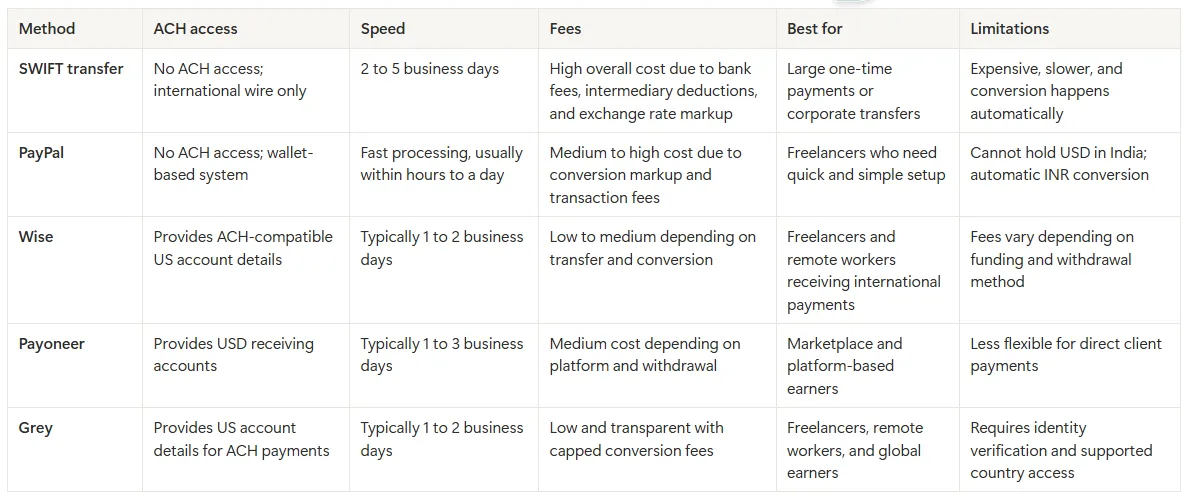
The table below covers the most common US-to-Africa corridors on Grey. Fees shown are Grey's payout fees per transaction, on top of the standard 1% conversion fee (capped at the equivalent of $6 on major currency pairs).

Destination Delivery method Payout fee Speed Total cost on $500
Kenya M-Pesa (Safaricom, Airtel) $0.50 Instant $5.50
Kenya Bank transfer $0.65 Instant $5.65
Nigeria Bank transfer NGN 35 flat Same day / next day ~$5.02
Ghana Mobile money (MTN) $1.00 Same day $6.00
Ghana Bank transfer $1.20 Same day $6.20
South Africa Bank transfer $1.80 1-2 business days $6.80
Egypt Bank transfer $1.70 T+1 (before 1 PM GMT, Sun-Thu) $6.70
Egypt Mobile money $1.70 Same day $6.70
Morocco Bank transfer $2.00 Instant (before 1 PM GMT) $7.00
Algeria Mobile money (Ooredoo, Mobilis, Djezzy) $2.50 Same day $7.50
Algeria Bank transfer $2.50 5 business days $7.50
Tanzania Bank transfer $1.50 Same day $6.50
Uganda Bank transfer $1.50 Same day $6.50
Cameroon Bank/mobile $2.00 Same day $7.00
Senegal Bank transfer $2.00 Same day $7.00
Ethiopia Bank transfer $1.80 1-2 business days $6.80

Total cost on $500 = $5 conversion fee (1% of $500) + payout fee. On transfers above $600, the conversion fee is capped at the equivalent of $6, so the total cost grows only by the payout fee. Grey fee data from support.grey.co, September 2026.

A few patterns stand out. East African corridors (Kenya, Tanzania, Uganda) are the cheapest and fastest, with instant M-Pesa delivery to Kenya at just $0.50 per transfer. North African corridors (Egypt, Morocco, Algeria) carry slightly higher payout fees and, in Algeria's case, longer bank settlement times. West African corridors (Ghana, Nigeria, Senegal, Cameroon) fall in between.

On transfers above $600, the conversion fee caps at the equivalent of $6 regardless of the amount. That means a $2,000 transfer to Kenya via M-Pesa costs $6.50 total ($6 conversion + $0.50 payout), not the $20 to $40 you might pay through a bank wire or a percentage-based app.

Mobile money or bank transfer: How African recipients prefer to get paid

One of the biggest differences between sending money to Africa and sending to Europe or Asia is how recipients access their funds. In much of Africa, mobile money is more widely used than traditional bank accounts.

Kenya is the most mobile-money-dominant market in the world. Over 30 million Kenyans use M-Pesa daily for everything from groceries to rent. If you are sending to Kenya, M-Pesa is almost always the right choice. It is cheaper ($0.50 versus $0.65 for bank transfer), equally fast (instant), and more convenient for your recipient. Send money from the US to Kenya.

Ghana has strong mobile money adoption through MTN Mobile Money. Grey supports mobile money delivery to Ghana at $1.00 per transfer, compared to $1.20 for a bank transfer. Both arrive on the same day. Send money from the US to Ghana.

Nigeria is primarily bank-transfer-based. Mobile money adoption is growing with platforms like OPay, but most Nigerians still receive international transfers into their bank accounts. Grey delivers to all major Nigerian banks.

Egypt supports both bank transfer and mobile money. Bank transfers settle in one business day (processed before 1 PM GMT, Sunday to Thursday). Mobile money arrives the same day.

South Africa is bank-transfer only on Grey. Transfers arrive within 1 to 2 business days.

Algeria is the exception to speed. Bank transfers take five business days due to settlement infrastructure constraints in the Algerian banking system. Mobile money via Ooredoo, Mobilis, or Djezzy is same-day. If your recipient can use mobile money, choose that option to avoid the five-day wait.

Which app is best for sending money from the US to Africa

Several apps serve the US-to-Africa corridors well, but their strengths differ by country and delivery method.

How to send money from the US to Africa with Grey

The process is the same regardless of which African country you are sending to. Here is how it works.

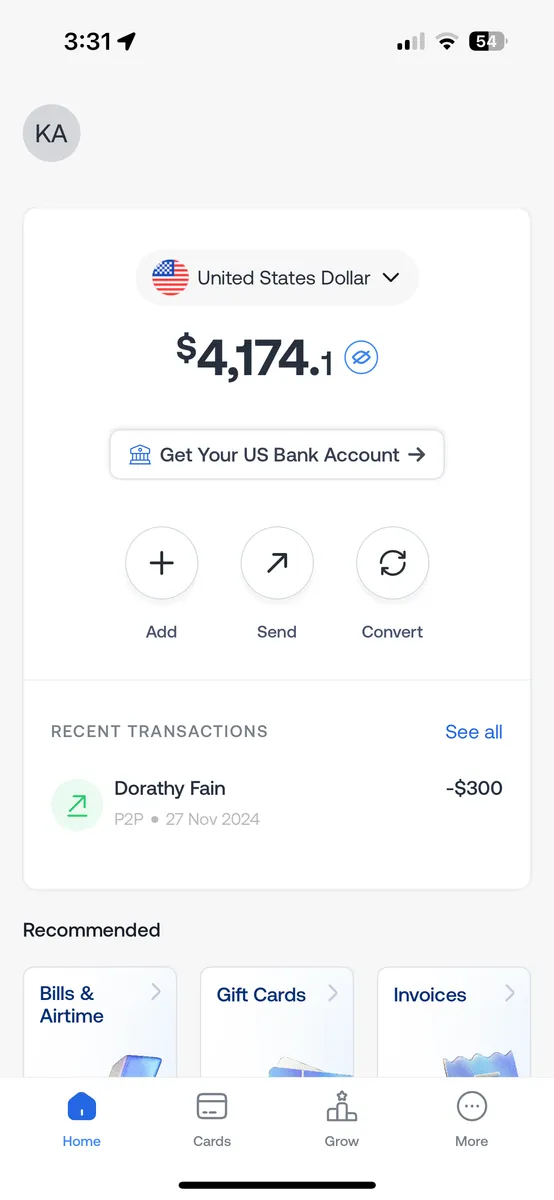
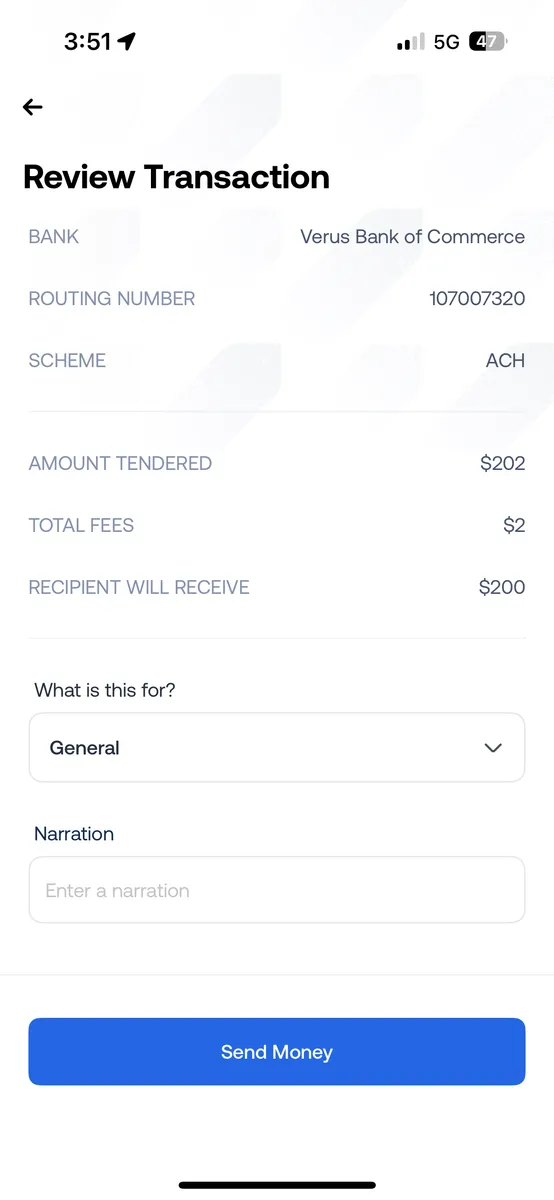
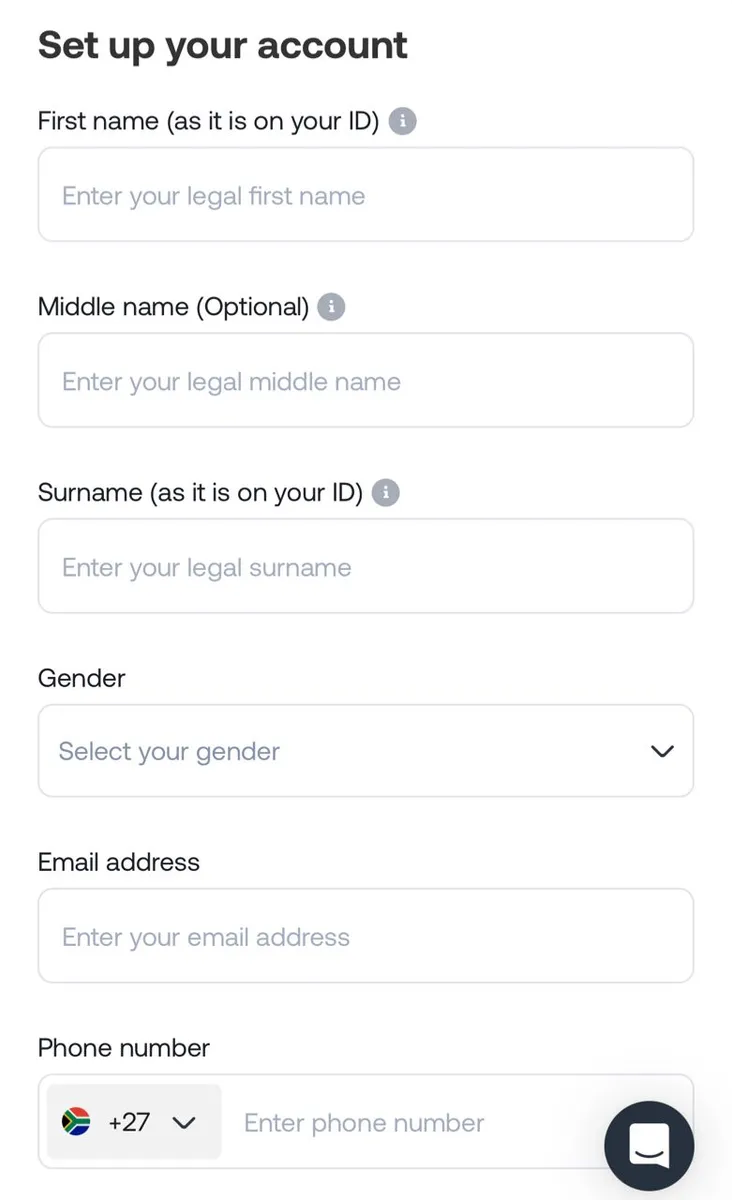
1. Open your Grey account. Download the Grey app, sign up, and verify your identity. US residents need a government-issued ID. Grey is licensed by FinCEN as a Money Services Business.

2. Fund your account. Transfer USD from your US bank account into your Grey wallet. You can fund via ACH (free, arrives same day) or wire transfer.

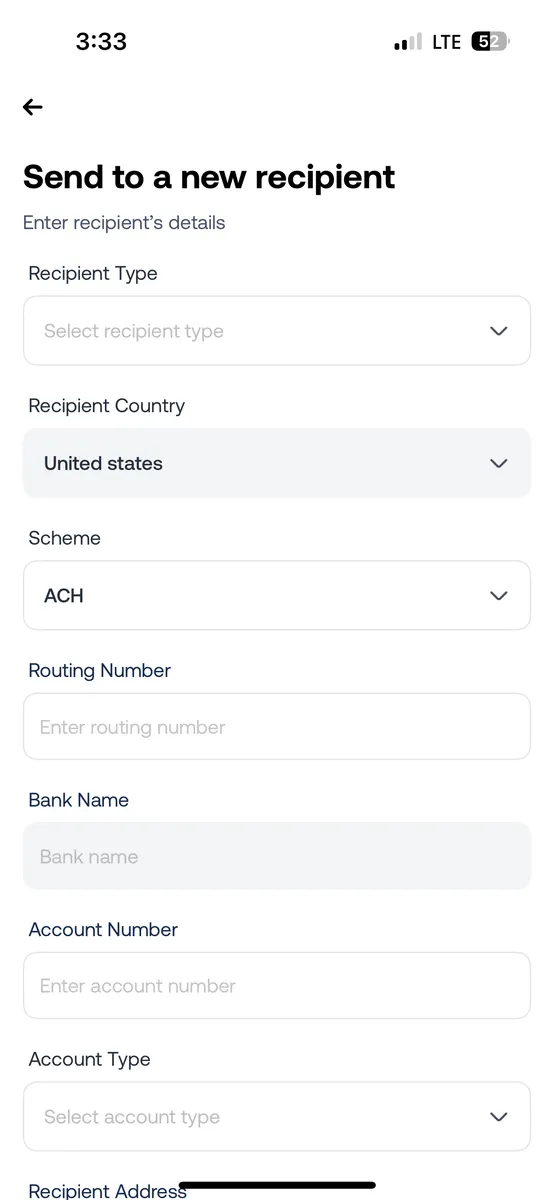
3. Choose your destination. Tap Send, select the destination currency (KES for Kenya, GHS for Ghana, NGN for Nigeria, ZAR for South Africa, etc.), and choose bank transfer or mobile money.

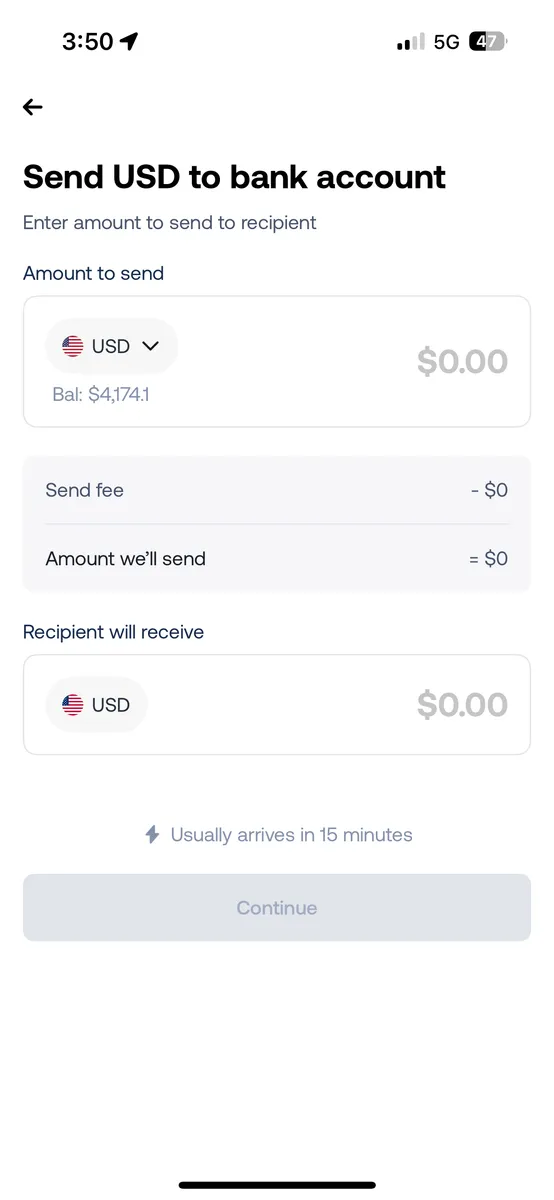
4. Enter your recipient's details. For mobile money, you need their phone number and the network (Safaricom, Airtel, MTN, etc.). For a bank transfer, you need the bank name and account number. Grey shows the exchange rate, conversion fee, payout fee, and the exact amount your recipient will receive before you confirm.

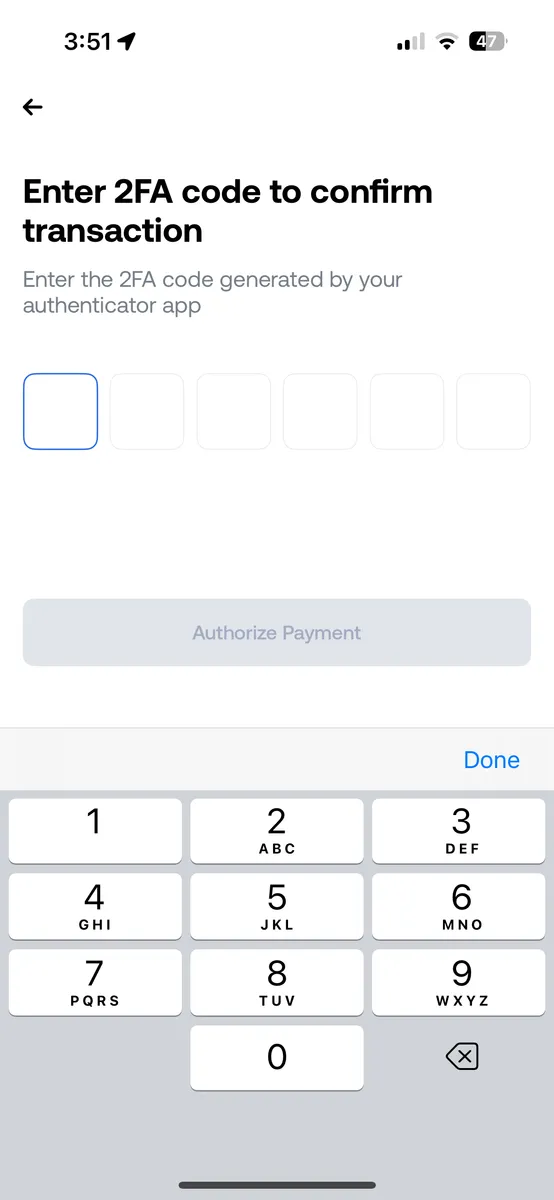
5. Confirm and send. Review the summary and confirm with your PIN. For Kenya M-Pesa, the money arrives instantly. For most other African destinations, it arrives the same day or within 1 to 2 business days.

Your recipient does not need a Grey account. The funds arrive as a standard deposit in their bank account or mobile money wallet.

Three ways to save on US-to-Africa transfers

Use mobile money when available. M-Pesa in Kenya ($0.50) is cheaper than a bank transfer ($0.65). MTN Mobile Money in Ghana ($1.00) is cheaper than a bank transfer ($1.20). If your recipient can receive via mobile money, it is usually the cheaper and faster option.

Batch your transfers to benefit from the fee cap. If you send $500 monthly, you pay $5 in conversion fees each time ($60 per year). If you send $1,500 quarterly instead, you pay $6 each time ($24 per year). The cap at the equivalent of $6 rewards larger, less frequent transfers.

Avoid Algeria bank transfers if speed matters. Algerian bank transfers take five business days. If your recipient has access to Ooredoo, Mobilis, or Djezzy mobile money, use that instead for same-day delivery at the same cost.

Also read: Best apps to send money internationally from the US in 2026 for a broader comparison, including European and Asian destinations.

Frequently asked questions

What is the cheapest way to send money from the US to Africa?

For transfers above $600, Grey's 1% conversion fee capped at the equivalent of $6 is the lowest published rate among apps with transparent pricing. On a $1,000 transfer to Kenya via M-Pesa, the total cost is $6.50 ($6 conversion + $0.50 payout). Apps like Sendwave charge no visible fee but embed cost in the exchange rate. Always compare the amount your recipient actually receives.

How long does it take to send money from the US to Africa?

It depends on the destination and delivery method. Kenya via M-Pesa is instant. Ghana via mobile money arrives the same day. Nigeria via bank transfer is same day or next day. South Africa and Ethiopia are 1 to 2 business days. Algeria via bank transfer takes 5 business days, though mobile money is same-day.

Can I send money from the US to M-Pesa in Kenya?

Yes. Grey supports M-Pesa delivery to Kenya from the US via both Safaricom and Airtel. The payout fee is $0.50 per transfer and delivery is instant. Your recipient receives the money in their M-Pesa wallet and can spend, send, or withdraw it immediately.

Which African countries can I send money to from the US with Grey?

Grey supports transfers from the US to Kenya, Nigeria, Ghana, South Africa, Egypt, Morocco, Algeria, Tanzania, Uganda, Rwanda, Senegal, Cameroon, Ethiopia, and additional African destinations. Both bank transfer and mobile money are available in most markets.

Is it cheaper to send via mobile money or bank transfer to Africa?

Mobile money is usually slightly cheaper. In Kenya, M-Pesa costs $0.50 per transfer versus $0.65 for bank transfer. In Ghana, mobile money costs $1.00 versus $1.20 for bank transfer. Both options are equally fast in most countries. Mobile money is also more convenient for recipients who do not use a bank account regularly.

Do I need to pay tax on money sent to Africa from the US?

Personal remittances sent from the US to Africa are generally not taxable for the sender. The US does not tax outgoing personal transfers. However, if you send more than $16,000 to a single individual in a calendar year, you may need to file a gift tax return (IRS Form 709), though no tax is typically owed until you exceed the lifetime exemption. Consult a tax professional for your specific situation.

Related reading

Best apps to send money internationally from the US in 2026 is the broader comparison covering all destinations, not just Africa.

How to send money from Nigeria to any country in 2026 is the outbound Nigeria guide, where the competitive landscape is very different from US-to-Africa.

Exchange rates on Grey are variable and include a margin over the mid-market rate. Always review the rate before confirming a conversion. Grey is a financial technology company, not a bank. Banking services are provided by licensed banking partners. This article is general information, not financial or tax advice. Consult a qualified professional for tax questions.

Last updated:

September 23, 2026

Open a free Grey account to get startedJoin 1 million digital nomads
IF YOU ENJOYED THIS, CHECK THESE OUT

US banks international transfer daily limit: What you can send

2 min read

Let’s say you need to send $60,000 abroad for a property purchase. After you log in to your bank’s online portal, enter the recipient details and the amount, and the transfer is declined. After calling the bank, the representative tells you your online international wire limit is $25,000 per day, a limit you had no idea existed.

This is a situation many people discover mid-transaction, often at the worst possible moment, when a deadline is approaching, and a seller or landlord abroad is waiting. International wire transfer limits at US banks are real, sometimes surprisingly low for online transfers, and almost never prominently displayed before you try to send.

This article covers what every major US bank allows on international wire transfers, why the limits exist, how to increase them, and what to do when your bank won’t accommodate what you need to send. Understanding who pays wire transfer fees is useful context before you initiate any large transfer.

Do US banks have daily limits on international wire transfers?

Yes. Every major US bank sets limits on how much you can send via international wire transfer, and those limits vary significantly depending on three things: the bank you use, the account type you hold, and how you initiate the transfer.

The most important distinction is online versus branch-initiated transfers. International wires initiated online typically have limits of $25,000 to $100,000 per day. In-branch wires allow significantly more, often $250,000 to $500,000 or higher, because the bank verifies your identity face-to-face.

Why do these limits exist? Three reasons.

Fraud prevention
Large international wire transfers are a primary target for fraud, including business email compromise scams where criminals impersonate vendors or executives to redirect payments. Automated online systems can’t verify intent the way a human can, so banks apply tighter caps to online-initiated transfers.

Bank Secrecy Act compliance
Transfers of $10,000 or more trigger a mandatory Currency Transaction Report (CTR) to FinCEN, the Financial Crimes Enforcement Network. This doesn’t block your transfer, but it means large transfers receive additional scrutiny. Banks also monitor for structuring, the practice of making multiple transfers just under $10,000 to avoid reporting, which is itself illegal.

Operational risk management
Errors in international wire transfers are difficult and sometimes impossible to reverse. Banks apply limits partly to reduce exposure to irreversible mistakes.

What are the international wire transfer daily limits at major US banks?

Wire transfer limits vary significantly by bank, account type, and whether the transfer is initiated online, by phone, or in person. The table below shows the most current verified figures for international wire transfers at six major US banks.

Bank Online international
wire limit
Branch international
wire limit
Outgoing international
wire fee
How to request a limit increase
Chase $25,000/day online $250,000/day $40 online (USD); $5 online (foreign currency under $5,000) Speak with a representative
Bank of America $1,000/day online (personal); $5,000 (small business) Higher limits available in branch $45 outgoing international Contact branch or call customer service
Wells Fargo Varies; not publicly disclosed. Check online banking for current limit Higher limits at branch $0 to $25 digital; $40 branch Visit a Wells Fargo branch
Citibank $25,000/day; $50,000/month (standard online) Higher limits available $25 to $35 depending on method Contact Citibank directly
TD Bank $25,000/day online Higher limits available $25 to $50 international Contact TD Bank customer service

All figures verified against published bank data and authoritative sources as of May to June 2026. Limits are subject to change and may vary based on account type, account history, and recipient. Always verify your specific limit by logging into online banking or calling your bank before initiating a large transfer.

Why do online wire limits and branch wire limits differ?

The gap between what you can send online and what you can send at a branch reflects how banks manage risk differently across channels.

Online wire transfers are initiated without any human review at the time of submission. The bank’s systems run automated checks against fraud patterns and compliance requirements, but no bank employee sees the transaction before it’s processed. This automated environment increases the risk of fraud, and banks respond by applying tighter limits.

Branch-initiated wire transfers undergo human review. A bank employee verifies your identity in person, may ask about the purpose of the transfer and the relationship to the recipient, and can escalate anything unusual to a compliance officer before the wire goes out. That human review layer justifies higher limits because the bank has a documented process.

Phone-initiated wires, available at some banks, typically sit between online and branch limits. The bank verifies your identity verbally and may ask screening questions, which provides some human review without requiring a branch visit.

The practical implication is that if your transfer exceeds the online limit, a branch visit in most cases resolves the issue without any formal request to increase the limit. You don’t need to apply for a higher limit or wait for approval. You show up, initiate the wire in person, and the branch limit applies.

How to increase your bank’s international wire transfer limit

When a branch visit isn’t practical, and you need to send more than your online limit allows, requesting a temporary or permanent limit increase is the next step. The process varies by bank but follows a similar pattern.

  1. Prepare your documentation
    Have ready the transfer amount, the recipient’s full details, the purpose of the transfer, and documentation of the source of funds if the amount is significant. Banks may ask for proof of funds, a contract, or an invoice, depending on the transfer size and purpose.
  2. Call the right person
    General customer service line agents typically can’t authorise limit increases. Ask specifically for a branch manager, a relationship banker, or a wire transfer specialist. At larger banks with relationship teams for higher-value customers, your relationship manager is the right first call.
  3. Use this script
    "Hi, I’m [name] and I have a [account type] with you. I need to initiate an international wire transfer for [amount], and I understand this exceeds my current online limit. I’d like to request a temporary limit increase. The transfer is for [property purchase/family support/business payment]. I have all the recipient details ready and can provide documentation of the source of funds if needed. Can you help me with this or connect me with someone who can authorise the increase?"
  4. Confirm the limit increase before initiating the transfer
    A verbal approval means nothing if it’s not recorded in the system before you submit. Ask the representative to confirm the increase is active before you log back in and try again.

What to do if your bank won’t increase the limit

If the bank declines your request to increase your limit, or the process takes longer than your transfer timeline allows, four practical options are available.

  1. Split the transfer across multiple days
    If your bank’s online limit is $25,000 and you need to send $75,000, three transfers of $25,000 each across multiple days achieve the same result. This works for many personal transfers. It doesn’t work when timing matters, such as a property purchase with a specific settlement date.
  2. Visit a branch instead of using online banking
    In-branch wires allow significantly higher limits, typically $250,000 to $500,000 or higher. For most transfers that exceed online limits but don’t approach branch limits, this is the simplest solution. No limit increase request needed.
  3. Use a different account at a different bank
    If you hold accounts at multiple institutions, each bank’s limit is independent. A transfer that exceeds Chase’s $25,000 online limit might be within Citibank’s limit for your account type there.
  4. Use an alternative international transfer service
    If you find bank wire limits or fees consistently prohibitive, switching to a lower-cost infrastructure for international transfers makes more sense than repeatedly navigating limit-increase requests.

Frequently asked questions

What is the maximum amount you can wire transfer internationally from the US?

There is no legal maximum on international wire transfers from the US for legitimate purposes. Banks set their own daily limits, which vary by account type and how the transfer is initiated. In-branch international wire transfers at major banks can reach $250,000 to $500,000 per day for standard accounts, with premium banking relationships handling $1,000,000 or more. Transfers above $10,000 trigger mandatory regulatory reporting, but this doesn’t limit or block the transfer.

Can I send $100,000 internationally in one wire transfer?

It depends on your bank and how you initiate the transfer. Chase’s online international wire limit is $25,000, which means a $100,000 transfer requires either a branch visit or a limit increase request. Bank of America’s online personal limit is $1,000, making branch initiation essential for any significant international transfer. At a branch, most major US banks can accommodate $100,000 in a single international wire for standard account holders.

Does Bank of America have a daily international wire limit?

Yes. Bank of America’s online international wire limit for personal accounts is $1,000 per day, and $5,000 for small business accounts. This is among the most restrictive limits on international wire transfers at any major US bank. Customers needing to send larger amounts must initiate the transfer at a branch, where higher limits apply. Bank of America Preferred Rewards customers at higher tiers may have access to increased limits.

How do I increase my Chase international wire transfer limit?

To send more than Chase’s standard daily limit, you need to speak with a representative who can authorise a limit increase. Call your branch directly and ask for a relationship banker or branch manager rather than the general customer service line. Have the transfer amount, recipient details, and purpose of transfer ready. For very large amounts, Chase may ask for source-of-funds documentation. Chase’s standard limit is $250,000 per day for branch-initiated international wires.

Is there a legal limit on how much money I can send abroad from the US?

No. There is no legal ceiling on international wire transfers from the US for legitimate purposes. Transfers of $10,000 or more must be reported to the IRS via a Currency Transaction Report filed by your bank, not by you. The reporting requirement doesn’t restrict or delay the transfer. Banks may also report patterns of transfers just under $10,000, as structuring transactions to avoid reporting thresholds is itself illegal.

Visit grey.co or download the Grey app to enjoy quick and easy transfers.

How to send money from the US to Africa in 2026

2 min read

Africa receives more remittances from the United States than from any other single country. Nigerian Americans, Ghanaian Americans, Kenyan Americans, Ethiopian Americans, and communities from across the continent send billions of dollars home every year to support families, pay school fees, cover medical costs, and invest in property.

The challenge has always been cost. The World Bank has consistently found that sub-Saharan Africa is the most expensive region in the world to send money to, with average fees exceeding 7% of the transfer amount. Part of that cost is structural: many African recipients rely on mobile money or cash pickup rather than bank accounts, and some corridors require multiple intermediaries to complete a transfer.

A new generation of transfer apps has dramatically reduced fees across most US-to-Africa corridors. This guide covers how to send money from the US to Africa in 2026, what each major destination costs, how long transfers take, and which apps work best for different African countries.

What it costs and how long it takes, country by country

The table below covers the most common US-to-Africa corridors on Grey. Fees shown are Grey's payout fees per transaction, on top of the standard 1% conversion fee (capped at the equivalent of $6 on major currency pairs).

Destination Delivery method Payout fee Speed Total cost on $500
Kenya M-Pesa (Safaricom, Airtel) $0.50 Instant $5.50
Kenya Bank transfer $0.65 Instant $5.65
Nigeria Bank transfer NGN 35 flat Same day / next day ~$5.02
Ghana Mobile money (MTN) $1.00 Same day $6.00
Ghana Bank transfer $1.20 Same day $6.20
South Africa Bank transfer $1.80 1-2 business days $6.80
Egypt Bank transfer $1.70 T+1 (before 1 PM GMT, Sun-Thu) $6.70
Egypt Mobile money $1.70 Same day $6.70
Morocco Bank transfer $2.00 Instant (before 1 PM GMT) $7.00
Algeria Mobile money (Ooredoo, Mobilis, Djezzy) $2.50 Same day $7.50
Algeria Bank transfer $2.50 5 business days $7.50
Tanzania Bank transfer $1.50 Same day $6.50
Uganda Bank transfer $1.50 Same day $6.50
Cameroon Bank/mobile $2.00 Same day $7.00
Senegal Bank transfer $2.00 Same day $7.00
Ethiopia Bank transfer $1.80 1-2 business days $6.80

Total cost on $500 = $5 conversion fee (1% of $500) + payout fee. On transfers above $600, the conversion fee is capped at the equivalent of $6, so the total cost grows only by the payout fee. Grey fee data from support.grey.co, September 2026.

A few patterns stand out. East African corridors (Kenya, Tanzania, Uganda) are the cheapest and fastest, with instant M-Pesa delivery to Kenya at just $0.50 per transfer. North African corridors (Egypt, Morocco, Algeria) carry slightly higher payout fees and, in Algeria's case, longer bank settlement times. West African corridors (Ghana, Nigeria, Senegal, Cameroon) fall in between.

On transfers above $600, the conversion fee caps at the equivalent of $6 regardless of the amount. That means a $2,000 transfer to Kenya via M-Pesa costs $6.50 total ($6 conversion + $0.50 payout), not the $20 to $40 you might pay through a bank wire or a percentage-based app.

Mobile money or bank transfer: How African recipients prefer to get paid

One of the biggest differences between sending money to Africa and sending to Europe or Asia is how recipients access their funds. In much of Africa, mobile money is more widely used than traditional bank accounts.

Kenya is the most mobile-money-dominant market in the world. Over 30 million Kenyans use M-Pesa daily for everything from groceries to rent. If you are sending to Kenya, M-Pesa is almost always the right choice. It is cheaper ($0.50 versus $0.65 for bank transfer), equally fast (instant), and more convenient for your recipient. Send money from the US to Kenya.

Ghana has strong mobile money adoption through MTN Mobile Money. Grey supports mobile money delivery to Ghana at $1.00 per transfer, compared to $1.20 for a bank transfer. Both arrive on the same day. Send money from the US to Ghana.

Nigeria is primarily bank-transfer-based. Mobile money adoption is growing with platforms like OPay, but most Nigerians still receive international transfers into their bank accounts. Grey delivers to all major Nigerian banks.

Egypt supports both bank transfer and mobile money. Bank transfers settle in one business day (processed before 1 PM GMT, Sunday to Thursday). Mobile money arrives the same day.

South Africa is bank-transfer only on Grey. Transfers arrive within 1 to 2 business days.

Algeria is the exception to speed. Bank transfers take five business days due to settlement infrastructure constraints in the Algerian banking system. Mobile money via Ooredoo, Mobilis, or Djezzy is same-day. If your recipient can use mobile money, choose that option to avoid the five-day wait.

Which app is best for sending money from the US to Africa

Several apps serve the US-to-Africa corridors well, but their strengths differ by country and delivery method.

How to send money from the US to Africa with Grey

The process is the same regardless of which African country you are sending to. Here is how it works.

1. Open your Grey account. Download the Grey app, sign up, and verify your identity. US residents need a government-issued ID. Grey is licensed by FinCEN as a Money Services Business.

2. Fund your account. Transfer USD from your US bank account into your Grey wallet. You can fund via ACH (free, arrives same day) or wire transfer.

3. Choose your destination. Tap Send, select the destination currency (KES for Kenya, GHS for Ghana, NGN for Nigeria, ZAR for South Africa, etc.), and choose bank transfer or mobile money.

4. Enter your recipient's details. For mobile money, you need their phone number and the network (Safaricom, Airtel, MTN, etc.). For a bank transfer, you need the bank name and account number. Grey shows the exchange rate, conversion fee, payout fee, and the exact amount your recipient will receive before you confirm.

5. Confirm and send. Review the summary and confirm with your PIN. For Kenya M-Pesa, the money arrives instantly. For most other African destinations, it arrives the same day or within 1 to 2 business days.

Your recipient does not need a Grey account. The funds arrive as a standard deposit in their bank account or mobile money wallet.

Three ways to save on US-to-Africa transfers

Use mobile money when available. M-Pesa in Kenya ($0.50) is cheaper than a bank transfer ($0.65). MTN Mobile Money in Ghana ($1.00) is cheaper than a bank transfer ($1.20). If your recipient can receive via mobile money, it is usually the cheaper and faster option.

Batch your transfers to benefit from the fee cap. If you send $500 monthly, you pay $5 in conversion fees each time ($60 per year). If you send $1,500 quarterly instead, you pay $6 each time ($24 per year). The cap at the equivalent of $6 rewards larger, less frequent transfers.

Avoid Algeria bank transfers if speed matters. Algerian bank transfers take five business days. If your recipient has access to Ooredoo, Mobilis, or Djezzy mobile money, use that instead for same-day delivery at the same cost.

Also read: Best apps to send money internationally from the US in 2026 for a broader comparison, including European and Asian destinations.

Frequently asked questions

What is the cheapest way to send money from the US to Africa?

For transfers above $600, Grey's 1% conversion fee capped at the equivalent of $6 is the lowest published rate among apps with transparent pricing. On a $1,000 transfer to Kenya via M-Pesa, the total cost is $6.50 ($6 conversion + $0.50 payout). Apps like Sendwave charge no visible fee but embed cost in the exchange rate. Always compare the amount your recipient actually receives.

How long does it take to send money from the US to Africa?

It depends on the destination and delivery method. Kenya via M-Pesa is instant. Ghana via mobile money arrives the same day. Nigeria via bank transfer is same day or next day. South Africa and Ethiopia are 1 to 2 business days. Algeria via bank transfer takes 5 business days, though mobile money is same-day.

Can I send money from the US to M-Pesa in Kenya?

Yes. Grey supports M-Pesa delivery to Kenya from the US via both Safaricom and Airtel. The payout fee is $0.50 per transfer and delivery is instant. Your recipient receives the money in their M-Pesa wallet and can spend, send, or withdraw it immediately.

Which African countries can I send money to from the US with Grey?

Grey supports transfers from the US to Kenya, Nigeria, Ghana, South Africa, Egypt, Morocco, Algeria, Tanzania, Uganda, Rwanda, Senegal, Cameroon, Ethiopia, and additional African destinations. Both bank transfer and mobile money are available in most markets.

Is it cheaper to send via mobile money or bank transfer to Africa?

Mobile money is usually slightly cheaper. In Kenya, M-Pesa costs $0.50 per transfer versus $0.65 for bank transfer. In Ghana, mobile money costs $1.00 versus $1.20 for bank transfer. Both options are equally fast in most countries. Mobile money is also more convenient for recipients who do not use a bank account regularly.

Do I need to pay tax on money sent to Africa from the US?

Personal remittances sent from the US to Africa are generally not taxable for the sender. The US does not tax outgoing personal transfers. However, if you send more than $16,000 to a single individual in a calendar year, you may need to file a gift tax return (IRS Form 709), though no tax is typically owed until you exceed the lifetime exemption. Consult a tax professional for your specific situation.

Related reading

Best apps to send money internationally from the US in 2026 is the broader comparison covering all destinations, not just Africa.

How to send money from Nigeria to any country in 2026 is the outbound Nigeria guide, where the competitive landscape is very different from US-to-Africa.

Exchange rates on Grey are variable and include a margin over the mid-market rate. Always review the rate before confirming a conversion. Grey is a financial technology company, not a bank. Banking services are provided by licensed banking partners. This article is general information, not financial or tax advice. Consult a qualified professional for tax questions.

Best apps to send money internationally from the US in 2026

2 min read

If you send money from the United States to family, friends, or business contacts abroad, you have probably noticed that the options have multiplied. Ten years ago, it was Western Union or your bank. Now there are over a dozen apps competing for each transfer, each with a different fee structure, exchange rate approach, and set of destination countries.

The problem is not a lack of options. It is the right app that changes depending on where you are sending, how much you are sending, and how your recipient wants to receive the money. An app that is excellent for sending $500 to India via bank deposit might be a poor choice for sending $200 to Kenya via M-Pesa.

This guide covers six of the best apps for sending money internationally from the US in 2026. For each one, we explain what it actually costs, where it works best, and what to watch out for. If you are looking for a broader overview of sending money from the US with Grey, the corridor hub page covers every supported destination.

How the main apps compare at a glance

App Best for Fee structure Speed Destinations
Grey Larger transfers to Africa and Asia 1% capped at ~$6 + flat payout fee Instant to 1-2 days 50+ countries
Wise Transparent mid-market rate transfers 0.41% to 1.5% (varies by corridor) 1-3 business days 80+ countries
Remitly Family remittances to Asia, Africa, Latin America $0 to $4.99 (varies by speed and corridor) Minutes (Express) to 3-5 days (Economy) 170+ countries
WorldRemit African mobile money corridors $0 to $4.99 (varies by destination) Minutes to 3 days 130+ countries
Sendwave No-fee transfers to Africa and Asia $0 fee (cost in exchange rate) Minutes 50+ countries
Western Union Cash pickup worldwide $2.99 to $14.99+ (varies by amount and method) Minutes to 5 days 200+ countries

Fee ranges are illustrative and vary by corridor, amount, and payment method. Always compare the total amount your recipient receives, not just the headline fee. Last checked: September 2026.

Grey

Grey is a multi-currency account provider that supports transfers from the US to over 50 countries. It is particularly strong on African corridors, where it offers both bank transfer and mobile money delivery, including M-Pesa in Kenya, MTN Mobile Money in Ghana, and direct bank transfers across the continent.

Grey charges a 1% conversion fee on all transfers, capped at the equivalent of $6 on major currency pairs (USD, EUR, GBP). That cap is the differentiator. On a $500 transfer, the fee is $5. On a $1,000 transfer, the fee is $6. On a $5,000 transfer, the fee is still $6. Most other apps charge a percentage that scales with the amount, or a flat fee plus a rate markup that grows with volume. Grey's cap means that anyone regularly sending above $600 pays less per transfer than they would on almost any other platform. Full details on Grey's fee calculator.

On top of the conversion fee, there is a flat payout fee per destination. For the US-to-India corridor, that is $1.50. For Kenya via M-Pesa, it is $0.50. For Ghana via mobile money, it is $1.00. UK destinations carry no separate payout fee.

Grey also provides multi-currency accounts (hold USD, EUR, and GBP), a virtual Visa card for online payments, and UPI delivery to India, which arrives in minutes. The UPI support is unusual among transfer apps and makes Grey a strong option for the US-to-India corridor.

Best for: US-based senders who regularly transfer larger amounts ($600+) to Africa or India and want a transparent, capped fee structure.

Wise

Wise is widely considered the benchmark for transparent international transfers. It uses the mid-market exchange rate with no markup, and the fee is shown upfront before you confirm. For most corridors, the fee ranges from 0.41% to 1.5% of the transfer amount, depending on the destination and payment method.

The advantage of Wise is predictability. The rate you see is the rate you get, and there is no hidden margin. The disadvantage is that the fee is a straight percentage with no cap, so on large transfers, it can add up. A $5,000 transfer at 0.5% costs $25 in fees. With Grey, the same transfer costs $6 in conversion fees plus a flat payout fee that depends on the destination.

Wise supports 80+ destination countries and offers a multi-currency account with a Wise debit card. It is an excellent all-round choice for US senders, particularly for bank-to-bank transfers in Europe and Asia. Its African coverage is solid for bank transfers but less comprehensive for mobile money delivery than Grey or WorldRemit.

Best for: Senders who prioritise exchange rate transparency and send moderate amounts to a wide range of countries.

Remitly

Remitly is built for family remittances. It offers two delivery speeds: Express (arrives in minutes, higher fee) and Economy (arrives in 3 to 5 business days, lower fee). The fee ranges from $0 to $4.99, depending on the corridor, payment method, and delivery speed.

Remitly's strength is its coverage of popular remittance corridors: India, the Philippines, Mexico, Pakistan, Bangladesh, Nigeria, Kenya, and Ghana are all well served. Delivery options include bank deposit, mobile wallet, cash pickup, and door-to-door delivery in some markets. First-time users often receive a promotional rate on their first transfer.

The trade-off is the exchange rate. Remitly does not use the mid-market rate. The rate includes a margin, so the headline fee may look low, but the total cost (fee plus rate) can be higher than Wise's on the same corridor. Always compare the final amount your recipient receives, not just the fee.

Best for: Frequent senders to South Asia, Southeast Asia, and Latin America who value delivery speed and flexibility (bank, wallet, or cash pickup).

WorldRemit

WorldRemit is the strongest app for mobile money transfers to Africa. It supports M-Pesa in Kenya, MTN Mobile Money in Ghana, Airtel Money in Uganda, and mobile wallets across dozens of African countries. If your recipient does not have a bank account or prefers receiving via their phone, WorldRemit covers more African mobile money networks than any other major US-based app.

Fees range from $0 to $4.99, depending on the destination, amount, and delivery method. Like Remitly, WorldRemit includes a margin in the exchange rate, so the headline fee does not tell the full story. Cash pickup is available in some countries through partner agent networks.

WorldRemit also supports airtime top-ups, which let you add mobile credit to your recipient's phone directly. This is a niche feature, but useful for senders supporting family members who need phone credit more than cash.

Best for: Senders to sub-Saharan Africa who need mobile money delivery, particularly to countries with strong M-Pesa or MTN Mobile Money networks.

Sendwave

Sendwave charges no visible transfer fee. The cost is built into the exchange rate, similar to Pesa on the Nigeria corridor. The app specialises in transfers to Africa and parts of Asia, with a simple interface designed for speed.

The appeal is simplicity. You enter an amount, see what your recipient gets, and confirm. There is no fee line item to think about. But as with any zero-fee app, the total cost depends on the exchange rate markup. Compare the amount your recipient receives on Sendwave against what they would receive on Wise or Grey at the same moment to know whether the zero-fee model is actually cheaper.

Sendwave supports mobile money and bank transfer in most African markets. It is owned by WorldRemit's parent company (Zepz), but operates as a separate app with its own rates and fee structure.

Best for: Small, frequent transfers to Africa and Asia, where simplicity and speed matter more than optimising the exchange rate.

Western Union

Western Union has the largest cash pickup network in the world, with over 500,000 agent locations across 200+ countries. If your recipient needs physical cash and does not have a bank account or mobile money wallet, Western Union is often the only practical option.

Fees range from $2.99 to $14.99 or more, depending on the amount, destination, and delivery method. The exchange rate includes a margin. Western Union is rarely the cheapest option for bank-to-bank transfers, but its reach is unmatched for cash pickup in remote locations.

Western Union also offers bank deposit and mobile wallet delivery in many countries, though its digital experience is less polished than purpose-built apps like Wise or Remitly.

Best for: Senders whose recipients need cash pickup at a physical agent location, particularly in countries with limited banking infrastructure.

How to choose the right app for your transfer

The best app depends on three things: where your recipient is, how they want to receive the money, and how much you are sending.

If you send large amounts ($600+) regularly to Africa or India, Grey's $6 fee cap makes it the cheapest published option. On a $2,000 transfer, Grey charges $6 while Wise charges $10 to $30, depending on the corridor, and Remitly's combined fee and rate markup can exceed that.

If you prioritise exchange rate transparency, Wise is the strongest choice. The mid-market rate with no markup means you always know the true cost.

If your recipient needs mobile money in Africa, WorldRemit has the widest mobile money network. Grey covers M-Pesa (Kenya) and MTN Mobile Money (Ghana) well, but WorldRemit reaches more networks across more countries.

If your recipient needs cash pickup, Western Union's 500,000+ agent network is unmatched.

If you send small amounts frequently and want simplicity, Sendwave's zero-fee model removes the decision fatigue, though you should periodically check whether the rate is competitive.

Also read: How to send money from Nigeria to any country in 2026 covers the outbound Nigeria corridor, where the competitive landscape is very different.

Frequently asked questions

What is the cheapest app to send money internationally from the US?

It depends on the amount and destination. For transfers above $600, Grey's 1% fee capped at $6 is the lowest published rate among apps with transparent pricing. For smaller amounts, Wise's percentage-based fee (from 0.41%) or Remitly's Economy tier may be cheaper on specific corridors. Sendwave charges no visible fee but builds cost into the exchange rate. Always compare the final amount your recipient receives.

Is Wise or Remitly better for sending money from the US?

Wise is better for transparency: it uses the mid-market exchange rate with no markup, and the fee is shown upfront. Remitly is better for speed and delivery flexibility: its Express option delivers in minutes and supports bank, mobile wallet, and cash pickup. Wise is usually cheaper on total cost for bank-to-bank transfers. Remitly is stronger for mobile wallet delivery in Asia and Africa.

Can I send money from the US to M-Pesa in Kenya?

Yes. Grey, WorldRemit, and Sendwave all support M-Pesa delivery from the US to Kenya. Grey charges $0.50 per M-Pesa transfer plus a 1% conversion fee capped at $6. The transfer is instant.

What is the cheapest way to send money from the US to India?

Grey offers a $1.50 flat payout fee plus a 1% conversion fee capped at $6, with delivery via UPI in minutes. Wise charges from approximately 0.41% with delivery in 1 to 2 business days. Remitly's Economy option is often competitive for smaller amounts. On a $1,000 transfer, Grey costs $7.50 total (conversion cap + payout fee).

How long does it take to send money from the US internationally?

It depends on the destination and app. Transfers via Grey to India (UPI) and Kenya (M-Pesa) are instant. Transfers to the UK and most of Europe arrive within 1 to 2 business days. Remitly's Express option delivers in minutes on popular corridors. Bank-to-bank transfers via Wise typically take 1 to 3 business days.

Is Grey available in the United States?

Yes. Grey is licensed by FinCEN in the US as a Money Services Business. US residents can open a Grey account, hold multiple currencies, and send money to 50+ countries. Grey also provides virtual Visa cards and multi-currency accounts for receiving international payments.

Related reading

How to send money from Nigeria to any country in 2026 covers the outbound Nigeria corridor, where most competitors do not operate, and Grey's positioning is very different from the US market.

Cheapest way to send money from Nigeria in 2026 compares fees across Grey, Flutterwave Send, Pesa, and Eversend for the Nigeria outbound market.

Exchange rates on Grey are variable and include a margin over the mid-market rate. Always review the rate before confirming a conversion. Grey is a financial technology company, not a bank. Banking services are provided by licensed banking partners. This article is general information, not financial advice.

How to send money from Nigeria to any country in 2026

2 min read

Five years ago, sending money out of Nigeria meant a trip to your bank's forex desk, a stack of forms, and a 2 to 5% fee with no guarantee of when the funds would arrive. The apps everyone recommended online were built for the opposite direction: Wise, LemFi, WorldRemit, and Remitly all moved money into Nigeria, not out of it.

That has changed. A handful of fintech apps now support outbound transfers from Nigeria, and the differences between them matter. Some charge a percentage fee. Some claim zero fees but build margin into the exchange rate. Some cover 18 countries; others cover 50. If you are in Lagos, Abuja, or Port Harcourt and need to send money to someone abroad, the options are real, but they are not all the same.

This guide compares every viable option for outbound transfers from Nigeria in 2026, breaks down what each one actually costs, and covers the CBN rules that apply to money leaving the country.

Which apps actually support sending money from Nigeria

Not every transfer app works in the outbound direction. Before comparing fees and features, it helps to know which apps let you initiate a transfer from inside Nigeria and which ones do not.

Apps that support outbound from Nigeria:

Grey supports outbound transfers from Nigeria to 50+ countries via bank transfer, mobile money, and UPI (India). You fund your Grey account in naira, convert to the destination currency, and send directly to your recipient's bank account or mobile wallet. Send money from Nigeria with Grey.

Flutterwave Send supports outbound from Nigeria through its Swap feature, built in partnership with Kadavra BDC and Wema Bank. You convert NGN to USD, GBP, or EUR inside the app, then send to recipients in 30+ countries. The transfer limit is $20,000 per transaction.

Eversend supports outbound from Nigeria to USD, GBP, and EUR bank accounts across 18 countries. It also supports stablecoin wallets (USDC and USDT) and offers a virtual dollar card.

Pesa (formerly Pesapeer) supports outbound from Nigeria to 50+ countries with a multi-currency wallet covering NGN, USD, GBP, EUR, CAD, and AED.

Apps that do NOT support outbound from Nigeria:

Wise does not support NGN as a sending currency. You can receive money in Nigeria through Wise, but you cannot use it to send money out of the country.

LemFi is a diaspora product. It works from the UK, US, Canada, and EU to Nigeria. If you are physically in Nigeria, LemFi does not support outbound transfers.

WorldRemit and Remitly both follow the inbound-only model. They send money to Nigeria from 50+ countries, but do not support the reverse direction.

Zelle and Venmo require both the sender and the receiver to hold US-based bank accounts. Neither works with Nigerian bank accounts in any direction.

OPay is a domestic Nigerian payments app. It handles local transfers, bill payments, and airtime top-ups within Nigeria but does not support international outbound transfers.

Afriex may also support outbound transfers from Nigeria, based on some sources, though the company's website primarily lists sending from the US, UK, Canada, and Europe to African countries. If you are considering Afriex for outbound Nigeria, confirm the available corridors directly in the app before initiating a transfer.

Understanding this split matters because search results and app store listings often recommend Wise, WorldRemit, or Remitly for "Nigerian money transfers" without specifying that they only work inbound. If you need to send money from Nigeria, the confirmed working options are Grey, Flutterwave Send, Eversend, and Pesa.

What each app actually costs on a $500 transfer

Every app handles pricing differently. Some charge a visible transfer fee. Others claim zero fees but build their margin into the exchange rate, which means you receive less at the other end without seeing a separate line item. The only honest comparison is to look at the total cost: transfer fee plus exchange rate markup combined.

Grey: 1% conversion fee, capped at the naira equivalent of $6 for major currency pairs (USD, EUR, GBP, NGN). There is also a flat payout fee that varies by destination. On a $500 transfer to the US, the conversion fee is $5, and there is no separate payout fee for USD destinations. Total visible cost: $5.00. See Grey's fee calculator for exact costs on any corridor.

Flutterwave Send: 1% of the transfer amount for all Nigerian outbound corridors. No published cap. On a $500 transfer, the fee is $5.00. On a $1,000 transfer, the fee is $10.00. On a $2,000 transfer, the fee is $20.00.

Eversend: Business accounts start from 0.49% plus a fixed fee per transfer. Personal account fees are shown in-app before you send but are not published on the website. You can see the exact cost before confirming any transfer, but there is no public fee schedule to compare against in advance.

Pesa: $0 transfer fee. Pesa does not charge a visible fee on any corridor. The cost is embedded in the exchange rate markup, which is not disclosed.

How the fee cap changes the maths on larger transfers

Transfer amount Grey (1%, capped at $6) Flutterwave Send (1%, no cap) Pesa ($0 visible) Eversend
$200 $2.00 $2.00 Hidden in rate Shown in-app
$500 $5.00 $5.00 Hidden in rate Shown in-app
$1,000 $6.00 (cap) $10.00 Hidden in rate Shown in-app
$2,000 $6.00 (cap) $20.00 Hidden in rate Shown in-app
$5,000 $6.00 (cap) $50.00 Hidden in rate Shown in-app

Eversend publishes a 0.49% + fixed fee rate for business accounts but does not publish personal transfer fees. The fee is displayed in-app before you confirm.

On a $5,000 transfer, the difference between Grey and Flutterwave Send is $44. For anyone sending tuition payments, property deposits, or supplier invoices, the cap is a significant cost advantage.

Pesa's column reads "hidden in rate" because the true cost cannot be calculated without comparing the live exchange rate Pesa offers against the mid-market rate at that moment. A $0 transfer fee does not mean a $0 cost. It means the cost is in the rate, and you need to check how much you actually receive compared to what the mid-market rate would deliver.

Where can you send from Nigeria

Grey (50+ countries): Africa (Kenya, Ghana, South Africa, Egypt, Morocco, Algeria, Tanzania, Uganda, Rwanda, Senegal, Cameroon, Ethiopia), Europe (UK, Germany, France, Netherlands, Spain, Belgium, Italy, Ireland, Poland, Austria via SEPA), Asia (India via bank and UPI, Philippines, Indonesia, Bangladesh, Malaysia, UAE, Saudi Arabia), Americas (US via ACH, Canada via bank and Interac, Mexico, Brazil, Argentina, Colombia, Chile), Oceania (Australia).

Pesa (50+ countries): Similar breadth to Grey, with multi-currency wallets supporting NGN, USD, GBP, EUR, CAD, and AED. It recently expanded to the UAE.

Flutterwave Send (30+ countries): Sends from Nigeria, Cameroon, Senegal, Ivory Coast, Ghana, Kenya, South Africa, and Ethiopia.

Eversend (18 countries): Outbound from Nigeria to USD, GBP, and EUR accounts. Narrower coverage but supports stablecoin wallets (USDC, USDT) and intra-African routes like Nigeria to Kenya and Nigeria to Ghana.

How long do transfers take?

Destination Method Speed Available via
India UPI Minutes Grey
India Bank transfer Same day Grey
Kenya Mobile money Same day Grey, Flutterwave Send
Ghana Mobile money Same day Grey, Flutterwave Send
Morocco Bank transfer Instant (before 1 PM GMT) Grey
Canada Interac Instant Grey
US ACH 1-2 business days Grey, Flutterwave, Eversend, Pesa
UK FPS Next business day Grey
Algeria Bank transfer 5 business days Grey
Algeria Mobile money Same day Grey

How to send money from Nigeria step by step

The process is similar across all four apps. Here is how it works with Grey.

Step 1: Open and verify your account. Download the Grey app, sign up, and verify your identity with a government-issued ID (passport, national ID, or driver's licence) and your BVN. Verification typically completes within minutes.

Step 2: Fund your account. Transfer naira from your Nigerian bank account into your Grey wallet. You can hold balances in USD, EUR, and GBP and convert when the rate suits you, or convert at the time of transfer.

Step 3: Convert your currency. Grey converts your naira to the destination currency at the rate shown on the screen. The 1% conversion fee (capped at $6 on major pairs) is displayed before you confirm.

Step 4: Enter recipient details and send. Add your recipient's bank details: sort code and account number for the UK, routing number and account number for the US, UPI ID or bank account for India. Confirm the transfer. Grey processes it, and you both receive a confirmation.

CBN rules for outbound transfers in 2026

The Central Bank of Nigeria regulates all foreign exchange transactions leaving the country. These limits apply regardless of which app you use.

Limit type Amount Notes
Personal travel allowance (Form A) $4,000 to $5,000 per quarter Depends on stated purpose
Business travel allowance $5,000 to $7,500 per quarter
Telegraphic transfers Up to $10,000 per day Via authorised channels
Platform transfer limits $5,000 to $10,000 per month Depends on platform and verification tier
Physical cash (no declaration) Up to $10,000
Physical cash (with Form TE) $10,000 to $50,000 Declaration required at departure
Domestic online ceiling (individual) N25 million Biometric verification above N1 million

Paying for international services directly

Beyond person-to-person transfers, many Nigerians need to pay for international subscriptions, advertising platforms, software, freelancer tools, or online courses. For these recurring payments, a virtual card is more practical than initiating a transfer each time.

Grey offers a Rain card (Visa) for a one-time $4 creation fee plus a $1 funding deduction from your USD balance ($5 minimum balance required). The card works anywhere Visa is accepted online and supports Apple Pay and Google Pay. No monthly fee. For USD merchants, there is no additional charge. For non-USD merchants, a 2% + $0.50 cross-border fee applies. A fuller breakdown is in Grey charges explained.

Eversend also offers a virtual USD card at $0.99 per month or a $2.99 one-time fee, with no FX surcharge on USD transactions. Pesa offers virtual cards as well.

Which app is best for what

There is no single best app for every use case. Here is when each option makes the most sense.

Grey is best for larger transfers and wider destination coverage. The 1% fee capped at $6 means anyone sending above $600 pays less than they would on a straight-percentage platform. Grey also has the widest destination coverage (50+ countries), UPI support for India transfers, and a full-featured Visa virtual card.

Flutterwave Send is best for quick, moderate transfers within Africa. The 1% fee without a cap is competitive on smaller amounts, and the Swap integration makes currency conversion seamless.

Eversend is best for multi-currency holders and stablecoin users. If you hold USDC or USDT and want to convert and send without going through naira first, Eversend's stablecoin wallets are a genuine differentiator.

Pesa is best if you prioritise no visible fees on small transfers. The $0 transfer fee is real. But because the cost is in the exchange rate, you need to compare the rate Pesa offers against the mid-market rate to know what you are actually paying.

Also read: Cheapest way to send money from Nigeria in 2026

Frequently asked questions

Can I use Wise to send money from Nigeria?

No. Wise does not support NGN as a sending currency. Wise suspended USD transfers to Nigeria effective November 1, 2022, and later resumed inbound naira payouts, but outbound from Nigeria remains unsupported. To send money from Nigeria, use Grey, Flutterwave Send, Eversend, or Pesa.

What is the cheapest way to send money from Nigeria abroad?

It depends on the amount. For smaller transfers, Pesa's zero-visible-fee model or Eversend's in-app pricing may work out cheaper depending on the exchange rate offered. For transfers above $600, Grey's 1% fee capped at the naira equivalent of $6 is the lowest published rate among platforms with transparent fee structures. On a $2,000 transfer, Grey charges $6 in conversion fees while Flutterwave Send charges $20. Always compare the total received amount, not just the headline fee.

Can OPay send money internationally?

No. OPay is a domestic Nigerian payments platform. It handles local transfers, bill payments, airtime, and betting deposits within Nigeria. OPay does not support international outbound transfers.

Is Zelle allowed in Nigeria?

No. Zelle requires both the sender and the receiver to hold bank accounts at US-based financial institutions. Nigerian bank accounts are not compatible with Zelle in either direction.

What documents do I need to send money from Nigeria?

You need a valid government-issued ID (international passport, national ID card, or driver's licence) and your Bank Verification Number (BVN) to verify your account. For larger transfers, you may be asked for proof of source of funds in line with CBN anti-money laundering requirements.

How long does it take to send money from Nigeria to India?

With Grey, transfers to India arrive the same day. Both bank transfer (up to INR 450,000) and UPI (up to INR 100,000) are supported, with a flat $1.50 payout fee. UPI transfers can arrive within minutes and are available every day, including weekends.

How long does it take to send money from Nigeria to the US?

Most apps deliver to US bank accounts within 1-2 business days via ACH. Grey, Flutterwave Send, Eversend, and Pesa all support the Nigeria-to-US corridor with similar delivery timeframes.

Is Grey a bank?

No. Grey is a licensed multi-currency account provider that operates through regulated banking partners. Grey offers international transfers, multi-currency accounts, and virtual cards across 80+ countries. It is not a deposit-taking bank.

Related reading

Cheapest way to send money from Nigeria in 2026 compares the exact cost of sending $500, $1,000, and $2,000 with Grey, Flutterwave Send, Pesa, and Eversend.

The easiest way for Nigerians abroad to send US dollars home covers the reverse direction: sending money to Nigeria from the UK, US, or Canada.

Exchange rates on Grey are variable and include a margin over the mid-market rate. Always review the rate before confirming a conversion. Grey is a financial technology company, not a bank. Banking services are provided by licensed banking partners. This article is general information, not financial advice.

What is a virtual wallet? How it compares to a bank account

2 min read

You've probably tapped your phone at a checkout counter to buy a coffee. That's a virtual wallet in action. But the term covers two fundamentally different things, and the difference matters for whether your money is actually protected.

A virtual wallet is a digital application that stores your payment card details so you can make purchases online or via contactless payment without a physical card. Examples include Apple Pay, Google Pay, and PayPal. Some virtual wallets also hold funds directly, like PayPal or Grey, making them closer to a digital bank account.

Apple Pay doesn't hold a single pound or dollar. It stores a copy of your existing card. PayPal holds actual money you can spend. Grey holds multiple currencies and issues its own card. These are all called "virtual wallets," but they work in completely different ways.

What is a virtual wallet and how does it work?

A virtual wallet stores your payment information digitally so you can pay without carrying a physical card. When you tap your phone at a terminal or select Apple Pay at an online checkout, the wallet sends a tokenised version of your card number to the merchant. The merchant never sees your actual card details.

Tokenisation is the key technology. Your real card number is replaced with a randomly generated token that's unique to that device and transaction. Even if someone intercepts the token, it's useless without the device it was generated on. This makes paying with a virtual wallet generally safer than handing over a physical card, where the actual number is exposed every time. To learn how to set up your wallet, see how to add a virtual card to Apple Pay or Google Pay.

But not all virtual wallets work the same way. The critical distinction is whether the wallet holds your money or simply holds your cards.

Types of virtual wallet: Pass-through vs stored value

This is the distinction most guides skip, and it's the one that matters most for your money's safety.

Pass-through wallets

Apple Pay, Google Pay, and Samsung Pay are pass-through wallets. They store your existing debit or credit cards digitally. No money lives inside the wallet itself. When you pay, the transaction goes through your bank, exactly as it would if you tapped the physical card. The wallet is just a faster way to access the card you already have.

Stored-value wallets

PayPal, Venmo, Cash App, and Grey are stored-value wallets. They hold actual funds in your account. You can receive money into them, hold a balance, and spend from that balance without linking a bank card at all. Some also issue their own virtual cards, which you can add to a pass-through wallet like Apple Pay for contactless payments.

Feature Pass-Through Stored Value
Examples Apple Pay, Google Pay, Samsung Pay PayPal, Venmo, Cash App, Grey
Holds money? No. Charges go to your linked card. Yes. You can hold a balance.
Issues its own card? No. Uses your existing cards. Some do (Grey, Cash App).
Receives payments? No. Yes. Can receive transfers, invoices, salary.
Multi-currency? Depends on your bank card. Some (Grey: USD, GBP, EUR).
Best for Contactless in-store payments. Holding, sending, and spending money.

The distinction matters because it affects whether your money is protected if the wallet provider fails. Pass-through wallets carry no risk here: your money is with your bank, not with Apple or Google. Stored-value wallets are different. Your money sits with the wallet provider, and the level of protection depends on whether that provider holds funds at a regulated, insured institution.

Virtual wallet vs bank account: What is the difference?

A digital wallet vs bank account comparison comes down to four things: where your money is held, whether it's insured, whether it earns interest, and what you can do with it.

Feature Virtual Wallet Bank Account
Deposit insurance Varies. PayPal holds funds at FDIC-insured banks. Others may not. Yes. FDIC (US, $250K) or FSCS (UK, GBP 120K).
Earns interest? Rarely. Most wallets don't pay interest on balances. Yes, especially savings and money market accounts.
Direct debit / standing orders Limited. Some wallets support recurring payments. Yes. Full support.
International transfers Some. PayPal and Grey support cross-border payments. Yes, usually via wire or SWIFT (often expensive).
Physical cash access No. Wallets don't dispense cash. Yes. ATM withdrawals and branch access.
Card issuance Some issue virtual or physical cards. Yes. Debit cards standard.
Regulation Varies by provider and country. Regulated as deposit-taking institution.

The biggest practical difference: bank accounts are regulated deposit accounts with government-backed insurance. If your bank fails, your money (up to the insured limit) is guaranteed. Most virtual wallets don't offer that guarantee directly, though some, like PayPal, hold customer funds at FDIC-insured partner banks.

For most people, the answer isn't one or the other. Use a bank account for savings and salary. Use a virtual wallet for spending, international payments, and everyday convenience. They solve different problems.

Best virtual wallet apps in 2026

Six virtual wallet apps worth considering, sorted by type:

1. Apple Pay (pass-through)

The default wallet on every iPhone. Stores your existing debit and credit cards for contactless payments. No fees, no account needed beyond your Apple ID. Works in-store, in-app, and online wherever Apple Pay is accepted. Doesn't hold funds or issue cards.

2. Google Pay (pass-through)

The Android equivalent. Stores your cards and works at contactless terminals, in apps, and online. Also supports peer-to-peer transfers in some markets. Free to use. Merged with Google Wallet in most countries.

3. PayPal (stored value)

The most widely recognised stored-value wallet globally. Holds funds, sends and receives money, and works with millions of online merchants. Transaction fees apply for business payments and currency conversion. Funds are held at FDIC-insured partner banks in the US.

4. Grey (stored value + multi-currency)

Grey holds USD, GBP, and EUR in one account, issues a virtual debit cardyou can add to Apple Pay or Google Pay, and lets you send money from the US or receive payments from clients worldwide. It's built for people who earn, hold, or spend in more than one currency. For more on the full feature set, see Grey for freelancers.

5. Cash App (stored value)

Popular in the US for peer-to-peer payments. Holds funds, issues a physical and virtual debit card (Cash Card), and supports direct deposit. Also offers stock and Bitcoin buying. Free for standard transfers; instant transfers cost a small fee.

6. Venmo (stored value)

Owned by PayPal, popular for splitting bills and social payments in the US. Holds funds and issues a debit card. The social feed (which shows transactions publicly by default) is either a feature or a privacy concern, depending on your preference. Free for standard transfers.

Open a Grey multi-currency account and get a virtual wallet that holds USD, GBP, and EUR, with a virtual card you can add to Apple Pay or Google Pay.

Are virtual wallets safe?

In most cases, paying with a virtual wallet is safer than paying with a physical card. Three layers of protection make the difference:

Tokenisation. Your real card number is never shared with the merchant. A unique token is generated for each transaction. Even if that token is intercepted, it can't be reused.

Biometric authentication. You must unlock your phone with Face ID, fingerprint, or a PIN before any payment goes through. A stolen phone can't be used to make wallet payments without your face or fingerprint.

Remote deactivation. If your phone is lost or stolen, you can remotely disable your wallet through Find My iPhone (Apple) or Find My Device (Google). Your cards are instantly frozen without needing to call your bank.

The one risk that's less visible: if you use a stored-value wallet and the provider isn't regulated as a bank, your balance may not be insured. Check whether your wallet provider holds customer funds at an FDIC-insured (US) or FSCS-protected (UK) institution before storing large amounts.

Frequently asked questions about virtual wallets

Is a virtual wallet the same as a bank account?

No. A bank account is a regulated deposit account with government-backed insurance (FDIC in the US, FSCS in the UK). A virtual wallet is a digital app that either stores your existing cards (pass-through) or holds funds (stored value). Some stored-value wallets hold funds at insured partner banks, but not all do. A virtual wallet can complement a bank account, but it doesn't replace the regulatory protection.

Can you get scammed using a virtual wallet?

The wallet itself is secure (tokenisation prevents card details from being exposed). The risk is social engineering: someone convincing you to send them money through the wallet, or phishing emails that trick you into entering your wallet credentials on a fake site. The wallet's technology is safe. The human using it is the vulnerability. Never send money to someone you don't know, and never enter your wallet login details on a site you reached via an email link.

What is the safest virtual wallet?

For payment security, Apple Pay and Google Pay are the safest because they don't hold money. Your funds stay with your insured bank. For stored-value wallets, safety depends on whether the provider holds funds at an insured institution. PayPal holds US customer funds at FDIC-insured banks. Check your provider's terms for your specific country.

Can I use a virtual wallet abroad?

Pass-through wallets (Apple Pay, Google Pay) work abroad wherever contactless payments are accepted, and your card issuer supports international transactions. Your bank's foreign transaction fees still apply. Stored-value wallets vary: PayPal works in 200+ countries but charges conversion fees. Grey lets you hold and spend in USD, GBP, and EUR without forced conversion, which avoids the fee on every transaction.

What happens to money in my virtual wallet if the company closes?

For pass-through wallets (Apple Pay, Google Pay), nothing happens to your money because it was never in the wallet. It's in your bank. For stored-value wallets, it depends on regulation. If the provider holds funds at an insured institution, your balance is protected up to the insurance limit. If they don't, you become an unsecured creditor in the company's insolvency, which means you may not get all your money back. This is why it's important to check how your wallet provider safeguards funds before storing large amounts.

Do virtual wallets charge fees?

Pass-through wallets (Apple Pay, Google Pay, Samsung Pay) are free. They don't charge you anything to store cards or make payments. Stored-value wallets vary: PayPal charges fees on business transactions and currency conversion. Cash App and Venmo charge for instant transfers. Grey doesn't charge monthly account fees but applies fees on currency conversion and card transactions. Always check your specific provider's fee schedule.

Open a Grey account and get a virtual wallet that holds USD, GBP, and EUR, with a virtual card you can add to Apple Pay or Google Pay.

Disclaimer: This article is for informational purposes only. Virtual wallet features, fees, and regulatory protections vary by provider and country. Verify current terms with your provider before relying on any wallet for significant funds. Grey is not a bank. Grey is a licensed financial services provider offering multi-currency accounts.

How to send money from Dubai to Nigeria

2 min read

It's salary day. You've already done the maths: AED 3,000 for rent, AED 1,500 for food and transport, AED 2,000 to send home to Lagos. You walk into the exchange house near Al Fahidi metro, take a ticket, and wait.

When your number comes up, you slide your Emirates ID across the counter and say "Nigeria, bank transfer." The receipt shows a fee of AED 15. Looks cheap. What the receipt doesn't show is that the exchange rate they've used is 3% worse than the actual market rate. On AED 2,000, that's another AED 60 gone. You won't see it because it's baked into the rate, not listed as a fee.

That AED 75 total cost isn't the worst deal in Dubai. But it's not the best, either. And if you're sending money home every month, twelve transfers at AED 75 each is AED 900 a year. Enough to matter.

To send money from Dubai to Nigeria, you can use a bank transfer, an exchange house, or a fintech app. Fintech apps are usually the fastest and cheapest, often delivering naira within minutes. Compare the total cost, which includes both the fee and the exchange rate margin, before you send.

This guide walks you through every way to send money from the UAE to Nigeria. It explains the real costs (not just the advertised fees) and shows you how to make sure your recipient gets the most naira possible for every dirham you send.

Ways to send money from Dubai to Nigeria

There are three main ways to transfer money from Dubai to Nigeria. Each suits a different situation. The right one depends on how much you're sending, how fast it needs to arrive, and whether your recipient has a bank account.

1. Bank wire transfer (SWIFT)

Your UAE bank sends the money via the SWIFT network to a Nigerian bank account. This is the route most people think of first, and it's the most expensive for regular transfers.

UAE banks typically charge AED 50-100 as a flat outgoing transfer fee. The receiving Nigerian bank may charge an additional fee upon arrival (typically $10 to $20 or the naira equivalent). And the exchange rate your bank offers for AED to NGN is almost never competitive. Banks aren't in the business of offering tight FX rates on retail transfers. They build their margin into the rate.

Delivery takes 2 to 5 business days. During that window, the exchange rate can fluctuate, so the naira amount your recipient receives may differ from what you saw when you initiated the transfer.

Use it if: you're sending a large amount (above AED 20,000) where the flat fee is a small percentage of the total. Skip it if: you need the money to arrive today, you're sending less than AED 5,000, or you send monthly and want to minimise annual cost.

2. Exchange houses

Al Ansari Exchange, UAE Exchange (now Lulu Exchange), and similar operators are the traditional choice for Dubai residents sending money to Nigeria. You walk in with AED in cash or a debit card, the operator processes the transfer, and your recipient receives naira in a Nigerian bank account or as cash pickup.

The stated fees are low: typically AED 10 to 30. That's the number on the board, and it's designed to look attractive. The real cost is in the exchange rate. Exchange houses buy USD or AED from the wholesale market and sell them to you at a 2-4% markup. On an AED 5,000 transfer, a 3% rate markup is AED 150. Add the AED 15 fee, and your true cost is AED 165, not AED 15.

Delivery is faster than banks: same-day to next business day for bank deposits, and within hours for cash pickup. The cash pickup option is important for recipients who don't have a bank account or who need physical naira urgently.

Use it if your recipient needs cash pickup, you prefer to conduct the transaction in person, or you don't have a smartphone for app-based transfers. Skip it if: you're cost-sensitive and willing to compare rates on an app before sending.

3. Fintech apps

Digital transfer services handle the conversion and delivery through their own network, bypassing some of the traditional banking intermediaries. Fees are typically lower, rates are closer to mid-market, and delivery is faster (minutes to hours). Most require Emirates ID verification on your first transfer. See also virtual dollar cards in the UAE to learn how UAE residents can hold and spend USD digitally.

The advantage is transparency. Most fintech apps show you the exchange rate, the fee, and the exact naira amount the recipient will get before you confirm. There's no mystery about where your money went. The disadvantage is that not all apps are licensed for the UAE-Nigeria corridor, and regulatory coverage varies. Check that your provider is licensed by the UAE Central Bank before sending.

Use it if: you want the lowest total cost, fastest delivery, and full visibility on the rate. Skip it if: you need cash pickup (not all apps support it) or you prefer face-to-face transactions.

Comparing fees, speed, and exchange rates

The single most important lesson in sending money from Dubai to Nigeria: never compare fees without comparing exchange rates. A service that charges AED 0 in fees but marks up the exchange rate by 3% is more expensive than one that charges AED 25 but gives you a rate within 0.5% of mid-market.

The "total cost" is the fee plus the exchange rate margin. Here's what that looks like on an AED 5,000 transfer:

Method Stated fee Rate margin Speed True cost on AED 5,000
Bank wire (SWIFT) AED 50 to 100 1.5 to 3% 2 to 5 business days AED 125 to 250
Exchange house AED 10 to 30 2 to 4% Same day to 2 days AED 110 to 230
Fintech app AED 0 to 25 0.5 to 1.5% Minutes to hours AED 25 to 100
Grey (hold USD, convert to NGN) Flat fee per transfer Grey rate Minutes See grey.co for current rates

Focus on the "true cost"— not just the fee you see. Two exchange houses might charge AED 15 and AED 30, but the one with a better exchange rate could put more naira in your recipient’s hand, even if their fee is higher.

Over 12 monthly transfers of AED 5,000, the gap between the most expensive method (bank wire at AED 250 per transfer) and the cheapest (fintech at AED 50 per transfer) is AED 2,400 per year. That's a flight home.

All numbers here are estimates based on publicly available information from mid-2026. Fees and rates can change quickly, so double-check the total cost right before you send.

Hidden costs most guides skip

The fee and the exchange rate margin aren't the only costs. Three others can reduce what your recipient actually receives:

Intermediary bank charges: SWIFT transfers sometimes pass through one or two intermediary banks on the way to Nigeria. Each intermediary can deduct $5 to $20 from the transfer. You won't know this happened until your recipient reports receiving less than expected. This is most common with bank wires and doesn't apply to fintech apps (which use their own settlement networks).

Receiving bank charges: The Nigerian bank that receives the deposit may deduct its own fee, typically NGN 500-2,000, depending on the bank and the transfer amount. This comes from the naira your recipient receives, not from your dirham total. It's invisible to the sender.

Double conversion: If your provider converts AED to USD first, then USD to NGN, you're paying two conversion margins. This is common with exchange houses that don't offer a direct AED/NGN rate. Ask whether the conversion is direct (AED to NGN) or indirect (AED to USD to NGN). If it's indirect, the true cost is higher than the table above suggests.

Cash pickup markup: If your recipient collects cash rather than receiving a bank deposit, some providers charge a less favourable rate for the cash option. The difference can be 0.5 to 1%. It's rarely disclosed upfront.

Step by step: Sending AED to Naira

Regardless of your chosen method, the process follows the same structure. Here's what to prepare before you start:

  1. Choose your provider. Bank, exchange house, or fintech app. Use the cost comparison above. For first-time digital transfers, you'll need to create an account and verify your identity.
  2. Provide your identification. Emirates ID is mandatory for all UAE-based transfers. Some providers also require your passport. First-time users go through a KYC (Know Your Customer) check that typically takes 10 to 30 minutes. Once verified, subsequent transfers don't require re-verification.
  3. Enter the recipient's details. You need: their full name as it appears on their Nigerian bank account or national ID, their bank name and account number (10 digits for Nigerian banks), and their phone number. For cash pickup, the recipient needs a government-issued ID and the reference number you'll receive after sending.
  4. Enter the amount in AED. The provider shows the exchange rate, the fee, and the exact naira amount the recipient will receive. Check the naira figure carefully. If it looks lower than expected, the rate margin is probably wider than the competition.
  5. Fund the transfer. Options include: bank transfer from your UAE account (free but adds a day), debit card (instant, usually free), credit card (instant, but many providers charge a cash advance fee of 2 to 3% on top), or cash at a physical location.
  6. Confirm and share the reference. You'll get a confirmation with a tracking number. Share it with your recipient so they know the money is on the way and can confirm receipt. Most fintech apps show real-time delivery status in the app.
  7. Keep the receipt. Store the confirmation for your records. If you're in the UAE on a work visa and regularly send money, your employer or immigration authorities may request proof of remittance. It's rare, but having receipts is a good habit.

There's no legal cap on how much you can send from the UAE to Nigeria. But providers impose their own limits. Transfers above a certain threshold (typically AED 10,000 to 35,000 depending on the provider) trigger enhanced due diligence: pay slips, employment letters, or a source-of-funds declaration. This is standard anti-money-laundering procedure, not a sign that anything is wrong.

A simpler way with Grey

The traditional Dubai-to-Nigeria transfer follows a two-conversion path: AED converts to USD (or remains in AED), then to NGN at the receiving end. Each conversion has a margin. Two margins on one transfer is how the total cost compounds without the sender noticing.

Grey changes the flow. You hold USD before you convert, see the USD-to-NGN rate in real time, and send money across borders with Grey when the rate works for you. The rate and the fee are visible before you confirm. No hidden markup layered underneath.

Here's where it gets practical. Say you earn AED 10,000 per month and want to send AED 2,000 home. Instead of walking into the exchange house on payday and accepting whatever rate they're offering, you hold USD in your Grey account and watch the NGN rate. If the rate is strong on Tuesday, you convert and send on Tuesday. If it dips, you wait. The money sits in USD until you're ready.

Over a year, even small improvements in timing can save hundreds of dirhams. You can also track and hold multiple currencies if you're managing money across more than one corridor. For Nigerians in Dubai supporting family in Lagos, parents in Ibadan, and a sibling in Abuja, a single account handles it all.

If you’re sending money to Nigeria, you can hold USD with Grey and send it home whenever the exchange rate looks good — no hidden costs, just clear rates.

Frequently asked questions about sending money from Dubai to Nigeria

What's the cheapest way to send money from Dubai to Nigeria?

Fintech apps typically deliver the lowest total cost when you account for both the fee and the exchange rate margin. Exchange houses appear cheaper because their stated fees are lower (AED 10 to 30), but the 2 to 4% exchange rate markup adds a hidden cost that often exceeds the fee itself. For regular senders, holding USD in a Grey account and converting to NGN when the rate is favourable saves more over a year than any single-transfer comparison.

How long does it take to send money from Dubai to Nigeria?

It depends on the method. Fintech apps deliver in minutes to a few hours. Exchange house bank deposits arrive on the same day or the next business day. Cash pickup can be collected within hours. Bank wire transfers take 2 to 5 business days and can take longer if an intermediary bank is involved. The speed is determined by the method, not the country. A fintech transfer to Nigeria is no slower than one to India or the Philippines.

What documents do I need to send money from the UAE to Nigeria?

Emirates ID is required for all methods. Some providers ask for your passport. First-time digital users complete a KYC verification (10 to 30 minutes, one-time). For large transfers, typically above AED 10,000 to 35,000, depending on the provider, you may need a recent pay slip, an employment letter or contract, and a declaration of the source of funds. Regular senders who've already been verified don't repeat the documentation each time.

Is it legal to send money from Dubai to Nigeria?

Yes, completely. The UAE Central Bank regulates all remittance services operating in the country. Licensed exchange houses, banks, and fintech providers all operate under its supervision. There's no government cap on how much you can send. Individual providers set their own per-transaction and per-month limits, and transfers above certain amounts trigger enhanced checks as a standard regulatory requirement.

Why does the naira amount change between transfers?

Because the AED-to-NGN exchange rate fluctuates daily. The naira has been particularly volatile against the dollar and dirham in recent years. If you sent AED 2,000 last month and your family received NGN X, sending the same AED 2,000 this month might yield a different naira amount, even with the same provider and fee. This is normal FX behaviour. It's also why holding USD and choosing when to convert (rather than converting on payday every time) can make a measurable difference over the course of a year.

Can I send money from Dubai to Nigeria using my phone?

Yes. Most fintech apps and several exchange houses (including Al Ansari and Lulu Exchange) offer mobile apps for UAE-to-Nigeria transfers. Create an account, verify with your Emirates ID, add your recipient's Nigerian bank details, and fund the transfer by card or bank transfer. Once verified, subsequent transfers take under five minutes.

What exchange rate will I get when sending AED to NGN? It depends on the provider and the moment you send. No provider gives you the exact mid-market rate. Fintech apps typically offer rates within 0.5 to 1.5 percentage points of the mid-market rate. Exchange houses are 2-4% off. Banks are 1.5 to 3% off. The only way to know is to compare at least two providers at the exact moment you're ready to send. For a broader look at the Nigeria corridor, see sending money to Nigeria.

Open a Grey account and send money home to Nigeria with clear rates and no hidden margins.

Disclaimer: This article is for informational purposes only. Fees, exchange rates, and transfer limits change frequently. All cost estimates are based on publicly available data as of mid-2026 and should be verified at the point of sending. Grey is not a bank. Grey is a licensed financial services provider offering multi-currency accounts.

Arrow (up)

Back to top