
“Should I be using Grey Business, or is my personal Grey account enough?”
It’s a common question, especially once your income starts growing.
At the beginning, everything feels simple. You get paid and you withdraw your money easily. But as your work evolves, whether that’s taking on more clients, earning from multiple platforms, or starting a company, the way you manage money needs to evolve too.
Grey offers two account types for this exact reason: Grey Personal and Grey Business. They are not better or worse than each other. They are built for different stages of your earning process.
This guide breaks down the differences, including fees, features, and when to switch, so you can choose the right setup without second-guessing.
Also read: Receiving foreign income as a solo founder
What is a Grey personal account?
A Grey personal account is designed for individuals who receive and manage international payments.
If you are a freelancer, remote worker, or creator earning from global clients or platforms, this is the account you are expected to use.
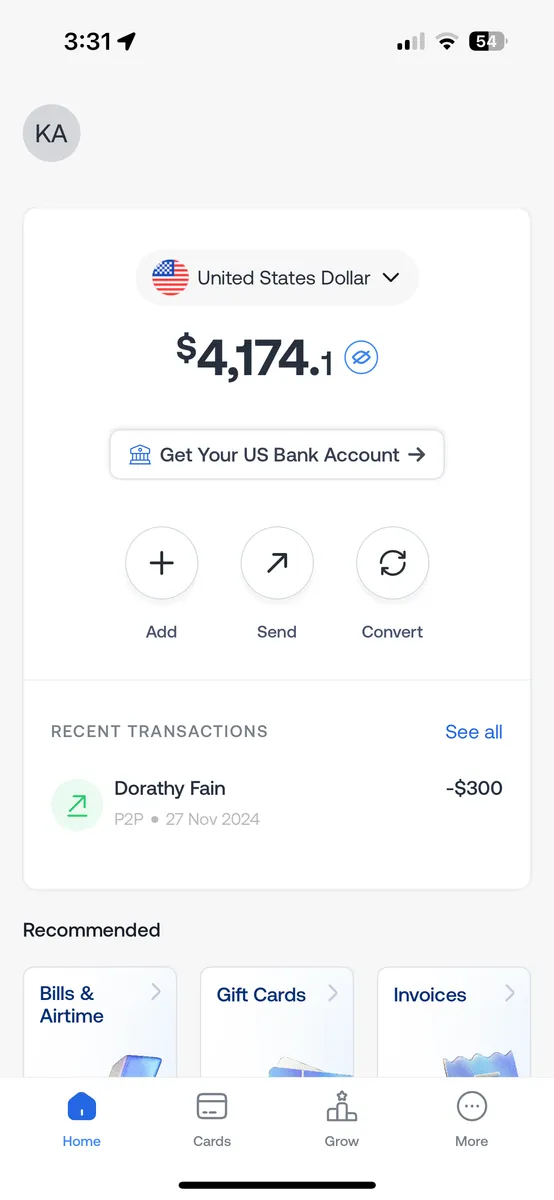
With a personal account, you can open USD, GBP, and EUR balances with real banking details. This allows clients to pay you as if they were making a local transfer in their own country. Instead of receiving an expensive international wire, you receive money through local rails like ACH, SEPA, and FPS.
Once the money arrives, you can hold it in foreign currency, convert it when the rate works for you, or withdraw it to your local bank account. You can also spend directly using your Grey virtual card without needing to manually move funds around.
The focus here is simplicity. You are managing your own income, and the account is designed to make that as flexible as possible.
What fees does Grey Personal charge?
Understanding fees is where most people get confused, so here’s how it actually works.
When you receive money through ACH, SEPA, or FPS, Grey charges a 0.8% fee, with a minimum of $2, €2, or £2 and a maximum of $10, €10, or £10. This means larger payments become proportionally cheaper because of the cap.
Currency conversion depends on the currency pair. Some routes are free, while others range from 0.5% to 1%. For certain major pairs, the fee is capped at $6. The important detail is that Grey shows the rate before you confirm, so there are no hidden charges after the fact.
Withdrawals vary depending on the country, but for major currencies like EUR and GBP, the fee is typically 0.5%, with a minimum and maximum cap. Other corridors may use fixed fees instead.
For less common deposit methods like Fedwire, BACS, or CHAPS, fixed fees apply. These are generally used less often, since local rails like ACH or FPS are cheaper.
Read more: Grey charges explained: what every transaction costs
What is Grey Business?
Grey Business is designed for companies rather than individuals.
If you are running a registered business, working under a company name, or managing revenue that belongs to a business entity, this is the account structure you need.
Unlike a personal account, a Grey Business account is built for your company. This means you can receive payments on behalf of the business, manage funds at a company level, and keep financial records properly organised for accounting and compliance.
The functionality goes beyond receiving payments. Grey Business allows you to manage team access, assign roles, and give multiple people control over finances without sharing a single login.
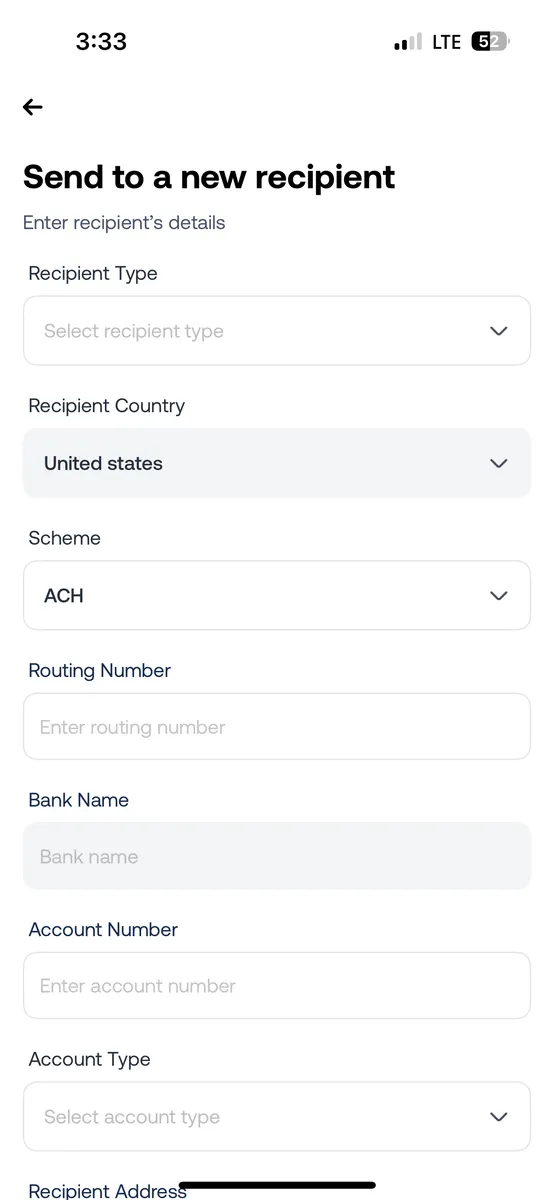
You can also pay contractors globally, send payments in local currencies, and handle bulk payouts by uploading recipient details. This becomes important as soon as you are working with a team or scaling operations.
The goal of Grey Business is not just to receive money, but to structure how your business handles it.
What fees does Grey Business charge?
Grey Business follows the same core pricing model as personal accounts.
Receiving payments still comes with the 0.8% fee capped at $10. Conversion fees follow the same tiered structure, and withdrawals depend on the payout country.
The difference is not in lower fees, but in what the account enables.
With Grey Business, you are paying for structure, team management, and the ability to operate at scale without mixing personal and company finances.
Grey Personal vs Grey Business: what is the difference?
The main difference comes down to ownership.
A personal account is for money that belongs to you as an individual. A business account is for money that belongs to a company.
Everything else builds from that.
Grey Personal is simpler, quicker to set up, and designed for individuals managing their own income. Grey Business requires verification of a registered company but provides tools to manage payments, teams, and operations effectively.
If you are working alone and getting paid for your own work, a personal account is enough. If you are invoicing as a company, hiring people, or managing shared finances, you need a business account.
Also read: Can non-residents open a US bank account online in 2026?
When should you use Grey for personal use?
You should use a personal account if you are earning in your own name.
This includes freelancers, remote employees, and creators earning from platforms like YouTube, TikTok, or Upwork. At this stage, your income is still personal, even if it comes from multiple sources.
A personal account keeps things simple.
When should you use Grey Business?
You should use Grey Business when your income is no longer just yours.
If you have registered a company, invoice under a business name, or manage revenue that belongs to a business entity, a personal account is no longer the right structure.
This is especially important if you are paying contractors, working with a team, or preparing financial records for accounting and tax purposes.
Can you have both Grey for personal use and Grey Business?
Yes, and in many cases, this is the best setup.
If you run a company but also earn income personally, keeping both accounts separate helps avoid confusion. Your business transactions stay within the business account, while your personal income remains separate.
This makes accounting cleaner and reduces the risk of mixing funds.
Grey for personal use vs Grey Business: key differences
| Feature | Grey Personal | Grey Business |
|---|---|---|
| Who it’s for | Individuals (freelancers, creators, remote workers) | Registered companies, startups, agencies |
| Account ownership | Personal use | Business entity |
| Currencies supported | USD, GBP, EUR, USDC | USD, USDC (business-focused) |
| Receiving payments | Yes (ACH, SEPA, FPS) | Yes (for business transactions) |
| Team access | No | Yes (multi-user access with roles) |
| Bulk payouts | No | Yes (CSV uploads supported) |
| Virtual cards | Yes (for personal use) | Yes (multiple cards for teams, tools, ads) |
| Best use case | Getting paid individually | Managing company finances and scaling operations |
| Setup process | Fast (ID verification) | More detailed (business verification required) |
So, which Grey account should you choose?
Most people overthink this decision, but it comes down to one simple question:
Who does the money belong to?
If you’re earning as an individual, whether that’s freelancing, remote work, or content creation, a Grey Personal account is the right fit. It keeps things simple and flexible while giving you full access to international payments.
If you’re operating as a registered business, invoicing clients under a company name, or managing team payments, Grey Business is the structure you need. It helps you separate finances properly and handle growth without creating confusion later.
If you’re in between, which is common, you can start with a personal account and move to business when your setup requires it. Many users also keep both, using one for personal income and the other for company operations.
The goal isn’t to pick the most advanced option. It’s to choose the one that fits how you earn today and won’t slow you down as you grow.
Getting started with Grey
Opening a Grey Personal account takes just a few minutes. You can sign up in under 5 minutes, and once your identity is verified, you can usually start receiving payments the same day.
Opening Grey Business takes a bit longer because it involves business verification. You’ll need to submit your company registration and ownership details, and approval typically takes 1 to 3 business days, depending on the documents provided. This ensures your account is set up correctly from the start.
Frequently asked questions
What is the difference between Grey for persona use and Grey Business?
Grey Personal is for individuals receiving and managing their own income, such as freelancers, creators, and remote workers. Grey Business is for registered companies that need to manage business revenue, pay contractors, and give team members access to finances.
The main difference is ownership. Personal accounts are for your money. Business accounts are for company funds.
Can I use a Grey Personal account for business payments?
You can use a personal account while you are freelancing under your own name. However, once you register a company or start invoicing under a business name, it is better to switch to Grey Business.
Using a personal account for business transactions can create confusion with accounting, taxes, and financial tracking.
Does Grey Business have different fees from Grey Personal?
Grey Business follows the same core pricing structure as personal accounts. Receiving fees are typically 0.8% with a cap, and conversion fees depend on the currency pair.
The main difference is not pricing, but functionality. Grey Business adds tools for team access, bulk payments, and structured financial management.
Can I have both a Grey Personal and Grey Business account?
Yes. Many users have both accounts.
This is useful if you have personal income, such as freelance work or creator earnings, and also run a registered business. Keeping them separate makes accounting cleaner and easier to manage.
When should I switch from Grey Personal to Grey Business?
You should consider switching when your income becomes business revenue instead of personal income.
This usually happens when you register a company, start invoicing clients as a business, hire contractors, or need proper financial records for tax and reporting purposes.
What documents are required to open a Grey Business account?
To open a Grey Business account, you will need to provide company registration documents, ownership details, and verification information about the business.
The process is more detailed than a personal account because it involves verifying a legal entity.
Is Grey Personal enough for freelancers and creators?
Yes. For most freelancers, remote workers, and creators, Grey Personal is more than enough.
It allows you to receive international payments, hold foreign currency, convert when needed, and withdraw locally without needing business-level setup.
Can I receive USD, GBP, and EUR with both accounts?
Yes. Both Grey Personal and Grey Business support multi-currency functionality.
Personal accounts focus on individual income, while business accounts structure those same capabilities for company use.
Which Grey account is better?
Neither is better. They are designed for different use cases.
Grey Personal is better for individuals managing their own income. Grey Business is better for companies managing business finances and scaling operations.
Ready to get started?
Open your Grey Personal account to start receiving international payments as an individual, or set up Grey Business if you’re managing company finances and need a more structured setup.

.svg)