Trusted by 3M+ people around the world

GOOGLE PLAY •22K REVIEWS

APP STORE • 12K REVIEWS


Rand into a South African bank account
The money going south from Den Haag, Amsterdam and Rotterdam is rarely a one-off. It is parents who stayed in Cape Town, a bond on a house in Johannesburg, fees at a school in Stellenbosch, or a sibling who never left Durban. The sender has a Dutch salary and a South African set of obligations.
Grey converts your euros to ZAR and pays into FNB, Standard Bank, Absa, Nedbank and Capitec using the account number and branch code. Transfers from a funded balance typically arrive within minutes as an ordinary domestic credit.
How the South Africa route runs

Sign up
Free to open, roughly five minutes, and one valid identity document. No Dutch is needed at any stage.

Fund
Move euros in by iDEAL or SEPA from ABN AMRO, ING, Rabobank or bunq and hold them until the rand is wanted.

Send
Enter the South African account number and branch code, check the rand total, and confirm. The rate stops moving there.
What the transfer costs, honestly
Grey shows the EUR to ZAR rate and the payout cost as separate figures before you confirm, and neither is revised afterwards.
The rand is a volatile currency, so the timing of a conversion matters as much as the provider. Holding euros on Grey and converting on a day you choose puts that decision in your hands rather than a bank's clearing schedule.

The rand figure is agreed before it leaves

When you confirm in the Netherlands, the EUR to ZAR rate is fixed and the rand total is settled.
For a bond instalment or a term of school fees, that is the only version that works. The amount due in South Africa does not adjust itself because a currency moved while the payment was in transit.


The trouble with an ordinary international transfer
Sent as a SWIFT payment, money to South Africa passes through correspondent banks, each with its own charge, and can be held for checks at the receiving end. A Grey payout lands at FNB or Capitec looking like a domestic rand deposit, which is both quicker and cleaner for whoever is receiving it.
What your family in South Africa sees
Rand credited to the account they already bank with. No collection, no code, no Grey account at their end and no charge from Grey either.

The major banks
FNB, Standard Bank, Absa, Nedbank and Capitec, addressed with the account number and branch code.

Domestic credit
The deposit appears as a local rand payment rather than an incoming foreign wire.

Saved once, reused
Store a parent, a school or a bond account and later transfers take three taps.
How money reaches your Grey balance here
Everything before the conversion is ordinary euro banking in the Netherlands, and it happens one of three ways.
iDEAL
The familiar Dutch route, credited to the balance in moments.
Non-euro balances
USD provided by Lead Bank, or GBP, converts to ZAR without an intermediate euro step.
From another user
A GreyTag transfer from someone else on Grey is instant and free.

If the rand amount is the fixed part, enter ZAR first and the euro cost is calculated back for you.

Why money moves from here to South Africa
Parents and retirement
Regular support for parents in Cape Town, Pretoria or Port Elizabeth, including medical aid contributions and household costs.
Property and bonds
Instalments on a house kept in Johannesburg or Durban, rates, levies and the costs of maintaining property from abroad.
School and university fees
Termly fees for children still studying in South Africa, paid to a specific account on a specific date.
Contractors and small business
Dutch companies paying South African developers, designers and agencies who invoice in rand.
The community is established rather than new, and that changes the shape of the payments. They are less about monthly survival and more about obligations left behind.
Why this route works on Grey
Leaving South Africa rarely means leaving its bills. A bond, a school and a parent all carry on, and each expects a rand figure on a date that was set long before you lived in the Netherlands.
Euros funded in the Netherlands, rand paid into a South African bank account, encrypted and tracked from confirmation to settlement.



FAQs
Which South African banks can receive the money?

FNB, Standard Bank, Absa, Nedbank and Capitec, using the recipient's account number and branch code.
Can I pay a bond instalment from the Netherlands?
Yes. Save the South African bond account once and pay each instalment in rand from your euro balance.
Does the app work in English?
Yes. Sign-up, verification and support run in English, which suits the South African community in Den Haag and Amsterdam.
How do I add euros to my balance?
iDEAL is the quickest. A SEPA transfer from ABN AMRO, ING, Rabobank or bunq works just as well.
Can I choose when to convert to rand?
Yes. Hold euros on Grey and convert on a day you choose, rather than when a bank transfer happens to clear.
Is the rand amount fixed once I confirm?
Yes. The EUR to ZAR rate is locked at confirmation, so the rand total does not change in transit.
Will rand reach a bond account in Johannesburg on time?
Yes. From a funded euro balance, payouts typically arrive within minutes as an ordinary domestic credit at FNB, Absa or Nedbank.
Will my parents be charged to receive it?
No. Grey charges the sender, and the rand arrives whole at the South African bank.
Can a Dutch company pay a South African contractor?
Yes. Developers, designers and agencies invoicing in rand are paid the same way as family recipients.
Do parents in Cape Town need to sign up for anything?
No. The rand lands in the South African account they already hold. Two Grey users can also send free instant GreyTag transfers.
Besides rand, what else does the account give a sender in the Netherlands?
Access to more than 80 countries, balances in USD provided by Lead Bank, GBP and EUR, and a virtual Mastercard.
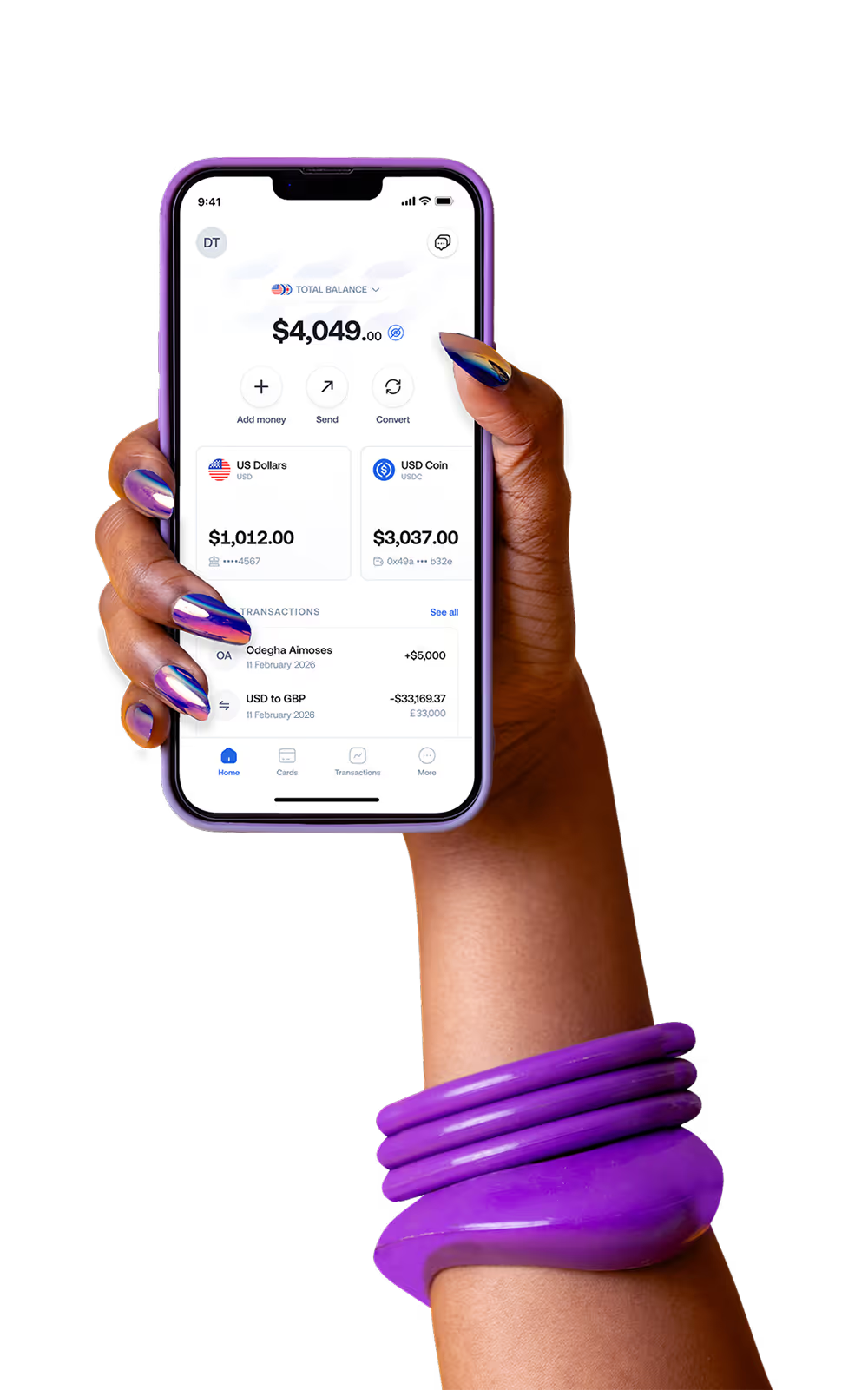
Get digital banking
at your fingertips