Send money from Singapore to Ghana
Cocoa, shea and cashew contracts written in Singapore are settled in Accra in cedi. Grey converts your balance and pays GHS into a Ghanaian bank account or an MTN Mobile Money, Vodafone Cash or AirtelTigo wallet, with the rate and the fee shown before you confirm.
SGD
GHS


-

Trusted by 3M+ people around the world

GOOGLE PLAY •22K REVIEWS

APP STORE • 12K REVIEWS
Who sends from Singapore to Ghana
The traffic on this route starts in an office around Raffles Place or Tanjong Pagar rather than in a family kitchen. Commodity desks buying Ghanaian cocoa, shea and cashew, shipping agents covering vessel calls at Tema and Takoradi, and regional offices running West African operations from here account for most of it.
Behind them sits a smaller group of Ghanaian engineers, seafarers and finance staff working in Singapore who support parents in Accra or Kumasi.
Both want the same outcome: a fixed cedi figure landing on a named Ghanaian account or wallet on the day it was promised. Grey quotes GHS first and holds that figure.
Three steps from a Singapore desk to a Ghanaian account

Sign up
A free Grey account opens in about five minutes against a passport, NRIC or employment pass. Grey opens a USD account in your name, provided by Lead Bank.

Fund
Trade receipts, commission and salary paid to you in USD, EUR or GBP land in that balance and sit there until a Ghanaian payment falls due.

Send
Enter the Ghanaian bank account number, or the registered MTN MoMo, Vodafone Cash or AirtelTigo number, read the GHS figure, confirm.
What a cedi payment actually costs
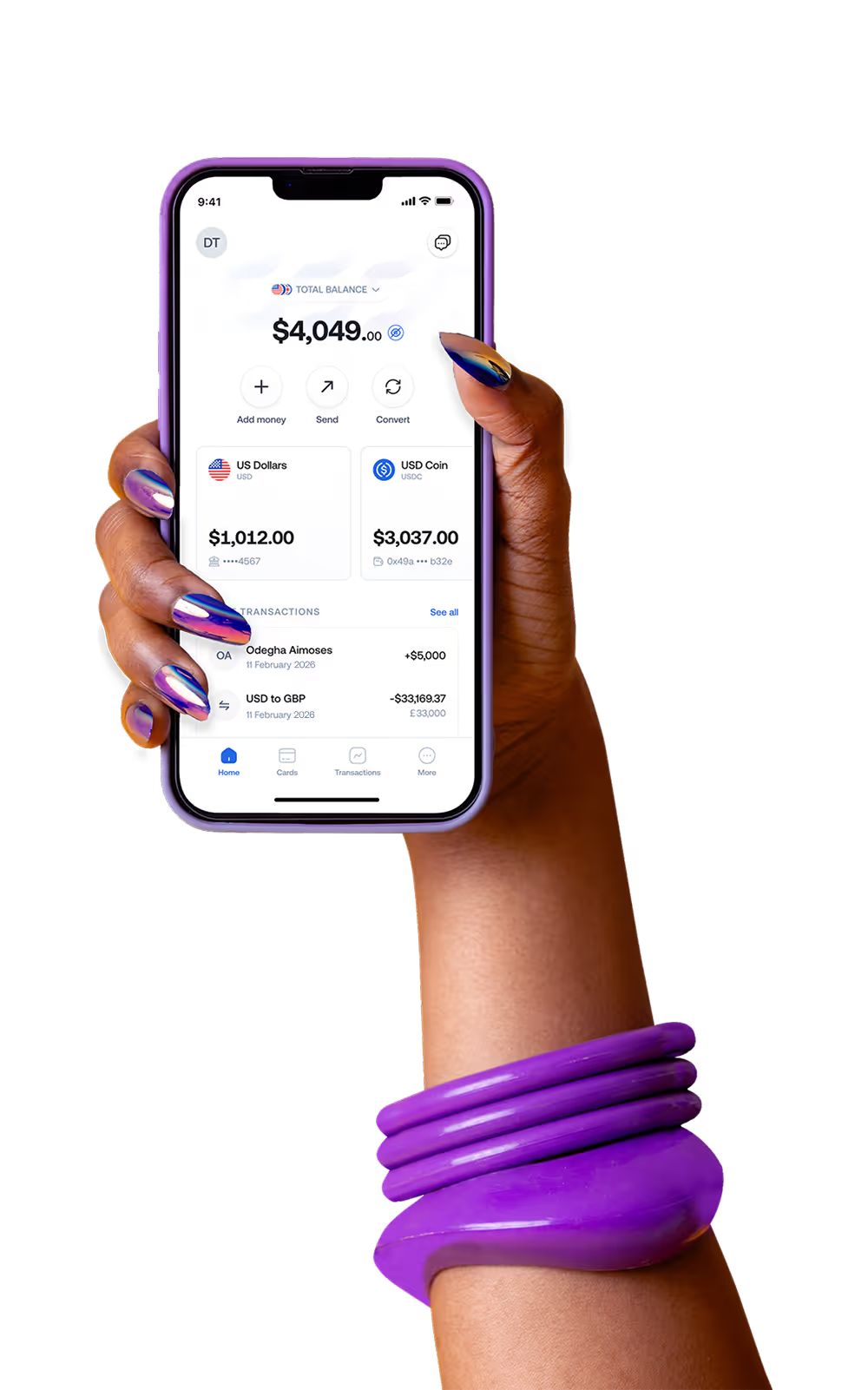
Grey keeps them apart. The dollars leaving your balance, the fee and the cedi arriving in Ghana appear together on one screen before confirmation, so the cost can be checked against the invoice rather than reconstructed later from a statement.
Nothing is taken off at the Ghanaian end. The GHS figure approved in Singapore is the figure credited in Accra.

The GHS rate is fixed when you confirm

The cedi moves, and a payment that drifts for days can land at a different value from the one quoted. Grey fixes the rate at the moment of confirmation, so the quote sent to a Ghanaian counterparty for approval is still the quote when the money arrives.
You can work backwards as well. Enter the GHS the supplier invoiced and Grey shows the dollar cost from Singapore before anything leaves the balance.

Against a correspondent bank route to Accra
A wire from a Singapore bank to Ghana passes through at least one correspondent, each of which can take a cut, and none of which tells you the cedi figure in advance. DBS, OCBC, UOB, Standard Chartered Singapore and Citibank Singapore quote in dollars and leave the conversion to the receiving bank. Grey converts here and delivers GHS as a domestic credit there.
What the recipient in Ghana sees
No Grey account is needed on the Ghanaian side. The cedi shows up as an ordinary local credit, in a bank account or a mobile wallet, with your reference attached.
Bank account in cedi
GHS credited to an account at any major Ghanaian bank.

Mobile money wallet
MTN Mobile Money, Vodafone Cash or AirtelTigo, by registered number.

GreyTag if they hold one
Free and instant between two Grey accounts.
Getting money into the account in Singapore
Before any cedi moves, the balance has to be funded here. On this corridor that is usually foreign currency already owed to you rather than a deposit you have to arrange.
Counterparty settlements
Buyers and charterers pay USD into your Grey account details.
Payroll and platforms
Salaries, commissions and platform payouts in EUR or GBP.
From another Grey user
A GreyTag from a colleague or partner funds it in seconds.

Holding the balance between payments is worth more here than shaving a fee, because it lets you pick the moment the dollars become cedi.

What Singapore money pays for in Ghana
Cocoa and cashew buying
Advances and settlements to licensed buying companies and upcountry agents through the cocoa season.
Port and agency costs
Disbursements for calls at Tema and Takoradi: pilotage, stevedoring, surveyors and local agency fees.
Staff and inspectors
Salaries for a Ghanaian team reporting to a Singapore office, and fees to quality inspectors and warehouse operators.
Family support
Ghanaian professionals and seafarers based here sending a monthly amount to Accra, Kumasi or Takoradi.
Four uses cover most of what leaves Singapore for Ghana. They are weighted towards trade rather than towards family, which is what makes this corridor unusual.
Why Grey on the Singapore to Ghana route
A Ghana corridor is judged in the middle of a buying season, when payments go out weekly and every cedi figure has to reconcile against a contract.
By then what counts is that the rate held, the account or wallet number was already saved, and nobody in Accra had to ask again when the money would arrive.



FAQs
Does Grey pay out in Ghanaian cedi?

Yes. Grey converts your Singapore balance and credits GHS to a Ghanaian bank account or a mobile money wallet as a local payment.
Which mobile money wallets work in Ghana?
MTN Mobile Money, Vodafone Cash and AirtelTigo are all supported. Enter the recipient's registered mobile number in place of a bank account number.
Can I pay a cocoa buying company rather than a person?
Yes. Payments to Ghanaian companies work exactly as payments to individuals do, using the company account number at its Ghanaian bank.
How do I fund the transfer from Singapore?
Trade receipts, freight income or salary paid to you in USD, EUR or GBP land in your Grey account and fund the cedi payment.
Do I need a Singapore dollar bank transfer first?
No. The balance is built from foreign currency already paid to you, so there is no separate local funding step to arrange.
Is the cedi rate fixed before I release a buying season advance?
Yes. The cedi figure, the fee and the dollar cost appear together, and the rate holds from the moment you confirm.
Does the recipient in Accra need a Grey account?
No. The cedi arrives as an ordinary credit in their existing bank account or wallet, so a Grey account is optional for them.
Who provides the USD account my balance sits in?
Lead Bank provides it. Grey is a financial technology company rather than a bank, and works through licensed banking partners.
How soon can a Singapore commodity desk make its first cedi payment?
About five minutes to open the account, using one valid identity document such as a passport, NRIC or employment pass.
Can I pay a Takoradi port agent during a vessel call?
Yes. Agency disbursements reach the agent's Ghanaian account or wallet in cedi, with the amount and the fee visible before you confirm.
What if my Ghanaian counterparty also uses Grey?
Send by GreyTag instead. Transfers between two Grey accounts are free and instant, in whichever currency you both hold.
Get digital banking
at your fingertips