<script type="application/ld+json" data-schema-version="grey-blog-v4"> [{"@context":"https://schema.org","@type":"BlogPosting","@id":"https://grey.co/blog/the-6-highest-paying-digital-nomad-jobs-in-the-world#article","headline":"The 6 highest paying digital nomad jobs in the world","description":"Discover why Grey outperforms local banks with lower fees, better exchange rates, and a seamless USD debit card.","inLanguage":"en","url":"https://grey.co/blog/the-6-highest-paying-digital-nomad-jobs-in-the-world","mainEntityOfPage":{"@id":"https://grey.co/blog/the-6-highest-paying-digital-nomad-jobs-in-the-world#webpage"},"datePublished":"2025-02-07T19:48:24.065Z","dateModified":"2026-06-15T16:33:32.117Z","author":{"@type":"Person","@id":"https://grey.co/authors/priscila-marotti#person","name":"Priscila Marotti","url":"https://grey.co/authors/priscila-marotti","jobTitle":"Content Writer","sameAs":["https://www.linkedin.com/in/priscila-marotti/"]},"publisher":{"@type":"Organization","@id":"https://grey.co/#organization","name":"Grey","url":"https://grey.co","logo":{"@type":"ImageObject","url":"https://cdn.prod.website-files.com/6360022338a81bd6fdbb1145/6564ae1077a67e39d3c491a6_Grey%20Logo%20Lockup%20Black.svg"}},"image":{"@type":"ImageObject","@id":"https://grey.co/blog/the-6-highest-paying-digital-nomad-jobs-in-the-world#primaryimage","url":"https://cdn.prod.website-files.com/636a85d290ee58e70c17e1c0/6a3015bdb2ba4a03394d6c7e_6a3015bcb646e0377ebf30f6_the-6-highest-paying-digital-nomad-jobs-in-the-world__header-image.webp","contentUrl":"https://cdn.prod.website-files.com/636a85d290ee58e70c17e1c0/6a3015bdb2ba4a03394d6c7e_6a3015bcb646e0377ebf30f6_the-6-highest-paying-digital-nomad-jobs-in-the-world__header-image.webp","width":1200,"height":675}},{"@context":"https://schema.org","@type":"WebPage","@id":"https://grey.co/blog/the-6-highest-paying-digital-nomad-jobs-in-the-world#webpage","url":"https://grey.co/blog/the-6-highest-paying-digital-nomad-jobs-in-the-world","name":"The 6 highest paying digital nomad jobs in the world","description":"Discover why Grey outperforms local banks with lower fees, better exchange rates, and a seamless USD debit card.","inLanguage":"en","primaryImageOfPage":{"@id":"https://grey.co/blog/the-6-highest-paying-digital-nomad-jobs-in-the-world#primaryimage"},"breadcrumb":{"@id":"https://grey.co/blog/the-6-highest-paying-digital-nomad-jobs-in-the-world#breadcrumb"}},{"@context":"https://schema.org","@type":"BreadcrumbList","@id":"https://grey.co/blog/the-6-highest-paying-digital-nomad-jobs-in-the-world#breadcrumb","itemListElement":[{"@type":"ListItem","position":1,"name":"Home","item":"https://grey.co/"},{"@type":"ListItem","position":2,"name":"Blog","item":"https://grey.co/blog"},{"@type":"ListItem","position":3,"name":"The 6 highest paying digital nomad jobs in the world","item":"https://grey.co/blog/the-6-highest-paying-digital-nomad-jobs-in-the-world"}]},{"@context":"https://schema.org","@type":"ItemList","@id":"https://grey.co/blog/the-6-highest-paying-digital-nomad-jobs-in-the-world#list","name":"The 6 highest paying digital nomad jobs in the world","numberOfItems":6,"itemListElement":[{"@type":"ListItem","position":1,"name":"Software development and engineering"},{"@type":"ListItem","position":2,"name":"Data science and analytics"},{"@type":"ListItem","position":3,"name":"Cybersecurity consulting"},{"@type":"ListItem","position":4,"name":"Digital marketing and SEO consultancy"},{"@type":"ListItem","position":5,"name":"Online coaching and consulting"},{"@type":"ListItem","position":6,"name":"UX/UI design"}]}] </script>

The 6 highest paying digital nomad jobs in the world

Priscila Marotti

TABLE OF CONTENT

SHARE THIS POST

The rise of remote work has opened up high-paying opportunities for professionals who want to work from anywhere in the world. While digital nomad jobs vary in salary, some roles stand out for their lucrative earning potential and flexibility. If you’re looking to earn a great income while working remotely, here are six of the highest-paying digital nomad jobs.

1. Software development and engineering

Software developers and engineers are among the highest-paid remote professionals. Companies worldwide seek skilled developers to build applications, websites, and digital products. Whether you’re a front-end, back-end, or full-stack developer, this field offers excellent salaries and job security.

Average salary: £60,000 – £120,000 per year (or more for highly experienced professionals)

Skills required: Proficiency in programming languages like Python, JavaScript, or Java, problem-solving skills, and experience with cloud computing or DevOps.

Why it’s great for digital nomads: High demand, flexible work schedules, and the ability to work for international companies.

2. Data science and analytics

Data scientists and analysts are in high demand as businesses rely on data to drive decisions. This role involves collecting, interpreting, and visualising data to help companies optimise their strategies.

Average salary: £70,000 – £150,000 per year

Skills required: Knowledge of machine learning, statistical analysis, SQL, Python, and data visualisation tools like Tableau.

Why it’s great for digital nomads: High earning potential, project-based work, and opportunities across various industries, including tech, finance, and healthcare.

3. Cybersecurity consulting

With increasing cyber threats, businesses need cybersecurity professionals to protect sensitive data. Cybersecurity consultants assess risks, implement security measures, and ensure compliance with industry regulations.

Average salary: £80,000 – £160,000 per year

Skills required: Cybersecurity certifications (CISSP, CEH, CISM), ethical hacking, network security, and risk assessment.

Why it’s great for digital nomads: High industry demand, remote consulting opportunities, and lucrative salaries.

4. Digital marketing and SEO consultancy

Companies need digital marketing experts to manage online advertising, SEO, and social media. Digital marketers can work remotely for multiple clients or be employed by a single company.

Average salary: £50,000 – £120,000 per year (higher for experienced consultants)

Skills required: SEO, pay-per-click (PPC) advertising, content marketing, social media strategy, and data analytics.

Why it’s great for digital nomads: The ability to work with international clients, freelance opportunities, and passive income potential through affiliate marketing or digital products.

5. Online coaching and consulting

Experts in business, career development, fitness, or personal finance can offer online coaching and consulting services. This industry has grown significantly, with professionals using platforms like Zoom and social media to reach clients worldwide.

Average salary: £50,000 – £200,000 per year (depending on niche and client base)

Skills required: Industry expertise, strong communication skills, marketing knowledge, and the ability to create online courses or coaching packages.

Why it’s great for digital nomads: High-income potential, flexible schedules, and the ability to scale services through online courses and memberships.

6. UX/UI design

User experience (UX) and user interface (UI) designers create visually appealing and user-friendly digital products. They collaborate with developers and product teams to design apps, websites, and software interfaces.

Average salary: £55,000 – £130,000 per year

Skills required: Proficiency in design tools like Figma, Adobe XD, and Sketch, along with user research and wireframing skills.

Why it’s great for digital nomads: High demand, freelance opportunities, and the ability to work with clients worldwide.

Choosing the right digital nomad job for you

While these roles offer high salaries, choosing a job that aligns with your skills and interests is essential. Whether you’re an aspiring digital nomad or looking to transition into a higher-paying remote career, these six jobs offer financial stability and the freedom to work from anywhere in the world.

Ready to start your digital nomad journey? Grey makes it easy to manage cross-border transactions, send and receive payments, and access international banking from one app. Create your free account with Grey now.

‍

Last updated:

October 2, 2026

Open a free Grey account to get startedJoin 1 million digital nomads
IF YOU ENJOYED THIS, CHECK THESE OUT

How Moroccan creators can receive YouTube payments

•

•

2 min read

Pioneers like Saad and Bassima are leading a creative revolution in Morocco. Their massive followings and innovative content have inspired a whole new generation to see YouTube as a real way to earn. Across the country, young Moroccans are turning vlogs, tutorials, and reviews into a steady income, proving that talent and consistency pay off.

Even with the government’s new digital tax putting extra pressure on earnings, creators aren’t slowing down. They’re finding smarter ways to manage payments, adapt to challenges, and keep their passion alive. Here’s how Moroccan creators can confidently receive their YouTube earnings without losing a dirham of what they deserve.

Also read: How to pay for subscriptions in US dollars from Morocco

Challenges Moroccan YouTubers face in monetising their channels

Moroccan YouTubers are growing fast, but success doesn’t come easy. From content quality to taxes, creators face unique challenges shaping their journey.

1. Content quality

Standing out on YouTube means producing consistent, high-quality videos. Many Moroccan creators struggle with limited equipment, editing tools, and resources. Balancing creativity with production value takes time, money, and persistence, yet audiences increasingly expect professional standards, making content quality a tough but necessary challenge to overcome.

2. Taxation

With the introduction of digital taxes, Moroccan YouTubers now face reduced earnings. Many creators find it difficult to understand and comply with tax rules, especially freelancers without formal business structures. This often leads to confusion, unexpected deductions, and added pressure on already tight profit margins.

3. Global reach

While YouTube is a global platform, Moroccan creators often face challenges reaching international audiences. Language barriers, limited visibility in global algorithms, and niche content topics can restrict exposure. To grow beyond borders, creators must adapt content for wider appeal while staying authentic to their Moroccan identity.

4. Digital infrastructure

Slow internet speeds and inconsistent connectivity continue to impact video uploads, live streams, and collaborations. Many Moroccan YouTubers invest extra time and money in data or better equipment just to stay consistent. Without a stronger digital infrastructure, even the most talented creators face limits on growth and engagement.

Also read: How Fiverr freelancers in Morocco can receive payments easily in 2025

How YouTubers in Morocco earn money

As a Moroccan YouTuber, there are several ways you can monetise your channel and build a sustainable digital career.

1. Advertising

YouTube’s Partner Programme allows you to earn money from ads shown on your videos. Once your channel meets the requirements, you’ll start receiving revenue based on views and engagement. The more consistent and engaging your content, the higher your earnings. Ads become your first real step toward turning passion into profit.

2. Fan funding

Your biggest supporters want to see you succeed, and many are willing to help financially. Through Super Chat, channel memberships, or platforms like Patreon, your audience can directly contribute. This kind of funding creates a deeper bond with your fans and provides a steady source of income beyond ads.

3. Affiliate marketing

You can recommend products or services you genuinely love and earn a commission for each sale made through your unique links. Whether it’s beauty products, gadgets, or online tools, affiliate marketing lets you monetise trust. When done authentically, it benefits both you and your viewers.

4. Merchandising

Selling your own branded merchandise, from T-shirts to mugs, is another powerful way to earn. As your audience grows, so does their connection to your personal brand. Offering merch gives fans something tangible to support you while helping you create a new income stream.

Earn from YouTube in Morocco using Grey

  • Get a foreign account instantly: Open a free EUR, USD, or GBP account with Grey right from Morocco.
  • Link your Grey account to YouTube AdSense: Use your Grey-provided banking details to receive AdSense payments directly from YouTube and brand partnerships in euros or dollars.
  • Low fees: Enjoy transparent transactions with no hidden charges and real exchange rates, so you keep more of what you earn.
  • Quick withdrawals to Moroccan bank accounts: Transfer your YouTube earnings instantly from Grey to your local bank in MAD.

Receive your YouTube earnings with Grey

Earning from YouTube is a huge opportunity for creators in Morocco. Gone are the days when you needed a foreign account to receive your payments. With Grey, you can earn globally and spend locally while growing your YouTube channel. Sign up or download the Grey app today to get started.

‍

5 best countries to live as a digital nomad

•

•

2 min read

So, you’ve decided it’s time to swap the office desk for your laptop and a change of scenery. Maybe a beach, a cobbled alley café, or a co-working hub with mountain views. But where do you go?

If you’re new to this lifestyle, you’ll want to start somewhere that welcomes you, with great infrastructure, fair costs, and a community that makes you feel at home. Here are five countries that tick all the boxes for beginners ready to earn globally and live locally.

What “easy” actually means: the remote-work sweet spot

Before we deep dive into countries, let’s define the ingredients that turn a foreign country into a remote-work playground:

  • Remote-work visa or legal clarity: A place that welcomes you to live and work for clients overseas, without needing a local job contract. For example, over 60 countries now offer digital nomad visas.
  • Affordable cost of living: Lower rent, reasonable bills, and decent lifestyle so your foreign salary stretches further. “Affordability” featured in top-10 lists for digital nomad destinations.
  • Good connectivity & infrastructure: Strong internet, co-working spaces, cafes with power outlets — so you can work without frustration.
  • Friendly tax/financial setup: Simpler payment routes, clear rules about remote income, manageable tax burdens.
  • Culture and community: You’ll thrive when there’s a base of fellow remote workers, good language access, and safe environment.

When a country hits several of these, it becomes a “beginner-friendly” remote work destination. Ready? Let’s tour five of the easiest places to start.

Also read: Best countries to work in Europe

1. Portugal

Why it’s a top pick: Great climate, strong infrastructure, and clear remote-work visa options.

  • Portugal offers a digital nomad-friendly visa (D8), simpler residency and remote work-friendly rules.
  • It ranks highly for coworking culture, cost of living (by Western standards) and English-friendly environment.
  • Example estimate: A digital nomad visa in Portugal requires proof of monthly income (~€3,480 according to some sources).
  • Estimated monthly living cost (solo): ~ $1,200-2,000 depending on city & lifestyle. E.g., digital nomads report approx €1,200-€1,800 per month in many places.

Key practical notes:

  • Lisbon and Porto are more expensive, particularly rent. For example, a one-bed in Lisbon centre can be ~€1,000+ per month.
  • Remote-work visa applicants will typically need to show proof of income (~€3,000+ monthly) and health insurance.
  • High connectivity, good infrastructure, great for remote work.

Beginner tip: Choose Lisbon or Porto for social energy and remote-work cafés, or find quieter towns in the Algarve for cost savings.

Make your life easier from day one, manage multiple currencies, receive global payments, and spend anywhere.

Open a free Grey account and set up your remote-work finances before you even book your flight.

2. Spain

Why it works: Sunny weather, robust remote-work rules, and huge expat community.

  • According to a 2025 report by Global Citizen Solutions, Spain tops the list for digital nomad visas thanks to infrastructure, visa clarity and quality of life.
  • Average monthly expenses in some Spanish cities for remote workers: ~€1,000–€1,400 for living.
  • Estimated monthly living cost (solo): ~ $1,400-2,000+, depending on city (Madrid/Barcelona being toward the upper end).

Key practical notes:

  • Good food, café culture, strong English + local language balance.
  • Excellent for remote workers who want European lifestyle but intend to maintain foreign income.
  • Need to check regional visa and tax rules (Spain has “autónomo” rules, etc).

Tip: Even if you’re beginner-remote, stay at an Airbnb or shared flat for a month to test co-working rhythm before committing to a long stay.

Read more: How to apply for a digital nomad visa in Spain

3. United Arab Emirates (UAE)

Why it’s easier than you might think: Ultra-modern infrastructure + remote-work visa support.

  • The UAE ranked 2nd in the 2025 VisaGuide Digital Nomad Index for ease of remote work.
  • If you can handle higher living costs, you get world-class connectivity, coworking hubs and no personal income tax (in many cases) for remote earnings.
  • Estimated monthly living cost (solo): ~ $2,000+ in Dubai for a comfortable lifestyle. In less central emirates (Sharjah, etc) closer to $1,100-1,500.

Key practical notes:

  • If you’re earning foreign income and pay tax elsewhere, it can be very tax-friendly.
  • Lifestyle is high-end: malls, gyms, cafés, and high connectivity.
  • But cost of rent and living is significantly higher than in many emerging markets.
  • Heat and climate may affect comfort; outdoors may be stressful in summer.

Tip: Dubai or Abu Dhabi have nomad-friendly areas, plenty of networking events and a strong international community.

Get paid in USD, EUR, or GBP from anywhere and convert at fair rates with Grey — no stress, no borders, no hidden steps.

Start today with a free account.

4. Vietnam

Why it’s friendly for beginners: Low cost of living, strong remote-work culture, lots of cafes.

  • Although not always topping visa-lists, Vietnam (including hubs like Ho Chi Minh City, Da Nang) shows up in fast-growing remote-work destination lists.
  • The key: You might stay on tourist visa extensions initially and rely on local coworking spots, but the lifestyle is affordable and rich.
  • Estimated monthly living cost (solo): ~ $800-1,450 depending on city and style of living. E.g., low end ~$800; mid-range ~$1,000+.

Key practical notes:

  • Rent is very cheap compared to Western cities (e.g., one-bed in city centre ~$500-800 in HCMC).
  • Excellent value for money: food, transport, living costs are low.
  • Visa rules may be less straightforward than Western/European countries.
  • If you’re earning in USD/EUR/GBP, your money can stretch a lot.

Tip: Aim for budget that allows you to live well (rent + coworking + meals) under US$1,500/month while you ramp up your remote earnings.

You may also like: Remote work visas compared: which countries offer the best deals

5. Georgia

Why it’s appealing: Simple visa rules, lower living costs, and a remote-work friendly mindset.

  • Georgia has a “Remotely from Georgia” programme allowing remote workers from many countries to live and work there for up to one year.
  • It features among fastest-growing remote-work hubs in 2025.
  • Estimated monthly living cost (solo): ~ $700-1,500 depending on city, type of accommodation, lifestyle. Example: Tbilisi estimate ~US$1,000/month including rent.

Key practical notes:

  • One-bed apartments in Tbilisi can range ~$400-700/month depending on area.
  • The environment is more “off the beaten path” — less infrastructure than Western Europe but a lot of upside.
  • Good for remote workers who want to save aggressively, live in a beautiful place, and build remote income.

Tip: Tbilisi offers cozy apartments, great cafés, a relaxed expat scene, and your foreign-income dollar stretches further.

How to choose the right country for you

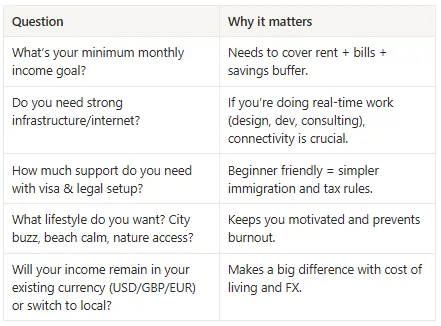
Here’s a quick self-check list before you pack your laptop:

__wf_reserved_inherit

Next steps if you’re just starting remote work abroad

  1. Choose one country from above and spend 30 days researching visa terms, cost of living, and co-working/housing.
  2. Run your budget with a “safe” scenario (income you have now) and an “optimistic” scenario (what you’ll aim for).
  3. Set up your remote-work tools: reliable internet backup, co-working subscription, banking/payment methods.
  4. Plan your launch: Choose your first clients, set up your profile, and commit to a timeline (e.g., three months abroad while working remotely).
  5. Track your results: After month three, ask: Am I meeting my income goal? Is lifestyle matching expectations? Adjust accordingly.

If you’re just starting your remote-work journey, Vietnam and Georgia stand out as amazing value plays: low cost of living, fewer upfront risks, and strong potential to stretch your earnings. If you’re earning a bit more or want premium infrastructure, Portugal and Spain are fantastic European options. And if you’re comfortable spending more and want a luxurious base with easy global connectivity, the UAE could be your playground.

Once you pick your destination, focus on:

  • locking in clients and income in a strong currency (USD/EUR/GBP),
  • setting up global-friendly banking/payment methods,
  • researching local visa & tax rules carefully.

Wherever you go, your money should follow

From sunny Portugal to the buzzing streets of Ho Chi Minh City, remote work opens the world to you. Grey makes it simple to get paid across borders, manage multiple currencies, and access your money anywhere you land.

Open a free Grey account and explore the world with a wallet that moves as freely as you do.

Happy nomad-life building!

‍

Cost of living in Edinburgh

•

•

2 min read

The first time I went to Edinburgh, I felt like stepping into a storybook, where every cobbled lane, smoky pub, and castle view feels like part of a centuries-old tale still being written. And I can say this feeling doesn’t go away. One moment you’re walking past a centuries-old castle, and the next, you’re grabbing a flat white in a café filled with students and freelancers.

It’s beautiful, walkable, and surprisingly easy to call home. Some find their place in a Georgian flat in New Town, others in a snug apartment near the Meadows or a sea-view home in Leith.

Rent in Edinburgh

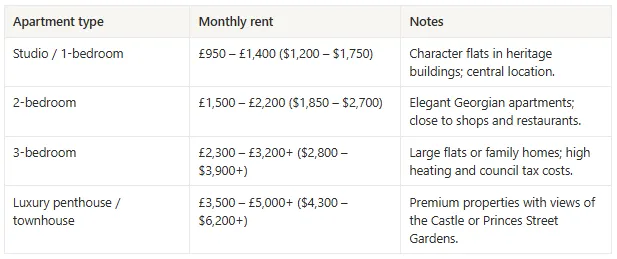
Finding a place to live in Edinburgh is all about balancing history and convenience. The city is compact and walkable, divided between the atmospheric Old Town and the elegant Georgian streets of the New Town.

Rent varies depending on the area. Central neighbourhoods like Old Town and New Town are the priciest, while Leith, Marchmont, and Stockbridge offer more space and local flavour. Many apartments are furnished and include essentials, but heating and council tax can significantly impact monthly costs.

New Town and Old Town

This is the heart of Edinburgh’s history and architecture. Living here means being surrounded by landmarks, cafés, and cobbled charm, but at a premium price. Ideal for professionals and expats who want to live close to the action.

__wf_reserved_inherit

Leith and Shore area

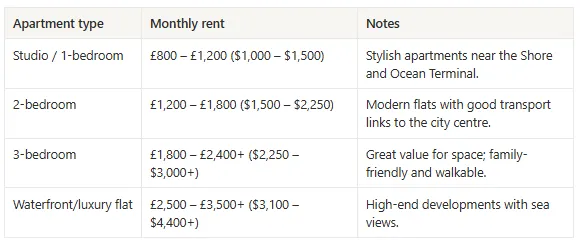
Trendy and cosmopolitan, Leith has transformed from a port district into one of Edinburgh’s most vibrant areas. Expect converted warehouses, modern flats, and a thriving food and arts scene.

__wf_reserved_inherit

Marchmont and Bruntsfield

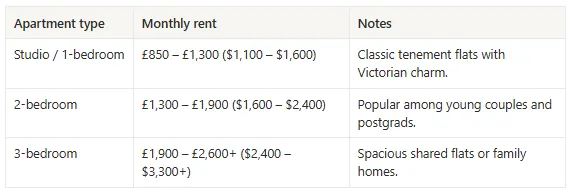
Leafy, laid-back, and full of students and young professionals. These areas are close to the University of Edinburgh and the Meadows, offering a community feel without being far from the city centre.

__wf_reserved_inherit

Morningside and Stockbridge

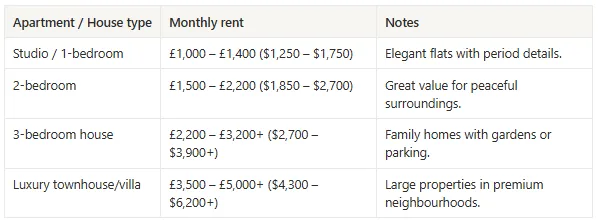
Two of the most desirable residential areas in Edinburgh, Morningside and Stockbridge are green, family-friendly, and packed with independent shops and cafés. Ideal for families, long-term expats, and anyone seeking quiet luxury.

__wf_reserved_inherit

Transport in Edinburgh

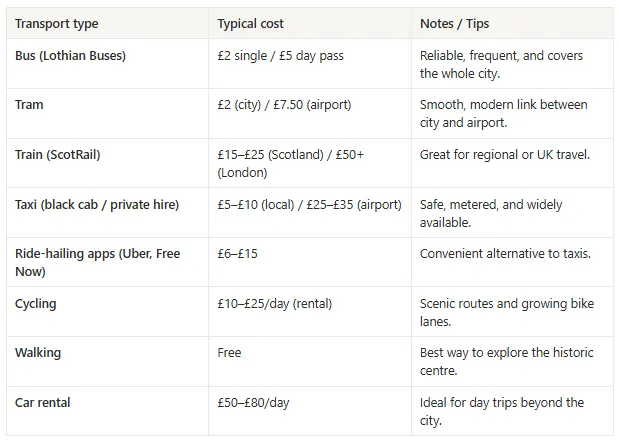
Getting around Edinburgh is one of the city’s simple pleasures. Compact, scenic, and well connected, it’s the kind of place where you can walk almost anywhere. Public transport is reliable, cycling is growing in popularity, and the tram makes getting to the airport a breeze.

Buses

Lothian Buses are the backbone of Edinburgh’s transport system. They’re clean, frequent, and cover nearly every corner of the city, from the city centre to seaside suburbs like Portobello.

  • Cost: £2 for a single adult ticket or £5 for a day ticket (unlimited rides).
  • Tip: Use the Transport for Edinburgh app to plan routes and buy digital tickets. Buses don’t give change, so pay contactless or via the app.

Trams

The Edinburgh Trams connect the airport to the city centre, passing through key areas like Haymarket, Princes Street, and St Andrew Square. The line now extends north to Leith, making it an efficient way to reach the waterfront.

  • Cost: £2 for city rides, £7.50 for an airport-to-city single ticket.
  • Tip: If you’re flying, trams are cheaper and faster than taxis. You can buy tickets at the stop or on the app before boarding.

Trains

Trains are ideal for exploring Scotland beyond the capital. Edinburgh Waverley and Haymarket are the main stations, with regular services to Glasgow, Dundee, Inverness, and London.

  • Cost: £15–£25 for intercity routes within Scotland; £50–£120 to London (advance tickets are much cheaper).
  • Tip: Book in advance on ScotRail or Trainline for big savings. Avoid peak hours (7–9 am and 4–6 pm) if you can.

Taxis

Black cabs are easy to find in the city centre and near major attractions. They’re metered, spacious, and driven by knowledgeable locals. Private-hire cabs (booked via apps) are slightly cheaper.

  • Cost: £5–£10 for short rides within the city; £25–£35 from the city centre to the airport.
  • Tip: For reliability and safety, pre-book through apps like Free Now, Uber, or Capital Cars.

Ride-hailing apps (Uber, Free Now)

Ride-hailing services are popular for convenience, especially late at night or when carrying luggage. Prices are typically a little higher than taxis during peak times but still affordable for short trips.

  • Cost: £6–£15 for most rides within the city.
  • Tip: Keep in mind that surge pricing applies during events like the Fringe Festival.

Cycling

Edinburgh’s cycling network has grown in recent years, with dedicated lanes across the city and scenic routes through parks and canals. Many locals use bikes for daily commutes or weekend rides.

  • Cost: Free if you have your own bike; rentals from £10–£25 per day.
  • Tip: The route from the city centre to Portobello Beach or along the Union Canal is popular and safe.

Walking

Walking is arguably the best way to experience Edinburgh. The city is compact, beautifully designed, and full of views — from the cobbles of the Royal Mile to the slopes of Arthur’s Seat.

  • Cost: Free.
  • Tip: Pack comfortable shoes. The city’s hills can be steep but worth the climb for the views.

Driving/Car rentals

Driving isn’t usually necessary unless you’re exploring the Highlands or nearby towns. Parking can be tricky and expensive in the centre, but roads are smooth and scenic outside the city.

  • Cost: £50–£80 per day for car hire; petrol averages £1.50 per litre.
  • Tip: For weekend getaways, try car-share services or rentals near Waverley Station.
__wf_reserved_inherit

Food prices in Edinburgh

Edinburgh’s food scene is as rich as its history, where hearty Scottish classics meet global influences. From cosy pubs serving haggis, neeps and tatties to street markets selling artisan pastries, and elegant restaurants offering modern Scottish cuisine, eating in Edinburgh is as much about atmosphere as flavour.

Restaurants

Dining out in Edinburgh ranges from affordable café meals to Michelin-starred experiences. You can grab a bowl of soup and a sandwich for a few pounds or enjoy a three-course meal with a castle view. It all depends on your mood (and budget).

  • Casual cafés/pubs: Expect to spend £10–£18 ($12–$22) for meals like fish and chips, pies, or sandwiches. Many pubs offer daily specials or lunch deals.
  • Mid-range restaurants: In areas like Stockbridge, Leith, or Bruntsfield, a sit-down meal typically costs £20–£35 ($25–$45) per person, including a drink.
  • Fine dining / special occasions: Dinner for two at high-end restaurants such as The Kitchin, Martin Wishart, or Number One can range from £120–£200 ($145–$240), not including wine.

Cafés and bakeries are part of Edinburgh’s charm — perfect for lazy mornings or afternoon breaks. A latte and pastry usually costs around £5–£8 ($6–$10), and you’ll find everything from traditional shortbread to flaky French croissants.

Supermarkets and markets

Grocery prices in Edinburgh vary depending on where you shop. Large supermarkets offer convenience and variety, while local markets and smaller greengrocers are great for fresh produce and artisanal goods.

__wf_reserved_inherit

Cooking at home is generally more affordable than eating out, and most expats find a balance between supermarket shopping and enjoying Edinburgh’s lively restaurant and café culture.

For one person

  • Groceries (mix of supermarkets and markets): $70–110 per week (~$280–440 per month)
  • Eating out (casual meals, cafés, and occasional dinners): $50–90 per week (~$200–360 per month)

Total monthly food budget: $480–800

Comfortable enough to cook at home most days and enjoy a few nights out at pubs or restaurants each week.

For a couple or small family

  • Groceries: $120–180 per week (~$480–720 per month)
  • Eating out: $100–160 per week (~$400–640 per month)

Total monthly food budget: $900–1,400

That allows for home-cooked meals, weekend brunches, and the occasional treat at one of Edinburgh’s many excellent bistros, gastropubs, or fine dining spots.

Utilities costs in Edinburgh

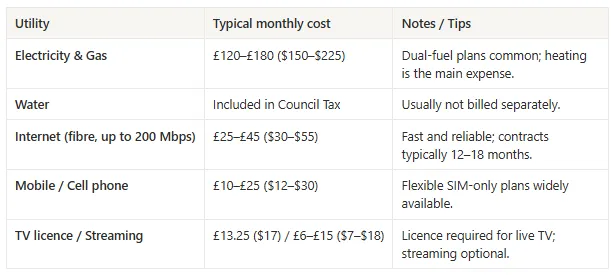
Living in Edinburgh comes with moderate utility costs compared to other major UK cities. Heating is the biggest factor, especially during the colder months, but good insulation and energy-efficient appliances can help keep bills under control. Most flats include basic appliances, and payments are made monthly through providers or direct debit.

Electricity and gas

Electricity and gas bills tend to rise in winter due to heating use. Most homes rely on a dual-fuel plan, which combines both utilities under one provider for convenience.

  • Average monthly cost for a 1–2 bedroom flat: £120–£180 ($150–$225)
  • Tip: Turning down the thermostat by just one degree can save significantly over winter. Providers like Scottish Power, Octopus Energy, and OVO are popular options.

Water

Water services in Scotland are handled by Scottish Water and are typically included in your Council Tax, meaning most residents don’t receive a separate bill. For larger homes or private arrangements, small quarterly charges may apply.

  • Average monthly cost: Usually included in Council Tax (if billed separately, around £30–£40 per month).
  • Tip: Check your lease to confirm if water charges are covered — most rentals already include them.

Internet

Edinburgh offers reliable and fast broadband, with fibre connections widely available. Speeds are generally strong enough for streaming, remote work, and online meetings.

  • Average monthly cost: £25–£45 ($30–$55) for fibre (up to 200 Mbps).
  • Tip: Top providers include BT, Virgin Media, Sky Broadband, and TalkTalk. Most contracts require a 12- or 18-month commitment.

Mobile/phone plans

Mobile data and phone plans are affordable, with flexible pay-as-you-go or monthly options.

  • Average monthly cost: £10–£25 ($12–$30) for 10–30 GB data.
  • Tip: EE, O2, Vodafone, and Three offer reliable coverage throughout the city. SIM-only plans are a great option for expats or digital nomads.

TV licence and streaming

If you watch live television or use BBC iPlayer, you’ll need a TV licence. Streaming services like Netflix, Disney+, and Amazon Prime are optional extras.

  • Cost: £13.25 ($17) per month for the TV licence.
  • Tip: Many expats skip the licence if they only use streaming platforms, which range from £6–£15 ($7–$18) per month.
__wf_reserved_inherit

Healthcare in Edinburgh

Healthcare in Edinburgh is among the best in the UK, offering residents access to high-quality public care through the National Health Service (NHS) as well as private options for those seeking faster appointments or specialised treatment. For expats, the system is straightforward once you’re registered, and most day-to-day medical needs are covered at little or no cost.

Public healthcare (NHS Scotland)

Scotland’s public healthcare system is funded by taxes and provides comprehensive services, from GP (general practitioner) consultations to hospital treatment and emergency care. Once registered with a local GP practice, you can access NHS services free of charge.

  • Cost: Free for residents, including most prescriptions.
  • Pros: Excellent quality of care, free consultations and emergency services, and a strong public health network.
  • Cons: Wait times for non-urgent appointments can be long, especially for specialist referrals.

Expats living or working in the UK for more than six months are eligible for NHS access through the Immigration Health Surcharge (IHS) paid during their visa application. Short-term visitors or digital nomads can use private clinics or travel insurance instead.

Private healthcare and insurance

Private healthcare in Edinburgh is a great option for those who prefer shorter waiting times or access to specific specialists. The city has several reputable private hospitals and clinics, offering everything from dental work to physiotherapy and elective surgery.

  • Basic consultation (without insurance): £80–£150 ($100–$190)
  • Specialist visit: £120–£250 ($150–$310)
  • Private hospital stay (per night): £300–£600 ($370–$740)

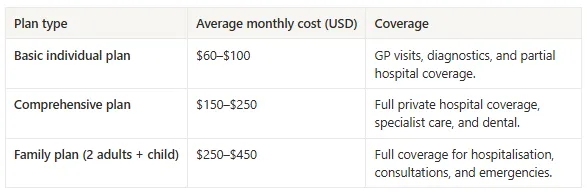
Private health insurance is optional but useful for expats and professionals who prefer flexibility. It can cover faster GP appointments, private hospitals, and elective procedures not included in the NHS.

__wf_reserved_inherit

Average living costs in Edinburgh

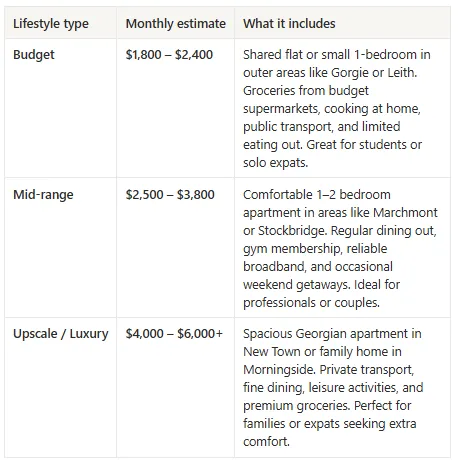
Edinburgh offers a high quality of life wrapped in history, charm, and culture. It’s more affordable than London but still one of the pricier cities in the UK, especially when it comes to rent and winter utilities. That said, it’s entirely possible to live comfortably here with a balanced lifestyle, good budgeting, and a few local habits like shopping at farmers’ markets and using public transport.

__wf_reserved_inherit

You can live well in Edinburgh on around $2,500–$3,000 per month, depending on your lifestyle. While housing and heating can stretch your budget, affordable public healthcare, free education, and walkable neighbourhoods help balance the cost of living.

Seamless money management with Grey

From cobblestone streets to castle views, life in Edinburgh is full of experiences worth savouring. To truly enjoy living in this storybook city, managing your international finances should be simple and stress-free, especially if you earn or receive payments from abroad.

With Grey, you can receive payments in USD, GBP, or EUR, hold multiple currencies, convert when the rates are best, and withdraw directly to your UK bank account. It’s quick, secure, and designed for people living and working across borders.

Open a free Grey account and keep your focus on the story you’re living, not the transfers behind it.

More from this series:

Cost of living in London

Cost of living in Paris

Cost of living in Bali

Cost of living in Marrakech

Cost of living in Rio

‍

Remote work visas compared: which countries offer the best deals

•

•

2 min read

The world now sees the role of remote work and its contribution to the global economy. Many countries now offer visa programs tailored for digital nomads, allowing foreign remote workers to legally reside in the country while earning income from international clients.

However, not all remote work or digital nomad visas are the same. They usually have different requirements, including income thresholds, visa conditions, and tax considerations. This means it is not enough for a country to offer digital nomad visas. You also have to consider your income, work model, tax status, and lifestyle as the visa itself before hopping on a flight.

Key factors in comparing remote work visas

To compare the top digital nomad visas, we consider:

  • Income threshold: The minimum earnings required, often proving financial stability.
  • Duration and renewability: How long you can stay, and if extensions are possible.
  • Application cost: Fees for processing, excluding ancillary expenses like insurance.
  • Cost of living: Monthly estimates for a single person, influencing overall affordability.
  • Ease of application: Online vs. in-person, processing times, and documentation needs.
  • Additional benefits: Family inclusion, tax treatment, and lifestyle perks.
  • Drawbacks: Restrictions, such as no local work or bureaucratic hurdles.

Countries with the best deals on remote work visas

From Europe to South America, here are some of the countries with the best remote work visas.

Spain

Spain's digital nomad visa was launched in 2023 and revised in 2025. It tops many rankings because it balances an exciting lifestyle and accessibility. The visa targets non-EU remote workers earning at least €2,760 per month (about $3,200), with applications possible via consulates. It lasts one year and can be renewed up to five times, potentially leading to residency. Fees are around $100, plus proof of health insurance. The cost of living in cities like Barcelona averages $1,500- $2,200 per month.

Discover how to apply for a digital nomad visa in Spain.

Portugal

Portugal’s Digital Nomad Visa, also known as the D8 visa, is for non-EU/EEA/Swiss citizens who want to work remotely for a foreign company. It comes in two forms: a temporary stay visa valid for up to 1 year and a residency visa valid for stays over 1 year. To qualify, you must have a monthly income of about $4,000 (€3,480), which is four times the current Portuguese minimum wage. Applicants must also provide proof of remote work, health insurance, accommodation in Portugal, and a valid passport.

Read more about how to apply for a digital nomad visa in Portugal.

Thailand

Thailand’s primary digital nomad visa is the Destination Thailand Visa (DTV), which is valid for 5 years, allows multiple entries, and lets you stay for 180 days per entry, with the option to extend once for another 180 days. To qualify, you must be a remote worker or freelancer working for companies outside Thailand, have at least 500,000 THB (approx. $13,600 USD) in liquid funds, and apply from outside of Thailand. Another option is the Long-Term Resident (LTR) Visa, valid for 10 years, but with higher income requirements (USD 80,000+ annually).

Croatia

Croatia offers a digital nomad visa for non-EU citizens to legally reside and work remotely for companies or clients outside of Croatia. As of a recent update, the permit allows for stays of up to three years and includes provisions for close family members. To be eligible, you must prove a monthly income of at least €3,295 (about $3,900) have proof of remote work, a valid passport, health insurance, a clean criminal record, and show evidence of accommodation.

Estonia

Estonia Digital Nomad Visa is a long-stay visa for non-EU/EEA citizens that allows them to work remotely from Estonia for up to 12 months. To be eligible, applicants must be at least 18 years old, have a contract with an overseas company, and demonstrate that they earned at least €3,504 (around $4,000) per month in the six months before applying. The application is submitted through the nearest Estonian embassy or consulate.

Malaysia

Malaysia’s digital nomad visa is called the DE Rantau Nomad Pass, which allows qualifying remote workers to live and work in Malaysia for up to 12 months with the possibility of renewal. To be eligible, applicants must be at least 18 years old, work remotely for a non-Malaysian company, meet specific income requirements ($24,000+ annually for digital roles, or $60,000+ for other professions), and provide a valid passport, proof of income, a clean criminal record, and health insurance. The application is processed online through the Malaysia Digital Economy Corporation (MDEC).

Indonesia

Indonesia’s digital nomad visa is officially known as the E33G Remote Worker Visa. It allows remote workers with foreign employers to live and work legally in Indonesia for up to one year, with the possibility of renewal. To qualify, you must have a valid passport, a job with a company outside of Indonesia, and prove sufficient financial resources. The visa can be used to live anywhere in the country, not just Bali.

Brazil

The Brazilian digital nomad visa is for remote workers employed by non-Brazilian companies and is valid for one year, with a one-year renewal option available. To apply, you must demonstrate a monthly income of at least $1,500 or have a bank balance of $18,000, proof of remote work for a foreign employer or client, and may need additional documents like medical insurance and a criminal background check. Applications can be submitted through a Brazilian consulate or via the Federal Police's MigranteWeb platform.

Mauritius

The Mauritius digital nomad visa, officially known as the Premium Visa, allows remote workers, retirees, and freelancers to stay for up to one year, with the possibility of renewal. To qualify, you must have a minimum monthly income of $1,500, valid health and travel insurance, and proof of remote work or financial stability. Applications are submitted online through the Economic Development Board (EDB) portal.

Also read: Visa types every remote worker should know

Managing international payments while you travel with Grey

As a digital nomad, you can manage international payments with Grey by using its platform to open virtual USD, GBP, and EUR bank accounts, allowing you to receive money from clients globally as local transfers, convert currencies at competitive rates, and make international payments with ease.

Get started with Grey today for seamless international payments as you travel.

‍

Exploring Marrakech as a city for digital nomads: amenities and culture

•

•

2 min read

Marrakech is a city for digital nomads due to its affordability, culture, and infrastructure like strong internet and coworking spaces. The Red City is known for more than its terracotta-coloured walls and buildings, but also how it blends history and a fast-paced lifestyle. Marrakech was historically a crossroads for trade across the Sahara, accounting for its economic importance and cultural mix.

With Morocco's introduction of a digital nomad visa, the city offers modern amenities and tons of activities to explore. This article delves into the amenities that make Marrakech attractive to digital nomads and the cultural expressions to expect.

Also read: Morocco’s growing appeal for European remote workers

Amenities for digital nomads

It is not enough that Marrakech promises a lot of fun and cultural activities. It must also have the amenities to support remote work. Marrakech has made significant strides in providing the necessary infrastructure for remote work, balancing the bustling energy of the city with productive workspaces.

1. Reliable internet and coworking spaces

Over the past few years, Marrakech has invested heavily in digital infrastructure. Most cafés and guesthouses now offer high-speed Wi-Fi, and coworking spaces are thriving across the city. Popular options include:

  • The Spot Coworking – modern and well-equipped, with a strong community of local entrepreneurs.
  • Cowork in Marrakech – located in the city centre, ideal for short-term visitors needing flexible access.
  • Level Up Coworking – offers private rooms, meeting spaces, and a relaxed atmosphere perfect for productivity.

For those who prefer working from cafés, spots like Café du Livre, Pointbar, and Latitude31 combine great food with a reliable connection.

2. Affordable accommodation

Accommodation options range from traditional riads (Moroccan guesthouses) to modern apartments and co-living spaces. Digital nomads can find fully furnished flats in central neighbourhoods like Gueliz or Hivernage for far less than equivalent properties in Europe. Short-term rentals are available through Airbnb, while platforms like NomadX list long-stay coliving options.

3. Convenient transport

Marrakech is compact and easy to navigate. Most nomads rely on taxis, scooters, or simply walking. The city’s bus system is improving, and for weekend getaways, the train network connects Marrakech to Casablanca, Rabat, and Fes efficiently. The Marrakech Menara Airport offers direct flights to major European and African cities, making travel seamless for remote workers.

4. Access to modern essentials

The city offers the most modern comforts: international supermarkets, gyms, healthcare centres, and banks. Multi-currency payment platforms like Grey also make it easy to manage international payments, receive freelance income, or convert currencies without hidden fees — a key advantage for digital nomads working with clients abroad.

Also read: Summer in Morocco: 5 spots to visit and how to spend without stress

Cultural experiences for digital nomads in Marrakech

Marrakech remains a unique destination for digital nomads seeking distinct cultural expressions.

1. A blend of tradition and modernity

Marrakech is a city where the old and the new co-exist beautifully. You might spend your morning working from a modern coworking space and your evening wandering through the ancient medina, sipping mint tea on a rooftop overlooking the Atlas Mountains. It is beautiful to imagine, and even better to experience.

2. Community and hospitality

Moroccans are known for their warmth and hospitality. Many digital nomads find it easy to connect with locals and expatriates alike, whether at cafés, yoga studios, or cultural events. The city’s international community is growing fast, offering networking opportunities and social events tailored to remote workers.

3. Food and lifestyle

The culinary space in Marrakech is another reason to experience the city. From traditional tagines and couscous to trendy vegan spots and international restaurants, food is both affordable and flavourful. There many local markets offering fresh produce if you wish to cook your meals. Nomads also enjoy Morocco’s vibrant art and music culture, with galleries, festivals, and live performances happening every now and then.

4. Proximity to nature and adventure

Marrakech’s location makes it ideal for quick escapes. You could hike the Atlas Mountains, visit desert camps in Merzouga, or surf in Essaouira. The balance between work and fun is easy to maintain here. Here is a list of experiences you can tick off your list in Marrakesh:

  • Historic medina and souks: The heart of Marrakech is its ancient walled city (Medina), a UNESCO World Heritage site with labyrinthine alleyways perfect for exploration and haggling for handicrafts, spices, and textiles.
  • Jemaa el-Fnaa Square: This iconic main square is a must-visit, transforming into a lively spectacle at night with food stalls, musicians, acrobats, and storytellers.
  • Architectural masterpieces and gardens: When not working, nomads can explore historical landmarks like the Bahia Palace, the Koutoubia Mosque, or relax in the magnificent Jardin Majorelle, a beautiful botanical garden.

Challenges to consider when visiting Marrakech

While Marrakech offers many exciting adventures, there are a few challenges to keep in mind:

  • Heat: Summers can be extremely hot, with temperatures exceeding 40°C. Many nomads prefer to visit between October and April.
  • Language barrier: Arabic and French are widely spoken; English is common in tourist areas but less so elsewhere.
  • Payment limitations: Some international platforms don’t integrate smoothly with local banks, so using fintech solutions like Grey can simplify cross-border transactions.

Also read: How to open US, UK and Euro bank accounts in Morocco

Managing cross-border payments with Grey

Marrakech offers a beautiful combination of affordability, adventure, and digital infrastructure that support an exciting work-life balance many digital nomads crave. If you’re planning to move abroad or work across borders, streamline your finances with Grey. With its multi-currency accounts, you can send, receive, and manage multiple currencies seamlessly while you enjoy your nomadic life in Marrakech. You can also get a virtual USD debit card to support your international spending.

Get started on Grey today and travel with financial freedom.

‍

Morocco’s growing appeal for European remote workers

•

•

2 min read

The number of Europeans visiting Morocco is increasing, with significant growth from the UK (45%), Spain and Portugal (30%), and Switzerland (27%). Morocco is gradually becoming one of the most attractive destinations for European remote workers for many reasons.

This sudden appeal isn’t just a function of Morocco’s proximity to Europe, even though it is quite relevant. But, it is also about the lower cost of living, which affords similar memorable experiences as European cities, compatible time zones, and Morocco’s improved digital infrastructure.

This article explores the various reasons behind Morocco’s growing popularity among European remote workers, from economic advantages to its lifestyle perks.

Also read: Summer in Morocco: 5 spots to visit and how to spend without stress

Affordable living and a good quality of life

The cost advantage of Morocco relative to European cities is significant enough to meaningfully impact the finances of a European remote worker. A one-bedroom apartment in central Marrakech can cost around $400 to $600 (€345 - €515) per month. Utilities and food remain affordable, usually under $100. For comparison, a one-bedroom apartment in central Lisbon, which has itself been marketed as an affordable European alternative for remote workers, now costs €1,200 to €1,800  ($1,390 to $2,100) per month. In Berlin, €1,400 to €2,000. In Barcelona, €1,300 to €1,900.

A European remote worker earning €3,500 per month who moves from Berlin to Marrakech and reduces their monthly outgoings from €2,800 to €1,200 is not just saving money. They are changing the fundamental shape of their finances: more saved, more invested, more runway for professional risk-taking.

The currency dimension adds another layer. The Moroccan dirham is pegged to a basket of currencies dominated by the euro, which means European remote workers earning in euros face minimal exchange rate volatility. Converting euros to dirhams at a predictable rate, without the volatility that affects more freely traded emerging market currencies, makes budgeting in Morocco considerably more stable than in many other popular remote work destinations.

Reliable internet and coworking spaces

Internet connectivity has improved significantly across Morocco’s major cities, making remote work smoother than ever. Most cafés, hotels, and apartments now provide high-speed Wi-Fi, while dedicated coworking spaces cater to professionals who prefer structured work environments. Popular coworking spots include The Spot in Casablanca, Commons Agdal in Rabat, and Regus in Marrakech. These hubs not only provide reliable infrastructure but also create opportunities for networking with other digital professionals and entrepreneurs.

Proximity, time zone, and ease of travel

Morocco is geographically close to Europe, with flights from Madrid or Paris to Casablanca taking less than 3 hours. This makes it easy for digital nomads to travel between continents. Most European citizens can stay in Morocco for up to 90 days visa-free, and visa extensions are relatively simple for those who wish to stay longer. Affordable flights from budget airlines also make travel to and from Morocco convenient and cost-effective. The country operates in a time zone (GMT+1) that is compatible with most European work hours, ensuring seamless collaboration with European clients and teams.

A rich cultural and lifestyle experience

Morocco offers a rich, diverse lifestyle that appeals to remote workers seeking an exciting work-life balance. From the historic medinas of Fez to the breezy coastal allure of Essaouira and the desert adventures in Merzouga, there’s an exciting adventure for everyone in Morocco. The country’s warmth, hospitality, cultural diversity, and great food. Many remote workers enjoy a slower pace of life that balances productivity with well-being.

Growing digital nomad hotspots

Several Moroccan cities are becoming popular hubs for digital nomads. It is easy to find communities of other expats, digital nomads, and freelancers. Europeans find it easy to blend in and start a life. Marrakech, Taghazout, Essaouira, Casablanca, and Rabat are some of the popular digital nomad nests.

  • Bureaucracy: Administrative processes, such as getting long-term accommodation or residency, can be slow

Also read: Where to buy Moroccan dirhams online

Challenges of European remote workers in Morocco

While Morocco is becoming increasingly attractive to remote professionals, there are still a few challenges to navigate:

  • Language barriers: Arabic and French are widely spoken, though English is less common outside major cities.
  • Banking and currency issues: Transferring or receiving USD payments through local banks can be cumbersome.
  • Payment barriers: Many remote workers struggle to manage international payments due to high fees, unfair exchange rates, and slow payment processing.

Also read: How to open US, UK and Euro bank accounts in Morocco

Which cities suit which types of remote workers

Morocco's major cities each have a distinct character, and matching the right city to your working style makes a significant difference to the long-term experience.

Casablanca is Morocco's commercial capital. It has the best-developed business infrastructure, the widest range of international restaurants and services, and the most English-speaking professional community. The city is less romanticised than Marrakech in travel writing, but for remote workers who need reliable services, easy airport access, and a functioning urban infrastructure, it is the most practical base.

Rabat is the administrative capital, considerably calmer than Casablanca, with a well-maintained city centre, excellent coworking infrastructure at Commons Agdal and other spaces, and a large international community of diplomats, NGO workers, and expats that makes it easy to build a social network outside tourism. Internet connectivity is reliable, and the cost of living is slightly below that of Casablanca.

Marrakech is where most first-time remote workers go, attracted by the visual intensity of the medina and the established tourist infrastructure. It has plenty of coworking options, good short-term accommodation, and a well-developed expat community. The trade-off is that it can feel tourist-saturated in high season, and moving beyond the main tourist areas requires more language capacity in Darija or French than in Casablanca or Rabat.

Taghazout is a small fishing village south of Agadir that has become a genuine hub for surfing-focused remote workers. If your work can be done in concentrated bursts rather than continuous connectivity, and your lifestyle is oriented around morning surf and afternoon work, it suits a specific type of remote worker very well. It is not suitable for those who need continuous, reliable high-speed internet or urban amenities.

Essaouira has a cooler, windier Atlantic coast character and a slower pace than Marrakech. It appeals to remote workers who want to live in a smaller, more authentically Moroccan setting without sacrificing the basic infrastructure of cafes, accommodation, and reasonable connectivity. It has attracted a creative community over several decades and has a character that feels lived-in rather than touristy.

Tangier is underrated for remote workers. It has strong connectivity to Spain via ferry and air links to major European cities, a revitalised city centre, and a growing café and coworking culture. For European remote workers who want to be particularly close to mainland Europe, Tangier's positioning makes frequent return trips more feasible than from Marrakech or Agadir.

Visa situation for European remote workers

Most European citizens can stay in Morocco for up to 90 days visa-free. The specific terms vary slightly by nationality: UK citizens are visa-free for 90 days, as are citizens of most EU member states.

Morocco does not currently offer a formal digital nomad visa. Remote workers who want to stay longer than 90 days have two practical options. The first is a brief border exit, typically to Spain via ferry from Tangier, which resets the 90-day window. This is widely practised among long-term remote workers in Morocco and is not formally illegal, though it is not officially sanctioned as a long-term immigration strategy. The second is applying for a long-stay visa or residency permit through the Moroccan consulate in the home country, which requires proof of income, accommodation, and health insurance coverage.

Morocco has been discussed in regional policy contexts as a potential digital nomad visa destination, but no formal programme has been announced as of mid-2026. Checking with the Moroccan consulate in your country for the current status is the reliable approach if a longer structured stay is planned.

The practical challenges

Challenges for European remote workers in Morocco include language barriers, as Arabic and French are widely spoken but English is less common outside major cities, administrative slowness in processes such as getting long-term accommodation or residency, and banking and payment barriers, including high fees, unfair exchange rates, and slow payment processing through local banks.

The language point is worth being concrete about. In Casablanca and Rabat, French is commonly used in professional and commercial contexts, and most educated Moroccans speak it. In Marrakech's tourist areas, English is widely understood. In smaller cities and rural areas, Darija (Moroccan Arabic) is the primary language, and French becomes useful. For European remote workers who do not speak French, Casablanca and Marrakech are significantly more navigable than other cities. Learning basic Darija phrases for everyday interactions is welcomed by locals and makes daily life considerably easier.

The banking challenge is the most consequential for European remote workers whose income arrives in euros, pounds, or dollars. Traditional Moroccan bank accounts are denominated in dirhams. Receiving a euro transfer into a Moroccan bank account involves the bank converting at its internal rate, typically 1% to 3% below mid-market, with no upfront disclosure of the spread. SWIFT transfers from European banks to Moroccan accounts also pass through correspondent banks that deduct handling fees of €10 to €25 per transfer.

Managing money as a European remote worker in Morocco

The practical financial setup that works for most European remote workers in Morocco involves keeping a foreign currency account for receiving client payments and a local Moroccan bank account or cash for day-to-day dirham spending.

Several Moroccan banks, including Attijariwafa, Banque Centrale Populaire, BMCE (now Bank of Africa), and CIH Bank, offer accounts to foreign residents, though the process typically requires proof of residency and in-person documentation. For remote workers in their first 90-day stay, a local bank account may not be accessible before leaving the country.

The alternative used by most European remote workers is a multi-currency account that provides local banking details in the relevant European currencies, allows the worker to hold euros, pounds, or dollars, and converts to dirhams at a disclosed rate when needed. Platforms like Wise, Grey, and Revolut serve this function. Wise applies the mid-market rate on EUR-to-MAD conversions with a disclosed fee of 0.4% to 1.5%. Grey provides virtual EUR, GBP, and USD accounts, charges 1% on conversions, and supports MAD withdrawal to Moroccan bank accounts at a $2 flat fee.

For European remote workers whose clients pay via SEPA transfers, having a Grey EUR account with an IBAN gives clients a domestic EU transfer destination, removing the SWIFT fee and correspondent bank deductions from the cost chain entirely. The full euro amount arrives, the worker converts to dirhams at a visible rate, and withdraws to their Moroccan account for a flat fee.

Grey charges fees on deposits, conversions, and withdrawals. Deposits via SEPA incur a 0.8% fee (minimum €2, maximum €10). Currency conversions are charged at 1%. Exchange rates are variable and include a margin over the mid-market rate. Always review the rate before confirming a transaction. Visit grey.co/pricing for current rates.

Frequently asked questions

Do European remote workers need a visa to work from Morocco?

Most European citizens can stay in Morocco for up to 90 days visa-free. Morocco does not currently offer a formal digital nomad or remote worker visa. Remote workers who stay in Morocco and work for non-Moroccan employers occupy a legal grey area that Moroccan authorities have not actively enforced restrictions on. For stays intended to be extended beyond 90 days on a structured basis, applying for a long-stay visa through the Moroccan consulate in your home country before the visa-free period ends is the compliant approach.

What is the cost of living for a European remote worker in Marrakech or Casablanca?

A comfortable lifestyle in Marrakech, including a one-bedroom apartment in a central neighbourhood, utilities, food from local markets and restaurants, and coworking membership, typically runs €800 to €1,400 per month. Casablanca is slightly more expensive for accommodation but comparable on other costs. This compares with €2,500 to €4,000 for a comparable lifestyle in Lisbon or Barcelona.

Is internet connectivity reliable enough for full-time remote work in Morocco?

In Casablanca, Rabat, Marrakech, and Tangier, fixed-line and coworking internet connectivity is reliable enough for full-time remote work, including video calls, cloud-based tools, and file transfers. Dedicated coworking spaces in these cities typically offer high-speed fibre connections with backup options. In smaller coastal towns like Taghazout and Essaouira, connectivity is adequate in coworking spaces but more variable in residential accommodation. Testing your specific accommodation's internet before committing to a long-term lease is the practical approach in those locations.

How do European remote workers receive payment from EU clients while in Morocco?

Most European remote workers in Morocco use a multi-currency fintech account that provides an IBAN as their primary receiving account. EU clients pay via SEPA transfer, which is a domestic EU transaction from their perspective with no international wire fees. The funds arrive in the worker's EUR balance. Conversion to MAD happens within the platform at a disclosed rate. The worker withdraws to a local Moroccan bank account or uses the platform's card for direct spending. This approach is significantly cheaper than routing European client payments through a Moroccan bank's SWIFT conversion process.

As more European remote workers turn to Morocco, it is crucial to have a solid financial plan for your trip.  Get started on Grey today for multicurrency accounts to receive international payments directly from clients, convert funds at 1% conversion fee and withdraw to a local MAD account.

‍

Arrow (up)

Back to top