

How much you'll need to pay for a US passport depends on your age, the type of passport you need and how quickly you want it processed. Whether you are applying for your first passport, renewing an expired document or replacing a lost one, understanding the fees helps you prepare your budget and avoid unexpected expenses.
A US passport has two main charges: an application fee and an execution fee. A new adult passport book costs more than a renewal, and expedited service adds an extra fee. A passport card is cheaper than a book
Your total cost may also depend on whether you apply in person, request faster processing or need additional services, such as overnight delivery. Children have different application fees and requirements from adults, while passport cards and books serve different travel purposes.
This guide breaks down US passport fees, renewal costs, expedited processing charges and the differences between passport books and cards, helping you understand what you may need to pay before applying.
How much does a US passport cost?
The cost of a US passport depends on whether you are applying for the first time or renewing an existing passport. A first-time adult passport book costs $165, while an adult renewal costs $130. These fees cover the standard passport book application and do not include optional expedited processing or delivery services.
First-time adult applicants must pay two separate fees:
- Application fee: $130, paid to the US Department of State for processing the passport application.
- Execution fee: $35, paid separately to the authorised acceptance facility, such as a participating post office, for accepting and verifying your application.
Together, these fees bring the total cost of a first-time adult passport book to $165. Adult renewals generally cost less because eligible applicants can apply by mail or online without paying the separate execution fee. Before applying, confirm the current fees and payment methods on the official US Department of State website.
New US passport book and card fees
The cost of a first-time US passport depends on your age and whether you apply for a passport book, a passport card or both. Applicants must pay an application fee to the US Department of State and a separate $35 execution fee to an authorised acceptance facility.
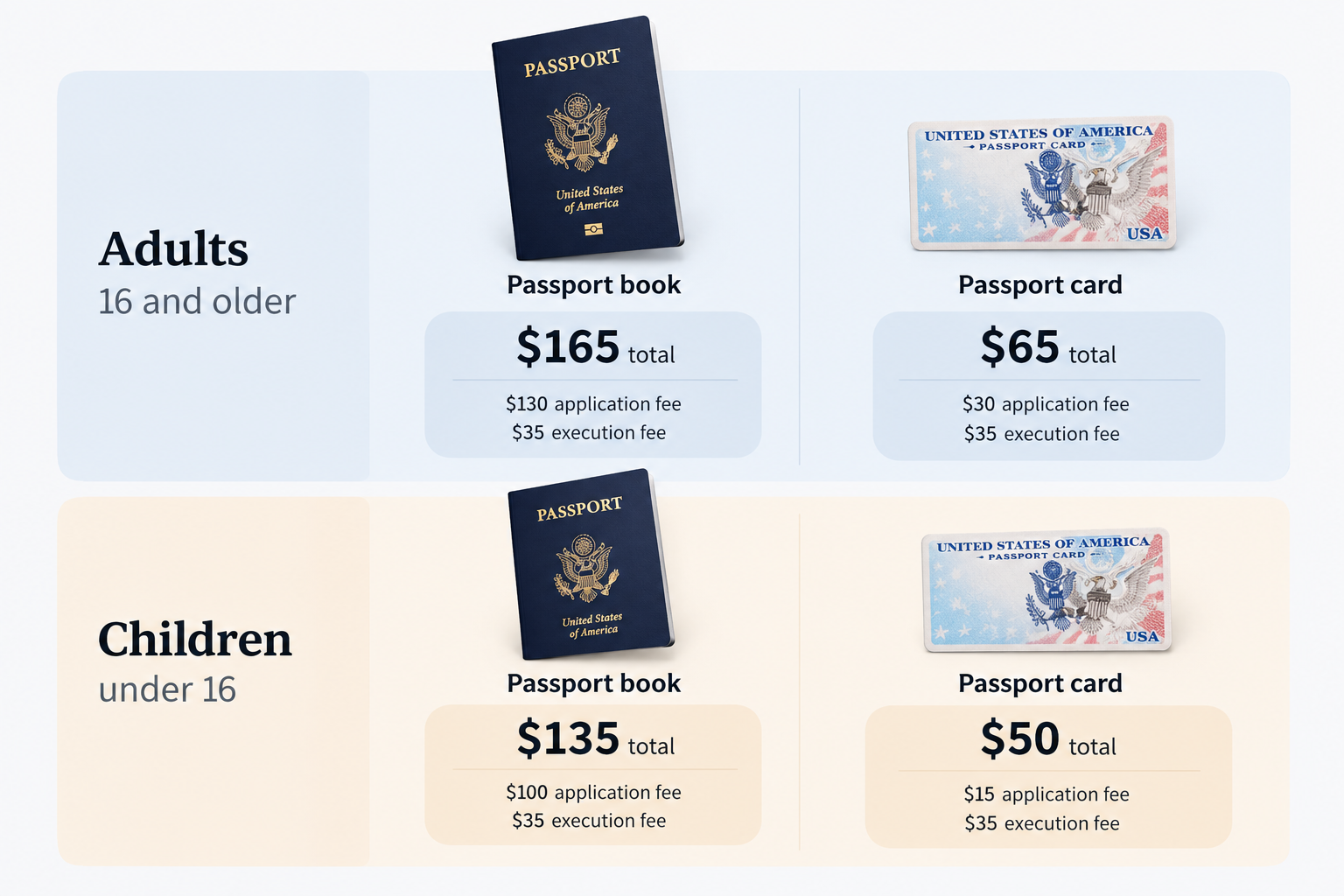
Adults aged 16 and older:
- Passport book: $165 total, comprising a $130 application fee and $35 execution fee.
- Passport card: $65 total, comprising a $30 application fee and $35 execution fee.
Children under 16:
- Passport book: $135 total, comprising a $100 application fee and $35 execution fee.
- Passport card: $50 total, comprising a $15 application fee and $35 execution fee.
A passport book allows international travel by air, land and sea, while a passport card is limited to eligible land and sea crossings, primarily between the United States, Canada, Mexico, Bermuda and Caribbean countries. It cannot be used for international air travel. Check the official US Department of State website for current fees, eligibility requirements and application instructions.
US passport renewal fees
Renewing a US passport generally costs less than applying for a first passport because eligible adult applicants do not pay the separate execution fee. An adult passport renewal costs $130 for a passport book or $30 for a passport card. These fees cover standard processing, while expedited service and optional delivery services may cost extra.
You can renew your US passport by mail if your most recent passport is undamaged, was issued within the last 15 years, and you were at least 16 years old when it was issued. Your passport must also display your current legal name, or you must provide official documentation confirming your name change.
If you are a Canadian citizen, the renewal process and fees are different. Check the requirements for renewing a Canadian passport to understand eligibility, application methods and current charges before submitting your documents. Always verify the latest fees through the relevant government website.
Expedited US passport and additional fees
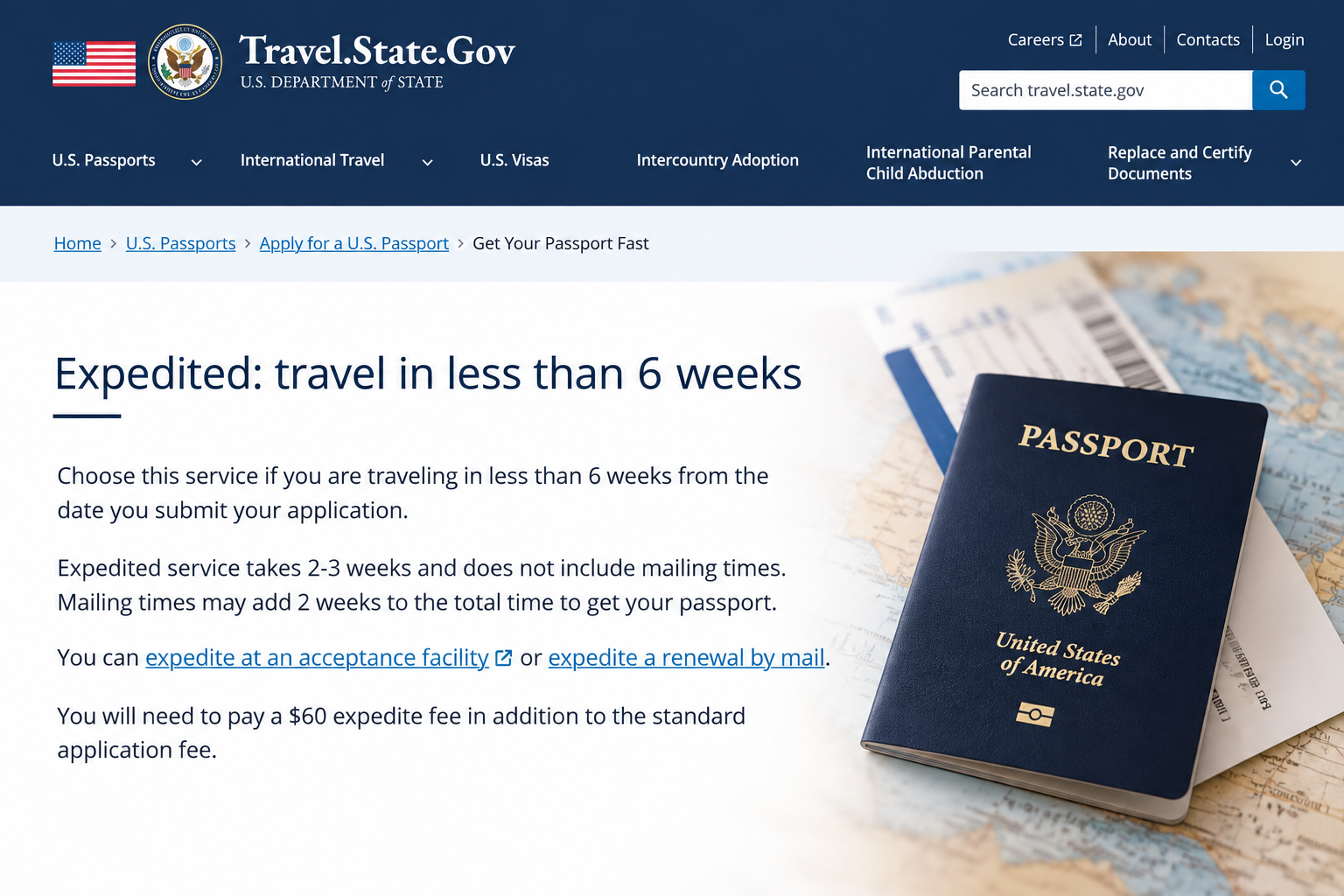
If you need your US passport sooner than the standard processing time allows, you can pay extra for expedited service. The additional fee is $60, which is added to your regular passport application cost. This option may be useful if you have an upcoming trip and cannot wait for routine processing, but you should still check the current processing estimates before applying.
You can also pay $21.36 for 1–2 day delivery of your completed passport book to your home address. This fee covers faster delivery after your passport has been issued; it does not guarantee that your application will be processed within one or two days.
Remember to budget for passport photographs if you do not take an acceptable photo yourself. A local retail store or post office may charge around $15 for passport photos, although prices vary by location. Before submitting your application, review the latest fees on the US Department of State website to confirm the amounts and available services.
Spending abroad on your trip
Spending abroad can cost more than expected when card charges and unfavourable exchange rates add up. Before travelling, check whether your credit card charges foreign transaction fees, which typically range from 1% to 3% per purchase. A card with 0% foreign transaction fees can help you keep more of your travel budget.
If you are travelling from the US to the UK, you may also need to move money across borders before your trip. Grey makes it easier to send money from the US to the United Kingdom, so you can organise your funds before departure. Check the applicable transfer fees and exchange rate to understand the total cost.
Once you arrive, Grey’s virtual card for spending abroad offers another payment option for eligible purchases. Check its fees and supported currencies before using it to understand how to avoid foreign transaction fees where applicable.
When paying at shops or restaurants, choose to pay in the local currency rather than your home currency. This helps you avoid dynamic currency conversion, which may come with an unfavourable exchange rate.
Frequently asked questions US passport costs
How much does a US passport cost?
A first-time adult US passport book costs $165, including the $130 application fee and $35 acceptance fee. If you apply for a passport card instead, the total is $65. Your final cost may increase if you choose expedited processing or faster delivery. Check official passport fees.
How much is a US passport renewal?
Renewing an eligible adult US passport costs $130 for a passport book or $30 for a passport card. You do not pay the separate $35 acceptance fee when renewing by mail or online. Expedited processing and optional delivery services cost extra. Check your eligibility before submitting your renewal application.
What is the US passport card fee?
A first-time adult US passport card costs $65, including the $30 application fee and $35 acceptance fee. Eligible adult renewals cost $30. The card supports qualifying land and sea travel to destinations such as Canada, Mexico, Bermuda and the Caribbean, but it cannot be used for international air travel.
How much is the expedited US passport service?
Expedited US passport processing costs an additional $60 per application. This fee is added to your standard passport charges for faster processing, currently estimated at two to three weeks. Optional one-to-three-day delivery of an issued passport book costs extra. Check current processing times before paying, as mailing time is separate.
Can I pay for a US passport online?
Yes, if you qualify for online renewal. Eligible applicants can pay using a credit or debit card through the official government renewal portal. First-time applicants generally need to apply in person and pay using the accepted methods. Avoid unofficial websites that charge additional fees or claim to process applications on the government’s behalf.
How do I avoid fees abroad?
To reduce travel costs, choose a payment card with 0% foreign transaction fees and check its terms before travelling. At payment terminals, select the local currency to avoid potentially unfavourable dynamic currency conversion rates. If you use Grey’s virtual card, review its applicable fees and supported currencies before making international purchases. Compare transfer charges and exchange rates before sending money abroad.





.svg)