


<script type="application/ld+json" data-schema-version="grey-blog-v4"> [{"@context":"https://schema.org","@type":"BlogPosting","@id":"https://grey.co/blog/how-to-easily-convert-and-send-usd-to-british-pound-sterling-online#article","headline":"How to easily convert and send USD to British Pound Sterling online","description":"Learn how to convert USD to GBP securely using Grey. Get excellent rates, fast transfers, and seamless currency conversions online.","inLanguage":"en","url":"https://grey.co/blog/how-to-easily-convert-and-send-usd-to-british-pound-sterling-online","mainEntityOfPage":{"@id":"https://grey.co/blog/how-to-easily-convert-and-send-usd-to-british-pound-sterling-online#webpage"},"datePublished":"2025-01-28T07:43:51.011Z","dateModified":"2026-06-15T17:13:11.439Z","author":{"@type":"Person","@id":"https://grey.co/authors/baraka-mafole#person","name":"Baraka Mafole","url":"https://grey.co/authors/baraka-mafole"},"publisher":{"@type":"Organization","@id":"https://grey.co/#organization","name":"Grey","url":"https://grey.co","logo":{"@type":"ImageObject","url":"https://cdn.prod.website-files.com/6360022338a81bd6fdbb1145/6564ae1077a67e39d3c491a6_Grey%20Logo%20Lockup%20Black.svg"}},"image":{"@type":"ImageObject","@id":"https://grey.co/blog/how-to-easily-convert-and-send-usd-to-british-pound-sterling-online#primaryimage","url":"https://cdn.prod.website-files.com/636a85d290ee58e70c17e1c0/6a301639ee103d2c91bbca74_6a30163851e9fcfea6c6e628_how-to-easily-convert-and-send-usd-to-british-pound-sterling-online__header-image.webp","contentUrl":"https://cdn.prod.website-files.com/636a85d290ee58e70c17e1c0/6a301639ee103d2c91bbca74_6a30163851e9fcfea6c6e628_how-to-easily-convert-and-send-usd-to-british-pound-sterling-online__header-image.webp","width":1200,"height":675}},{"@context":"https://schema.org","@type":"WebPage","@id":"https://grey.co/blog/how-to-easily-convert-and-send-usd-to-british-pound-sterling-online#webpage","url":"https://grey.co/blog/how-to-easily-convert-and-send-usd-to-british-pound-sterling-online","name":"How to easily convert and send USD to British Pound Sterling online","description":"Learn how to convert USD to GBP securely using Grey. Get excellent rates, fast transfers, and seamless currency conversions online.","inLanguage":"en","primaryImageOfPage":{"@id":"https://grey.co/blog/how-to-easily-convert-and-send-usd-to-british-pound-sterling-online#primaryimage"},"breadcrumb":{"@id":"https://grey.co/blog/how-to-easily-convert-and-send-usd-to-british-pound-sterling-online#breadcrumb"}},{"@context":"https://schema.org","@type":"BreadcrumbList","@id":"https://grey.co/blog/how-to-easily-convert-and-send-usd-to-british-pound-sterling-online#breadcrumb","itemListElement":[{"@type":"ListItem","position":1,"name":"Home","item":"https://grey.co/"},{"@type":"ListItem","position":2,"name":"Blog","item":"https://grey.co/blog"},{"@type":"ListItem","position":3,"name":"How to easily convert and send USD to British Pound Sterling online","item":"https://grey.co/blog/how-to-easily-convert-and-send-usd-to-british-pound-sterling-online"}]}] </script>

How to easily convert and send USD to British Pound Sterling online

Baraka Mafole

TABLE OF CONTENT

SHARE THIS POST

Are you looking to convert USD to GBP? If so, you’re in the right place! Whether it’s for business transactions, school or sending money to loved ones in the UK, Grey makes it easier to convert your USD to GBP at great rates.

This article will explain why Grey is the best option for converting USD to BRL. We’ll also show you how to check exchange rates on Grey and convert currencies on the Grey app.

Why Grey is the best platform for your USD to GBP transfers

  • Fast conversions: The Grey app allows you to swap your USD for GBP in less than a minute. Once you convert, you instantly receive the GBP equivalent in your Grey GBP balance.
  • Send to any UK Bank: Just as you can receive money from the UK, you can also directly send the GBP equivalent you convert. Plus, you can send GBP from Grey to any UK bank. You nee the recipient’s SWIFT code, SORT , account number, and account name.
  • Fast  transfers: Grey has partnered with the necessary regulatory bodies and institutions to ensure the recipient gets the funds within 24 hours.
  • Excellent rates:  Enjoy the best market rates with no hidden fees.  Plus, you can always check the exchange rate before you starting a transaction.

Bonus: You can also create a GBP account without a British residency permit (BRP) on Grey.

Related: How to open a British pounds sterling account as a non-UK resident.

What are the exchange rates for USD to GBP online?

Checking exchange rates before converting your funds is crucial,  as it  helps you to plan and have accurate information on how much you  receive after completing  a transaction. At Grey, we have a free currency converter  which you can use to calculate how much you will receive on your account after the conversion. Try it now

Related: How to convert Naira to GBP on Grey.

How do I change my USD to Pound sterling online on Grey?

Ready to convert USD to GBP? Here’s how:

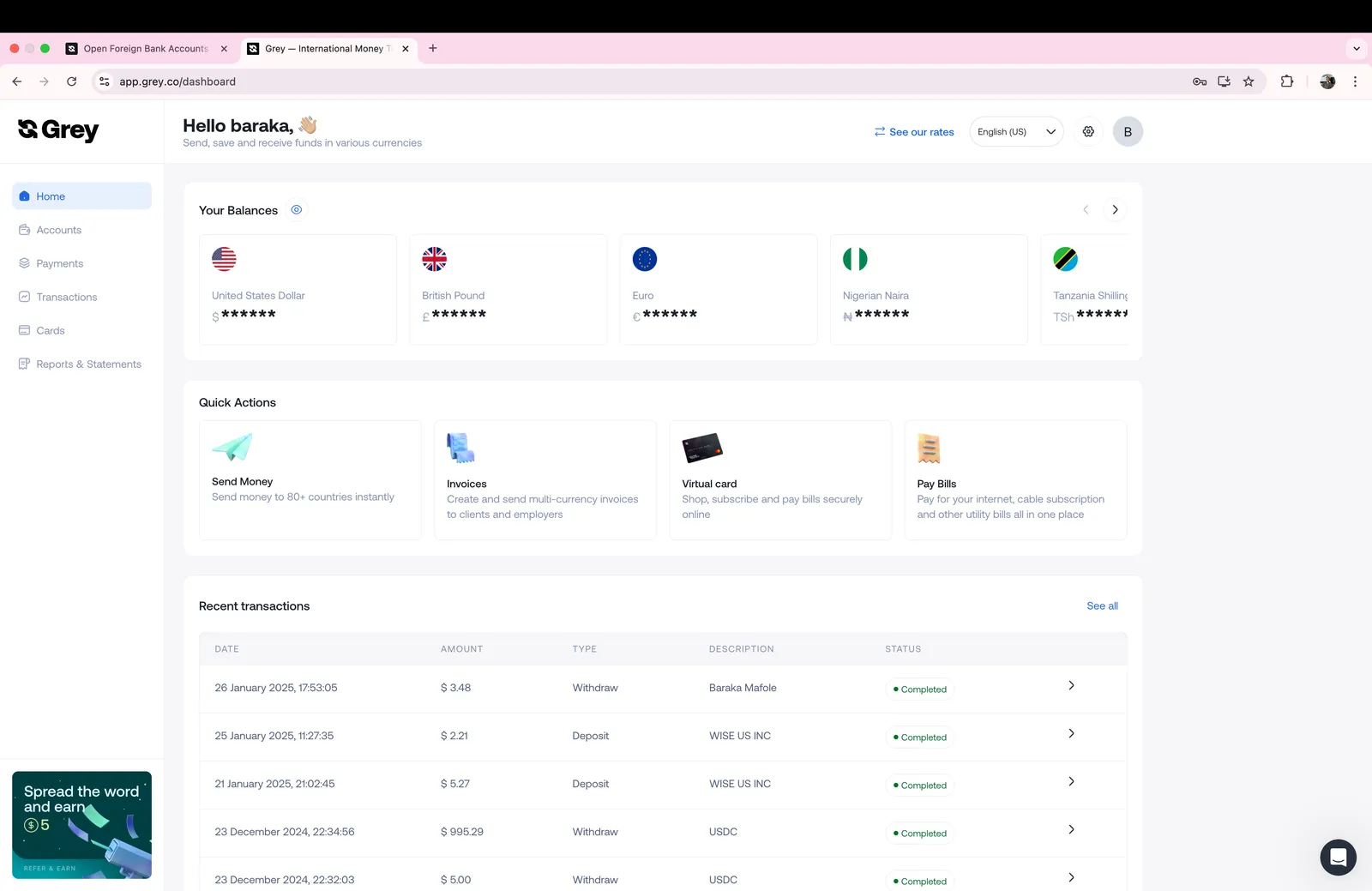
On web

  • Log in to your account.
__wf_reserved_inherit
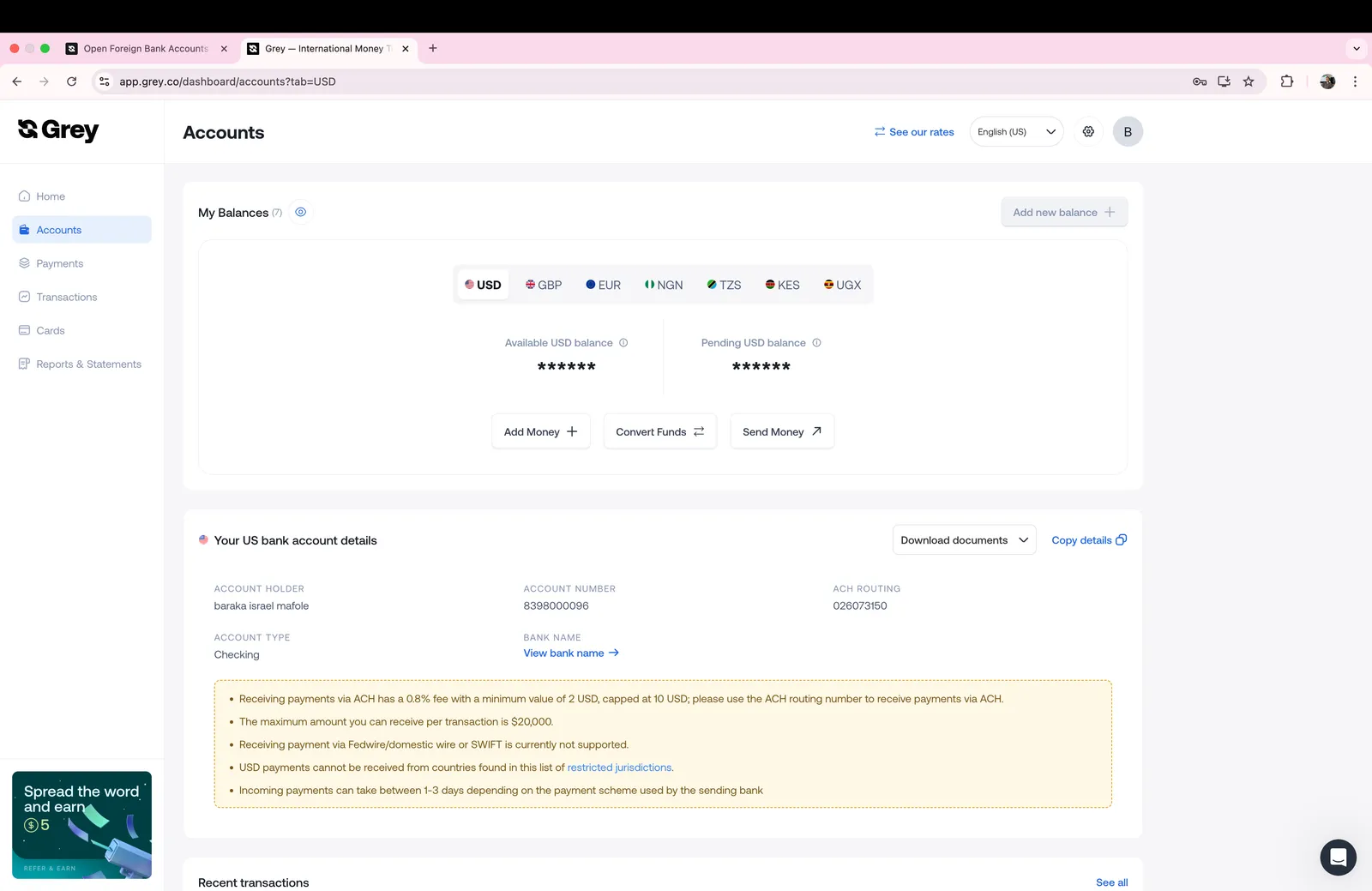
  • Proceed to “Accounts” and select a USD balance.
__wf_reserved_inherit
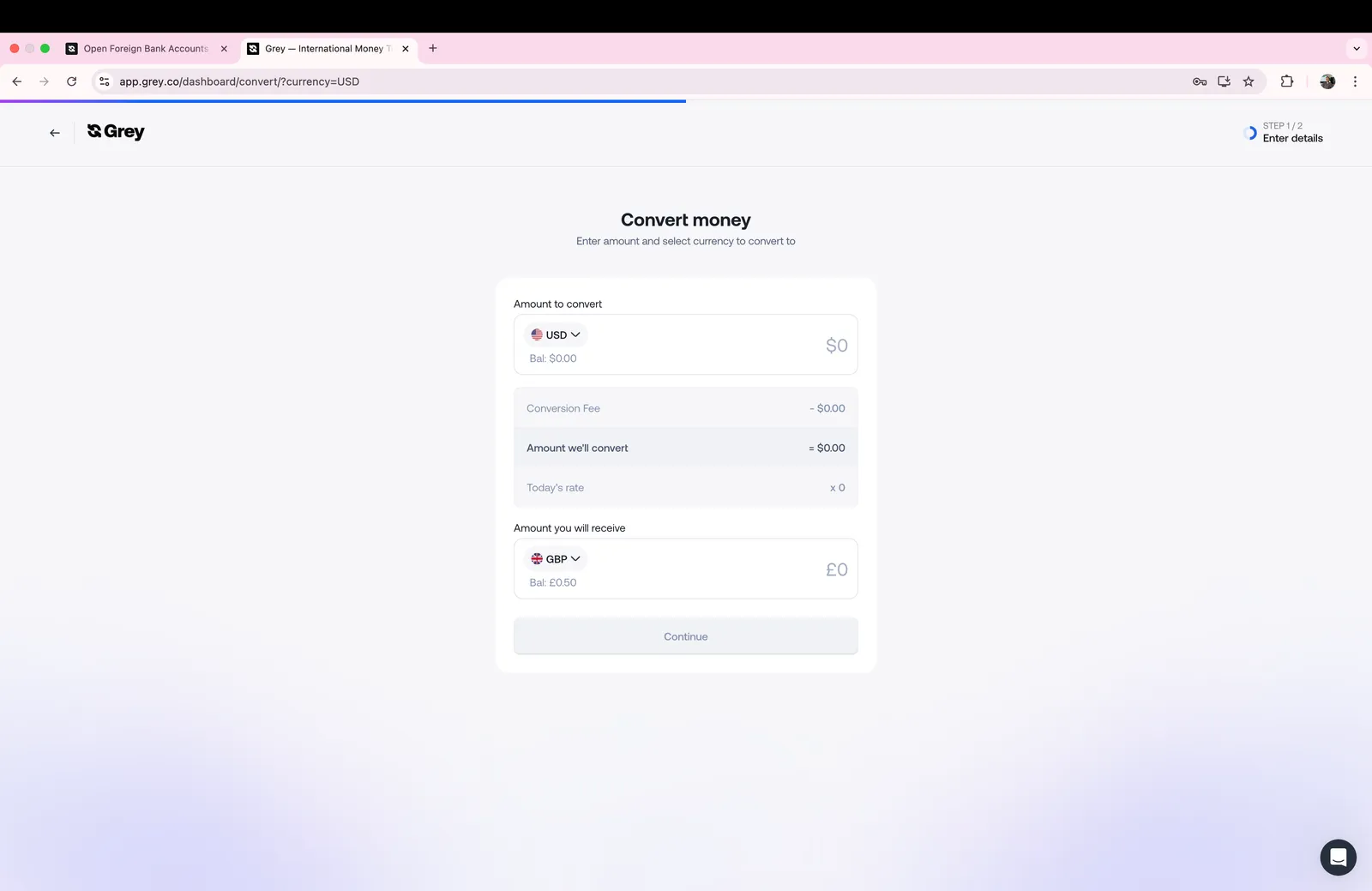
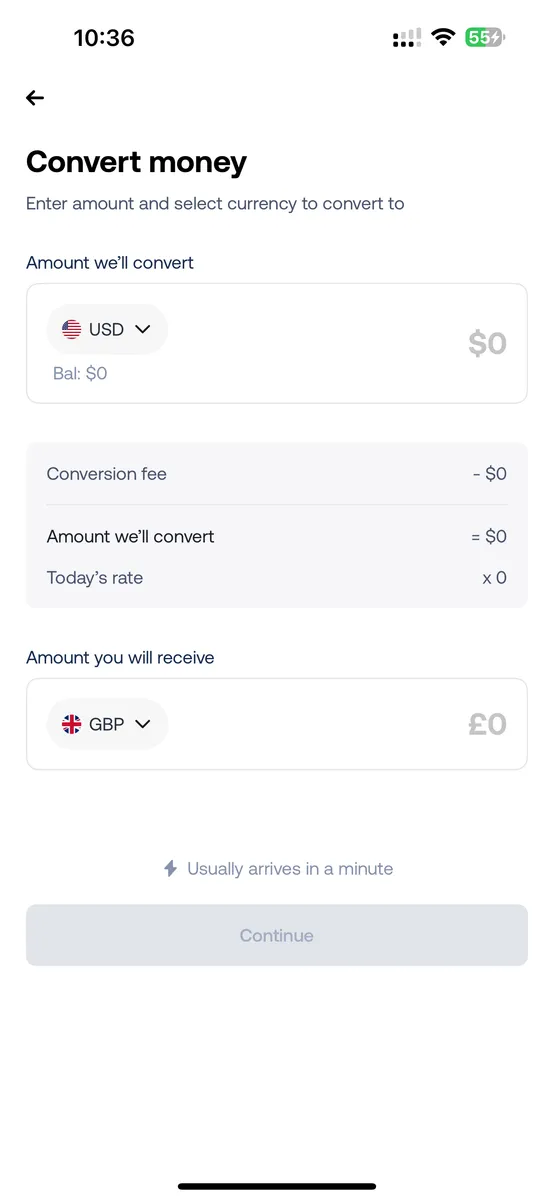
  • Click the convert icon, fill out the requested details, and follow the prompt.
__wf_reserved_inherit

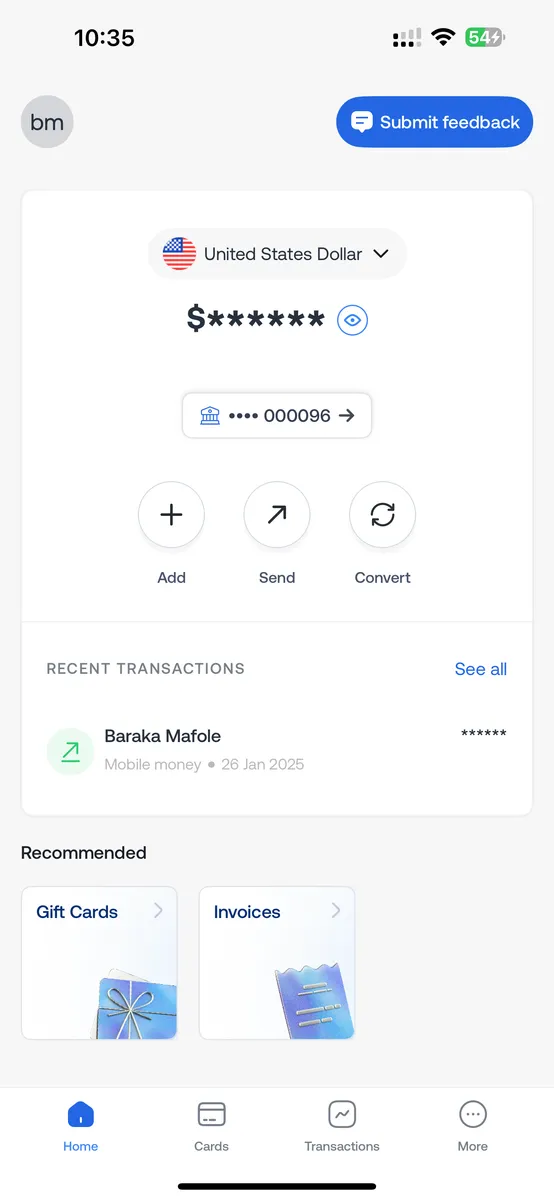
On mobile

  • Log in to your account.
__wf_reserved_inherit
  • On the homepage, Select USD balance.
__wf_reserved_inherit
  • Click “convert,” fill out the requested details, and follow the prompt.
__wf_reserved_inherit

Whether you need to convert your USD to GBP  for business transactions or send it to loved ones in the UK, we recommend using Grey. Create your free account here to enjoy the best exchange rates and seamless transactions.

Last updated:

October 2, 2026

Open a free Grey account to get startedJoin 1 million digital nomads
IF YOU ENJOYED THIS, CHECK THESE OUT

How Moroccan freelancers receive consulting payments from US clients

•

•

2 min read

Morocco’s unique position between Africa and Europe is more than just a geographical advantage. Coupled with a growing bilingual or trilingual (French, Arabic, English) talented workforce, this proximity has made it easy for many Moroccans to integrate well into global workspaces and understand how various regions operate. A good number of consultants in Morocco now work with US clients across strategy, technology, marketing, finance, legal advisory, and UX research. One thing that still lags, however, is how foreign income goes from a client in New York or San Francisco to a consultant in Casablanca or Rabat.

Receiving a consulting payment from a US client is not the same as receiving it from a Moroccan one. The currency, payment processes, regulatory obligations, and costs buried in the conversion process differ, and these differences are often significantly higher than consultants realise when they first set up their payment infrastructure.

This article explains how Moroccan freelancers receive consulting payments from US clients, what each option costs, and how to set up a system that protects your earnings.

How US clients typically pay, and why it matters

Most US clients, whether individuals, startups, or mid-sized businesses, pay via ACH or wire transfer. Understanding the difference is the first step to choosing the right setup.

The Automated Clearing House (ACH) is a payment network that works only within the United States banking system. When a US client initiates an ACH transfer, the funds move directly between US banks, with no correspondent banks involved. Most US banks charge nothing or less than $1 for ACH payments.

For a wire transfer, a payment instruction travels through the SWIFT network to one or more correspondent banks, each of which deducts a fee of $10 to $25. The sender's bank also charges $25 to $45 to initiate the wire. By the time a wire reaches a Moroccan bank account, the total deductions, including correspondent fees and the receiving bank's conversion markup, can become significant.

This means that your payment method determines how much of your earnings actually reaches you, and how much you lose along the way.

Also read: Wire transfer vs ACH: cheapest way to receive USD

Managing USD payments with virtual USD accounts

With traditional banks charging high fees for international wire transfers, virtual USD accounts have become the most cost-effective option for Moroccan consultants receiving regular payments from US clients.

A virtual USD account gives you a real US routing number and account number issued through a regulated fintech platform. When you share those details with a US client, they initiate an ACH transfer as a standard domestic payment. The money moves through the ACH network without correspondent banks and is credited to your virtual USD account in full, typically within 1 to 3 business days.

From there:

  • You hold the balance in USD without it being automatically converted to MAD.
  • You convert when you choose, at a rate you can see before confirming.
  • You withdraw to your Moroccan bank account after the conversion.

That control over conversion timing is the structural advantage over every alternative that routes money directly into a Moroccan bank account. When MAD strengthens against the USD, you can wait. When the rate is favourable, you convert. Your bank does not make that decision for you.

Platforms worth considering for Moroccan consultants:

  • Grey provides virtual USD accounts alongside GBP and EUR, with real foreign banking details for each currency. You can receive USD payments and convert to MAD at competitive rates. The deposit fee is 0.8% of the amount received, with a minimum fee of $2 and a maximum of $10. The currency conversion fee is 1% and capped at $6 per conversion, regardless of the amount. Grey is upfront about their fees, so you can see how much each transaction costs before initiating it, and withdrawals to a local bank account cost a flat fee per transaction. Grey is regulated by FinCEN in the United States and FINTRAC in Canada.
  • Wise applies the mid-market rate with a clearly disclosed fee, typically 0.4% to 1.5% depending on the currency and amount. It also provides local USD account details, a routing number and an account number that accepts ACH payments directly. One of Wise’s selling points is the transparency. You see the exact conversion cost and the amount you will receive before confirming.

Also read: How freelancers in Morocco can switch from traditional banks to Grey

Receiving USD payments with SWIFT wire to a Moroccan bank account

For US clients who insist on wire transfers, a Moroccan commercial bank account that can receive USD is the standard destination. Most Moroccan banks can receive SWIFT transfers in USD, and the funds are converted to MAD upon receipt.

Let’s say you are expecting a $3,000 consulting payment via wire transfer. Here’s what the charges will look like:

  • Client's sending fee: $35 on average
  • Correspondent bank deductions in transit: $20 to $50
  • Receiving bank's conversion markup (2% to 4% below mid-market): $56 to $112
  • Total cost before you access the money: $111 to $197, which is about 3.7% to 6.6%.

Processing takes two to five business days. The exact amount you receive is not known until it arrives, because you cannot be sure how many banks will be involved or how much they will deduct.

This option is better for large, infrequent payments where the fixed costs represent a small percentage of the total.

Managing consulting payments from US clients with Payoneer

Payoneer works in Morocco and supports MAD withdrawals to Moroccan bank accounts. Thanks to its seamless integration feature, it works well with global marketplaces. If you work through Upwork or similar platforms where Payoneer is already a payout option, the integration is already in place and requires no additional setup.

For direct US client payments, the cost structure is the important thing to understand:

  • Payoneer does not charge a visible conversion fee. It includes a margin of 2% to 3% into the exchange rate applied when you withdraw to your Moroccan bank.
  • Withdrawal to a Moroccan bank account carries an additional fee on top.
  • There is an annual account fee of $29.95 if the account receives less than $2,000 in a 12-month period.

LDMAG1

Using PayPal in Morocco for USD payments

PayPal is a household name in global payments, especially among US clients. Moroccan users can receive international payments from foreign PayPal accounts, which means US clients who pay via PayPal can send funds to a Moroccan PayPal account. With CashPlus’s integration, it is now much easier for Moroccans to withdraw from PayPal into their local account.

Let’s take a look at the cost of managing USD payments with PayPal.

  • PayPal charges a 4.4% receiving fee plus a fixed fee for international payments.
  • Withdrawing from a PayPal balance to a Moroccan bank account is at PayPal's currency conversion rate, at 3% to 5% below mid-market.

This means you might be looking at $74 to $94 for a $1,000 transaction.

PayPal is worth accepting if a client insists on it and no alternative is workable. For any client who is flexible on payment method, there are significantly cheaper options.

Considering contractor platforms for USD payments

If you are a consultant in a structured long-term engagement with a single US employer or client, platforms like Deel can handle the payment on both sides. The US client pays Deel in USD. Deel handles the conversion and deposits your earnings in MAD to your Moroccan bank account on a regular schedule. The total fees incurred might not be as clear as with virtual accounts, and there may be hidden margins on conversions.

Deel also handles contractor compliance documentation, which is useful for consultants who want a clean paper trail for their engagements.

Structuring your payment terms with US clients

The payment method is only part of the picture. How you structure the terms of the engagement determines when the money arrives and what recourse you have if it does not.

A few things worth building into every consulting contract with a US client before work begins:

  • Specify the billing currency upfront. USD is the standard for US client work. Stating it clearly in the contract removes any ambiguity about what amount the client owes and prevents a client from attempting to pay in a less favourable currency later.
  • Define who absorbs transfer fees. Including a clause that the client is responsible for ensuring the full invoiced amount arrives net of all transfer costs means you are not absorbing correspondent bank deductions that have nothing to do with the agreed fee.
  • Set a deposit before work starts. For project-based consulting, a 30% to 50% deposit is standard, due before work begins. It protects you from delivering significant work before a payment issue surfaces.
  • State your net terms clearly. Net 14 or Net 15 is reasonable for most US consulting clients and cuts the time between invoice and payment compared to the Net 30 that US businesses often default to.
  • Include a late payment clause. A 1.5% monthly charge on outstanding balances, agreed in the contract before the engagement starts, changes the tone of any follow-up conversation about an overdue invoice.

Also read: Negotiating cross-border freelance contracts: Tips and templates

Receive US consulting payments with Grey

Grey provides Moroccan consultants with virtual USD accounts with real US routing and account numbers. US clients pay via ACH. The full amount arrives without correspondent bank deductions, and you hold the balance in USD until you are ready to convert. Conversion is capped at $6 per transaction, regardless of the amount being converted, and withdrawals to your Moroccan bank account incur a flat fee. GBP and EUR accounts are available on the same platform for any UK or European clients in your portfolio.

If you are shopping on Shein, renewing your AWS hosting subscriptions, or visiting another country, a Grey virtual card helps you spend directly in foreign currencies without manual top-ups. You can create multiple cards for different purposes and link them with Apple Pay and Google Pay.

Grey provides more than virtual USD accounts. It offers a unique opportunity to manage your international finances across various currencies in one place and at affordable rates. Sign up on Grey and download the app to get started.

‍

Best payment methods for freelancers working with US clients

•

•

2 min read

Developers, designers, writers, consultants, virtual assistants, and marketers outside the United States collectively earn billions of dollars from American clients every year. A significant portion of that money is lost quietly to transfer fees, exchange rate markups, and payment infrastructure that was never optimised for the people on the receiving end.

This article covers the main payment methods available to freelancers working with US clients, how each one works at a mechanical level, what each one costs in real numbers, and which situation each one suits best.

What US clients actually use to pay

Before comparing platforms, it helps to understand what US clients typically use when paying a contractor. Most US businesses pay through one of four mechanisms:

  • ACH transfers, the domestic US electronic payment network, are free or near-free for the sender and are processed entirely within the US banking system.
  • Domestic wire transfers, used for larger or more urgent payments, have a sending fee of $25 to $45 from most US banks.
  • International wire transfers via SWIFT for recipients without US bank details, with fees on both ends.
  • Payment platforms like PayPal, Venmo for Business, or Stripe, which US clients often default to for smaller or less formal arrangements.

The payment method available to you depends entirely on the account details you give your client. If you share a US routing number and account number, your client can pay you via ACH as a domestic transfer. If you share SWIFT details, they send an international wire. If you share a PayPal email, they pay via PayPal. The account details you enter on your invoice determine which route the money moves through and, therefore, what it costs.

ACH to a virtual USD account

This is the most cost-effective option for most freelancers working with US clients. The Automated Clearing House is technically the engine room that manages how money moves in the US banking system. It requires both parties to have US bank accounts and routing numbers.

When a US client initiates an ACH transfer using your US routing number and account number, the money moves directly between their bank and the bank holding your account. From the client's perspective, paying you via ACH is like making a local transaction. It is often free or less than $1.

But opening an account with a traditional US bank requires you to live in the US, have a Social Security Number, and visit the bank in person. And since this isn’t possible for many freelancers, virtual USD accounts step in, providing a USD bank account and routing number. So, when you are paid with these details, it looks just like the client is making a local transaction, even though you are in Manila or Lagos.

Here are some virtual USD account options to look into:

Grey

When you open a virtual USD account through a platform like Grey, you receive a real US routing number and account number issued through Grey's licensed US banking partner. You can share this with your client, who then initiates an ACH transfer. The payment amount arrives in your Grey USD account within one to three business days. You keep the money in USD, convert at mid-market rates, and withdraw to your local bank account at a flat fee per transaction.

Here is what Grey’s fees look like:

  • Deposit fee: 0.8%, minimum of $2, maximum of $10
  • Conversion fee: 1%, capped at $6
  • Withdrawal to local bank: flat fee, depending on the currency

All fees are shown up front, so you know how much you are paying, what you are paying for, and how much you will receive.  You can also link this USD account to your freelancing platform to receive payouts directly in USD.

LDMAG1

Wise

Wise gives freelancers local USD account details, including a routing number and an account number, that accept ACH payments from US clients. It applies a mid-market rate to currency conversions, with a clearly disclosed fee of 0.4% to 1.5%, depending on the currency pair and amount.

What works well:

  • The conversion cost is shown before you confirm. There is no markup built into the rate, only a transparent percentage fee.
  • For example, on a $2,000 payment converted to naira, the Wise conversion fee ranges from approximately $8 to $30 at the mid-market rate.
  • Wise also supports GBP and EUR accounts for UK and European clients, which is useful for freelancers working across multiple markets.

Payoneer

Payoneer also provides a virtual USD account, but the platform has built its reputation on integration with major freelance marketplaces. Upwork, Fiverr, Toptal, Amazon, and dozens of other platforms offer Payoneer as a native payout option. If most of your US client income comes from a marketplace where Payoneer is already integrated, then you have nothing to worry about other than the payment structure.

  • Payoneer adds 2% to 3% margin to the exchange rate applied when you withdraw to your local bank account.
  • The annual account fee of $29.95 applies if you receive less than $2,000 in 12 months.
  • The withdrawal fees are 1-4% of the transaction amount. The exact fees usually depend on the transaction volume and region.

PayPal

PayPal is what many US clients reach for first. It is familiar, American consumers trust it, and for small or informal payments, it requires no additional setup on either side. For international freelancers on the receiving end, the experience is considerably less straightforward.

The cost structure:

  • PayPal charges a 4.4% receiving fee plus a fixed fee for international payments. On a $1,000 invoice, that is $44 before anything else happens.
  • Withdrawing to a local bank account triggers PayPal's currency conversion at a rate typically 3% to 5% below the mid-market rate. The remaining $956 costs another $29 to $48.
  • Total cost on a $1,000 payment: $73 to $92, or 7.3% to 9.2% of the invoice.

Beyond cost, PayPal's limitations in certain countries can be a problem. Many countries can receive PayPal payments, but cannot withdraw directly to a local account.

Contractor platforms

If you are working in a structured, long-term arrangement with a single US employer or client, then contractor platforms like Deel, Remote, and Ripple handle the payment infrastructure on both sides. Here is how they work:

  • The US client funds the platform.
  • The platform manages the compliance documentation, the contractor agreement, and the currency conversion.
  • The platform pays freelancers via local payout methods in their country.

Receive payments from US clients with Grey

Grey gives freelancers outside the US virtual USD accounts with real US routing numbers and account numbers that US clients can pay via ACH directly. Grey also supports GBP and EUR accounts for UK and European clients on the same platform. You can receive payments in USD at low and transparent fees, keep your earnings in USD, convert at competitive rates, and withdraw to your local bank.

Grey is regulated by FinCEN in the United States and FINTRAC in Canada, and it uses layers of encryption to protect your data and transactions while complying with global financial standards. With Grey virtual cards, you can create multiple cards for various uses and spend directly from your multi-currency account without manual top-ups or conversions. These cards can also be linked to Google Pay and Apple Pay, making international spending even more seamless.

Virtual accounts save time and money when receiving payments from US clients. Sign up on Grey and download the app to create your virtual USD account today.

‍

How to receive Deel Payments outside the US: Withdrawal and bank transfer guide

•

•

2 min read

Deel has solved multiple problems plaguing the global remote work industry and contractor arrangements. It is a comprehensive global HR and payroll platform designed to help companies hire, manage, and pay international employees and contractors in 150+ countries. It automates compliance with local labour laws, handles payroll, manages benefits, and offers equipment provisioning, allowing businesses to hire globally without setting up local entities.

But today, we are focusing on how Deel is solving the  global payment problem and how you can receive Deel payments outside the US.

Understanding how Deel payments work

Here is what happens when your client uses Deel:

  • The client pays Deel via bank transfer, card, or another supported method on their end.
  • Deel processes the payment and holds it in your Deel balance.
  • You initiate a withdrawal to your chosen destination using whichever method you have set up.
  • The funds move from your Deel balance to the account

Deel doesn’t charge contractors a subscription fee. The costs that apply are withdrawal fees and, in many cases, currency conversion fees charged either by Deel or by the withdrawal platform on the receiving end.

Your Deel balance is held in USD by default. You may choose to withdraw in USD if you have an account that supports USD or convert to your currency when withdrawing to you account.

Also read: How freelancers receive recurring payments from US clients

Receiving Deel payments via local bank transfer

For contractors in countries where Deel supports local bank payouts, this is the most straightforward option. Deel processes payments via local banking rails, converting USD to your local currency and depositing it directly into your bank account.

Deel does not charge a withdrawal fee for local bank transfers in most supported countries, but currency conversion happens on Deel's end. This conversion occurs during withdrawal, and the exchange rate is not always disclosed upfront. So, you are not sure of how much you are losing to exchange rate margins.

Processing your withdrawal typically takes 1 to 5 business days, depending on the country.

Receiving Deel payments via bank transfer

SWIFT is an option for contractors whose country is not supported by Deel's local bank transfer infrastructure, or who hold a foreign currency account.

How it works mechanically:

  • Deel initiates a SWIFT message to the receiving bank via the correspondent banking network.
  • One or more correspondent banks process the transfer in transit, each potentially deducting a handling fee of $10 to $25.
  • The funds arrive at the destination bank within 2 to 5 business days, sometimes sooner than the amount sent if correspondent deductions are applied.

Deel charges $5 to $25 per SWIFT withdrawal, and there is no way to tell how much the correspondent bank(s) will deduct for processing the transaction.

On the other hand, virtual USD accounts like Grey and Wise are considered bank transfer options for Deel withdrawals. However, the mechanism and cost involved are significantly different. We will look more into them.

Also read: Virtual US accounts explained: who they work for

Receiving Deel payments with Wise

Wise is available as a withdrawal destination on Deel for contractors in supported countries. Deel does not charge a withdrawal fee for Wise. The costs on this route are Wise's own conversion fee and any applicable exchange charges on the receiving end.

What makes Wise worth considering:

  • Wise applies the mid-market rate to conversions, with the fee clearly disclosed before confirmation.
  • When converting from USD to a local currency, Wise's fee typically ranges from 0.4% to 1.5%, depending on the currency and amount.
  • Processing is typically within one business day, and in many cases, the same day.

Wise often has restrictions in some climes. It is a good idea to confirm that Wise supports your specific country and currency before relying on it.

Receiving Deel payments with Grey

Grey offers multi-currency accounts, allowing contractors to receive payments in USD, GBP, or EUR and transfer them to their foreign accounts. Withdrawals from Deel usually take 1–2 business days, though they may take longer due to processing or compliance checks.

Grey charges a 0.8% deposit fee on incoming payments (capped at $10 and a minimum of $2).  You can hold USD in Grey or convert to your local currency at competitive rates within the app before withdrawing to your local bank. A flat fee applies for local bank withdrawals.

You can set this up in Deel by selecting "Bank transfer," then selecting the relevant currency, and entering the account details provided by Grey.

Receiving Deel payments with Payoneer

Payoneer is one of the most popular withdrawal options among international contractors on Deel, primarily because it is fast, widely supported, and familiar to people who have used it before. After receiving USD in your Payoneer account, you need to convert and withdraw to your local currency. Deel does not charge a withdrawal fee for Payoneer. But there are fees applied on  Payoneer's side:

  • Payoneer doesn’t charge a visible conversion fee, but it applies a 2% to 3% markup to the exchange rate.
  • Payoneer's withdrawal fee is 2%
  • There is an annual account fee of $29.95 if the account receives less than $2,000 in a 12-month period.

Withdrawing from Deel with the Deel Card

The Deel Card is a virtual prepaid Mastercard that lets verified contractors spend directly from their Deel balance without initiating a withdrawal first. As soon as a payment lands in your Deel balance, it is available to spend on the card.

Key features of the Deel Card:

  • No transaction fees for USD purchases.
  • A 1.25% fee applies to non-USD transactions, such as paying for a local subscription priced in naira or a European vendor priced in EUR.
  • Compatible with Google Pay, Facebook Pay, and Meta Pay.
  • No ATM withdrawal support.
  • Balance held in USD, which shields contractors in volatile currency markets from local currency fluctuations on unspent earnings.

The Deel Card is particularly useful for contractors who want to use their USD earnings for international subscriptions, tools, or online purchases directly. Paying for AWS hosting, a Figma subscription, or a ChatGPT Plus renewal directly from a USD balance avoids the conversion markup that appears when a local currency card is used for USD-priced services.

Receiving Deel payments with PayPal

PayPal is available as a Deel withdrawal method in locations where PayPal supports withdrawals. Deel allows contractors to withdraw funds to PayPal, which generally takes about 1 business day and incurs a 2.5% fee (minimum $0.25 USD). PayPal charges you when withdrawing to a local bank account.

PayPal's conversion from USD to local currency typically applies a rate 3% to 5% below the mid-market rate. For instance, on a $1,000 withdrawal, that amounts to a $30 to $50 loss before adding PayPal’s withdrawal fee. In markets where PayPal's local functionality is limited or account restrictions are common, PayPal is the least reliable withdrawal option.

When linking your PayPal account to your Deel account, it is essential that your email addresses match.

Receiving crypto payments from Deel with Coinbase

For contractors who receive payments in crypto, Deel integrates with Coinbase as a withdrawal option. Supported currencies include Bitcoin (BTC), Ethereum (ETH), Solana (SOL), USD Coin (USDC), and Dash (DASH). Coinbase charges a 1.5% fee to contractors for this option.

While crypto payments are relatively uncommon, they are useful for contractors managing unstable local currencies.

Receive Deel payments with Grey

Grey gives contractors outside the US virtual USD accounts with real US routing numbers and account numbers that work as Deel withdrawal destinations. You can keep your payout in USD or convert at mid-market rates and withdraw to your local bank account at a flat fee whenever you need to.

To set up your Grey account to receive Deel payments

  1. Get a Grey account: Complete your verification and request a virtual USD bank account.
  2. Add method on Deel: In your Deel account, navigate to Settings and then ****Withdraw Methods. Choose to add a new account.
  3. Enter bank details: Select "Bank Transfer" and fill in the ACH routing number and account number provided by Grey.
  4. Verification: Ensure the bank account holder's name on Grey matches the name on your Deel account.

Managing Deel payment with Grey gives you a payment setup that avoids delays, unclear fees and forced conversions. Sign up on Grey and download the app to manage your Deel payment efficiently.

‍

How to get paid by US clients if PayPal is not available in your country

•

•

2 min read

PayPal is one of the most widely used payment methods for US clients. It’s familiar, easy to suggest, and often expected in freelance and consulting work. But if you’re in a country where PayPal isn’t fully supported, that expectation quickly becomes a challenge.

It’s one thing to complete the work; it’s another to actually receive your payment without friction. This article explores how to get paid by US clients without PayPal, guiding you through practical alternatives and helping you compare options so you can choose what works best for you.

Also read: How to get paid as a remote worker without a PayPal account

Why PayPal isn’t available in some countries

PayPal is widely used, but its availability depends on local laws, banking systems, and global policies, which can limit its access in certain countries.

1. Regulatory barriers

Some countries have strict financial regulations that don’t align with PayPal's operating model. This can include requirements for local data storage, licensing, or compliance rules that PayPal cannot meet. As a result, the service may not launch fully or may only offer limited features in those regions.

2. Sanctions

Countries under international sanctions are often restricted from using global financial services like PayPal. These restrictions are driven by international policy rather than individual use. As a result, access to platforms like PayPal is either limited or completely unavailable in these regions.

3. Lack of banking infrastructure

In some countries, local banking systems are not fully compatible with global platforms. Linking a bank account, withdrawing funds, or converting currency can be difficult. Even when payments go through, accessing or moving the money can be unnecessarily complicated.

4. Economic restrictions

Some governments control the flow of foreign currency to protect their economy. This can limit how money is received, held, or converted. In practice, it affects how easily funds can be withdrawn or accessed in currencies like USD.

Also read: How Algerian freelancers get paid without PayPal

The challenges of not being able to use PayPal

If you’ve ever tried getting paid from US clients without PayPal, you’ll know it isn’t always easy. Traditional bank transfers often involve fees of $25 or more per transaction, and intermediary banks may charge additional amounts. Over time, these costs reduce the money you actually take home, making it harder to manage your earnings efficiently.

Not having a widely used payment option can also affect how clients see you. Many clients are used to PayPal and other common platforms, so using a lesser-known method might make you appear less established or professional, even if your work is top quality.

Finally, some clients are simply unwilling to pay through unfamiliar channels. This can result in lost projects or opportunities, as they may choose freelancers who offer the convenience and familiarity of mainstream payment methods.

PayPal alternatives for receiving payments from US clients

If PayPal isn’t available in your country, you still have several ways to receive payments from US clients safely and efficiently. Each method has its own fees, speed, and convenience, which you should consider before choosing the best option.

Payoneer

Payoneer gives you a receiving account that works like a US bank account, allowing clients to deposit money via ACH. Currency conversion fees are up to 3.5%, ATM withdrawals cost $3.15, and bank withdrawals can reach 3%. There’s also a $29.95 annual fee for inactive accounts. Payoneer is useful for handling multiple clients and currencies, offering a straightforward way to access your funds without the complications of international bank transfers.

Wise

Wise provides lower fees and better exchange rates than traditional bank wires. You can receive USD via wire or SWIFT. Note that a small activation deposit may be required. Wise charges a fixed fee of $6.11 per payment. It’s a transparent and cost-effective option, ideal if you want your money converted efficiently, with predictable costs, and delivered to your local bank account without hidden fees or lengthy processing times.

Grey

Grey is highly rated by freelancers, offering virtual accounts in USD, GBP, and EUR, with fast local payouts. Currency conversions are just 1%, capped at $6. It also provides virtual USD cards to spend internationally or online without additional hassle. Grey is a modern, convenient solution, letting you receive payments quickly and manage multiple currencies from one platform, removing the usual frustrations of international transfers.

Crypto platforms

Crypto services like Binance allow payments in stablecoins such as USDT or USDC. Grey also supports receiving USDC directly. This method is fast and borderless, bypassing traditional banking systems. It works well for those comfortable with crypto, though you may need to convert it into your local currency before withdrawing or spending.

Direct bank transfer

You can give clients your local bank account and SWIFT code for direct international transfers. Banks handle the payment, but processing can take several days. Fees depend on both your bank and the client’s bank, and currency conversion may come with hidden costs. While reliable and widely accepted, this method can be slower and more expensive than specialised online platforms for receiving international payments.

LDMAG1

Manage your US earnings with Grey

Grey lets you receive payments from US clients even when PayPal isn’t available in your country. It offers competitive currency exchange rates and the ability to hold funds in multiple currencies with its multicurrency feature. Grey is secure, reliable, and user-friendly, making international payments simple. Sign up or download the app today to get started and manage your earnings effortlessly.

A simple guide for US businesses working with global clients

•

•

2 min read

Working with clients around the world can be one of the smartest growth moves a US business can make, especially if done right. New markets, fresh revenue streams, and access to specialised talent are on the other side of expanding internationally.

However, some new complexities may arise. Things like different time zones, culture shocks, contracts, payments, and compliance suddenly matter.

In this article, you’ll learn everything you need to run a smooth and profitable relationship with global clients, from first contact to final invoice. I’ll cover how to understand clients in different markets, build scalable workflows, handle payments without losing money, and stay on the right side of the law.

Also read: Meet Grey Business: the growth engine for global finances

1. Know the client’s context before you start

Before pitching or signing, learn about the client’s market and the expectations.

Here are some practical checks:

  • Time zones: Propose meeting windows that work for everyone.
  • Business days & public holidays: Keep an eye out for important days and plan accordingly.
  • Communication style: Confirm whether they prefer formal or informal, email or instant messaging, and, more importantly, the expected response times.
  • Decision-making: Are approvals fast or routed through many stakeholders? Ask who signs off and what the approval timeline is.
  • Local payment norms: Do clients prefer bank transfers, cards, or local wallets? Knowing this up front prevents invoicing friction.

Also read: What non-US residents need to open a US bank account at major banks

2. Write a detailed contract

A tight contract helps to define deliverables and keeps cash flow predictable.

Essential contract elements include:

  • Deliverables & acceptance criteria: Define exactly what “done” looks like and how the client will sign off.
  • Milestones & timeline: Include dates for drafts, feedback windows, and final delivery.
  • Payment terms: This includes the currency, invoicing cadence, accepted payment methods, and who pays the fees (you or the client). If there will be late-payment penalties, state them clearly (e.g., 1.5% per 30 days).
  • IP & licensing: Clearly state when ownership transfers and which rights you retain (templates, libraries).
  • Confidentiality & data protection: You should have details of the minimum security standards, data residency concerns, and permitted data use.
  • Termination & dispute resolution: The most important clauses are the notice period, refund rules for partially completed work, and whether disputes are resolved through mediation or arbitration.
  • Force majeure & change orders: This will cover how unexpected events or added scope are handled.

Also read: How to open a USD bank account remotely without US citizenship

3. Build simple, repeatable workflows

Define a small stack and stick to it. Here are some core workflow components

  • Project tracker: Asana, ClickUp, or Trello for tasks, deadlines and approvals.
  • Single source of truth: A shared drive with a clear folder structure (e.g., /ClientName/Project/Deliverables/Final).
  • Communication rules: Slack for day-to-day, Zoom for calls, email for official records and define expected response times (e.g., 24 hours).
  • Meeting notes: After every call, send a summary with action items and owners.
  • Version control: Label files with date and version to avoid confusion.
  • Handover documents: For each milestone, provide a brief list of deliverables, acceptance criteria, and next steps.

Remember, the fewer tools you use, the easier it is for global teams to adopt your processes.

Also read: How Moroccan businesses receive payments from overseas customers

4. Pricing, taxes and compliance

Pricing internationally is not simply a matter of currency conversion.

Pricing approaches

  • Value-based pricing: Price by impact rather than by the hour. This often yields higher margins.
  • Tiered packages: Basic, standard and premium are the most common. This method is useful for clients with different budgets.
  • Localised pricing: You can adjust for local market purchasing power where appropriate.

Tax and legal considerations

  • Withholding taxes: Some countries require payers to withhold tax on payments to foreign recipients. Check ahead and consider gross-up clauses.
  • VAT / GST / digital services tax: Digital services sold to EU consumers, for example, may be subject to VAT. B2B sales often reverse-charge but confirm.
  • Permanent establishment risk: Avoid activities that create a taxable presence in client countries (e.g., hiring a local team without a local entity).
  • US reporting: Track foreign income, and for payments to foreign contractors, you may need to file Form 1099 or Form 1042-S.

Always consult a tax advisor.

5. Building long-term global relationships

Long-term clients are gold. Here’s how to convert one-off projects into retainers.

  • Deliver predictable results: Happy clients are more likely to sign extensions.
  • Quarterly business reviews: Show ROI and propose next steps.
  • Referral programmes: Incentivise referrals with discounts or bonuses.
  • Case studies & testimonials: With the client’s permission, use success stories to win similar work.

LDMAG1

Scale globally but keep it simple

Expanding beyond the US unlocks growth, but it also tests your operations. The difference between businesses that struggle with international clients and those that thrive often comes down to infrastructure, specifically, having financial systems designed for cross-border work.

Grey Business is built specifically for companies working with global clients. You get a USD account that makes it easy for international clients to pay you.

When you need to pay contractors or vendors abroad, Grey Business handles it efficiently, avoiding the delays and excessive fees of wire transfers. You can also make bulk payments to multiple accounts at once in their preferred currency. And because everything is structured as a business account, your financial records stay clean and organised for accounting and tax purposes.

Open your Grey Business account today and give your company the financial infrastructure it needs to operate globally without friction.

‍

How to receive Patreon payments outside the US: Guide for international creators

•

•

2 min read

Patreon has provided a platform for creatives within and outside the US to earn from their work while also gaining visibility. A musician from a quiet street in Manila, a writer in a buzzing Nairobi community, and a podcaster creating lifestyle content in Madrid all have a place to showcase their work. It is a digital platform for creatives that enables you to build a sustainable income from your work, regardless of where you live.

Non-US Patreon creators like Peter Boese, Aunty Donna, and Ben Komets have built successful profiles on the platform. As motivating as this sounds, your reality as a Patreon creator might be different from that of American creators.

Building an audience on Patreon is only half the work. The real question for creators outside the US is: how do you actually receive your earnings without losing a significant portion to fees, delays, or forced currency conversion? This article explains how Patreon payouts work for international creators, what each option costs, and how to structure your account to keep as much of your earnings as possible.

Also read: How to collect international creator funds in local currency

How Patreon's fee structure works before you even get to payouts

Patreon charges a platform fee on every amount you earn from the platform. If your account became active after August 4, 2025, you will be charged a 10% platform fee. Creators who published before that date may be on legacy plans at 5% or 8%, depending on their tier. On top of the platform fee, payment processing fees apply to every transaction:

  • Standard payments over $3: 2.9% + $0.30 per transaction
  • Micropayments of $3 or under: 5% + $0.10 per transaction
  • iOS in-app purchases (outside the US): an additional 30% Apple fee applies

Also, when a patron pays in a currency different from your chosen payout currency, Patreon charges a 2.5% conversion fee on that payment. For instance, if you set your payout to USD and a patron pays in GBP, Patreon will charge a 2.5% conversion fee. This applies per payment, not per payout, which means it compounds across every patron whose billing currency does not match yours. After deducting the platform fee, processing fee, and any conversion fees, the remaining balance is your payout.

Payout methods available to international creators

Patreon offers three main payout routes for creators outside the United States. Which ones are available to you depends on your country of residence and your chosen payout currency.

Local bank transfer (direct deposit in local currency)

This is a straightforward payout option for international creators in countries where it is available. Patreon sends your earnings in your local currency directly to your bank account. The payout fee is a flat charge of approximately $0.50 or the local equivalent per payout. This is typically processed through a partner infrastructure (often associated with Payoneer), although you do not need a Payoneer account to use it.

  • Go to your Patreon payout settings
  • Enter your local bank details
  • Select your country
  • The funds arrive in your local currency

Patreon controls the conversion from USD to your local currency and applies its own rates, which may differ from the mid-market rate. This means the final conversion rate may vary from what you expect.

Also read: How creators receive payouts from international platforms

Wire transfer (international bank transfer)

This is also processed through a partner infrastructure. The wire transfer option sends funds in USD via international wire to a bank account that can receive USD. This is relevant for creators who have a foreign currency account, a virtual USD account, or a domiciliary account.

This option allows you to receive USD without conversion on Patreon’s side. Once the funds arrive, you can choose to keep them in USD or convert them to your local currency.

The exact amount you receive depends on your bank and country. Patreon’s fee is typically between $1.50 and $3.00 per payout.

If you are using a non-US account, the payout may pass through correspondent banks, which can deduct $10 to $30. Your receiving bank may also charge a deposit fee. It is a good idea to compare options before choosing this method.

PayPal

PayPal is one of the most widely known options and the one many creators default to because it is familiar and quick to set up. Patreon's payout fee for PayPal is typically 1% with a minimum of $0.25 per transfer.

Receiving payments on PayPal is usually straightforward. However, withdrawals to local bank accounts outside the US are subject to PayPal’s currency conversion. This rate is typically 3% to 5% below the mid-market rate. So, if your payout is $500, you could be charged $15 to $25 on conversion before any withdrawal fee is applied.

In some countries, there may also be limitations that affect withdrawals or account usage.

Payoneer wallet

We already mentioned that Payoneer’s infrastructure supports some payout methods. Another option is to use Payoneer as a wallet to receive your payout. This is a legacy option and is only available to creators who connected a Payoneer account before December 19, 2018. It is no longer available to new creators.

How to receive Patreon payouts with a virtual USD account

For creators outside the US earning in USD on Patreon, a virtual USD account is one of the more cost-efficient setups available.

Here’s what you should do:

  1. Open a virtual account: Sign up for Wise, Payoneer, or a similar provider and request your ACH (USD) bank details
  2. Add payout method: Go to Payouts in Patreon Settings and select Add payout method
  3. Set country: Select the United States as your bank country (even if you live elsewhere)
  4. Enter details: Input the USD routing and account numbers provided
  5. Verify and wait: A 5-day lock is placed on your account when you change payout methods

From there, you hold your USD balance, convert it at a time of your choosing, and withdraw to your local bank account. The conversion cost is visible before you confirm it, and withdrawal fees are typically fixed depending on the destination.

Platforms like Grey provide virtual USD accounts with real US banking details for creators outside the US. The deposit fee is 0.8% of the amount received (minimum of $2 and capped at $10). The currency conversion fee is typically 1% and capped at $6 for certain currency pairs. Withdrawals are usually charged as flat fees depending on the destination.

Grey is registered with FinCEN in the United States and with FINTRAC in Canada and operates under applicable financial regulations.

Additional information on receiving payments from Patreon outside the United States

Getting your Patreon payout configuration right from the start can save a lot of stress later. Here are a few things to keep in mind:

  • Match your payout currency to your patron base: If most of your patrons are in the US, billing in USD helps avoid the 2.5% conversion fee. If most are in Europe, EUR may be more suitable
  • Add your payout method early: Patreon applies a five-day payout hold whenever you add or change your payout method
  • Automatic payouts on the 5th: Patreon offers automatic payouts initiated on the 5th of each month, helping you maintain a predictable schedule
  • iOS purchases carry an additional 30% Apple fee: This applies to memberships purchased through the Patreon iOS app by international users

Also read: Switching from banks to global accounts: what to know

Receive your Patreon earnings with Grey

Patreon provides a platform for creators to monetise their work. Grey helps creators manage how they receive and use their earnings by providing access to virtual USD accounts.

You can receive your Patreon earnings in USD, keep them in USD, or convert them at competitive rates to your local currency and withdraw to your bank account when needed.

Grey also offers virtual cards, allowing you to create multiple cards, add them to Google Pay or Apple Pay, and spend directly from your multi-currency balance without additional steps.

Create freely on Patreon without worrying about payout complexity. You can sign up on Grey or download the app to get started.

‍

Arrow (up)

Back to top

