


Dual citizenship allows you to be a legal citizen of two countries at the same time. It can give you more freedom to live, work and travel, but it also comes with responsibilities that may affect your finances, legal status and personal choices.
Before applying for a second nationality, it is important to understand the potential downsides of dual citizenship. You may need to file tax returns in both countries, meet military service obligations or follow different laws depending on where you live. You could also face limits on consular assistance while in your other country of citizenship.
In some cases, holding two nationalities can make it difficult to renounce one later. Certain countries also restrict dual citizenship or may withdraw your original nationality when you acquire another. Understanding these rules before making a decision helps you weigh the benefits against the possible risks and avoid unexpected legal or financial complications.
Does dual citizenship mean paying tax twice?
Dual citizenship taxes can be confusing because you may have tax obligations in both countries. Filing two tax returns is common, but paying tax twice on the same income usually is not. Whether you owe taxes in both countries depends on the tax laws of both countries, where you live, where your income comes from, and your citizenship status. Some countries tax residents on worldwide income, while others also tax citizens living abroad.
Tax treaties between countries can help reduce double taxation. These agreements may determine which country has the primary right to tax certain income or allow you to claim relief for taxes paid elsewhere. However, not every country has a tax treaty with every other country, and the rules differ by agreement. A treaty may reduce your tax burden without removing every filing requirement.
If you are a US citizen living abroad, the foreign earned income exclusion may allow you to exclude qualifying foreign-earned income from US federal income tax if you meet specific requirements. It does not automatically eliminate all US tax obligations. Before making decisions, check the rules in both countries and consult a qualified tax professional for guidance on your circumstances.
Which countries do not allow dual citizenship?
Countries have different rules on dual citizenship, with some prohibiting it altogether or withdrawing nationality when citizens voluntarily acquire another citizenship. Here are some countries that do not allow dual citizenship or impose restrictions on it:
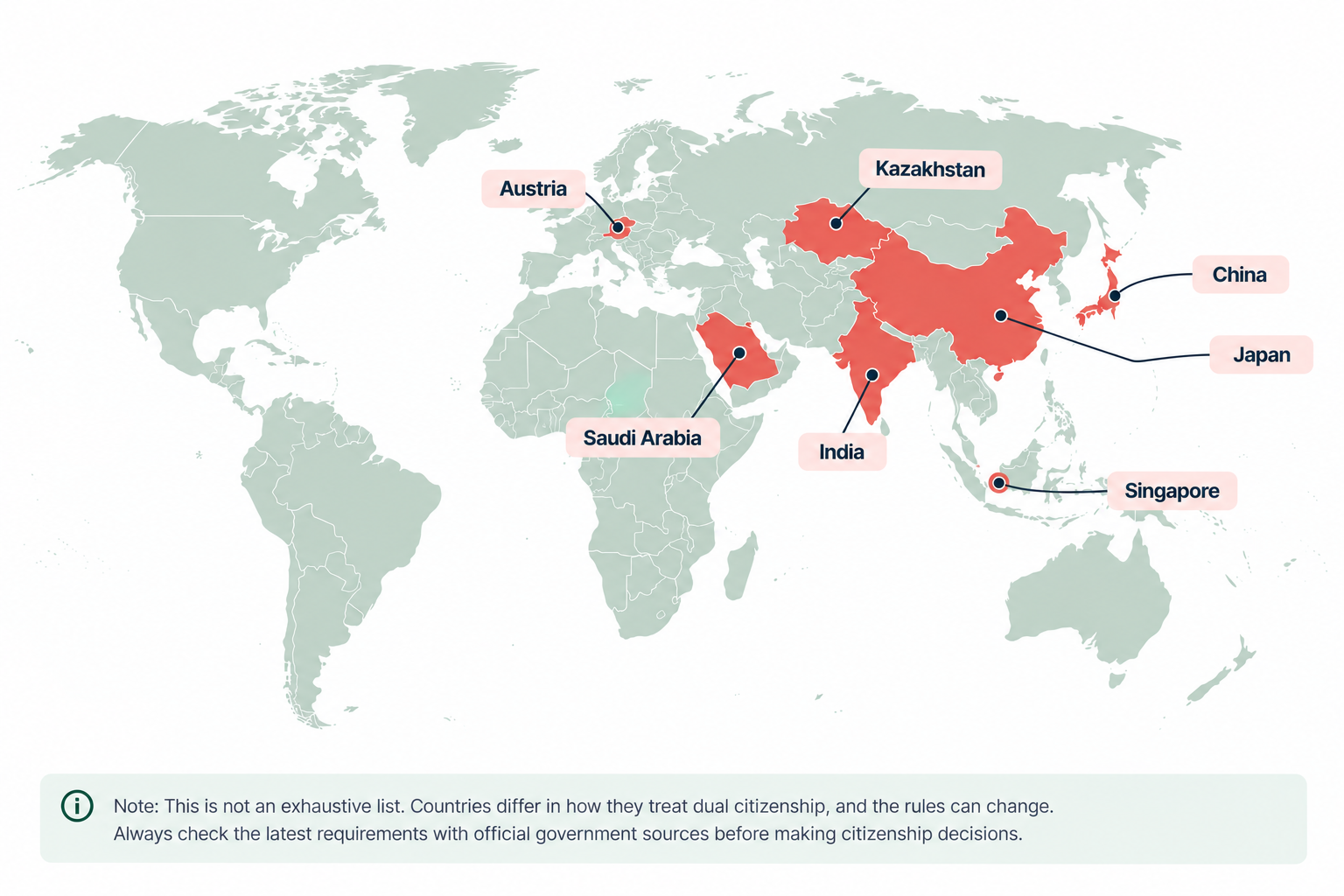
China
China does not recognise dual nationality under its Nationality Law. Chinese citizens who voluntarily settle abroad and acquire foreign nationality may automatically lose Chinese nationality. However, the application of this rule depends on legal circumstances, so verify current requirements before pursuing another citizenship.
India
India does not permit full dual citizenship. Indian citizens who voluntarily acquire another country’s citizenship generally lose Indian citizenship and must surrender their Indian passport. The Overseas Citizen of India (OCI) scheme offers eligible foreign citizens of Indian origin certain benefits, but it is not citizenship.
Japan
Japan generally requires people with multiple nationalities to choose one nationality under its Nationality Act. Those who acquire another nationality voluntarily may lose Japanese nationality. People who hold dual nationality from birth face a nationality-selection requirement, with deadlines and procedures depending on their circumstances.
Singapore
Singapore generally prohibits adult citizens from holding dual citizenship. People who acquire Singapore citizenship may need to renounce their foreign nationality, while Singapore citizens who voluntarily acquire another nationality risk losing Singapore citizenship. Rules for minors differ, so check official requirements before making citizenship decisions.
Saudi Arabia
Saudi Arabia restricts dual nationality. Saudi citizens generally require prior permission to acquire another nationality, and obtaining foreign citizenship without approval may lead to loss of Saudi citizenship under applicable law. The consequences depend on individual circumstances, so confirm current rules with Saudi authorities before applying.
Also read: How to receive international freelance payments in Saudi Arabia
Austria
Austria generally withdraws Austrian citizenship when a citizen voluntarily acquires another nationality, unless they obtain permission to retain Austrian citizenship beforehand. Exceptions may apply in specific circumstances, including certain cases involving citizenship by birth. Always check the legal requirements before pursuing naturalisation in another country.
Kazakhstan
Kazakhstan does not recognise dual citizenship under its nationality laws. Citizens who acquire another nationality are generally required to report it and surrender their Kazakh documents within the applicable period. Failure to comply may result in penalties, so confirm the current reporting and citizenship-loss rules with official authorities.
What consular protection do you lose?
Consular protection is assistance your government provides when you encounter problems abroad, such as arrest, illness, lost travel documents or an emergency. If you hold dual citizenship, you may expect both countries to help you when something goes wrong. However, your ability to receive assistance from one country can be limited when you are inside the other country where you are also a citizen.
For example, if you are a dual citizen of the United States and Nigeria and face arrest while in Nigeria, US officials may be unable to intervene on your behalf. Nigerian authorities may treat you solely as a Nigerian citizen and may not recognise your American nationality. This can limit access to US consular assistance, including visits or representations to local authorities.
These restrictions do not mean you lose all consular protection whenever you travel. Your options depend on the countries involved, their laws and any applicable agreements. Before travelling, check your government’s guidance on dual nationality, local laws and emergency contacts so you understand what support may be available.
Military service and other civic obligations
Dual citizenship can bring legal responsibilities in both countries, even when you live permanently in one. Depending on each country’s laws, you may be required to complete military service, respond to jury duty summons or meet compulsory voting requirements while living abroad.
Military conscription can be particularly important if one of your countries requires eligible citizens to serve in its armed forces. Some countries provide exemptions, deferments or alternative service arrangements, but these depend on factors such as your age, residency and circumstances. Jury duty and voting obligations also vary, and some countries allow citizens overseas to fulfil these duties remotely or qualify for exemptions.
Ignoring a legal obligation may lead to fines, travel restrictions, difficulties renewing documents or other penalties, depending on the country and the specific law. Before acquiring a second nationality, check the civic duties attached to both citizenships. Understanding these requirements can help you avoid unexpected obligations when travelling, relocating or returning to either country.
Also read: D7 visa Portugal: Requirements and how to apply
How hard is it to renounce citizenship?
Renouncing citizenship is not always straightforward. The process depends on the country’s laws, and you may need to apply through an embassy or consulate, attend an appointment, submit original documents and prove that you hold another nationality. Some countries will not allow you to renounce citizenship if doing so would leave you stateless.

Fees and waiting times vary considerably. You may pay an application or administrative fee, cover document certification and translation costs, and wait several months or longer for approval. In some cases, additional checks or incomplete paperwork can delay the process.
Tax obligations can make renunciation more complicated. For example, the United States generally requires certain citizens who renounce their nationality to complete final tax filings, and some may face an expatriation tax if they meet specific criteria. Other countries may impose outstanding tax obligations or departure-related requirements, depending on their laws. Renouncing citizenship does not automatically erase unpaid taxes or other liabilities. Before proceeding, check the official requirements of your country and consider seeking qualified legal or tax advice.
Frequently asked questions
1. Do dual citizens pay tax in both countries?
Yes, dual citizens may have tax obligations in both countries, depending on residency, citizenship and income sources. The United States taxes citizens on worldwide income, even when they live abroad. Tax treaties and foreign tax credits can help reduce double taxation, although filing requirements may still apply.
2. Which countries ban dual citizenship?
Countries such as China, India, Japan and Singapore restrict or generally prohibit dual citizenship under specific circumstances. Saudi Arabia, Austria, Kazakhstan and Indonesia also impose restrictions. However, rules and exceptions vary, so check each country’s current nationality laws before applying for another citizenship.
3. Can you lose your original citizenship automatically?
Yes, some countries may withdraw your original citizenship when you voluntarily acquire another nationality. India generally ends Indian citizenship upon voluntary acquisition of foreign citizenship, while China does not recognise dual nationality and applies specific rules to citizens who settle abroad and acquire foreign citizenship.
4. Can dual citizens be conscripted?
Yes, dual citizens may face military service obligations in either country, depending on its laws. Requirements can depend on age, residency and nationality status. Some countries have exemptions or agreements to prevent double service, so check the rules before travelling or relocating.
5. Which passport should you travel on?
Dual citizens may need to use a particular country’s passport when entering or leaving that country. For example, US citizens generally must use a US passport to enter and leave the United States. Check both countries’ requirements and use the appropriate passport for international travel.
6. Is it hard to give up a second citizenship?
Renouncing citizenship can involve application fees, official documents, interviews and waiting periods. US citizens must generally complete an in-person renunciation appointment and may have tax filing obligations, including potential expatriation tax. Other countries have different procedures, so confirm the requirements before beginning.
Managing money across borders becomes easier when you have the right tools. With Grey, you can send money internationally, including transfers from the US to Canada, while holding and managing multiple currencies. Whether you’re travelling, working remotely or receiving payments from abroad, Grey helps you manage international payments and access your money across borders with greater convenience and flexibility.
.svg)