<script type="application/ld+json" data-schema-version="grey-blog-v4"> [{"@context":"https://schema.org","@type":"BlogPosting","@id":"https://grey.co/blog/how-to-sell-gift-cards#article","headline":"How to sell gift cards for cash in the US","description":"Sell gift cards for cash through exchanges, kiosks or peer marketplaces, and see the rates each pays. Avoid the common scams. Compare your options.","inLanguage":"en","url":"https://grey.co/blog/how-to-sell-gift-cards","mainEntityOfPage":{"@id":"https://grey.co/blog/how-to-sell-gift-cards#webpage"},"datePublished":"2026-10-26T22:13:47.955Z","dateModified":"2026-10-30T08:58:03.716Z","author":{"@type":"Person","@id":"https://grey.co/authors/tunde-aladeloba#person","name":"Tunde Aladeloba","url":"https://grey.co/authors/tunde-aladeloba","jobTitle":"Content Writer","sameAs":["https://ng.linkedin.com/in/aladeloba-babatunde-b1114b100"]},"publisher":{"@type":"Organization","@id":"https://grey.co/#organization","name":"Grey","url":"https://grey.co","logo":{"@type":"ImageObject","url":"https://cdn.prod.website-files.com/6360022338a81bd6fdbb1145/6564ae1077a67e39d3c491a6_Grey%20Logo%20Lockup%20Black.svg"}},"image":{"@type":"ImageObject","@id":"https://grey.co/blog/how-to-sell-gift-cards#primaryimage","url":"https://cdn.prod.website-files.com/636a85d290ee58e70c17e1c0/6adfd08439bd6559cc954f30_How%20to%20Sell%20Gift%20Cards%20for%20Cash%20in%20the%20US-compressed.jpg","contentUrl":"https://cdn.prod.website-files.com/636a85d290ee58e70c17e1c0/6adfd08439bd6559cc954f30_How%20to%20Sell%20Gift%20Cards%20for%20Cash%20in%20the%20US-compressed.jpg","width":1200,"height":675}},{"@context":"https://schema.org","@type":"WebPage","@id":"https://grey.co/blog/how-to-sell-gift-cards#webpage","url":"https://grey.co/blog/how-to-sell-gift-cards","name":"Sell gift cards for cash in the US: Best options | Grey","description":"Sell gift cards for cash through exchanges, kiosks or peer marketplaces, and see the rates each pays. Avoid the common scams. Compare your options.","inLanguage":"en","primaryImageOfPage":{"@id":"https://grey.co/blog/how-to-sell-gift-cards#primaryimage"},"breadcrumb":{"@id":"https://grey.co/blog/how-to-sell-gift-cards#breadcrumb"}},{"@context":"https://schema.org","@type":"BreadcrumbList","@id":"https://grey.co/blog/how-to-sell-gift-cards#breadcrumb","itemListElement":[{"@type":"ListItem","position":1,"name":"Home","item":"https://grey.co/"},{"@type":"ListItem","position":2,"name":"Blog","item":"https://grey.co/blog"},{"@type":"ListItem","position":3,"name":"How to sell gift cards for cash in the US","item":"https://grey.co/blog/how-to-sell-gift-cards"}]},{"@context":"https://schema.org","@type":"FAQPage","@id":"https://grey.co/blog/how-to-sell-gift-cards#faq","inLanguage":"en","mainEntity":[{"@type":"Question","name":"What is the best place to sell gift cards?","acceptedAnswer":{"@type":"Answer","text":"The best place to sell gift cards depends on your preferred currency, payout speed, and the card you own. Platforms such as Cardtonic, GiftCardsToNaira, GiftCash, and Gameflip offer different options. Compare their rates, fees, supported brands, and payment methods before choosing where to sell."}},{"@type":"Question","name":"How much can you get for a gift card?","acceptedAnswer":{"@type":"Answer","text":"The amount you receive depends on the card’s brand, value, demand, and resale platform. Some gift cards may sell for 60% to 93% of their face value, but rates vary. Check current offers before selling so you understand how much you will receive."}},{"@type":"Question","name":"Can you sell a partially used gift card?","acceptedAnswer":{"@type":"Answer","text":"You may be able to sell a partially used gift card, depending on the platform’s rules. The marketplace must support the card and allow its remaining balance to be verified. Check the requirements first, and disclose the exact balance to avoid disputes with the buyer."}},{"@type":"Question","name":"How long does a gift card payout take?","acceptedAnswer":{"@type":"Answer","text":"Gift card payout times depend on the platform, verification process, and payment method. Some services process approved transactions quickly, while others may take several hours or longer. Before selling, check the estimated processing time and confirm whether additional identity or card verification is required."}},{"@type":"Question","name":"Is selling gift cards legal?","acceptedAnswer":{"@type":"Answer","text":"Selling gift cards you legitimately own is generally legal, but the rules depend on your location, the card issuer’s terms, and the transaction. Avoid selling cards obtained through fraud or using platforms that facilitate illegal activity. Check local regulations and the marketplace’s terms before completing a sale."}},{"@type":"Question","name":"How do you sell a US gift card from outside the US?","acceptedAnswer":{"@type":"Answer","text":"To sell a US gift card while living abroad, choose a reputable platform that accepts your card brand and country of residence. Check its exchange rate, fees, verification requirements, and payout options. Confirm that you can withdraw the proceeds in your preferred currency before submitting your card details."}}]}] </script>

How to sell gift cards for cash in the US

Tunde Aladeloba

TABLE OF CONTENT

SHARE THIS POST

If you have a gift card you'll never use, selling it can help you turn that unused balance into cash. Whether you received an unwanted gift card, have leftover shopping credit, or simply need money for something else, there are several ways to sell gift cards in the US. Online gift card exchanges offer convenience, physical kiosks provide quick in-person transactions, and peer-to-peer marketplaces let you negotiate directly with buyers.

The amount you receive depends on the retailer, card balance, demand, and selling method. Some gift cards sell closer to their face value than others, so comparing offers before accepting one can help you get a better deal. Payout times also vary, ranging from immediate payment at some kiosks to several business days for online transactions.

Before choosing where to sell, check the platform's fees, payment options, and verification requirements. Be cautious with private buyers who ask for your card number or PIN before payment, as gift card scams can leave you with nothing.

This guide explains how to sell gift cards safely, compare payout options, and choose the method that best fits your needs.

Where can you sell gift cards for cash?

Typical payouts for selling gift cards range from 60% to 93% of the card’s face value, depending on the retailer, platform, and selling method. Understanding how digital gift cards work can help you choose the right selling method and protect your balance.

1. Dedicated gift card trading apps

Gift card trading apps typically offer around 70% to 85% of your card’s value. You submit your card details, receive an offer, and get paid after verification. Check the app’s fees, supported retailers, and payout methods before accepting an offer.

2. Direct cash-out websites

Specialised websites such as GiftCash may offer payouts of approximately 75% to 93% for eligible cards. Rates depend on demand, brand, and balance. Compare the final offer with other platforms, as the highest advertised rate may not apply to your card.

3. Peer-to-peer marketplaces

P2P marketplaces let you negotiate directly with buyers, with typical returns of 60% to 85% after fees. You may secure a better price, but fraud risks are higher. Use trusted platforms and never share your card's redemption code before payment is secured. If you also need to purchase or keep track of gift cards, buy and manage gift cards with Grey to see your options.

What rate should you expect when selling gift cards?

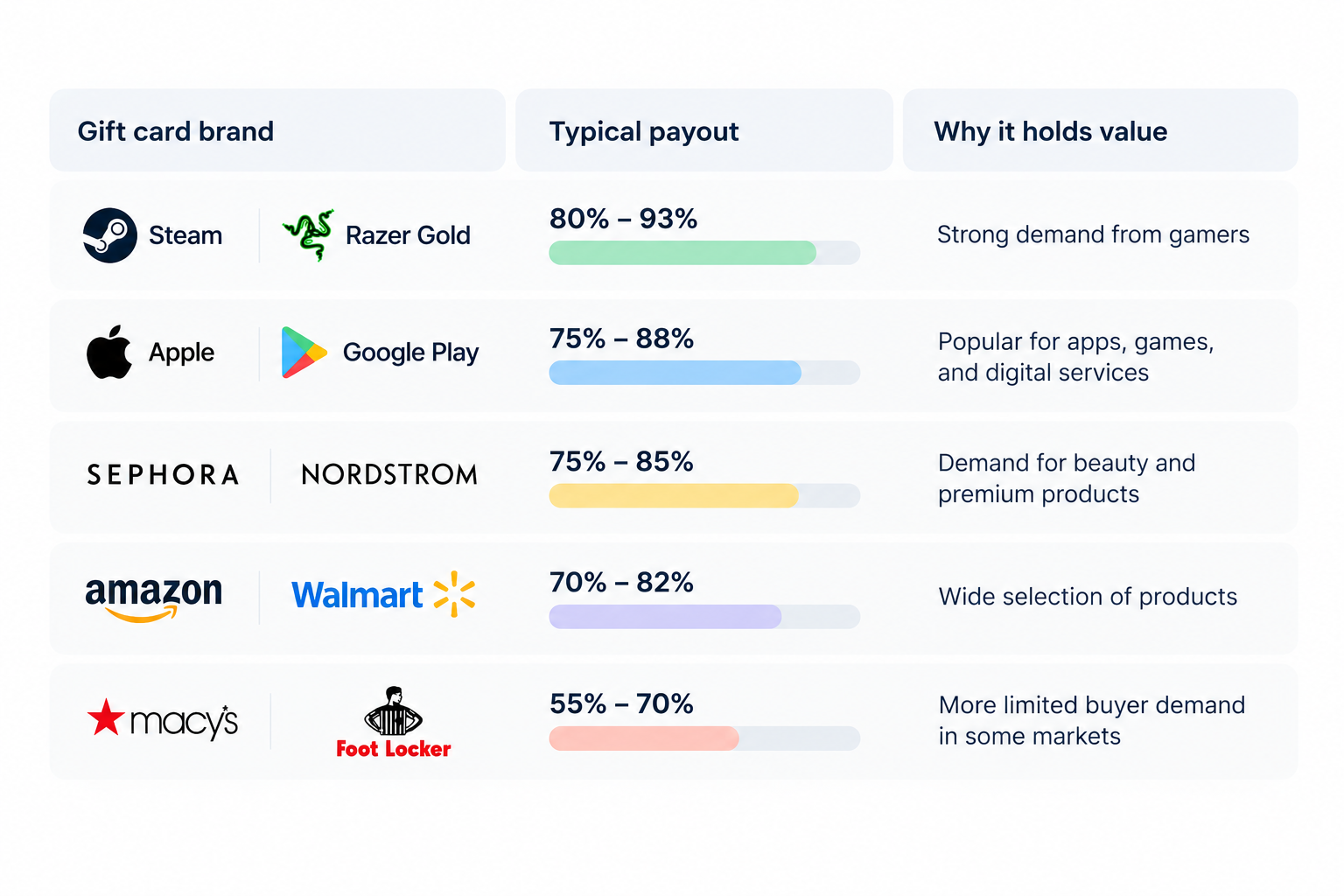
The rate you receive depends on the gift card brand, how many buyers want it, and how easily the card can be resold. Amazon, Apple, and Steam gift cards often have strong demand, while cards for less popular or region-specific retailers may sell for less.

A card's resale value is not the same as its face value. If your gift card is worth $100 and a buyer offers 80%, you will receive $80 before any additional fees.

Typical gift card resale rates by brand

Chart of gift card payout rates by retailer.

‍

Why do gift card rates differ?

  • Brand popularity: More buyers usually mean better resale rates.
  • Ease of resale: Cards that sell quickly may attract higher offers.
  • Card format: Physical cards with receipts may be easier to verify than some digital codes, depending on the buyer.
  • Country and currency: US-issued cards may attract stronger demand than cards restricted to other regions.
  • Fees and verification: Platforms may reduce their offers to cover processing costs and fraud risks.

How to sell a gift card step by step

Follow these steps to turn an unused gift card into cash while reducing the risk of delays, rejected submissions, or scams.

1. Check your balance: Visit the retailer's official website to confirm the remaining balance and make sure the card has been activated.

2. Confirm the card details: Check the brand, issuing country, currency, denomination, and whether you have a physical card or digital code.

3. Keep your proof of purchase: Save the original receipt, activation slip, or purchase confirmation email. Some buyers require proof to verify the card's origin.

4. Compare offers: Check the current payout rate on reputable trading platforms and compare the final amount you will receive after fees.

5. Submit your card: Create an account, select the correct card category, and upload clear images or enter the digital code through the platform's official submission process.

6. Wait for verification: The buyer checks the card's validity and balance. Track your transaction and respond to requests for additional information.

7. Receive your payout: Once approved and marked as paid, withdraw the money using an available payment method. Keep your transaction receipt for your records.

Important: Never share your gift card code with an unverified buyer or send it through public comments or unofficial messages.

How to avoid gift card scams

Selling gift cards for cash can be convenient, but a careless transaction can leave you with an empty balance and no payment. Knowing the warning signs can help you protect your money.

1. Check for drained cards: Confirm your gift card balance on the retailer's official website before trading. Submit it promptly through a trusted platform, as anyone who obtains the code may redeem the balance first.

2. Avoid fake buyers: Be cautious of social media traders promising unusually high rates or instant payments. Use reputable platforms with clear verification procedures and buyer protection where available.

3. Watch for overpayment scams: Never refund an alleged excess payment based on a screenshot or an unverified check. Confirm that funds have actually cleared before releasing your card.

4. Keep your PIN secret: Never share your redemption code, PIN, or photos showing the complete card details with an unverified buyer. Once someone redeems the balance, recovering your money may be difficult.

Always verify the buyer, confirm payment independently, and keep transaction records.

Getting your payout when living abroad

Selling gift cards through US platforms can be useful, but receiving your money while living abroad requires the right payment method. You may not need a US bank account if the platform supports international payouts or allows you to withdraw through an eligible financial service. Before selling, confirm the available payout currencies, withdrawal methods, and account requirements.

If you live in Nigeria, for example, you may want to receive USD and convert it to naira when you need local spending money. Grey supports cross-border transfers, and you can see how to send money from the US to Nigeria to understand the available transfer options. Check the applicable fees, exchange rate, and delivery time before moving your funds.

You can also open a USD account with Grey to receive and manage dollars, subject to eligibility and availability. Keeping funds in USD before converting them may help you choose when to exchange, but always compare the total costs and withdrawal options first.

Frequently asked questions

1. What is the best place to sell gift cards?

The best place to sell gift cards depends on your preferred currency, payout speed, and the card you own. Platforms such as Cardtonic, GiftCardsToNaira, GiftCash, and Gameflip offer different options. Compare their rates, fees, supported brands, and payment methods before choosing where to sell.

2. How much can you get for a gift card?

The amount you receive depends on the card’s brand, value, demand, and resale platform. Some gift cards may sell for 60% to 93% of their face value, but rates vary. Check current offers before selling so you understand how much you will receive.

3. Can you sell a partially used gift card?

You may be able to sell a partially used gift card, depending on the platform’s rules. The marketplace must support the card and allow its remaining balance to be verified. Check the requirements first, and disclose the exact balance to avoid disputes with the buyer.

4. How long does a gift card payout take?

Gift card payout times depend on the platform, verification process, and payment method. Some services process approved transactions quickly, while others may take several hours or longer. Before selling, check the estimated processing time and confirm whether additional identity or card verification is required.

5. Is selling gift cards legal?

Selling gift cards you legitimately own is generally legal, but the rules depend on your location, the card issuer’s terms, and the transaction. Avoid selling cards obtained through fraud or using platforms that facilitate illegal activity. Check local regulations and the marketplace’s terms before completing a sale.

6. How do you sell a US gift card from outside the US?

To sell a US gift card while living abroad, choose a reputable platform that accepts your card brand and country of residence. Check its exchange rate, fees, verification requirements, and payout options. Confirm that you can withdraw the proceeds in your preferred currency before submitting your card details.

Last updated:

November 11, 2026

Open a free Grey account to get startedJoin 1 million digital nomads
IF YOU ENJOYED THIS, CHECK THESE OUT

What is SWIFT GPI? How to track an international transfer

•

•

2 min read

International money transfers have made it easier to send funds across borders, but knowing where your money is after hitting the send button remains a common frustration. A payment can leave your bank account without immediately appearing in the recipient's, leaving you wondering whether it's processing, sitting with an intermediary bank, or facing an unexpected delay.

This lack of visibility has long been a challenge in cross-border banking. Unlike local transfers, international payments may pass through several financial institutions, making it difficult for customers to follow their progress or know when to expect delivery.

That's where SWIFT GPI (Global Payments Innovation) makes a difference. Introduced to improve international payment services, it gives participating banks a way to track cross-border transfers from the sending bank to the receiving institution. Each payment receives a unique reference called a UETR (Unique End-to-End Transaction Reference), which works much like a parcel tracking number.

With SWIFT GPI, customers can get better visibility into their payments, identify delays, and know when funds have reached their destination. Most GPI payments are credited within minutes to hours, although processing times vary.

What is SWIFT GPI?

SWIFT GPI (Global Payments Innovation) is an upgraded international payment framework introduced by SWIFT to make cross-border bank transfers faster, more transparent, and easier to track.

Traditional international wire transfers can take several business days to reach their destination, especially when multiple intermediary banks are involved. SWIFT GPI was developed to address these delays by improving how banks process and monitor international payments.

One of its biggest advantages is speed. Most GPI-enabled payments are credited within 30 minutes, although actual processing times depend on the banks, countries, and compliance checks involved.

It also introduces end-to-end payment tracking through a unique reference number called a UETR (Unique End-to-End Transaction Reference). This allows participating banks to follow a payment throughout its journey and provide updates on its status.

Another important feature is transparency. Customers can get better visibility into intermediary bank charges, foreign exchange costs, and the amount received by the beneficiary. Payment information is also preserved throughout the transfer process, reducing the risk of missing or altered remittance details.

The three key features of SWIFT GPI

GPI stands for Global Payments Innovation. It improves the traditional SWIFT network by addressing three major concerns associated with international transfers: delays, hidden charges, and the difficulty of tracking payments. Here are the three features that make it different:

  • Speed: International transfers no longer have to mean waiting several business days. Nearly 60% of payments settle within 30 minutes, while almost all are completed within 24 hours. However, actual processing times depend on the banks, countries, and compliance checks involved.
  • Transparency: Knowing how much money will arrive is just as important as knowing when it will get there. The system provides better visibility into foreign exchange rates and fees deducted by intermediary banks. This helps senders understand the cost of transferring money and gives recipients a clearer picture of what to expect.
  • Tracking: Every payment receives a unique 36-character reference called a UETR (Unique End-to-End Transaction Reference). Participating banks use this number to monitor the transfer from the sending institution to the receiving bank, providing updates on its progress and final credit.

Together, these features make cross-border payments faster, easier to monitor, and more transparent for everyone involved.

How to track a SWIFT GPI transfer

Once an international transfer has been sent, the next thing you probably want to know is whether the money is still moving between banks or has reached the recipient. Fortunately, you don't have to rely entirely on waiting for a confirmation message. You can request a payment trace using your UETR.

Here's how to do it:

  1. Find your UETR: Check your payment confirmation receipt or contact the sending bank to request the 36-character Unique End-to-End Transaction Reference.
  2. Contact your bank: Ask the bank that initiated the transfer to check its SWIFT GPI Tracker using your UETR. Some banks also provide tracking through their online banking portals. You can visit the official SWIFT website to learn more about how the international payment network works.
  3. Review the payment status: Your bank can help you understand where the funds are and whether the transfer has been completed, delayed, or rejected.

What do the different tracking statuses mean?

As you check the payment, you may come across a few common status updates:

  • In Progress: The payment is still moving through the banking network or awaiting confirmation.
  • Completed: The receiving bank has confirmed that the beneficiary's account has been credited.
  • On Hold: The transfer has been paused, possibly because of compliance checks or missing information.
  • Rejected: A bank has declined the payment, and you may need to contact the sender's bank for an explanation.

One important detail: don't confuse your UETR with a SWIFT code. A UETR tracks an individual payment, while a SWIFT/BIC identifies a bank. If you're unsure about the difference, Grey's guide to SWIFT codes, BICs and IBANs breaks down what each one does and when you need it.

How long does a GPI transfer take?

Speed is one of the biggest advantages of SWIFT GPI. Nearly 60% of payments are credited to recipients within 30 minutes, while almost 100% are completed within 24 hours. However, these timelines aren't guaranteed, and certain issues can keep your money in transit longer.

Here are three common reasons for delays:

  • Compliance checks: Banks may pause a transfer for anti-money laundering (AML), sanctions screening, or additional identity verification. Manual reviews can add hours or days.
  • Cut-off times and holidays: Payments sent after banking hours, during weekends, or on public holidays may not be processed until the next working day.
  • Incomplete details: Incorrect account numbers, beneficiary names, or missing intermediary bank information can trigger additional checks.

Currency conversion can also affect how much the recipient receives. Understanding foreign transaction fees helps you prepare for these extra costs.

For UK payments, CHAPS provides another option for time-sensitive, high-value transfers, with same-day settlement when payments are submitted before the bank's cut-off time. You can also read our guide to how CHAPS payments work  to understand the process, key requirements, and when to use this payment method

Sending and tracking transfers with Grey

International transfers involve more than moving money from one bank account to another. Exchange rates, transfer fees, delivery times, and payment visibility all matter, particularly when you're sending money across borders regularly.

Grey simplifies this process by bringing international transfers and multicurrency banking together. Users in the US can send money internationally, including to India through the US-to-India transfer service. Before confirming a transaction, users can review the applicable exchange rate and transfer charges, making it easier to know how much the recipient will receive.

Beyond sending money, Grey's foreign currency accounts provide a place to receive and hold international payments without immediately converting the balances. This is particularly useful for freelancers, remote workers, and businesses dealing with overseas clients.

By bringing these services together, Grey makes it easier to manage international income, handle cross-border payments, and keep money accessible for future transactions.

Frequently asked questions about SWIFT GPI

1. What is SWIFT GPI?

SWIFT GPI is an upgraded international payment framework that makes cross-border bank transfers faster, more transparent, and easier to track. It allows participating banks to monitor payments as they move through the banking network, giving senders and recipients better visibility into transfer progress, processing times, and intermediary bank charges.

2. What does GPI stand for?

GPI stands for Global Payments Innovation. It is a modern payment standard introduced by SWIFT to improve traditional international bank transfers. Its main purpose is to address common problems associated with cross-border payments, including slow processing, limited tracking information, and unclear intermediary bank fees.

3. How do I track a SWIFT payment?

To track an international SWIFT payment, request the 36-character UETR (Unique End-to-End Transaction Reference) from your sending bank. You can then ask the bank to check the payment through its SWIFT GPI tracking system. Some banks also provide tracking through their online banking portals, allowing you to check the transfer's progress.

4. What is a UETR?

A UETR, or Unique End-to-End Transaction Reference, is a 36-character code assigned to an individual international payment. It works much like a parcel tracking number, helping participating banks identify and follow a transaction throughout its journey. Your bank can use this reference to investigate any delays and confirm the progress of your payment.

5. How long does a GPI transfer take?

SWIFT GPI payments are generally faster than traditional international wire transfers. Roughly 60% settle within 30 minutes, while nearly 100% reach their destination within 24 hours. However, these figures aren't guarantees. Compliance reviews, banking holidays, incorrect beneficiary details, and processing by intermediary banks can still cause delays.

6. Can I track my transfer with Grey?

Yes. Grey provides transfer status updates within its platform, helping users follow their transactions. However, if you're tracking an external SWIFT bank transfer, you'll need to obtain the UETR from the sending bank. Grey's transfer tracking and SWIFT's bank-to-bank tracking are separate processes.

Send and track transfers with Grey

International payments don't have to be complicated. With Grey, you can send money across borders, monitor transfers, and manage multiple currencies, all from one platform.


Best countries to work remotely from: 8 picks ranked by visa

•

•

2 min read

The best countries to work remotely from right now are Portugal, Malaysia, Thailand, Spain, Colombia, Costa Rica, Croatia and the United Arab Emirates. Each one has a visa built for people who earn from abroad, broadband that handles video calls, and a clear income bar you can plan around.

That last point is why this list looks different from the famous rankings. The best-known remote-work index put Germany, Denmark and the US at the top in 2022, yet Germany, the leader, has no visa made for someone paid by a foreign employer. We checked every visa rule, cost figure and internet speed below against government pages and named data sources on 25 November 2026.

The 8 best countries to work remotely from, at a glance

The order weighs four things: how clear the legal route is, how much you must earn, what daily life costs and how fast the internet is. Use the first table to see whether you qualify and the second to compare daily life.

CountryRemote-work visaIncome or savings neededLongest stay on the visa
1. PortugalD8 residence visa for remote work€3,680 a month (4 × minimum wage), 3-month averageResidence visa, not a short stay
2. MalaysiaDE Rantau Nomad PassUS$24,000 a year (tech roles); US$60,000 (senior non-tech roles)24 months in total
3. ThailandDestination Thailand Visa (DTV)500,000 baht in funds5-year visa, 180 days per entry
4. SpainTelework (digital nomad) visa200% of minimum wage, about €2,849 a monthPermit of up to 3 years
5. ColombiaDigital nomad visa3 × the monthly minimum wage2 years
6. Costa RicaDigital nomad stayUS$3,000 a month (US$4,000 with dependants)1 year, plus 1 renewal
7. CroatiaTemporary stay for digital nomads€3,622.50 a month18 months
8. United Arab EmiratesVirtual work residence visaUS$3,500 a month1 year

‍

Checked 25 November 2026. Sources: each country's government or consular page, linked in its section below.

CountryCost of living indexRent indexMedian broadband download (Mbps)Time zone (UTC, standard time)
Portugal48.723.5243.84UTC+0
Malaysia34.08.5168.07UTC+8
Thailand36.812.8279.65UTC+7
Spain51.422.3277.98UTC+1
Colombia35.611.5214.30UTC-5
Costa Rica56.821.1169.03UTC-6
Croatia51.316.1136.75UTC+1
United Arab Emirates55.636.3384.51UTC+4

‍

Checked 25 November 2026. Sources: Numbeo Cost of Living Index by Country, 2026 mid-year (higher is pricier; the US scores 69.7 and the UK 68.2) and the Ookla Speedtest Global Index, March 2026 (US median 309.80 Mbps, UK 172.24 Mbps).

Why the famous remote-work rankings send you to the wrong countries

The big indices score how pleasant a country is for remote work, not whether a foreigner can legally do it there. NordLayer's Global Remote Work Index ranked Germany, Denmark and the US as its top three in 2022, judging 66 countries on cybersecurity, economic and social conditions, infrastructure and COVID-19 response.

Germany shows the problem. It has no dedicated digital nomad visa, and its freelance visa usually needs letters of intent from potential German clients, according to The Local Germany (November 2024). If your salary comes from London or Lagos, a great score for e-government does not help you get in.

So this list starts with the question the indices skip: is there a visa for you? Only then does it compare rent, broadband and time zones.

The best countries to work remotely from, ranked

1. Portugal: the best all-rounder

Portugal gives you a residence route, not just a long holiday. Its D8 visa for remote work asks for an average monthly income over the last three months of at least four times the Portuguese minimum wage, per Portugal's visa application centre. With the minimum wage at €920 in 2026, that is €3,680 a month.

  • Why it ranks first: a clear legal route, broadband of 243.84 Mbps and London's clock, which also gives you a five-hour head start on New York.
  • Watch out for: the highest monthly income bar on this list.
  • Best cities: Lisbon, Porto, Funchal (Madeira).

Before you apply, read our D8 application guide.

2. Malaysia: the cheapest place to live

Malaysia has the lowest living costs and rent on this list, and a modest income bar if your job qualifies. The DE Rantau Nomad Pass needs US$24,000 a year (about US$2,000 a month) for tech and digital roles, or US$60,000 for senior non-tech roles such as CEO or legal counsel, according to the official DE Rantau FAQ (version 10, August 2026).

  • Why it ranks high: a cost of living index of 34.0, rent at 8.5 and a pass of 3 to 12 months, renewable to 24 months in total.
  • Watch out for: a RM1,080 processing fee, and the FAQ says tax can apply once a remote worker stays 61 days or more.
  • Best cities: Kuala Lumpur, Penang (George Town), Johor Bahru.

Our DE Rantau guide covers the documents.

3. Thailand: the longest visa

Thailand's Destination Thailand Visa lasts five years, the longest on this list. It allows 180 days per entry, extendable once by another 180 days, and asks for at least 500,000 baht in funds and a 10,000 baht fee, per the Thai foreign ministry.

  • Why it ranks high: low living costs (index 36.8) with broadband faster than the UK's (279.65 Mbps).
  • Watch out for: you must leave and re-enter after each stay, and UTC+7 means late calls with American teams.
  • Best cities: Bangkok, Chiang Mai, Phuket.

See our DTV walkthrough for the application steps.

4. Spain: the easiest European income bar

Spain asks for less income than Portugal or Croatia. The bar is 200% of the minimum wage each month, per the Spanish consulate in New York, and with the 2026 minimum wage at €1,221 over 14 payments, The Local Spain puts the bar at about €2,849 a month.

  • Why it ranks high: a residence permit of up to three years and 277.98 Mbps broadband.
  • Watch out for: you need at least three months with your employer or client, the company must be at least a year old, and freelancers can earn no more than 20% from Spanish clients.
  • Best cities: Madrid, Barcelona, Valencia.

Here is Spain's application process, step by step.

5. Colombia: the best fit for US clients on a budget

Colombia pairs New York's winter clock with some of the lowest costs here (index 35.6). Its digital nomad visa needs income of at least three times the monthly minimum wage and lasts up to two years, per Colombia's Ministry of Justice.

  • Why it ranks here: UTC-5 all year, 214.30 Mbps broadband and a two-year stay.
  • Watch out for: you need a passport from a country that does not need a short-stay visa for Colombia, and the fee is US$177 for Europeans or US$230 for everyone else.
  • Best cities: Medellín, Bogotá.

6. Costa Rica: tax-free remote income

Costa Rica's official tourism board says digital nomads are exempt from income tax. The stay needs US$3,000 a month earned outside Costa Rica (US$4,000 with dependants) and a US$100 fee, per the official requirements.

  • Why it ranks here: one year, with the option to renew for another, and a time zone one hour behind New York in winter.
  • Watch out for: the highest cost of living on this list (index 56.8), and you must show a year of bank statements.
  • Best cities: San José, Santa Teresa, Tamarindo.

Our Costa Rica guide covers eligibility and costs.

7. Croatia: an EU base for non-EU citizens

Croatia offers non-EU citizens up to 18 months in the EU. It asks for at least €3,622.50 a month, or €43,470 in savings for a 12-month stay, per Croatia's interior ministry, and the accounting firm Crowe Croatia says digital nomads do not pay Croatian income tax.

  • Why it ranks here: European time, an EU base and a tax break, if you can meet the bar.
  • Watch out for: the second-highest income bar here, the slowest broadband (136.75 Mbps) and a cap of 18 months.
  • Best cities: Zagreb, Split.

8. United Arab Emirates: no income tax, fastest internet

The UAE has the fastest broadband here (384.51 Mbps) and no income tax on individuals. Its one-year virtual work residence visa needs proof that you work for an organisation outside the UAE and earn US$3,500 a month, per the UAE government portal.

  • Why it ranks here: UTC+4 sits between Europe and Asia, so you can overlap with both.
  • Watch out for: the highest rent on this list (index 36.3), close to the US level.
  • Best cities: Dubai, Abu Dhabi.

Pick by your clients' time zone

Your clients' clock matters more than the beach, because it sets when you sleep. If a New York client books a 9am call, that is 9am in Bogotá, 2pm in Lisbon and 10pm in Kuala Lumpur during New York's winter.

  • US clients: Colombia or Costa Rica.
  • UK and European clients: Portugal, Spain or Croatia.
  • Asian or Australian clients: Malaysia or Thailand.
  • A mix of Europe and Asia: the UAE.

Europe moves its clocks forward in summer, while Colombia, Costa Rica, Malaysia, Thailand and the UAE do not. Check the gap in both seasons before you sign a lease.

How to get paid and prove your income for the visa

Most of these visas ask for bank statements, so the way you get paid shapes your application. Croatia accepts a bank statement showing regular income, Portugal looks at your three-month average, and Costa Rica asks for a year of statements.

Grey gives you USD, GBP and EUR account details, so clients can pay you as if you were local: ACH or wire for dollars, sort code and IBAN for pounds, IBAN and SWIFT for euros. Receiving by ACH, Faster Payments or SEPA costs 0.8% (minimum $2, £2 or €2, maximum $10, £10 or €10), according to Grey's help centre, and you can download a statement for any currency and date range.

Whether a consulate accepts a statement from a financial technology company is the consulate's call, so ask before you apply. Grey is a financial technology company, not a bank, and is registered with FinCEN.

Once you land, a virtual card spends from your USD, EUR or GBP balance for a one-time $5 fee and no monthly charges, with conversion fees on non-USD payments. Check today's USD to EUR rate if you earn in dollars and plan to live in Portugal, Spain or Croatia.

Frequently asked questions

What is the best country to work remotely from?

Portugal is the best all-round choice for most remote workers, because its D8 visa is a residence route and its broadband and time zone suit UK and US clients. If your budget is tight and you work in tech, Malaysia is the cheapest place to live on this list and asks for US$24,000 a year.

Can I work remotely from another country on a tourist visa?

It depends on the country, and many tourist rules say nothing clear about remote work. A visa built for remote workers removes that doubt, which is why every country on this list has one. Our guide to working on a tourist visa explains the risks.

Can you work remotely from another country permanently?

Not on most remote-work visas alone, because they have end dates: 18 months in Croatia, 24 months in Malaysia and two years in Colombia. Portugal and Spain issue residence permits rather than temporary stays, so they suit people who plan to stay for years.

What is the cheapest country to work remotely from?

Malaysia is the cheapest country on this list, with a Numbeo cost of living index of 34.0 and a rent index of 8.5 (2026 mid-year). Colombia (35.6) and Thailand (36.8) come next.

The visa comes first

Portugal, Malaysia and Thailand top this list, but the right pick depends on your income, your passport and your clients' time zone. Start with the table, check the official page for your shortlisted country, and see our 50-plus country list if none of these fits, or the nomad tax guide before you move.

The best country to work remotely from is the one that will let you stay.

Cost of living in Marrakech: rent, food, bills and monthly budgets

•

•

2 min read

A single person in Marrakech spends about 5,175 MAD (roughly US$525) a month before rent, according to Numbeo's crowd-sourced prices, last updated on 20 November 2026. Add a one-bedroom flat in the centre at around 4,995 MAD and the total lands near 10,170 MAD, about US$1,030 or €940. That's a fraction of New York prices, yet it is more than twice what the average local worker takes home.

Marrakech is a maze of colours, sounds and scents: red walls glowing under desert light, rooftop terraces facing the Atlas Mountains. What it costs to live here comes down to two choices, where you sleep and which currency you earn in. Below, I'll walk you through rent by neighbourhood, food, bills, transport and healthcare, with every figure in dirhams, its source and the date I checked it.

How much does it cost to live in Marrakech per month?

Expect roughly 8,700 to 10,200 MAD a month for one person and 23,500 to 26,200 MAD for a family of four, depending on whether you rent in the centre or further out. These totals add Numbeo's average rents to its estimate of everything else: food, transport, utilities and leisure.

HouseholdRent (MAD/month)Other costs (MAD/month)Total (MAD/month)Total (approx. US$/month)
Single person, 1-bed in the centre4,9955,17510,1701,030
Single person, 1-bed outside the centre3,5265,1758,701880
Family of four, 3-bed in the centre6,98919,16026,1492,645
Family of four, 3-bed outside the centre4,38519,16023,5452,380

Checked 25 November 2026. Source: Numbeo, Marrakech (updated 20 November 2026, 644 price entries from 36 contributors in the past 12 months); US dollar figures at 9.89 MAD per US$1 (OFX interbank rate, 18 November 2026); euro figure in the introduction at 10.84 MAD per €1 (OFX, 20 November 2026).

Treat these totals as a starting point, not a quote. Numbeo's prices come from residents' submissions, so a furnished flat in Gueliz or a riad in the Medina can cost far more than the average, and a long lease in a local neighbourhood far less.

Is Marrakech cheap to live in?

Marrakech is cheap if you earn in dollars, euros or pounds, and tight if you earn in dirhams. Numbeo puts its day-to-day costs 69.5% below New York's, and its rents 91.2% lower.

Now look at it from the other side. The average monthly net salary in Marrakech is about 4,805 MAD (Numbeo), which is less than a single person's spending before rent. Add a central one-bedroom flat and a newcomer's budget is 2.1 times a typical local pay packet.

That gap explains the city's split personality. Local produce and bus fares are priced for local wages: tomatoes cost about 7 MAD a kilo and a bus ride 4 MAD. Imported brands are not, and a pair of mid-range Nike trainers averages about 880 MAD (around US$89), close to a fifth of the average local monthly salary.

Tip: Shop at the souks, eat where locals eat and ride the bus, and Marrakech stays cheap. Live on imported groceries, international schools and Hivernage restaurants, and the savings shrink fast. If you're weighing up other Moroccan cities, compare it with living in Casablanca.

How much is rent in Marrakech?

A one-bedroom flat averages about 4,995 MAD a month in the city centre and 3,526 MAD further out, according to Numbeo. Rents swing with the district, with whether the flat is furnished and with whether bills are included, so the ranges matter as much as the averages.

FlatAverage (MAD/month)Typical range (MAD/month)Average (approx. US$/month)
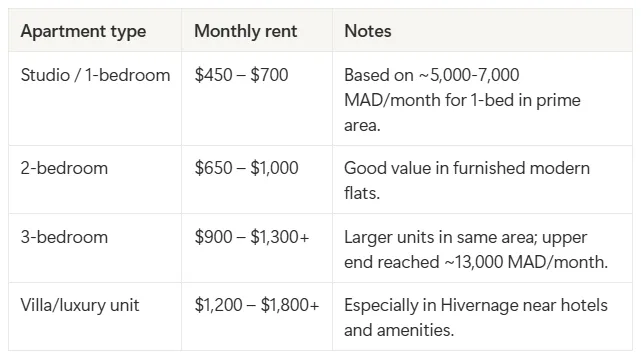
1 bedroom, city centre4,9954,000 to 7,270505
1 bedroom, outside the centre3,5262,300 to 5,510355
3 bedrooms, city centre6,9896,000 to 10,000705
3 bedrooms, outside the centre4,3853,000 to 9,000445

Checked 25 November 2026. Source: Numbeo, Marrakech (updated 20 November 2026); US dollar figures at 9.89 MAD per US$1 (OFX, 18 November 2026).

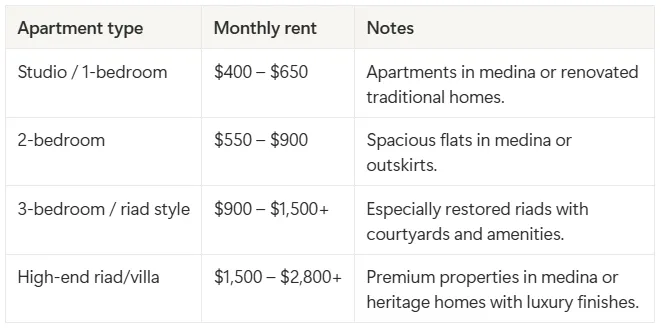
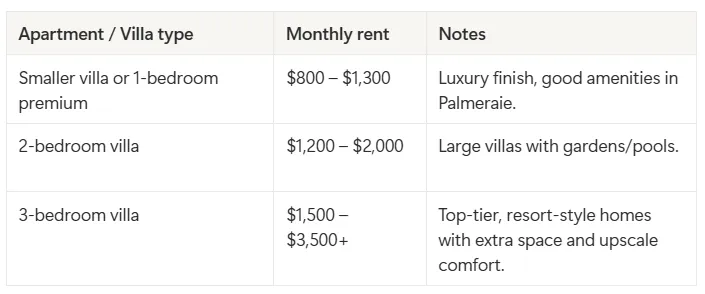
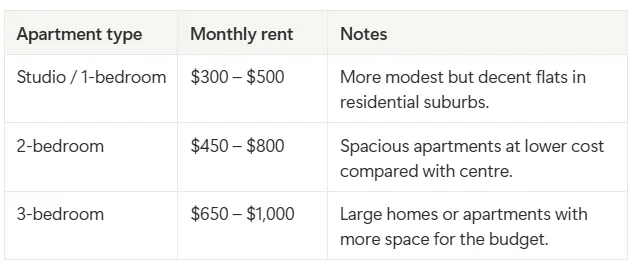
Sale prices are a fair guide to which districts cost the most. ReaConsult's 2026 price barometer (indicative ranges) puts apartments in Hivernage at 12,700 to 19,100 MAD per square metre, Gueliz at 9,900 to 15,300, the Medina and its riads at 8,000 to 13,600, and Targa at 8,000 to 12,000.

Gueliz and Hivernage

This is Marrakech's modern face, where European-style cafés, boutiques and coworking spaces meet Moroccan flair. Gueliz is lively and central, while Hivernage feels more upscale, with tree-lined streets and luxury hotels. Both are expat favourites for their walkability and nightlife, and both sit at the top of the price range.

__wf_reserved_inherit

Medina and traditional riads

The Medina is the beating heart of the city: maze-like alleys, busy souks, rooftop terraces and historic riads full of tilework. It isn't the quietest place to live, and parking is hard to find, but nothing else matches it for atmosphere.

Tip: Riad prices vary hugely, from simple rooms to restored houses with plunge pools. Compare several listings and ask whether water and electricity are included before you sign.

__wf_reserved_inherit

Palmeraie

The Palmeraie (the Palm Grove) is an oasis of calm on the city's outskirts, known for villas, gardens, gated communities and golf resorts. It suits people who value privacy and space, but you'll depend on a car or taxis for almost everything.

__wf_reserved_inherit

Targa and quieter residential districts

Peaceful and family-friendly, these districts sit away from the tourist buzz. Expect newer apartment blocks, local markets and easy access to schools and supermarkets, and in Targa, lower prices per square metre than in Gueliz. They suit remote workers and families who want a slower pace.

__wf_reserved_inherit

How much does a house cost in Marrakech?

Buying works out at about 19,100 MAD per square metre for an apartment in the centre and 10,900 MAD outside it, based on Numbeo's averages. A 70 square metre flat in the centre would cost roughly 1.34 million MAD (about US$135,000) before fees and taxes.

Food prices in Marrakech

Food is where Marrakech feels cheapest: an inexpensive restaurant meal averages 40 MAD (about US$4), and a three-course dinner for two at a mid-range restaurant about 300 MAD. Whether you're grabbing a tagine from a street stall or dining under lanterns in Gueliz, there's something for every budget.

ItemAverage price (MAD)Approx. price (US$)
Inexpensive restaurant meal404.00
Three-course dinner for two, mid-range restaurant30030.30
Fast-food combo meal606.10
Cappuccino23.302.35
Milk (1 litre)8.200.83
Eggs (12)191.90
Chicken fillets (1 kg)49.405.00
Beef (1 kg)111.9011.30
Tomatoes (1 kg)7.400.75
Potatoes (1 kg)6.800.70
Oranges (1 kg)8.900.90
Bottled water (1.5 litres)5.700.60
Mid-range bottle of wine757.60

Checked 25 November 2026. Source: Numbeo, Marrakech (updated 20 November 2026); per-kilo prices converted from Numbeo's per-pound figures; US dollar figures at 9.89 MAD per US$1 (OFX, 18 November 2026).

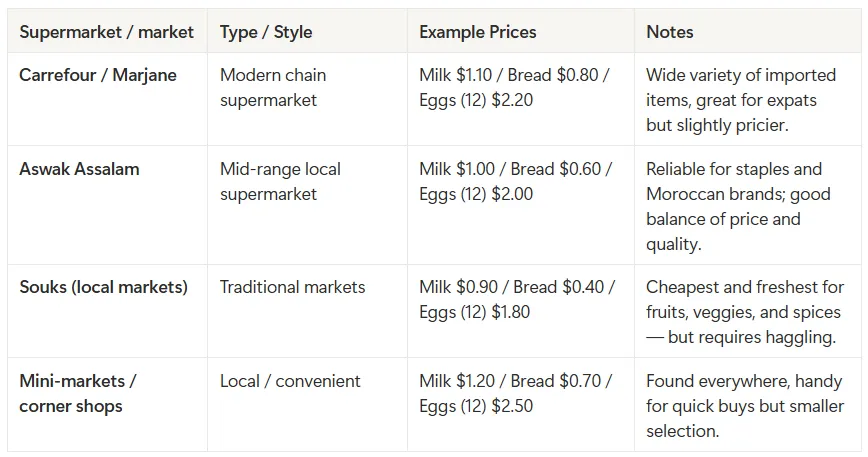
Most expats mix both worlds. They buy fresh produce and bread at the souks and neighbourhood shops, then pick up pantry staples and imported items such as cheese, cereal or wine at Carrefour or Marjane.

__wf_reserved_inherit

Tip: Haggling is normal at market stalls and in the souks, not in supermarkets. Learn the going rate for staples in your first week and you'll spot a tourist price straight away.

Utilities, internet and phone costs

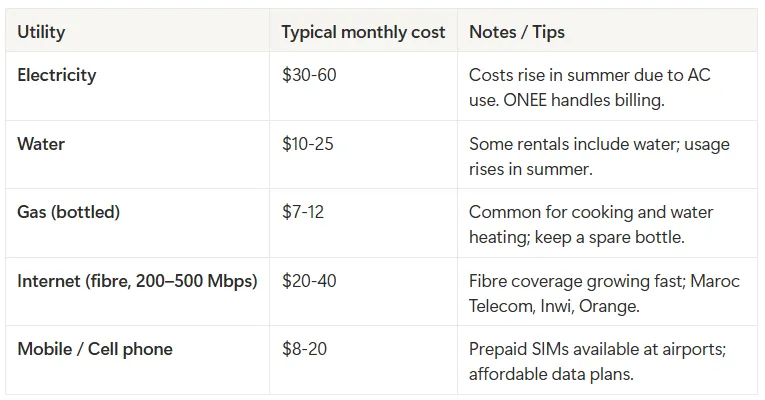
Basic utilities (electricity, heating, cooling, water and rubbish collection) average about 346 MAD a month for an 85 square metre flat, according to Numbeo. Bills climb in summer, when air conditioning runs most of the day.

BillAverage (MAD/month)Typical range (MAD/month)Average (approx. US$/month)
Basic utilities, 85 m² flat346283 to 53135
Home internet, 60 Mbps or faster346200 to 50035
Mobile plan with 10 GB or more data9650 to 2009.70

Checked 25 November 2026. Source: Numbeo, Marrakech (updated 20 November 2026); US dollar figures at 9.89 MAD per US$1 (OFX, 18 November 2026).

Since 1 November 2024, water, electricity and sanitation in Marrakech have been run by the SRM Marrakech-Safi, which replaced the city's former distributor, RADEEMA (Le Matin, November 2024). Some rentals, especially furnished ones, include water, so check what your lease covers before you budget for it.

Many homes cook with bottled butane. The 12 kg bottle rose from 40 to 50 MAD in 2024, and a further rise planned for 2025 was not applied (EcoActu, October 2025), so check the current price at your local shop.

Maroc Telecom, Orange and Inwi are the main internet and mobile providers. SIM cards are easy to buy at the airport or at kiosks, and prepaid plans suit short stays.

__wf_reserved_inherit

Transport costs in Marrakech

Getting around is cheap: a bus ride costs about 4 MAD, and a petit taxi starts at around 8 MAD on the meter plus roughly 6 MAD per kilometre (Numbeo, November 2026). Most residents mix walking, taxis and apps.

Petit and grand taxis

Petit taxis are small, metered and only run within the city, while grand taxis cover longer routes and intercity trips, often shared. Always ask the driver to switch on the meter (compteur), and if it stays off, agree the price before you set off. A few Darija phrases go a long way here.

Uber and ride-hailing apps

Uber returned to Morocco on 27 November 2025, launching in Marrakech and Casablanca with UberX and UberXL and using licensed vehicles only (Uber newsroom). Apps show the price before you ride, which many newcomers prefer to negotiating.

Buses

City buses are the cheapest option, at about 4 MAD a ride or 300 MAD for a monthly pass (Numbeo). They connect most districts, but they get crowded at rush hour.

Driving and scooters

Petrol costs about 14.67 MAD a litre (roughly US$1.50), according to Numbeo. A car makes sense in the Palmeraie or for weekends in the Atlas Mountains, but in the Medina parking is the hard part. Scooters are everywhere, even inside the Medina, so wear a helmet and expect traffic rules to be followed loosely.

Tip: In Gueliz or Hivernage you can walk to most cafés and shops, ideally early in the morning or in the evening when the heat eases. In the Palmeraie you'll rely on a car or taxis.

Healthcare costs in Marrakech

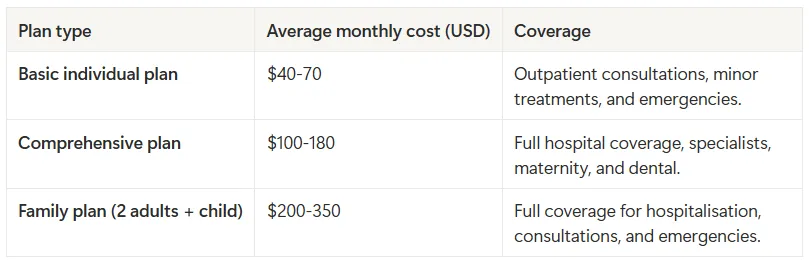
Private clinics in Morocco set their own consultation fees, so there is no single price to quote. Ask for the fee when you book, and budget for private health insurance if you're staying more than a few months.

Public hospitals offer low-cost consultations, emergency care and hospital treatment, but they can be crowded, waits are often long and few staff speak English. Many expats use private clinics for faster appointments and doctors who speak French or English.

__wf_reserved_inherit

Tip: Pharmacies are well stocked and many common medicines are sold over the counter, so a pharmacist is a good first stop for minor problems.

Other monthly costs: gym, childcare and school

Leisure is cheap by Western standards, but schooling is not. Here's what Numbeo's contributors report for everyday extras.

ItemAverage (MAD)Approx. (US$)
Gym membership, per month48249
Cinema ticket636.30
Men's haircut13013
Household cleaner, per hour808
Private preschool, per child per month96798
International primary school, per child per year123,58712,500

Checked 25 November 2026. Source: Numbeo, Marrakech (updated 20 November 2026); US dollar figures at 9.89 MAD per US$1 (OFX, 18 November 2026).

For families, school fees can outweigh rent. A year at an international primary school averages about 123,600 MAD per child, more than two years of the average local net salary.

Can you stay in Marrakech longer than 90 days?

US and UK passport holders can visit Morocco without a visa for up to 90 days (US State Department; GOV.UK). To stay longer, request an extension at a Moroccan police station before the 90 days run out, because overstaying can mean appearing before a judge and paying a fine when you leave.

Rules differ by nationality, so read our guides for US citizens and EU citizens before you sign a long lease.

Earning abroad, living well in Marrakech

Marrakech is an inspiring base for freelancers, remote workers and retirees who earn abroad and spend in dirhams. The weak spot is turning that income into MAD, because card fees, ATM charges and poor exchange rates can eat into a budget that looked generous on paper.

Grey is a financial technology company, not a bank. With Grey you can receive payments into international accounts, convert with a 1% fee capped at US$6 and no margin added to the exchange rate, and send dirhams to a Moroccan bank account for a US$2 fee. MAD payouts are processed Monday to Friday and arrive the next business day.

Before you move money, check today's USD to MAD rate or EUR to MAD rate, and read how to avoid ATM fees on your first trip.

Moving soon? Open a Grey account before you go, and keep more of every payment for the city itself.

Every number in this guide points the same way. In Marrakech, what counts as cheap depends on the currency you earn in.

Frequently asked questions

How much money do you need to live comfortably in Marrakech?

One person needs roughly 8,700 to 10,200 MAD a month (about US$880 to US$1,030), based on Numbeo's November 2026 averages for rent plus day-to-day costs. Budget more for a furnished flat in Gueliz or Hivernage, frequent restaurant meals or imported groceries.

How much is rent in Marrakech?

A one-bedroom flat averages about 4,995 MAD a month in the city centre and 3,526 MAD outside it, according to Numbeo. Three-bedroom flats average about 6,989 MAD in the centre and 4,385 MAD further out.

Is food expensive in Marrakech?

Local food is cheap: an inexpensive restaurant meal averages 40 MAD (about US$4) and tomatoes about 7 MAD a kilo. Imported products cost much more, so a diet built on supermarket imports will push your budget up quickly.

Best countries to work in Africa: pay, permits and job sites

•

•

2 min read

The best countries to work in Africa for most skilled professionals are South Africa, Kenya, Nigeria, Egypt, Morocco, Senegal and Namibia. Each has a big-city job market, international employers and a defined route to a work permit.

Choosing between them comes down to three questions: will an employer sponsor you, what will the job pay, and how will you move that money? The answers have shifted fast. All seven countries have raised their minimum wage since mid-2023, and South Africa, Nigeria and Egypt have reworked their rules for foreign workers since 2024.

Below you'll find each country's current minimum wage and permit route, taken from government notices, official immigration pages and named news reports, all checked on 25 November 2026. You'll also get the main job sites and a plan for getting paid across currencies.

Best countries to work in Africa compared

Start with this table, then read the country sections for the detail. Remember that a minimum wage is a legal floor, not what a skilled professional earns.

CountryStatutory minimum wage (local currency)Work permit route for foreignersMain job sites
South AfricaZAR 30.23 an hour, from 1 March 2026General or critical skills work visa, scored under a points systemPNet, Careers24, LinkedIn
KenyaKES 18,047.40 a month for a general labourer in the main cities, from 1 May 2026Class D employment permit, applied for online through eFNSBrighterMonday, MyJobMag, LinkedIn
NigeriaNGN 70,000 a month, set in 2024Employment visa under your employer's expatriate quota, then an e-CERPAC residence cardJobberman, MyJobMag, LinkedIn
EgyptEGP 7,000 a month in the private sector, rising to EGP 8,500 on 1 January 2027Annual work permit from the Ministry of LabourWuzzuf, Bayt, LinkedIn
SenegalXOF 370.52 an hour outside agriculture, since 1 July 2023Work permit approved by the Directorate of Labour before you startEmploi Dakar, LinkedIn
NamibiaNAD 18 an hour, from 1 January 2025Employment permit from the Ministry of Home AffairsLinkedIn, local newspapers
MoroccoMAD 17.92 an hour in industry, commerce and services, from 1 January 2026Employment contract approved by the Ministry of Employment, with an ANAPEC certificateRekrute, Emploi.ma, LinkedIn

Checked 25 November 2026. Sources: South Africa Department of Employment and Labour; Kenya Legal Notice 108 of 2026 (reported by The Star); Nigeria State House; Egypt National Wages Council (reported by The National); WageIndicator for Senegal; The Namibian; Bladi for Morocco; and the immigration pages linked in each section below.

The wider backdrop is steady growth. The African Development Bank's 2026 African Economic Outlook (May 2026) estimates that Africa grew 4.4% in 2025 and projects 4.2% growth for 2026 and 4.4% for 2027.

The rule that decides most moves

In most of these countries, the employer has to prove that a local can't do your job before you get a permit. That single rule shapes how you should job hunt.

  • Kenya: the Class D application must name a Kenyan understudy who will learn your role.
  • Nigeria: since April 2025, each expatriate quota position needs at least two Nigerian understudies.
  • Namibia: the employer must advertise the vacancy in a local newspaper and share the CVs of Namibians who applied and were turned down.
  • Morocco: the employer needs a certificate from ANAPEC, the national employment agency, showing your profile is scarce.

South Africa is the exception worth knowing. If your occupation is on its critical skills list, that alone scores the full 100 points you need for a visa. Everywhere else, the lesson is the same: find the job first, target roles where local talent is thin, and let your employer start the paperwork.

The seven best countries to work in Africa

South Africa: the clearest route for in-demand skills

South Africa's jobs for foreign professionals cluster in finance, mining, engineering and technology, mainly in Johannesburg and Cape Town. It is also the only country here that scores work visas on points.

__wf_reserved_inherit

The national minimum wage rose to R30.23 an hour on 1 March 2026, according to the Department of Employment and Labour. Skilled roles pay well above that, and the visa rules themselves tell you what counts as a strong salary.

Under the points-based system gazetted in October 2024, you need 100 points for a general or critical skills work visa. An occupation on the critical skills list scores all 100; otherwise a job offer is compulsory and scores 50 points above R976,194 a year or 20 points from R650,976, with more points for qualifications, experience, a trusted employer and language. Check the Department of Home Affairs for any updated thresholds before you apply.

Key considerations:

  • Job sites: LinkedIn, PNet and Careers24.
  • Cost of living: Cape Town and Johannesburg cost the most; Durban, Gqeberha and Kimberley are cheaper.
  • Comparing offers: convert a rand salary with our USD to ZAR converter so you can compare it with offers elsewhere.

Kenya: East Africa's tech and NGO hub

Nairobi, nicknamed the Silicon Savannah, draws professionals in tech, finance, agribusiness and international development. Demand is rising for IT professionals, engineers and digital marketers.

__wf_reserved_inherit

Kenya raised its general minimum wages by 12% from 1 May 2026. A general labourer in Nairobi, Mombasa, Kisumu, Nakuru and Eldoret must now earn at least KES 18,047.40 a month, under Legal Notice 108 of 2026 as reported by The Star.

Foreign employees need a Class D permit, which is issued for a specific job with a specific employer when the skills aren't available in Kenya. You apply online through the eFNS portal, pay a non-refundable KES 20,000 processing fee and submit your employer's documents, your certificates and the details of your Kenyan understudy.

Key considerations:

Nigeria: scale, if your employer holds a quota

Lagos, Abuja and Port Harcourt offer roles in oil and gas, finance, telecoms and tech. The market is huge, but foreign hiring runs through a quota system that is getting stricter.

__wf_reserved_inherit

The national minimum wage is NGN 70,000 a month, approved in July 2024, and the government has committed to reviewing it every three years, according to State House. If your package is paid in naira, budget for exchange-rate swings before you sign.

The standard route is an R2A employment visa, which is subject to your employer's expatriate quota, and the Nigeria Immigration Service now issues the e-CERPAC residence card before you travel. Reforms announced by the Ministry of Interior in April 2025 require two Nigerian understudies per quota position and set Temporary Work Permit visa fees at $600 for three months and $1,100 for six, according to KPMG Nigeria.

Key considerations:

  • Job sites: LinkedIn, Jobberman and MyJobMag.
  • Where to live: rent and daily costs vary sharply between Lagos, Abuja and smaller cities; our cost of living breakdown compares them.
  • Work culture: trust and personal connections carry weight, and respect for seniority matters.

Egypt: multinational jobs with a rising pay floor

Cairo is the hub for banking, tech, telecoms and engineering, with Alexandria and New Cairo growing as business centres. Arabic helps a great deal outside multinational offices.

__wf_reserved_inherit

Egypt's private-sector minimum wage has been EGP 7,000 a month since March 2025, and the National Wages Council approved a rise to EGP 8,500 from 1 January 2027, as reported by The National on 18 November 2026.

Foreign employees need a work permit from the Ministry of Labour, issued for a year at a time. Enforcement is tighter under the new labour law that took effect in September 2025: the ministry recorded more than 7,000 work permit violations in 17 days, according to the Cairo Governorate.

Key considerations:

  • Job sites: LinkedIn, Wuzzuf and Bayt.
  • Cost of living: daily costs are moderate, but imported goods, private schools and upscale housing are expensive.
  • Comparing offers: track the pound with our USD to EGP converter.

Senegal: a French-speaking base in West Africa

Dakar is Senegal's business centre, with jobs in banking, telecoms, agriculture, international trade and international organisations. French is the language of business, so fluency is usually expected.

__wf_reserved_inherit

The minimum wage outside agriculture has been XOF 370.52 an hour since 1 July 2023, set by Decree 2023-1710 and tracked by WageIndicator. Salaries at multinationals and NGOs sit well above this floor.

Your employer applies for your work permit through the Directorate of Labour, and you can't start work until it is issued. A 2018 directive ended the practice of starting before approval, and the wait can run to four weeks, according to Fragomen.

Key considerations:

  • Job sites: LinkedIn and Emploi Dakar.
  • Cost of living: everyday spending is affordable, but housing and imported goods in Dakar are costly.
  • Work culture: relationships are built on trust, and networking drives career growth.

Namibia: stable, English-speaking and selective

Namibia's economy runs on mining (diamonds and uranium), tourism, agriculture and a growing renewable energy sector. Windhoek is the business centre, and English is the official language, which makes settling in easier.

__wf_reserved_inherit

A national minimum wage of NAD 18 an hour has applied since 1 January 2025. Domestic and agricultural workers are phasing in, at NAD 15 and NAD 14 an hour in 2026, and both reach NAD 18 in 2027, according to The Namibian.

You need an employment permit, which costs NAD 2,600 a year. Alongside your police clearance and medical reports, your employer must prove it advertised the job locally and list the Namibian candidates it turned down.

Key considerations:

  • Job sites: LinkedIn and the job pages of local newspapers, where employers must advertise anyway.
  • Cost of living: Windhoek is pricier than other Namibian towns, and imported goods add up.
  • Work culture: fairly formal, with respect for hierarchy and protocol.

Morocco: a North African hub for industry and services

Casablanca is the financial centre, with jobs in banking, IT and logistics, while Marrakech and Agadir run on tourism. Automotive manufacturing and renewable energy are growing sectors. French and Arabic are the working languages in most offices.

__wf_reserved_inherit

The minimum wage in industry, commerce and services rose to MAD 17.92 an hour on 1 January 2026, according to Bladi. Skilled roles at multinationals pay far more.

Your employer must ask the Ministry of Employment for permission to hire you, backed by an ANAPEC certificate, and then have your contract stamped; the first approval usually lasts a year. Senegalese, Tunisian and Algerian nationals don't need a work permit at all, according to the Spanish Embassy in Rabat.

Key considerations:

  • Job sites: LinkedIn, Rekrute and Emploi.ma.
  • Where to live: Casablanca and Rabat cost more than other cities; our Moroccan city guide compares the main options.
  • Work culture: a mix of formal and relationship-based, with networking playing a big part.

What to check before you accept an offer

The permit and the salary get the attention, but these details decide how the move feels after six months.

  • Salary currency: a local-currency salary can lose value quickly when exchange rates move, so ask whether part of your package can be paid in US dollars, pounds or euros.
  • Health cover: public healthcare is limited in many areas, so check whether private medical insurance is part of the package.
  • Housing: rents near business districts climb fast; ask colleagues which neighbourhoods they live in before you sign a lease.
  • Safety: read your own government's travel advice for the city, not just the country.
  • Relationships: networking and introductions carry weight in all seven markets, an idea Southern Africans sum up as Ubuntu: a person is a person through other people.

How to get paid and move money across borders

A local bank will usually want to see your permit and proof of address, so your first salary can arrive before your local account is ready. A Grey account fills that gap: it is free to open, has no maintenance fees and gives you US, UK and European account details for receiving money from abroad.

You can hold your money, convert it at real-time rates when the timing suits you, withdraw to a local account and pay online with a virtual card. If your salary arrives in US dollars, euros or pounds, Grey Paycheck splits it automatically into spending, savings and an emergency fund.

If your employer pays by bank transfer from Europe, our guide to getting a virtual IBAN for salary payments walks through the setup. Grey is a financial technology company, not a bank, and availability depends on the country you live in, so check eligibility in the app.

No work permit? Work for a foreign company from home

If you are African and your main goal is a stronger salary rather than a new country, you don't need a permit at all. Many of the same employers hire remotely, and our list of remote jobs that pay in foreign currency is a good place to start.

Frequently asked questions

Which country in Africa has the most job opportunities?

No official ranking measures job openings across Africa. For foreign professionals, the best country is the one with the clearest permit route for your skills: South Africa if your occupation is on its critical skills list, Kenya or Nigeria if an employer will sponsor you, and Morocco or Senegal if you work in French.

Can foreigners work in South Africa?

Yes, with a work visa. Under the points-based system gazetted in October 2024, you need 100 points; an occupation on the critical skills list scores 100 on its own, and otherwise a job offer is compulsory, with extra points for salary, qualifications and experience.

How do I get a job in Africa as a foreigner?

Apply from abroad through LinkedIn and each country's main job sites, and focus on multinationals and roles with clear skills shortages. In Kenya, Nigeria, Namibia and Morocco the employer must justify hiring a foreigner, so secure the offer before you plan the move.

Choosing where to work in Africa

All seven countries offer real careers, but they reward different people: South Africa favours scarce skills, Kenya and Nigeria favour candidates whose employer will sponsor them and train a local understudy, and Morocco and Senegal favour French speakers. Shortlist two countries where your skills are hard to find, then approach employers there directly.

When the offer comes, open a free Grey account so your first pay cheque lands somewhere you can hold, convert and spend it. In Africa, your work permit starts with your employer, so find the job first and let the country follow.

Wells Fargo virtual card: How to create one

•

•

2 min read

Personally, virtual cards win over physical cards for me because I keep losing the card, and sometimes it’s a chore bringing the card out each time I want to shop online or pay for a subscription. Virtual cards offer another way to pay without repeatedly entering your physical card information. If you already bank with Wells Fargo, here's how  you can create one and how to get started.

To create a Wells Fargo virtual card, sign in to the Wells Fargo Mobile app or online banking and check the digital payment options available for your eligible card. If virtual card details are supported, follow the prompts to generate or access them. You may also be able to add your eligible card to a digital wallet for contactless payments.

However, availability depends on your card type and the features supported by Wells Fargo. Not every customer can generate a separate virtual card number on demand, so check your account's available options before proceeding.

What is a Wells Fargo virtual card?

A Wells Fargo virtual card is a temporary, digitally generated 16-digit number linked to an existing account. It allows users to make online payments without directly exposing their actual card details, adding another layer of protection against fraud and unauthorised charges.

For businesses, Wells Fargo provides virtual card solutions through its WellsOne commercial card programme. Companies can generate single-use card numbers with custom spending limits, expiration dates, and merchant category restrictions. This makes paying approved suppliers more secure while giving businesses better control over their spending.

For everyday consumers, however, Wells Fargo does not offer standalone virtual card numbers for individual accounts. Instead, personal debit and credit cardholders can use digital payment services such as Apple Pay, Google Pay, Samsung Pay, PayPal, and Paze. These services use encrypted digital tokens to help protect actual card information during transactions.

Of course, Wells Fargo isn't the only option for managing online payments. Services offering online debit cards provide another way to pay online without relying on your everyday banking card. Similarly, prepaid Visa cards can help users set aside money for specific purchases and keep their spending under control.

How to set up a virtual card with Wells Fargo

If you're a Wells Fargo personal account holder, you can connect an eligible debit or credit card to a digital wallet through the Wells Fargo Mobile app.

Getting started is fairly simple. Here's how to do it.

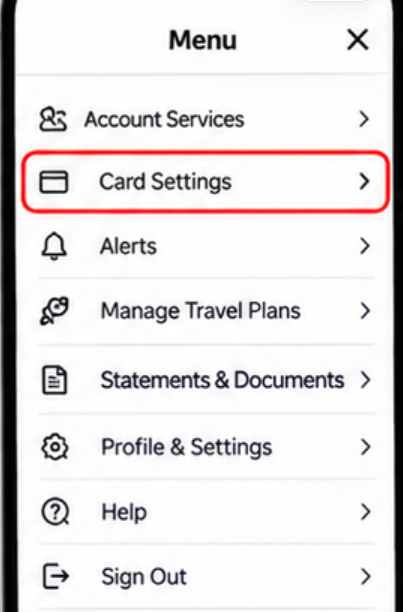
  1. Sign in: Download the Wells Fargo Mobile app and log in using your online banking details.
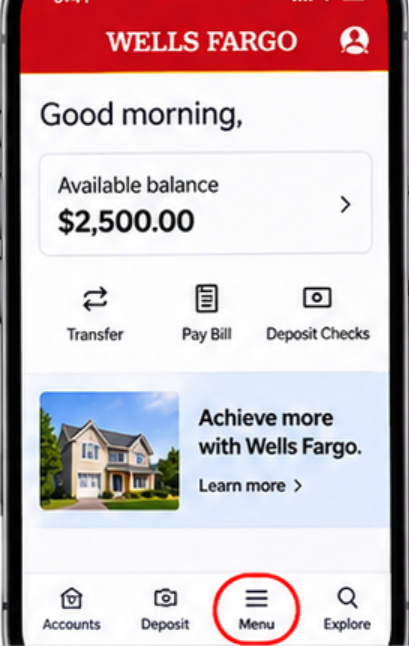
  2. Open the menu: Tap Menu at the bottom of your screen.
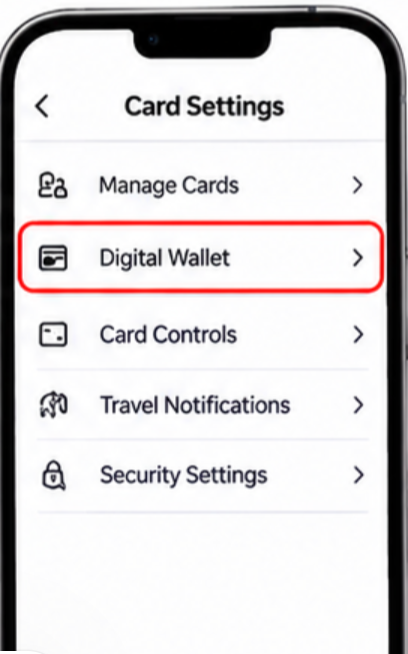
  3. Find card settings: Select Card Settings from the available options.
  4. Choose Digital Wallet: Tap this option to see the supported payment services.
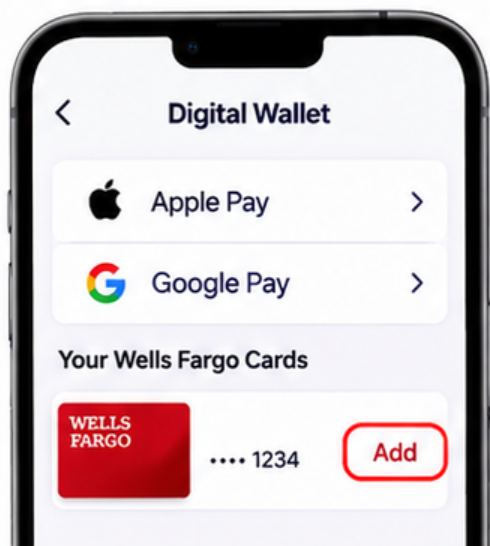
  5. Select a wallet: Choose Apple Pay, Google Pay, or Samsung Pay, depending on your device.
  6. Add your card: Select your eligible Wells Fargo debit or credit card and tap Add.
  7. Verify your identity: Follow the instructions on your screen. You may receive a verification code through text, email, or a phone call.

Once verification is complete, your card should be ready to use with the selected digital wallet.

The best part? You can make contactless and online payments without repeatedly entering your physical card details. The digital wallet uses a secure token to help protect your actual card information.

How to find your Wells Fargo virtual card number

Wells Fargo doesn't display a complete, standalone virtual card number in its mobile banking app. Instead, when you add an eligible card to a digital wallet, the wallet generates a hidden digital token linked to your actual card.

Step 1: Sign in
Open the Wells Fargo Mobile app and sign in using your username and password (or biometric sign-in).

Step 2: Tap menu
Once signed in to your account dashboard, tap Menu in the bottom navigation bar.

Step 3: Select card settings
‍
From the main menu list, scroll down and select Card Settings.

Step 4: Choose digital wallet
‍
In the Card Settings menu, choose digital wallet.

Step 5: Add your card
‍
Select Apple Pay or Google Pay, then tap Add beside your eligible Wells Fargo card and follow the on-screen prompts to complete the setup.

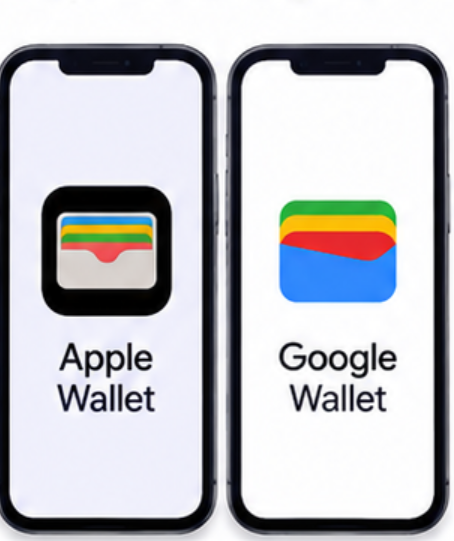
Step 6: Open your mobile wallet
‍
Once your card is linked, open Apple Wallet or Google Wallet on your phone and select your newly added Wells Fargo card.

Step 7: View virtual account number
‍
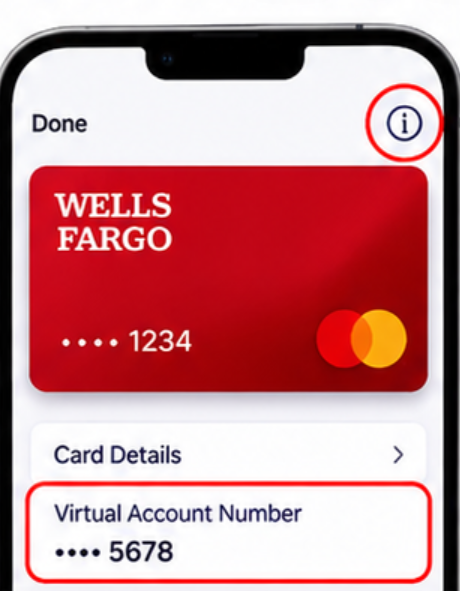
Tap card details (or the info icon) to view the last four digits of your virtual account number.

Remember, these four digits identify the digital wallet's virtual account number, not your complete physical card number. The full tokenised card details are generally not displayed for security reasons.

If you're living outside the United States and wondering whether you can access Wells Fargo banking services, this guide to opening a Wells Fargo account outside the US provides additional information.

How to use your Wells Fargo virtual card safely online

To get the most out of your Wells Fargo virtual card, it's important to know how to use it safely. A few simple precautions can help protect your money and personal information when shopping online.

  • Limits: Personal digital wallet tokens share the spending limits or available credit of the original card. However, WellsOne business users can set custom spending limits for individual transactions, making it easier to manage supplier payments.
  • Freezing: Lost your phone or suspect someone has accessed your card? Open the Wells Fargo Mobile app, go to Card Settings, and turn off your card. This helps prevent new transactions without necessarily closing your account.
  • Good habits: Enable real-time purchase alerts to monitor transactions as they happen. Always use secure HTTPS websites when making payments, and avoid saving card details on public or shared devices.

These precautions are particularly useful if you regularly make international online purchases. If you're a non-resident looking into US banking options, understanding whether non-residents can open a US bank account online in 2026 can also help you make informed decisions about managing your money.

A flexible alternative for online and cross-border spending

If you're using Wells Fargo but need more flexibility for international payments, Grey is  worth considering. Perhaps you want to pay for a subscription in dollars, shop on a US website, or send money to someone back home. You don't necessarily want to depend on your regular bank card for everything.

With the Grey virtual card, you can make online payments, including international purchases and subscriptions. And if you need to send money from the US to family, friends, or business partners abroad, Grey also offers international money transfers.

What if you regularly receive money in different currencies? Grey's multi-currency accounts allow you to hold and manage multiple currencies, making it easier to keep your international finances organised and one less app on your phone.

So, whether you're paying online, receiving money from abroad, or sending dollars to another country, Grey gives you more ways to manage your money beyond everyday banking.

Frequently asked questions about Wells Fargo virtual cards

1. Does Wells Fargo offer virtual cards?

Yes, Wells Fargo supports digital card numbers through digital wallets such as Apple Pay, Google Pay and Samsung Pay. However, personal customers cannot generate standalone virtual card numbers like those offered by some other providers. Businesses may also have access to commercial virtual card payment solutions.

2. How do I create a Wells Fargo virtual card?

Open the Wells Fargo Mobile app and sign in. Go to Menu, select Card Settings, then Digital Wallet. Choose an available wallet, such as Apple Pay or Google Pay, and add your eligible debit or credit card. Follow the verification instructions to complete the setup.

3. Where is my Wells Fargo virtual card number?

Once your card is added to a digital wallet, it receives a unique digital card number that replaces your actual card number during supported transactions. You may find its last four digits in your wallet's card details. The complete token number may not be displayed.

4. Can I use my Wells Fargo virtual card abroad?

Yes. Eligible Wells Fargo debit cards can be used internationally through supported digital wallets at participating merchants. However, international usage settings, merchant acceptance and transaction fees may affect your experience. Check your card settings and account terms before travelling.

5. Is a Wells Fargo virtual card safe for online payments?

Yes. Digital wallets replace your actual card number with a unique digital card number, helping prevent merchants from accessing your full card details. Wells Fargo also provides fraud monitoring and Zero Liability protection for qualifying transactions reported promptly, subject to applicable conditions.

6. What is a good alternative to Wells Fargo virtual cards?

If you need more flexibility for international payments, Grey is worth considering. Its virtual card supports online spending, while its multicurrency accounts help you hold and manage different currencies. You can also use Grey to send money across borders, including transfers from the US.

USDC wallet: Best options for storing and sending

•

•

2 min read

Picking a USDC wallet may seem like a relatively small decision, but once you need to send money in a hurry, cash out to a bank account, or find a password you’re struggling to remember, the quality of that “small decision” begins to tell. So let's make it simple. This guide walks through the main options, so you can choose the one that fits how you actually use your dollars.

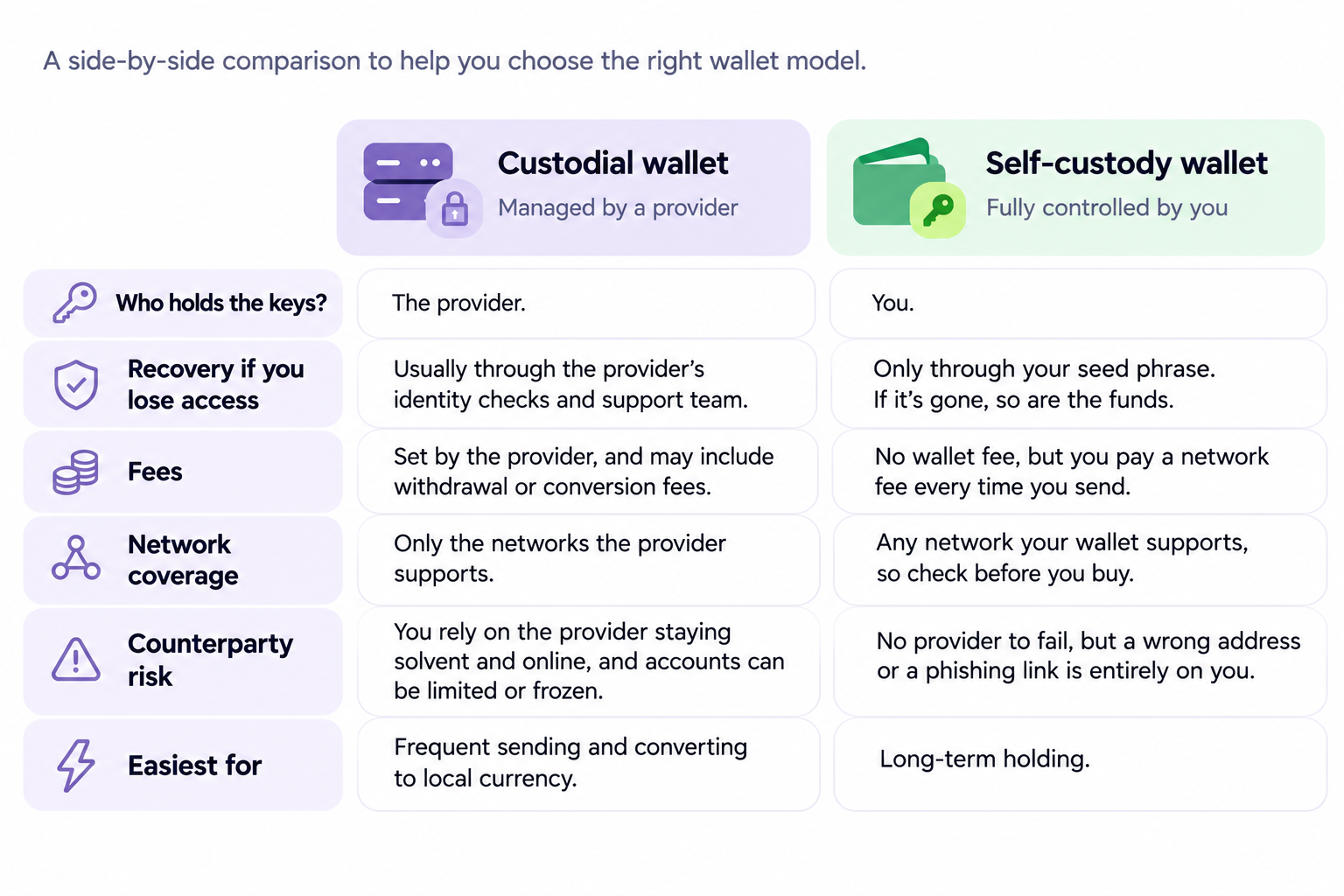
A USDC wallet is either custodial, where a provider holds the keys, or self-custody, where you hold them. Custodial wallets suit people who send often and want to convert to local currency. Self-custody suits long-term holding. Check which networks each supports before you move funds.

What is a USDC wallet?

A USDC wallet is an app or device that holds the keys to your USDC, the digital dollar issued by Circle, and lets you send and receive it.

Interestingly, your USDC isn't actually inside the wallet. It’s on a blockchain, which is a shared public ledger that anyone can check. The wallet holds the private key that proves the balance is yours and signs each transaction that moves it. Think of your public address as a mailbox that anyone can drop money into, and the private key as the only key that opens it.

As for the coin itself, Circle says USDC is backed by cash and cash-equivalent assets and can be redeemed one-for-one for US dollars. That's why it tends to hover around $1. The wallet question is a different one: who holds the key? That split matters more than any brand name.

Custodial wallets
A provider, such as an exchange or a fintech app, holds the keys for you. It works a lot like a bank login. If you forget your password, you can usually get back in by proving who you are. The trade-off is that you're trusting the company to stay solvent and let you withdraw.

Self-custody wallets
You hold the keys, normally through a seed phrase of 12 or 24 words. Nobody can freeze your balance. Nobody can reset it either. If you lose the seed phrase, the money is gone for good.

So, what’s the best USDC wallet? Honestly, there isn't one winner. It depends on how often you send, how much you’re holding, and whether you need to turn USDC into local currency. And if you’re still choosing between stablecoins too, here's how USDC compares with USDT.

Custodial versus self-custody wallets

Custodial wallets trade a bit of control for convenience, and self-custody wallets trade convenience for control.

Graphic comparing custodial and self-custody wallet models.

A good rule of thumb: if you send money every week or need to transfer it to a bank account, a custodial wallet is probably the better option. If you're setting money aside and rarely touching it, self-custody gives you full control. Many people end up using both, with a custodial wallet for everyday transactions and a self-custody wallet for their nest egg.

Hardware wallets for larger balances

A hardware wallet is a small device that keeps your private keys offline, which is what people mean by USDC cold storage. When you send, the device signs the transaction itself, so the keys never touch your phone or laptop and malware on your computer can't simply lift them.

The catch is that it’s slower and fiddlier. You plug it in, confirm on the device, and pay network fees as with any other self-custody send. It’s great for savings.

Your seed phrase is the whole game. When you set up the device, it shows you 12 or 24 words that can rebuild your wallet on any compatible device. Anyone who gets those words gets your funds. So:

  • Write them on paper or, better, stamp them into metal, and keep them offline.
  • Never photograph them, save them in a notes app, or email them to yourself.
  • Never type them into a website. No genuine support agent will ever ask for them.
  • Keep a second copy somewhere separate, so one flood or break-in doesn't wipe you out.
  • Practise a recovery with a small amount before you trust it with a large one.
  • Buy the device directly from the manufacturer, sealed, never second-hand.

So is it worth the money? Hardware wallets usually cost somewhere between tens and low hundreds of dollars, so check current prices.

If losing the balance would hurt more than the price of the device, then you can buy one. For savings you'd miss, yes. Also check that the wallet and its app support the network you want to hold USDC on before you hand over any cash.

Which wallet is cheapest to send from?

The cheapest wallet is whichever one lets you send on a low-fee network, because the network, not the wallet, sets most of the cost. The same USDC can move across many blockchains, and what a simple send costs varies a lot between them.

Here's roughly how it looks for a basic transfer as of November 2026. Treat it as a guide, not a quote, because fees rise and fall with network traffic.

Network Typical fee for a simple send Worth knowing
Ethereum Can reach several dollars when busy Widely supported, but fees swing the most
Solana A cent or less Addresses look nothing like Ethereum ones, so double-check
Base Cents A common low-fee option, so confirm the receiver supports it
Arbitrum Cents A common low-fee option, so confirm the receiver supports it
Polygon PoS Cents A common low-fee option, so confirm the receiver supports it

To send USDC cheaply, there are two things you must look out for.

First, the receiving end has to support the same network you send on. An address that works on one blockchain isn't automatically valid on another, and a confirmed send to the wrong place usually can't be reversed.

Second, custodial providers may add their own withdrawal fee on top of the network fee, so read the fee screen before you confirm.

A good habit is to send a tiny test amount first. If it lands where it should, send the rest.

Open a Grey account and hold USDC alongside USD, GBP and EUR.

Moving USDC into a bank account

There's no button that sends USDC straight to a bank. Moving USDC to a bank account means converting it to cash first, then withdrawing that cash to an account in your name. The question is who does the converting.

An exchange: You sell USDC for dollars or local currency and withdraw to your bank. Compare the fees, the exchange rate you actually get, withdrawal limits, and whether your country is supported.

Peer-to-peer: You trade with another person, sometimes at better rates. It also carries a higher risk of scams, so it’s advisable to stick to platforms that hold funds in escrow until both sides confirm.

A provider that holds fiat and USDC in one place: Instead of hopping between platforms, you keep USDC beside your regular balances and convert when you need to. Circle's own minting and redemption service is built for institutions, so individuals usually go through an exchange or a provider like this.

Whichever route you pick, expect some paperwork. Providers typically ask for a government-issued ID, proof of address, a selfie check, and bank details in your own name. For larger amounts, or for a business, you may also be asked where the money came from or for company documents. It varies by provider and country, and verification usually has to be finished before your first withdrawal.

Grey is a great option. Eligible users can hold and send USDC with Grey, with USDC sitting alongside their fiat balances, and convert it for withdrawal to a local bank account where that's supported. If you're moving money from the US to Nigeria, you can send money from the US to Nigeria, and you can open a multi-currency account to keep several currencies in one place. Availability depends on your account and location, so check the supported networks, rates, and fees in the app before you transfer.

One last thing: in many countries, selling crypto can be a taxable event. This is general guidance, not professional tax advice. Consult a certified tax professional for your specific situation.

Grey is a financial technology company, not a bank. Exchange rates, fees, limits, and transfer times vary by destination and are subject to change.

Frequently asked questions

What is the best wallet for USDC?

There isn't one best wallet, because it depends on how you use your money. A custodial wallet usually suits frequent sending and cashing out, while a self-custody or hardware wallet suits long-term holding. Check the networks each one supports before you commit.

Is a custodial USDC wallet safe?

It can be, but it's only as safe as the company behind it. Look at whether the provider is regulated, how it protects customer funds, and what security it offers, such as two-factor authentication. Switch that on, and never share your login codes.

Can a single wallet hold USDC across multiple networks?

Yes, many wallets can, but USDC on each network is held separately. You need to pick the right network when you send or receive, and addresses for different networks can look completely different. Always confirm before you hit send.

Do USDC wallets charge fees?

Many don't charge just for holding USDC, but sending usually costs a network fee. Custodial providers may add withdrawal or conversion fees on top. The cost of a send depends heavily on the network you pick.

How do I move USDC to my bank?

Convert it to cash through an exchange or a provider that supports your country, then withdraw to a bank account in your name. Expect to verify your identity first, and check the rate and fees before you confirm.

What happens if I lose my seed phrase?

If you lose your seed phrase and the device or app that holds your wallet, you will almost certainly lose access to your funds for good, because no one can reset a self-custody wallet. If you still have access to the wallet, move your funds to a new wallet right away and store the new seed phrase safely. With a custodial wallet, you recover your account through the provider instead.

Open a Grey account and hold USDC alongside USD, GBP and EUR.

Arrow (up)

Back to top