Send money from Kenya to Rwanda
Seen from Nairobi, the corridor looks like this. Kigali has drawn young African professionals and students from across the continent, and the money that follows them is mostly rent, tuition and setup costs. From Nairobi, Grey pays RWF straight into a bank account in Rwanda, with the rate and fee shown before you tap send.
KES
RWF


-

Trusted by 3M+ people around the world

GOOGLE PLAY •22K REVIEWS

APP STORE • 12K REVIEWS
Why Nairobi to Kigali needs a proper rate
Nairobi's tech and NGO workforce is paid in dollars, and Kenyans send abroad for study, trade and family.
On the Kigali side, the pattern is different. Kigali has drawn young African professionals and students from across the continent, and the money that follows them is mostly rent, tuition and setup costs. Grey pays Rwandan francs into any bank in Rwanda, including Bank of Kigali, Equity Bank Rwanda, I&M Bank Rwanda, Cogebanque. You see the exact RWF amount before you confirm, and that's the amount that arrives.
How sending to Rwanda works

Sign up
Verify once with your national ID or passport. From then on, sending to Rwanda or anywhere else is a saved recipient and three taps. Grey works with licensed partners in Kenya.

Fund
Add shillings from KCB, Equity, Co-operative Bank, NCBA or M-Pesa. The balance shows in the app straight away, ready to convert to RWF when you need it.

Send
Rwanda takes a bank name and account number, nothing else. Confirm the RWF amount and the fee, then send.
Where the money goes on Kenya to Rwanda
Grey converts KES to RWF in one step for senders in Nairobi, shows the rate and the fee as two separate numbers, and locks both before you confirm. No second conversion, no deduction at Bank of Kigali.

Fixed from Nairobi to Kigali

Grey fixes the KES to RWF rate at the moment you confirm. The RWF amount doesn't move after that.
When you've calculated exactly what a month in Kigali costs from Nairobi, the number needs to hold.


Why this route is priced badly elsewhere
On this route from Nairobi, the reason to switch is simple. Because Rwanda is small and the amounts are modest, people assume the transfer is cheap. It usually isn't. That's the standard Grey works to for a sender in Nairobi: KES to RWF quoted directly, delivered to Bank of Kigali.
The recipient's side in Rwanda
RWF at Bank of Kigali, or any other bank in Rwanda, as a straightforward deposit. The recipient in Kigali doesn't see Grey, doesn't need Grey, and isn't charged by Grey. You in Nairobi see settled in the app.
Any bank in Rwanda
Bank name plus account number. The RWF lands directly.

Saved details
Save a landlord, school or supplier once for repeat transfers.

Payment records
Each transfer is logged with the rate and fee for your own reconciliation.
Where senders to Kigali start
Top up in shillings from your bank app, or leave a small standing balance if you send to Kigali more than once a month. Kenyans top up by M-Pesa or bank transfer from KCB, Equity or Co-operative Bank. Nairobi's dollar-earning tech and NGO workforce can send from USD directly.
M-Pesa or bank transfer
The standard route from KCB, Equity, Co-operative Bank, NCBA or M-Pesa.
Dollars from abroad
Skip the KES leg by sending from a USD balance.
Leftover balance
Whatever's on Grey converts to RWF instantly.

Most senders from Nairobi to Kigali settle into a rhythm: top up on payday, convert on the due date, done.

What this route is used for
Business and NGOs
Paying Kigali-based staff, contractors and suppliers in local currency.
Conferences
Hotel deposits and registration for events at the Kigali Convention Centre.
Family support
Monthly transfers covering rent, food and medical costs for relatives in Kigali and the provinces.
Tuition
Fees at ALU, CMU-Africa, University of Rwanda and Mount Kigali University, paid in francs.
For senders in Nairobi and Mombasa, the Kigali side matters most. Kigali has drawn young African professionals and students from across the continent, and the money that follows them is mostly rent, tuition and setup costs. From Nairobi and Mombasa, the senders are a mix of families, students' parents and businesses.
Why Grey for Kenya to Rwanda
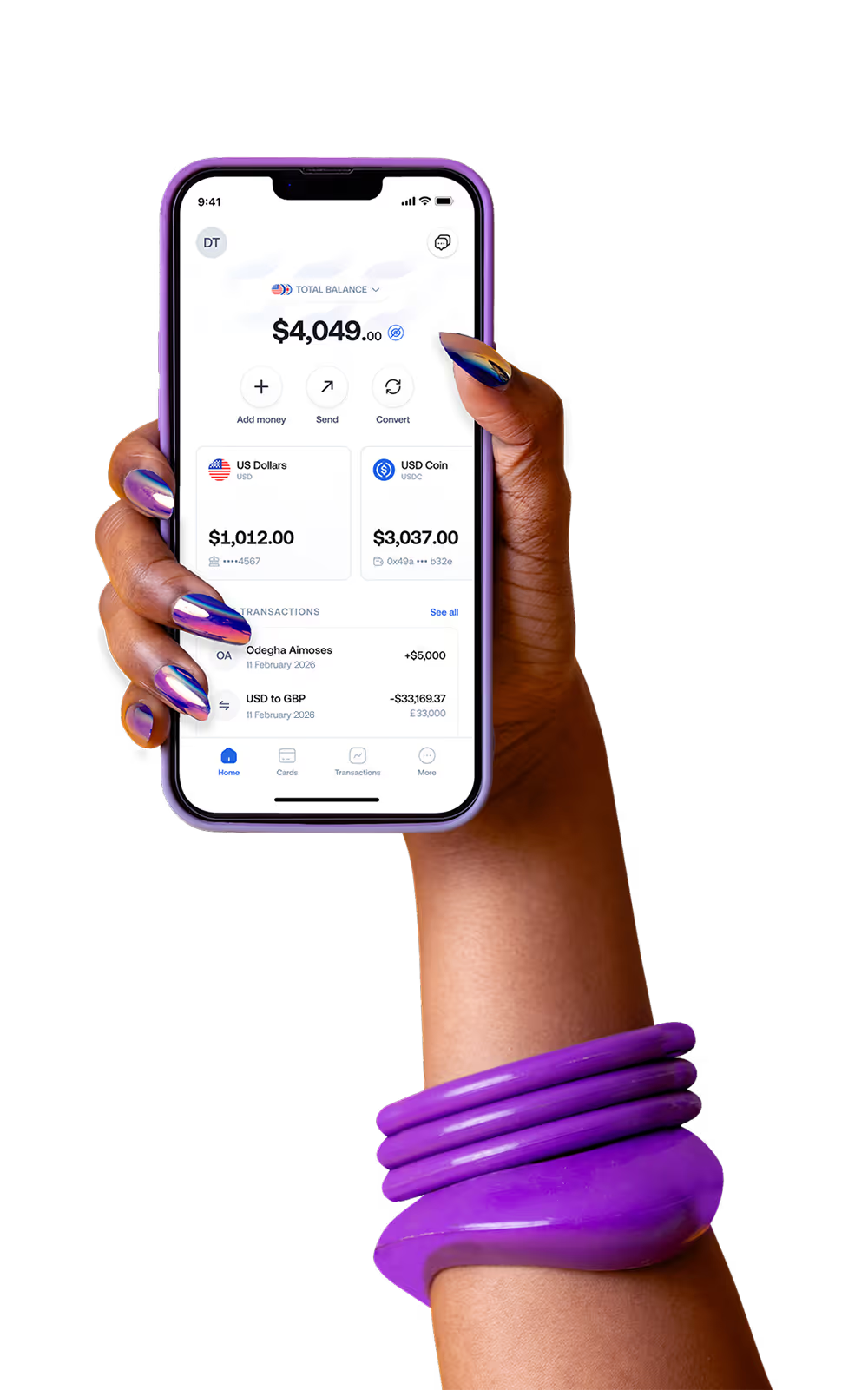


Get digital banking
at your fingertips