<script type="application/ld+json" data-schema-version="grey-blog-v4"> [{"@context":"https://schema.org","@type":"BlogPosting","@id":"https://grey.co/blog/step-by-step-guide-to-applying-for-a-ghana-visit-visa#article","headline":"Step-by-step guide to applying for a Ghana visit visa","description":"Discover the steps to obtain a Ghana visit visa and how Grey simplifies your trip","inLanguage":"en","url":"https://grey.co/blog/step-by-step-guide-to-applying-for-a-ghana-visit-visa","mainEntityOfPage":{"@id":"https://grey.co/blog/step-by-step-guide-to-applying-for-a-ghana-visit-visa#webpage"},"datePublished":"2025-03-19T14:56:25.587Z","dateModified":"2026-06-15T15:05:02.665Z","author":{"@type":"Person","@id":"https://grey.co/authors/tunde-aladeloba#person","name":"Tunde Aladeloba","url":"https://grey.co/authors/tunde-aladeloba","jobTitle":"Content Writer","sameAs":["https://ng.linkedin.com/in/aladeloba-babatunde-b1114b100"]},"publisher":{"@type":"Organization","@id":"https://grey.co/#organization","name":"Grey","url":"https://grey.co","logo":{"@type":"ImageObject","url":"https://cdn.prod.website-files.com/6360022338a81bd6fdbb1145/6564ae1077a67e39d3c491a6_Grey%20Logo%20Lockup%20Black.svg"}},"image":{"@type":"ImageObject","@id":"https://grey.co/blog/step-by-step-guide-to-applying-for-a-ghana-visit-visa#primaryimage","url":"https://cdn.prod.website-files.com/636a85d290ee58e70c17e1c0/6a30149e290dac557602255f_6a30149d888da5e750d24d3a_step-by-step-guide-to-applying-for-a-ghana-visit-visa__header-image.webp","contentUrl":"https://cdn.prod.website-files.com/636a85d290ee58e70c17e1c0/6a30149e290dac557602255f_6a30149d888da5e750d24d3a_step-by-step-guide-to-applying-for-a-ghana-visit-visa__header-image.webp","width":1200,"height":675}},{"@context":"https://schema.org","@type":"WebPage","@id":"https://grey.co/blog/step-by-step-guide-to-applying-for-a-ghana-visit-visa#webpage","url":"https://grey.co/blog/step-by-step-guide-to-applying-for-a-ghana-visit-visa","name":"Step-by-step guide to applying for a Ghana visit visa","description":"Discover the steps to obtain a Ghana visit visa and how Grey simplifies your trip","inLanguage":"en","primaryImageOfPage":{"@id":"https://grey.co/blog/step-by-step-guide-to-applying-for-a-ghana-visit-visa#primaryimage"},"breadcrumb":{"@id":"https://grey.co/blog/step-by-step-guide-to-applying-for-a-ghana-visit-visa#breadcrumb"}},{"@context":"https://schema.org","@type":"BreadcrumbList","@id":"https://grey.co/blog/step-by-step-guide-to-applying-for-a-ghana-visit-visa#breadcrumb","itemListElement":[{"@type":"ListItem","position":1,"name":"Home","item":"https://grey.co/"},{"@type":"ListItem","position":2,"name":"Blog","item":"https://grey.co/blog"},{"@type":"ListItem","position":3,"name":"Step-by-step guide to applying for a Ghana visit visa","item":"https://grey.co/blog/step-by-step-guide-to-applying-for-a-ghana-visit-visa"}]}] </script>

Step-by-step guide to applying for a Ghana visit visa

Tunde Aladeloba

TABLE OF CONTENT

SHARE THIS POST

Ghana stands as one of West Africa’s top travel and business hubs, attracting over 915,000 tourists in 2020 and contributing significantly to the region’s economy. As a fast-growing market with a GDP of over $77 billion, Ghana offers more than just landscapes and rich culture; it is a prime destination for both leisure seekers and business professionals. Whether you're visiting for business, tourism, or cultural exploration, securing a Ghana visit visa is the first step to experiencing everything the country has to offer.

This guide provides steps to apply for your visa, key requirements, and how Grey ensures a seamless trip with easy currency exchange, virtual cards, and smooth international transactions.

Also read: How to get a Ghana tourist visa

Why Ghana should be your next destination

  1. Rich cultural heritage – From the Cape Coast Castle to the Ashanti Kingdom, Ghana offers deep historical and cultural experiences.
  2. Beautiful beaches – Visit stunning coastal spots like Labadi Beach or explore Kakum National Park’s canopy walk.
  3. Friendly locals – Ghanaians are known for their warm hospitality, and festivals like Homowo and Chale Wote bring the streets to life.
  4. Markets and food scene – Experience Makola Market and enjoy Ghanaian delicacies like jollof rice, waakye, and kelewele.

Also read: The best digital nomad jobs to earn from anywhere in Ghana

Requirements for a Ghana visit visa

  1. A valid passport (with at least 6 months remaining before expiry).
  2. A completed visa application form.
  3. Passport-sized photos (recent, with a white background).
  4. Proof of travel itinerary (flight bookings, accommodation details).
  5. Proof of sufficient funds (bank statements or financial documents).
  6. Yellow fever vaccination certificate (mandatory for entry).

Also read: How to receive US Dollars in Ghana with Grey

A Guide to getting your Ghana visa

Check visa requirements

Visit the official website of the Ghanaian embassy or consulate in your country to confirm visa requirements and processing times.

Complete the visa application Form

Download and fill out the Ghana visa application form. Ensure all details match your passport information.

Gather supporting documents

Collect all necessary documents, including your passport, photographs, flight details, and proof of accommodation.

Pay the visa fee

Ghana visa fees vary based on visa type, nationality, and application location, but generally range from $55 to $330 USD

Wait for processing

Processing times range from 5 to 15 business days, but expedited services may be available for an additional fee.

Collect your visa

Once approved, collect your passport with the visa stamp or have it delivered (if postal services are offered).

Enjoy a stress-free trip with Grey

Grey is the ideal financial partner for anyone visiting Ghana, whether for business, leisure, or cultural exploration. With a Grey account, you can easily send, receive, and convert Ghanaian cedis (GHS), ensuring hassle-free transactions. Sign up for free or download the Grey app today to manage your money effortlessly while experiencing all that Ghana has to offer.

‍

Last updated:

October 2, 2026

Open a free Grey account to get startedJoin 1 million digital nomads
IF YOU ENJOYED THIS, CHECK THESE OUT

How to budget in foreign currencies using the Grey card

•

•

2 min read

Budgeting used to be simple. You earned money, spent money, and tracked what was left. At that time, you had only one account with one currency, which required just one mental model.

Then remote work happened.

Now you might earn in EUR, pay for tools in USD, and travel in between. Discipline isn’t enough for budgeting anymore; you need structure. Without the right structure, even the most careful spender can lose track of where their money is going.

The Grey card comes in as a practical budgeting tool for people who live and spend across borders. I’ll explain.

Why budgeting in multiple currencies breaks down so easily

Most people don’t overspend because they’re irresponsible. Rather, they overspend because their money isn’t organised in a way that reflects how they live.

Here’s what usually goes wrong.

You’re spending across platforms, clients, and countries, but everything is tied to one card. Subscriptions, ads, one-off purchases, and travel expenses all blur together. When something goes wrong, such as a spike in ad spend or an unexpected renewal, it’s challenging to pinpoint the cause quickly.

Add foreign currencies to the mix, and it gets worse. The charges don’t always settle immediately, and these small amounts seem harmless until they quietly add up.

At that point, your budget is broken.

Also read: How to use your Grey card to manage all your subscriptions

What should budgeting look like when you earn and spend globally?

Clarity, separation, and control are the most crucial factors when budgeting across multiple currencies. You should be able to:

  • See exactly what each type of spending is costing you.
  • Stop or pause spending instantly when needed.
  • Protect one part of your budget from another.
  • Make changes without disrupting everything else.

The Grey card is designed around solving these exact needs.

How does the Grey card help with budgeting?

Use multiple cards to separate your spending

One of the most effective budgeting habits is separation. Instead of using a single card for everything, you can create multiple cards with clear purposes.

For example, you can create:

  • One card for subscriptions and recurring tools
  • One card for ads and growth experiments
  • One card for travel or everyday spending
  • One card per client or project

Each card acts like its own budget lane. You don’t need to guess where the money went; you already know.

This is especially useful if you freelance, manage ads, or run multiple income streams. When spending is separated, budgeting becomes more straightforward.

Also read: How to pay for ads easily with your Grey card

Freeze cards instantly when spending goes off-track

Budgets fail when you can’t act fast enough.

With the Grey card, you can instantly freeze or unfreeze any card in the app. If an ad campaign starts burning cash, freeze the card. If a subscription you forgot about renews unexpectedly, freeze the card. If you’re travelling and want to lock down non-essential spending, freeze the card.

Freezing a card doesn’t affect your other cards or balances. It simply stops that specific spending lane, which is precisely how budgeting should work.

Set limits that protect your budget

Budgets can fail when they’re too rigid. Grey’s spending limits work more like guardrails.

You can set daily or monthly limits per card, receive alerts when you’re approaching your limit, and still stay flexible. The goal isn’t to punish spending. I mean, who wants that? It’s to keep you aware before things drift too far.

For shared cards or subscriptions, limits are especially useful. You know exactly how much can be spent, and nothing sneaks past unnoticed.

Track spending clearly in one place

When you’re budgeting across currencies, visibility matters more than perfection. Every Grey card transaction appears clearly in your app, linked to the card you used. That means you’re not just seeing how much you spent, but why you spent it.

When budgeting time comes around, you’re no longer reconstructing your month from memory. The structure is already there.

Spend confidently across borders

Trust helps with budgeting too. When you’re shopping internationally, paying for ads, or travelling, declined payments and unexpected charges can throw everything off. The Grey Card works across global merchants and even supports Apple Pay and Google Pay, so everyday spending feels normal, even when you’re far from home.

LDMAG1

A quick note on protection when spending abroad

An often-overlooked aspect of budgeting is preparing for contingencies in case things go wrong.

When you pay with your Grey card, you have access to Visa benefits, including purchase protection, extended warranties, and price protection, depending on the transaction and your activation status. It’s not something you think about daily, but it adds a layer of reassurance when you’re buying electronics, booking travel, or shopping internationally.

It’s one less thing to worry about while managing money across borders.

Also read: How to claim your Visa card benefits

What budgeting in foreign currencies is like with the Grey card

When your card and your accounts are aligned, budgeting stops being guesswork. You know what you’re spending, which currency it’s coming from and more importantly, when something changes.

Instead of constantly reacting to your balance, you’re now making decisions with clarity. And that’s what good budgeting should be like, whether you’re at home, travelling, or working remotely.

If you’re ready to make your budget work wherever you are, create or update your Grey card and start spending and budgeting in the ways that matter to you.

‍

How tax-free shopping works for international travellers

•

•

2 min read

If you've ever shopped abroad and wondered why you pay more than the people who live there, put the blame on taxes you shouldn’t be paying because you are a foreigner. Sometimes, you are asked if you want a tax-free receipt, which is a legal way to help you reclaim the Value Added Tax (VAT) or sales tax on goods you take out of the country. As a foreigner, tax-free shopping while travelling can help you spend less if you understand how the system works. This article explains how tax-free shopping works for international travellers and how you can cut down on your shopping expenses.

What is tax-free shopping for international travellers?

Tax-free shopping is also called a VAT refund or a tourist refund. It's a provision that allows international travellers to reclaim the local sales tax (VAT) they paid on goods they take home. In most countries, this can save you 5–25% on major purchases, such as fashion items and electronics.

VAT is usually included in the displayed prices in most countries. Tax-free shopping removes tax on certain items after you’ve purchased them, depending on the country. Usually, you must be a short-term visitor (staying less than six months) to qualify for tax-free shopping. You would also be required to prove you're not a resident of the country you're shopping in. For example, a non-EU passport is all you need in Europe. Tax-free shopping only applies to personal items not intended for resale in your country. The item must also be leaving the country with you.

Also read: How virtual cards can simplify your life abroad

How do you shop tax-free as an international traveller?

Here is how you can benefit from tax-free shopping as an international traveller:

1. Visit participating stores

Not all stores offer tax refunds for tourists. Look for stores with stickers that say “Tax Free”, “VAT Refund”, or “Global Blue”/“Premier Tax Free” on their window or at checkout. Many big department stores and designer boutiques offer tax-free shopping. Many times, these stores have a minimum amount you can spend per visit.

2. Request for a tax refund form at the till

Show your passport (some stores will permit a clear photo on your phone). The shop will issue a tax refund form or an electronic receipt. In some systems, you pay the full price, including tax, while others deduct the tax at checkout. Keep the items unused and with their tags, as customs may require them.

LDMAG1

3. Validate at customs validation

Before you check in your bags (or after security in some airports), go to the customs desk. Show them your form, passport, and the goods. They stamp or electronically validate it to confirm you're exporting the items. This step is important because you won’t get a refund without the custom validation.

4. Get your money back

Once stamped, go to the refund counter (often run by Global Blue or Planet). You can usually choose cash (in local currency or sometimes USD/EUR), credit to your card, or bank transfer. Many now offer instant refunds on their app. There might be a service fee of around 10–20%. You may not be receiving the full tax refund.

Managing your international shopping with Grey

Every traveller will take the slightest opportunity to maximise their budget. Tax-free shopping is an effective way to reduce your expenses while travelling. If you're wondering whether there is an easier way to pay for your international travel and shopping, Grey makes it simple with multi-currency accounts that support USD, EUR, and GBP. With low transaction costs, versatile virtual cards, and competitive exchange rates, you save more on your international spending. Grey now allows you to manage multiple cards for different purposes, helping you track your international spending more effectively. You can also spend directly from your balance without waiting to top up your card, reducing delays. You can also receive your tax refund seamlessly by providing your account details to the service provider.

Sign up on Grey today by installing the Grey app to manage your international shopping with ease.

‍

Can foreigners open a UK bank account without proof of address?

•

•

2 min read

If you’re planning to move to the UK, study there, or work remotely for UK clients, you almost certainly will need a UK bank account. For most people, they’ll quickly contact a few UK banks to open an account, and almost immediately, they hit the same wall: “Do you have proof of UK address?”

Most people don’t.

This could be because you’re not living in the UK yet, or you’re based abroad but need UK banking access. After explaining this, the conversation usually ends there. The bank says they can’t help without proof of address. You’ve failed before you’ve even started. Okay, maybe saying you’ve failed is a bit of an exaggeration, but you get my point.

So, can foreigners open a UK bank account without proof of address? Yes, but only if you know what to do.

Let's explain why UK banks require proof of address, your realistic options, and how to navigate UK banking as a foreigner without the usual documentation.

Why do UK banks ask for proof of address?

UK banks aren’t asking for proof of address to be difficult. I know, I know it can be a bit annoying. They’re in fact required by law to verify customer identities and addresses as part of KYC (Know Your Customer) and AML (Anti-Money Laundering) regulations.

These regulations exist to prevent financial crime, especially across borders. Banks must confirm you are who you say you are and that you have a verifiable connection to the address you’ve provided. This helps prevent fraud, money laundering, and identity theft.

For people already living in the UK, this is straightforward. You can provide a utility bill, council tax statement, or rental agreement showing your name and UK address. For foreigners who don’t live in the UK yet, or who live abroad permanently but need UK banking, these requirements pose a barrier.

LDMAG1

Can foreigners open a UK bank account without proof of address?

Technically, yes, but it depends entirely on which type of account you’re trying to open and with whom.

Traditional high-street banks almost always require proof of address in the UK. Their systems and compliance processes are built around this expectation. Applying to these banks without a UK address usually results in automatic rejection.

Some traditional banks offer international or expat banking services for high-net-worth individuals or specific professional categories (students, employees of multinational companies). These accounts sometimes accept foreign proof of address, but they often come with high minimum balance requirements, monthly fees, or qualifying restrictions.

Digital banks and fintech companies operate differently. Many were built specifically to serve people who don’t meet traditional banking criteria, including foreigners without UK addresses. These companies use technology to verify identity without always requiring physical UK residency.

Also read: Choosing the right payment setup for UK freelancers

Digital banks and fintech alternatives

Digital banks and fintech companies built their businesses around serving people that traditional banks aren't capable of serving.

These services typically verify your identity using your passport or national ID card, along with proof of address from your home country. They don’t require you to live in the UK. Once verified, you receive UK banking details that function as traditional UK bank accounts for receiving and sending payments.

However, they don’t offer full high-street bank services like mortgages, loans, or overdrafts (though some are expanding into these areas) and physical branch access (because they’re fully digital)

For foreigners who need UK banking access but do not live in Britain, these alternatives are often the only realistic options.

Also read: How to create US and UK bank accounts as a migrant worker in the UK

How does Grey help you open UK accounts?

If you live and work outside the UK but earn money from UK clients, or run a business that needs UK banking, or simply need UK account details without moving to the UK, Grey provides a practical solution.

You don’t need UK proof of address to open a Grey account. Verification is done using your existing identity documents and proof of address from where you currently live. Once verified, you receive UK banking details (sort code and account number) that your clients, employers, or customers can pay into as if you had a traditional UK bank account.

Grey also offers GBP, EUR, and USD accounts, meaning you can receive payments in multiple currencies without forced conversion. You control when to convert money and at what rates. For freelancers, remote workers, and businesses operating internationally, this flexibility matters.

Grey isn’t trying to replace your local bank. It’s a layer that sits alongside your existing banking, giving you access to UK (and other) banking infrastructure without needing to physically live in those countries.

Also read: How Grey differs from a UK bank

Can foreigners open a UK bank account without proof of address?

If you need UK banking to receive payments, hold pounds, and manage money digitally, fintech alternatives work well.

Grey gives you GBP, EUR, and USD accounts with UK banking details, no UK address required. Verify your identity using documents from your home country, receive your UK sort code and account number, and start enjoying truly inclusive global banking

Open your free Grey account today or download the app and access the UK banking infrastructure you need, without the residency requirements you don’t have.

‍

How to avoid foreign transaction fees when travelling abroad

•

•

2 min read

Foreign transaction fees: how to avoid paying extra

Let’s say you land in Tokyo, check into your hotel, decide to grab dinner, and then pay with your card. Nothing feels unusual. Well, until your bank statement arrives, and every single transaction has a small percentage added on. That’s a foreign transaction fee, and over a two-week trip with daily card spending, it quietly adds up to a meaningful sum.

The good news is that foreign transaction fees are avoidable. They’re not a fixed cost of travelling, rather a result of using the wrong card or making the wrong choice at the payment terminal. This guide explains what foreign transaction fees are, how to avoid them, and what to look for in a card that won’t charge you for spending in another country.

What is a foreign transaction fee?

A foreign transaction fee is a charge your bank or card issuer applies when you complete a transaction in a foreign currency, or when a transaction is processed through a foreign bank, even if you’re physically in your home country. According to the Consumer Financial Protection Bureau, foreign transaction fees typically range from 1% to 3% of the purchase amount.

The fee is not charged by the card networks but by the bank or financial institution that issued your card. Two people with Visa cards from different banks can make the same purchase abroad: one pays a foreign transaction fee, and the other doesn’t, depending purely on what their card issuer charges.

Foreign transaction fees apply in several situations:

  • Purchasing something in a foreign currency while travelling abroad
  • Shopping on an international website that processes payments in a foreign currency
  • Making a purchase at a foreign merchant, even if the amount is displayed in your home currency

The fee is typically a percentage of the total transaction value, deducted automatically, so it usually won’t appear as a separate line item at the payment terminal. It shows up later, on your statement, alongside dozens of other charges. Most people don’t notice it until they add everything up.

How to avoid foreign transaction fees

Avoiding foreign transaction fees doesn’t require complicated financial planning. You just need to know which tools to use before you travel.

Use a card with no foreign transaction fee: This is the most straightforward solution. Many travel-oriented cards, premium cards, and digital banking accounts charge zero foreign transaction fees as standard. If your current card charges a foreign transaction fee, switching to one that doesn’t is the single most effective change you can make.

Always pay in the local currency: When you use your card abroad, the payment terminal may offer to charge you in your home currency instead of the local one. Always decline this. It’s called dynamic currency conversion, and it typically adds a significant surcharge on top of whatever fees your card already charges. Paying in local currency means your bank or card issuer handles the conversion, which is almost always cheaper than the merchant doing it.

Withdraw cash strategically at ATMs: If you need cash in local currency, withdraw larger amounts less frequently rather than making multiple small withdrawals. Many cards charge a flat fee per ATM withdrawal abroad, so fewer withdrawals at larger amounts reduce the fixed cost per transaction. Check whether your card has ATM withdrawal fees and whether there’s a network of fee-free ATMs available in your destination.

Use a multi-currency account for extended travel: If you’re travelling for weeks or months, or visiting multiple countries, a multi-currency account lets you hold balances in several currencies and spend from the relevant one without triggering conversion fees. You convert when the rate suits you, not at the moment of every transaction.

Tell your bank you’re travelling: This doesn’t avoid foreign transaction fees, but it prevents your card from being blocked for suspected fraud when you use it abroad, which is a separate problem that costs time rather than money.

Cards with no foreign transaction fee

Not every card charges foreign transaction fees. Knowing which categories typically waive them helps you choose the right one before your next trip.

Travel rewards cards: These are specifically designed for frequent travellers and almost universally offer no foreign transaction fees as a baseline feature. They often include additional travel benefits, such as airport lounge access, travel insurance, and points on international spending.

Premium cards: You’ll usually find these at the higher tier of a bank’s product range, typically waive foreign transaction fees alongside other premium features. The trade-off is usually a higher annual fee.

Digital banking accounts and fintech platforms: Many of these have made no foreign transaction fees a standard feature rather than a premium one. Many digital-first accounts charge zero foreign transaction fees on all purchases, offer competitive exchange rates, and provide virtual cards for secure online spending. This combination makes them meaningfully cheaper than traditional cards, even when the traditional card also claims no foreign transaction fee but still applies an exchange rate markup.

What to look for when comparing cards:

  • Zero foreign transaction fee explicitly stated in the terms, not just a low fee
  • Exchange rate used for currency conversion: mid-market is better than a proprietary rate with a margin built in
  • ATM withdrawal fees abroad, and whether there’s a monthly free allowance
  • Whether the card is virtual, physical, or both
  • Fraud protection and the ability to freeze the card instantly if needed

Read the terms carefully. A card that advertises no foreign transaction fee can still apply an exchange rate margin that costs you 1 to 2% on every conversion. The total cost of spending abroad is the fee plus the rate margin, not just one or the other.

Best travel cards with no foreign fees

The best travel card for spending abroad has several features working together, not just one. Here’s what to look for.

Zero foreign transaction fee: This is the baseline. Any card you use regularly abroad should have this as a confirmed feature, not something to check each time.

Mid-market or near-mid-market exchange rate: The exchange rate is where many cards recoup costs even when they advertise no foreign transaction fee. A card that charges 0% in fees but applies a 2.5% margin to the exchange rate costs you 2.5% on every transaction. The closest rate to the interbank mid-market rate is always better.

No or low ATM withdrawal fees: If you’ll need cash, check the ATM fee structure. Some cards charge a flat fee per withdrawal, others charge a percentage, and some offer a monthly allowance of free withdrawals before fees kick in.

Instant freeze and fraud protection: If your card is lost or compromised while you’re abroad, the ability to freeze it instantly from an app is a practical necessity. Physical cards take days to replace. A virtual card can be frozen in seconds, and a replacement can be issued without waiting for the post.

Multiple currencies in one account: For travellers visiting more than one country, a card linked to a multi-currency account means you’re spending from the right currency balance in each country, avoiding conversion entirely where you’ve pre-loaded the local currency.

The Grey virtual debit card covers all of these. Grey charges no foreign transaction fee on purchases made in the card’s base currency, applies a conversion fee of 1% capped at $6 for currency conversions, and gives you a virtual USD card you can get the Grey virtual debit card and add to Apple Pay or Google Pay in minutes. Grey accounts hold USD, GBP, EUR, and other currencies, allowing you to convert and spend from whichever balance you need.

The cross-border card fee on the Grey virtual card (non-USD purchases on a USD card) is 2% plus $0.50. For travellers who pre-convert to the local currency within Grey before spending, this fee is avoidable entirely.

Dynamic currency conversion: the hidden fee

Dynamic currency conversion (DCC) is the practice where a foreign merchant or ATM offers to convert your transaction into your home currency at the point of sale, rather than charging you in the local currency. It sounds convenient, but it’s more expensive.

Here’s how it works in practice. You’re in Paris, paying €80 for a meal. The card reader asks whether you’d like to pay in euros or in US dollars. If you choose dollars, the merchant’s payment provider handles the conversion, typically at a rate that includes a 5% to 10% margin above the mid-market rate. If you choose euros, your card issuer handles the conversion, almost always at a better rate.

A concrete example: €80 at the mid-market rate on a given day might be $87.20. The same transaction processed via DCC might show as $91.50 or higher, with the merchant’s payment provider keeping the difference. On a single transaction, this is a few dollars. Across ten days of dining, hotels, and activities, it adds up to a meaningful amount paid for no service.

The way to avoid DCC is to always choose to pay in the local currency when given the option. If a card reader asks whether you want to pay in your home currency, decline. If an ATM offers to convert your withdrawal to your home currency, decline. For more details on how card network exchange rates work, see our guide on how Mastercard exchange rates work.

Some merchants apply DCC automatically without asking. In that case, ask to redo the transaction in local currency or dispute the DCC charge with your bank after the fact if the margin applied was excessive.

How to use a multi-currency account when travelling

A multi-currency account improves the travel payment experience in practical ways. Instead of converting every transaction at the point of sale, you convert in advance at a rate you can see and confirm, then spend from the converted balance without any further conversion cost.

For example, before travelling to Japan, you convert $500 to JPY in your multi-currency account at the current mid-market rate, with a transparent conversion fee. For the rest of your trip, every yen you spend comes from that balance.

If you’re travelling to multiple countries, you hold balances in each currency and spend from whichever one applies. Euros in France, pounds in the UK, dirhams in Morocco. Each balance is pre-converted at a rate you confirmed before travel.

Grey lets you hold and convert multiple currencies from one account. You can convert currencies at mid-market rates with Grey and load the converted balance to your Grey virtual card before you travel.

For travellers who earn in one currency and spend in another, such as a remote worker earning USD who spends in EUR, GBP, or NGN while travelling, Grey removes the double conversion problem: converting from USD to local currency at your bank’s rate every time you make a purchase, twice each time, once in and once out.

Frequently asked questions

What is the average foreign transaction fee?

The typical foreign transaction fee charged by traditional banks and card issuers ranges from 1% to 3% of the transaction value. According to the Consumer Financial Protection Bureau, 3% is the most common fee rate among US-issued cards that charge it. On $3,000 in travel spending, a 3% foreign transaction fee costs $90 before any exchange rate margin is applied.

Do all cards charge foreign transaction fees?

No. Many travel-oriented cards, premium cards, and digital banking accounts charge zero foreign transaction fees. The fee is set by the card issuer, not by Visa or Mastercard. Whether your card charges a foreign transaction fee is stated in your card’s terms and conditions, usually in the fees section. If it’s not clearly stated as zero, check before travelling.

Does using a debit card abroad avoid foreign transaction fees?

Not automatically. Whether a debit card charges foreign transaction fees depends on the issuing bank, not the card type. A debit card from a traditional bank can charge the same 1% to 3% as a traditional card. A debit card from a digital banking platform like Grey may charge zero. The card type (debit versus card) matters less than the issuer’s fee policy.

What is dynamic currency conversion, and how do I avoid it?

Dynamic currency conversion (DCC) is when a foreign merchant or ATM offers to charge you in your home currency rather than the local currency. It typically adds 5% to 10% to the effective cost of the transaction because the merchant’s payment provider sets the conversion rate, almost always worse than your card issuer’s rate. Avoid it by always choosing to pay in the local currency when given the option. If a payment terminal asks whether you want to pay in your home currency, decline.

Is it cheaper to pay in cash or by card abroad?

It depends on how you obtain the cash and which card you’re comparing. Withdrawing cash from an ATM abroad with a card that charges withdrawal fees and a poor exchange rate can be more expensive than paying by card with no foreign transaction fee. Conversely, a card with a high foreign transaction fee can make cash, obtained at a fair exchange rate, cheaper. The answer depends on your specific card’s fee structure. A card with no foreign transaction fee, a mid-market exchange rate, and no ATM withdrawal fees is typically the cheapest way to access money abroad, whether for card or cash spending.

Does Grey charge foreign transaction fees?

Grey does not charge a foreign transaction fee on purchases made in the card’s base currency (USD for the Grey virtual USD card). A cross-border card fee of 2% plus $0.50 applies to non-USD purchases made on the USD card. To avoid this fee when spending in non-USD currencies abroad, convert the amount you need to the local currency within your Grey account before travelling and spend from that converted balance.

Send Canadian dollars with Grey

•

•

2 min read

Everything we do at Grey is aimed at making it easier for you to make global payments.

We’re excited to announce that Grey now supports Canadian dollars (CAD) payments, which means you can send money to Canada directly from your Grey account via Interac e-Transfer.

You can pay freelancers, send money to family, or make cross-border payments to Canadian businesses right from your phone.

What exactly does this mean for you?

Send money to Canada easily‍

Because we’ve integrated with Interac e-Transfer, you can send money directly to any Canadian bank account. You’ll only pay a flat $3 fee, regardless of how much you’re sending.

Expand your global operations with less friction

‍CAD joins our growing list of supported currencies, giving you more flexibility when operating across borders.

No additional setup required

‍It’s the same Grey account you already have. Sending CAD works exactly like sending any other currency through Grey. There’s no confusion about exchange rates and no need for the recipients to sign up for anything.

How does sending CAD work with Grey?

We’ve kept things simple. Here’s how to send Canadian Dollars using Grey:

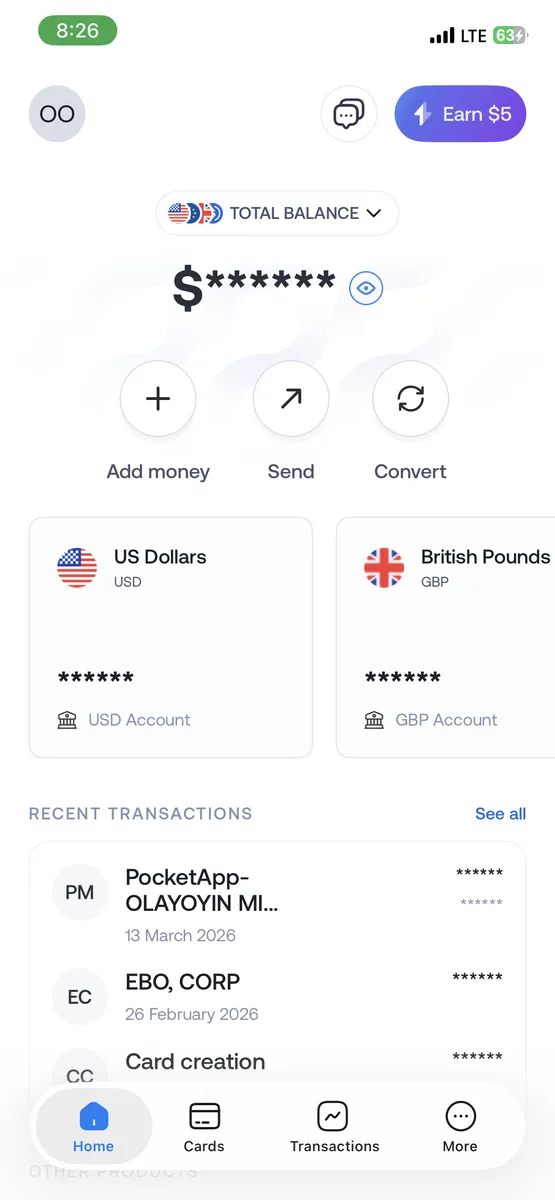
  1. Log in to your Grey account.
    ‍
  2. Click “Send”.
Send Canadian dollars with Grey

‍

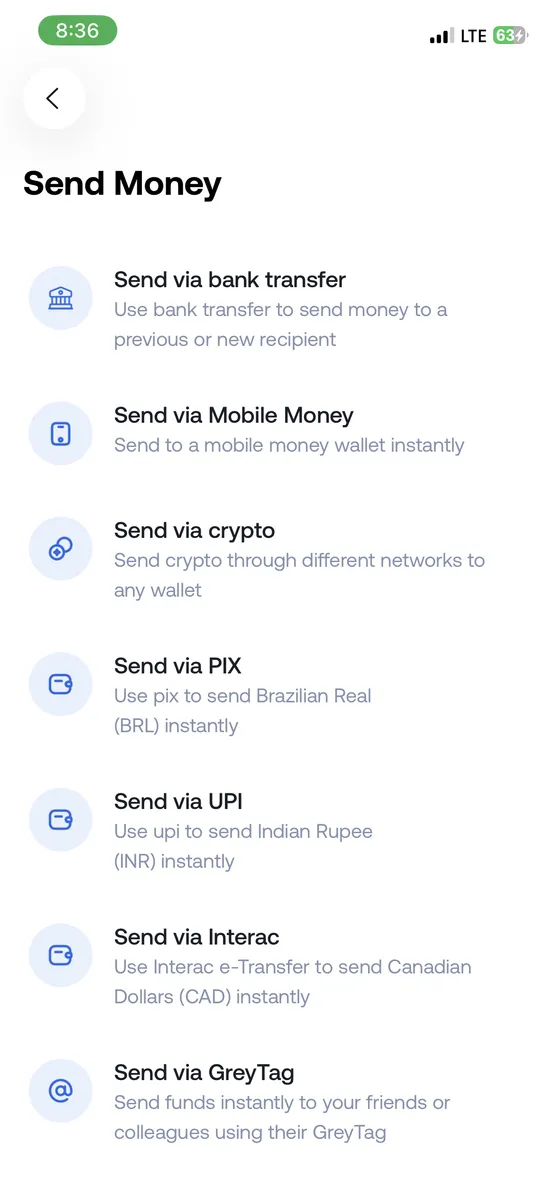
2. On the “Send Money” tab, select “Send via Interac”.

Send Canadian dollars with Grey

‍

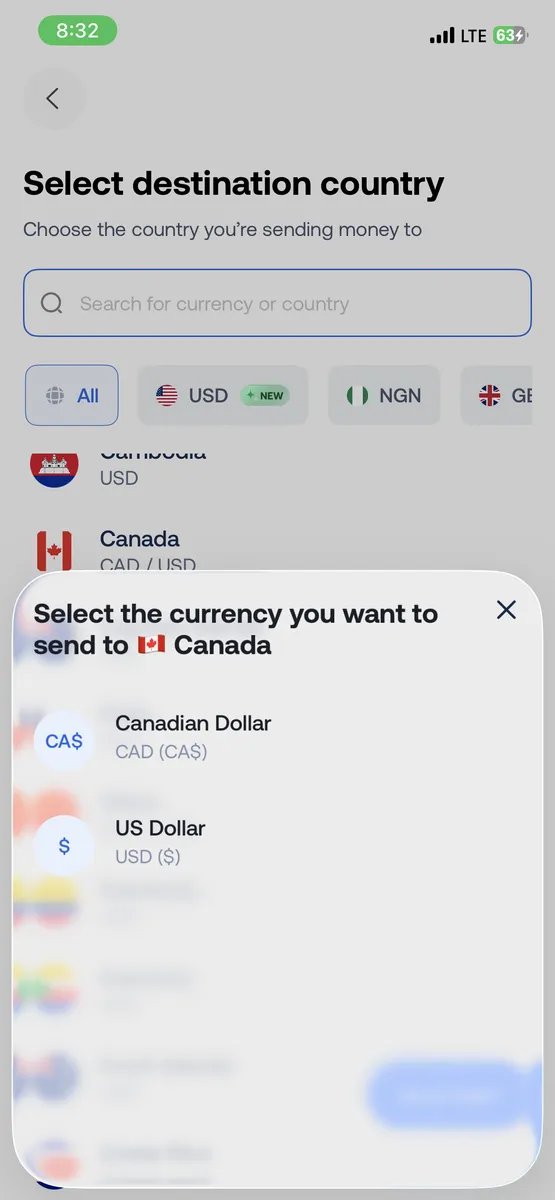
3. Select Canada as the destination and choose CAD as the currency.

Send Canadian dollars with Grey

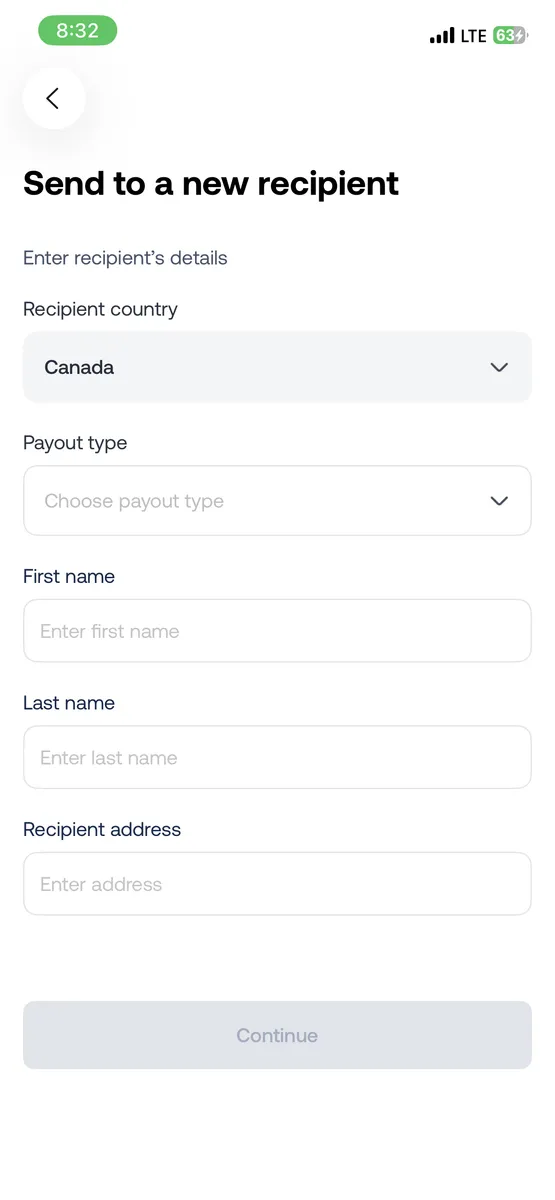
4. Enter the recipient’s details and confirm the transfer.

Send Canadian dollars with Grey

Enjoy global payments with Grey

At Grey, our mission is to make globalisation work for everyone. Supporting payments in Canadian Dollars takes us closer towards achieving that goal.

We want more freelancers, businesses, and remote workers to operate internationally without friction.

More currencies, more countries, and more ways to manage money across borders, that’s where we’re headed.

Open a free Grey account today, or download the app to get started.

‍

How to convert money for AFCON trips

•

•

2 min read

Travelling to Morocco this December for the 2025 African Cup of Nations (AFCON)? Then you need a currency conversion service to convert your home currency to Moroccan Dirhams (MAD) with ease. While you can easily use exchange services at airports and hotels, you will be paying significant markups on exchange rates and high conversion fees. Traditional banks can be dramatic with their paperwork and delays. If you are wondering how you can get the best deal and how you can convert money for AFCON trips, let’s give you a rundown of your options.

What to consider before choosing an exchange service

Before you opt for an exchange service in Morocco, here are some things you should consider:

  • Transparency and fees: Some exchanges offer amazing rates but include hidden fees and high markups. Look for clear exchange rates (mid-market rate), hidden charges, and low transaction fees to avoid unnecessary losses.
  • Security: Use licensed, regulated financial services to avoid scams, counterfeit money, and secure your funds. Review their security features and regulatory authorities.
  • Convenience: Consider online platforms with mobile apps, doorstep delivery, or multi-currency accounts like Grey for seamless travel.
  • Currency support: Choose a service that lets you manage multiple currencies in one place and allows you to withdraw to MAD at any time. This means you can hold money in other currencies till the exchange rate is favourable or you need MAD.
  • Customer support: Check reviews for reliability, fast service, and responsiveness.
  • Payment options: Use international cards for online purchases like tickets; your bank handles conversion automatically.

How to convert money for AFCON trips

Here are various currency exchange options for your AFCON trips.

Using bureaux de change (Exchange offices) to convert money for AFCON trips

You will need some cash for your AFCON trips, and exchange offices are your safest option. You can find them in cities like Rabat, Casablanca, Marrakech, and Tangier, where AFCON matches will be held. Look for the official ones, as they offer rates close to mid-market. They offer immediate access to cash, which is useful for last-minute needs or upon arrival in Morocco. You may be required to provide identification, such as a valid passport or driver's licence, for the transaction.

Using ATMs for currency conversion at AFCON 2025

ATMs are generally a reliable way to get the local currency wherever available. You might be able to withdraw cash at international ATMs at the airport. However, you should note the fees and exchange rate. It is usually better to be charged in the local currency to get the best exchange rate to avoid Dynamic Currency Conversion (DCC), which  is usually more expensive. Your home bank may have partnerships with foreign banks that allow you to use their ATMs with reduced or waived fees. Check with your bank before travelling to find a locator for partner ATMs in Morocco.

Hotels and airports’ currency exchange services for AFCON trips

Avoid airports and hotels for converting large sums because the rates are usually poor, even when convenient. Instead, exchange a small amount at the airport if you have urgent needs, then access better rates at ATMs, official exchange bureaus, and reliable fintech apps like Grey.

Using digital payment services for converting money on AFCON trips

Fintech companies offer a range of solutions that simplify and reduce the cost of currency conversion for events such as the Africa Cup of Nations (AFCON), whether for travellers, businesses, or fans. They typically offer transparent, low fees, mid-range conversion rates, and access to international accounts (USD, EUR, and GBP), while also supporting withdrawals to MAD accounts.

LDMAG1

Tips when converting money at AFCON

  • Check multiple providers and compare rates.
  • Locate reliable exchange points via Morocco’s OC CONNECT app.
  • Avoid temporary stands or street corners for cash exchange.
  • Always count your money carefully before leaving the counter.

Converting money for AFCON trips with Grey

Managing currency exchange on AFCON trips can be tricky without the right tools. Grey offers a flexible and reliable currency conversion solution. With swift payouts, low conversion fees, and a transparent fee structure, users can hold USD, EUR, and GBP and seamlessly withdraw to MAD accounts. Grey also offers versatile virtual USD debit cards to simplify your online payments in Morocco. Here’s how to convert money on Grey:

  • Log in to your Grey account on the mobile app or website. If you don’t have one, you can sign up and complete your verification within minutes.
  • Go to the "Accounts".
  • Select the currency you want to convert from (e.g., USD, EUR, GBP).
  • Click the "convert" icon.
  • Choose Moroccan Dirham (MAD) as the currency you want to receive.
  • Input the amount you wish to convert and the local MAD account details you are paying into.
  • Check real-time exchange rate and fees, then follow the prompts to complete the conversion.

Attending an AFCON with Grey makes the experience even more exciting. Enjoy the thrill of the games, without payment concerns.

Sign up on Grey’s website or download the app today to get started.

‍

Arrow (up)

Back to top