Send money to Nigeria from the United Kingdom
Grey sends money from the UK to Nigeria directly to bank accounts. The live GBP-to-NGN rate and total fee are shown before you confirm. GTBank, Access Bank, Zenith Bank, UBA, and First Bank are supported. Transfers from a funded Grey balance typically arrive within minutes. Grey is regulated by the FCA.
GBP
NGN


-

Trusted by 3M+ people around the world

GOOGLE PLAY •22K REVIEWS

APP STORE • 12K REVIEWS
Send money to Nigeria, straight to any bank account
When you send money to Nigeria through Grey, the transfer lands directly in your recipient's bank account. GTBank, Access Bank, Zenith Bank, UBA, and First Bank are all supported. Enter the account details, confirm the rate and fee, and send.
Your recipient does not need a Grey account. The NGN arrives in their banking app typically within minutes of you confirming. No branch visits, no agent queues.
The total cost of a transfer is the fee and the exchange rate together. Some services advertise zero fees but mark up the rate. On a £1,000 transfer, a 2% rate markup costs more than a £20 fee. Grey shows both numbers on the same screen before you tap Send.
How to send money to Nigeria from the United Kingdom

Sign up
Open a free Grey account on your phone in under five minutes. Verify your identity with a valid UK photo ID such as a passport, BRP card, or driving licence.

Fund
Add money from your UK bank account via Faster Payments, or send directly from your existing Grey balance.

Send
Enter your recipient's bank account number. Confirm the live GBP-to-NGN rate and fee. Send. The money typically arrives within minutes.
How much does it cost to send money to Nigeria
Every transfer from the UK to Nigeria involves two costs: the visible fee and the exchange rate margin. Most high-street banks embed their margin in the rate and advertise zero fees. Grey shows both the rate and the fee before you confirm. The NGN amount your recipient receives is on screen before you tap Send.

How exchange rates work: GBP to NGN

The GBP-to-NGN exchange rate determines how many NGN your recipient receives. On a £500 transfer, a 1% difference in the rate changes what your recipient receives significantly. On monthly remittances, that gap compounds.
Grey shows the live GBP-to-NGN rate before you confirm. The rate on screen is the rate applied. No adjustment after you send.
GBP-to-NGN is a Group A currency pair. Grey's conversion fee is 1%, capped at $6 regardless of the transfer amount. On a £1,000 transfer the effective fee is well under 1%. The withdrawal fee is N35 flat (NIBSS) and displayed alongside the rate before you commit.


How fast is each provider?
Grey delivers to Nigerian bank accounts typically within minutes from a funded balance. Wise typically takes 1-2 business days. UK bank wires (SWIFT) take 3-5 business days and cost £20-40 in visible fees alone.
What your recipient sees in Nigeria
Your recipient does not need a Grey account. The NGN arrives in their account as a standard credit. It appears the same way any domestic transfer would.
Bank account delivery
Grey sends to GTBank, Access Bank, Zenith Bank, UBA, and First Bank. Enter the account number in the Grey app. Withdrawal fee: N35 flat (NIBSS).
Transfer speed
Transfers from a funded Grey balance typically arrive within minutes. If funding via Faster Payments, allow the same day for the deposit to clear first.

GreyTag transfers
If your recipient has a Grey account, send via GreyTag instead. GreyTag transfers are free and arrive within seconds, in any currency.
Ways to fund your transfer
Whether you are transferring money to Nigeria for the first time or the fiftieth, Grey gives you three funding options
Faster Payments
Fund your Grey account via Faster Payments from any UK bank. Processed the same day. Fee: 0.8% of the deposit amount, minimum £2, capped at £10.
BACS
Fund via BACS from your UK bank. Fee: £15 flat. Slower than Faster Payments but available from all UK banks.
Grey balance
If you already hold GBP in your Grey balance, you can send without waiting for a bank deposit to clear. Fund your balance in advance, and transfers go out immediately.

Which option is cheapest? Grey displays the fee for each funding method before you confirm, so you can compare and choose. There is no penalty for switching between them.

Send money to Nigeria for every reason that matters
Family support
A Nigerian professional in London covering their parents' monthly expenses in Lagos. A nurse in Birmingham sending money to family in Abuja every month. A family in Manchester supporting siblings in Port Harcourt. On a recurring £400 transfer, a 1% rate gap costs nearly £50 a year.
Housing and property
Paying rent on a property in Lekki from a salary in London. Contributing to a land purchase in Enugu. Covering maintenance on a home in Ibadan while working in the UK. On larger transfers, the cap on Grey's conversion fee at $6 means the effective cost drops as the amount rises.
Education
A parent in London covering university fees in Lagos. A family in Birmingham sending monthly allowance to a student in Ile-Ife. School fees denominated in naira and due on fixed dates , rate stability on the day of transfer matters.
Business payments
A UK company paying a Nigerian supplier or contractor in naira. A client settling invoices with an Abuja-based agency. Grey supports payments to all major Nigerian banks without requiring a separate business account.
Your reasons may be different, but the need is the same: the money has to get there, the cost has to be clear, and the app has to work the same way it did last month. Do it all on Grey, with the rate and fee shown before every transfer.
Best way to send money to Nigeria from the United Kingdom
A global money app you can actually trust
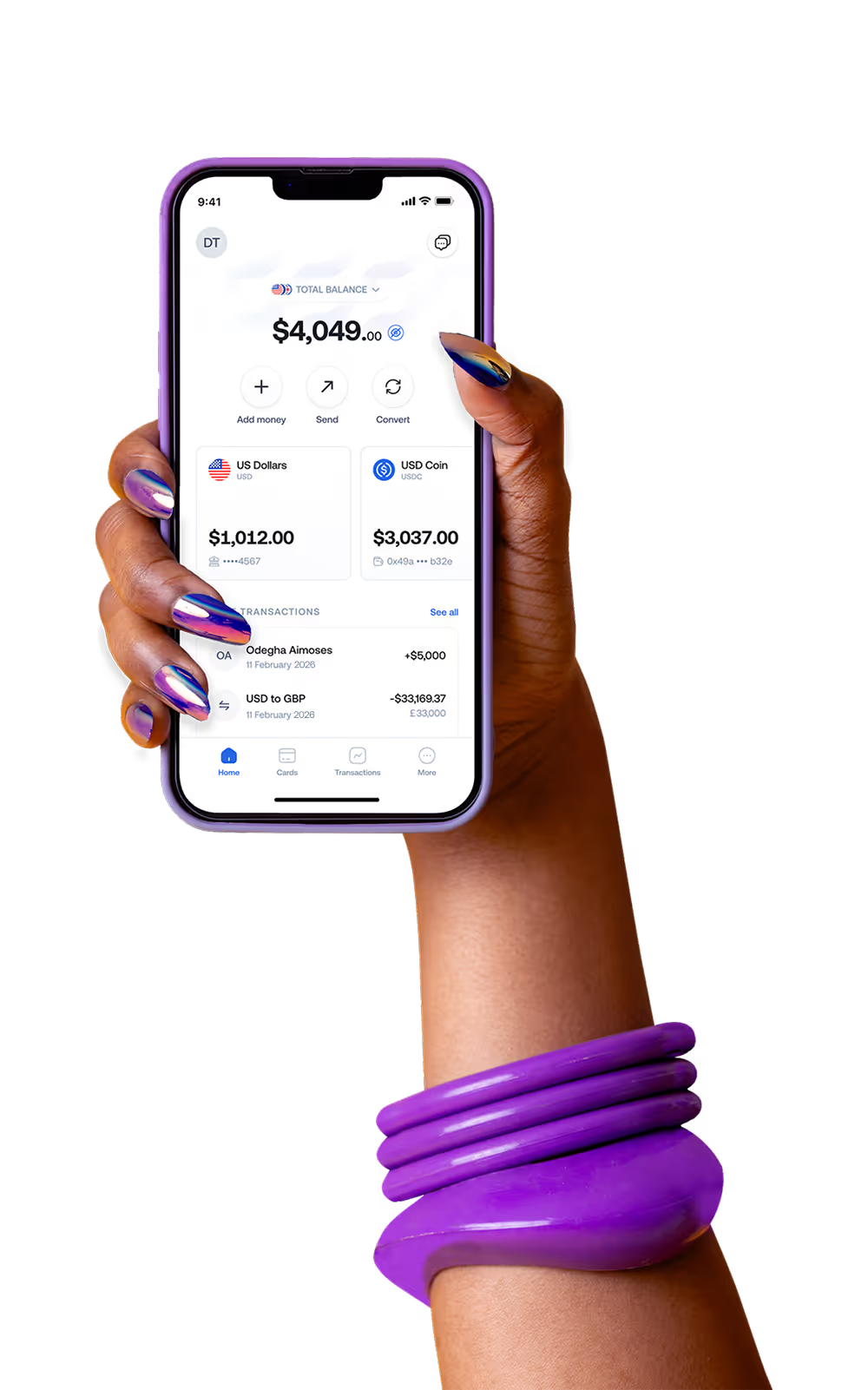
Over 3 million people across 80+ countries use Grey to move money across borders. Your transfers are protected with bank-grade encryption, and every payout is tracked end-to-end. You'll know exactly when the money lands, and so will the person receiving it. If you have any questions, our support team is one tap away.



FAQs
How long does it take to send money to Nigeria from the UK?

Transfers from a funded Grey balance to Nigeria typically arrive within minutes. If funding via Faster Payments, allow the same day for the deposit to reach your Grey account first.
What is the fee for sending money to Nigeria from the UK?
Grey charges a 1% capped at $6 conversion fee on GBP to NGN transfers. The withdrawal fee is N35 flat (NIBSS). The Faster Payments deposit fee is 0.8% of the deposit amount, minimum £2, capped at £10. All fees are shown before you confirm.
Which Nigeria banks does Grey support?
Grey supports transfers to GTBank, Access Bank, Zenith Bank, UBA, and First Bank.
What is the GBP to NGN exchange rate today?
The live GBP to NGN rate is shown inside the Grey app before you confirm your transfer. The rate at the time of confirmation is the rate applied. Grey does not adjust the rate after you send.
Does my recipient need a Grey account to receive money in Nigeria?
No. Your recipient does not need a Grey account. The NGN arrives as a standard credit, the same way any domestic Nigeria transfer would appear.
Is Grey safe for sending money to Nigeria from the UK?
Grey is regulated by the Financial Conduct Authority (FCA) in the United Kingdom. Grey is a financial technology company, not a bank.
How much can I send to Nigeria from the UK?
The daily limit is $10,000 equivalent and the monthly limit is $30,000 equivalent. All limits are shown in the Grey app before you send.
Is Grey cheaper than my UK bank for sending money to Nigeria?
In most cases, yes. UK high-street banks typically charge £20-40 per international transfer plus an exchange rate 2-4% below mid-market. Grey charges a 1% capped at $6 conversion fee and a flat withdrawal fee, both shown before you confirm.
Can I send money to Nigeria from a Grey balance?
Yes. If you hold GBP in your Grey balance, you can send to Nigeria without waiting for a Faster Payments deposit to clear. Transfers from a funded Grey balance typically begin within seconds.
What is the cheapest way to send money to Nigeria from the UK?
The cheapest way is to fund your Grey balance in advance via Faster Payments, then send from your Grey balance. This avoids the deposit fee on each individual transfer. Grey shows the total cost before you confirm.
How does Grey compare to Wise for sending money to Nigeria from the UK?
Both Grey and Wise show fees and exchange rates upfront. Grey typically delivers to Nigeria within minutes from a funded balance. Wise typically takes 1-2 business days for bank-funded transfers. Compare the NGN amount your recipient receives in both apps before sending.
Get digital banking
at your fingertips