Send money from South Africa to Ghana
Johannesburg companies have been opening offices in Accra for twenty years, and Ghanaian traders, students and nurses have been building lives in Gauteng for just as long. Both directions of that story need cedis at the other end. Grey pays Ghanaian cedis into a mobile money wallet or a bank account in Ghana.
ZAR
GHS


-

Trusted by 3M+ people around the world

GOOGLE PLAY •22K REVIEWS

APP STORE • 12K REVIEWS
The Gauteng to Accra route, and who uses it
Retail chains, telecoms contractors and construction firms headquartered in Sandton run Ghanaian operations that need paying in local currency: site wages, landlords, freight agents, statutory bills. Alongside them sits a community of Ghanaian professionals in Pretoria and Johannesburg sending money to parents in Kumasi and Takoradi.
Grey pays into MTN Mobile Money, Vodafone Cash and AirtelTigo using the recipient's registered number, or into major Ghanaian banks using an account number. Mobile money is the default for most household transfers; bank payout suits invoices and salaries.
From a funded balance, cedis reach the wallet within minutes as a rule, and the recipient needs no Grey account to collect them.
Sending cedis in three steps

Sign up
Open the account with a South African identity document and a selfie. It takes roughly five minutes and costs nothing to keep open.

Fund
Money reaches your Grey balance in foreign currency, not rand: dollars from a client or employer abroad, or a GreyTag sent by another user.

Send
Give the MTN, Vodafone Cash or AirtelTigo number, or the Ghanaian bank account details. The cedi figure is shown before you approve it.
Reading the cost on the Accra route
Grey publishes the conversion rate and the payout fee separately, ahead of the transfer, which means a cost per payment that can be recorded rather than estimated.
Nothing further is taken once the cedis reach the wallet or the bank. The amount your recipient in Accra reads on the confirmation message is the amount agreed before sending.

A cedi figure that does not move

Once you tap confirm, the cedi amount stops moving. The rate is captured at that moment and applied to that payment, whatever happens in the hours that follow.
Anyone paying a fixed rent in Accra, or a fixed school fee in Kumasi, needs that certainty more than they need a headline rate. The obligation is in cedis; the quote has to be in cedis too.


Why a bank wire to Ghana costs more
An international wire from a South African bank to Ghana goes through correspondent institutions, takes several working days, and arrives without a clear account of what was deducted along the way. Grey quotes the cedi amount up front, sends it to the wallet or the bank the recipient already uses, and leaves a record of the rate and the fee applied.
What the person in Ghana receives
A normal cedi credit, either as a mobile money balance or a bank deposit. No app to install, no collection point, no charge at their end.
Mobile money
MTN Mobile Money, Vodafone Cash and AirtelTigo all accept the payment against a registered number.

Bank deposit
Major Ghanaian banks receive cedis as an ordinary credit against the account number you supply.

Saved details
A landlord, a supplier or a parent can be stored once and paid again without retyping anything.
Putting money into the account
This is where South African senders differ from senders in Europe or the United States. No rand is debited anywhere. The balance is foreign currency earned abroad, and Ghana is paid out of it directly.
Details to share
USD, GBP and EUR account details in your own name, ready to give to a payer.
Hold the balance
Keep funds in dollars until the Accra payment date arrives.
Convert at the end
A single conversion into cedis, quoted before it happens.

Companies running a monthly Ghanaian payroll usually fund early in the month and convert on the payment date itself.

What this corridor pays for
Site and office payroll
South African firms with Accra and Tema operations paying local staff, security and cleaning contractors in cedis every month.
Family at home
Ghanaian nurses, engineers and traders living in Pretoria and Johannesburg sending to parents in Kumasi, Cape Coast and Tamale.
Suppliers and freight
Clearing agents at Tema port, hauliers and local suppliers invoicing Johannesburg buyers in cedis rather than dollars.
School and university fees
Term payments to schools and universities in Accra and Legon, sent against a cedi invoice with a fixed due date.
Expansion northwards from Johannesburg and family life in Gauteng produce very different payments, and this route carries both without much overlap.
Why this route is easier on Grey



FAQs
Can I send to MTN Mobile Money from South Africa?

Yes. MTN Mobile Money, Vodafone Cash and AirtelTigo all receive cedis against the recipient's registered mobile number.
Can I pay into a Ghanaian bank account instead?
Yes. Major Ghanaian banks accept cedi payouts against an account number, which usually suits salaries and supplier invoices better than a wallet.
How long does a payment to Accra take?
From a funded Grey balance, cedis reach a wallet or bank account within minutes as a rule, without any branch visit.
Does the recipient in Ghana need the Grey app?
No. The cedis arrive as an ordinary credit in their wallet or bank account and nothing is charged to them.
Can a Johannesburg company pay Ghanaian staff this way?
Yes. Site and office payroll can be paid in cedis to each employee's wallet or bank account, with the rate quoted in advance.
Do I transfer rand from my South African bank first?
No. Your Grey balance holds foreign currency credited from abroad, and cedis are bought from that balance when you send.
Will the cedi amount change after I confirm?
No. The rate is captured at confirmation and applied to that transfer, so the cedi figure shown is the figure delivered.
What does it cost to send money to Ghana?
The conversion rate and the payout fee are both shown before you confirm, so the total cost is visible in advance.
How do I open a Grey account in South Africa?
Register with a valid identity document and a selfie. Verification takes roughly five minutes and holding the account costs nothing.
Can I save a recipient for monthly transfers?
Yes. A stored MoMo number or bank account can be reused, which reduces a repeat transfer to a few taps.
Is Grey a bank, or a route into MTN MoMo in Ghana?
No. Grey is a financial technology company, not a bank, registered with FinCEN. Cedis are delivered into MTN MoMo, Vodafone Cash, AirtelTigo or a Ghanaian bank.
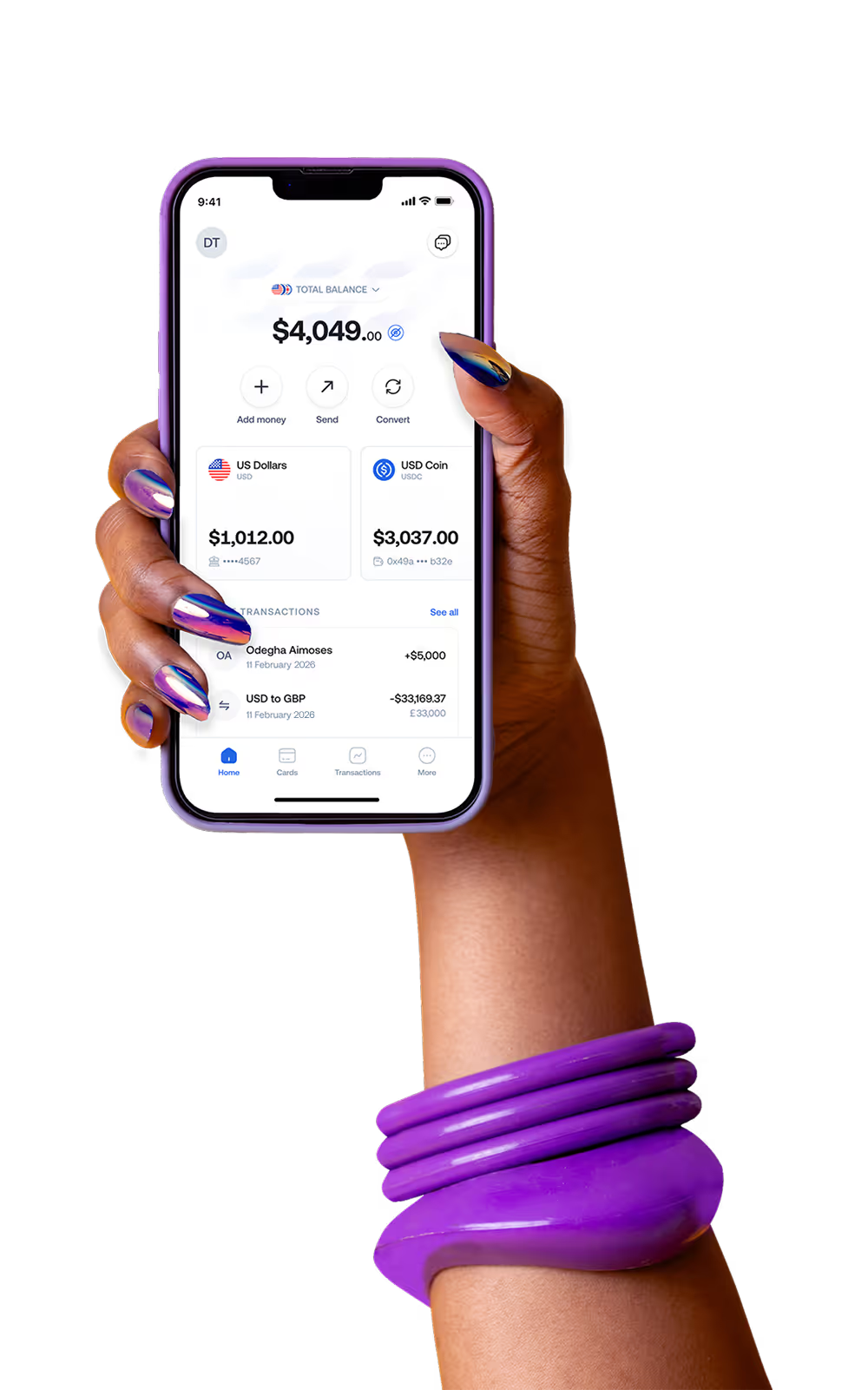
Get digital banking
at your fingertips