



Foreign transaction fees: how to avoid paying extra
Let’s say you land in Tokyo, check into your hotel, decide to grab dinner, and then pay with your card. Nothing feels unusual. Well, until your bank statement arrives, and every single transaction has a small percentage added on. That’s a foreign transaction fee, and over a two-week trip with daily card spending, it quietly adds up to a meaningful sum.
The good news is that foreign transaction fees are avoidable. They’re not a fixed cost of travelling, rather a result of using the wrong card or making the wrong choice at the payment terminal. This guide explains what foreign transaction fees are, how to avoid them, and what to look for in a card that won’t charge you for spending in another country.
What is a foreign transaction fee?
A foreign transaction fee is a charge your bank or card issuer applies when you complete a transaction in a foreign currency, or when a transaction is processed through a foreign bank, even if you’re physically in your home country. According to the Consumer Financial Protection Bureau, foreign transaction fees typically range from 1% to 3% of the purchase amount.
The fee is not charged by the card networks but by the bank or financial institution that issued your card. Two people with Visa cards from different banks can make the same purchase abroad: one pays a foreign transaction fee, and the other doesn’t, depending purely on what their card issuer charges.
Foreign transaction fees apply in several situations:
- Purchasing something in a foreign currency while travelling abroad
- Shopping on an international website that processes payments in a foreign currency
- Making a purchase at a foreign merchant, even if the amount is displayed in your home currency
The fee is typically a percentage of the total transaction value, deducted automatically, so it usually won’t appear as a separate line item at the payment terminal. It shows up later, on your statement, alongside dozens of other charges. Most people don’t notice it until they add everything up.
How to avoid foreign transaction fees
Avoiding foreign transaction fees doesn’t require complicated financial planning. You just need to know which tools to use before you travel.
Use a card with no foreign transaction fee: This is the most straightforward solution. Many travel-oriented cards, premium cards, and digital banking accounts charge zero foreign transaction fees as standard. If your current card charges a foreign transaction fee, switching to one that doesn’t is the single most effective change you can make.
Always pay in the local currency: When you use your card abroad, the payment terminal may offer to charge you in your home currency instead of the local one. Always decline this. It’s called dynamic currency conversion, and it typically adds a significant surcharge on top of whatever fees your card already charges. Paying in local currency means your bank or card issuer handles the conversion, which is almost always cheaper than the merchant doing it.
Withdraw cash strategically at ATMs: If you need cash in local currency, withdraw larger amounts less frequently rather than making multiple small withdrawals. Many cards charge a flat fee per ATM withdrawal abroad, so fewer withdrawals at larger amounts reduce the fixed cost per transaction. Check whether your card has ATM withdrawal fees and whether there’s a network of fee-free ATMs available in your destination.
Use a multi-currency account for extended travel: If you’re travelling for weeks or months, or visiting multiple countries, a multi-currency account lets you hold balances in several currencies and spend from the relevant one without triggering conversion fees. You convert when the rate suits you, not at the moment of every transaction.
Tell your bank you’re travelling: This doesn’t avoid foreign transaction fees, but it prevents your card from being blocked for suspected fraud when you use it abroad, which is a separate problem that costs time rather than money.
Cards with no foreign transaction fee
Not every card charges foreign transaction fees. Knowing which categories typically waive them helps you choose the right one before your next trip.
Travel rewards cards: These are specifically designed for frequent travellers and almost universally offer no foreign transaction fees as a baseline feature. They often include additional travel benefits, such as airport lounge access, travel insurance, and points on international spending.
Premium cards: You’ll usually find these at the higher tier of a bank’s product range, typically waive foreign transaction fees alongside other premium features. The trade-off is usually a higher annual fee.
Digital banking accounts and fintech platforms: Many of these have made no foreign transaction fees a standard feature rather than a premium one. Many digital-first accounts charge zero foreign transaction fees on all purchases, offer competitive exchange rates, and provide virtual cards for secure online spending. This combination makes them meaningfully cheaper than traditional cards, even when the traditional card also claims no foreign transaction fee but still applies an exchange rate markup.
What to look for when comparing cards:
- Zero foreign transaction fee explicitly stated in the terms, not just a low fee
- Exchange rate used for currency conversion: mid-market is better than a proprietary rate with a margin built in
- ATM withdrawal fees abroad, and whether there’s a monthly free allowance
- Whether the card is virtual, physical, or both
- Fraud protection and the ability to freeze the card instantly if needed
Read the terms carefully. A card that advertises no foreign transaction fee can still apply an exchange rate margin that costs you 1 to 2% on every conversion. The total cost of spending abroad is the fee plus the rate margin, not just one or the other.
Best travel cards with no foreign fees
The best travel card for spending abroad has several features working together, not just one. Here’s what to look for.
Zero foreign transaction fee: This is the baseline. Any card you use regularly abroad should have this as a confirmed feature, not something to check each time.
Mid-market or near-mid-market exchange rate: The exchange rate is where many cards recoup costs even when they advertise no foreign transaction fee. A card that charges 0% in fees but applies a 2.5% margin to the exchange rate costs you 2.5% on every transaction. The closest rate to the interbank mid-market rate is always better.
No or low ATM withdrawal fees: If you’ll need cash, check the ATM fee structure. Some cards charge a flat fee per withdrawal, others charge a percentage, and some offer a monthly allowance of free withdrawals before fees kick in.
Instant freeze and fraud protection: If your card is lost or compromised while you’re abroad, the ability to freeze it instantly from an app is a practical necessity. Physical cards take days to replace. A virtual card can be frozen in seconds, and a replacement can be issued without waiting for the post.
Multiple currencies in one account: For travellers visiting more than one country, a card linked to a multi-currency account means you’re spending from the right currency balance in each country, avoiding conversion entirely where you’ve pre-loaded the local currency.
The Grey virtual debit card covers all of these. Grey charges no foreign transaction fee on purchases made in the card’s base currency, applies a conversion fee of 1% capped at $6 for currency conversions, and gives you a virtual USD card you can get the Grey virtual debit card and add to Apple Pay or Google Pay in minutes. Grey accounts hold USD, GBP, EUR, and other currencies, allowing you to convert and spend from whichever balance you need.
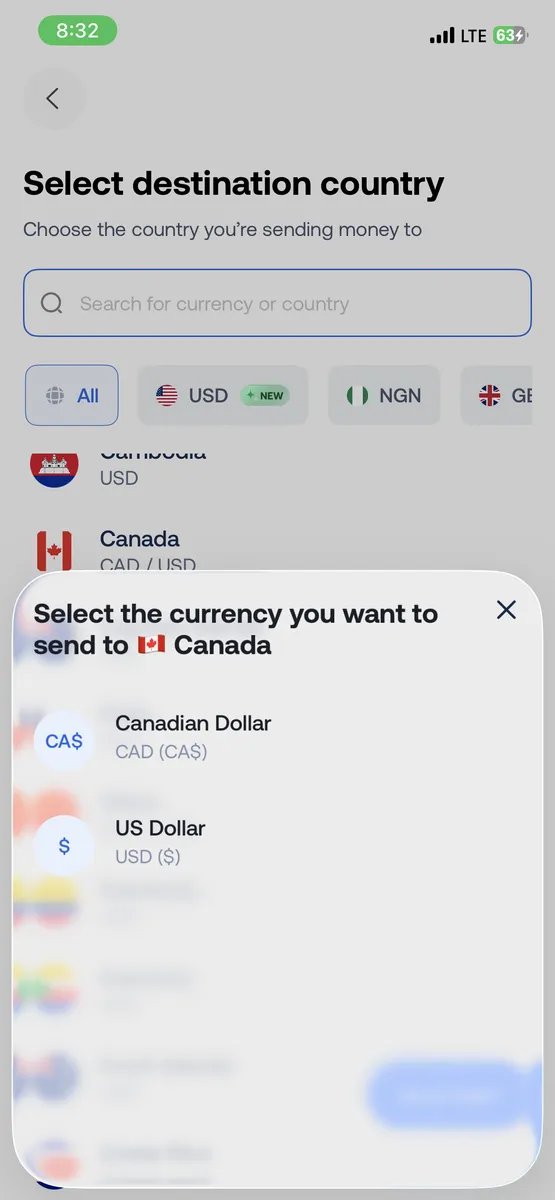
The cross-border card fee on the Grey virtual card (non-USD purchases on a USD card) is 2% plus $0.50. For travellers who pre-convert to the local currency within Grey before spending, this fee is avoidable entirely.
Dynamic currency conversion: the hidden fee
Dynamic currency conversion (DCC) is the practice where a foreign merchant or ATM offers to convert your transaction into your home currency at the point of sale, rather than charging you in the local currency. It sounds convenient, but it’s more expensive.
Here’s how it works in practice. You’re in Paris, paying €80 for a meal. The card reader asks whether you’d like to pay in euros or in US dollars. If you choose dollars, the merchant’s payment provider handles the conversion, typically at a rate that includes a 5% to 10% margin above the mid-market rate. If you choose euros, your card issuer handles the conversion, almost always at a better rate.
A concrete example: €80 at the mid-market rate on a given day might be $87.20. The same transaction processed via DCC might show as $91.50 or higher, with the merchant’s payment provider keeping the difference. On a single transaction, this is a few dollars. Across ten days of dining, hotels, and activities, it adds up to a meaningful amount paid for no service.
The way to avoid DCC is to always choose to pay in the local currency when given the option. If a card reader asks whether you want to pay in your home currency, decline. If an ATM offers to convert your withdrawal to your home currency, decline. For more details on how card network exchange rates work, see our guide on how Mastercard exchange rates work.
Some merchants apply DCC automatically without asking. In that case, ask to redo the transaction in local currency or dispute the DCC charge with your bank after the fact if the margin applied was excessive.
How to use a multi-currency account when travelling
A multi-currency account improves the travel payment experience in practical ways. Instead of converting every transaction at the point of sale, you convert in advance at a rate you can see and confirm, then spend from the converted balance without any further conversion cost.
For example, before travelling to Japan, you convert $500 to JPY in your multi-currency account at the current mid-market rate, with a transparent conversion fee. For the rest of your trip, every yen you spend comes from that balance.
If you’re travelling to multiple countries, you hold balances in each currency and spend from whichever one applies. Euros in France, pounds in the UK, dirhams in Morocco. Each balance is pre-converted at a rate you confirmed before travel.
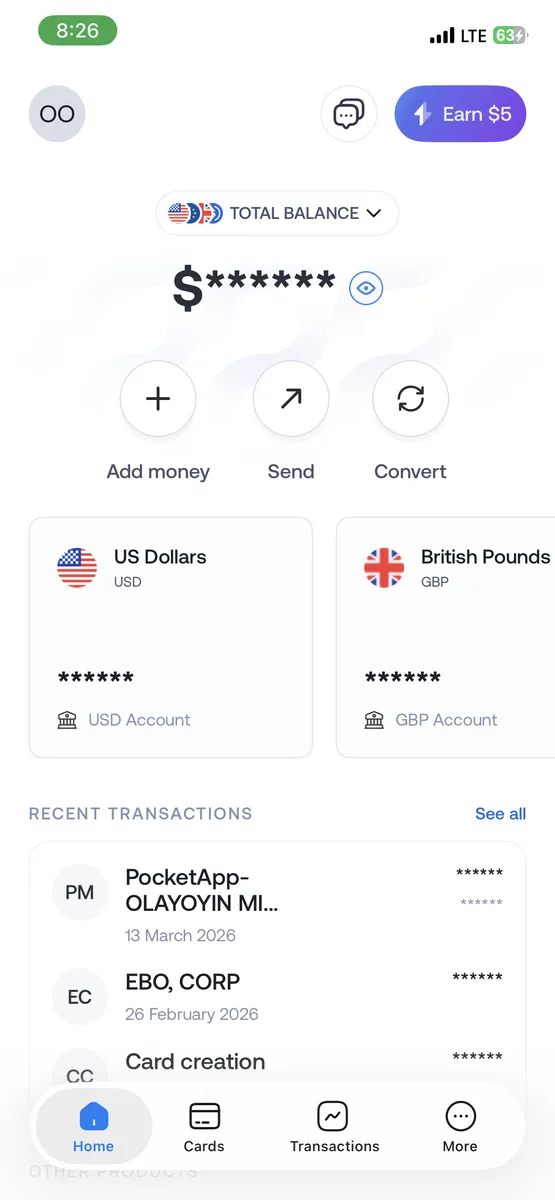
Grey lets you hold and convert multiple currencies from one account. You can convert currencies at mid-market rates with Grey and load the converted balance to your Grey virtual card before you travel.
For travellers who earn in one currency and spend in another, such as a remote worker earning USD who spends in EUR, GBP, or NGN while travelling, Grey removes the double conversion problem: converting from USD to local currency at your bank’s rate every time you make a purchase, twice each time, once in and once out.
Frequently asked questions
What is the average foreign transaction fee?
The typical foreign transaction fee charged by traditional banks and card issuers ranges from 1% to 3% of the transaction value. According to the Consumer Financial Protection Bureau, 3% is the most common fee rate among US-issued cards that charge it. On $3,000 in travel spending, a 3% foreign transaction fee costs $90 before any exchange rate margin is applied.
Do all cards charge foreign transaction fees?
No. Many travel-oriented cards, premium cards, and digital banking accounts charge zero foreign transaction fees. The fee is set by the card issuer, not by Visa or Mastercard. Whether your card charges a foreign transaction fee is stated in your card’s terms and conditions, usually in the fees section. If it’s not clearly stated as zero, check before travelling.
Does using a debit card abroad avoid foreign transaction fees?
Not automatically. Whether a debit card charges foreign transaction fees depends on the issuing bank, not the card type. A debit card from a traditional bank can charge the same 1% to 3% as a traditional card. A debit card from a digital banking platform like Grey may charge zero. The card type (debit versus card) matters less than the issuer’s fee policy.
What is dynamic currency conversion, and how do I avoid it?
Dynamic currency conversion (DCC) is when a foreign merchant or ATM offers to charge you in your home currency rather than the local currency. It typically adds 5% to 10% to the effective cost of the transaction because the merchant’s payment provider sets the conversion rate, almost always worse than your card issuer’s rate. Avoid it by always choosing to pay in the local currency when given the option. If a payment terminal asks whether you want to pay in your home currency, decline.
Is it cheaper to pay in cash or by card abroad?
It depends on how you obtain the cash and which card you’re comparing. Withdrawing cash from an ATM abroad with a card that charges withdrawal fees and a poor exchange rate can be more expensive than paying by card with no foreign transaction fee. Conversely, a card with a high foreign transaction fee can make cash, obtained at a fair exchange rate, cheaper. The answer depends on your specific card’s fee structure. A card with no foreign transaction fee, a mid-market exchange rate, and no ATM withdrawal fees is typically the cheapest way to access money abroad, whether for card or cash spending.
Does Grey charge foreign transaction fees?
Grey does not charge a foreign transaction fee on purchases made in the card’s base currency (USD for the Grey virtual USD card). A cross-border card fee of 2% plus $0.50 applies to non-USD purchases made on the USD card. To avoid this fee when spending in non-USD currencies abroad, convert the amount you need to the local currency within your Grey account before travelling and spend from that converted balance.
.svg)