


When you receive money through PayPal, Venmo, or other payment apps, those platforms may report certain transactions to the IRS. They do this using a tax document called Form 1099-K. This form helps the IRS keep track of payments made through digital platforms, particularly when people use them to sell products or provide services.
A Form 1099-K, also known as a Payment Card and Third Party Network Transactions form, reports payments you receive through payment apps, online marketplaces, and other third-party payment processors. If your transactions meet the applicable reporting requirements, the platform may send a copy of the form to you and the IRS. The amount shown on the form generally represents the total payments processed, not necessarily your profit or taxable income.
Receiving this form does not automatically mean you owe taxes on all the money reported. The tax treatment depends on why you received the money. For example, payments for products you sell or services you provide may be taxable, while personal gifts and reimbursements generally are not. Understanding how Form 1099-K works, including the reporting requirements, can help you identify taxable payments, avoid reporting errors, and prepare your tax return correctly.
What is a 1099-K form?
A 1099-K form is an IRS tax document that reports the gross payments you receive for goods or services through payment cards and third-party payment networks. It helps the IRS track digital transactions and gives you a record of payments processed through online platforms.
For example, imagine you run an online store, offer freelance services, or sell handmade products through a marketplace. Customers pay you using PayPal, Venmo, Cash App, eBay, or Etsy. These platforms record your transactions and may issue you a 1099-K when your payments meet the applicable reporting requirements.
Who issues a 1099-K form?
Payment settlement entities (PSEs) are responsible for issuing Form 1099-K to eligible recipients and submitting a copy to the IRS. These include payment card processors and third-party settlement organisations (TPSOs) that facilitate transactions between buyers and sellers. If you're unfamiliar with how these tax documents work, understanding what a Form 1099 is can help you see where Form 1099-K fits into the wider tax reporting process.
Why does the 1099-K form exist?
The main purpose of Form 1099-K is to improve tax reporting accuracy and help the IRS track payments made through digital platforms. It allows the agency to compare payment records with the income you report on your tax return.
However, receiving a 1099-K does not automatically mean the entire amount shown is taxable income. Personal gifts, reimbursements, and other non-income transactions may receive different tax treatment
What are the 1099-K reporting thresholds?
The 1099-K reporting threshold is the minimum payment amount and transaction count that trigger a payment platform's federal reporting requirement. These limits have changed over the years, so the tax year matters when determining whether you should receive the form.
How the 1099-K threshold has changed by tax year
As of November 17, 2026, the federal reporting rules for third-party payment apps and online marketplaces are:
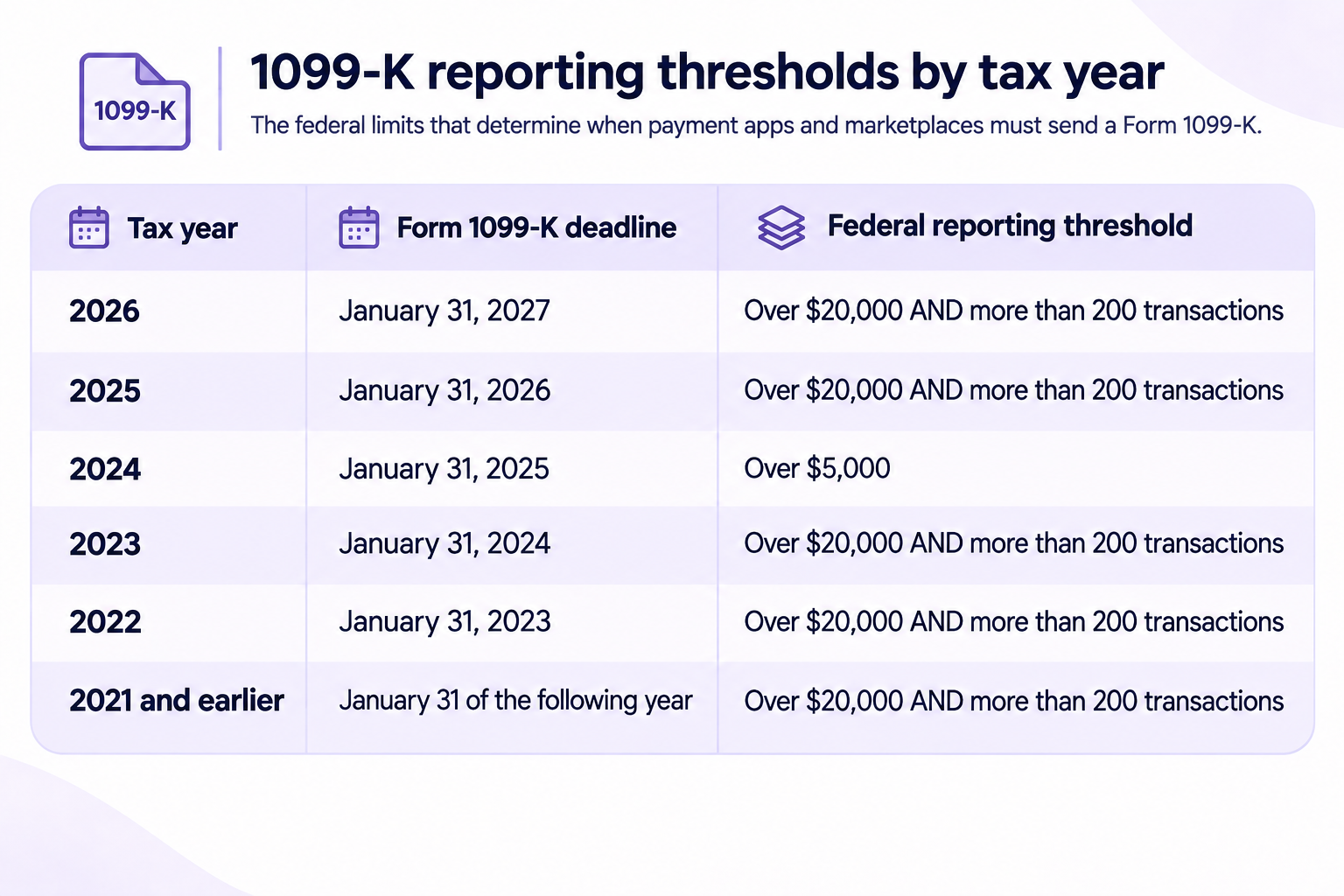
Note: These are federal reporting thresholds for third-party payment network transactions, not thresholds for whether income is taxable.
Does the threshold apply to every payment method?
No. If you accept direct credit or debit card payments for goods or services, your payment processor must report those transactions regardless of the amount or number of payments. The $20,000 and 200-transaction requirements apply to third-party payment networks, such as PayPal and online marketplaces.
Which platforms send a 1099-K?
Form 1099-K is issued by payment settlement entities that process payments you receive for selling goods or providing services. These include payment apps, online marketplaces, gig-economy platforms, and payment card processors. If you use digital payment services, understanding how virtual wallets work can help you understand how money moves between customers, platforms, and sellers.
Payment apps and virtual wallets
Payment apps and virtual wallets allow you to send, receive, and store money electronically. Examples include services that facilitate peer-to-peer transfers and commercial payments. If you accept customer payments through these platforms, you may receive a 1099-K when the applicable reporting requirements are met. However, personal transfers between friends and family are generally treated differently from business payments.
Online marketplaces
Online marketplaces connect buyers and sellers through e-commerce stores, auction websites, and craft platforms. When these marketplaces collect and process payments for your products, they may issue a 1099-K to report qualifying transactions. Whether you sell clothing, electronics, handmade products, or other items, the platform's payment processing arrangement matters.
Gig-economy and service platforms
Rideshare, food delivery, freelance, and ticket-resale platforms may process payments on behalf of independent workers and service providers. If you earn money through these services, a 1099-K may be issued for payments processed through the platform.
Payment card processors
Payment card processors handle credit, debit, and gift card transactions for businesses. Unlike third-party payment networks, card transactions have no federal minimum reporting threshold.
Who gets a 1099-K?
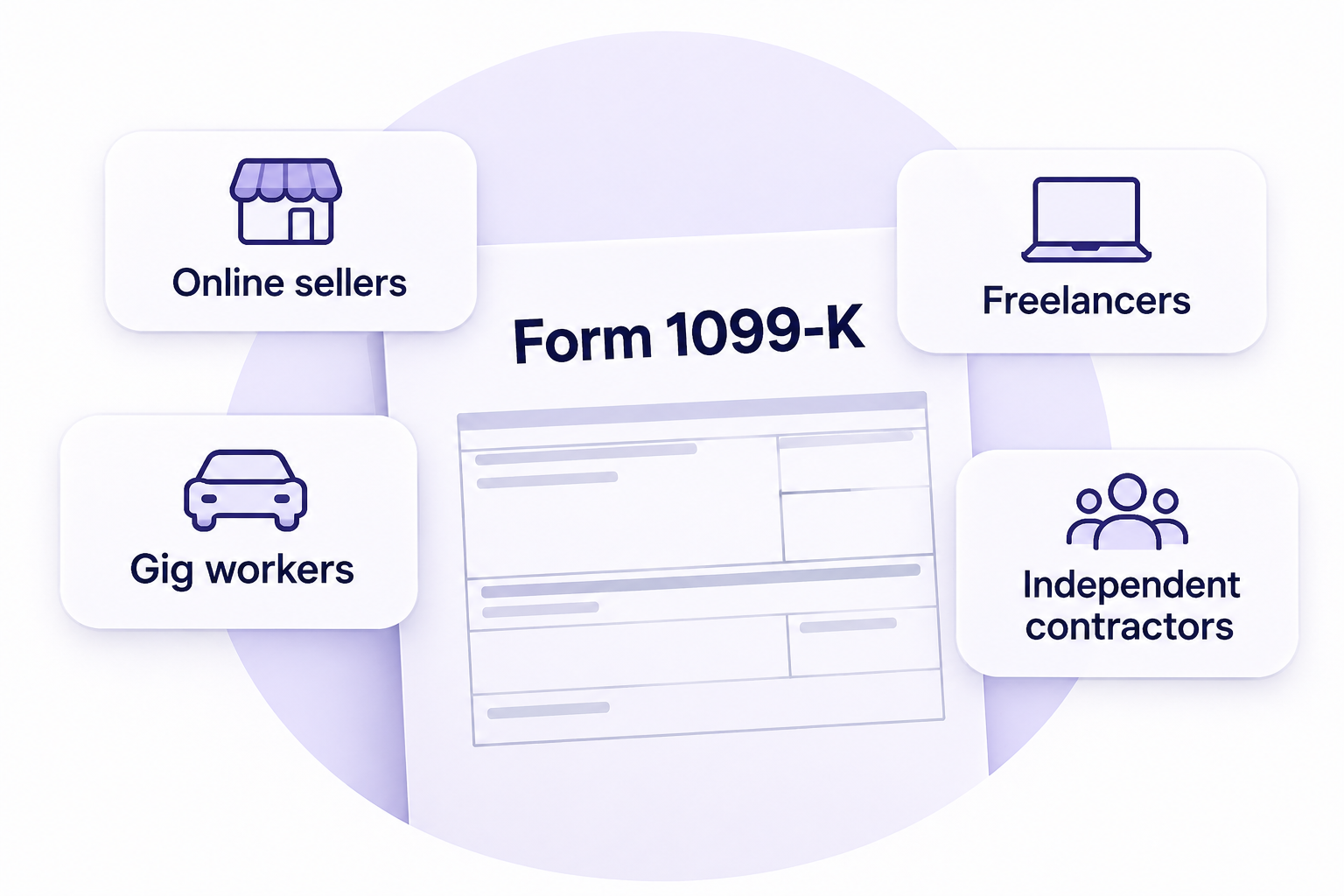
A 1099-K form is generally issued to people and businesses receiving payments for goods or services through payment cards, apps, or online marketplaces. Recipients may include online sellers, gig workers, freelancers, and independent contractors. Whether you receive one depends on how you are paid and the reporting rules. Even without the form, taxable income must be reported.
Sellers, gig workers, and freelancers
If you sell products online, drive for a rideshare service, deliver food, or provide freelance work, you may receive a 1099-K when a platform processes customer payments and reporting requirements are met. Direct card payments can be reported regardless of the amount or transaction count.
Personal payments versus business payments
Not every transfer through a payment app is business income. Payments for goods or services may be reportable, while personal gifts and reimbursements between friends or family are not. Money a friend sends to split dinner differs from a customer paying you for work. Keep personal and business transactions separate, and save records showing what each payment was for
Avoiding double counting with Form 1099-NEC
Form 1099-NEC reports payments made to independent contractors for services, while Form 1099-K covers payments processed through payment cards and third-party networks. Understanding what Form 1099-NEC reports and who receives it helps you distinguish between the two documents and identify potential overlaps. If a payment appears on both forms, compare the amounts with your invoices, payment platform statements, and other business records. This helps you avoid reporting the same income twice when preparing your tax return.
Receiving platform income efficiently
If you earn money through international marketplaces, freelance platforms, or overseas clients, how you receive and manage your earnings matters. Grey makes this easier by providing USD account options that allow eligible users to receive and manage international payments. Instead of converting every dollar immediately, you can hold your funds in USD and decide when to exchange them based on your needs and available exchange rates.
With Grey, you can open a USD account to receive eligible payments from international clients and platforms. This gives you more flexibility when managing your earnings, particularly if you regularly work with customers or businesses abroad. And when you need to send your money elsewhere, you can move money across borders using Grey's available international transfer services.
Whether you're a freelancer, online seller, or independent professional, having access to a USD account can simplify how you receive, hold, and manage your income. Rather than worrying about immediate currency conversion, you have more control over when and how you access your earnings.
Frequently asked questions about the Form 1099-K
What is a 1099-K used for?
Form 1099-K is an information return showing gross payments you received for goods or services through payment cards, payment apps, or online marketplaces. The payment processor sends a copy to you and the IRS. Use it alongside your own records to work out what income, gains, fees, refunds, and expenses belong on your tax return.
What is the 1099-K threshold this year?
For the 2026 tax year, federal rules generally require third-party settlement organisations to report when your gross payments for goods or services exceed $20,000, and you have more than 200 transactions. Both conditions must be met for each calendar year. Payment-card transactions have no minimum federal threshold, and some states require reporting at lower amounts.
Will I get a 1099-K from PayPal?
PayPal may send you Form 1099-K if your 2026 payments for goods and services exceed $20,000 and involve more than 200 transactions during that year. Both federal conditions apply, although state rules may require reporting at a lower threshold. PayPal may also issue a form below the federal threshold. Personal transfers generally are not reportable.
Is a 1099-K taxable?
No. Form 1099-K reports gross payments, not your taxable profit. For business income, you generally calculate taxable profit after allowable business expenses. If you sell a personal item, a gain may be taxable, while a loss is generally not deductible. Gifts and reimbursements for shared personal costs are not taxable income under federal tax rules.
What if my 1099-K includes personal payments?
First, contact the payment platform or form issuer and request a corrected 1099-K. If it cannot provide one, the IRS says you can still file and zero out the error on Schedule 1 of Form 1040: report it on line 8z and offset it on line 24z. Keep supporting records and correspondence for your files.
Do I have to report income if I don't receive a 1099-K?
Yes. The 1099-K threshold determines when a platform must send an information form; it does not determine whether income is taxable. You must report taxable income even if you receive no 1099-K. Keep records of cash, card, app, and marketplace payments, along with fees, refunds, expenses, and purchase costs, for accurate tax reporting each year.