Send money from Ethiopia to South Africa and pay rand into a local bank account
Ethiopian firms and professionals paid in US dollars use this corridor to pay South African suppliers, contractors and universities. The dollars are held in a Grey USD account and converted into rand at the moment of sending, then paid into an account using its number and branch code. The rand figure you approved is the rand figure credited, with nothing deducted at the South African end.
ETB
ZAR


-

Trusted by 3M+ people around the world

GOOGLE PLAY •22K REVIEWS

APP STORE • 12K REVIEWS
How dollars held in Ethiopia become rand in South Africa
Dollar earners in Ethiopia are the senders on this corridor. Consultants, developers and designers in Addis Ababa who invoice clients abroad pay South African collaborators and subcontractors, while trading and services companies settle suppliers, logistics firms and agencies in Johannesburg, Cape Town and Durban. Families with a student at a South African university meet tuition and residence costs from the same dollar income.
Each payment is funded in dollars you already hold. Lead Bank provides the Grey USD account, which carries US routing and account numbers, so clients, employers and platforms abroad can deposit dollars into it directly. Rand is bought out of that balance at the point you decide to send and not before.
The South African side is ordinary local banking. FNB, Standard Bank, Absa, Nedbank and Capitec all receive rand, and the payment needs the account number together with the branch code. Both go into the Grey app the first time; save the recipient and a later payment is a short repeat rather than a re-entry of details.
How to send money to South Africa from Ethiopia

Sign up
Create a Grey account from your phone and complete verification with a passport or another accepted photo identity document. Grey Inc is registered with FinCEN, registered address 651 N Broad St, Suite 206, Middletown, DE 19709, United States.

Fund
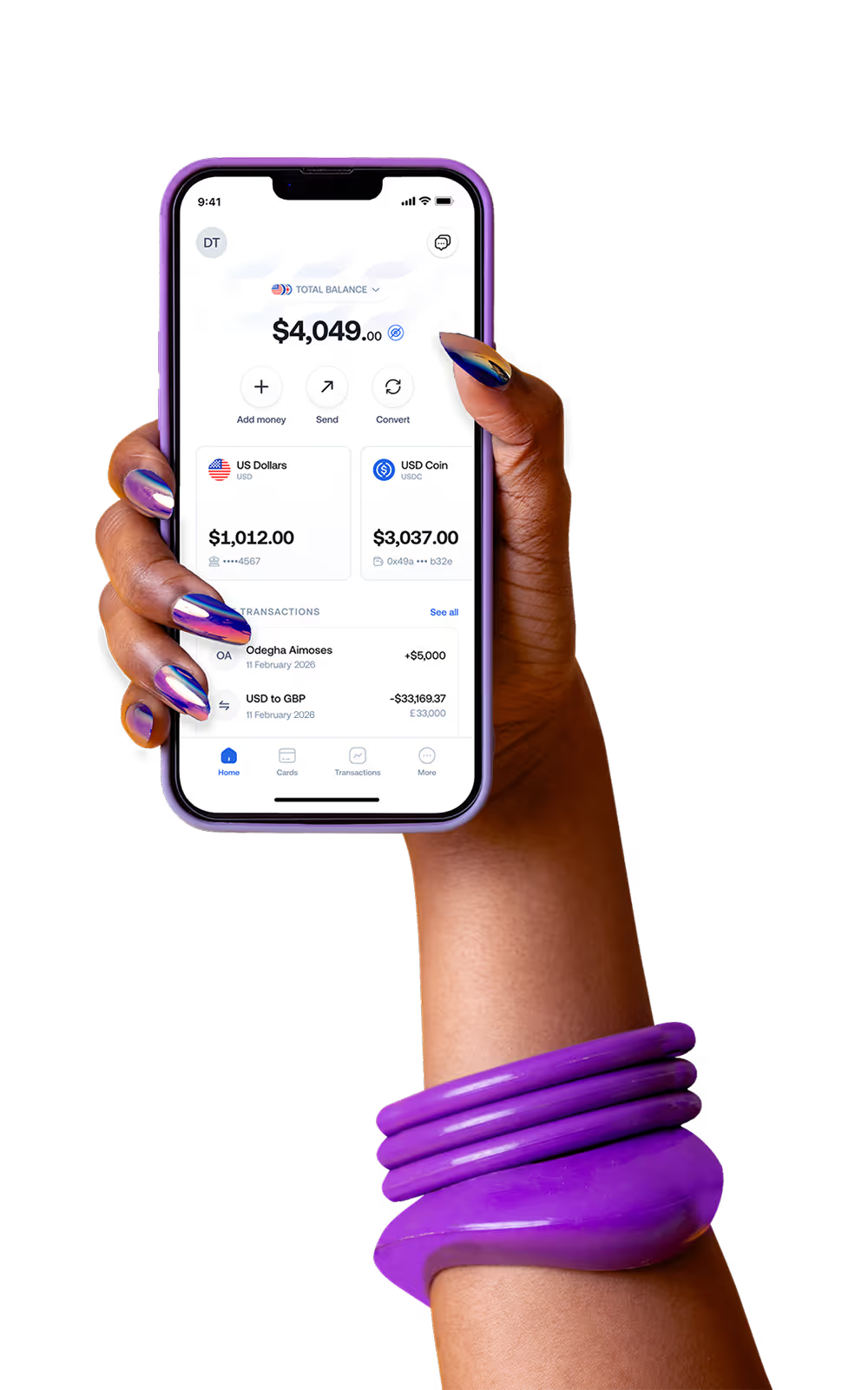
US routing and account numbers come with the Grey USD account provided by Lead Bank. Hand them to clients or an employer abroad, or wire dollars in from a dollar account at another bank. Rand is bought from the dollars sitting in that balance.

Send
Name the South African bank, then enter the account number and the branch code. The rand amount, the rate and the fee appear on the confirmation screen together, and the rate is fixed as soon as you confirm.
What it costs to send money from Ethiopia to South Africa
Every rand transfer is priced twice over, and only the fee is announced. The second charge lives inside the exchange rate, as the gap between the rate given to you and the rate being traded. It is why a transfer promoted as free can deliver fewer rand than one with a plain fee attached.
Compare on the rand figure. Put the same dollar amount into Grey and into Wise, Remitly or whichever provider you are weighing, and read what each guarantees to credit in South Africa. Fee and margin are already accounted for in that number.
A correspondent bank wire cannot produce that number. Banks in the middle may each take a deduction, so the credit that lands in Johannesburg can be less than the sum agreed at the outset. Grey quotes the rand amount beforehand and credits it in full.
On repeating payments the difference stacks up. A company paying the same South African suppliers monthly, or a parent paying university costs each term, meets that margin at every single payment date.

How the US dollar to rand rate works

Your rate is set at confirmation and does not move afterwards. Whatever the dollar to rand market does next, the rand figure you approved is the figure your supplier or your child's university receives.
There is only one conversion on this route. The money begins as dollars, so nothing is converted into dollars first and only one margin is applied to the payment.
The moment of conversion is yours to pick. Dollars in Grey stay in dollars until you buy rand with them, so a payment with a flexible date can wait for a rate you are happier with.


Grey alongside an ordinary bank wire to South Africa
An international wire into South Africa is relayed through correspondent banks, each applying its own cut-off times and working calendar, and each able to deduct charges once the instruction has left you. Grey hands the final leg to South African banks, so the money posts as a rand credit to an ordinary account rather than an inbound foreign payment somebody has to query.
The practical gain is control over the figures. The rand total is agreed before the transfer leaves, the recipient can be saved for next month, and the position of the payment sits in the app instead of behind a phone call to a branch.
What your recipient in South Africa sees
Rand goes into the bank account your recipient already uses. They register nothing with Grey and there is nothing to collect in person.
Payouts to South African banks
Rand payouts reach FNB, Standard Bank, Absa, Nedbank and Capitec alike. Enter the account number together with the branch code in the Grey app, both of them the first time and saved for the next payment.

How the money lands
The payment posts as a rand credit in an ordinary local account. The figure you approved is the figure credited, with nothing taken off at the South African end, so your supplier or the university sees the full amount.

GreyTag
If your recipient uses Grey as well, pay their GreyTag instead. Transfers between Grey users are instant, carry no fee and can be sent in any currency Grey holds.
How to fund a transfer to South Africa
Rand is purchased with dollars already held in Grey, so funding comes before sending. The route you use to bring dollars in therefore sets the earliest date a South African payment can be made.
Invoice payments from abroad
Give out the Grey USD details once and every payment afterwards arrives in Grey by itself, with nothing to arrange at the time.
Dollar wire in
Use the routing and account numbers in the app to wire dollars across from another bank holding a dollar account in your name.
Balance already held
Dollars in the app convert with no waiting, so the rand leaves the moment the figures have been read and accepted.

Businesses on this corridor commonly keep a dollar float rather than funding each invoice separately. South African payment dates seldom match the day a client settles, and dollars held in advance take that pressure out of the month end.

Who sends money from Ethiopia to South Africa
Freelancers and remote workers
Developers, designers and consultants in Addis Ababa and regional cities who invoice abroad in dollars and pay South African collaborators from the same balance.
Businesses and agencies
Ethiopian firms paying South African suppliers, logistics companies, agencies and contractors, often several accounts on the same day each month.
Professionals on a foreign payroll
People living in Ethiopia but employed by a company abroad in dollars, sending part of that pay to South Africa.
Families meeting university costs
Households paying tuition, residence fees and monthly costs for a relative at a South African university, funded from dollar earnings.
This corridor is carried by dollar earners in Ethiopia. Freelancers and remote workers lead it, followed by companies paying South African suppliers, professionals on a foreign payroll, and families meeting university costs.
The best way to send money from Ethiopia to South Africa



FAQs
How much does it cost to send money from Ethiopia to South Africa?

The rate, the fee and the rand total are shown before you confirm. Compare the rand figure rather than the headline fee.
What details do I need to pay a South African account?
The account number and the branch code, both entered in the Grey app the first time and saved afterwards.
Which South African banks can Grey pay?
FNB, Standard Bank, Absa, Nedbank and Capitec all receive rand payouts into ordinary local accounts.
Does anything get deducted at the South African end?
No. The rand figure you approved is the figure credited, so your supplier or the university receives the full amount.
Is there a limit on how much I can send?
Limits attached to your account are displayed in the app before confirmation, so they are visible while you are sending.
Can I track a payment to South Africa?
Yes. Every transfer carries a status in the Grey app from the moment it is approved until the rand is credited.
Is Grey safe for paying South African suppliers?
Grey Inc is registered with FinCEN in the United States. Transfers are encrypted and each payout can be followed in the app.
What can I fund the transfer with?
US dollars only: client or employer payments into your Grey USD account, a dollar wire from another bank, or an existing balance.
Does my recipient need a Grey account?
No. An ordinary South African bank account is enough, though a GreyTag payment is instant and free where they do use Grey.
Can I keep records of these payments?
Yes. Each transfer stays on record in the app for matching against invoices or fee notices. Grey does not provide tax advice.
What if the branch code is wrong?
Read the account number and branch code back on the confirmation screen first. If a payment leaves wrongly addressed, report it immediately.
Get digital banking
at your fingertips