<script type="application/ld+json" data-schema-version="grey-blog-v4"> [{"@context":"https://schema.org","@type":"BlogPosting","@id":"https://grey.co/blog/new-look-better-grey-a-message-from-idee#article","headline":"New look, better Grey: a message from Idee","description":"Discover everything you need to know about Grey’s rebrand and join us in redefining cross-border payments and building a financial world without borders","inLanguage":"en","url":"https://grey.co/blog/new-look-better-grey-a-message-from-idee","mainEntityOfPage":{"@id":"https://grey.co/blog/new-look-better-grey-a-message-from-idee#webpage"},"datePublished":"2023-11-27T13:25:43.269Z","dateModified":"2026-06-15T19:34:42.820Z","author":{"@type":"Person","@id":"https://grey.co/authors/idorenyin#person","name":"Idee Obong","url":"https://grey.co/authors/idorenyin"},"publisher":{"@type":"Organization","@id":"https://grey.co/#organization","name":"Grey","url":"https://grey.co","logo":{"@type":"ImageObject","url":"https://cdn.prod.website-files.com/6360022338a81bd6fdbb1145/6564ae1077a67e39d3c491a6_Grey%20Logo%20Lockup%20Black.svg"}},"image":{"@type":"ImageObject","@id":"https://grey.co/blog/new-look-better-grey-a-message-from-idee#primaryimage","url":"https://cdn.prod.website-files.com/636a85d290ee58e70c17e1c0/6a301b4bd61be9a66a768e83_6a301b4a78e40e52862cfa1c_new-look-better-grey-a-message-from-idee__header-image.webp","contentUrl":"https://cdn.prod.website-files.com/636a85d290ee58e70c17e1c0/6a301b4bd61be9a66a768e83_6a301b4a78e40e52862cfa1c_new-look-better-grey-a-message-from-idee__header-image.webp","width":1200,"height":675}},{"@context":"https://schema.org","@type":"WebPage","@id":"https://grey.co/blog/new-look-better-grey-a-message-from-idee#webpage","url":"https://grey.co/blog/new-look-better-grey-a-message-from-idee","name":"New look, better Grey: a message from Idee","description":"Discover everything you need to know about Grey’s rebrand and join us in redefining cross-border payments and building a financial world without borders","inLanguage":"en","primaryImageOfPage":{"@id":"https://grey.co/blog/new-look-better-grey-a-message-from-idee#primaryimage"},"breadcrumb":{"@id":"https://grey.co/blog/new-look-better-grey-a-message-from-idee#breadcrumb"}},{"@context":"https://schema.org","@type":"BreadcrumbList","@id":"https://grey.co/blog/new-look-better-grey-a-message-from-idee#breadcrumb","itemListElement":[{"@type":"ListItem","position":1,"name":"Home","item":"https://grey.co/"},{"@type":"ListItem","position":2,"name":"Blog","item":"https://grey.co/blog"},{"@type":"ListItem","position":3,"name":"New look, better Grey: a message from Idee","item":"https://grey.co/blog/new-look-better-grey-a-message-from-idee"}]}] </script>

New look, better Grey: a message from Idee

Idee Obong

TABLE OF CONTENT

SHARE THIS POST

On November 14, 2023, Grey celebrated the milestone achievement of 500,000 users, and we couldn’t have done that without you. Your support has empowered us to improve our products continuously, ensuring we remain at the forefront of global fintech innovation. With our expanding user base, we’re more dedicated than ever to providing you with outstanding user experience across all our platforms.

On this note, I am pleased to officially announce Grey’s rebrand, and I look forward to starting this next chapter with you.

What’s Different?

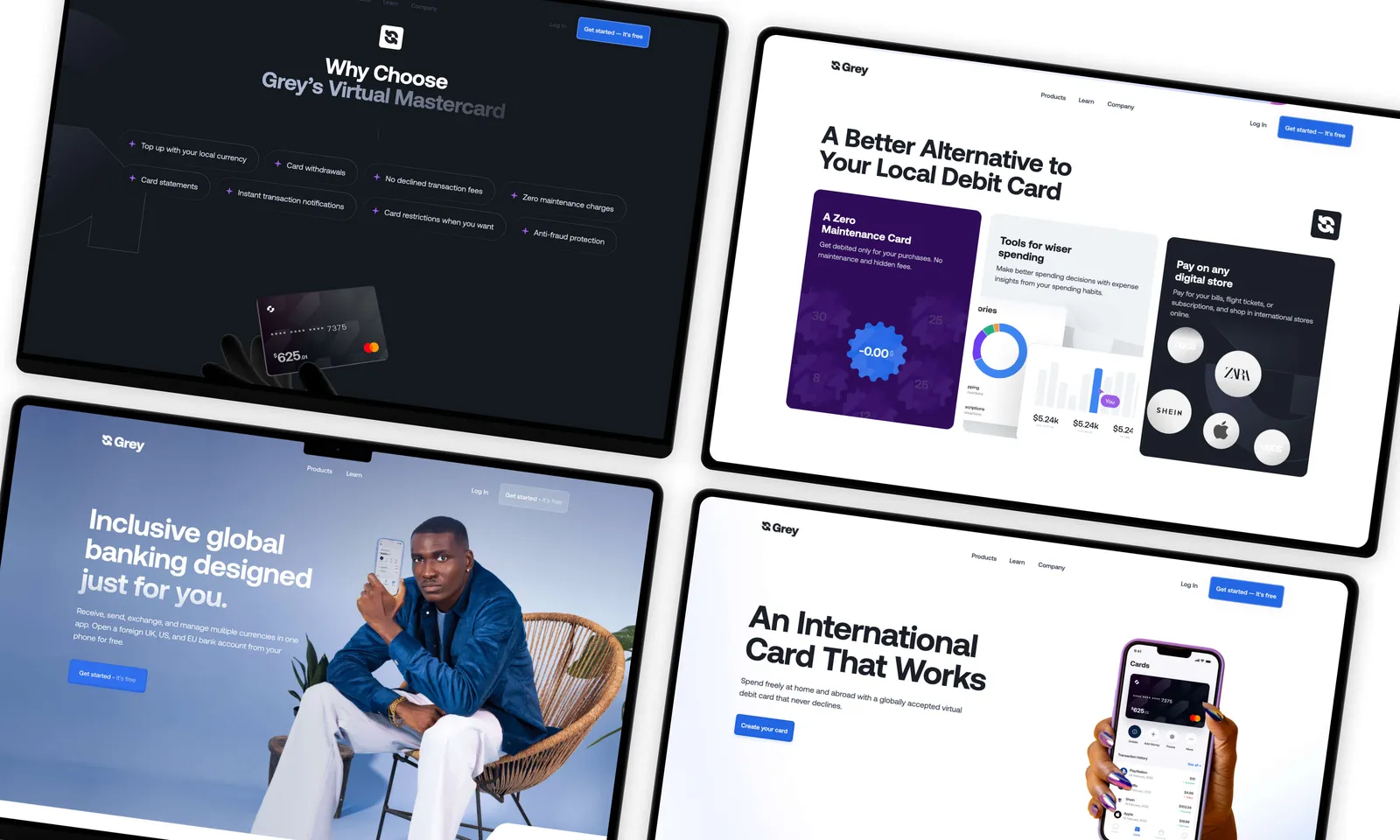
We have a fresh logo and website design that visually represents our commitment to innovation, excellence, and global connectivity.

Grey redesigned website

This rebrand is an important step in our journey towards expanding our footprint in the global market and taking advantage of significant opportunities in the face of present economic uncertainties.

As we continue to grow and evolve, our focus remains on being people-centric by prioritizing the dynamic needs of our users.

We’re also dedicated to cultivating a lasting community that empowers individuals and businesses to thrive and excel with no worries of financial borders.

What’s Next?

Our rebrand isn’t just an aesthetic change but represents our unwavering commitment to redefining the fintech landscape.

Our core mission is to provide seamless and secure cross-border payments to foster global connectivity. Over the past year, we’ve established key partnerships across B2B and B2C sectors across Africa, solidifying our reputation as a trusted and reliable cross-border payment company.

We’ll leverage our new identity to establish our international presence, connect with an even broader audience, and build lasting relationships worldwide.

We ask you to start this new journey with us to create a global village with no financial borders.

‍

‍

Last updated:

October 2, 2026

Open a free Grey account to get startedJoin 1 million digital nomads
IF YOU ENJOYED THIS, CHECK THESE OUT

Grey launches faster rupee payouts for Indians earning globally

•

•

2 min read

Y Combinator backed startup fintech Grey has expanded its services to India, now offering almost instant rupee payouts to serve Indians earning from international sources—from freelancers and entrepreneurs to students and expats sending money home, receiving  support from family and managing cross-border finances.

The product expansion positions Grey, a US-licensed fintech, that serves over 2 million users across 50+ countries, as a major player offering comprehensive global banking services specifically designed for India’s digitally connected workforce, providing instant access to USD, EUR, and GBP accounts alongside local rupee conversions.

India processes over $125 billion in annual remittances, more than any country globally, yet most recipients still wait 3-5 business days and pay 3-7% in hidden fees for international transfers.

“Traditional banks treat international payments like it’s still 1995,” said Idorenyin Obong, Grey’s CEO, who spent time in Bengaluru meeting users “I talked to a freelance designer who was losing ₹15,000 monthly just on conversion fees and delays. That's serious money.”

The timing reflects India's growing global economic integration. The country has the world's largest freelance market with over 15 million freelancers and approximately 3 million remote workers employed by foreign companies. Most still rely on traditional payment methods with multi-day delays, despite having clients primarily based in the US, UK, Australia, Europe, and South America.

Grey's approach differs by providing users with actual US, European, and UK bank account details, allowing international clients to pay as if hiring locally, then instantly converting funds to rupees on the recipient's end.

"We're not just another remittance app," Obong explained. "We're giving Indians the same financial infrastructure that Americans and Europeans have which is instant access to global money."

The launch positions Grey directly against established players in India, a market where cross-border payment companies have struggled with regulatory complexity and local banking partnerships.

Indian users can sign up immediately at grey.co. The service supports payouts from 170+ countries and includes virtual USD debit cards and USDC cryptocurrency deposits and payouts.

About Grey

Grey is at the forefront of providing secure and convenient global banking solutions to meet the needs of customers and businesses. Grey holds a Money Service Business license from FINTRAC in Canada, and FinCEN in the USA, and our primary focus is emerging markets. Our range of services enables individuals and businesses to easily own and manage multi-currency accounts. This includes currency exchange, sending and receiving payments to and from over 170 countries, as well as access to virtual cards.

Media contact

For all press-related inquiries, please contact Oyinda via oyinda@grey.co

‍

How Nigeria is navigating digital currency regulations

•

•

2 min read

Nigeria isn’t new to innovation, especially with money.

It is one of the largest adopters of mobile money in Africa and has a huge crypto community. The enthusiasm has always been there, which has greatly aided the broad acceptance of innovation over the years. As crypto use surged, policymakers moved to keep pace, sometimes with strict regulations and other times stepping aside to allow the industry to grow.

Following the regulators’ changing rules,  where does that leave businesses, freelancers, and everyday users who actually need to move money? I say, somewhere in the middle of a live experiment. The country is trying to protect its financial system while allowing for new rails like stablecoins, tokenised assets, and CBDCs. The result is a system that changes fast, rewards people who stay informed, and increasingly favours solutions that combine innovation with compliance.

We’ll together, trace how Nigeria got here, how the rules are shifting, and what that means for safely getting paid, paying others, and cryptocurrency startups.

A quick look back: Nigeria’s digital currency story

By the late 2010s, crypto adoption was becoming hugely popular. Platforms like Binance, Paxful, and Luno held a huge part of the market share. For young Nigerians, especially freelancers tired of waiting days for foreign payments or watching the naira lose value overnight, digital assets became a faster, more reliable alternative.

By 2021, Nigeria ranked second in the world for crypto adoption. While this might have ordinarily been a good thing, the Central Bank of Nigeria (CBN) was worried about money laundering, tax evasion and threats to monetary stability, so it stepped in hard. It banned banks from facilitating crypto transactions, cutting off many startups and exchanges that relied on traditional financial rails.

Yet, even as the crackdown unfolded, Nigeria pushed forward with its own state-backed experiment. In October 2021, the country launched the eNaira. It was Africa’s first central bank digital currency (CBDC). The goal was to offer a safe, regulated digital alternative that could promote financial inclusion and modernise payments. While uptake has been very slow, it showed that Nigeria wasn’t against digital money. It seemed more like the government wanted to be in total control.

The tug-of-war: innovation vs. regulation

I like to describe Nigeria’s digital currency journey as a tussle between innovation and control. On one side, you have a young, tech-savvy population eager to embrace decentralised finance. On the other hand, cautious regulators are trying to manage risks in an already fragile economy. The result is a constant push and pull that has shaped how Nigerians use digital money today.

  • Crypto bans and restrictions: In 2021, the Central Bank’s ban on banks supporting crypto transactions significantly impacted exchanges and fintech startups. While peer-to-peer trading kept the crypto economy alive, businesses that relied on bank integrations struggled to stay afloat. For many of these businesses, innovation slowed down because of regulatory roadblocks, not a lack of demand.
  • The eNaira experiment: To counter the rise of unregulated digital assets, the government doubled down on its own central bank digital currency. The eNaira was marketed as a safer, government-approved alternative. But despite millions of downloads, adoption has been sluggish. By 2023, less than 1% of Nigerians were active users, a sign that trust and utility are what drive adoption, not availability.
  • Global pressure and local realities: Nigeria’s regulatory stance isn’t just shaped at home. International bodies like the IMF and World Bank have pushed for tighter oversight on digital assets to prevent risks such as capital flight and financial crime. Nigeria, already under economic strain, has had to walk a fine line between encouraging innovation and staying compliant with global standards.

This back-and-forth has created uncertainty for businesses and individuals. However, it has also forced Nigerians to turn to stablecoins, fintech workarounds, and alternative platforms to keep the digital economy alive despite regulatory hurdles.

Also read: Comparing USDC vs SWIFT transfers: What you need to know

Where do things stand today?

By late 2023, it became clear that Nigeria’s hardline stance on crypto wasn’t sustainable. Despite restrictions, trading volumes kept rising, peer-to-peer platforms flourished, and freelancers still turned to stablecoins to get paid. The government had to face reality as a complete clampdown wasn’t working.

The tone began to shift. The Securities and Exchange Commission (SEC) announced it was exploring licensing frameworks for exchanges and fintechs. This signalled a new willingness to move away from blanket bans toward structured regulation. Instead of shutting the door completely, regulators defined how players could legally operate in the space.

At the same time, the Central Bank of Nigeria (CBN) started refining its digital currency policies, aiming to build a more inclusive and controlled financial ecosystem. Some of the key areas of focus included:

  • Cross-border transactions: With remittances forming a significant part of Nigeria’s economy, the CBN began looking at ways digital currencies could make sending and receiving money cheaper and faster.
  • Inclusion of fintech startups: Rather than locking fintechs out, regulators started discussing how startups could plug into Nigeria’s payment infrastructure, bringing innovation back into the fold.
  • Stablecoins and tokenised assets: Recognising the popularity of dollar-backed stablecoins like USDT and USDC, the government has been considering frameworks to regulate their use, creating a safer environment for individuals and businesses.

This doesn’t mean Nigeria has fully embraced digital currencies. Instead, it shows a shift in mindset, from outright resistance to cautious acceptance. Regulators are no longer trying to fight innovation head-on but are instead putting guardrails around it. The aim is to ensure that growth happens within a controlled, secure framework.

For everyday Nigerians, this new phase could mean more reliable payment options, less reliance on risky peer-to-peer trading, and greater confidence that trading digital assets doesn’t leave them operating in a legal grey area.

Also read: How to accept payments in USDC as a digital nomad

Why does this matter for freelancers and businesses?

For many Nigerians, especially freelancers, digital currencies have been essential. When international clients struggled to pay via traditional banking routes, receiving USDT, Bitcoin, or other tokens often became the only practical option. Peer-to-peer (P2P) markets filled the gap, creating a parallel economy where freelancers could swap digital assets for naira. This method, however, left users vulnerable to price volatility, scams, and compliance risks.

Businesses haven’t had it any easier. Startups and SMEs wanting to tap into global markets found themselves in a no-man’s land. Holding or accepting crypto was risky, and many were forced to improvise. Some leaned on stablecoins to shield themselves from naira swings, while others turned to fintech platforms offering USD accounts as safer, more reliable workarounds.

This is why Nigeria’s stance matters. With more straightforward rules and proper standards, freelancers and businesses stand to gain a lot.

  • More reliable on- and off-ramps: Easier, safer movement between crypto and naira without depending solely on unregulated P2P trades.
  • Wider adoption of stable, regulated digital currencies: Giving businesses and individuals a secure way to transact without being exposed to wild market swings.
  • Reduced reliance on risky workarounds: With licensed exchanges and fintech integrations, the payment process could become smoother, faster, and more transparent.

In short, what’s at stake is financial confidence. For freelancers, that means getting paid without fear of losing value or falling victim to fraud. For businesses, it means expanding globally with fewer compliance headaches and more predictable cash flow.

What the future might look like

Nigeria is in an interesting place right now. The crypto community is creative, resilient, deeply embedded in the country’s digital economy and shows no signs of slowing down. At the same time, regulators are beginning to acknowledge that outright bans haven’t worked, and that structured, transparent systems are the only sustainable path forward. The result is a future that’s likely to blend innovation with oversight.

Here’s what to expect:

  • Stablecoins become more popular: USD-backed stablecoins like USDC could become the sweet spot, offering the stability of the dollar, the efficiency of blockchain, and enough regulatory flexibility to gain mainstream acceptance.
  • Clearer rules for fintechs: Licensing, compliance requirements, and regulatory sandboxes may allow startups and platforms to operate more confidently, sparking new payment solutions without fear of abrupt policy reversals.
  • Hybrid financial systems: Depending on the context, Nigerians may use a mix of eNaira, stablecoins, and cross-border accounts instead of one dominant solution.

This balancing act between innovation and regulation could position Nigeria as a regional leader in digital finance. This change won’t happen by rejecting crypto, but by integrating it into a safer, more inclusive financial ecosystem.

Also read: Bank transfers vs. crypto transfers: which is safer for international payments?

Where do you go from here?

The key takeaway for freelancers, entrepreneurs, and businesses is adaptability. Payment systems will keep evolving through CBDCs like the eNaira, globally trusted stablecoins, or flexible multi-currency accounts. Those who stay open, informed, and ready to pivot will be best placed to thrive in this shifting landscape.

At its core, the future of money in Nigeria is one where trust, accessibility, and opportunity are the major guiding principles.

These principles also guide us at Grey. That’s why we’re giving you access to borderless accounts and payment tools designed to help you confidently navigate your finances. Create your free Grey account today or download the app to experience a smarter way to move money.

‍

Remote work by the numbers — global trends to watch

•

•

2 min read

Remote work initially gained traction as a pandemic-era experiment that stuck around. It’s now a full-blown global shift, reshaping how we think about work, income, and geography. Multinational companies are going fully remote, and governments are introducing digital nomad visas. The data tells a compelling story: the world of work has changed, and it’s not going back.

In this article, I’ll discuss the key stats and trends shaping remote work’s future across borders. If you’re a freelancer, remote employee, or global business owner, these numbers matter because they affect how you live, earn, save, and spend.

Also read: 10 fun remote jobs that pay surprisingly well (and how to get them!)

1. Remote work is now a global standard, not a perk

Before 2020, remote work was considered a fringe benefit. Now that has changed.

98% of people want to work remotely at least some of the time for the rest of their careers. Companies that resist this shift are only losing talent and largely falling behind.

Countries like the US, UK, Germany, and India are leading in remote job availability. But the rise is just as visible in countries like Nigeria, Brazil, Kenya, and the Philippines, thanks to better internet access and digital platforms.

2. Freelance marketplaces are booming

The freelance economy is thriving. Platforms like Upwork, Fiverr, and Toptal have seen exponential growth in users, with Upwork alone recording over $4.1 billion in freelance billings in 2023.

More importantly, freelancers from emerging economies are tapping into global income streams. India, Pakistan, Bangladesh, Nigeria, and Brazil are among the top 10 fastest-growing freelancer markets globally, with tech, design, writing, and customer support being in-demand niches.

This cross-border freelance movement has also highlighted a pain point: getting paid across currencies without losing income to fees and bad exchange rates.

3. Digital nomadism is going mainstream

Working while travelling is now a lifestyle backed by government policy. More than 50 countries now offer digital nomad visas, including Portugal, Spain, and Indonesia. These visas allow remote workers to live legally abroad while earning from foreign clients or employers.

For global professionals looking to combine travel with a steady income, these programs offer legal clarity and lifestyle flexibility.

Also read: Beginner-friendly remote data entry jobs you can do from anywhere

4. Cross-border payments are becoming essential

As remote workers earn globally, cross-border payments are no longer optional. Yet, traditional banking systems haven’t caught up. Many workers face:

  • Long delays (2–5 days) on international transfers.
  • Poor FX rates and hidden conversion fees.
  • Difficulty receiving in foreign currencies like USD or EUR.

This is why digital financial platforms like Grey have become essential. With Grey, freelancers and remote workers can open international accounts (USD, EUR, GBP) from their home country, receive global payments, convert at competitive rates, and withdraw in their local currency.

5. Remote salaries are becoming more location-flexible

Another big trend? Companies adjust salaries based on geography, but not always in the way you think.

Some are adopting a location-based pay model, offering adjusted rates depending on where you live. Others, especially startups and remote-first companies, offer location-agnostic salaries to attract the best global talent.

Either way, remote workers are in a better negotiating position than ever before and that’s reflected in the data. The average remote salaries in countries like Brazil, Kenya, and the Philippines have risen by 18% since 2022.

Also read: High-paying remote jobs you can land without experience

What this means for you

The remote economy is here to stay and it’s growing fast. The opportunities are global, but so are the challenges, especially when it comes to getting paid, saving across currencies, and navigating life abroad.

With the right tools, you can ride the wave of remote work without worrying about financial friction.Create your Grey account today or download the app to enjoy inclusive global banking designed to carry your dreams across borders.

‍

Send USD to 170+ countries instantly and securely with Grey!

•

•

2 min read

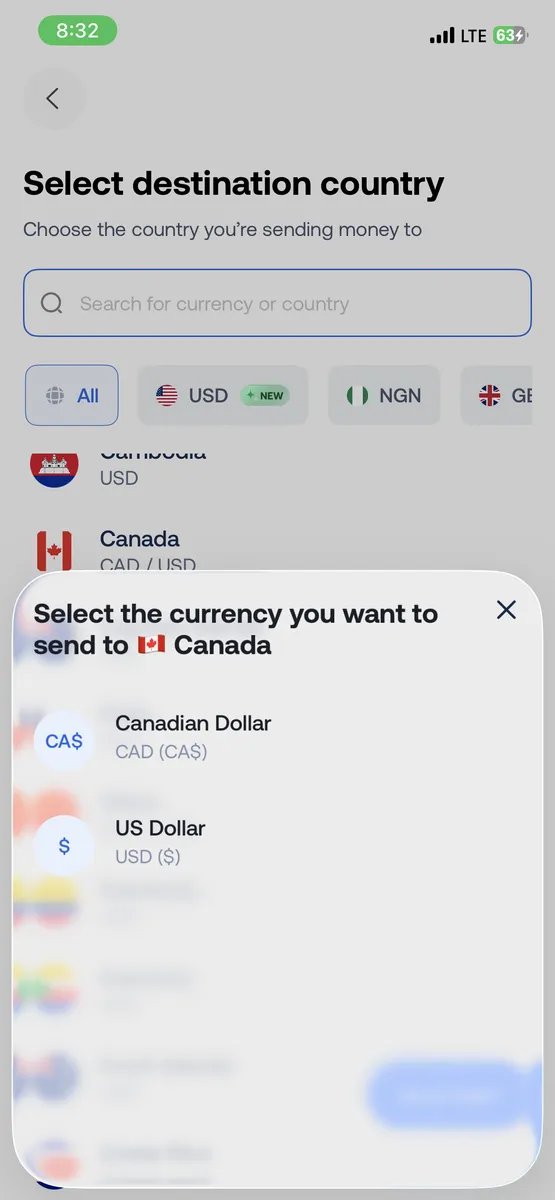
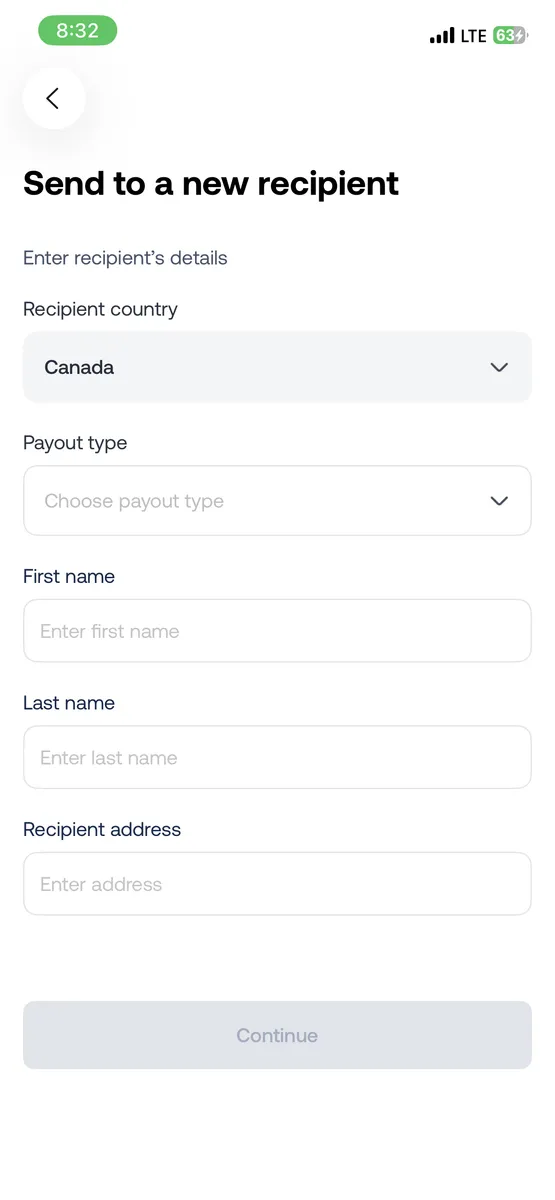
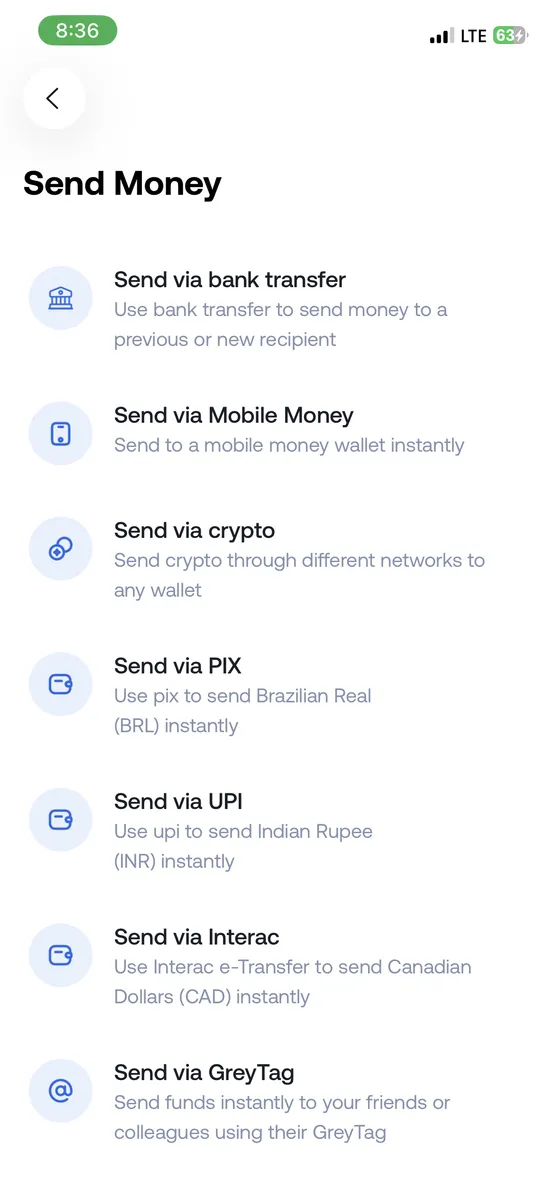
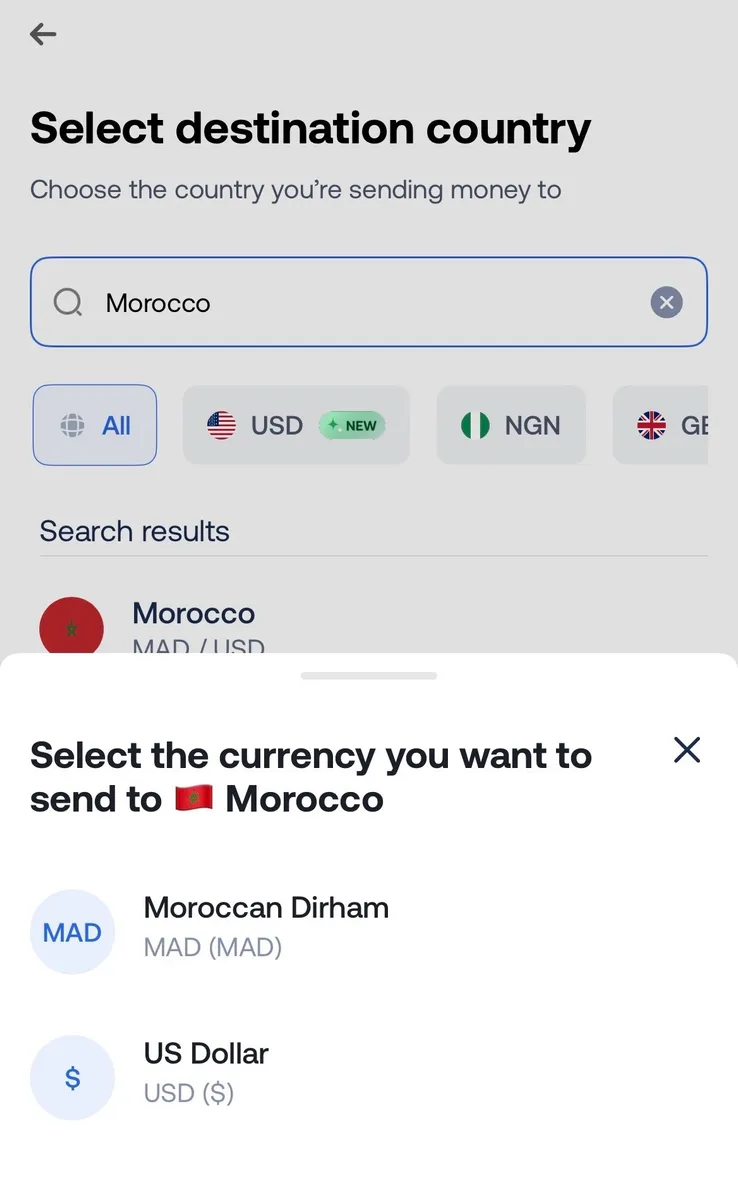
At Grey, we’re always looking for ways to make global payments smoother, faster, and stress-free. We started by making it easy for you to receive USD, and now, we’re taking things a step further: You can now send USD to over 170 countries directly from your Grey account!

Also read: How non-US citizens can open a US bank account online

We know how important it is to have complete control over your money, whether supporting your family, paying international freelancers, buying products from overseas suppliers, or investing in global opportunities. However, traditional international transfers often come with high fees, frustrating delays, and complicated processes. We’re changing that.

Now, with Grey, sending USD globally is as easy as a few taps — no ridiculous fees, no frustrating delays or complex banking processes, just simple, borderless payments the way they should be.

What this means for you

  • Faster and easier USD transfers: You can send USD in just a few taps without delays or complicated processes.
  • Lower fees: You can now avoid high conversion fees and hidden charges, helping you keep more money when making international payments.
  • Business opportunities: You can pay international suppliers and freelancers directly in USD without relying on third-party services.
  • Seamless global transactions: Enjoy the freedom to send and manage your money across borders without stress.

Get started today

This isn’t about adding another feature; it's one more way we’re making international payments easier and giving you the financial freedom you deserve.

Create a free account today to send USD easily and experience borderless payments with Grey!

Also read: How to send and receive USDC directly in your USD account

Receive USDC instantly in your US account with Grey!

•

•

2 min read

Stablecoins are becoming a popular payment option for freelancers, digital nomads, and remote workers. With low volatility, fast transactions, and global reach, they make it easy to receive payments without location restrictions. Still, transactions using stablecoins have  downsides, as they often involve multiple steps, unnecessarily complicated transactions, and additional fees.

However, we at Grey always look for ways to make global banking better for people like you who work and live across borders. Today, we’re excited to announce that you can now receive USDC payments directly into your US bank account!

Also read: Send instant USDC payouts to 70+ countries with Grey!

How to receive USDC deposits with Grey

We’ve simplified the process so there are no extra steps, complicated exchanges, or third-party conversions, just a seamless way to receive payments! Here’s how it works:

  1. Share your wallet address with your sender
  2. Grey converts your USDC into USD instantly.
  3. Access your money in your US bank account, and you can start transacting immediately!

Also read: How non-US citizens can open a US bank account online

What this means for you

  • Faster payments: With Grey, you no longer have to wait for your transactions to process through multiple platforms; you can access your funds as soon as possible without hassle.
  • Seamless conversion: We convert your USDC to USD instantly, so you don’t have to worry about manual exchanges.
  • Secure transactions: With Grey, you can avoid the risks of P2P trading or third-party exchanges, such as fraud, price manipulation, hidden fees or failed transactions. Just fast, seamless, and reliable payments straight to your US bank account.
  • Simplified finances: Keep all your transactions, balances, and account statements in one place, making it easier to track your income.

A simpler way to get paid with Grey

At Grey, our goal is simple: to make global banking seamless for everyone, no matter where you are. We believe international payments should be effortless, and this new feature is another step toward making cross-border transactions smoother and more accessible for you.

Open a free account today and start receiving USDC payments effortlessly with Grey.

#AccelerateAction with UpGreyed Her 2025

•

•

2 min read

The number of women entrepreneurs and women-led businesses grows yearly, proving that women are shaping industries and driving economic growth worldwide. However, access to funding is still a major challenge, with the global financing gap for women entrepreneurs estimated to be about $1.7 trillion.

This is why UpGreyed Her exists — to support women entrepreneurs with equity-free funding to help scale your business! 🚀

What’s UpGreyed Her?

UpGreyed Her, launched in 2024, is our annual International Women’s Day initiative designed to provide tangible support for women entrepreneurs’ businesses.

Beyond the panels, webinars and conversations, we’re taking action by providing equity-free funding to give them the necessary capital to expand and scale their businesses.

We’re awarding four outstanding women entrepreneurs in  manufacturing and production, construction, textiles, hospitality, agriculture, transportation, logistics or tech-enabled sectors like AgricTech, AI-enabled businesses, ClimateTech, EdTech, FemTech, and HealthTech. The first-place winner will receive $4,000, the first and second runners-up will get $2,000 each, and the third runner-up will receive $1,500. We're assembling a panel of distinguished female judges and business, technology, and management experts will carefully select the winners. Keep an eye out on our social media (@greyfinance) for more updates.

How to apply for UpGreyed Her 2025

To be eligible for participation, you must meet the following criteria:

  • Be a woman aged 21 to 35
  • Own a tech-enabled startup or early-stage business and have up to 50% shares or voting rights
  • Have a registered business
  • Be based in Africa, the Middle East, Southeast Asia, Europe, Latin America, the UK, and the US.

How to apply

To participate, fill out this form with accurate information. The application window opens Saturday, March 8th, 2025, and closes Tuesday, April 8th, 2025.

Please note that you must submit your application on or before 9 a.m. (Pacific Time), as applications received after this deadline will not be acknowledged.

To ensure you don’t miss any updates, follow us on Instagram, Twitter, LinkedIn, and Facebook, and sign up for our newsletter.

We wish you all the best with your applications!

P.S. Terms and Conditions apply*

‍

Arrow (up)

Back to top