
<script type="application/ld+json" data-schema-version="grey-blog-v4"> [{"@context":"https://schema.org","@type":"BlogPosting","@id":"https://grey.co/blog/how-to-stay-motivated-and-productive-as-a-freelancer#article","headline":"How to stay motivated and productive as a freelancer","description":"Feeling uninspired? Discover 7 effective strategies to overcome freelancer burnout, boost productivity, and achieve your goals! This guide covers routines, goal setting, workspace tips, and more","inLanguage":"en","url":"https://grey.co/blog/how-to-stay-motivated-and-productive-as-a-freelancer","mainEntityOfPage":{"@id":"https://grey.co/blog/how-to-stay-motivated-and-productive-as-a-freelancer#webpage"},"datePublished":"2024-03-21T13:33:27.879Z","dateModified":"2026-06-15T15:31:35.947Z","author":{"@type":"Person","@id":"https://grey.co/authors/toluwani-omotesho#person","name":"Toluwani Omotesho","url":"https://grey.co/authors/toluwani-omotesho"},"publisher":{"@type":"Organization","@id":"https://grey.co/#organization","name":"Grey","url":"https://grey.co","logo":{"@type":"ImageObject","url":"https://cdn.prod.website-files.com/6360022338a81bd6fdbb1145/6564ae1077a67e39d3c491a6_Grey%20Logo%20Lockup%20Black.svg"}},"image":{"@type":"ImageObject","@id":"https://grey.co/blog/how-to-stay-motivated-and-productive-as-a-freelancer#primaryimage","url":"https://cdn.prod.website-files.com/636a85d290ee58e70c17e1c0/6a301ad54a4855103a711e27_6a301acf4555d9e22be65199_how-to-stay-motivated-and-productive-as-a-freelancer__header-image.webp","contentUrl":"https://cdn.prod.website-files.com/636a85d290ee58e70c17e1c0/6a301ad54a4855103a711e27_6a301acf4555d9e22be65199_how-to-stay-motivated-and-productive-as-a-freelancer__header-image.webp","width":1200,"height":675}},{"@context":"https://schema.org","@type":"WebPage","@id":"https://grey.co/blog/how-to-stay-motivated-and-productive-as-a-freelancer#webpage","url":"https://grey.co/blog/how-to-stay-motivated-and-productive-as-a-freelancer","name":"How to stay motivated and productive as a freelancer","description":"Feeling uninspired? Discover 7 effective strategies to overcome freelancer burnout, boost productivity, and achieve your goals! This guide covers routines, goal setting, workspace tips, and more","inLanguage":"en","primaryImageOfPage":{"@id":"https://grey.co/blog/how-to-stay-motivated-and-productive-as-a-freelancer#primaryimage"},"breadcrumb":{"@id":"https://grey.co/blog/how-to-stay-motivated-and-productive-as-a-freelancer#breadcrumb"}},{"@context":"https://schema.org","@type":"BreadcrumbList","@id":"https://grey.co/blog/how-to-stay-motivated-and-productive-as-a-freelancer#breadcrumb","itemListElement":[{"@type":"ListItem","position":1,"name":"Home","item":"https://grey.co/"},{"@type":"ListItem","position":2,"name":"Blog","item":"https://grey.co/blog"},{"@type":"ListItem","position":3,"name":"How to stay motivated and productive as a freelancer","item":"https://grey.co/blog/how-to-stay-motivated-and-productive-as-a-freelancer"}]},{"@context":"https://schema.org","@type":"ItemList","@id":"https://grey.co/blog/how-to-stay-motivated-and-productive-as-a-freelancer#list","name":"How to stay motivated and productive as a freelancer","numberOfItems":7,"itemListElement":[{"@type":"ListItem","position":1,"name":"Create a routine"},{"@type":"ListItem","position":2,"name":"Set clear and realistic goals"},{"@type":"ListItem","position":3,"name":"Have a workspace"},{"@type":"ListItem","position":4,"name":"Use productivity tools"},{"@type":"ListItem","position":5,"name":"Take regular breaks"},{"@type":"ListItem","position":6,"name":"Keep learning"},{"@type":"ListItem","position":7,"name":"Reward yourself"}]}] </script>

How to stay motivated and productive as a freelancer

Toluwani Omotesho

TABLE OF CONTENT

SHARE THIS POST

As a freelancer, you can choose the type of projects to work on and your working hours. While this flexibility can do wonders for your creativity, staying motivated can sometimes be challenging.

Like other professionals, freelancers also get demotivated, especially as they might be burnt out from taking on too much work, dealing with demanding clients, or receiving constant negative feedback.

Understandably, being demotivated can significantly impact your productivity and work quality, so we explore some ways to help you stay motivated as a freelancer.

Create a routine:

Creating a structure and rhythm for your work can help you stay motivated as it gives you a sense of consistency, and you’ll be able to focus more on your tasks. Another benefit is that a routine makes transitioning mentally in and out of work mode easier. You can establish a routine around the hours you’re most productive.

Also read: The Ultimate Guide to Choosing the Best Freelancing Platform in 2024

Set clear and realistic goals:

Starting your week with a realistic to-do list gives you a clear idea of what you want to accomplish and how. This way, you can prioritize your tasks and track your progress, keeping you from feeling overwhelmed and reducing the chances of procrastination.

Have a workspace:

Having a designated area in your home as your workspace helps separate your work from your personal life and minimize distractions. It also ensures that you have a comfortable

environment to work in, which can improve your productivity and maintain motivation.

Use productivity tools:

Productivity tools like Toggl can help you keep track of the time you spend on tasks and projects, giving insights into your productivity. These tools can also help you manage your workload and collaborate with clients more effectively.

Take regular breaks:

Taking regular breaks between work can help you recharge and boost your creativity. You can use the Pomodoro technique to ensure focused work sessions and enough rest periods. Here’s how the method works:

  • Pick a task to work on
  • Set a timer for 25 minutes (this is called one “Pomodoro”)
  • Work on the task until the timer runs out
  • Take a 5-minute break
  • Repeat the cycle
  • For every four pomodoros, you can take a 15-30 minute break.

Aside from helping you stay motivated and productive, this technique also helps with procrastination and keeps you from being burnt out.

Keep learning:

Another way to stay motivated as a freelancer is to be open to learning from people in your field. Read books and blogs, listen to podcasts, watch videos, and attend seminars or workshops. This will open you up to new ideas, expand your knowledge base, and inspire you. This way, you’re more likely to approach your work more motivated and confident.

Reward yourself:

Rewarding yourself after hitting milestones is okay, no matter how small. Celebrating yourself will ensure you acknowledge your progress and successes, which will help you stay positive and motivated in your work.

Wrapping up

There will be moments when you’re not motivated enough to be productive as a freelancer, but freelancing is a marathon of self-discovery and adaptation. Finding the techniques and strategies that work for you can help you stay inspired and keep pushing forward.

Last updated:

October 2, 2026

Open a free Grey account to get startedJoin 1 million digital nomads
IF YOU ENJOYED THIS, CHECK THESE OUT

How South African YouTubers receive YouTube payments in 2026

•

•

2 min read

YouTube is now considered one of the most popular search engines in the world, and South African creators are taking full advantage of it, with over 25 million South Africans actively using the platform. This shows that there’s a huge market for you as a creator. And you can, of course, make money from it.

How?

First, you create videos that people watch worldwide; next, your account gets monetised, and then the money accumulates in your AdSense account. After that, you can withdraw and then start spending.

Except... I’ve spoken to many creators who waited weeks for transfers, lost significant portions of their earnings due to unfavourable exchange rates, or had payments rejected because their bank didn’t accept international wire transfers. None of those stories need to be yours. Below, I’ll explain how YouTube pays, the pain points most South Africans face, and most importantly, practical, step-by-step options to receive your money quickly and with minimal fees.

Also read: Send US dollars to South Africa from anywhere

Why do USD earnings matter for South African creators?

As a South African creator, your payments from YouTube are made in US dollars. Earning in USD gives your income more global value. Great yeah? Well, most local bank accounts in South Africa can’t receive USD directly. For those that do, when your earnings are converted into South African Rand (ZAR), they often take a significant cut due to high transfer fees and unfavourable exchange rates.

Sometimes, currency fluctuations can make this worse. Your income’s real value may drop the moment it’s converted. By holding part of your earnings in USD, you can protect yourself from these swings and preserve the value of what you’ve earned.

Earning in a stable foreign currency helps you stay in control by keeping more of your money, allowing you to decide when to convert it, and ultimately, getting paid on your own terms.

How does YouTube pay?

Before you can cash out your earnings, it’s important to understand how YouTube’s payment system works.

1. Join the YouTube Partner Program (YPP)

You can only start earning from ads once you’re part of the YouTube Partner Program (YPP). To qualify, your channel needs to meet one of YouTube’s monetisation thresholds within the past 12 months:

  • Option 1: 1,000 subscribers and 4,000 valid public watch hours, or
  • Option 2: 1,000 subscribers and 10 million valid public Shorts views

Once your channel is approved, you’ll be able to monetise through ads, channel memberships, Super Chats, Super Stickers, and YouTube Premium revenue. Essentially, every view or engagement can start earning you money, as long as it happens on monetised content.

2. Set up a Google AdSense account

YouTube doesn’t send money directly to your bank. All payments are processed through Google AdSense, so setting it up is a crucial step.

Here’s what you’ll need to do:

  1. Create or link an AdSense account to your YouTube channel.
  2. Submit your tax information. This ensures compliance with YouTube’s global payment policies.
  3. Choose your preferred payout method, such as direct bank transfer or wire transfer.

Your AdSense dashboard is where you’ll monitor your estimated earnings, payment history, and any deductions for taxes or invalid activity.

3. Reach the payment threshold

YouTube doesn’t pay out every time you make a few dollars; it works on a minimum payment threshold system. You’ll need to earn at least $100 in your AdSense account before Google processes a payout.

If your earnings for the month fall short, the amount will simply roll over to the next month until you reach the threshold. Once you cross that mark and your account is verified, YouTube will automatically schedule your payment in the next payment cycle.

For most creators, payments will be sent around the 21st of each month, covering your total earnings up to the end of the previous month. So, if you hit $100 in March, you’ll typically get paid in April.

4. Understand the payment timeline

So, let's talk more about the payment cycle. The payment system runs on a monthly cycle, but payments aren’t instant. There’s a short delay while your earnings are verified and processed.

Here’s how it works:

  • Earnings are finalised between the 3rd and 10th of the following month. During this time, YouTube reviews your ad revenue to confirm everything’s valid.
  • Payments are processed between the 21st and 26th, once your balance reaches the $100 threshold.
  • You’ll only receive your payout if there are no payment holds, such as missing tax information or pending account verification.

So, for example, if you earned $200 in April, those funds will appear in your AdSense account in early May, but you’ll actually receive the money later in May. Once Google processes that month’s payouts.

It’s a simple system. Once you understand the rhythm, you just need a bit of patience between creating the content and seeing the cash hit your account.

Also read: How to pay for subscriptions in US dollars from South Africa

How to receive USD from YouTube in South Africa with Grey

Grey allows South African YouTubers to open a USD account effortlessly, all without leaving the country.

1. Create your Grey account

Visit the Grey website or download the app. Sign up and complete your KYC verification.

2. Access your USD account details

After approval, you’ll get your account information, including a US routing number, account number, and SWIFT code.

3. Connect your Grey USD account to AdSense

Log in to AdSense, select “Add payment method,” and enter your Grey account details.

4. Receive payments in USD

YouTube will deposit your earnings directly into your Grey account in USD, eliminating the need for automatic currency conversion.

5. Convert whenever you want

Use Grey’s in-app exchange to convert USD to ZAR at competitive rates or hold your USD in your account if you prefer.

Also read: How to send and receive British pounds in South Africa

What other ways can South African YouTubers boost earnings?

Once you’ve set up a reliable payment method, you can turn your channel into a sustainable income source. The most successful creators don’t rely on just one revenue stream; they layer multiple income sources to protect against dips in views or ad rates.

Here’s how you can do the same:

Channel memberships

Offer loyal fans exclusive perks like members-only videos, live Q&As, or custom emojis in exchange for a monthly subscription. This builds community and gives you a predictable monthly income.

Super chat & super stickers

These features allow viewers to pay to have their messages highlighted or to send animated stickers during live chats, providing a fun way for fans to support you in real-time.

Affiliate marketing

By adding affiliate links in your video descriptions, you can earn a commission every time someone buys a product you recommend. This works well if you review gear, software, or services your audience already needs.

Brand sponsorships

You can partner with companies to feature their products or services in your content. Sponsored deals often pay far more than ad revenue, especially if you have a niche audience that brands want to reach.

Also read: How to get paid as a creator on social media from anywhere in the world

At the end of the day, the more diverse your income streams, the more stable your creator career will be. If ad rates drop or one revenue source slows down, your other income channels keep you afloat.

Why Grey is the best option for South African creators

Now to the solution. Grey is built to accommodate how modern creators work, earn, and spend across borders. If you’re a South African YouTuber, influencer, or freelancer receiving international payments, Grey removes the friction that usually comes with getting paid from abroad.

Free USD account setup

Grey lets you open a USD account, providing you with the same payment details (routing and account numbers) that US-based creators typically use.

Low, transparent FX rates

Grey offers competitive exchange rates that are visible upfront, so you know exactly how much you’ll receive before confirming a transfer.

Multi-currency accounts to grow your income

With Grey, you can also hold EUR, GBP and USD, which is perfect if you land brand deals in Europe or work with clients in the UK.

Fast, reliable payouts

You no longer need to wait weeks for your money to clear. Grey processes transfers quickly, so you can move your earnings to your local bank account without delay, helping you maintain a steady cash flow.

Built with creators in mind

Every feature is designed to make life easier for people who get paid globally, so you can focus on making content instead of chasing payments. This makes it easier to keep more of your hard-earned YouTube income and avoid the usual international payment frustrations.

Being a YouTuber in South Africa is a great way to share your voice with the world and earn a living from it. By setting up a USD account with Grey, you can receive your YouTube earnings quickly, securely, and without incurring losses due to unfavourable exchange rates.

Create your free Grey account today or download the app to make your creator journey easier, smarter, and borderless.

‍

How Egyptians can pay for international Black Friday deals online

•

•

2 min read

Black Friday is just around the corner, and the lure of international deals is impossible to resist. There are many deals during this period. I already have my eye on a couple of gadgets and some fashion must-haves. The prices are just too good to pass up.

If you’re like me and have already mapped out your Black Friday journey, I’ll be taking it one step further by teaching you how to pay for the things you want to buy.

With the right approach, paying for international Black Friday deals from Egypt is easier, safer, and more cost-effective than you might think. Here’s how.

What challenges do Egyptians face when making international payments?

Before diving into solutions, it helps to understand the main hurdles:

  • Limited access to international payment methods: Not all Egyptian debit or credit cards are accepted abroad.
  • High foreign exchange fees: Converting EGP to USD, EUR, or GBP can be expensive if your payment method isn’t cost-effective.
  • Bank restrictions: Some banks block international transactions or flag them as suspicious, causing delays or failed payments.
  • Security concerns: Paying on foreign sites carries a risk of fraud, especially during busy sales periods.

Knowing these challenges helps you plan ahead and shop confidently.

Also read: How to pay for subscriptions in US dollars from Egypt

What are the payment options for international Black Friday deals

Here’s a detailed look at the best ways Egyptians can pay for international Black Friday purchases:

1. International credit & debit cards

Most global retailers accept Visa, Mastercard, and sometimes American Express.

Pros:

  • Direct and convenient.
  • It can be used on almost any e-commerce platform.

Tips:

  • Use a card with low foreign transaction fees.
  • Ensure 3D Secure or OTP verification is enabled for extra security.
  • Sometimes, it helps to notify your bank about upcoming international transactions to avoid declined payments.

Cons:

  • FX conversion rates charged by Egyptian banks can be high.
  • Some smaller international stores may not accept Egyptian cards.

2. Online payment platforms

Platforms like PayPal, Wise, Payoneer, and Grey make international payments easier and safer.

How they help:

  • You can hold multiple currencies, so you can pay in USD, EUR, or GBP without worrying about EGP conversion at checkout.
  • They provide faster transactions and higher security than directly using your bank card.

Tips:

  • You can even create a virtual USD card on Grey, which you can then use to make purchases.
  • Always check transaction fees before completing a purchase.

Pros:

  • It can be an extra layer of security if you’re not sharing your bank card directly with international retailers.
  • Some platforms offer better exchange rates than traditional banks.

Cons:

  • Certain merchants may not accept PayPal or similar services.
  • The account verification may take 1-2 business days if it has not already been completed.

3. Bank wire transfers

For large purchases, international wire transfers via your bank can be an option.

Pros:

  • Secure and suitable for high-value items.
  • Some banks offer competitive rates for larger amounts.

Cons:

  • Transfers may take several days.
  • Banks charge fees, which can make small purchases impractical.
  • Not all online stores accept wire transfers for e-commerce purchases.

Also read: How to get paid as a creator on social media from anywhere in the world

LDMAG1

Tips to save on payments and avoid issues

  • Check FX rates before paying: You can save significantly by converting funds at the right time. Grey’s currency converter is perfect for checking the rates.
  • Use secure payment gateways: Look for HTTPS sites and trusted payment methods.
  • Avoid public Wi-Fi: Always use secure networks to prevent fraud and avoid using public wifi when opening bank apps.
  • Set transaction alerts: This helps you monitor spending in real-time.

Popular international stores that Egyptians can shop from

Some of the most sought-after Black Friday destinations include:

  • Amazon: Global shipping with multiple currency options.
  • eBay: Great for electronics and fashion deals.
  • AliExpress: Budget-friendly options for gadgets and accessories.
  • ASOS, Zara, and H&M for fashion lovers, often with international shipping.

Check each store’s accepted payment methods before planning your purchases.

See you this Black Friday

Black Friday is a golden opportunity to snag international deals, but the right payment method is key. By using multi-currency accounts, trusted online payment platforms, virtual cards, or low-fee international cards, Egyptians can shop globally with confidence, save on fees, and avoid payment frustrations.

Set up your payment solution before sales begin, so you can check out quickly when the best deals are available.

Also, don't forget to open a free Grey account or download the app to start paying internationally smarter, safer, and faster.

‍

Paying abroad from the UK: a simple guide for first-time traveller

•

•

2 min read

Travelling out of your country can be an exciting experience, but it can also be distressing without the right information. You get to experience life differently from what you are used to in your home country. One common concern for people leaving the UK for the first time is how to manage international payments. Between unfavourable exchange rates, card restrictions, and high transaction fees, many UK travellers end up spending more than they should simply because they don’t know the best way to pay. Here’s a simple guide to help you understand your options, avoid hidden fees, and pay confidently while travelling abroad.

Also read: Summer vacation ideas for families in the UK

Understanding your payment options

There are various payment options, each with its pros and cons. Your choice of payment options should depend on destination, trip length, and spending habits. Regardless, opt for options that offer exchange rates close to the mid-market rates and low or no foreign transaction fees. Here are your options

  • Cash: It is readily accepted in markets and convenience stores in most countries. You can also use it to pay for your train tickets or bus passes. There are no additional charges for using cash, and you won't get stranded if your card fails or a machine isn’t available. On the other hand, you risk loss or theft if you aren’t careful enough. It is better to carry small amounts at a time. Also, obtaining cash, especially if you are converting at an airport, hotel or using international ATMs, can be expensive. It is also challenging to pay in cash for online transactions.
  • Regular UK debit card payments: Your regular UK debit card works in many countries, but charges may be steep.
  • Travel debit card: An international travel debit card is usually better for avoiding high fees and conversion charges. Card payments are convenient for both physical and online payments. Digital banks like Starling Bank, Monzo, and Chase offer current accounts with debit cards that have no foreign transaction fees and good exchange rates.
  • Travel credit cards: Specialist credit cards, such as the Halifax Clarity or Barclaycard Rewards Visa, are fee-free for spending abroad. Section 75 consumer protection on purchases between £100 and £30,000 is still applicable. So, if you pay for a service or a single item within this rate and the quality isn’t excellent, you can file for a refund. You, however, need a good credit score to get one. You also have to pay off the credit quickly to prevent the interest from piling up.
  • Prepaid travel cards: You load these cards with a specific amount of currency before you travel. This way, you are locking in the exchange rate at that moment. It is great for budgeting and is not usually linked to your primary bank account. This adds extra security and protects against sudden unfavourable exchange rate changes. It is advisable to consider the associated fees before proceeding. This usually includes an application fee and charges on top-ups and withdrawals. Also, the exchange rates aren't always the absolute best available.
  • Digital payment solutions: Digital payment solutions are revolutionising how we manage international payments by removing barriers to affordable cross-border transactions. Transactions are cheaper, exchange rates are better, and payment processing is swifter. With payment solutions like Grey, you get a multicurrency account supporting USD, GBP, EUR, and even USDC, and you can withdraw funds to a local bank account in many countries at competitive exchange rates. You can also get a virtual USD debit card that can be added to Google or Apple Pay, further simplifying payments abroad.

Also read: How Grey differs from a UK bank

LDMAG1

Pre-travel checklist

Before you jet off, a little preparation will help you avoid unexpected costs and stay secure.

  • Inform your bank: Most modern digital banks don’t require you to inform them of your travel plans. However, with traditional high-street banks, it's a good idea to let them know so they don't block your card if they discover transactions from another country.
  • Check fees: Scrutinise the fees charged by your existing UK bank for foreign transactions and ATM withdrawals. Many charge a non-sterling transaction fee of around 3%, plus a flat fee per withdrawal.
  • Carry some cash: While cards are widely accepted, using cash may be better suited for tips, small vendors, street markets, or areas with unreliable internet. You will get better exchange rates if you get money in advance from a bureau de change, rather than at airports or hotels.
  • Have a backup: Have at least one alternative payment option. Keep cards in separate, secure places in case one is lost or stolen.
  • Know your numbers: Keep a physical or digital note of your bank's emergency contact details so you can quickly report a lost or stolen card and block it.

Also read: How UK residents can send and receive US dollars easily

Travelling with Grey

Paying abroad doesn’t have to be complicated or costly. With a bit of preparation and the right tools, you can enjoy your trip without worrying about hidden fees or bad rates. If you’re travelling soon, consider opening a Grey account to get access to multi-currency features that work globally. It’s one of the simplest ways for UK travellers to manage payments abroad safely, affordably, and conveniently. Get a Grey USD debit card to give you more financial flexibility.

Sign up on Grey today for seamless payments abroad.

‍

Cost of living in London vs New York: A full comparison

•

•

2 min read

London and New York. Two cities that define ambition, opportunity, and the art of expensive living. They’re often compared for their energy, culture, and global influence, but there’s one comparison that never gets old: which city is more expensive to live in?

Both have that irresistible, big-city energy: the feeling that something exciting is always happening just one train stop away. Not so exciting, however, are the expenses that would make even a well-paid professional wince at their bank statement. Still, they’re magnets for dreamers, freelancers, and global workers who want to live at the centre of everything.

So, you want the old-world charm of London, with its cobblestones, museums, and rainy-day cafés? Or the nonstop buzz of New York, where everyone always seems to be on the move?

This is a detailed breakdown of the actual living costs in each city. I have everything covered: rent, food, transport, utilities, and even childcare. I even touched on how Grey can help you manage your money.

Grab your calculator, let’s find out which city really costs more to call home.

How much is the typical rent?

Rent is where both cities truly test your patience and financial endurance. No matter how you slice it, housing eats up the biggest portion of anyone’s monthly budget, and both London and New York are notorious for it.

In London, a one-bedroom flat in the city centre, areas like Shoreditch, Southbank, or Notting Hill, costs around $3,100 per month. If you cross the Thames or move a few Tube stops outward to areas like Stratford or Greenwich, and rent dips to around $2,300. While that’s still steep, it’s relatively manageable compared to New York’s rental market.

In New York, a one-bedroom apartment in Manhattan or prime Brooklyn averages around $4,100 monthly, with similar spaces in Queens or the Bronx costing closer to $2,500. That’s a nearly 30% higher average rent than in London for central locations, though the gap narrows in outer boroughs.

Larger homes follow the same trend. A three-bedroom apartment in central London costs roughly $5,100, compared to a staggering $7,800 in Manhattan. It’s this kind of price tag that makes flat sharing so common. Even outside the city centres, the difference remains: an average of $3,700 in London versus $5,100 in New York.

To put it simply, you’ll need to earn about $100,000 a year to rent comfortably in central London, but closer to $130,000 - $150,000 to manage the same standard of living in New York. In both cases, rent alone can take up 40 - 50% of your monthly income if you’re not careful.

__wf_reserved_inherit

Verdict: London is expensive, but New York is on a whole other level. The average renter in NYC spends roughly 20 - 25% more than their London counterpart for the same space.

Also read: Cost of living in London

What if you prefer to buy a condo or apartment?

When it comes to buying a home, both cities make you pay dearly for the privilege of saying “I live here.”

In London, buying property is often less about owning a space and more about investing in history. Yeah, it’s that expensive.

A square metre of city-centre real estate costs around $21,250, making it one of the most expensive property markets in the world. That means a modest 70 m² flat in Central London (think Shoreditch, South Kensington, or Westminster) could cost upwards of $1.48 million before taxes or fees. Step just outside the heart of the city, say, to areas like Stratford, Walthamstow, or Greenwich and the average drops to $11,000 per square metre, bringing that same flat down to about $770,000.

New York, surprisingly, comes in slightly cheaper per square metre, around $15,500 in the city centre. A 70 m² apartment in Manhattan would cost approximately $1.08 million. However, buyers there face higher ongoing costs, including property taxes averaging 1.7% per year, as well as maintenance fees that can add several thousand dollars per month in co-op or condo buildings. Outside central boroughs like Brooklyn, Queens, or the Bronx, property prices average $11,100 per square metre, roughly $777,000 for the same 70 m² flat, which is nearly identical to London’s suburban equivalents.

But price per square metre doesn’t tell the whole story. In London, you’ll often find smaller, older properties that come with preservation restrictions, while New York’s market leans toward high-rise living with modern amenities but sky-high building costs.

If you’re buying as an investor, rental yields are another factor: London averages 3 - 4% annually, compared to 4 - 5% in New York.

__wf_reserved_inherit

Verdict: London wins for long-term prestige and property value stability, but New York offers more substantial returns and newer builds for your money. Either way, in both cities, you’ll need to plan well for a purchase.

Also read: Cost of living in Paris

Restaurants

If rent is where London and New York empty your wallet, food is where they tempt you to open it again. Both cities are global dining capitals, home to celebrity chefs, street food icons, and everything in between. Regardless of your preference, whether grabbing a quick bite or splurging on fine dining, the numbers tell a fascinating story about how much it really costs to eat well in each city.

In London, an inexpensive meal at a local café or casual restaurant costs around $27, while in New York, that same plate would be roughly $25. It’s a negligible difference, well, until you start dining out regularly. A three-course dinner for two in a mid-range restaurant costs approximately $106 in London, compared to $150 in New York. That’s almost a 40% jump, showing how New York’s dining scene rewards indulgence but punishes your credit card.

For the average person eating out three to four times a week, that difference soon becomes a problem. You could spend $450 - $600 monthly on casual meals in London or nearly $700 - $900 in New York, and that’s before drinks or tips.

Fast food and casual chains paint a slightly different picture. A McDonald’s combo meal costs $11 in London and $14 in New York, making the UK marginally friendlier to quick, low-cost dining. Drinks, however, are where the playing field levels out. A domestic beer costs around $9 in London and $8 in New York, while an imported beer might flip the comparison, $8 in London versus $10 in New York.

And if you’re one of those people who can’t start the day without caffeine (no judgement here), you’ll pay $5.50 for a cappuccino in London and around $6 in New York. Over a month of daily café runs, that’s about $165 vs. $180, proof that even your coffee habit costs more in Manhattan.

__wf_reserved_inherit

Verdict: London wins if you’re eating on a budget, or prefer home-cooked meals and pub lunches over fine dining. But New York outshines for culinary variety: you’ll find everything from $3 pizza slices to $300 tasting menus, often on the same block.

Markets

When it comes to everyday shopping, you’ll find plenty of options in either city, and how far your grocery budget stretches depends on what you buy and where you buy it.

In London, chain supermarkets like Tesco, Sainsbury’s, and Aldi offer solid value, while Waitrose or Marks & Spencer cater to those who don’t mind paying a premium for imported or organic goods. A typical grocery basket, which will include milk, bread, rice, eggs, and fresh fruit, comes to around $40 - $50 weekly for one person, or roughly $200 a month if you mostly cook at home. Prices stay fairly stable, though imported foods (like cheese or wine) push the total higher.

A litre of milk costs $1.70, and a loaf of bread averages $2, which is affordable by big-city standards. But a dozen eggs go for about $4.70, and chicken fillets hover around $9 per kilo. Meat and dairy tend to be where your grocery bill spikes. On the brighter side, locally grown produce like apples ($3.50/kg) or bananas ($1.70/kg) remains budget-friendly, especially at weekend markets or local greengrocers.

New York, however, turns grocery shopping into an Olympic event, one that your wallet rarely wins. Supermarkets like Whole Foods, Trader Joe’s, and Key Food charge noticeably more, with prices varying wildly by borough. Expect to spend around $350 - $450 per month if you cook regularly, and easily more if you shop organic or prefer imported brands.

Basic items tell the story well: a loaf of bread is $4.90 (more than double London’s), and eggs cost $7.20 per dozen. Even staples like rice ($8.20/kg) and milk ($1.60/L) come with a New York markup. Meat and produce are consistently higher too, as chicken fillets average $16/kg, and apples hit $7.50/kg, nearly twice London’s cost.

The gap widens further when you factor in alcohol and tobacco. A bottle of wine costs $11.50 in London but $18 in New York. Cigarettes? $4.50 in London versus a staggering $19 in NYC, making it one of the most expensive places in the world for smokers.

__wf_reserved_inherit

Verdict: London gives you more value for money, especially if you cook often.

Transportation

Let’s be honest, both cities have world-famous public transport systems. London’s red double-decker buses and the New York subway come to mind almost immediately.

In London, getting around isn’t cheap, but it’s incredibly well-connected. A one-way Tube or bus ticket costs around $4.20, and a monthly travel pass averages $240, still one of the most expensive in the world. Daily commuters can save money using Oyster cards or contactless payments, which cap your daily fare at around $10 - $15, depending on the zones.

Taxi rides are another story. A standard black cab starts at $5.50, but the fare rises quickly during rush hour or late at night. Ride-hailing services like Uber tend to be slightly cheaper, though not by much. Fuel costs around $1.80 per litre, making car ownership in London more of a luxury than a necessity. Due to the congestion charges, parking fees, and insurance, most people stick to public transport or cycling.

Over in New York, transportation is slightly more affordable, at least on paper. A single subway or bus fare costs $3, and a monthly MetroCard is $133, nearly half of London’s cost. For daily riders, that’s a massive saving. Taxis start around $5, and while surge pricing can spike fares in Manhattan traffic, ride-sharing apps like Lyft and Uber are everywhere. Fuel is far cheaper, averaging $0.90 per litre, making car ownership less punishing for those outside the boroughs.

__wf_reserved_inherit

Verdict: New York wins for affordability, hands down. But London’s system is better integrated. If you value comfort and connectivity, you’ll tolerate London’s higher costs. But if saving money matters more, New York’s MetroCard is still the golden ticket, even if it sometimes comes with the scent of pizza and street jazz.

Also read: Cost of living in Mumbai

Utilities

Utilities might not be the most exciting topic, but they’re what truly determine whether your apartment feels like home or just an expensive box with windows.

In London, basic utilities for an 85 m² apartment — electricity, heating, cooling, water, and garbage — come to around $330 per month. Prices fluctuate depending on the season; winter heating bills can push the cost closer to $400, while the summer months offer some relief. What’s great, though, is that energy-efficient buildings are becoming more common, especially in newer developments outside central London.

The internet is reasonably priced by global standards. A high-speed plan (60 Mbps or more) averages $42, and most providers offer reliable service. Mobile plans are also competitive, with rates starting at around $19 per month for calls, texts, and 10 GB or more of data. That’s significantly cheaper than in the U.S., and it’s one of the few areas where London actually saves you money.

Meanwhile, in New York, utilities can be a mixed bag. The average cost for the same 85 m² apartment is around $200 per month, but don’t let that fool you; many older buildings in New York have outdated systems, meaning you’ll likely need to budget extra for heating or air conditioning, especially during extreme weather. Some apartments include water and heat in the rent, but electricity can still add up fast.

Where New York really pulls ahead (or falls behind, depending on how you see it) is in connectivity. Internet costs about $66.60 per month, and while speeds are great, it’s nearly 60% more expensive than in London. Mobile plans are also higher, averaging $62 monthly, roughly three times London’s rate.

__wf_reserved_inherit

Verdict:. In London, you’ll pay less for mobile and internet services and enjoy reliable utilities across the board. New York’s older infrastructure and higher data costs make it the slightly more expensive option, especially for remote workers or freelancers who depend on stable, high-speed connections.

LDMAG1

Sports and leisure

The one thing Londoners and New Yorkers take seriously, besides their morning coffee, is staying active and entertained. However, depending on where you live, the cost of staying fit (or just having fun) can vary significantly.

In London, Gym memberships average $64 a month, and you’ll find everything from sleek chains like PureGym and Virgin Active to boutique studios with yoga, spin, or boxing. Public sports centres are affordable too; some charge as little as $8 per session for swimming or fitness classes. If you’re into tennis, court rentals on weekends cost around $25 an hour, and for the less sporty, catching a movie at your local cinema is about $20.

What’s great about London is that so many of the fun activities are free; long runs through Hyde Park, weekend cycling along the Thames, or joining a neighbourhood football group — everyone loves Sunday League. Outdoor activities thrive in London, especially in the summer when the weather finally cooperates.

New York, on the other hand, turns fitness into a high-end affair. A basic gym pass can cost $130 per month, with premium clubs like Equinox charging up to $250 for memberships that include saunas, classes, and towel service (because, of course, it’s New York). Tennis court rentals are pricier too, averaging $59 per hour, and even outdoor recreation in Central Park isn’t entirely free if you want to join an organised sport or use maintained courts.

Entertainment prices are roughly comparable to those in London. A cinema ticket is $20, but New York’s nightlife, concerts, and Broadway shows can make that number skyrocket quickly. A night out with drinks, dinner, and a show can easily top $250, especially in Manhattan.

__wf_reserved_inherit

Verdict: London offers better value and more free fitness options, while New York delivers more variety and experience, if you’re willing to pay the price.

Childcare

If you plan on raising kids in either London or New York, brace yourself, childcare is one of the biggest expenses you’ll face, no matter which side of the Atlantic you’re on.

In London, a full-day private preschool costs around $2,550 per month, depending on the borough and curriculum. Central neighbourhoods, such as Kensington or Islington, tend to be pricier, while outer zones, like Croydon or Walthamstow, have slightly lower fees. London offers a diverse range of childcare options, including local nurseries, Montessori schools, and nanny shares. The UK government also provides subsidies for working parents, with 15 to 30 hours of free childcare available for eligible children aged three to four.

Although primary education is free for state-funded schools, tuition in private schools averages $27,400 per year. However, top-tier institutions such as the American School in London or Southbank International can exceed $35,000 annually. Still, the structure and global curriculum often justify the price.

New York, however, raises the stakes and the fees. Preschool in the city costs approximately $2,230 per month, which may sound slightly lower than in London, but the difference quickly fades once you factor in registration fees, supplies, and additional care hours. For many working parents, hiring a nanny becomes the norm, with costs ranging from $3,000 to $4,500 per month, depending on the hours and experience required.

Private education is where the gap truly widens. An international or private primary school in New York costs a staggering $58,300 per year on average, making it one of the most expensive cities in the world for schooling. Even mid-tier private schools range between $35,000 and $45,000 annually — roughly equivalent to a small mortgage.

__wf_reserved_inherit

Conclusion

Choosing between London and New York is a personal decision. You’ll need to consider the trade-offs you’re willing to live with: rent versus salary, dining versus groceries, public transport versus car costs, and the necessary but often overlooked realities of paying for childcare and schooling.

If you earn abroad or have income in foreign currencies, those trade-offs start to look a little different. Suddenly, a higher salary in New York might cover steeper rents and school fees; a London paycheck might stretch further on everyday items or childcare. The smart move is to think of your finances as a system: how you get paid, how you hold money, and how you convert it all matter as much as the numbers on a job offer.

The right platforms make a real difference. Holding the right currency, timing conversions, and avoiding hidden fees can save you hundreds, even thousands, of dollars a year. For remote workers, freelancers, and families juggling international income and local costs, a multi-currency account with transparent rates and fast payouts is no longer a nice-to-have but a necessity.

That problem exactly is what Grey solves. It doesn’t matter if you’re paid in dollars, pounds or euros, you can receive funds on Grey, hold them in the currency that works best for you, and convert or withdraw at competitive rates, quickly and transparently. That means less guesswork when you’re planning rent, school fees or monthly bills in either city, and more control over how much of your hard-earned money actually reaches you.

Open a free Grey account or download the app to keep more of your income and, by extension, spend it on the things that truly matter.

Disclaimer: This article is based on researched data and is intended to give you a general overview of the cost of living in London and New York. The figures provided are estimates gathered at the time of writing and may vary depending on location, lifestyle, and market changes.

‍

Cost of living in London

•

•

2 min read

I must have been about five or six years old the first time I heard about London. It was from the “London Bridge is falling down” rhyme, which every child my age seemed to know by heart. Unfortunately, I can’t say the same for myself anymore. I barely remember the full lyrics now.

Imagine my surprise when, years later, I learned that the actual London Bridge had never fallen; instead, it required many repairs over the years.

These days, I associate London less with collapsing bridges and more with people falling head over heels for the chance to visit or stay.

It’s one of the most cosmopolitan cities in the world, and you’ll find communities of nearly every nationality there. Rumour has it that even Martians have settled there. Don’t quote me, please. I’m just a writer who happens to believe in aliens.

Now, if you still want to move to London despite the presence of the imaginary Martian community I’ve created, I’m sure you’ll be wondering what living there is like and, more importantly, what it costs.

Here’s a breakdown of all the expenses you’ll encounter. We’ll cover rent, transportation, food, utilities, and other essential expenses that people often overlook. And of course, everything will be in British, not Martian pounds.

Also read: How Grey differs from a UK bank

Is London more expensive than other big cities?

Short answer, yes.

It consistently ranks among Europe’s most expensive cities, often compared to Paris, and New York when it comes to housing, dining, and transport costs. Rent alone can take up anywhere from 40-60% of your monthly income, depending on where you live and how you manage expenses.

For a single person, excluding rent, you’re looking at around £1,000 - £1,200, while a family of four might spend £3,500 - £4,000. London’s appeal is undeniable, but you’ll need to budget carefully to enjoy it without breaking the bank.

How much is the typical rent in London?

London’s housing market is huge, and rent prices vary dramatically depending on which zone you live in. The city is divided into six main zones, with Zone 1 being the heart of London. It’s home to landmarks like Westminster, Soho, and Kensington, and Zone 6 covers the farthest suburban areas.

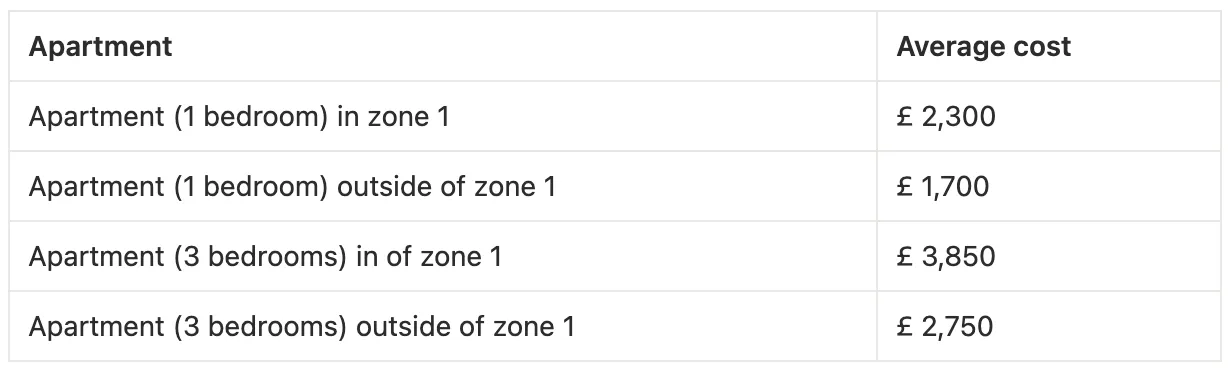
The closer you are to Zone 1, the more you’ll pay for the convenience of being near offices, restaurants, and nightlife. A one-bedroom apartment in Zone 1 can cost around £2,300 - £2,700 per month, while neighbourhoods in Zone 2, such as Stratford or Greenwich, average £1,700 -£2,000. When you move farther out to Zones 4 - 6, in places like Croydon, Ilford, or Hounslow, you can find similar flats for £1,200 - £1,500, though your daily commute will take longer.

Most Londoners balance affordability and access by living between Zones 2 and 4, where you’ll still have reliable Tube connections without the central London price tag. Sharing accommodation or renting a room in a flatshare remains one of the most practical ways to save.

__wf_reserved_inherit

What if you prefer to buy an apartment in London?

Buying a home in London isn’t for the faint of heart or the light of wallet. The city consistently ranks among the most expensive property markets in the world, with prices varying sharply across transport zones and property types.

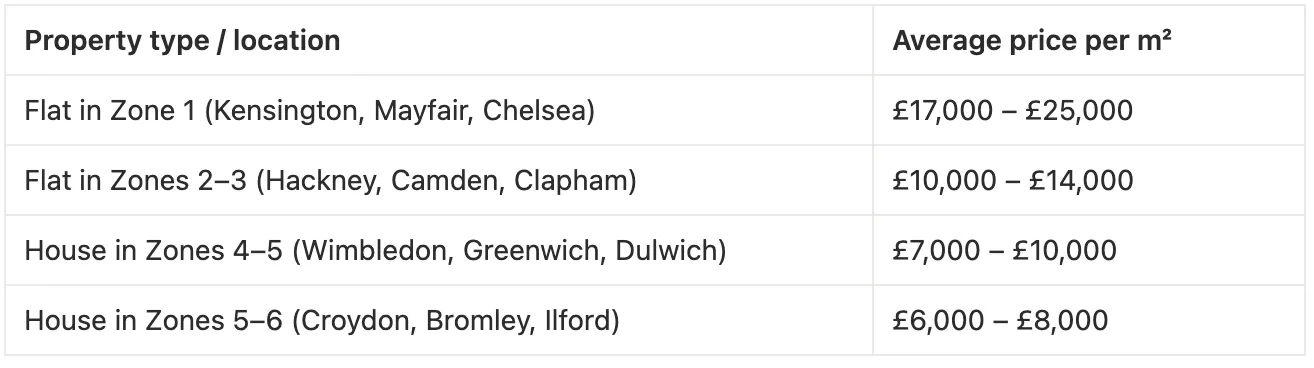
Most London homes fall into two main categories: flats (apartments), which dominate Zones 1-3, and houses, which are more common in outer Zones 4 - 6. If you’re eyeing a flat in central areas like Chelsea, Kensington, or Mayfair, prepare to pay around £17,000 - £20,000 per square metre, with luxury developments reaching as high as £25,000 - £30,000. Even smaller one-bedroom units in these postcodes can easily exceed £1 million.

Moving outward makes a dramatic difference. In Zones 3 - 4 (Wimbledon, Greenwich, or Hackney), average prices fall to £9,000 – £12,000 per square metre, while in Zones 5 - 6 (Croydon, Bromley, or Ilford), you’ll find newer builds or family houses for £6,000 - £8,000 per square metre. However, commuting costs tend to increase, so it’s a trade-off between affordability and convenience.

For most expats, students, and digital nomads, renting remains the more practical option. However, if you’re staying long-term, London offers several first-time buyer schemes, such as Shared Ownership and Help to Buy, which allow for partial ownership or reduced deposits. Mortgages for foreign buyers are also possible, though they often require higher down payments (typically 25–40%) and proof of UK income.

__wf_reserved_inherit

Also read: Cost of living in Manila

Restaurants

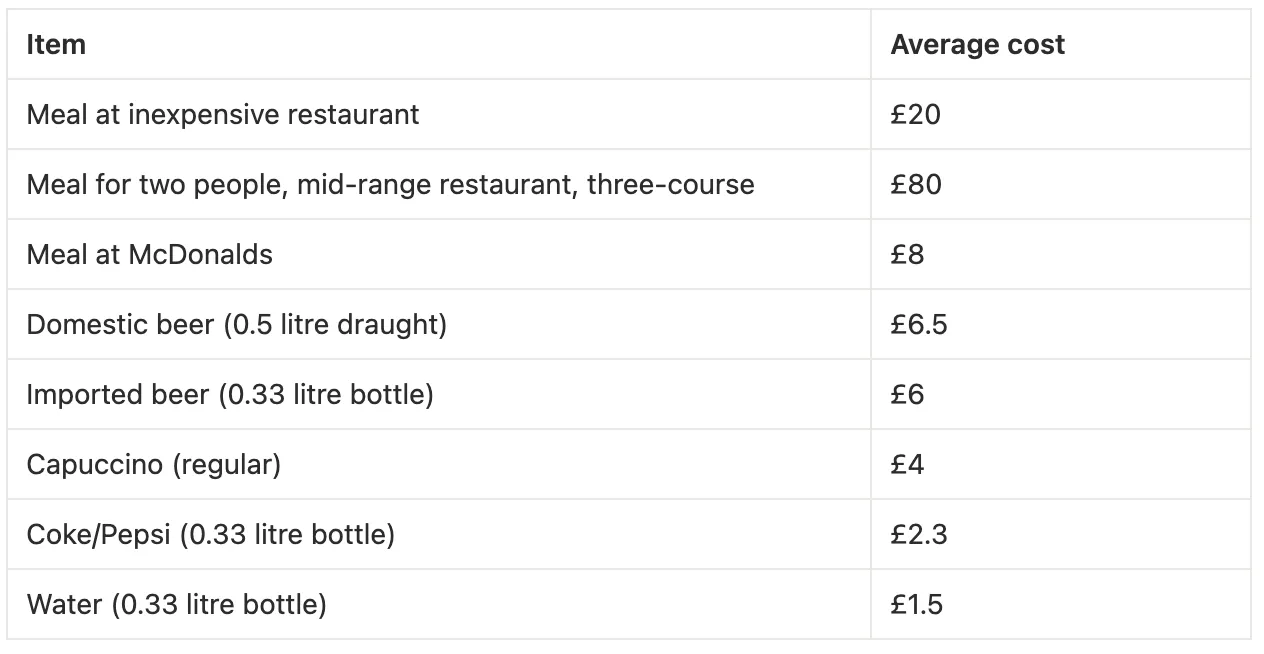
London’s food scene is huge. The city caters to every taste and well, most budgets. Eating out regularly can get expensive. A meal for two at a mid-range restaurant averages £70 - £80, while a casual lunch might set you back £15 - £20.

That said, you can save quite a bit by mixing in home cooking or quick bites. Supermarket meal deals (typically around £4 - £5) are a local favourite for office workers, and markets like Borough, Camden, or Maltby Street offer gourmet options without the fine-dining markup. Coffee lovers should expect to pay around £3.50 - £4.50 for a cappuccino, depending on the café and neighbourhood.

__wf_reserved_inherit

LDMAG1

Markets

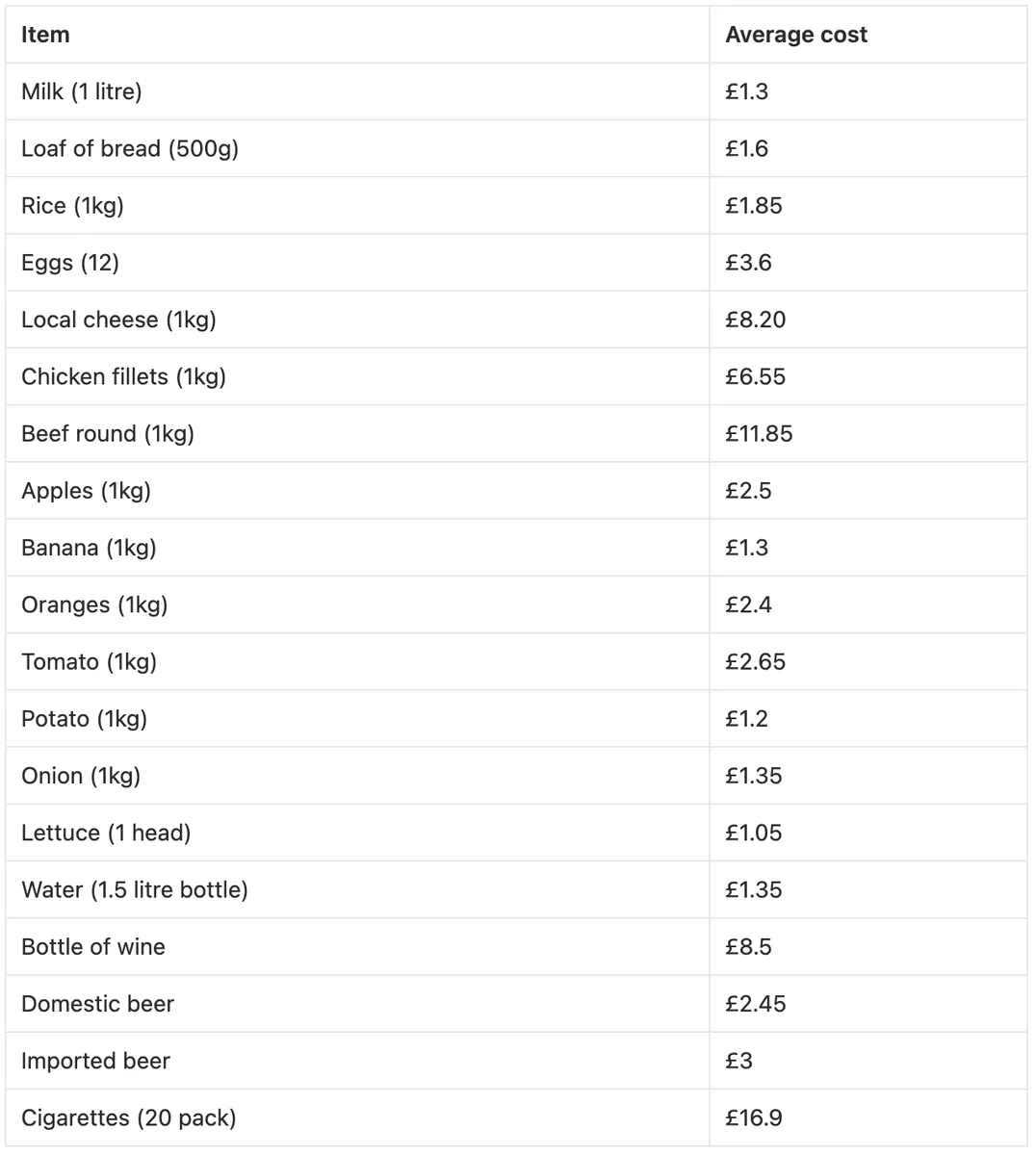
Prices vary depending on where you shop. Premium stores like Waitrose and M&S are more expensive, while Aldi, Lidl, and Asda are generally cheaper. A weekly grocery run for one person typically falls between £40 and £70, depending on dietary preferences and shopping habits.

Buying local produce or opting for supermarket brands can make a noticeable difference. For example, a litre of milk costs about £1.30, a loaf of bread £1.60, and a dozen eggs around £3.50. Meat and dairy products are pricier, while fruits and vegetables remain reasonably priced year-round. Londoners who shop at farmers’ markets may pay a little extra, but the freshness and quality often justify the spend.

__wf_reserved_inherit

Transportation

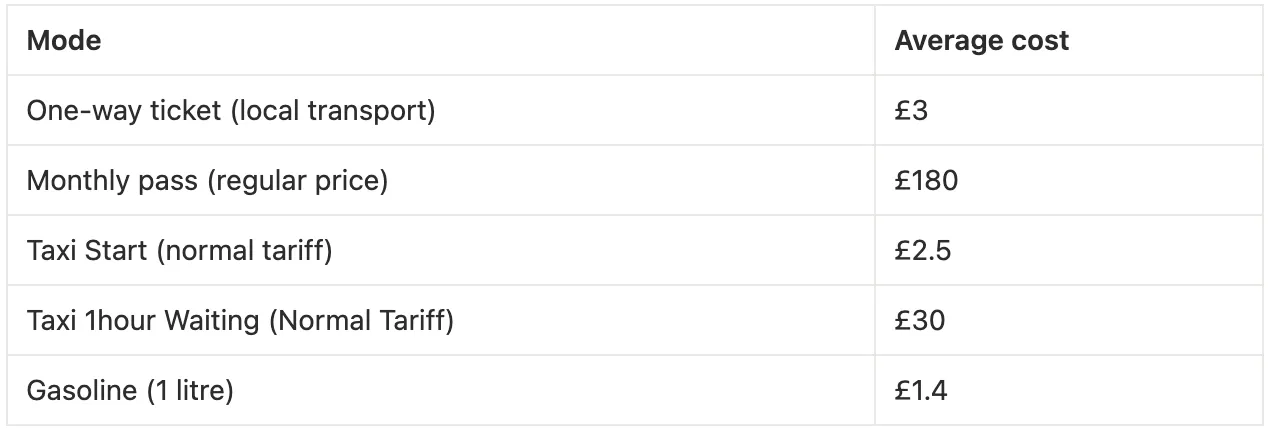
London’s public transport is reliable and well-integrated, but it’s not cheap. The Oyster card and contactless payment system make commuting convenient, though prices depend on your travel zones. A single Tube ride in Zone 1 costs about £2.80 - £3.40, while a monthly pass covering Zones 1 - 3 costs around £180.

Many digital nomads and remote workers skip the commute altogether and rely on walking or cycling, especially in central neighbourhoods. Gasoline prices are around £1.40 per litre, so many people consider owning a car to be impractical unless you live outside the city centre. However, London’s buses make getting around relatively stress-free.

__wf_reserved_inherit

Also read: Cost of living in London vs New York: A full comparison

Utilities

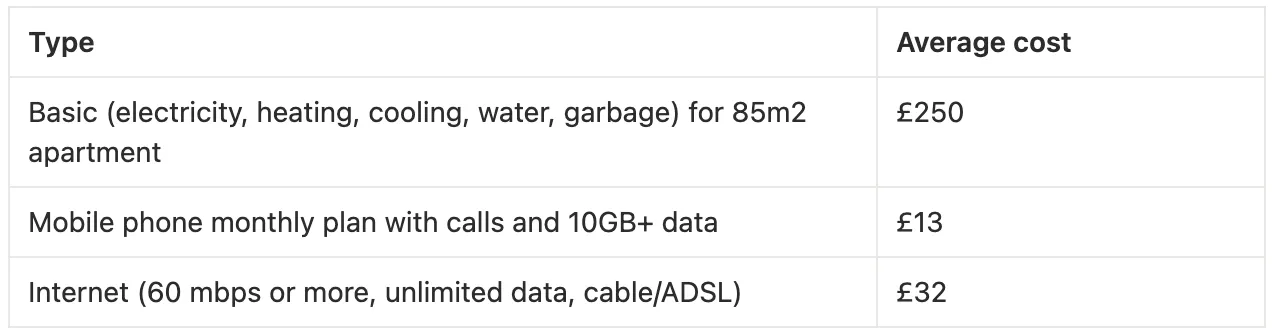
Once you’ve settled in,  Monthly utilities will add roughly £250 - £300 to your expenses. This covers electricity, heating, water, and waste collection for an average 85m² apartment. London’s chilly winters can increase energy bills, especially in older flats with poor insulation.

The internet is fast and reliable, with unlimited broadband plans starting around £30 - £35 per month, while mobile plans average £10 - £15 with generous data bundles. Many digital nomads also rely on public Wi-Fi, which is widely available in cafés and libraries. Overall, utilities remain manageable as long as you’re mindful of seasonal fluctuations.

__wf_reserved_inherit

Also read: Cost of living in Cairo

Sports and leisure

You can never run out of things to do in London. London never runs out of things to do. There are concerts, exhibitions, football matches, cinemas, and a pub around almost every corner. One of my life’s wishes is to watch an actual Chelsea FC match at Stamford Bridge. We’re the pride of London anyway. The Premier League ticket prices vary widely for each club, but the Premier League has capped away game tickets at £30.

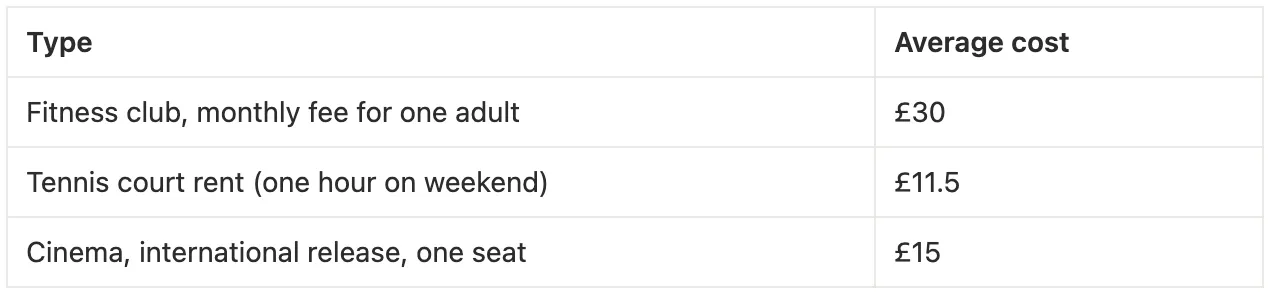
A gym membership typically costs around £30 - £50 per month, although premium studios can charge more. If you prefer something indoors, cinemas are really popular. A movie ticket is about £15. In contrast, a pint at the pub costs around £6 - £7. There are many other enjoyable experiences, including museums, galleries, and public parks, which are open to everyone. Finding a balance between paid activities and free exploration is the key to enjoying London without overspending.

__wf_reserved_inherit

Childcare

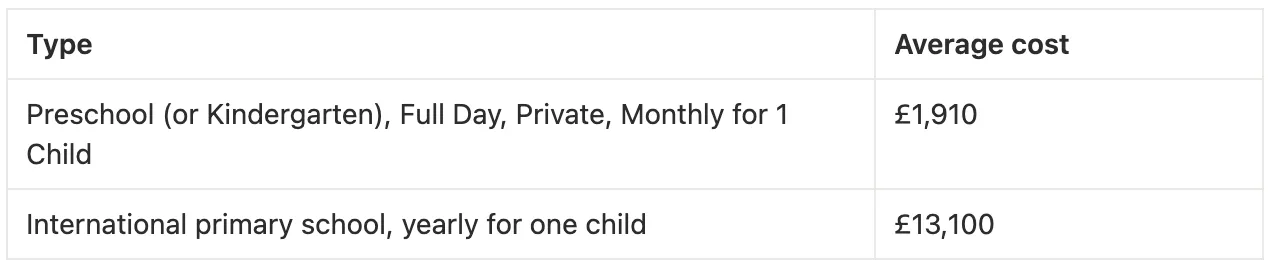
Raising children in London is rewarding but undeniably expensive. Private preschool fees average around £1,900 per month, while international schools can charge upwards of £13,000 per year. Many families explore public school options or relocate to commuter towns for more affordable childcare and housing.

Childcare costs often rival rent in smaller cities, so careful budgeting is key for families relocating to London. Digital nomads with kids may want to research flexible daycare options or community programmes, especially if both parents work remotely. Some even choose to homeschool to cut costs. What matters best is choosing what works for you.

__wf_reserved_inherit

Is living in London worth it?

Yes, if you plan wisely. London rewards ambition, creativity, and curiosity. The city’s career opportunities, cultural diversity, and sheer energy are unmatched. Still, living comfortably here depends on your income and how you manage expenses.

With the right budget strategy, you can enjoy everything London has to offer without being weighed down by the high costs.

Also read: Summer vacation ideas for families in the UK

How can you manage foreign paycheques in London?

Managing money as an international student or freelancer in London can get tricky, especially if you’re earning in a foreign currency. The UK has a well-developed banking system, but fees and exchange rates vary depending on the type of account you open.

Major players like Barclays, Lloyds, HSBC, and NatWest are all solid options for everyday banking. You can open student and international accounts that come with debit cards, online banking, and access to thousands of ATMs across the UK. HSBC is particularly popular with international students due to its global presence, while Monzo and Revolut stand out for their digital-first experiences, budgeting tools, and low domestic transfer fees.

That said, most UK banks charge high conversion and international transfer fees, sometimes between 2% and 5%, when you’re receiving money from abroad. Processing times can also stretch to several days, depending on your sender’s bank or currency region. This makes traditional banking less efficient for freelancers or students who get paid in foreign currency.

If you’re paid in foreign currencies, you’ll want something more flexible. A multicurrency account is perfect for this. It allows you to receive, hold, and convert various currencies at competitive rates, without the hidden costs that banks typically add.

Personally, I’d recommend Grey. It’s a reliable option built specifically for people who live and earn globally. You can open a free multicurrency account in minutes, receive payments in USD, GBP, or EUR, and convert seamlessly to pounds when rates work best for you.

With Grey, you get more control over your money, spend less on conversion, and save time managing multiple accounts. It’s a small switch that makes a big difference when living and earning abroad. Open a free Grey account or download the app and take the stress out of getting paid in London.

Disclaimer: This article is based on researched data and is intended to give readers a general overview of the cost of living in London. The figures provided are estimates gathered at the time of writing and may vary depending on location, lifestyle, and market changes.

‍

Cost of living in London for international students

•

•

2 min read

There are only a handful of moments quite as exciting as a confirmation mail from the university you applied to.

It’s that single moment when months of applications, essays, and anxious email refreshing finally pay off. It’s even more surreal when the university is in London, one of the world’s most popular and cosmopolitan cities.

However, once the excitement subsides, the important question of how much it will cost to live in London inevitably arises.

That’s why I’ve put together this guide. It’s a complete breakdown of what it really costs to live as an international student in London. We’ll cover everything from accommodation to entertainment, and I’ll show you how Grey helps you to make your pounds stretch further (especially if you’re receiving money from home).

So, let’s unpack the numbers, shall we?

Accommodation

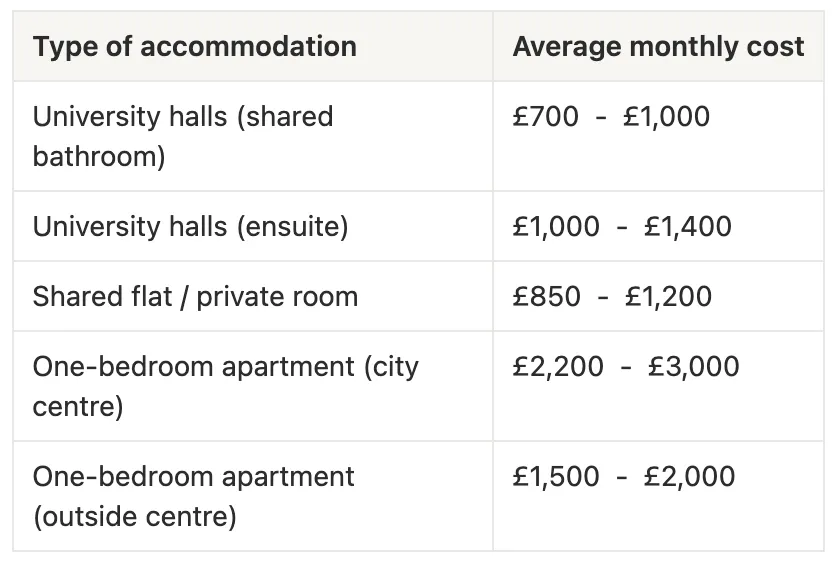
Rent is almost always the biggest part of a student’s budget. It varies depending on where you live. Central areas like Bloomsbury, Shoreditch, and South Kensington are pricier because they’re near top universities (UCL, LSE, Imperial). If you’re okay with a longer commute, you’ll find cheaper options in areas like Stratford, Lewisham, or Wembley.

Cost of living in London for international students

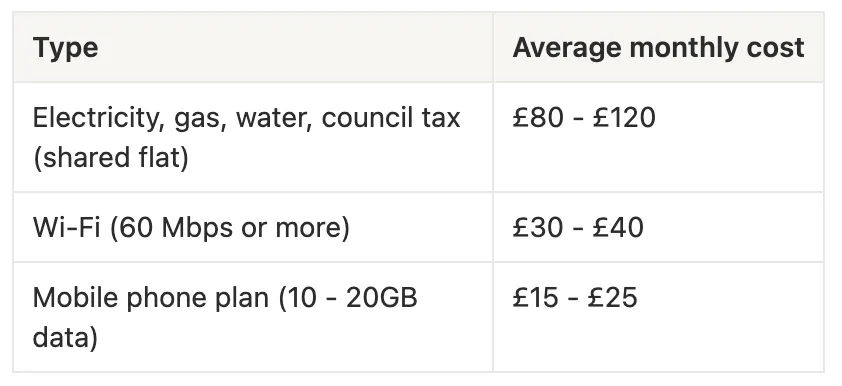
Many students save by sharing flats. Websites like SpareRoom or UniAcco help you find affordable, student-friendly housing. Remember that bills (electricity, Wi-Fi, water) often aren’t included in private rentals, so you’ll need to add another £150 - £250 monthly.

LDMAG1

Food and groceries

How much you spend on groceries depends entirely on your lifestyle. Cooking at home can save a lot, especially if you shop smart. Supermarkets like Aldi, Lidl, Tesco, and Asda are student favourites, while M&S and Waitrose are pricier but great for the occasional treat.

Cost of living in London for international students

If you cook most of your meals, you’ll likely spend around £150 - £250 per month on groceries. Eating out regularly or relying on takeaways can double that. You can also get student discounts in nearby restaurants and cafes. Also, meal prepping on weekends helps cut weekday costs and saves you from impulsive buying.

Also read: Cost of living in Alexandria

Transportation

Public transport in London is excellent but pricey, so plan ahead as much as you can. Most students rely on the Tube, buses, and trains, with discounted Oyster cards or Student Travelcards to keep costs down. I recommend using Trainpal or Trainline to book trains ahead, especially when you’ll be travelling outside London.

Cost of living in London for international students

If your classes are close to home, cycling can save a ton. Santander Cycles (Boris Bikes) cost just £20/month for unlimited 60-minute rides. Walking is also underrated in central London; you’ll be surprised how much you can explore on foot. It’s important to note that mobile maps, such as Google or Apple Maps, are helpful. The London commute can be very confusing, so it’s a great way to stay informed about your location. Ensure your device is charged, type in the address, and you’re all set.

Utilities and internet

If you live in university housing, utilities are usually included. However, if you’re renting privately, you may need to pay separately for essentials such as electricity, gas, and Wi-Fi. You can also find private accommodation with all bills included, but these are usually in the form of flatshares.

Cost of living in London for international students

Students are exempt from paying Council Tax if they’re enrolled full-time, so make sure to get a letter from your university confirming your status.

Study materials and personal expenses

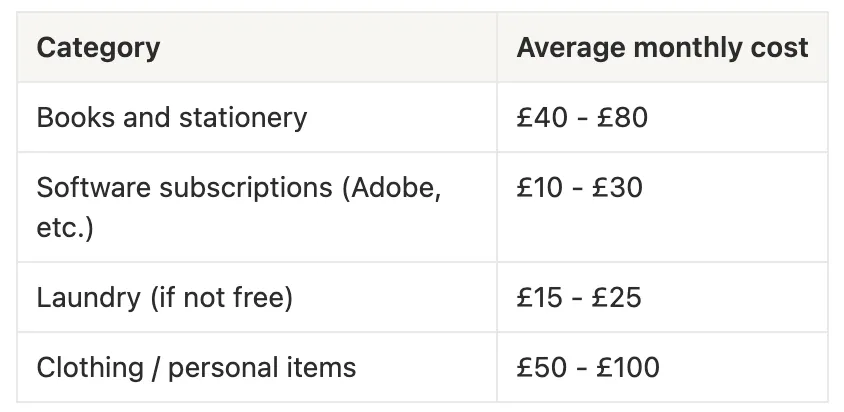
Books, printing, and supplies might not seem like much, but the costs can quickly add up. Most universities have libraries stocked with required textbooks; however, some courses may require specific editions or software (you can use the Grey virtual card for this).

Cost of living in London for international students

Most students also budget for occasional entertainment, streaming services, and social activities. It’s London. You’ll want to see a play, visit museums, or just enjoy a pint with friends now and then.

Also read: Cost of living in London vs New York: A full comparison

Entertainment and leisure

London is full of free and low-cost experiences. Museums like the Tate Modern, British Museum, and V&A are all free, and many theatres have discounted student tickets. Still, it’s nice to have a small leisure budget. A modest £150 - £250 per month for entertainment covers the occasional night out, gym membership, or city exploration.

Cost of living in London for international students

Total estimated monthly cost of living for international students

‍

Cost of living in London for international students

Total estimated monthly cost: £1,500 - £2,500

Your exact budget depends on where you live and how you spend, but a realistic figure for most international students in London falls between £18,000 and £25,000 per year.

Also read: Cost of living in London

Managing money in London with Grey

While studying your course in school, you’ll also need to learn how to manage your money outside of it. Many international students face the challenge of finding a reliable way to receive funds from outside the country or send some money back home occasionally.

Grey completely solves that. With a multicurrency account, you can receive money from home in USD, GBP, or EUR, convert at competitive rates, and spend directly in pounds, all without worrying about hidden fees or bad exchange rates.

So, if your parents send you funds monthly or even if you freelance part-time, Grey helps you manage your finances like a local.

Open a Grey account today or download the app and take one more thing off your student to-do list.

‍

Disclaimer: This article is based on researched data and is intended to give you a general overview of the cost of living in London. The figures provided are estimates gathered at the time of writing and may vary depending on location, lifestyle, and market changes.

‍

Arrow (up)

Back to top