

In the early days of running a business, many people just use their personal accounts. However, as you expand your client base and start to cover business expenses, your personal account won’t cut it. Your business needs to have a business account.
It makes it easier to receive and spend money in a separate account; it’s also easier to track monthly expenses without reading multiple bank statements.
What do you need to open a business bank account? The list is short, but it varies slightly depending on your business type, your tax ID, and where you, the owner, live. Here’s what you will need to open a US business account, how the requirements differ by structure, and what founders and business owners living outside the United States should expect.
To open a US business bank account, you typically need your EIN, business formation documents, ownership and control details, and a personal photo ID for each owner. Sole proprietors may use a Social Security number instead of an EIN. Some banks also ask for a business licence and an opening deposit.
The full checklist
Most business bank accounts require the same set of documents:
- Your EIN: The employer identification number is the IRS tax ID for your business. Some sole proprietors can use their Social Security number instead.
- Business formation documents: For an LLC, this is usually the Articles of Organisation or Certificate of Formation. For a corporation, it is the Articles or Certificate of Incorporation. Sole proprietors who trade under a name other than their own may need a DBA (doing business as) or assumed name certificate.
- Ownership agreement, if you have one: Banks commonly ask for an operating agreement (for an LLC) or a partnership agreement that shows who owns the business.
- Ownership and control details: For legal entities, US banks must collect the name, date of birth, address, and ID number of each person who owns 25% or more of the business, plus one person with significant control, such as a CEO or managing member. Foreign owners can provide a passport number. The FinCEN guidance on the customer due diligence rule explains the rule.
- A personal photo ID for each owner: A driver’s licence or passport is typical, and some banks also ask for a second form of ID.
- A physical business address: Some large banks do not accept a registered agent address, virtual address, or PO box as your business address.
- Proof the business is registered, or a business licence: Banks may ask for a document showing your business is registered with a government agency, and for any state or local licences you hold.
- An opening deposit: Initial deposits and minimum balances vary by bank and account type, and some banks waive them.
Requirements vary by bank, so check your chosen bank’s own list before you go. This is general information, not legal advice.
Requirements by business type
This list is the same for every business, but what you have to provide changes depending on your structure. A sole proprietor has the fewest requirements, and a corporation or partnership has the most paperwork.
having to readPlease note:
- Sole proprietors are not covered by the beneficial ownership rule because a sole proprietorship is not a separate legal entity. You are the owner, so your own ID is usually enough.
- LLCs are the most common structure for freelancers and small online businesses. Multi-member LLCs are more likely to be asked for an operating agreement. Our guide to the best business bank accounts for an LLC compares the options.
- Corporations and partnerships are asked to provide the founding documents showing who owns the business and who can sign on its behalf.
Not sure a separate account is worth it yet? Read our guide on whether you need a business bank account as a freelancer.
Do you need an EIN?
Not always, but banks prefer you have one. Some sole proprietors can open an account using their Social Security number, while LLCs, corporations, and partnerships are usually required to provide an EIN. Having one also keeps your personal number off your business records.
An EIN, or employer identification number, is a nine-digit tax ID assigned by the IRS to a business. It is free. The IRS says you never have to pay a fee for an EIN, so be wary of sites that charge.
Here is how to get one:
- Apply online if you qualify: The IRS online tool is for businesses formed in the US or its territories that have a principal place of business there. You need the responsible party’s Social Security number or individual taxpayer identification number (ITIN).
- Use the IRS hours: The online application runs at set times in Eastern Time, so check the IRS page before you start.
- Apply once per day. You can apply for only one EIN per responsible party per day.
- Keep the confirmation. Banks may ask for the IRS letter confirming your EIN, not just the number.
The IRS page on getting an EIN has the full details. If you do not qualify to apply online, for example, because your business is outside the US, you can apply by phone, fax, or mail instead. We cover that in the non-resident section below.
Requirements for non-residents
Non-residents can open a US business bank account, but it’s usually more difficult, and it depends on the bank. No federal rule bars it, yet each bank sets its own requirements for identity, address, and tax ID, and some do not accept foreign owners at all.
Here is what overseas founders usually need:
- A US business entity and an EIN: Most founders form a US company, such as an LLC, and then get an EIN.
- A valid passport: It usually replaces the Social Security number as your ID. US banks may record a passport number for foreign beneficial owners.
- Formation documents and an ownership agreement: The same documents as in the checklist above.
- Address evidence: A home address abroad, and a physical business address that the bank accepts.
- Proof of what the business does: Some banks ask for contracts, invoices, a website, or evidence of the source of funds.
You can still get an EIN without a Social Security number or ITIN. The IRS instructions for Form SS-4 say you enter “foreign” on line 7b if the responsible party has neither. The online tool is not available to you if you have no residence or principal place of business in the US, so you apply by phone, fax, or mail. Fax usually returns the EIN within about four business days. By mail, allow about four to five weeks.
The common hurdles are:
- Social Security number rules: Some banks require an SSN from each owner, and an EIN does not replace it.
- Address rules: A registered agent address, virtual address, or PO box is often rejected as your business address.
- In-person visits: Some traditional banks expect you to visit a branch.
- Country and industry limits: Providers may exclude some countries or business types.
- Extra checks: A bank may ask follow-up questions before approving the account, and incomplete answers can slow the process.
Before you apply, ask the bank exactly what it accepts from non-resident owners. Our guide to what non-US residents need to open a US bank account covers the major banks.
Handling international payments
Opening the account is one step, and getting paid across borders is another. A US business account is designed for domestic payments, so if you invoice clients abroad or pay suppliers in other countries, you may want a second layer to handle foreign currencies.
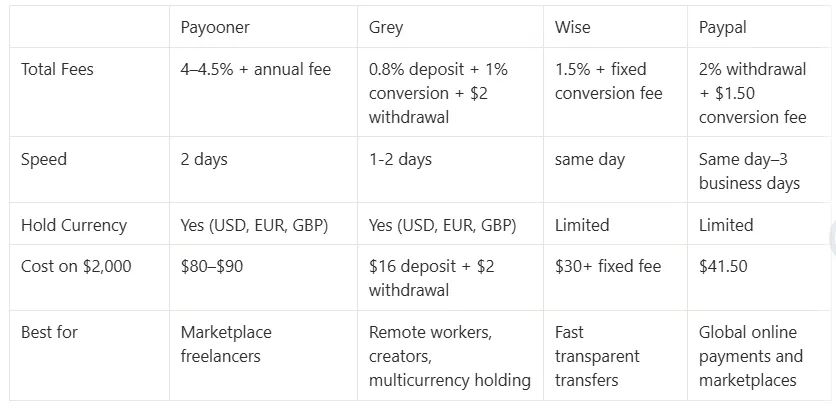
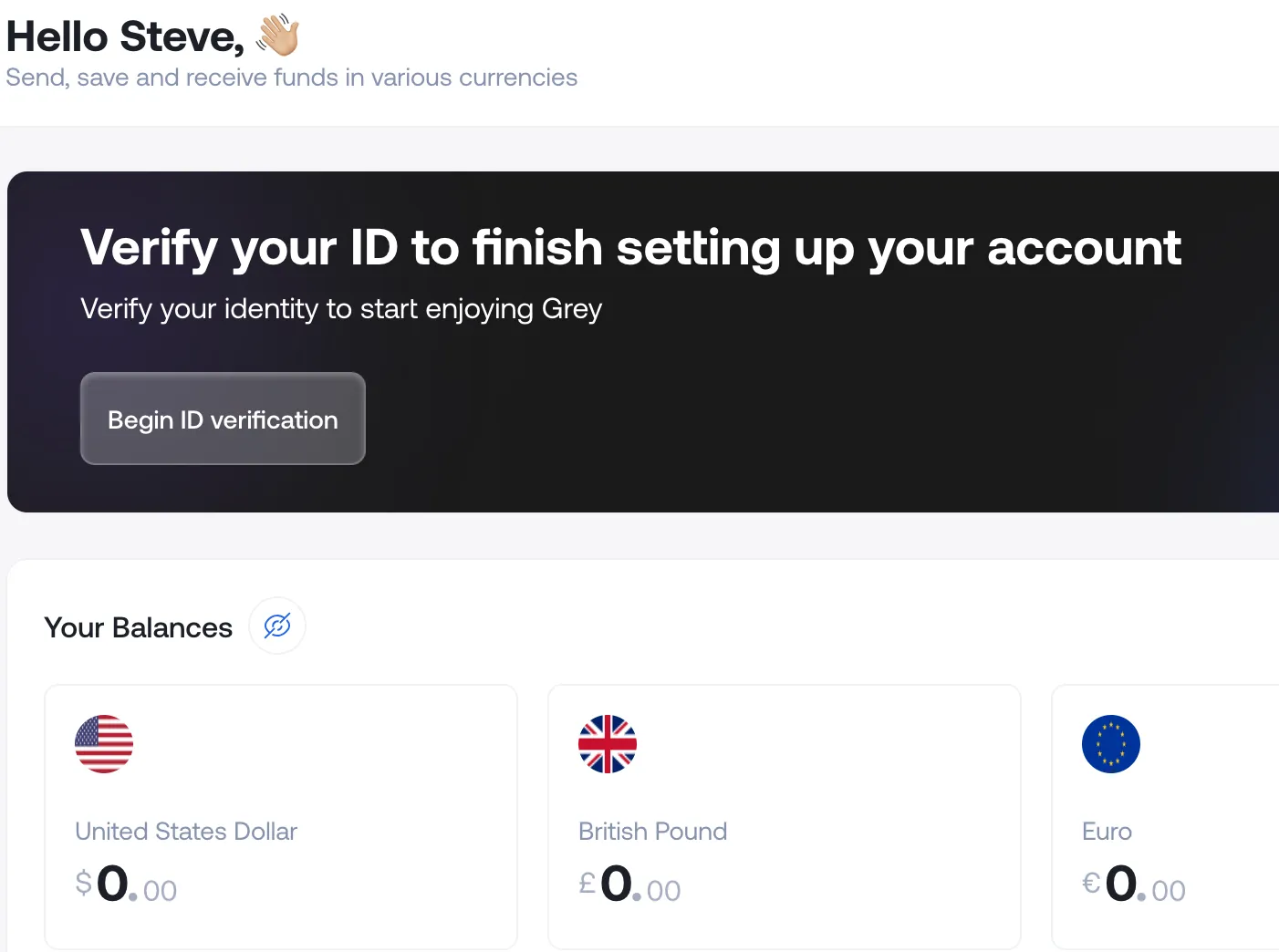
Grey offers multi-currency accounts, with no account opening fees, no maintenance charges, and no minimum deposit, so adding it does not require an additional opening deposit. You can also create a proper USD business account in your business name.
Grey also helps you send and receive money from the US. You can fund a transfer from a US bank account via ACH or wire, choose the destination, and check the exchange rate and fees before confirming. If you work with people or suppliers in Nigeria, you can send money from the US to Nigeria without the recipient needing a Grey account.
Transfer times and fees depend on the destination, the funding method, and the recipient’s bank, so check the details on Grey before you send.
Frequently asked questions
What documents do I need?
You typically need your EIN, formation documents, ownership and control details, and a personal photo ID for each owner. Some banks also ask for a business licence, proof of address, and an opening deposit.
Do I need an EIN?
Not always. Some sole proprietors can use their Social Security number, but LLCs, corporations, and partnerships are usually required to provide an EIN, and many banks prefer one for each business. An EIN is free from the IRS.
Can a sole proprietor open one?
Yes. A sole proprietor can open a business account using a personal ID and a Social Security number or an EIN. If you trade under a name other than your own, you may also need a DBA or assumed name certificate.
Can a non-resident open one?
Sometimes. It depends on the bank. Non-residents usually need a US business entity, an EIN, and a passport; some banks also require a Social Security number or an in-person visit. Ask the bank what it accepts before you apply.
Do I need a deposit?
It depends on the bank and the account. Initial deposits and minimum balances vary, and some banks waive them. Check the account terms before you apply.
Can I open one online?
Often yes. Many banks let you apply online and upload your documents, though some ask you to visit a branch. Have your documents ready as digital copies either way.
Ready to add a multi-currency layer to your business banking? Open a multi-currency account with Grey.
Grey is a financial technology company, not a bank. Exchange rates, fees, limits, and transfer times vary by destination and are subject to change.