




When James decided to turn his small online business into a registered company, he ran into a question he hadn't expected: Should he register an LLC or a corporation? Both offered legal protection for his personal assets, but choosing the wrong structure could affect how he paid taxes, managed the business, and brought in investors.
An LLC (Limited Liability Company) is generally easier to manage and offers more flexibility. It is owned by members, and profits typically pass through to their personal tax returns, avoiding the traditional double taxation associated with C corporations.
A corporation, on the other hand, is owned by shareholders and operates as a separate legal entity. It has a more formal management structure, with directors and officers responsible for business decisions. While C corporations face corporate-level taxation and potential shareholder taxation on dividends, they can issue shares and attract outside investors.
The right choice depends on your business goals. Understanding the differences between an LLC and a corporation can help you choose a structure that supports your plans as your business grows.
LLC vs. corporation comparison
An LLC is generally suited to entrepreneurs who want flexible ownership, simpler administration, and pass-through taxation. A C-Corp is often better for businesses seeking venture capital, issuing shares, or planning to go public. The right structure depends on your ownership plans, tax position, and long-term business goals.
What is an LLC?
Starting a business comes with plenty of decisions, and choosing the right legal structure is one of the most important. For entrepreneurs who want to protect their personal finances while keeping business operations flexible, a Limited Liability Company (LLC) is a popular option.
An LLC combines the personal asset protection of a corporation with some of the operational simplicity of a partnership. Unlike a sole proprietorship, where the business and owner are legally considered the same, an LLC creates a separate legal entity. Understanding the differences between an LLC and a sole proprietorship can help business owners decide which structure better suits their needs.
Here are the main features of an LLC:
Liability protection: An LLC generally separates personal assets, such as homes and savings, from business debts and legal claims.
Members: Owners are called members. An LLC can have one or several members, including individuals and certain business entities.
Pass-through taxation: By default, profits and losses pass through to members' personal tax returns, avoiding corporate-level taxation.
Management flexibility: Members can run the business themselves or appoint managers to oversee daily operations.
Simpler administration: LLCs generally have fewer formal requirements than corporations.
You don't necessarily need business partners to establish one. A single-member LLC allows an individual to own and operate the company while enjoying the same general liability protections available to other LLCs.
What is a corporation (C-Corp)?
As a business grows, its needs often change. What starts as a small operation may eventually require outside investors, additional employees, and a more formal management structure. This is where a C-Corporation (C-Corp) becomes a useful business structure.
A corporation is an independent legal entity, separate from its owners. This means it can own property, enter contracts, borrow money, and conduct business in its own name. It also provides shareholders with limited liability protection, generally keeping their personal assets separate from the company's debts and legal obligations.
Here are the main features of a C-Corp:
1. Shareholders
A corporation is owned by shareholders who hold equity through company stock. They can purchase, sell, or transfer their shares, depending on the company's rules. Shareholders generally enjoy limited liability, meaning their personal assets are protected from corporate debts and legal obligations beyond their investment.
2. Board of directors
Shareholders elect a board of directors to oversee the corporation's major decisions and long-term direction. The board establishes business policies, approves important corporate actions, and appoints executive officers. These officers handle daily operations and ensure the company follows its business objectives and governance requirements.
3. C-Corp taxation
Unlike an LLC's default pass-through taxation, a C-Corp pays corporate income tax on its profits. When the company distributes earnings as dividends, shareholders may also pay personal income tax on those payments. This arrangement is known as double taxation and can affect how businesses distribute profits.
4. Share issuance
Corporations can issue different classes of stock, including common and preferred shares, to attract different types of investors. This structure makes it easier to raise venture capital, secure institutional funding, bring in additional shareholders, and offer stock options to employees as part of their compensation packages.
Another advantage is that corporations can continue operating even when shareholders change. Ownership can be transferred through stock sales without necessarily disrupting business operations.
For businesses planning significant expansion, outside investment, or an eventual public offering, a C-Corp provides a formal structure designed to support long-term growth.
Key differences between an LLC and a corporation
Although both LLCs and corporations offer personal liability protection, they differ in how they handle taxes, business management, and ownership. Understanding these differences can help you choose a structure that matches your business needs and long-term plans.
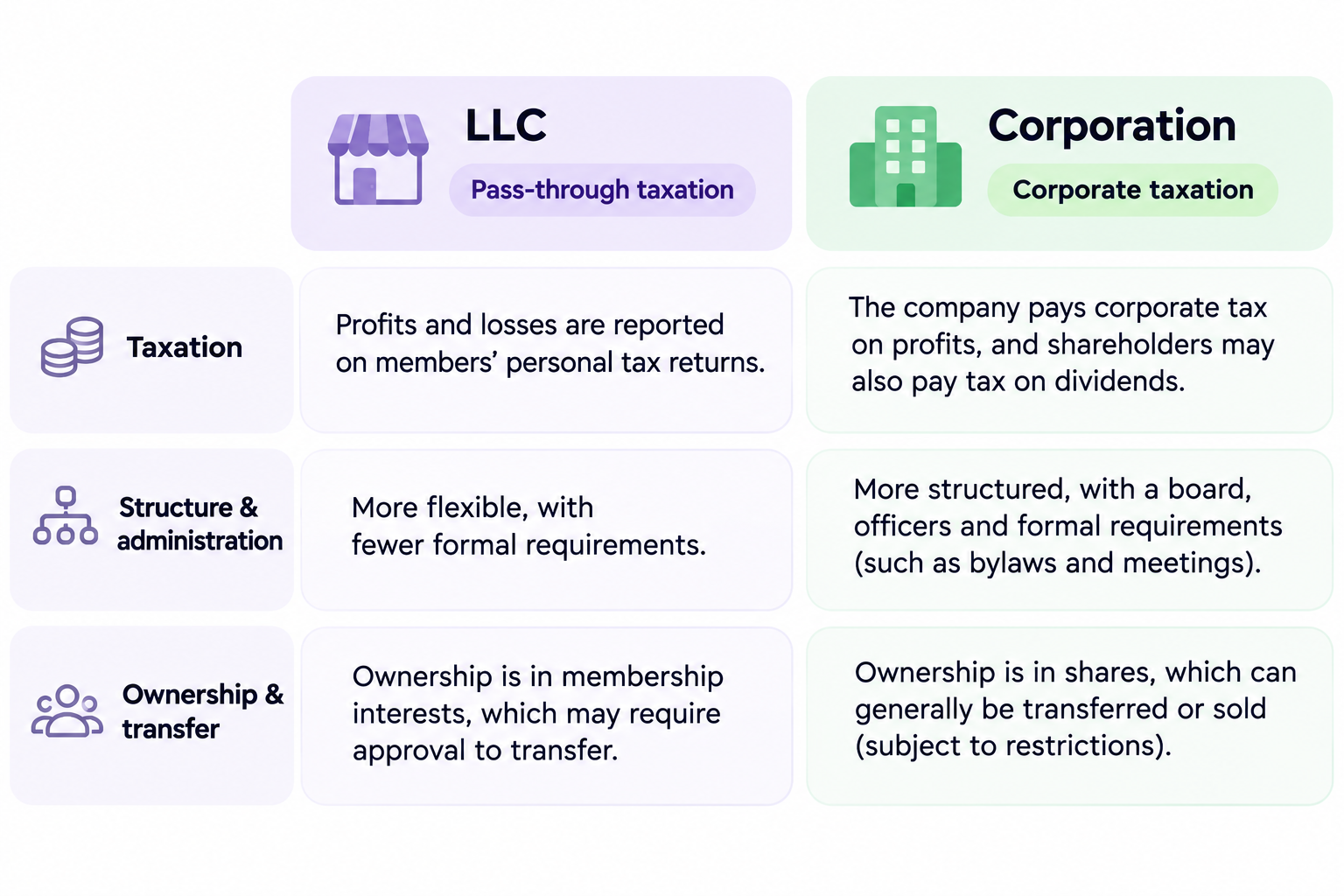
Here are three important areas where they differ:
1. Taxation and double taxation
One major difference is how business profits are taxed. LLCs generally use pass-through taxation, meaning profits and losses are reported on the members' personal tax returns rather than being taxed at the business level. This allows owners to avoid traditional corporate double taxation. C-Corporations, however, pay corporate income tax on their profits. If earnings are later distributed as dividends, shareholders may also pay personal income tax on those payments.
2. Structure and administrative requirements
LLCs offer more flexibility in daily management. Members can run the business themselves or appoint managers, with fewer formal administrative requirements. Corporations follow a more structured system involving shareholders, a board of directors, and corporate officers. They must also maintain bylaws, hold required meetings, document important decisions, and keep formal corporate records.
3. Ownership and transfer of interests
Corporations divide ownership into shares, which can generally be transferred or sold subject to applicable restrictions. LLC ownership is divided into membership interests. Transferring these interests may require approval from other members, depending on the operating agreement and state law.
These differences affect how easily a business can attract investors, distribute profits, and adapt its ownership structure as it grows.
How to choose between an LLC and a corporation
Choosing between an LLC and a C-Corp comes down to how you plan to fund, manage, and grow your business. Neither structure is automatically better; the right choice depends on what you want to achieve.
Choose a corporation if you plan to raise outside investment
If attracting venture capital or angel investors is part of your business plan, a C-Corp may be more suitable. Investors often prefer this structure because it allows companies to issue preferred stock, offer employee stock options, and accommodate multiple shareholders. It also provides a familiar ownership structure for businesses planning acquisitions or an eventual initial public offering (IPO).
Choose an LLC if you want flexibility and simpler management
An LLC works well for entrepreneurs who prefer to fund their businesses independently and avoid unnecessary administrative complexity. It offers default pass-through taxation, flexible profit-sharing arrangements, and fewer corporate formalities. This structure is particularly useful for consultants, agencies, real estate investors, and small businesses. Entrepreneurs starting alone can also register a single-member LLC, which provides a formal business structure without requiring additional owners.
Ultimately, consider your funding needs, tax position, ownership plans, and long-term growth strategy before registering.
Getting paid as a US business:
For a US-based business working with international clients, getting paid is only part of the equation. You also need a convenient way to receive payments, manage your earnings, and pay people in other countries without making every transaction complicated.
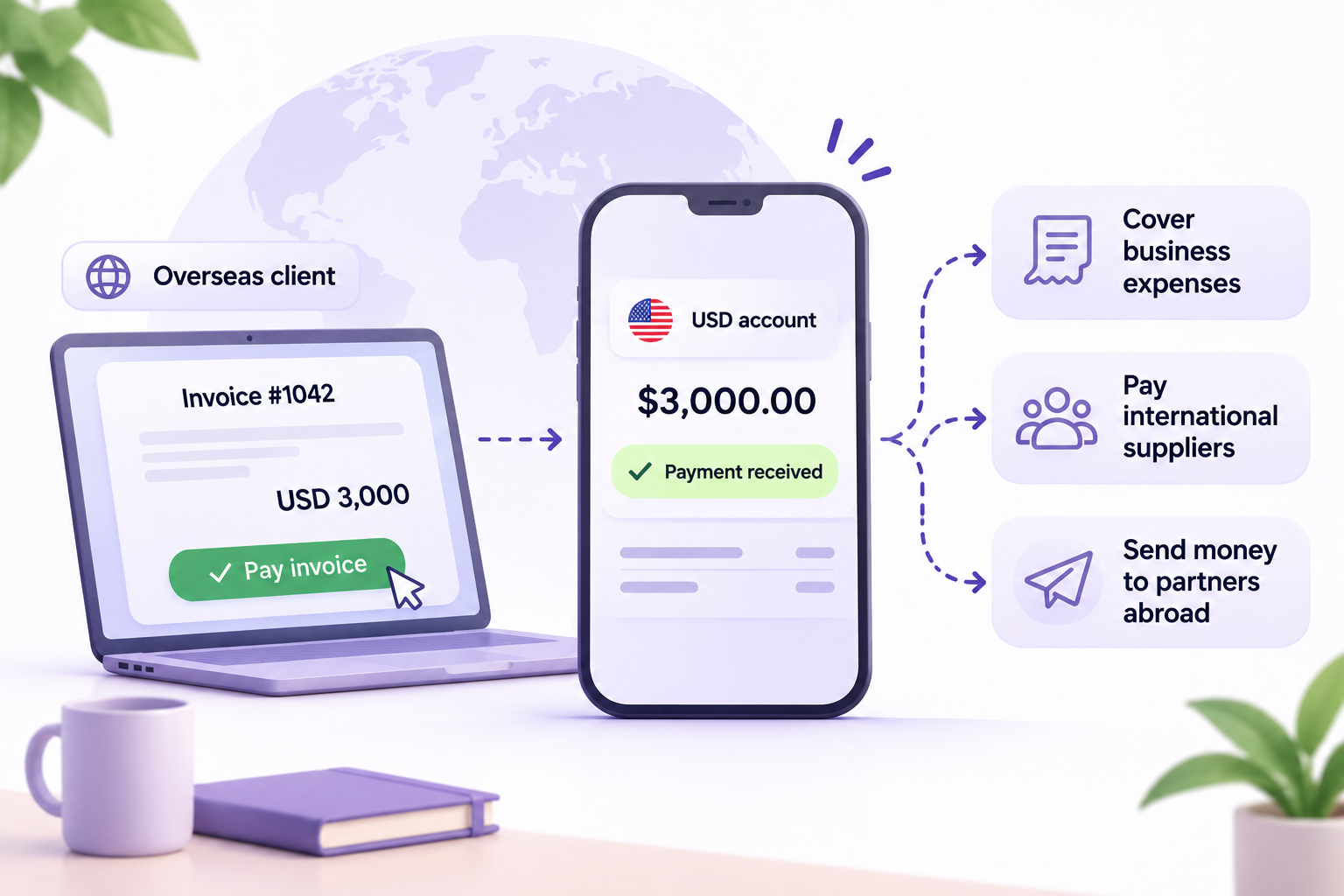
Grey helps simplify this process. With a USD account, freelancers, entrepreneurs, and businesses can receive payments from clients using US banking details. This is particularly useful when working with overseas customers who prefer paying through local US bank transfers.
Once payments arrive, you can use those funds to cover business expenses, pay international suppliers, or support partners abroad. Grey makes this possible through its send money from the US service, including the option to send money from the US to India.
By bringing payment collection and international transfers together, Grey gives businesses a more convenient way to manage incoming client payments and cross-border expenses from one platform
Frequently asked questions about LLCs and corporations
1. What is the difference between an LLC and a corporation?
An LLC offers flexible management, fewer administrative requirements, and pass-through taxation by default. A corporation operates under a more formal management structure, with shareholders, directors, and officers. It can issue shares to attract investors, making it more suitable for businesses planning significant expansion or seeking outside funding.
2. Which is better for taxes?
An LLC is generally attractive to small business owners because profits typically pass through to members' personal tax returns, avoiding corporate-level taxation. A C-Corp pays corporate income tax, with shareholders potentially paying additional tax on dividends. However, corporate tax rates and individual circumstances can influence which structure is more beneficial.
3. Which should I choose to raise money?
A corporation is generally better suited to businesses seeking venture capital or angel investment. It can issue preferred stock, accommodate multiple investors, and offer employee stock options. Although LLCs can attract investors, their ownership and tax structures may be less familiar to traditional venture capital firms.
4. Can I convert an LLC to a corporation?
Yes. You can convert an LLC into a corporation as your business grows or your funding needs change. Depending on your state's laws, this may involve statutory conversion, statutory merger, or a non-statutory conversion. Consider the tax consequences, legal requirements, and ownership implications before making the change.
5. Which is cheaper to run?
An LLC is generally less expensive to maintain because it typically involves fewer administrative formalities than a corporation. C-Corps must maintain corporate records, hold required meetings, document decisions, and comply with additional reporting obligations. However, actual costs depend on your state, business activities, and professional service fees.
6. Do both protect my personal assets?
Yes. Both LLCs and corporations generally separate owners' personal assets from business debts and legal liabilities. However, this protection isn't absolute. Mixing personal and business finances, committing fraud, or personally guaranteeing business loans can expose your personal assets. Maintaining proper financial records and legal compliance helps preserve liability protection.