

Landing freelance software development work is no longer just about having strong coding skills. The platform you choose can influence the quality of clients you attract, the rates you charge, and the types of projects you build your portfolio around. Some marketplaces focus on experienced developers working with global companies, while others make it easier to secure your first freelance contract and gain practical experience.
The best platforms for freelance software development jobs connect developers with clients ranging from early-stage startups to enterprise companies. Pay ranges from $50 to $200 per hour depending on the platform, tech stack, and experience level. Toptal and Gun.io target senior developers. Upwork and Fiverr are accessible for all levels. All accept international developers. Choosing the right platform depends on your experience, technical expertise, and career goals.
This guide compares 11 of the best platforms for freelance software development jobs, covering the types of clients they attract, expected pay, competition, and who each platform suits best. Whether you're looking for occasional side projects or long-term contracts, you'll find an option that matches your skills and ambitions.
What to look for in a freelance software platform
- Client quality: Look beyond the number of jobs available and consider who is hiring. Platforms with established startups, scale-ups, and enterprise companies typically offer more challenging projects, longer contracts, and higher budgets than marketplaces dominated by one-off, low-cost work.
- Average rates: Compare realistic hourly rates for your experience and tech stack before signing up. Senior developers generally find higher-paying opportunities on curated platforms, while open marketplaces provide more entry points but often require competing with a larger pool of freelancers.
- Screening process: Some platforms allow almost anyone to create a profile, while others require technical interviews, coding assessments, and portfolio reviews. Rigorous screening usually means fewer competitors, higher-quality clients, and stronger earning potential once you're accepted.
- International access: If you're working remotely, choose platforms that accept international developers and support cross-border payments. This gives you access to a much wider client base instead of limiting your opportunities to local companies.
- Platform fees: Always check how much the platform deducts from your earnings. Commission rates can range from around 5% to 20%, significantly affecting your take-home pay, especially on long-term contracts or high-value software development projects.
The 11 best platforms for freelance software development jobs
Toptal
Elite network for senior developers working with startups and enterprises. Typical rates $100–$250/hour, rigorous screening, client-facing markup rather than a standard freelancer fee. Best for highly experienced engineers seeking premium contracts.
Upwork
Largest freelance marketplace with software projects across every technology stack. Typical rates $25–$150/hour, low vetting, freelancer fees typically 0–15% depending on contract terms. Best for developers at every experience level.
Fiverr
Gig-based marketplace where developers sell predefined services. Typical rates $20–$120/hour equivalent, minimal vetting, 20% freelancer commission. Best for beginners building portfolios or specialists selling fixed-price development packages.
Freelancer.com
Global bidding marketplace offering web, mobile, and software development projects. Typical rates $30–$85/hour, low vetting, freelancer project fee generally 10% or $5 minimum. Best for developers comfortable competing on proposals.
Gun.io
Curated developer marketplace matching experienced engineers with US companies. Typical rates $75–$145/hour, high vetting, platform markup handled with clients rather than transparent freelancer fees. Best for senior backend and full-stack developers.
Arc.dev
Remote talent platform specialising in experienced software engineers. Typical rates $60–$150/hour, strong technical screening, client-side pricing rather than published freelancer commissions. Best for mid-to-senior developers seeking long-term remote contracts.
Lemon.io
Startup-focused marketplace connecting vetted developers with funded companies. Typical rates $60–$120/hour, rigorous vetting, platform markup included in client pricing. Best for experienced developers wanting startup-focused remote work.
PeoplePerHour
Freelance marketplace with hourly and fixed-price software projects. Typical rates $25–$100/hour, light vetting, freelancer service fees decrease as lifetime client spend increases. Best for developers building long-term client relationships.
Guru
Established freelance platform offering web development, programming, and IT projects. Typical rates $35–$90/hour, low vetting, freelancer fees start around 9% with lower rates on paid memberships. Best for long-term freelance contracts.
Turing
AI-powered platform connecting vetted developers with global companies. Typical rates $80–$200/hour, rigorous technical screening, platform pricing negotiated with clients instead of fixed freelancer fees. Best for experienced remote software engineers.
X-Team
Developer network placing experienced engineers with long-term remote teams. Typical rates $60–$150/hour, selective vetting, client pricing handled directly without published freelancer commissions. Best for developers seeking stable, ongoing software development engagements.
Also read: How to negotiate your freelance rates
How to land your first freelance software development job
Getting your first freelance software development client is often the hardest part, but a focused approach makes the process much easier. Start by specialising in one programming language, framework, or niche instead of marketing yourself as someone who can do everything. Whether it's React, Python, Shopify development, or WordPress, clients are more likely to hire a developer with a clear area of expertise. Next, build two or three portfolio projects that solve real problems, then explain the challenge, your solution, the technologies used, and the outcome. Clients want proof that you can deliver results, not just a list of programming languages.
Your profile should focus on the client's goals rather than your technical skills alone. Instead of saying you know JavaScript or Laravel, explain how you build faster websites, automate workflows, or improve application performance. Finally, stay consistent. During your first month, apply for five to ten relevant projects each week, tailoring every proposal to the client's requirements instead of sending the same generic message. A smaller number of personalised applications usually leads to better results than dozens of copied proposals.
Also read: How to receive international payments as a developer in Nigeria
How to get paid as an international freelance developer
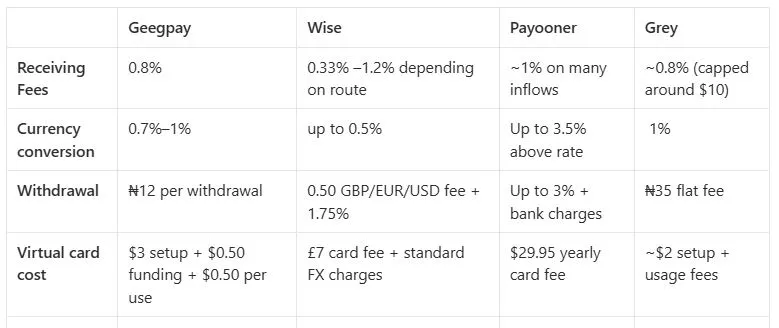
Freelance software development can be highly rewarding, with many US clients paying between $80 and $200 per hour for experienced developers. However, what you invoice isn't always what reaches your account. Platform commissions of 10% to 20%, payment processing charges, and poor exchange rates can significantly reduce your take-home earnings, particularly if every payment is converted immediately into your local currency.
One of the simplest ways to keep more of what you earn is to bill clients in USD whenever possible and receive payments without unnecessary currency conversions. Instead of converting every payment as soon as it arrives, hold your earnings in the original currency until you actually need to exchange them. This gives you greater control over your cash flow and lets you choose a more favourable exchange rate.
That's where Grey can help. You can receive USD, GBP, and EUR using local account details, hold multiple currencies in one account, and convert only when the exchange rate works in your favour. It's a practical way to simplify international payments while helping you keep more of your freelance income.
Also read: How to send a professional invoice with Grey
Frequently asked questions
How much do freelance software developers earn?
Freelance software developer earnings depend on your experience, specialisation, and the clients you work with. Beginners often charge $20–$50 per hour, while experienced developers typically earn $80–$200 per hour. Specialists in AI, cloud engineering, cybersecurity, and enterprise software can command even higher rates on premium platforms.
Which platform is best for beginner freelance developers?
For beginners, Upwork, Fiverr, and Freelancer.com are usually the easiest places to start because they have lower entry requirements and a wide variety of projects. Although competition is higher, these platforms allow you to build a portfolio, collect reviews, and gain experience before moving to premium marketplaces.
Is Toptal worth it for developers?
Yes, if you have strong technical skills and several years of professional experience. Toptal's screening process is demanding, but accepted developers gain access to higher-quality clients, premium rates, and long-term contracts. For beginners, however, less selective platforms are often a more realistic starting point.
Can I do freelance development without a computer science degree?
Absolutely. Most clients care more about your ability to solve problems than your academic qualifications. A strong portfolio, real-world projects, technical assessments, and positive client reviews usually carry more weight than a university degree when applying for freelance software development work.
How do international developers get paid on Upwork?
Upwork offers several withdrawal options, including direct bank transfer, PayPal, Payoneer, and wire transfer, depending on your country. If you receive payments in USD, using a multi-currency account can help you hold your earnings in dollars and convert them when exchange rates are more favourable.
What tech stack should I learn for freelance work?
Choose technologies with strong client demand. JavaScript with React and Node.js, Python with Django or FastAPI, PHP with Laravel, WordPress development, and mobile frameworks such as Flutter remain popular choices. Specialising in one stack generally makes it easier to attract higher-quality freelance opportunities.
How long does it take to get your first freelance development client?
The timeline varies, but many developers secure their first client within one to three months of consistently applying for suitable projects. Building two or three strong portfolio projects, writing tailored proposals, and applying regularly each week significantly improves your chances of getting hired.
The best freelance software development platform is the one that matches your skills, experience, and career goals. Once you've landed your first client, open a Grey account to receive payments in USD, GBP, and EUR, manage your international earnings in one place, and spend more time building software than managing payments.
.svg)