
South Africa is home to one of the largest Nigerian communities on the African continent. Hundreds of thousands of Nigerians live, work, and study in Johannesburg, Cape Town, Pretoria, and Durban, and a significant proportion of them send money back to family in Nigeria regularly.
Until recently, this has remained an expensive corridor. The World Bank has consistently found that sending money within Africa costs more than sending money from Europe or the US to the same destinations. The South Africa-to-Nigeria corridor is no exception. Comparison data from Monito shows that the cheapest available option on this corridor averaged around 4.1% of the transfer amount over the past month. That is roughly four times what you would pay on a US-to-Nigeria transfer through a competitive app.
The reason is structural. There is no deep, liquid forex market directly between the South African rand and the Nigerian naira. Most transfers are converted through an intermediary currency, usually the US dollar: your rand becomes dollars, and the dollars become naira. Each conversion step adds a margin, and those margins add up.
That said, several apps now serve this corridor with meaningfully lower costs than the traditional banking route. This guide covers how to send money from South Africa to Nigeria in 2026, what each option costs, how long transfers take, and which app makes the most sense depending on how much you send and how often.
What South Africans typically send money to Nigeria for
The reasons for sending money from South Africa to Nigeria are as varied as the community itself, but a few use cases come up more often than others. Understanding your use case matters because it affects how much you send, how often, and whether speed or cost is more important.
- Family support and living expenses. This is the most common reason. Many Nigerians in South Africa send a fixed amount monthly to parents, siblings, or extended family for food, utilities, rent, and day-to-day expenses. These tend to be regular transfers of R2,000 to R10,000, where consistency matters more than optimising every transaction.
- School fees and education costs. Paying school fees for children, siblings, or relatives attending schools and universities in Nigeria. These tend to be larger, less frequent transfers that align with term dates. For these transactions, the pressure to pay on time is real: if fees are not paid by the deadline, the student's place may be at risk.
- Medical expenses. These include urgent transfers to cover hospital bills, surgeries, or medications for family members in Nigeria. These are time-sensitive. Speed of delivery matters more than saving 0.5% on the exchange rate. Grey's minutes-to-same-day delivery is a significant advantage for medical emergencies.
- Property and investment. Buying land, building a house, or investing in a business in Nigeria. These involve larger amounts (R20,000 to R100,000+) where the fee cap and exchange rate margin make a meaningful difference to the total cost. For very large amounts, check whether you are within the SDA limit of R1 million.
- Ceremonies and celebrations. Contributing to weddings, funerals, naming ceremonies, and community events. These are often one-off transfers with a specific deadline, similar in urgency to school fees.
For regular monthly support, the priority is usually consistency and low cost. For emergencies, it is speed. For large lump sums, it is the exchange rate and fee cap. The sections below help you match each priority to the right app.
Why the South Africa-to-Nigeria corridor is expensive
If you have ever sent money from the UK or US to Nigeria, you know the cost is typically 1% to 2% all-in through a good transfer app. The South Africa corridor is more expensive for three reasons worth understanding, as they affect which app you choose.
No direct ZAR-NGN forex market. The rand and naira do not trade against each other in significant volumes on any international exchange. Your ZAR is converted to USD (or sometimes EUR), and then the USD is converted to NGN. Two conversions mean two margins. Apps that minimise the spread on each leg deliver more naira for the same rand.
South African exchange controls. The South African Reserve Bank (SARB) regulates outbound foreign currency payments. Individuals have a Single Discretionary Allowance of R1 million per calendar year for transfers abroad, without the need for a tax clearance certificate. Above R1 million and up to R10 million, you need a Foreign Investment Allowance, which requires tax clearance from SARS. These regulations add compliance overhead for transfer providers, which can translate into higher fees.
Fewer providers compete on this corridor. The US-to-Nigeria and UK-to-Nigeria corridors have dozens of competing apps, which drives fees down. The South Africa-to-Nigeria corridor has fewer players, which means less competitive pressure on pricing. Monito's comparison engine found only one provider to compare on this route. Moneytransfers.com found seven, but several of them are rate estimates only, without live data.
Which apps support sending money from South Africa to Nigeria
The competitive landscape along this corridor is narrower than that on US or UK routes. Here are the main options available to South African senders in 2026.
Grey supports transfers from South Africa to Nigeria via bank transfer. Grey was cited by moneytransfers.com as the quickest option for ZAR-to-NGN transfers, with delivery in minutes. Grey charges a 1% conversion fee on the transfer amount. The fee cap that applies on major currency pairs (USD, EUR, GBP, NGN) may reduce the cost on larger transfers, but whether the cap applies specifically to ZAR-NGN conversions should be confirmed in the app at the time of transfer, since ZAR is not one of the named Group A currencies. The Nigeria payout fee is NGN 35 flat per transaction.
WorldRemit is the most established name on this corridor and was Monito's recommended provider. WorldRemit supports bank deposit and cash pickup in Nigeria from South Africa. Fees range from $0 to $4.99, depending on the amount and delivery method, with an exchange rate margin on top. Cash pickup is available through partner agent networks in Nigeria, which is useful if your recipient does not have a bank account.
LemFi serves the South Africa-to-Nigeria corridor with low or zero visible transfer fees, earning primarily through the exchange rate spread. LemFi has built a strong reputation among the Nigerian diaspora for competitive parallel-market rates. Unlike the outbound-from-Nigeria direction (where LemFi does not operate), LemFi does work for South African senders sending to Nigeria.
Pesa was identified by moneytransfers.com as the cheapest option on this corridor, at roughly 1% cheaper than the second-best provider. As with all Pesa transfers, there is no visible fee. The cost is embedded in the exchange rate. To know the true cost, compare the naira amount your recipient receives on Pesa versus what they would receive through Grey or WorldRemit at the same moment.
Wise operates in South Africa and supports ZAR as a sending currency to many countries. However, Wise's coverage for direct ZAR-to-NGN transfers should be confirmed at the time of transfer, as Wise has historically had restrictions on the Nigeria corridor. If available, Wise would charge a percentage fee (typically 0.5% to 1.5%) with the mid-market exchange rate.
South African banks can process international transfers to Nigeria via SWIFT, but fees are significantly higher. Standard Bank, FNB, Nedbank, and Absa all offer international payment services, with fees that can reach R300 to R1,000 per transfer plus a wide exchange rate margin. The process typically requires a visit to an in-branch or online banking portal, and delivery takes 3 to 5 business days.
How to send money from South Africa to Nigeria with Grey
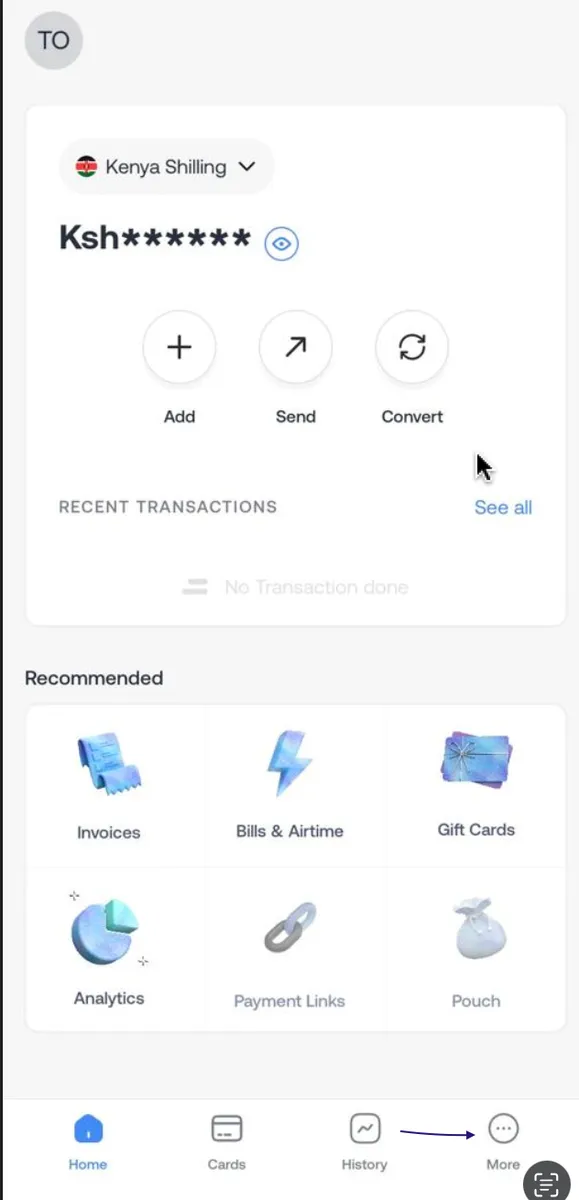
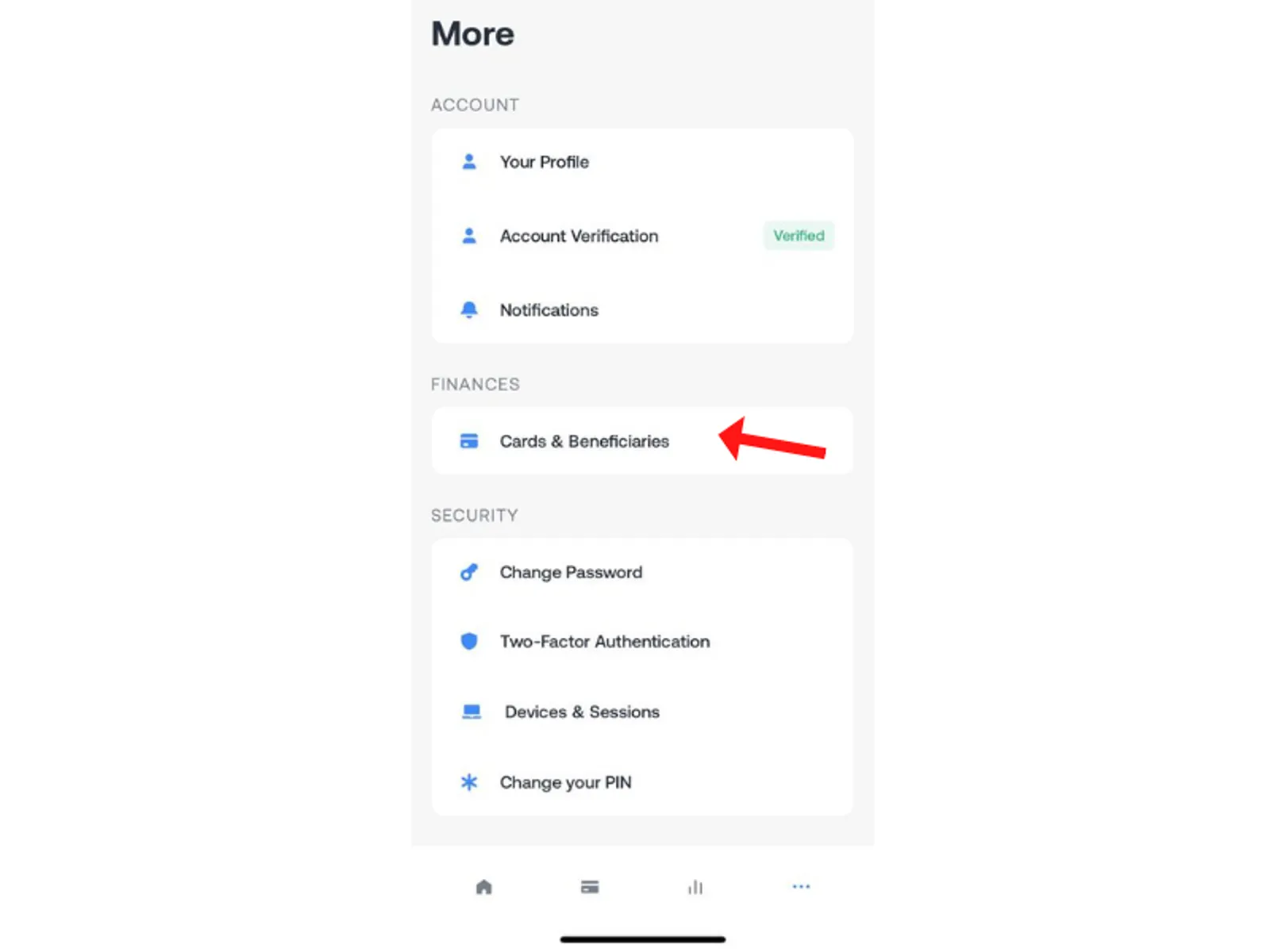
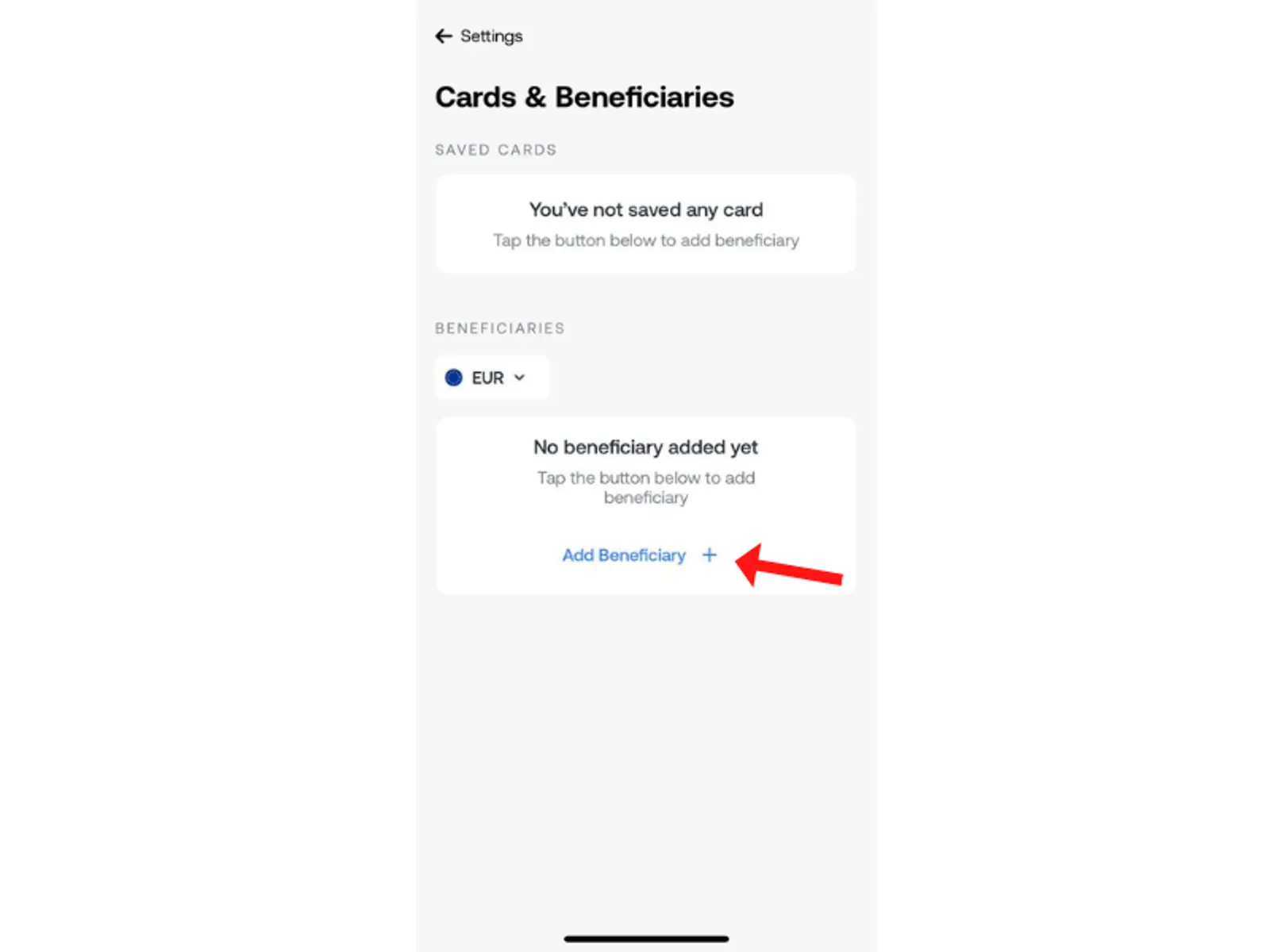
The process takes a few minutes from your phone. Here is how to do it step by step.
1. Create and verify your Grey account. Download the Grey app, sign up with your email, and verify your identity. You will need a valid government-issued ID (South African ID card, passport, or driver's licence). Verification typically completes within minutes.
2. Fund your account. Transfer funds from your South African bank account into your Grey wallet. Grey supports multi-currency accounts in USD, EUR, and GBP. Your ZAR will be converted as part of the transfer process.
3. Start your transfer. Tap Send, search for Nigerian Naira (NGN), and select it. Choose bank transfer as the delivery method.
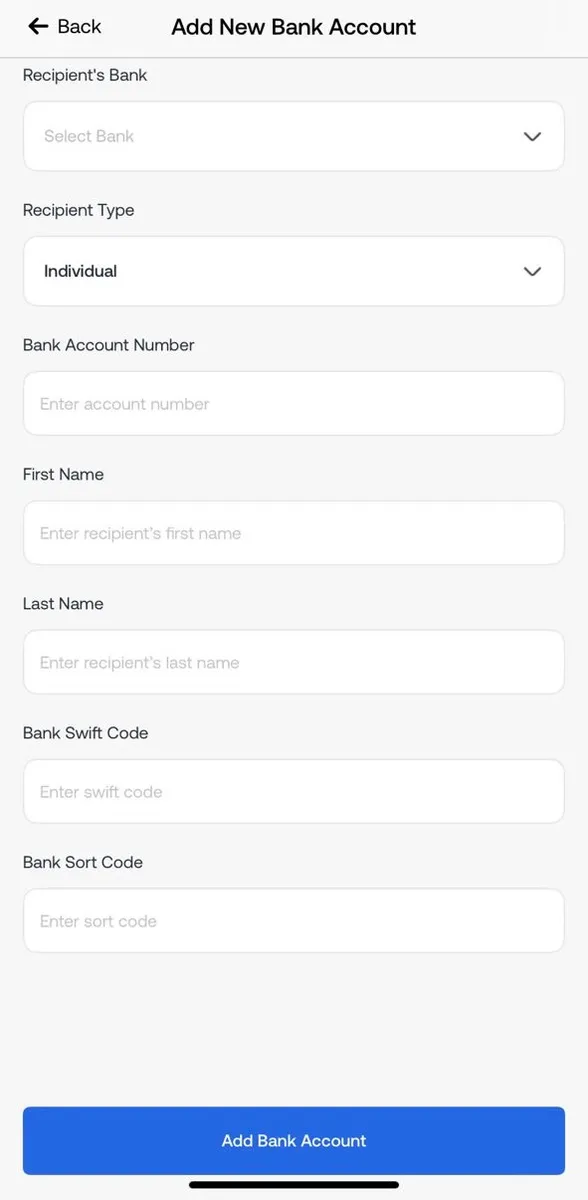
4. Add your recipient's details. Enter your recipient's full name, their Nigerian bank name, and their account number. Grey supports all major Nigerian banks including GTBank, Access Bank, Zenith Bank, First Bank, UBA, and every other commercial bank in Nigeria.
5. Enter the amount and review. Type the amount you want your recipient to receive in NGN, or the amount you want to send. Grey shows the live exchange rate, the conversion fee, the NGN 35 payout fee, and exactly how much naira your recipient will receive. Everything is on one screen before you confirm.
6. Confirm and send. Review the summary, confirm with your PIN or 2FA code, and the transfer is processed. Your recipient's Nigerian bank account is credited within minutes to the same day.
Your recipient does not need a Grey account. The naira arrives as a standard bank deposit in their Nigerian bank account.
What your recipient sees in Nigeria
Your recipient receives a standard domestic bank credit in their Nigerian bank account. The deposit arrives in naira and appears like any other inward transfer. Your recipient does not need to download an app, create an account, or take any action before you send.
The naira amount your recipient receives is the amount shown on your confirmation screen in the Grey app. There are no intermediary deductions between what Grey dispatches and what lands in the account. The NGN 35 payout fee is deducted on your end, not on the recipient's end.
If your recipient banks with a Nigerian bank that sends SMS or push notifications for deposits (most do), they will see the credit notification within minutes of you confirming the transfer. This makes it easy to coordinate: you can tell your recipient the exact amount to expect and they can confirm receipt almost immediately.
| Component | Amount | Notes |
|---|---|---|
| Conversion fee | 1% of the transfer amount | The cap at the naira equivalent of $6 applies to Group A pairs (USD/EUR/GBP/NGN). For ZAR conversions, confirm in the app whether the cap applies, since ZAR is not a named Group A currency. |
| Nigeria payout fee | NGN 35 flat per transfer | Charged regardless of amount. Applies to all NGN bank transfers. |
| Total cost on a R5,000 transfer (uncapped) | 1% + NGN 35 | If uncapped: ~R50 conversion + NGN 35 payout. |
| Total cost on a R5,000 transfer (if cap applies) | ~R100 cap + NGN 35 | If the $6 cap applies at current rates. |
The conversion fee cap status for ZAR-NGN specifically requires confirmation in the Grey app before sending. The 1% rate applies regardless. NGN 35 payout fee confirmed from support.grey.co. Data checked September 2026.
Even at the uncapped 1% rate, Grey is competitive on this corridor. The Monito average for the cheapest SA-to-Nigeria option was 4.1% of the transfer amount. A 1% conversion fee plus a negligible payout fee is roughly a quarter of that market average.
For context, South African bank SWIFT transfers to Nigeria typically cost R300 to R1,000 in direct fees (roughly $16 to $55) plus a wider exchange rate margin. On a R10,000 transfer, the bank's total cost can easily exceed 5% of the amount when you factor in both the fee and the rate.
How long does it take?
This is significantly faster than the 3 to 5 business days typical of a South African bank SWIFT transfer. If your recipient needs the money urgently, the speed difference alone justifies using a transfer app over a bank.
Understanding the ZAR to NGN exchange rate
The rand-to-naira exchange rate is one of the most volatile African currency pairs. As of recent data, 1 ZAR buys approximately 80 to 85 NGN, but this fluctuates daily based on oil prices, South African economic data, Nigerian forex policy changes, and global dollar strength.
Because there is no deep direct ZAR-NGN market, the effective rate you receive depends on how the provider routes the conversion. Most providers convert ZAR to USD first, then USD to NGN. The tighter the spread on each leg, the more naira your recipient gets.
Grey shows the effective rate on screen before you confirm. You can compare it against the mid-market ZAR-NGN rate on Google or xe.com at the same moment to gauge the margin. If you are not satisfied with the rate, you can wait and check again later. Currency pairs with this much volatility can move 2% to 3% in a single week, which means timing your transfer well can save more than any fee difference between providers.
If you send regularly, consider converting a larger amount when the rate is favourable and holding the balance in your Grey account until you are ready to send. This lets you lock in a rate without committing to the transfer immediately.
South African regulations for sending money abroad
The South African Reserve Bank (SARB) and SARS regulate all outbound foreign currency payments. As a South African resident, you have two allowances for transferring money abroad:
- Single Discretionary Allowance (SDA): R1 million per calendar year. No tax clearance certificate required. This is the allowance most individuals use for personal remittances, family support, and gifts. You do not need to declare the purpose in advance, though the transfer must go through an authorised dealer.
- Foreign Investment Allowance (FIA): Up to R10 million per calendar year. Requires a tax clearance certificate from SARS, which confirms you are a registered taxpayer with no outstanding obligations. Processing the tax clearance can take several weeks, so plan ahead if you need to send amounts above R1 million.
All outbound transfers must go through authorised dealers (licensed banks or approved transfer providers). Grey operates through licensed banking partners within this framework. You do not need to visit a bank branch or obtain separate SARB approval for transfers within the SDA limit.
One practical note: when you set up a new payee for an international transfer in South Africa, some banks and apps require you to provide a reason for the transfer (e.g., family support, education, gift). This is a standard regulatory requirement, not specific to any one provider.
| Provider | Fee structure | Speed | Best for |
|---|---|---|---|
| Grey | 1% conversion + NGN 35 payout | Minutes to same day | Fast delivery, transparent fee, multi-currency account |
| WorldRemit | $0-$4.99 + rate margin | Minutes to 3 days | Cash pickup, established brand, wide delivery options |
| LemFi | Low/zero fee + rate spread | Same day | Competitive parallel-market rates, diaspora trust |
| Pesa | $0 fee, cost in rate | Instant (claimed) | Lowest headline cost, zero visible fee |
| SA bank SWIFT | R300-R1,000+ fees + rate margin | 3-5 business days | Only option if provider apps are unavailable |
There is no single cheapest option that wins every time. LemFi and Pesa often offer the most competitive rates because they earn on the spread rather than a visible fee, but you need to check the amount delivered when you send. Grey's advantage is transparency (you see the fee and rate before confirming) and speed (minutes rather than days). WorldRemit's advantage is delivery flexibility (cash pickup in Nigeria for recipients without bank accounts).
For a broader comparison of outbound transfer apps, including those that do not serve the South Africa corridor, see how to send money from Nigeria to any country in 2026.
Four tips for saving on South Africa-to-Nigeria transfers
Compare the delivered amount, not the fee. LemFi and Pesa show no visible fee, but the cost is in the rate. Grey shows a visible 1% fee but may deliver more naira because the rate is tighter. The only number that matters is how many naira your recipient actually receives. Check this on two or three apps before you confirm.
Time your transfer when the rand is strong. The ZAR-NGN rate can move 2% to 3% in a single week. If your transfer is not urgent, check the rate daily and send when the rand strengthens. Grey lets you hold funds in your account without sending, so you can wait for a better rate without any holding cost.
Batch your transfers to reduce cost per rand. If you send R3,000 monthly, you pay the conversion fee twelve times a year. If you can send R9,000 quarterly instead, you pay it four times. On Grey, the NGN 35 payout fee is per transfer, not per rand, so fewer transfers also means fewer flat fees.
Use Grey for large transfers, compare LemFi and Pesa for small ones. On transfers above R5,000, Grey's transparent fee and fast delivery make it the strongest overall option. On smaller, non-urgent transfers, LemFi's parallel-market rates or Pesa's zero-visible-fee model may deliver slightly more naira. The difference is small on low amounts but worth checking if you send frequently.
You can also read the cheapest way to send money from Nigeria in 2026 to see how it works the other way.
Frequently asked questions
How much does it cost to send money from South Africa to Nigeria?
Grey charges a 1% conversion fee plus a NGN 35 flat payout fee per transfer. Whether the fee cap at the naira equivalent of $6 applies to ZAR conversions should be confirmed in the app, since ZAR is not a named Group A currency. Even at the uncapped 1% rate, Grey is significantly cheaper than South African bank SWIFT transfers, which typically cost R300 to R1,000 in fees plus a wider exchange rate margin.
How long does it take to send money from South Africa to Nigeria?
Grey delivers to Nigerian bank accounts in minutes to the same day. Moneytransfers.com cited Grey as the fastest option for ZAR-to-NGN transfers. By comparison, SWIFT transfers from South African banks typically take 3 to 5 business days.
Which Nigerian banks does Grey support?
Grey delivers to all major Nigerian banks, including GTBank, Access Bank, Zenith Bank, First Bank, UBA, and every other commercial bank that accepts domestic deposits. Your recipient does not need a Grey account.
Is it cheaper to use Grey or LemFi for South Africa to Nigeria?
It depends on the amount and the exchange rate at the time. LemFi often offers competitive parallel-market rates with low or zero visible fees, earning through the rate spread. Grey charges a visible 1% fee with a transparent rate. The only way to know which is cheaper on a given day is to compare the total naira your recipient would receive on both apps at the same moment.
Do I need a tax clearance certificate to send money from South Africa to Nigeria?
Not for amounts within the Single Discretionary Allowance of R1 million per calendar year. The SDA allows transfers abroad without a tax clearance certificate. For amounts above R1 million and up to R10 million, you need a Foreign Investment Allowance with tax clearance from SARS.
Can I send money from South Africa to Nigeria using Wise?
Wise operates in South Africa and supports ZAR as a sending currency. However, Wise has historically had restrictions on the Nigeria corridor. Check the Wise app at the time of transfer to confirm whether ZAR-to-NGN is available. If it is, Wise typically charges 0.5% to 1.5% with the mid-market rate.
What exchange rate will I get for ZAR to NGN?
Grey shows the live ZAR-to-NGN rate before you confirm the transfer. The rate includes a margin over the mid-market rate, which is standard across all providers. Because there is no deep, direct ZAR-NGN forex market, conversions typically route through USD (ZAR to USD to NGN), and the rate reflects both legs. You can compare Grey's rate against the mid-market rate on xe.com or Google to gauge the margin.
Related reading
How to send money from Nigeria to any country in 2026 works when the money is going out of Nigeria, this guide is for senders based in Nigeria rather than South Africa.
Cheapest way to send money from Nigeria in 2026 compares fees and how much it costs to send money from Nigeria.
Best apps to send money internationally from the US in 2026 covers the US outbound market, where the competitive landscape and fee structures are very different.
Exchange rates on Grey are variable and include a margin over the mid-market rate. Always review the rate before confirming a conversion. Grey is a financial technology company, not a bank. Banking services are provided by licensed banking partners. This article is general information, not financial advice.