Send money from Malaysia to Thailand and pay in baht
Money crosses from Malaysia into Thailand for family support, long-stay rent and payments to contractors and suppliers. Grey converts your funded US dollar balance into baht and credits the Thai bank account you enter. What lands is the currency they already spend, so nobody at the other end has to change anything.
MYR
THB


-

Trusted by 3M+ people around the world

GOOGLE PLAY •22K REVIEWS

APP STORE • 12K REVIEWS
How a dollar balance in Malaysia becomes baht in a Thai account
Short distance does not make this corridor simple. People send to a retired parent in Hua Hin, to a family member in Udon Thani, to a landlord holding a lease in Chiang Mai or to a supplier in Bangkok, and each of those payments has to land in baht to be useful. Students and graduates in Kuala Lumpur, Cyberjaya and Selangor sit alongside freelancers, expatriate staff and small businesses among the senders.
Grey sends from a funded US dollar balance rather than from ringgit handed over in cash. The Grey USD account is provided by Lead Bank and comes with US routing and account numbers, so a client, an employer or another bank you hold can pay dollars straight into it. You convert those dollars to baht when you decide to send.
Baht is what lands, paid directly into the Thai account you nominate. You enter their bank and account details in the app, and because the currency arrives already converted there is no second rate applied after yours.
How to send money to Thailand from Malaysia

Sign up
Create a Grey account on your phone and verify your identity with a passport or another accepted photo ID. Grey Inc is registered with FinCEN, registered address 651 N Broad St, Suite 206, Middletown, DE 19709, United States.

Fund
Baht leaves only once dollars have arrived. Pass your Lead Bank routing and account numbers to whoever pays you, or wire dollars in from another bank you hold.

Send
Enter the Thai bank and account details along with the account name. The baht figure and the fee appear together before you commit, and confirming fixes the rate.
What a transfer from Malaysia to Thailand costs
Every baht transfer carries two charges, the fee on the screen and the margin sitting inside the rate. A provider that advertises no fee can still deliver the smaller baht total, because the cost has simply been moved somewhere less visible.
The useful test is the delivered amount. Enter the same dollar figure into Grey, Wise and Remitly, then look only at the baht each promises to put into the Thai account. One comparison, both costs accounted for.
A Malaysian bank sending baht uses SWIFT, which exposes the payment to deductions by correspondent banks and can leave the Thai account short of the sum quoted at the counter. Converting before the money travels removes that uncertainty, because the baht total is agreed in advance.
Where the recipient would otherwise receive foreign currency, their own bank applies its own conversion on arrival. Sending baht avoids that second rate entirely, which is the difference most people notice on a monthly payment.

How the rate from your dollar balance to baht works

Grey holds the dollar to baht rate at the moment you confirm, so the baht shown is the baht credited in Thailand. What the market does next cannot change a payment already sent.
A payment that starts in dollars carries one conversion rather than two. No ringgit step sits in front of it, so a single margin applies on the way to baht.
Conversion happens when you say so. Dollars in a Grey balance remain dollars until you act, which lets you choose the moment rather than being tied to the day funding arrived.


Grey compared with a Malaysian bank transfer to Thailand
A Malaysian bank sends to Thailand over SWIFT, which means correspondent banks, branch cut-offs and charges that can be taken after your instruction has gone. Grey converts first, so the Thai bank receives baht and applies no exchange of its own to the credit.
The second difference is what the recipient has to do. Nothing arrives that needs changing, no trip to a counter is required, and the payment status is readable in the Grey app rather than through a branch enquiry.
What your recipient in Thailand sees
Baht appears in the Thai bank account they already use. No Grey account is required on their side and nothing has to be collected.

Payout to a Thai bank account
The baht goes straight into the recipient account in Thailand. You supply the Thai bank and account number, and the local currency enters the account directly.

How the money lands
It lands as an ordinary local baht credit, with no conversion for the recipient to arrange. The status is visible in the Grey app from confirmation to payout.

GreyTag
If the person receiving also uses Grey, send to their GreyTag instead. A transfer from one Grey user to another settles at once with no fee attached, in any currency.
How to fund a transfer to Thailand
Funding comes first and decides your timing. Baht cannot be converted until dollars have settled in your Grey USD account, so the route you pick shapes when the payment goes.
Employer or client payments
Hand over the Grey USD account details once, and every payment afterwards arrives there with nothing further to do.
Dollar wire
Send dollars in by wire from another bank, quoting the routing and account numbers the Grey app shows.
Existing Grey balance
A balance already held converts straight away, so a baht payment can leave without waiting on a deposit.

Keeping a working balance is sensible here because many of these payments are fixed dates rather than flexible ones. Rent, care costs and supplier terms do not shift because an invoice was settled late, and dollars already in place keep the baht on schedule.

Who sends money from Malaysia to Thailand
Students and graduates
African students and graduates around Kuala Lumpur, Cyberjaya and Selangor with family, study or living costs attached to Thailand.
Remote workers and freelancers
People based in Malaysia who invoice overseas clients in dollars and convert part of each payment into baht as costs come round.
Expatriate professionals
Staff in Kuala Lumpur, Penang and Johor on dollar payroll who hold a Thai account of their own, paying rent or medical costs into it.
Businesses paying suppliers
Malaysian companies and small teams paying Thai manufacturers, contractors and service providers in baht from a dollar balance.
Dollar earners resident in Malaysia carry this corridor. It mixes family support with long-stay living costs and business payments to Thai suppliers.
The best way to send money from Malaysia to Thailand



FAQs
How much does it cost to send money from Malaysia to Thailand?

Grey shows the fee and the rate before you confirm. Compare the baht delivered across providers rather than the headline fee alone.
How quickly does the baht reach the account?
It lands as an ordinary local baht credit. A status for the payment runs in the Grey app from confirmation until payout.
What details do I need to send money to Thailand?
The recipient Thai bank, their account number and the account name, all entered in the Grey app before you confirm.
Does the money arrive in baht or in dollars?
In baht, directly into the Thai account. Nothing is left for the recipient to convert and no second rate is applied.
Can I send money to my own Thai account?
Yes. Make sure the Thai account name matches the name held on your Grey account before you send the first payment.
Is there a limit on how much I can send?
Any limit attached to your account is displayed in the app before confirmation, so you see it while sending.
Can I track a transfer to Thailand?
Yes. Each baht payment carries a status in the Grey app from the moment you confirm until the Thai account is credited.
Is Grey safe for sending money to Thailand?
Grey Inc is registered with FinCEN in the United States, and your balance is encrypted while each baht payment is tracked throughout.
How do I fund the transfer from Malaysia?
Employer or client payments into the Grey USD account, a dollar wire from another bank, or a balance you already hold.
What records should I keep for tax?
Grey logs every transfer in the app. Check what Malaysian and Thai rules ask of you, because Grey does not give tax advice.
What happens if the account details are wrong?
Check the bank, the account number and the name on the confirmation screen first. Should a payment leave with the wrong details, raise it in the app straight away.
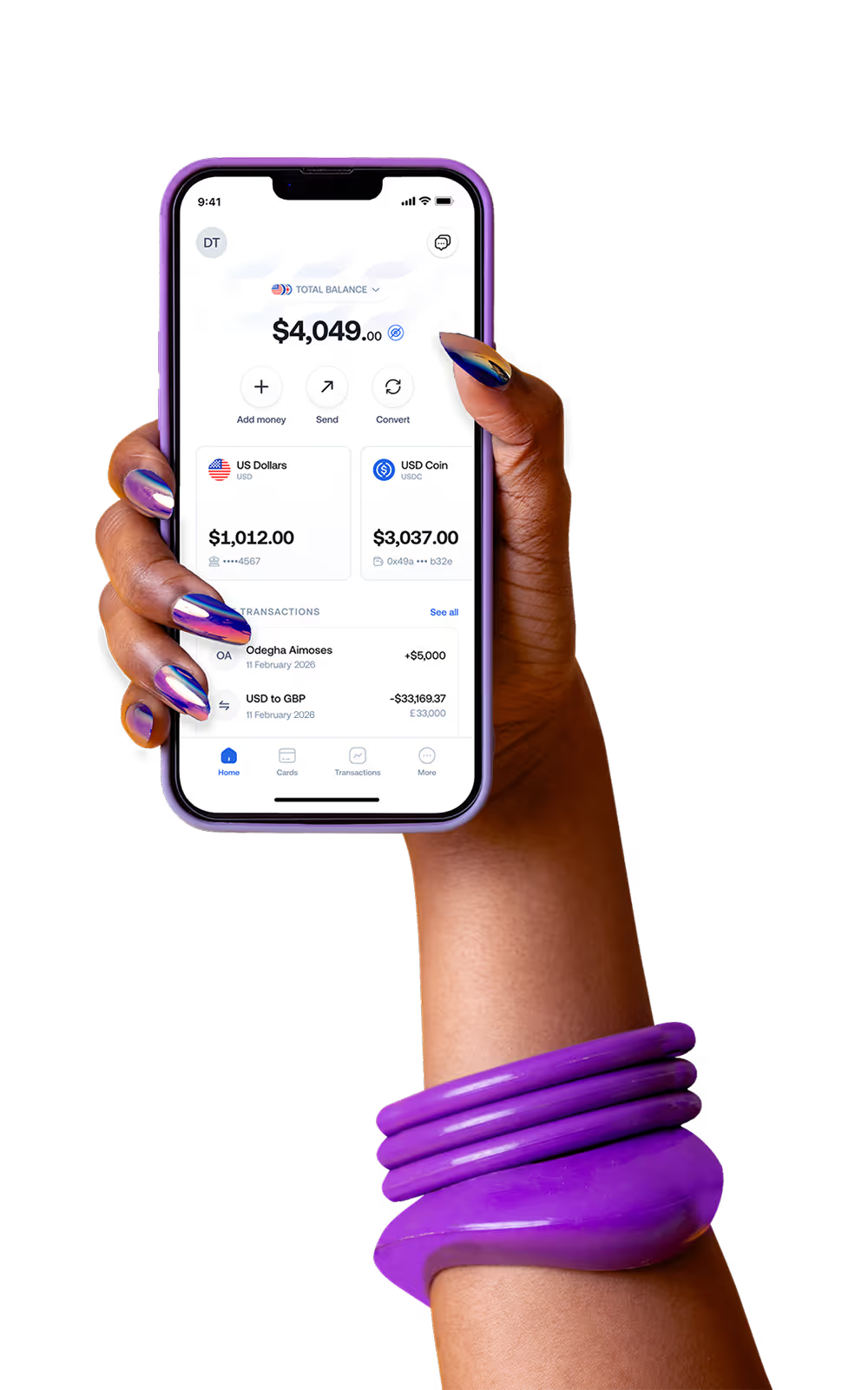
Get digital banking
at your fingertips