<script type="application/ld+json" data-schema-version="grey-blog-v4"> [{"@context":"https://schema.org","@type":"BlogPosting","@id":"https://grey.co/blog/how-to-open-us-uk-and-euro-bank-accounts-remotely-in-new-zealand#article","headline":"How to open US, UK and Euro bank accounts remotely in New Zealand","description":"Learn how to open a US, EU and UK bank accounts remotely from New Zealand. Follow this comprehensive guide and access US financial services with ease using platforms like Grey.","inLanguage":"en","url":"https://grey.co/blog/how-to-open-us-uk-and-euro-bank-accounts-remotely-in-new-zealand","mainEntityOfPage":{"@id":"https://grey.co/blog/how-to-open-us-uk-and-euro-bank-accounts-remotely-in-new-zealand#webpage"},"datePublished":"2024-11-29T16:02:18.824Z","dateModified":"2026-07-08T09:55:54.573Z","author":{"@type":"Person","@id":"https://grey.co/authors/adeolu-titus-adekunle#person","name":"Adeolu Titus Adekunle","url":"https://grey.co/authors/adeolu-titus-adekunle","jobTitle":"Content Writer","sameAs":["https://www.linkedin.com/in/titusadeoluadekunle/"]},"publisher":{"@type":"Organization","@id":"https://grey.co/#organization","name":"Grey","url":"https://grey.co","logo":{"@type":"ImageObject","url":"https://cdn.prod.website-files.com/6360022338a81bd6fdbb1145/6564ae1077a67e39d3c491a6_Grey%20Logo%20Lockup%20Black.svg"}},"image":{"@type":"ImageObject","@id":"https://grey.co/blog/how-to-open-us-uk-and-euro-bank-accounts-remotely-in-new-zealand#primaryimage","url":"https://cdn.prod.website-files.com/636a85d290ee58e70c17e1c0/6a30181dec6718bf31aa8b25_6a301811d96c1362f2e64485_how-to-open-us-uk-and-euro-bank-accounts-remotely-in-new-zealand__header-image.webp","contentUrl":"https://cdn.prod.website-files.com/636a85d290ee58e70c17e1c0/6a30181dec6718bf31aa8b25_6a301811d96c1362f2e64485_how-to-open-us-uk-and-euro-bank-accounts-remotely-in-new-zealand__header-image.webp","width":1200,"height":675}},{"@context":"https://schema.org","@type":"WebPage","@id":"https://grey.co/blog/how-to-open-us-uk-and-euro-bank-accounts-remotely-in-new-zealand#webpage","url":"https://grey.co/blog/how-to-open-us-uk-and-euro-bank-accounts-remotely-in-new-zealand","name":"How to open US, UK and Euro bank accounts remotely in New Zealand","description":"Learn how to open a US, EU and UK bank accounts remotely from New Zealand. Follow this comprehensive guide and access US financial services with ease using platforms like Grey.","inLanguage":"en","primaryImageOfPage":{"@id":"https://grey.co/blog/how-to-open-us-uk-and-euro-bank-accounts-remotely-in-new-zealand#primaryimage"},"breadcrumb":{"@id":"https://grey.co/blog/how-to-open-us-uk-and-euro-bank-accounts-remotely-in-new-zealand#breadcrumb"}},{"@context":"https://schema.org","@type":"BreadcrumbList","@id":"https://grey.co/blog/how-to-open-us-uk-and-euro-bank-accounts-remotely-in-new-zealand#breadcrumb","itemListElement":[{"@type":"ListItem","position":1,"name":"Home","item":"https://grey.co/"},{"@type":"ListItem","position":2,"name":"Blog","item":"https://grey.co/blog"},{"@type":"ListItem","position":3,"name":"How to open US, UK and Euro bank accounts remotely in New Zealand","item":"https://grey.co/blog/how-to-open-us-uk-and-euro-bank-accounts-remotely-in-new-zealand"}]}] </script>

How to open US, UK and Euro bank accounts remotely in New Zealand

Adeolu Titus Adekunle

TABLE OF CONTENT

SHARE THIS POST

While the New Zealand Dollar is considered stable, managing multiple currencies is essential for freelancers, business owners, students, and travellers in New Zealand. Holding US, UK, and Euro accounts doesn’t only simplify international transactions but also helps save the cost of converting from one currency to another. With digital platforms like Grey, opening these accounts remotely is now a smooth, hassle-free process.

Here’s a step-by-step guide on how to open US, UK, and Euro bank accounts remotely in New Zealand, and why it’s beneficial.

Why open US, UK, and Euro bank accounts in New Zealand?

Holding foreign currency accounts while residing in New Zealand offers significant financial advantages:

  • Simplified international transactions

Owning US, UK and Euro bank accounts makes it easier to receive payments from international clients in the US, UK, and Europe. You can send and receive payments without having to convert currencies every now and then.

  • Less currency conversion fees

Managing your finances in USD, GBP, and EUR saves you from frequent and costly currency conversion fees. Transactions are processed directly in these currencies, avoiding unnecessary charges.

  • Global payment platform integration

Having access to US, UK, and Euro accounts makes it easier to link with global payment systems like PayPal, Stripe, and other e-commerce platforms. This ensures smoother business transactions and subscription payments.

  • Convenience for students and expats

International students and expats in New Zealand can benefit from holding multi-currency accounts. They can pay tuition fees, rent, and other expenses directly in foreign currencies without incurring hefty conversion fees.

  • Travel flexibility

Frequent travellers benefit from booking flights, accommodations, and other travel expenses in their respective currencies without worrying about fluctuating exchange rates.

Read also: How non-US citizens can open a US bank account online.

A step-by-step guide to opening US, UK, and Euro bank accounts remotely in New Zealand

You can easily open and manage multi-currency accounts from New Zealand using Grey. Follow these steps:

Step 1: Create an account on Grey

Start by visiting Grey’s official website or downloading their mobile app:

__wf_reserved_inherit
  • Click on the “Get Started – it’s free” button.
  • Select New Zealand as your country of residence and proceed.
  • Enter your personal details, including your full name, email address, and phone number.

Step 2: Set a secure password

Create a strong password with the following:

__wf_reserved_inherit
  • Uppercase and lowercase letters.
  • At least one number and special character.
  • A minimum length of eight characters.

Step 3: Verify your email

You’ll receive a One-Time Password (OTP) sent to your email. Enter the code to verify your email address. If the email doesn’t arrive, check your other email folders, confirm that you typed in your correct email address or request a new OTP.

__wf_reserved_inherit

Step 4: Complete identity verification

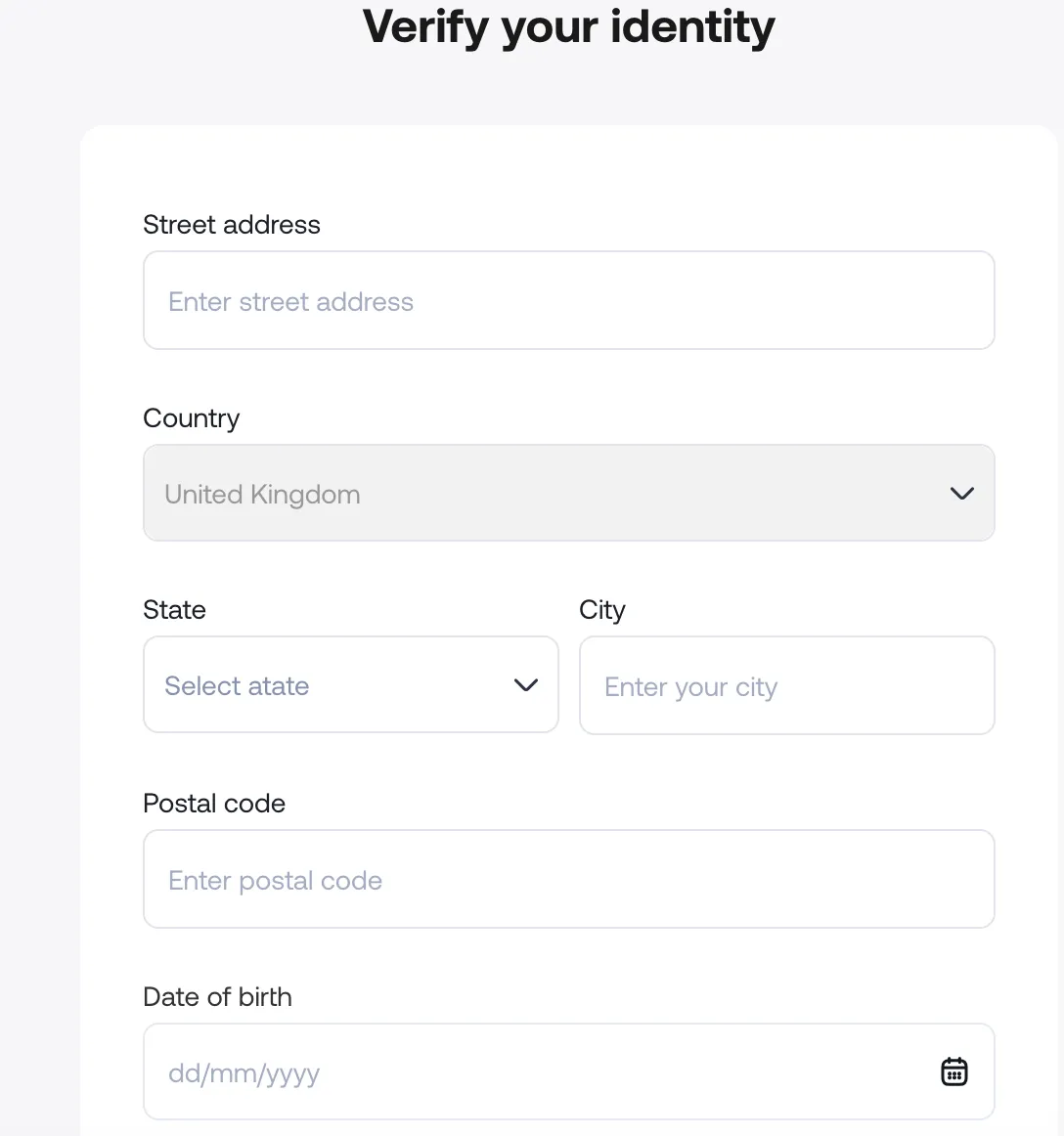
Grey requires you to verify your identity to comply with financial regulations by completing the Know Your Customer (KYC) process.

__wf_reserved_inherit
  • Upload a valid ID: This can be a passport, driver’s license, or national ID. Ensure it is clear and legible.
  • Provide proof of address: Submit a recent utility bill, bank statement, or official document that confirms your address.
  • Take a selfie: Ensure excellent lighting and no accessories like hats or glasses. The photo must show your full face.

Step 5: Wait for approval

This KYC verification process usually takes a few hours but may take longer if the documents need further review. Once approved, you will receive your US, UK, and Euro account details and can start transacting immediately.

Who can benefit from US, UK, and Euro accounts in New Zealand?

Freelancers and remote workers

Freelancers working with international clients can receive payments directly in USD, GBP, or EUR, avoiding hefty conversion fees and delays.

Digital nomads

Digital nomads in New Zealand can streamline their financial management by using multi-currency accounts for subscriptions, tools, and international payments.

Students and expats

Students and expats benefit from paying tuition, rent, and other living expenses directly in foreign currencies, avoiding costly bank fees and conversion rates.

Business owners

Entrepreneurs and businesses can handle cross-border transactions more efficiently, ensuring smooth payments from global clients and partners.

Frequent travellers

Travellers can manage travel-related expenses like flights, accommodations, and tours without worrying about unfavourable exchange rates.

Conclusion

Opening and managing US, UK, and Euro bank accounts from New Zealand gives you financial flexibility, cost savings, and access to global markets. With Grey, you can open these accounts quickly and efficiently, streamlining your international transactions. Whether you’re a freelancer, student, business owner, or traveller, having multi-currency accounts offers the convenience and freedom to operate globally.

Sign up on Grey today and experience hassle-free cross-border banking!

‍

Last updated:

October 2, 2026

Open a free Grey account to get startedJoin 1 million digital nomads
IF YOU ENJOYED THIS, CHECK THESE OUT

How to withdraw to your local bank account on Grey

•

•

2 min read

Get in here; let’s talk about getting your funds into your local accounts. Once you’re notified via email or push notification that you have received funds in your virtual foreign account, It becomes available in your balance for that currency.

Here’s a step-by-step guide showing how you can convert the funds in your foreign currency balance to your local bank account:

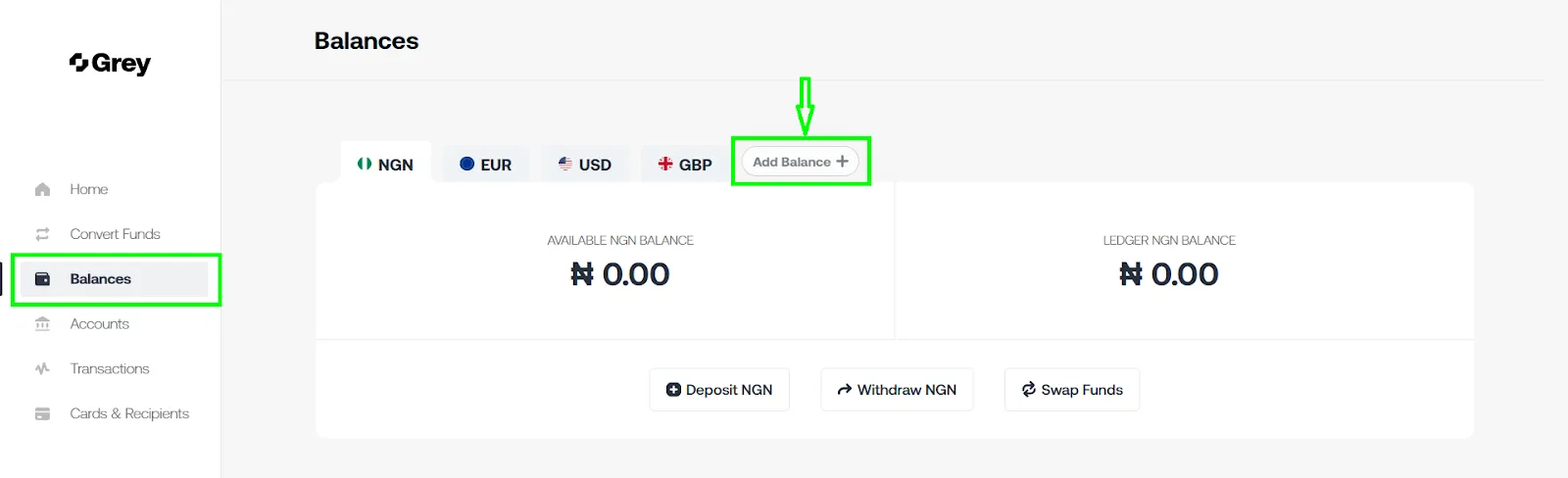
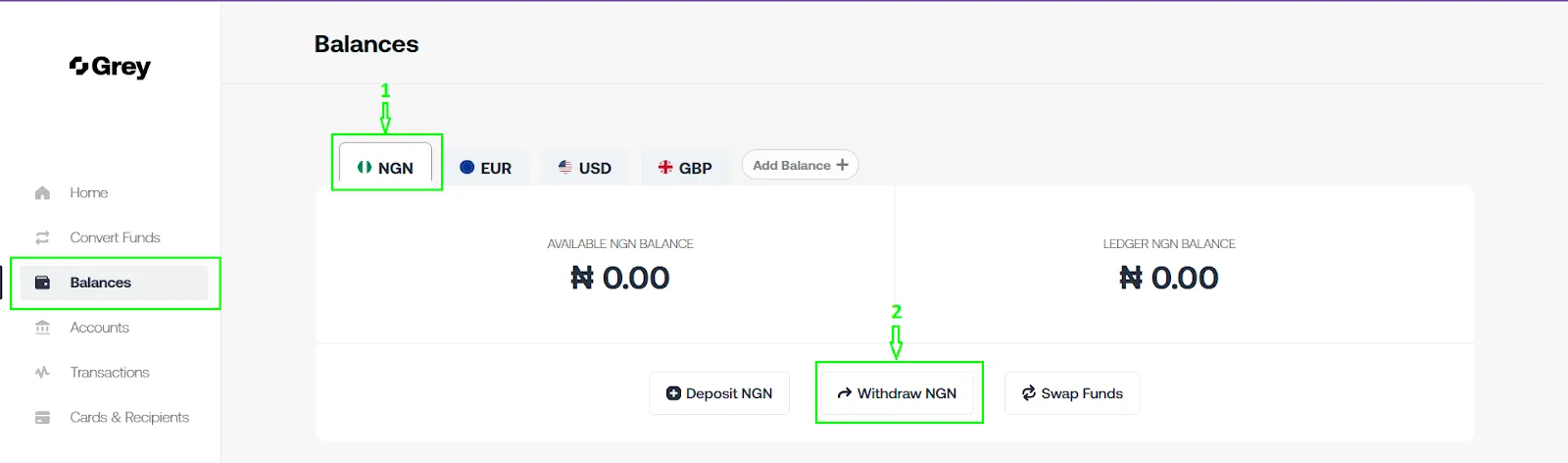
  • Log in to your Grey account to access your dashboard and select “Balances.”
  • Ensure that you have added your local currency to the currencies available in your balance; to be able to convert to your local currency.

For example, if your local currency is NGN, you will need to add NGN to the currencies in your balance to convert to NGN.

6387930f17d78e92805ef322 dYnbqZk 4lApav1f2XleXS1fhYrSPvIfwdtdvSOwoEUcxuAIsC5rUJj j3mguylWzBdaiLs0k8FE9D jbwxRUQvnuzCHMIx9NII3yg1rRBHRcYxJFodsMMl5loIY88VTDqjSe bLgzjNQIPZZw
  • Select the balance you would like to convert from**. (**We will demonstrate using a GBP balance.)
  • Click on “Swap funds” and select your local currency to convert.
6387930f17d78e74775ef324 l9dbEV6p2900xrIewEesOj5iWdCLNrDQcEv7 IUz rCOCGjLvGXomsmX60MrCb9 YSu5qCYuqglGgKVacPEZy4d5QfR2AWenva u5HPwGaBDqYi q ChvUKMAmGvV fqDE3iCQ07NQ9NplY4sw
  • Proceed to your local currency balance (NGN in our example).
  • Click ‘Withdraw NGN’ to withdraw your funds to your local bank account.
6387930f17d78e90145ef323 0uaBXYx9cy0YWO30jxrG6iprj qgw1ylRsrceC 5RFXWHm078pYmwDi4AtU8ejEM RNhqah3FqbgUGMxk6I8ujCxDIOxx95GshAG2rntgeDVIWpHGoB46COCzNWKBR4mPylA15zToFQN7d79Kg

Note that swap and withdrawal fees apply. All transactions are settled instantly, and any delays result from the banking network.

Got funds you need to withdraw into your local account? Hop on Grey to create a virtual foreign account, enjoy seamless international transactions, and send and receive money from anywhere in the world with ease.

Nigerian dollar account: How to open and use one

•

•

2 min read

If you are a Nigerian earning in dollars from freelance clients, a remote job, an international consultancy, or a business with customers abroad, consider opening a dollar account. Receiving USD payments into your local account means you are forced to convert every payment to naira the moment it arrives, often at marked-up rates worse than you would get elsewhere.

A Nigerian dollar account holds US dollars without automatically converting them to naira. You can open a bank domiciliary account at banks like GTBank or UBA, or a virtual USD account through a fintech, which gives you real US account details to receive payments and usually opens faster with lower fees.

This guide explains how to open a dollar account in Nigeria and compares domiciliary accounts with virtual accounts, so you can decide what works best for you.

What is a Nigerian dollar account?

A Nigerian dollar account lets you receive and hold USD instead of automatically converting it to naira. Most often, this term refers to a domiciliary account.

A domiciliary (or dom) account is a foreign currency account offered by Nigerian commercial banks (UBA, GTBank, First Bank, Standard Chartered, and others) and regulated by the Central Bank of Nigeria. This account lets you hold a foreign currency account with a Nigerian bank.

Both fintechs with virtual USD accounts and traditional banks with domiciliary accounts serve the same purpose. They both let you hold dollars as dollars without converting to naira. You only convert when you choose.

Domiciliary account vs virtual USD account

At a glance, here is how a domiciliary account is different from a virtual USD account.

Factor Bank domiciliary account Virtual USD account
Where it is held Nigerian commercial bank Issued via a US partner bank, accessed through a fintech app
Documents required Usually requires more documentations, including an application form, a valid ID, proof of address, BVN, NIN, recent photographs, and sometimes,  proof of the source of funds and references.   Usually simpler online verification requiring a valid ID, proof of address, and a selfie.
Opening balance
Often requires a minimum opening deposit, amount varies. Usually no minimum opening balance
Account opening speed
Can take days, sometimes requiring an in-branch visit Often same-day, fully online
Receiving USD Through international (SWIFT) wire with correspondent bank deductions Via ACH (like domestic transfer), no correspondent bank involved.
Fees Account maintenance, correspondent bank, and international wire fees Often lower or no monthly fee, transaction-based pricing instead
Best for Large or occasional foreign transfers Freelancers and remote workers receiving regular USD payments

The most important difference between virtual USD accounts is how you receive your dollars.

A domiciliary account usually receives international payments through SWIFT. The payment may pass through one or more intermediary banks before reaching your Nigerian bank. These banks deduct fees along the way.

A virtual USD account with a US routing number can receive ACH payments directly through the US banking system, like a local transaction. This avoids the extra cost of intermediary banks.

How to open a bank domiciliary account

Opening a domiciliary account might have some differences in requirements across banks and depend on the account tier. But here is how to open a dollar account in Nigeria generally.

Step 1: Choose a bank

Compare domiciliary accounts from banks such as GTBank, UBA, First Bank, Zenith and Standard Chartered. Check their fees, minimum balances and requirements before choosing one.

Step 2: Prepare your documents

Typically required: a valid means of identification (National ID, international passport, or driver's licence), your Bank Verification Number (BVN), proof of address (a recent utility bill or tenancy agreement), and passport photographs. Some banks request additional documentation depending on the account tier or your source of income.

Step 3: Visit a branch or apply through the bank's digital platform

Some banks now allow you to open a domiciliary account online, especially if you are an existing customer. Others may still require an in-person visit, especially if you are a new customer or requesting a higher-tier account.

Step 4: Make your opening deposit

Many domiciliary accounts require a minimum opening balance. This usually depends on the bank and account tier. Confirm the current requirement directly with your chosen bank.

Step 5: Receive your account details

Once your application is approved, you will receive your domiciliary account number and the bank's SWIFT code, which is what senders abroad will need to wire USD to your account.

How to open a virtual USD account in Nigeria

Different virtual USD account providers have slightly different sign-up processes. Here’s a general process to give you an idea of what to expect.

Step 1: Sign up with a fintech provider offering virtual USD accounts

Download the app or visit the provider's website and create an account with your basic details.

Step 2: Complete identity verification

Upload a valid government-issued ID (typically your BVN-linked National ID, international passport, or driver's licence) and complete the standard identification verification process.

Step 3: Open your USD account

Once your account is verified, open a USD account in the app and receive your account details. Grey, for example, provides a USD account through a US partner bank and gives you a US routing number and account number rather than a Nigerian domiciliary account number.

Step 4: Share your account details with payers

Share your US routing number and account number with your clients and employers or add to the platforms. This way, you can get paid via ACH.

Step 5: Receive, hold, or convert

When the USD lands in your account, you can keep the money in USD or convert to naira and withdraw whenever you choose. The rate is usually disclosed before you confirm the transaction. Platforms like Grey also provide virtual cards linked with your USD account, so you can spend directly in USD.

See our guide on the best ways to receive international payments in Nigeria.

Fees, limits and receiving USD

Receiving USD through a domiciliary account can involve several charges. These may include the sender's bank fee, correspondent bank charges and fees from your Nigerian bank. The amount you receive can therefore be lower than the amount originally sent. You might also be charged a maintenance fee, which varies by bank.

A virtual USD account in Nigeria that receives payments through ACH avoids the correspondent banks used by SWIFT transfers. Providers may still charge a fee for receiving or processing payments, so check the fee before receiving a large payment. For example, Grey charges 0.8% for USD deposits (minimum: $2, maximum: $10). This is shown clearly before any transaction. So, you can tell how much you will be getting at the end, unlike SWIFT transfers that come with undisclosed layered fees.

Here is how to receive US dollars with Grey.

Converting USD to naira

Both options require you to consider the exchange rate when converting your dollars to naira. With a bank, the rate you receive depends on the bank's rate at the time of conversion.

On the other hand, fintech usually offers a rate close to the mid-market rate and charges a separate conversion fee, which is also disclosed before initiating the conversion. With Grey, the conversion fee is 1%, capped at $6.

Whether it is a dom account or a virtual USD account, monitoring the exchange allows you to decide whether to convert now or wait, especially when there is no urgent need.

For guidance specifically on receiving USD from the US into a domiciliary account, see our detailed guide on sending USD from the USA to a Nigerian domiciliary account.

Transaction limits

The Central Bank of Nigeria regulates traditional banks, and each bank sets its own policies governing how domiciliary accounts may be used. This includes setting limits on withdrawals per time.

Virtual USD account limits are set by the individual fintech provider rather than the CBN.  However, standard anti-money laundering practices may still impose limits depending on the account’s verification tier.

Grey offers USD, EUR, and GBP accounts, allowing you to receive and manage these currencies in one place without monthly maintenance fees. You have full control over when you want to convert, and the fees are disclosed beforehand.

Open a USD account with Grey and receive dollars with real US account details, and avoid international wire fees.

Frequently asked questions about Nigerian dollar accounts

What documents do I need?

For a bank domiciliary account, you typically need a valid means of identification, your BVN, proof of address, and passport photographs, with some banks requesting additional documentation depending on the account tier. For a virtual USD account like Grey, requirements are generally lighter: a valid government-issued ID linked to your BVN and standard identity verification completed within the app, without the need for a physical branch visit.

What is the minimum balance?

Domiciliary accounts often require a minimum opening deposit, with the specific amount varying considerably by bank and account tier, so confirm directly with your chosen bank before applying. Virtual USD accounts like Grey typically have no minimum opening balance requirement, making them more accessible for those starting with smaller or irregular USD income.

Can I receive USD without a bank domiciliary account?

Yes. A virtual USD account, provided through a fintech platform's US banking partner, gives you real US routing and account number details for receiving USD via ACH, entirely separate from a Nigerian bank's domiciliary product. This is often faster to set up and avoids the correspondent bank deductions that can reduce SWIFT wire transfers into a domiciliary account.

How long does it take?

Opening a bank domiciliary account can take anywhere from the same day to several days, depending on the bank and whether you need an in-branch visit. A virtual USD account through a fintech provider is typically faster, often completed the same day online, since the entire process, from sign-up to verification to receiving your account details, happens within the app without requiring a physical visit.

How to open and use a domiciliary account

•

•

2 min read

Have you been trying to receive foreign currencies like USD? As a business owner, do you need to make frequent transactions in foreign currencies? Getting domiciliary or foreign accounts will make your transactions a lot more seamless.

A domiciliary account is probably one of the top recommendations you’d already be familiar with. Popularly referred to as a ‘Dom account,’ domiciliary accounts are a common way to receive USD, EUR, and GBP payments in your local country. 

In this post, we’ll explore the types of dom accounts available, what you need to open one and share answers to some frequently asked questions about these accounts.

What is a Domiciliary Account?

A domiciliary account is an account that allows you to receive, send, and transfer foreign payments from your local country. You can receive any type of foreign payment on your dom account. However, sticking to widely accepted currencies like USD, EUR, and GBP is advisable because you can only receive funds based on your bank’s available currencies. 

One limitation of this account type is that you must open accounts based on the currencies you want to receive. This means that to receive Dollar payments, you have to create a USD dom account. And for Pounds, you have to create a GBP domiciliary account.

Unfortunately, you cannot transfer from your local currency to your dom account. You can only receive a currency based on the account you’ve created.

Types of Domiciliary Accounts

Before heading over to the bank to open yours, there are two types of domiciliary accounts you’d have to choose from. 

1. Current Dom Account: This is like a typical current account. It’s mostly suitable for business people who need to carry out many transactions. For example, you can issue checks to third parties on this account. The downside is that it attracts more usage fees compared to the other type of domiciliary accounts.

2. Savings Dom Account: With this account, you can save in foreign currencies and withdraw with a bank teller whenever you want. This is more convenient for individuals who carry out little transactions. 

Both accounts are eligible to receive interests. However, the rates are not fixed. To withdraw funds from any dom account, you need to visit the nearest bank branch and fill out a bank teller. Once you receive the withdrawn sum in cash, you can change that sum to your local currency at any bureau de change office. 

How to Open a Domiciliary Account

The process for opening a dom account in Nigeria, Kenya or Tanzania is pretty much the same. Any individual or business can open a domiciliary account as long as they have the requirements listed below;

  • A completed account opening form given by the bank
  • Recent passport photographs
  • Proof of address such as a utility bill
  • Referee letters
  • A minimum opening balance (varies from bank to bank)
  • A government-issued ID

Please note that the documents required primarily depend on the bank you’re applying to. The entire process is free, so once the checklist you need is confirmed, visit the nearest branch and apply in person. 

Benefits of a Dom Account

Some of the advantages of opening a domiciliary account is that you can;

  1. Open foreign accounts and receive payments in foreign currencies
  2. You can receive interests on your domiciliary savings account

Drawbacks of a Dom Account

While domiciliary accounts are a great option for carrying out foreign transactions, they have several limitations. Some of the disadvantages of a domiciliary account is that;

  1. You cannot process withdrawals from anywhere or directly fund your account with your local currency
  2. Dom accounts have high withdrawal commissions 
  3. Opening an account requires referees and guarantors which can be inconvenient
  4.  You have to physically visit a branch to open an account

A Better Alternative for Receiving Foreign Payments

You need a domiciliary account alternative that allows you to transfer and receive foreign payments conveniently. With a Grey virtual foreign account, you can

  • Create accounts in multiple currencies from the comfort of your home
  • Get instant access to your foreign accounts
  • Enjoy zero to low fees on transfers and international payments
  • Seamless withdrawals to your local accounts
  • Get lower withdrawal costs and great conversion rates
  • Save time by avoiding endless bank queues

And so much more. Ready to explore? Create a foreign account for free and start receiving foreign payments today

How to open a British pounds sterling account as a non-UK resident

•

•

2 min read

Do you need to carry out essential transactions in Pounds, but you reside in an African country? Does the limitation of not having a BRP force you into constantly converting your local currency into Pounds before carrying out a transaction? Perhaps you just need a more accessible and stable way to receive GBP from your employers as a freelancer. What you need is a Pounds bank account.

Since most high-street banks in the UK require your resident permit or proof of accommodation before you can open an account, you’re probably looking for alternatives. Fortunately, there are still alternative ways to open a Pounds Account even when you are an African resident. 

This post will show you how to open one as a non-UK resident. We’d also look through the requirements, and some frequently asked questions we think will come in handy. 

The Challenges of Opening a Pounds Account as a Non-UK Resident

If you’ve been researching online UK bank alternatives, you may have seen online banking options like Monese and Revolut. Unfortunately, while these are more flexible options, they still require proof of residency in an EU country. And so, if you reside in Africa, you’re faced with either opening a Pounds Domiciliary account or a Grey foreign account.

You cannot process withdrawals from anywhere or open an account without a Domiciliary account referee. You’d also face high withdrawal charges and constantly have to visit a bank branch to carry out transactions. This is why having a Grey Pounds account is the best option for a non-UK resident. 

Requirements for Opening a Pounds Bank Account

While the requirements for opening an account vary for each bank, there are some consistent documents you’d have to present. 

For a Domiciliary Account, they include;

  • A completed account opening form 
  • Recent passport photographs
  • Two referee letters
  • A valid means of identity, e.g., a Passport
  • A minimum account balance (varies from bank to bank)
  • Proof of address: a utility bill in your name, showing your address in your country of residence. 

For a Grey Foreign account, all you need is a Valid ID, utility bill, internet connectivity, and a smartphone/PC. 

How to Open a Pounds Account as a Non-UK Resident or Citizen

As a non-UK resident, the best option you have is to open a foreign bank account via Grey. With a Grey foreign account, you can send, receive, swap, and transfer funds in GBP. You can open a bank account on Grey without a residence permit or referee letter.

You also don’t need to visit any branch as everything you need to set up your account is online. Here’s a step-by-step process on how to open a Pounds account via Grey;

  • Log in to your Grey account. If you don’t have an account, you can create one here.
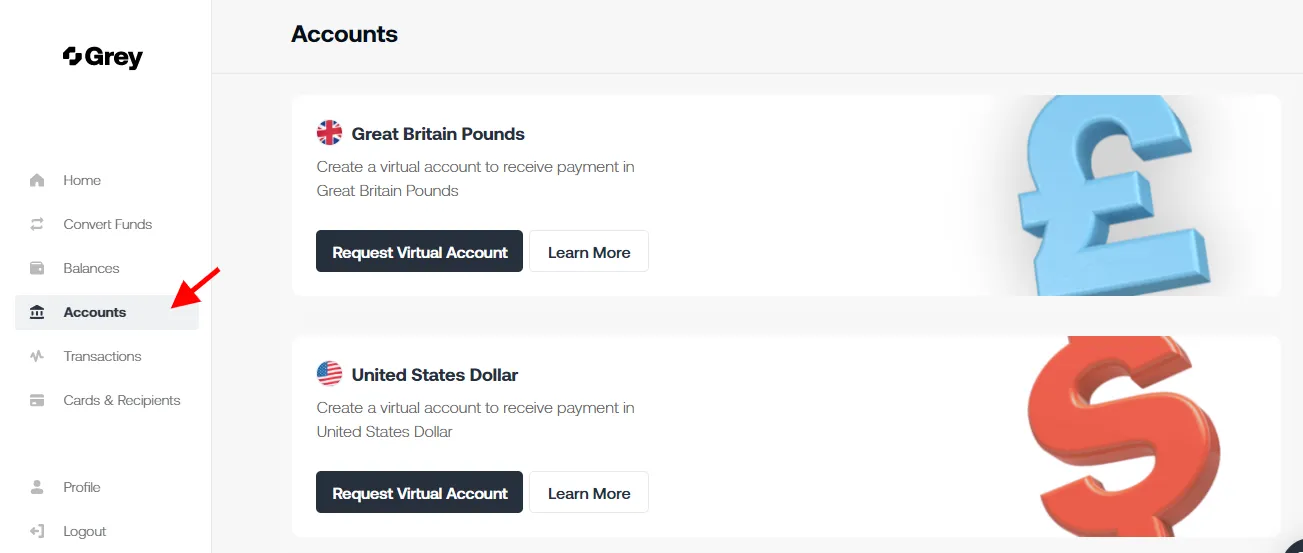
  • On the navigation panel on your screen’s left side, click on ‘Accounts.’
67222e16c9ee7fc522c90ff9 638793134c600ec246892dd4 TSayxFc7Z28ifeLc3 9lonPjW6MsHnDSvykWUL8sxjFVvAxTX8AUGSd6KWroXwI VUaE8AjnZcjqEQilYiL0fwsEqtxW3wzKTLBtmXJzOHLEJO5wUV094bhCNwgg5K8UHFi6C2LhXvErWkNgRY ph9o0WdpbZif0BeailA1OffftXOp2o6TYF8vjmA
  • Scroll and tap on ‘Request Virtual Account’ under the GBP account option
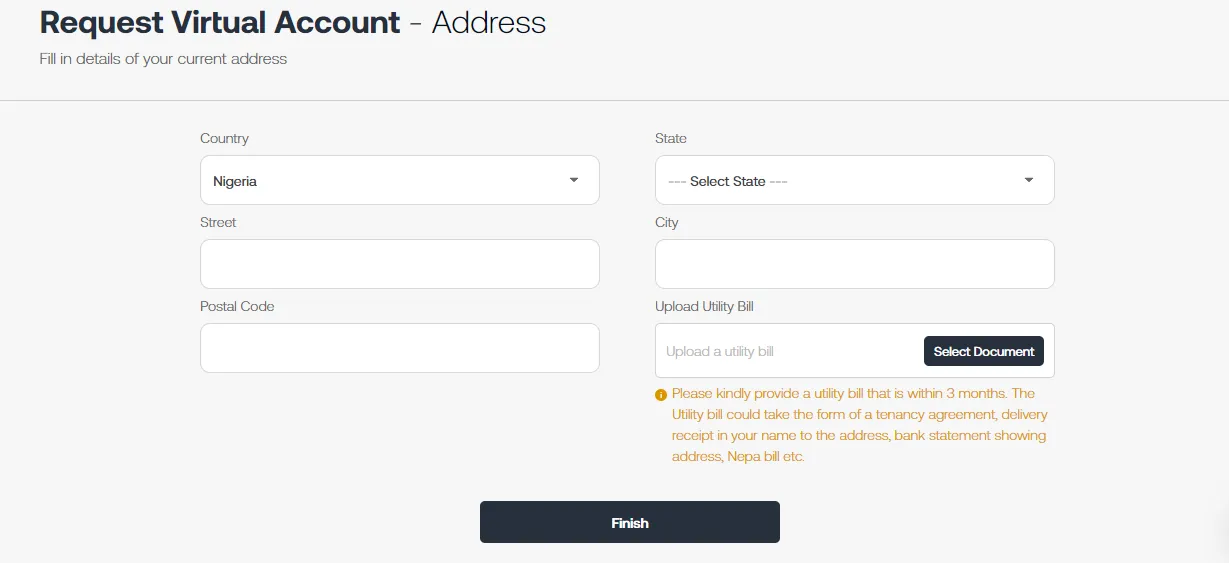
  • On the form displayed, fill in your address and upload a utility bill no farther than three months ago
67222e15c9ee7fc522c90ff5 6387931194ff1f17a38c6b1a vQQQOlHUPTaAtfpDpJGNo9HjloUigf1xw7TFxIzmnwHRiLwQ28AHK27Pz17F5DN Jud1zeEqL rUcj1jX1jp rkbv6iuDypOzy4hCDd ZAR2bB54vDO RqdikmAXgCyLASmPv9tThPicEs01Mk4yyRT63Yum6RaQB 77SreCDZKPq2boEr3aLxue9w
  • Review your information and tap on ‘Finish.’

You’ll get a notification once it’s been approved or whether there’s a needed update on your application. So ensure you enter valid and accurate information to prevent any delays. 

Benefits of Opening a Grey Pounds Account

With a host of other online banks, why should you opt for a Grey foreign account? Well, asides from being able to carry out transactions whenever you like, you can also;

  • Easily open an account without a residence permit or referee letter
  • Opening an account on Grey is entirely free.
  • There’s no need to visit a physical bank branch to open an account
  • You get international bank account details, including an IBAN and routing number, which makes your bank account suitable for official purposes
  • Online customer support to help you with all your banking needs
  • Seamless withdrawals to your local account and unlimited transfers
  • Receive payments immediately you open an account - no further restrictions
  • Faster KYC and verification process so you can get started with your Pounds account almost immediately
  • Enjoy low withdrawal rates and instant currency exchange whenever you want to

FAQs on Using a Grey GBP Bank Account

  • What Countries Can Send Me Payments?

With your Grey Pounds account, you can receive funds from any country in the United Kingdom and other countries in the EEA region. This means you cannot receive payments from countries outside the EEA region. 

  • What type of currencies can I receive in my account?

Great British Pounds. So you cannot receive any other currencies into this account. 

  • What supported payment types can I receive with a Grey Pounds Account?

Your Grey foreign account is addressable in Faster Payments (FPS), Bacs, and CHAPS. Unfortunately, you cannot receive SWIFT and WIRE transfers to your GBP Grey account. 

Next Steps

Opening a Pounds account as a Non-UK resident doesn’t have to be difficult anymore. Start by downloading the Grey mobile app from the comfort of your home via Playstore or the iOS App Store and get your UK foreign account to start a transaction. 

IBAN vs SWIFT codes: how are they different?

•

•

2 min read

International bank transactions are different from local transactions in several ways. The first time carrying out these international transfers can be daunting. Even those who occasionally make international transactions for business purposes or send money to friends and family are often confused by some terms.

Two popular terms that confuse most people are IBAN and SWIFT code. In this post, we will explain each concept and how they differ. But first, why is this important, and how do people use IBAN or SWIFT codes?

Before IBAN and SWIFT codes were standardised, international money transfers through banks were prone to errors and often took time to be completed. These errors are because international transfers require that the right bank, location and account number be employed to process the transaction. In the absence of a globally accepted method, money sent between countries often ended up in the wrong location and took extra time and money to be discovered and corrected.

The introduction of IBAN and SWIFT codes solved that problem and made international money transfer easier.

Let’s get into it.

What is IBAN?

There are chances that you have come across this several times already, but what does it mean? IBAN stands for International Bank Account Number. It is one of the generally accepted numbering systems used for identifying bank accounts during international transfers.

An IBAN is a two-digit country code, then two numbers, followed by alphanumeric characters that help the bank process customer transactions faster. It is, however, worth noting that an IBAN does not replace the individual’s account number. It simply ensures that the transaction is routed correctly and that the transaction details are correct.

What does an IBAN look like?

Let us break down an IBAN:

The first two letters represent the country code.

This is followed by 2 digits referred to as the check digits, used to provide a primary integrity check for the IBAN standard.

The check digits are then followed by a series of alphanumeric characters which can be up to 35 characters.

These characters are called the basic bank account number (BBAN) and its length depends on the country. Usually, the BBAN will consist of a bank identifier, the sort code or routing number (used to identify the specific bank and branch where an account is held), and the individual’s domestic account number.

Every country uses different algorithms to verify the BBAN when you initiate a transaction.

Overall, the total length of the IBAN will also signify which country the IBAN belongs to.

Here’s a hypothetical example of what an IBAN would look like:

GB35GTHY40317012345678

GB - Country code (Great Britain, in this case)

35 - Check digits

GTHY - Bank identifier

403170 - Sort code

12345678 - Individual’s domestic account number.

Why are IBANs important?

International Bank Account Numbers serve very specific and important purposes in overseas transactions. They:

  • Help financial institutions to easily and swiftly identify the bank you’re sending money to.
  • Ensure that the details of overseas transactions are accurate before payment is processed.
  • Reduces payment processing time due to faster processes.

What countries use IBAN?

The IBAN system is widely used in Europe and is being adopted in other parts of the world. All countries in the European Union use IBAN. However, the US and Canada specifically don’t use IBAN. The US uses ABA (American Bankers Association) routing numbers for domestic transfers and SWIFT codes for international transfers.

Now, let us talk about SWIFT codes.

What are SWIFT Codes?

First of all, SWIFT doesn’t just mean the codes help process international transactions faster 🙂, SWIFT here actually stands for Society for Worldwide Interbank Financial Telecommunication.

A notable difference between IBAN and SWIFT codes is that SWIFT codes are shorter. The SWIFT code is a unique alphanumeric code consisting of 8 to 11 characters assigned to banks and other financial institutions to identify a specific bank during international money transfers.

You should note that: “SWIFT code” is often used interchangeably with BIC (Business Identifier Code) as they mean the same thing.

What does a SWIFT code look like?

A typical SWIFT code would consist of:

Bank Code (4 letters), Country Code (2 letters), Location Code (2 letters or digits), Branch Code (3 digits).

Here’s a hypothetical SWIFT code: DETHUS23XXX

DETH - represents a bank code.

US - represents the country code, in this case, the United States.

23 - represents the bank location code.

XXX - represents the branch code; XXX represents a bank’s head office.

What’s the major difference between SWIFT codes and IBANs?

The difference between them is in what they are used to identify. An IBAN is used to identify a specific account in a specific bank while a SWIFT code is used to identify just a specific bank.

Read also: SWIFT Codes for Kenyans Banks

How can you get an IBAN or SWIFT code?

Usually, you can get an IBAN or SWIFT code from your bank. This depends on the type of bank account you open, but it is often a long process for many. Thankfully, with Grey, you can open virtual foreign GBP, EUR and USD accounts.

The best part is that when you open any of these accounts, you also get your SWIFT code and IBAN which you can easily use to complete international money transfers. USD and GBP accounts on Grey are easy and free to open. Once you sign up for an account, you can request your virtual account and start using it once your request is approved.

Get Started with Grey Virtual Accounts

Virtual IBANs and their benefits

•

•

2 min read

Let’s talk about how IBAN affects your business growth, but let’s begin by explaining what IBAN is for those who don’t already know.

The meaning of IBAN is International Bank Account Number and it is a standard worldwide numbering system for identifying an account held in a foreign country. This number isn’t intended to replace a proper bank account number but rather to provide additional information that aids in identifying international payments. IBAN consists of a two-digit country code, two numbers, and a few alphanumeric characters.

What are virtual IBANs?

Transactions are routed through virtual IBANs to online accounts. Virtual IBANs, like their traditional counterparts, can be used to transmit and receive payments worldwide, allowing businesses to expand their services to international clients. Customers can send and receive payments and transfer funds to and from their associated physical IBAN account using their virtual IBAN account, which works similarly to their normal IBAN.

A virtual IBAN functions in the same way as a regular IBAN in the eyes of the customer. When they make a payment, their money is transferred to the actual bank account associated with the virtual IBAN.

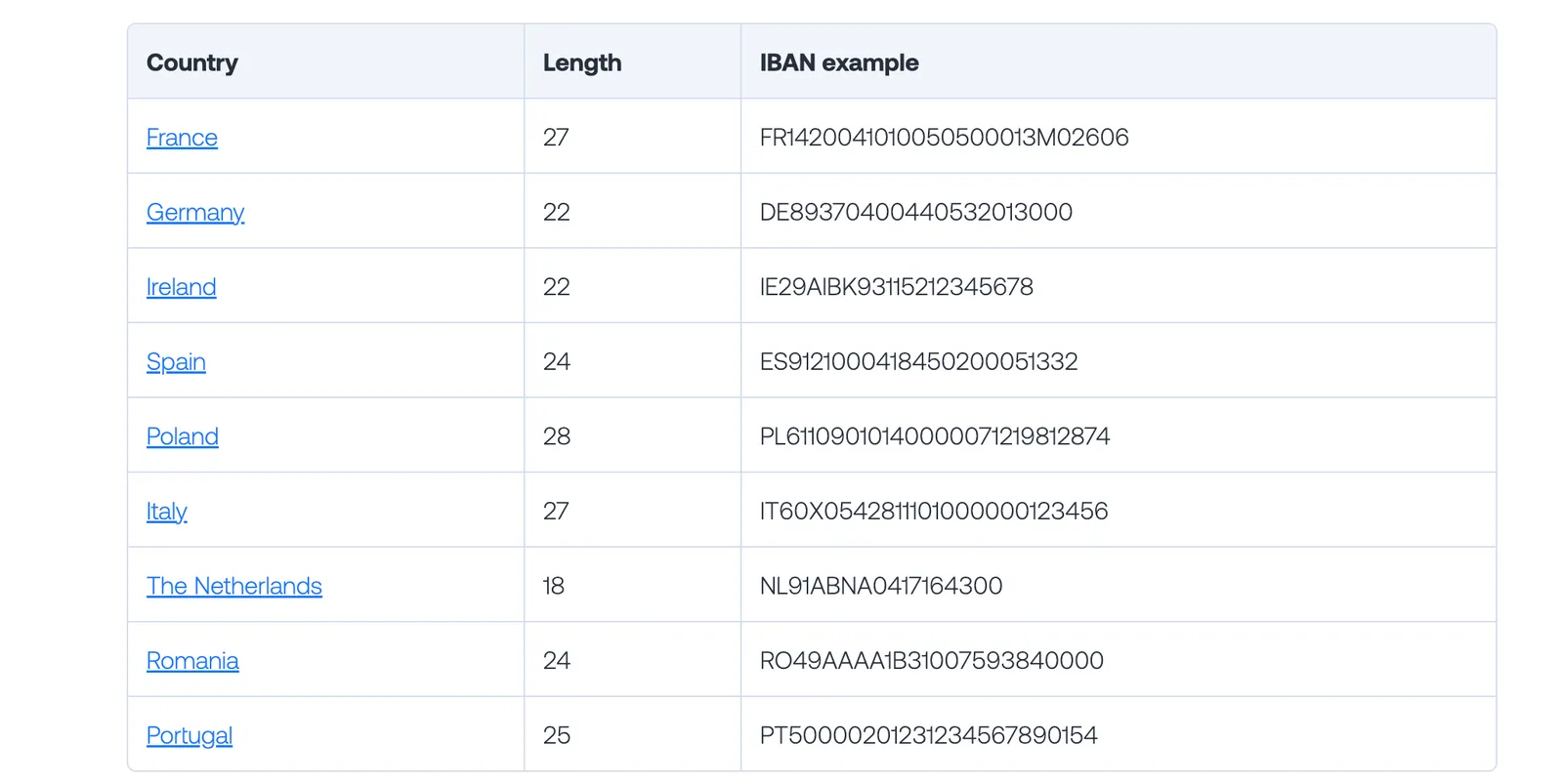
IBAN formats and their counties

6389d96477d7450e82255261 ibans

Benefits of virtual IBANs

  • Cost-effectiveness: Multiple accounts in multiple countries are time and labour difficult but also expensive. Consider how much a company would pay in banking fees to keep track of 20 accounts. It has to be a hefty sum. However, if virtual IBANs are adopted, costs will be significantly reduced. Companies can use virtual IBAN to set up several virtual accounts, similar to physical accounts. This eliminates the significant FX and transfer expenses associated with converting each payment compared to typical bank accounts.
  • Extra Account Security**:** Security is crucial for keeping financial documents. Having several records exposes the owner to additional risks. A virtual IBAN is stored in redundant, encrypted cloud servers. As a result, they are generally protected from misrepresentation or vacation. Virtual IBAN’s start-to-finish simplicity and isolation make it easier for businesses to adhere to Anti-Money Laundering (AML) and Know Your Customers (KYC) security rules.
  • Having virtual IBAN accounts can benefit FX and payments businesses and their customers. With these accounts, FX and payments organizations can create and allocate virtual IBAN accounts to each customer, aiding settlement and reconciliation. Payment businesses using a virtual IBAN can access multi-currency, multi-jurisdictional banking without needing multiple bank relationships.
  • Competitive pricing for accounts and transactions
  • Quick account setup
  • Provision of unlimited virtual IBAN accounts
  • Provides a banking appearance and feel
  • Accurate and immediate reconciliation
  • Segregation of funds and complete transparency to reduce AML and KYC risks

Conclusion

Virtual IBANs enable you and your clients to make and receive payments via local and cross-border payment rails there giving them access to by, giving them access to new territories and currencies.

Grey allows you to own foreign bank accounts and enjoy the benefits.

Arrow (up)

Back to top