
<script type="application/ld+json" data-schema-version="grey-blog-v4"> [{"@context":"https://schema.org","@type":"BlogPosting","@id":"https://grey.co/blog/how-grey-reduces-stress-for-international-students-managing-money#article","headline":"How Grey reduces stress for international students managing money","description":"See how Grey helps international students manage money with fast transfers, fair rates and no hidden fees.","inLanguage":"en","url":"https://grey.co/blog/how-grey-reduces-stress-for-international-students-managing-money","mainEntityOfPage":{"@id":"https://grey.co/blog/how-grey-reduces-stress-for-international-students-managing-money#webpage"},"datePublished":"2025-09-11T19:15:29.987Z","dateModified":"2026-06-15T14:43:57.793Z","author":{"@type":"Person","@id":"https://grey.co/authors/tunde-aladeloba#person","name":"Tunde Aladeloba","url":"https://grey.co/authors/tunde-aladeloba","jobTitle":"Content Writer","sameAs":["https://ng.linkedin.com/in/aladeloba-babatunde-b1114b100"]},"publisher":{"@type":"Organization","@id":"https://grey.co/#organization","name":"Grey","url":"https://grey.co","logo":{"@type":"ImageObject","url":"https://cdn.prod.website-files.com/6360022338a81bd6fdbb1145/6564ae1077a67e39d3c491a6_Grey%20Logo%20Lockup%20Black.svg"}},"image":{"@type":"ImageObject","@id":"https://grey.co/blog/how-grey-reduces-stress-for-international-students-managing-money#primaryimage","url":"https://cdn.prod.website-files.com/636a85d290ee58e70c17e1c0/6a300fad3b0df799ce8843eb_6a300fac3b0df799ce8842b4_how-grey-reduces-stress-for-international-students-managing-money__header-image.webp","contentUrl":"https://cdn.prod.website-files.com/636a85d290ee58e70c17e1c0/6a300fad3b0df799ce8843eb_6a300fac3b0df799ce8842b4_how-grey-reduces-stress-for-international-students-managing-money__header-image.webp","width":1200,"height":675}},{"@context":"https://schema.org","@type":"WebPage","@id":"https://grey.co/blog/how-grey-reduces-stress-for-international-students-managing-money#webpage","url":"https://grey.co/blog/how-grey-reduces-stress-for-international-students-managing-money","name":"How Grey reduces stress for international students managing money","description":"See how Grey helps international students manage money with fast transfers, fair rates and no hidden fees.","inLanguage":"en","primaryImageOfPage":{"@id":"https://grey.co/blog/how-grey-reduces-stress-for-international-students-managing-money#primaryimage"},"breadcrumb":{"@id":"https://grey.co/blog/how-grey-reduces-stress-for-international-students-managing-money#breadcrumb"}},{"@context":"https://schema.org","@type":"BreadcrumbList","@id":"https://grey.co/blog/how-grey-reduces-stress-for-international-students-managing-money#breadcrumb","itemListElement":[{"@type":"ListItem","position":1,"name":"Home","item":"https://grey.co/"},{"@type":"ListItem","position":2,"name":"Blog","item":"https://grey.co/blog"},{"@type":"ListItem","position":3,"name":"How Grey reduces stress for international students managing money","item":"https://grey.co/blog/how-grey-reduces-stress-for-international-students-managing-money"}]}] </script>

How Grey reduces stress for international students managing money

Tunde Aladeloba

TABLE OF CONTENT

SHARE THIS POST

For most international students, money from home is their lifeline. But getting it isn’t always simple. Parents send funds through banks, only for transfers to get stuck in bottlenecks, be delayed for days, or arrive in another currency that costs even more to convert. All of this adds unnecessary stress on top of tuition, rent, and everyday expenses. That’s where digital cross-border solutions like Grey come in; fast, reliable, and built for students. This article shows how Grey makes managing money simpler and stress-free.

Read also: Best ways for parents to send money to students overseas

Why managing finances abroad is stressful for international students

1. Money delays

Many international students depend on parents for tuition and living expenses. But bank transfers can take days, or even weeks, to arrive. Imagine waiting to pay rent while constantly refreshing your banking app. That uncertainty creates anxiety, making it hard to focus on classes or daily life.

2. Currency conversion struggles

Parents may send money in their local currency, but students need dollars, pounds, or euros. Each conversion chips away at the amount through fees or bad rates. A student expecting $1,000 might end up with far less. That constant loss makes budgeting stressful and unpredictable.

3. Hidden bank charges

Traditional banks often add surprise deductions, processing fees, international transfer charges, or compliance costs. Students get less than expected and scramble to cover expenses. For example, a $50 bank charge might mean skipping groceries or delaying textbook purchases, all because of a system they can’t control.

4. Managing daily expenses

From paying for transport to splitting bills with friends, expenses pile up quickly. Without quick, reliable access to funds, students may borrow from classmates or use credit cards, adding more stress. The pressure of simply keeping up with daily costs weighs heavily on their mental well-being.

Read also: Top mistakes international students make with money transfers

How Grey simplifies international students’ money transfers

1. Fast access to funds

Late money transfers often leave students anxious about paying rent or buying food. With Grey, money from home arrives almost instantly. That speed reduces the stress of waiting and guessing, so students can breathe easy knowing their essentials are covered without delays.

2. Better currency conversion

Watching your support shrink because of poor exchange rates is frustrating and stressful. Grey’s fair rates ensure students keep more of their money when converting. That means less worry about “losing value” and more freedom to focus on school instead of calculating every dollar.

3. Lower fees, more savings

Hidden bank charges quietly eat into funds, leaving students stressed about making ends meet. Grey keeps fees transparent and minimal. Their families see the exact amount students will receive before sending money, which reduces financial pressure and helps them plan better without the constant worry of shortfalls.

4. Stress-free money management

Complicated banking processes can pile on stress when students are already adapting to life abroad. Grey offers an easy, digital platform to manage transfers and currencies. Removing those hurdles frees students to focus on classes, friendships, and opportunities instead of financial headaches.

Step-by-step guide: How international students can use Grey

1. Sign up in minutes

Download the Grey app or visit the website. Enter your name, email, and set a password. It’s quick and easy.

2. Select your country of residence

Tell Grey where you live. This ensures your account is tailored to local regulations and makes payouts smooth.

3. Verify your identity

Upload a valid government-issued ID and a clear selfie. Verification protects your money and unlocks full access.

4. Get your virtual foreign accounts

Instantly receive USD, GBP, and EUR accounts, perfect for parents, sponsors, or clients to send you money directly.

5. Receive, convert, and use seamlessly

Funds arrive faster than traditional banks. Convert to your local currency at fair rates and withdraw or spend stress-free

Stress-free payments for students abroad

Managing money as an international student doesn’t have to feel like a constant struggle. With Grey, you can finally leave behind the long waits, banking bottlenecks, and hidden fees that make life stressful. Whether it’s tuition, rent, or a quick allowance from home, Grey ensures your money arrives fast, in the right currency, and with no headaches.

Create your Grey account today or download the app and experience the peace of mind that comes with seamless cross-border payments.

‍

Last updated:

October 6, 2026

Open a free Grey account to get startedJoin 1 million digital nomads
IF YOU ENJOYED THIS, CHECK THESE OUT

Cost of living in Chiang Mai for digital nomads

•

•

2 min read

Chiang Mai has earned a reputation as one of the world's favourite destinations for digital nomads, and it's easy to see why. Imagine starting your day in a quiet café, spending the afternoon in a modern co-working space and finishing with dinner at a bustling night market, all without stretching your budget. For freelancers, remote workers and entrepreneurs, the city offers an appealing mix of affordability, convenience and an excellent quality of life.

The cost of living is one of Chiang Mai's biggest advantages. A digital nomad in Chiang Mai needs $800 to $1,400 per month for a comfortable lifestyle. Rent for a one-bedroom apartment in the city centre ranges from $250 to $500. Food, transport, and entertainment are very affordable. Co-working spaces cost $80 to $150 per month. Chiang Mai is widely considered Thailand's most affordable nomad destination.

Whether you're planning a short stay or considering a longer move, understanding your monthly expenses is essential. This guide breaks down the real cost of living in Chiang Mai, covering accommodation, food, transport, co-working, healthcare and other everyday expenses, so you can budget confidently before making the move.

Also read: Digital nomad lifestyle: 11 tips for remote workers

How much does it cost to live in Chiang Mai?

Your monthly budget depends on your lifestyle, but Chiang Mai offers excellent value whether you're travelling on a modest or premium budget.

Expense category Budget tier ($800–$1,200) Mid-range tier ($1,250–$1,800) Comfortable tier ($1,850–$2,500+)
Housing & rent $250–$350 – Basic studio apartment or older Thai-style condo with a fan or limited air conditioning. $400–$550 – Modern one-bedroom condo in areas like Nimman or Santitham with a pool and gym. $600–$900+ – Luxury one or two-bedroom condo or private house in a gated community.
Utilities & internet $30–$50 – Water, electricity and basic mobile data with minimal air conditioning. $70–$100 – Fibre internet and regular daily air-conditioning. $120–$180 – Premium internet and heavy air-conditioning throughout the home.
Food & groceries $200–$250 – Mainly Thai street food and fresh local markets. $250–$350 – Mix of local meals, cafés and occasional Western restaurants. $400–$600 – Frequent dining out, imported groceries and premium restaurants.
Transport $40–$70 – Scooter rental, fuel or local songthaews. $80–$120 – Newer scooter rental plus occasional Grab rides. $150–$300 – Car ownership or frequent Grab rides.
Social & leisure $50–$100 – Local cafés, temples and outdoor activities. $150–$250 – Coworking spaces, gym membership, cinema and regular social outings. $300–$500+ – Premium fitness, spas, nightlife and weekend travel.
Healthcare & miscellaneous $50–$80 – Basic healthcare or minimal insurance. $100–$150 – Comprehensive health insurance for digital nomads. $150–$250 – Premium international medical cover and personal care.

Also read: 11 best banks for digital nomads: No-fee, no-address options

Where should you rent in Chiang Mai?

Chiang Mai has several neighbourhoods that are popular with digital nomads, each offering a different lifestyle. Nimman is the city's modern hub, known for its speciality coffee shops, co-working spaces, boutique cafés and walkable streets.

Property type 12-month lease (THB/month) 1-month rental (THB/month)
Studio apartment 4,500–15,000 7,000–22,000
One-bedroom condo 10,000–25,000 15,000–38,000
Shared house (private room) 5,000–8,000 7,500–12,000

How much does food cost in Chiang Mai?

Chiang Mai is a food lover's paradise, and eating well doesn't have to cost much. The city's famous street food culture means you can enjoy authentic Thai dishes such as khao soi, pad Thai and grilled meats for $1.50 to $3.50 per meal. Casual local restaurants typically charge $3 to $8, while Western cafés and international restaurants cost a little more. Even if you eat out regularly, your monthly food budget can remain surprisingly affordable.

If you prefer cooking, supermarkets and fresh markets make it easy to keep costs low. A single digital nomad can expect to spend around $150 to $250 per month on groceries, depending on how often imported products are purchased. Fresh fruit, vegetables, rice, eggs and local meats are inexpensive, while imported foods carry a premium. Overall, eating local is usually cheaper than cooking every meal, but combining home cooking with Chiang Mai's affordable street food offers the best balance of cost, convenience and variety.

How much do transport, utilities and internet cost in Chiang Mai?

Low transport costs, affordable utilities and reliable high-speed internet make Chiang Mai one of the easiest cities for digital nomads to live and work.

  • Local transport: The city's iconic songthaews (red buses) are the cheapest way to travel, with shared rides typically costing 30 THB (about $0.85) per person. For greater convenience, Grab offers taxis and private cars for 80–150 THB ($2.20–$4.15) per trip, while GrabBike provides a quicker and cheaper option during busy periods.
  • Motorbike rental: Many digital nomads rent a 125cc scooter, such as a Honda Click, for 2,500–4,000 THB ($70–$110) per month. Prices can increase during the high tourist season.
  • Utilities: Electricity is billed at government rates of 4–5 THB per kWh, with most nomads spending 1,000–3,500 THB ($28–$100) monthly depending on air-conditioning use. Water is inexpensive, usually costing 100–300 THB ($3–$8) per month.
  • Internet: Home fibre connections from providers such as AIS and True cost 500–900 THB ($14–$25) monthly. Unlimited 5G mobile plans are also widely available for 300–600 THB, making remote work reliable almost anywhere in the city.

Sample monthly budget for digital nomads in Chiang Mai

Compare two realistic monthly budgets to see how far your money can go, whether you're living modestly or enjoying extra comfort.

Expense Budget lifestyle (Approx. $800/month) Comfortable lifestyle (Approx. $1,400/month)
Rent $300 $500
Food & groceries $200 $300
Transport $50 $100
Co-working space $80 $120
Healthcare & insurance $50 $100
Entertainment & leisure $120 $280
Estimated monthly total $800 $1,400

Your actual spending will depend on where you live, how often you eat out and your lifestyle preferences. Many digital nomads comfortably live on around $800 per month by renting modest accommodation and eating local food, while a budget of $1,400 per month allows for a modern condo, regular café visits, co-working, weekend trips and a more comfortable overall lifestyle.

Is Chiang Mai the cheapest place to live in Thailand?

Compare Chiang Mai with Bangkok, Phuket and Pai to see where your budget goes furthest as a digital nomad.

Expense category (USD) Chiang Mai Bangkok Phuket Pai
Monthly budget $900–$1,500 $1,400–$2,200 $1,500–$2,400 $700–$1,100
Modern 1-bed condo $300–$500 $450–$800 $400–$750 Bungalows: $150–$300
Street food meal $1.50–$2.50 $2.00–$3.50 $3.00–$5.00 $1.20–$2.00
Western restaurant meal $6.00–$10.00 $10.00–$18.00 $12.00–$22.00 $5.00–$9.00
Monthly transport $70–$110 $90–$150 $150–$250 $60–$90
Co-working / afé day pass $8.00–$12.00 $12.00–$18.00 $10.00–$16.00 $5.00–$8.00

Although Pai can be cheaper for backpackers and slow travellers, it lacks the modern apartments, reliable co-working spaces and infrastructure that most remote professionals need. For digital nomads looking for the best balance of affordability, comfort and productivity, Chiang Mai remains Thailand's best-value destination.

How to manage your money as a digital nomad in Chiang Mai

Many digital nomads in Chiang Mai earn from clients and platforms that pay in USD, GBP or EUR, while their everyday expenses are in Thai baht (THB). Managing different currencies efficiently can make a noticeable difference to your monthly budget, especially if you're paid regularly from overseas. Converting money at the right time and avoiding unnecessary fees helps you keep more of what you earn.

Although card payments are becoming more common, cash is still widely used in Chiang Mai. Street food vendors, local markets, small cafés and some independent businesses often prefer cash, so it's useful to keep Thai baht on hand for daily spending while using your local bank account for larger purchases.

If you receive international payments, Grey makes managing your finances much simpler. You can receive money through foreign currency accounts in USD, GBP and EUR, hold multiple currencies and convert them at competitive exchange rates before spending or transferring funds. That means fewer expensive bank wire fees and more flexibility when living and working across borders.

Also read: The best regions in the world for a first-time digital nomad

Frequently asked questions

Is Chiang Mai a safe city for digital nomads?

Yes. Chiang Mai is considered one of Thailand's safest cities for digital nomads and expats. Violent crime is uncommon, and most visitors feel comfortable walking around popular areas such as Nimman and the Old City. As with any destination, keep an eye on your belongings and take normal safety precautions.

How long can digital nomads stay in Chiang Mai?

Your stay depends on your visa. Many travellers enter Thailand on a tourist visa or visa exemption, while others apply for long-term options such as the Destination Thailand Visa (DTV). Always check the latest immigration rules before travelling, as visa requirements and permitted lengths of stay can change.

Is the internet reliable in Chiang Mai?

Yes. Chiang Mai has excellent internet infrastructure, making it a favourite destination for remote workers. Fibre broadband is widely available in apartments and condos, while co-working spaces offer reliable high-speed connections. Affordable 5G mobile plans also make it easy to stay connected when working from cafés or travelling.

How much should I budget for rent in Chiang Mai?

Most digital nomads spend $250 to $500 per month on a one-bedroom apartment, depending on the location and facilities. Popular neighbourhoods such as Nimman cost more than local areas like Santitham, while signing a long-term lease can significantly reduce your monthly housing costs.

Can I use US dollars for everyday spending in Chiang Mai?

No. Thailand's official currency is the Thai baht (THB), and almost all businesses expect payment in local currency. While a few hotels or tourist businesses may accept foreign currencies, you'll generally get better value by paying in baht using cash or a local payment method.

What's the best way to receive international income while living in Chiang Mai?

Many freelancers and remote workers are paid in USD, GBP or EUR through international clients and online platforms. Grey helps you receive payments through foreign currency accounts, hold multiple currencies and convert them at competitive exchange rates before accessing your money, making it easier to manage your finances while living abroad.

Chiang Mai remains one of the best destinations for digital nomads seeking an affordable lifestyle without sacrificing comfort, connectivity or community. To make managing your international income even easier, open a Grey account or download the app today and receive global payments, hold multiple currencies and convert them with confidence.
Portugal receiving limit from US bank: Transfer rules explained

•

•

2 min read

Sending money from the US to Portugal is common for many reasons. You might be supporting family, paying tuition or rent, receiving freelance income, or moving money between your own accounts. While sending money is generally straightforward, fees and transfer limits vary by provider. Understanding how these limits work can help you avoid delays and unexpected costs.

There is no official government limit on how much money Portugal can receive from US banks, but individual banks set their own daily and monthly transfer limits. Most US banks cap international wire transfers at between $25,000 and $250,000 per day. Portugal's banks do not impose a receiving limit, but transfers over €10,000 may require documentation under anti-money-laundering rules.

This article explores transfer rules in Portugal, the transfer limits, receiving rules, and what banks require. Learning these rules ensures you receive international payments in Portugal without trouble.

Does Portugal have a receiving limit for international transfers?

Portugal does not have a legal limit on how much money you can receive from abroad. There is no government rule that caps the amount you can receive in an international bank transfer. However, large transfers may be reviewed under anti-money laundering (AML) rules.

If you receive €10,000 or more, your bank may ask you to verify your identity or provide documents showing where the money came from and what it is for. This is a reporting requirement, not exactly a restriction on receiving the funds.

These checks are part of EU financial regulations and are overseen by the Bank of Portugal. They are designed to prevent money laundering and terrorist financing, not to limit legitimate transfers.

For most people receiving money from the US, the biggest limit is usually set by the sender's US bank, not by Portugal itself.

US to Portugal online bank transfer limits

While there are no government-imposed limits on transfers, the amount you can send from the US to Portugal still depends on your US bank, your account type, and how you make the transfer. Most US banks set daily limits for international wire transfers. These limits vary based on factors such as:

  • Your bank and account type
  • Whether you have a personal or business account
  • Your verification level
  • Whether you send the transfer online or at a branch

Business accounts and premium banking customers often have higher transfer limits. If you visit a bank branch, you can usually send larger amounts because the bank conducts additional identity checks before processing the transfer, compared with an online transfer.

US banks’ transfer limits are subject to change. You should cross-check these limits before making a decision.

How to request a higher limit from your US bank:

Before you request a higher transfer limit from your US bank, you need to first confirm your daily limit. Most US banks will have this information somewhere on their app. So, if you need to send more than what your online limit allows, there are usually two options.

  • Visit a branch: Banks often allow higher transfer amounts for in-person requests because they can carry out additional identity checks.
  • Request a higher transfer limit: You can also contact your bank's wire transfer team to request a temporary or permanent increase in your transaction limit. The bank may ask for proof of identity, details about the source of the funds, and the reason for the transfer. For transfers above $100,000, additional documentation is often required to meet anti-money laundering (AML) regulations.

How much can you send from the US to Portugal?

Most commonly, the biggest transfer limit comes from the US bank, not the receiving bank in Portugal. Many US banks set daily limits for online international transfers ranging from $10,000 to $250,000, depending on the bank and your account type. Portuguese banks usually don’t have a corresponding limit on incoming transfers. So, if you need to send more than your online limit, you have two options:

  • Split the transfer over several days:  Most banks reset their daily limits every 24 hours, so you can send the money in separate transfers. Some banks, however, have weekly or monthly transaction limits. So, even though the daily transaction limit resets after 24 hours, the total transaction volume must still be within the weekly or monthly limits for your account tier.
  • Visit a branch. Banks usually allow much larger wire transfers in person after completing identity checks. Contact them ahead of time to confirm the maximum amount and the documents you'll need to avoid wasting time in the bank queue.

For the recipient in Portugal

If the transfer is large, particularly over €10,000, the recipient's bank may request documents showing the source of the funds. This is a routine anti-money laundering (AML) check and does not usually prevent the transfer from being completed. You just might not access the money until the checks are complete.

Some documents required may include:

  • Bank statements
  • Employment or salary letters
  • Property sale agreements
  • Other documents showing the source of the funds

Once you initiate or expect an amount that may trigger AML checks, it is best to have these documents ready to avoid delays. This is the standard in global financial practice and should not be considered a problem, even if it may cause some inconvenience. In fact, you should be worried if the financial institution doesn’t comply with best global practices.

Also read: How to open US, UK and Euro bank accounts in Portugal

Rules for sending money from the US to Portugal

There are several regulatory requirements for sending money from the US to Portugal.

FBAR (Foreign Bank Account Report)

If you are a US citizen, resident, or certain business entities and the total balance across your foreign financial accounts exceeds $10,000 at any point during the year, you must file an FBAR with FinCEN annually by 15 April.

This also applies if you have a bank account in Portugal and your combined foreign account balances exceed the threshold. The FBAR is filed separately from your tax return.

FATCA (Foreign Account Tax Compliance Act)

If you are a taxpayer in the US, and you have foreign financial assets above certain thresholds, you are required to report those assets on Form 8938 as part of your annual tax return. Portuguese banks are also required under FATCA to report accounts held by US persons to the IRS. These rules do not necessarily affect how you send or receive money, but they may create additional reporting requirements if you are transacting along this corridor.

Information you need to send a wire to Portugal

To send a SWIFT transfer from the US to Portugal, you'll usually need:

  • Recipient's full name and address
  • Portuguese IBAN (begins with PT50)
  • Bank's SWIFT/BIC code

Some common Portuguese bank SWIFT codes include:

  • Millennium BCP — BCOMPTPL
  • Caixa Geral de Depósitos — CGDIPTPL
  • Novo Banco — BESCPTPL
  • Santander Portugal — BCPIPTPL
  • BPI — BBPIPTPL

Also read: Real budgeting tips for nomads living in Lisbon

How long does a US-to-Portugal transfer take?

The transfer speed depends on the transfer method.

  • SWIFT wire from a US bank: A traditional bank wire usually takes one to five business days, with most transfers arriving within two to three business days. Transfers can take longer if several correspondent banks are involved or if they're sent outside banking hours.
  • SEPA transfer (from a European account): If the sender already has an account in the EU, SEPA Credit Transfers to Portuguese bank accounts are usually completed within one business day. Banks that support SEPA Instant transfers often complete transactions in seconds.
  • Fintech platforms using local rails: Some fintech providers allow you to receive your USD through ACH in the US, convert it to EUR, and then send it through SEPA. This avoids the SWIFT network and correspondent banks, so transfers are often both faster and cheaper than traditional bank wires.

A better way to send money from the US to Portugal

Sending money through a traditional US bank can be expensive. You may pay:

  • An outgoing wire fee of $35–$50
  • Correspondent bank charges of $15–$30 per bank
  • A receiving bank fee in Portugal of €10–€20
  • A bank exchange rate that's typically 1%–3% worse than the mid-market rate

At the end of the day, sending a $5,000 transfer can cost as much as $150.

Grey uses a different approach. Instead of sending money through SWIFT, you fund your Grey USD account via ACH, convert USD to EUR at 0.5% conversion fee and disclosed conversion rates, and send the EUR through SEPA to the recipient's Portuguese bank account at 0.5%  (min €2, max €10). This brings the total cost of a $5,000 transfer to around $46.

How to send money from the US to Portugal with Grey:

  1. Open a Grey account and complete identity verification with a valid ID and proof of address.
  2. Add funds to your Grey USD balance via ACH from your US bank account.
  3. Navigate to the currency exchange tool and convert USD to EUR.
  4. Select Send Money and enter the recipient's Portuguese IBAN and the Portuguese bank's BIC.
  5. Confirm the transfer. The EUR is sent via SEPA to the recipient's Portuguese account.

The recipient's Portuguese bank receives a standard SEPA credit transfer and credits the account within one business day in most cases. There are no SWIFT correspondent bank deductions because the transfer arrives as a local EU payment.

Frequently asked questions

Is there a maximum amount I can receive from the US in Portugal?

No. Portugal does not set a legal limit on incoming international transfers. The practical limit usually comes from the US bank sending the money. Portuguese banks may ask for supporting documents on large transfers as part of AML checks.

What documents does a Portuguese bank need for a large incoming transfer?

For transfers above €10,000, the bank may ask for:

  • Proof of identity
  • Documents showing the source of the funds, such as bank statements or employment letters
  • An explanation of why the money is being transferred

Requirements vary between banks.

Do I need to declare money received from abroad in Portugal?

If you are a Portuguese tax resident, foreign income may need to be reported on your annual tax return. Whether it is taxable depends on the type of income, such as employment, investments, or gifts. If you're covered by a special tax regime, different rules may apply. Consider speaking with a Portuguese tax adviser.

How do I send a wire transfer to a Portuguese IBAN?

Provide your US bank with the recipient's full name and address, the Portuguese IBAN (PT50 followed by 21 digits), and the bank's SWIFT or BIC code. Initiate the transfer through your bank's online platform or in branch. The bank applies its outgoing wire fee and USD to EUR conversion at its own rate. The transfer arrives at the Portuguese bank via SWIFT, typically within two to five business days.

What is the SWIFT code for Portuguese banks?

Each bank has its own SWIFT code. Examples include:

  • Millennium BCP — BCOMPTPL
  • Caixa Geral de Depósitos — CGDIPTPL
  • Novo Banco — BESCPTPL
  • Santander Portugal — BCPIPTPL
  • BPI — BBPIPTPL

Always confirm the correct code with the recipient before sending the transfer.

Can I use Grey to send money from the US to Portugal?

Yes. You can receive USD via ACH, convert it to EUR at a transparent rate, and send the money to any Portuguese IBAN through SEPA. Since the transfer doesn't use SWIFT, there are no correspondent bank deductions, and you'll see the full cost before sending.

Send money to Portugal with Grey with transparent fees and no correspondent bank deductions.

Living in Oman as an expat: Finance, banking and what to expect

•

•

2 min read

Starting a new job in Oman is an exciting opportunity, but settling in successfully takes more than securing your employment contract. Before you relocate, it's worth understanding what day-to-day life will cost, how the banking system works, what you'll need to set up your finances and what to expect once you arrive. From finding accommodation and managing your monthly budget to opening a local bank account, planning ahead will help you settle into life with greater confidence and avoid unnecessary surprises during your first few months.

Expats living in Oman benefit from tax-free salaries and a stable currency (the Omani rial is pegged to the US dollar). A single expat typically needs $1,500 to $2,500 per month for a comfortable lifestyle in Muscat. Most expats arrive on a sponsored employment visa and can open a local bank account once their residency is approved. This guide covers everything you need to know about living in Oman as an expat, including the cost of living, banking, visas, healthcare, taxes and practical financial tips to help you make the most of your move.

Also read: How freelancers in Egypt earn and store foreign currency

What is life like in Oman for expats?

One of the biggest reasons professionals choose Oman is the opportunity to earn and save more. For years, the country has attracted expats with tax-free salaries, competitive employment packages and a high standard of living. While Oman will introduce a 5% personal income tax from 1 January 2028 for individuals earning more than OMR 42,000 (around $109,000) annually, the vast majority of workers will remain unaffected. Many employment contracts also include valuable benefits such as housing, school fees for children and annual return flights, making it easier to build long-term savings.

Lifestyle largely depends on where you live. Muscat, the capital, offers a modern, fast-paced environment with excellent international schools, quality healthcare, shopping centres and established expat communities. Salalah, on the other hand, provides a slower, more relaxed lifestyle with a lower cost of living, beautiful natural scenery and a close-knit international community. While Muscat experiences long, hot and humid summers, Salalah is famous for its cooler Khareef monsoon season, which transforms the region into a lush green landscape.

Oman is also recognised as one of the safest countries in the region. Although welcoming to foreigners, it remains culturally conservative. Expats are expected to dress modestly in public, covering their shoulders and knees, while alcohol is only available in licensed venues and requires a permit for personal purchase. Respecting local customs and Islamic traditions goes a long way towards enjoying a rewarding and successful life in Oman.

Also read: How Egypt is becoming a MENA hub for remote workers

Cost of living in Oman: Muscat vs other cities

Oman is one of the most affordable countries in the Gulf for expats. Compared with cities such as Dubai or Doha, everyday living costs are generally lower, allowing many professionals to save a larger portion of their tax-free income. The biggest difference is where you choose to live.

Muscat offers more career opportunities and amenities but comes with higher housing and schooling costs, while cities such as Salalah and Sohar provide a more affordable lifestyle.

Expense category Muscat Salalah & other cities
1-bedroom apartment (city centre) OMR 220–350/month OMR 150–200/month
3-bedroom villa or apartment OMR 450–800+/month OMR 250–450/month
Utilities (electricity & water) OMR 45–85/month OMR 30–55/month
Monthly groceries (family of four) OMR 280–450 OMR 220–350
Petrol (per litre) OMR 0.24 OMR 0.24
Private healthcare consultation OMR 15–30 OMR 10–20
International school fees (annual) OMR 2,500–9,500+ per child OMR 1,200–3,500 per child

Rent is the biggest expense for most expats, especially in Muscat, while international school fees can significantly increase living costs for families. Grocery prices remain relatively consistent across the country, and subsidised fuel keeps transport costs low. If you're relocating alone, Oman offers excellent value for money. Families should budget carefully for accommodation, schooling and private healthcare, particularly if these costs aren't covered by an employer.

How to move to Oman as an expat

Moving to Oman starts with securing a job offer, after which your employer manages the visa process until your residency is approved.

  • Secure a job offer: Unlike some countries, you cannot apply for an employment visa independently. Your employer must sponsor your move and begin the application process with the Ministry of Labour after you accept the job offer.
  • Prepare your documents: You'll typically need a passport with at least six months' validity, attested degree certificates, professional licences where applicable and a medical fitness report. Your employer will advise if additional documents are required.
  • Employer applies for your visa: Once your documents are complete, your employer obtains labour clearance before applying for your employment visa and arranging your entry into Oman.
  • Apply for family sponsorship: After receiving your residency card, you can sponsor your spouse and children under 21. You'll need attested marriage and birth certificates, proof of suitable accommodation and a minimum monthly salary, usually between OMR 300 and OMR 600.
  • Understand the timeline: The process generally takes 6 to 12 weeks. Document attestation and medical tests usually take the first three weeks, followed by visa approval, arrival in Oman, biometric registration and residency card issuance.

Opening a bank account in Oman: What expats need to know

Setting up a local bank account is one of the first things you'll want to do after arriving in Oman. Most employers pay salaries into Omani bank accounts, making local banking essential for managing your day-to-day finances. However, you'll usually need to wait until your residency card has been issued before you can complete the process.

Popular banks that welcome expats include Bank Muscat, National Bank of Oman and HSBC Oman. Most banks require your passport, residency card, employment visa, proof of address and a salary or employment letter. Processing is generally straightforward once your residency has been approved.

While a local bank account is ideal for everyday spending in Oman, it may not always be the most efficient option for receiving international payments or managing multiple currencies. That's where Grey complements local banking. With foreign currency accounts in USD, GBP and EUR, you can receive international payments like a local, hold multiple currencies and convert your funds at competitive exchange rates before transferring money when you need it.

Understanding healthcare and health insurance in Oman

Healthcare in Oman is modern, reliable and widely regarded as one of the best in the Gulf. Most expats receive employer-sponsored health insurance as part of their employment package, giving them access to private hospitals and clinics. While public healthcare is available, it's primarily designed for Omani citizens, so most foreign workers rely on private medical facilities for routine consultations, specialist care and emergency treatment.

Private healthcare is particularly strong in Muscat, where you'll find well-equipped hospitals, experienced specialists and many English-speaking medical professionals. Waiting times are generally short, and the quality of care is high. If your employer doesn't provide comprehensive medical insurance, it's worth purchasing additional private cover to reduce out-of-pocket expenses, especially if you're relocating with your family or expect to need regular healthcare during your time in Oman.

How to send money home from Oman without paying high transfer fees

For many expats, sending money home is a regular part of life in Oman. Popular remittance destinations include India, Pakistan, Bangladesh, the Philippines and Egypt, where workers support their families or manage ongoing financial commitments. While local banks and exchange houses offer international transfers, they can come with higher fees, less favourable exchange rates and longer processing times, particularly for frequent transfers.

Digital alternatives are making international transfers simpler and more cost-effective. Grey gives eligible users a convenient way to receive and manage international funds through foreign currency accounts in USD, GBP and EUR. You can hold multiple currencies, convert them at competitive exchange rates and move your money more efficiently than relying solely on traditional bank wires or exchange houses. For expats managing finances across borders, Grey complements your local Omani bank account by making international money transfers faster, more flexible and easier to manage.

Frequently asked questions

Is Oman still tax-free for expats?

Yes, for most workers. Oman currently offers tax-free employment income, which is one of its biggest attractions for expats. From 1 January 2028, a 5% personal income tax will apply only to individuals earning more than OMR 42,000 annually, meaning around 99% of expats are expected to remain unaffected.

How long does it take to get an Oman residence visa?

The entire employment visa process usually takes 6 to 12 weeks, depending on document preparation and employer processing times. After your employer secures labour clearance and your employment visa is issued, you'll complete biometric registration and receive your residency card shortly after arriving in Oman.

Can foreigners buy property in Oman?

Yes, but only in designated Integrated Tourism Complexes (ITCs) approved by the Omani government. Buying property in these developments can also provide residency benefits in certain cases. Outside these areas, foreign ownership is generally restricted unless special approvals are granted.

What currency is used in Oman?

Oman's official currency is the Omani rial (OMR), one of the world's strongest currencies. It is pegged to the US dollar, helping maintain exchange rate stability. Most everyday transactions are made in rials, while international transfers can be completed through banks or digital financial platforms.

Is Oman a safe place for expats and foreign workers?

Yes. Oman is widely regarded as one of the safest countries in the Middle East, with low crime rates and a welcoming environment for international professionals. As with any destination, respecting local customs and laws helps ensure a comfortable and rewarding experience throughout your stay.

Can I send money from Oman to my family abroad with Grey?

Yes. If you're receiving international income or managing money across borders, Grey offers foreign currency accounts in USD, GBP and EUR. You can hold multiple currencies, convert funds at competitive exchange rates and transfer money more efficiently, making it a practical solution for expats supporting family overseas.

Can I open a bank account before getting my Oman residency card?

In most cases, no. While you can begin preparing the required documents, most Omani banks require a valid residency card before opening a personal account. Once your residency is approved, the process is usually straightforward with your passport, employment documents and proof of address.

Relocating to Oman offers excellent earning potential, a high quality of life and the opportunity to save more with careful financial planning. As you settle into your new role, open a Grey account or download the app to receive international payments, manage multiple currencies and move money across borders with confidence.

Cost of living in Tbilisi Georgia for digital nomads and expats

•

•

2 min read

Tbilisi has become one of the most attractive destinations for digital nomads and expats looking for an affordable lifestyle without sacrificing comfort. The Georgian capital combines a low cost of living with reliable internet, a growing remote work community, rich history and easy access to Europe and Asia. It also offers one of the world's most generous entry policies, with Georgia allowing citizens of many countries to stay visa-free for up to 365 days.

A single digital nomad or expat in Tbilisi needs between $900 and $1,500 per month for a comfortable lifestyle. Rent for a one-bedroom apartment in the city centre ranges from $400 to $700, while food, transport and utilities are inexpensive compared to Western Europe and North America.

Whether you're planning a short-term stay or relocating for the long term, understanding your monthly expenses will help you budget with confidence. This guide breaks down the cost of housing, groceries, transport, healthcare and entertainment, while showing you how to manage your money efficiently as you live and work from Tbilisi

Also read: Georgia Digital Nomad Visa: Everything you need to know

How much does it cost to live in Tbilisi, Georgia?

Tbilisi remains one of the most affordable capitals in Europe for digital nomads and expats. A single person can expect to spend $900–$1,500 per month, while a couple typically needs $1,500–$2,400. For a family of four, monthly living costs generally range from $2,500–$3,800, depending on housing, schooling and lifestyle. Compared to many cities in Western Europe and North America, these costs allow expats to enjoy a comfortable standard of living without stretching their budget.

Affordability is one of the biggest reasons Tbilisi has become a favourite among budget-conscious remote workers and long-term travellers. Lower housing costs, inexpensive public transport, affordable dining and reasonably priced utilities make it possible to enjoy a high quality of life while keeping monthly expenses under control. Combined with Georgia's generous visa-free policy for many nationalities and a growing digital nomad community, Tbilisi offers excellent value for anyone looking to live and work abroad.

What’s the cost of rent in Tbilisi?

Rent is likely to be your biggest monthly expense in Tbilisi, although it's still considerably lower than in most European capitals. The price you'll pay depends on the neighbourhood, property type and whether you're signing a long-term lease or booking short-term accommodation.

Neighbourhood 1-bedroom apartment 2-bedroom apartment Shared flat (per room)
Vake $600–$800 $900–$1,300 $250–$400
Saburtalo $450–$650 $700–$1,000 $180–$300
Old Town $550–$800 $850–$1,200 $220–$350
Vera $500–$750 $800–$1,100 $200–$350

Most digital nomads and expats choose Vake for its cafés, green spaces and international community, while Saburtalo offers the best value for money with excellent transport links.

How much should you budget for groceries, food and dining in Tbilisi?

Tbilisi is a food lover's paradise, offering affordable groceries, traditional restaurants and one of the world's oldest wine cultures, making dining out surprisingly budget-friendly.

  • Grocery shopping: A single person typically spends $215–$254 per month on groceries. You'll save the most by shopping at traditional open-air markets for fresh fruit, vegetables, eggs, cheese and dairy instead of larger international supermarket chains.
  • Eating out: Tbilisi offers excellent value for money. Street-side bakeries sell freshly baked khachapuri and lobiani (cheese and bean bread) for under $2, while local canteens serve hearty Georgian lunches for around $4–$11. Mid-range restaurants usually cost $15–$26 for a shared meal, while premium multi-course dining with wine averages around $37 per person.
  • Must-try Georgian dishes: Don't leave without tasting khinkali (juicy dumplings), Adjarian khachapuri (cheese-filled bread topped with egg), badrijani nigvzit (walnut-stuffed aubergine rolls) and churchkhela, Georgia's famous grape-and-nut sweet.
  • Georgia's wine culture: Georgia is widely regarded as the birthplace of wine, with an 8,000-year-old winemaking tradition. Many restaurants serve locally produced natural wines made using the traditional qvevri clay vessel method, making wine tasting an affordable and authentic part of everyday life.

Also read: Real budgeting tips for nomads living in Lisbon

The cost of transport, utilities and internet in Tbilisi

Transport, utilities and internet are all relatively affordable in Tbilisi, helping digital nomads and expats keep everyday living costs low throughout the year.

  • Public transport: Tbilisi has an affordable and reliable public transport network. An unlimited monthly travel pass costs ₾40 (around $15) and gives you unlimited access to municipal buses, the metro and minibuses across the city.
  • Taxis and ride-hailing: Most residents use Bolt, Tbilisi's leading ride-hailing app. Short trips within central neighbourhoods typically cost ₾5–15 ($2–$5.50), making taxis an inexpensive alternative when public transport isn't convenient.
  • Utilities: Utility costs vary by season. During summer, electricity, water and moderate air conditioning for a one or two-bedroom apartment usually cost ₾100–140 ($37–$52) per month. In winter, increased gas heating pushes monthly bills to around ₾180–260 ($67–$96).
  • Internet: Tbilisi has fast and reliable fibre internet, making it an excellent destination for remote workers. MagtiCom and Silknet are the leading providers, offering 50–100 Mbps fibre plans for ₾35–70 ($13–$26) per month, with extensive 5G mobile coverage available across much of the city.

Also read: 11 top countries with digital nomad visas

Sample monthly budget for digital nomads in Tbilisi

Here's a realistic monthly budget to help digital nomads estimate the typical cost of accommodation, work, healthcare and everyday living in Tbilisi.

  • Rent: $500–$700 for a furnished one-bedroom apartment in popular expat neighbourhoods.
  • Utilities and fibre internet: $50–$120 for electricity, gas, water and internet.
  • Co-working space: $115–$185 for unlimited hot-desk access at leading co-working hubs.
  • Private health insurance: $25–$45 for comprehensive local expat medical cover.
  • Food, leisure and dining: $150–$300 for restaurants, cafés, drinks and weekend outings.
  • Small business tax: 1% on annual gross revenue up to 500,000 GEL for eligible registered freelancers.

How affordable is Tbilisi compared to other popular expat destinations?

Compare Tbilisi's monthly living costs with other leading digital nomad destinations to see where your money goes furthest.

Expense Category Tbilisi, Georgia Lisbon, Portugal Bali, Indonesia Chiang Mai, Thailand Mexico City, Mexico
Food (Groceries) $200–$300 $350–$450 $150–$250 $150–$200 $300–$400
Dining Out $200–$350 $500–$800 $200–$400 $150–$300 $350–$600
Rent (1-bed apartment) $400–$700 $1,200–$2,000 $350–$650 $250–$450 $800–$1,500
Fast Internet $20–$30 $35–$45 $30–$50 $25–$35 $25–$35
Transport $30–$60 $60–$100 $50–$120 $20–$40 $50–$100
Utilities & Gym $60–$100 $120–$180 $60–$100 $50–$80 $100–$150
Estimated Monthly Total $910–$1,540 $2,265–$3,575 $890–$1,620 $645–$1,105 $1,625–$2,885

Tbilisi offers one of the best value-for-money lifestyles for digital nomads and expats. While destinations such as Chiang Mai and Bali can be slightly cheaper in some categories, Tbilisi stands out with its generous visa policy, reliable infrastructure, fast internet and relatively low accommodation costs.

How to bank and manage international payments in Tbilisi

Georgia's official currency is the Georgian lari (GEL), and most day-to-day expenses, from groceries and transport to rent and dining, are paid in the local currency. For expats planning to stay long term, opening a local bank account makes managing everyday finances much easier. Bank of Georgia and TBC Bank are the country's largest banks, offering current accounts, debit cards, mobile banking, multi-currency accounts and English-language support, making them popular choices among foreigners.

While local banks are excellent for paying bills and managing everyday spending, receiving income from abroad can be more complicated. International bank transfers may involve higher fees, exchange rate mark-ups and processing times that delay access to your money. Many expats therefore combine a local bank account with a digital financial platform to make cross-border payments simpler.

Frequently asked questions

Is Tbilisi safe for digital nomads?

Yes. Tbilisi is widely regarded as one of the safest cities for digital nomads in Eastern Europe. Violent crime is rare, and most expats feel comfortable using public transport and walking around popular neighbourhoods. As with any city, remain aware of your surroundings and take sensible precautions to protect your belongings.

How long can foreigners stay in Georgia without a visa?

Georgia has one of the world's most generous visa policies. Citizens of many countries, including the UK, EU member states, the US and Canada, can stay in Georgia visa-free for up to 365 days. Always check the latest entry requirements for your nationality before travelling.

Do I need a local bank account in Georgia?

If you're staying for several months, opening a Georgian bank account can make everyday life much easier. It allows you to pay rent, receive local transfers and avoid carrying cash. Many expats choose Bank of Georgia or TBC Bank, both of which offer English-language banking services.

Is the internet reliable enough for remote work in Tbilisi?

Yes. Tbilisi has fast and reliable fibre internet, making it a popular destination for remote workers and freelancers. Most apartments, cafés and co-working spaces offer stable high-speed connections, while providers such as MagtiCom and Silknet deliver affordable broadband packages with extensive coverage across the city.

Can I live comfortably in Tbilisi on a digital nomad budget?

Yes. Compared with many European capitals, Tbilisi offers excellent value for money. Affordable rent, inexpensive public transport, reasonably priced groceries and a vibrant café culture mean many digital nomads enjoy a comfortable lifestyle on $900–$1,500 per month, depending on their accommodation choices and spending habits.

How can I receive foreign income while living in Tbilisi?

If you're paid by overseas clients or employers, Grey makes receiving international payments simple. You can receive money through foreign currency accounts in USD, EUR and GBP, hold multiple currencies, convert funds at competitive exchange rates and transfer money to your Georgian bank account whenever you need it.

Living in Tbilisi offers an affordable lifestyle, but managing international income shouldn't be complicated. Whether you're freelancing, working remotely or earning from overseas, Grey helps you receive global payments and move money with ease. Open a Grey account or download the Grey app today to simplify your finances while living and working in Georgia.

Living in Spain as an expat: Complete banking and finance guide

•

•

2 min read

Spain is one of Europe's most popular destinations for expats, offering a high quality of life, excellent public services and a relatively affordable cost of living. Whether you're moving for work, retirement or a better lifestyle, understanding how to manage your finances is an essential part of settling in.

Expats living in Spain need a NIE (Foreigner Identification Number), a registered address, and a Spanish bank account to access local services. The cost of living is moderate by European standards, with a single expat needing €1,400 to €2,200 per month. Madrid and Barcelona are the most expensive cities.

From opening a bank account and understanding Spain's financial system to managing international payments and avoiding unnecessary transfer fees, this guide covers everything you need to know. Whether you're receiving a salary, pension or freelance income from abroad, you'll also learn how to manage your money efficiently while living in Spain.

Why do expats choose to live in Spain?

With more than 300 days of sunshine in many regions, fresh local cuisine and one of Europe's best public healthcare systems, Spain offers an appealing balance of affordability and quality of life.

Beyond the lifestyle, Spain has well-established international communities that make settling in much easier. Popular destinations such as the Costa del Sol, Valencia and Madrid are home to thriving expat populations, international schools, English-speaking services and active social networks, helping newcomers integrate quickly.

Whether you're relocating for work, retirement or remote living, Spain combines modern infrastructure with a welcoming culture and excellent connectivity to the rest of Europe. From vibrant cities to relaxed coastal towns, it offers a lifestyle that appeals to professionals, families, retirees and digital nomads alike.

Also read: Expat banking 101: Opening an account before relocation

What is the cost of living in Spain for an expat?

The cost of living in Spain varies depending on the city you choose, your lifestyle and whether you're renting in the city centre or further out. While Spain is generally more affordable than many Western European countries, major cities such as Madrid and Barcelona command higher housing costs. Beyond rent, you'll also need to budget for groceries, public transport, healthcare and everyday expenses. The table below provides a general comparison of average monthly costs for a single expat.

City Average Monthly Rent (1-bedroom, city centre) Food & Groceries Public Transport Healthcare
Madrid €1,200–1,600 €300–400 €25–55 €60–200
Barcelona €1,300–1,700 €300–400 €22–55 €60–200
Valencia €900–1,200 €250–350 €18–40 €60–200
Seville €800–1,100 €250–350 €20–35 €60–200
Málaga €950–1,300 €250–350 €18–40 €60–200

Healthcare costs reflect typical private health insurance premiums for a healthy adult. Legal residents may also qualify for Spain's public healthcare system depending on their residency status and employment circumstances.

How to move to Spain as an expat: A step-by-step guide

Relocating to Spain involves a few essential administrative steps, regardless of whether it's for work, retirement or a new lifestyle. While the process differs for EU and non-EU citizens, planning ahead will make your transition much smoother.

Step 1: Secure the right visa (Non-EU citizens only)

Apply for a visa that matches your purpose of stay, such as a Digital Nomad Visa, Non-Lucrative Visa, Work Visa or Student Visa. EU citizens do not need a visa to live and work in Spain.

Step 2: Obtain your NIE

Apply for a Número de Identidad de Extranjero (NIE), your foreigner identification number required for employment, banking, taxes and most official transactions.

Step 3: Register your address (Padrón)

Register your residential address with your local town hall (Empadronamiento). This is often required when accessing public services and completing residency formalities.

Step 4: Open a Spanish bank account

A local bank account is essential for receiving your salary, paying rent, setting up direct debits and managing everyday expenses.

Step 5: Register for healthcare

If you're employed or legally resident, register for Spain's public healthcare system. Alternatively, many visa holders, including digital nomads and retirees, are required to maintain private health insurance that meets Spanish immigration requirements.

Also read: Managing money across two countries as an expat

What Visa options are available for expats moving to Spain?

Spain offers several visa pathways for expats, depending on whether you're relocating for work, study, retirement or remote employment.

Visa Who it's for Key Requirements Application Process
Non-Lucrative Visa Retirees or individuals living on passive income Proof of sufficient financial means (typically 400% of Spain's IPREM, approximately €2,400–€2,500 per month for the main applicant), private health insurance and no employment in Spain Apply through the Spanish consulate in your home country before travelling. Once in Spain, apply for your residence card.
Digital Nomad Visa Remote workers and freelancers employed by or serving companies outside Spain Minimum income of around 200% of Spain's minimum wage (approximately €2,760 per month), proof of remote work, qualifications or experience, and private health insurance Apply from your home country through a Spanish consulate or, if eligible, from within Spain. Complete residence registration after approval.
Work Visa Individuals with a job offer from a Spanish employer Valid employment contract, employer sponsorship and work authorisation Your employer usually obtains work authorisation before you apply for the visa through the Spanish consulate.
Student Visa International students enrolled in recognised institutions Proof of admission, sufficient financial resources, accommodation and health insurance Apply through the Spanish consulate before departure and register upon arrival if your stay exceeds six months.
Golden Visa No longer available for new applicants. Spain ended its Golden Visa programme in 2025, meaning residency through qualifying property investment is no longer an option.

Choosing the right visa depends on your reason for moving, income source and long-term plans. Before applying, ensure you meet the financial requirements and gather all supporting documents to avoid delays.

Also read: How to apply for a digital nomad visa in Spain

How to open a bank account in Spain as an expat

Opening a Spanish bank account is one of the first financial tasks you'll need to complete after moving. A local account makes it easier to receive your salary, pay rent, set up direct debits and manage everyday expenses.

Step 1: Choose the right account

  • Resident account: For individuals living and paying taxes in Spain.
  • Non-resident account: Suitable for those buying property, spending part of the year in Spain or preparing to relocate.

Step 2: Gather the required documents

  • Valid passport or national ID (EU citizens)
  • NIE (Foreigner Identification Number)
  • Proof of address
  • Proof of employment, income or student status (if requested)

Step 3: Visit a bank or apply online

Submit your documents, complete the application and verify your identity. Some banks allow non-residents to begin the process online before visiting a branch.

Step 4: Activate your account

Once approved, you'll receive your IBAN, debit card and access to online banking, allowing you to make transfers, pay bills and receive payments in Spain.

Best banking options for expats in Spain

Most expats in Spain open an account with a traditional bank to manage everyday finances. Popular options include Santander, BBVA and CaixaBank, which offer current accounts, debit cards, savings accounts and online banking. A local account is often needed to receive your salary, pay rent, set up utility bills and make everyday purchases.

However, traditional banks aren't always ideal for managing international money. Receiving payments from abroad can involve transfer fees, less competitive exchange rates and processing times of several business days. Some banks also charge account maintenance fees or have limited support for holding multiple foreign currencies.

Many expats also use digital banks such as N26, Revolut and Wise for their low fees, easy account management and seamless payments across Europe. While they're great for everyday banking, receiving international income can still come with challenges, including processing delays, transfer fees and exchange rate mark-ups that reduce the amount you receive.

However, Grey offers a simpler way to manage your international finances. With foreign currency accounts in USD, GBP and EUR, you can receive payments like a local, hold multiple currencies, convert your money at competitive exchange rates, and transfer funds to your Spanish bank account whenever you need them. It works alongside your local bank, giving you a faster and more cost-effective way to manage cross-border payments.

Tax rules every expat in Spain should know

Understanding Spain's tax system is essential before relocating, as your tax obligations depend on your residency status and the type of income you earn.

Tax residency

  • Tax residents: If you spend more than 183 days in Spain during a calendar year, or your main economic interests or immediate family are based there, you're generally considered a tax resident. Tax residents must declare and pay tax on their worldwide income.
  • Non-residents: If you spend fewer than 183 days in Spain and have no significant economic or family ties there, you're generally taxed only on Spanish-sourced income, such as rental income from property in Spain.

Income tax (IRPF)

Spain operates a progressive income tax system, with combined state and regional rates typically ranging from:

  • Up to €12,450: 19%
  • €12,451–€20,200: 24%
  • €20,201–€35,200: 30%
  • €35,201–€60,000: 37%
  • Above €60,000: 45–47% (higher in some regions)

The Beckham Law

Qualifying foreign professionals, entrepreneurs, and digital nomads may apply for Spain's Special Tax Regime, commonly known as the Beckham Law. If approved, you'll pay a flat 24% tax on Spanish employment income up to €600,000 for up to six tax years, while many types of foreign income remain exempt from Spanish taxation.

Wealth tax

Spain also levies a Wealth Tax on certain high-value assets. Tax residents are assessed on their worldwide net assets, while non-residents are taxed only on qualifying assets located in Spain.

Frequently asked questions

What is the NIE, and how do I get one?

The Número de Identidad de Extranjero (NIE) is a foreigner identification number required for most legal and financial activities in Spain. You'll need it to open a bank account, sign a rental agreement, pay taxes and register for utilities. You can apply through a Spanish consulate before moving or at a police station after arriving in Spain.

Can I keep my UK or US bank account while living in Spain?

Yes. There's no requirement to close your existing UK or US bank account when you move to Spain. Many expats keep their home-country account for pensions, savings or existing financial commitments while opening a Spanish account for everyday expenses. Using both accounts together often provides greater flexibility when managing international finances.

Do I need private health insurance to move to Spain?

It depends on your visa and residency status. Many non-EU visa holders, including those applying for the Non-Lucrative or Digital Nomad Visa, must have private health insurance that meets Spanish immigration requirements. If you're employed in Spain, you may qualify for the country's public healthcare system through Social Security contributions.

Can foreigners buy property in Spain?

Yes. Foreigners can buy residential or investment property in Spain without being residents. You'll need an NIE, a Spanish bank account and a local solicitor to complete the purchase. Before buying, it's important to carry out legal checks, understand local taxes and budget for additional costs such as notary and registration fees.

Do I need to pay tax in Spain on foreign income?

If you're a Spanish tax resident, you generally pay tax on your worldwide income, although tax treaties and special regimes such as the Beckham Law may reduce your liability. Non-residents are typically taxed only on income earned in Spain. A qualified tax adviser can help determine your obligations.

Can I use Grey to receive payments while living in Spain?

Yes. Grey allows you to receive international payments through foreign currency accounts in USD, GBP and EUR while living in Spain. You can hold multiple currencies, convert funds at competitive exchange rates and transfer money to your Spanish bank account whenever you need it, making cross-border money management much simpler.

Moving to Spain is easier when your finances are set up for both local and international life. While a Spanish bank account supports your everyday needs, Grey helps you manage global income with ease. Open a Grey account or download the app today to receive international payments, hold multiple currencies and bank across borders confidently.

What is the cost of living in Casablanca?

•

•

2 min read

Casablanca might not have Marrakech’s desert charm or Chefchaouen’s blue alleys, but it’s Morocco’s beating economic heart. It’s a modern, fast-paced coastal city where global companies meet French cafés, street markets, and the Atlantic breeze.

Living here feels a bit like balancing two worlds: the polished side of Morocco, with its shopping malls, business districts, and seafront restaurants, and the local rhythm of markets, bakeries, and friendly neighbourhood cafés.

So, how much does it actually cost to live comfortably in Casablanca? Here’s a breakdown of rent, utilities, food, transport, and more, with a closer look at what different neighbourhoods offer.

Rent in Casablanca

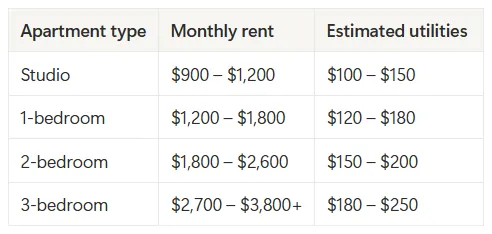
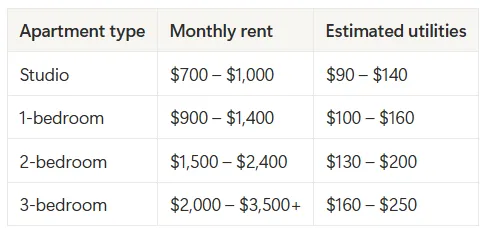
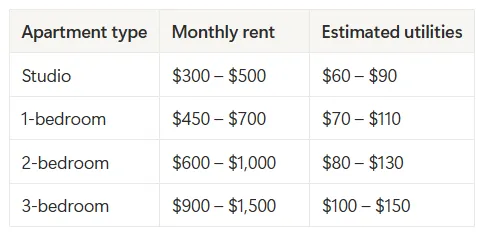
Casablanca has one of the most expensive housing markets in Morocco, but you’ll find a wide range of options, from modern apartments near the Corniche to older but charming flats downtown. Prices vary based on location, building age, and whether utilities are included.

Below are some of the most popular areas for expats and professionals, from luxury seaside spots to more budget-friendly residential zones.

Ain Diab

Ain Diab is Casablanca’s seaside escape, home to beach clubs, ocean-view apartments, and a lively restaurant scene. It’s perfect if you want a more Westernised, coastal lifestyle (and don’t mind paying for it).

__wf_reserved_inherit

Maarif / Gauthier

Maarif and neighbouring Gauthier are central, trendy, and popular among young professionals. You’ll find cafés, coworking spaces, and international restaurants everywhere. Apartments are usually modern and well-located, though parking can be tricky.

__wf_reserved_inherit

Casablanca Finance City (CFC)

CFC is one of the city’s newest and most upscale neighbourhoods, designed as both a business and lifestyle hub. It’s become a hotspot for expats, executives, and returning Moroccans thanks to its sleek apartment buildings, green spaces, and proximity to major companies. Think of it as Casablanca’s modern “Cartier”, being elegant, secure, and well-connected.

__wf_reserved_inherit

Racine / Bourgogne

Close to both the city centre and the sea, Racine and Bourgogne are elegant and convenient. Racine is more upscale, with boutiques and French-style cafés, while Bourgogne is more relaxed but still well-connected.

__wf_reserved_inherit

Anfa / Californie

These are Casablanca’s high-end residential neighbourhoods. They’re quiet, green, and ideal for families or anyone looking for space and privacy. Expect modern villas and gated communities rather than apartments.

__wf_reserved_inherit

Centre-ville (City centre)

Casablanca’s downtown is bustling, walkable, and full of older art deco buildings. Apartments here are more affordable, but often smaller or less modern. Great if you enjoy city energy and proximity to the tram.

__wf_reserved_inherit

Sidi Maarouf

Further from the city centre, these residential areas are quieter and more affordable. Many families and professionals who work in business parks or tech zones live here.

__wf_reserved_inherit

Why prices vary:

Casablanca’s rent depends on your location, building type, and whether the apartment is furnished. Sea views, new constructions, and areas near tram lines or international schools tend to cost significantly more.

Transport in Casablanca

Casablanca is Morocco’s busiest city, so getting around is part of everyday life. Between the tram lines, taxis, and ride-hailing apps, moving through the city is relatively easy, though traffic during rush hour can test anyone’s patience.

Expats and locals usually mix different transport modes depending on distance, time of day, and comfort.

Taxis (Petit & Grand)

Like in other Moroccan cities, Casablanca has two main types of taxis. Petit Taxis (usually red) handle trips within city limits, while Grand Taxis are larger vehicles that serve longer routes or nearby towns like Mohammedia or Rabat.

  • Cost: Petit Taxi starts at around 8.5 MAD (~$0.70) during the day, with typical short rides costing 15–35 MAD ($1.50–$3.50). Grand Taxis usually start around 40 MAD ($4) for longer distances and can go up to 150 MAD ($15) for intercity trips.
  • Tip: Always ask the petit taxi driver to turn on the meter (compteur). If they refuse, agree on a price before the ride starts, especially at night or in tourist areas. White taxis have their own pricing depending on the destination.

Ride-hailing apps (Heetch, Yango)

Casablanca is one of the best cities in Morocco for ride-hailing apps. Services like Heetch and Yango are popular among expats who prefer cashless payments and predictable fares.

  • Cost: 20–50 MAD ($2–$5) for short rides; slightly higher during peak hours.
  • Tip: App drivers usually know English or French, and prices are displayed upfront, so no haggling needed.

Tramway

Casablanca’s modern tram network is one of the most efficient public transport systems in Africa. It connects key neighbourhoods like Sidi Maarouf, Ain Diab, and the city centre, with two main lines covering over 40 km.

  • Cost: 8 MAD (~$0.60) per ticket or 230 MAD ($23) for a monthly pass.
  • Tip: Trams are reliable and clean, but can get crowded during rush hours (especially between 7–9am and 5–7pm).

Buses

Public buses cover the entire city, offering the cheapest rides. They’re modernising quickly, with newer fleets and air conditioning, but routes can still be slow and inconsistent in timing.

  • Cost: Around 5 MAD (~$0.50) per ride.
  • Tip: Better for regular commutes than quick trips. Use Google Maps or the ALSA app to check schedules.

Driving and car rentals

Driving in Casablanca gives you flexibility, but you’ll need patience for traffic and parking. Roads are well-maintained, but driving habits can feel chaotic for newcomers.

  • Cost: Car rentals range from 300–500 MAD/day ($30–$50) for a small car. Fuel costs around 14–15 MAD/L ($1.40–$1.50).
  • Tip: Many expats prefer apartments with parking, as street parking can be limited and guarded spots are often paid separately.

Motorbikes and scooters

Scooters are becoming more common, especially among younger locals and delivery drivers. Expats sometimes rent one for short commutes.

  • Cost: Around 120–180 MAD/day ($12–$18).
  • Tip: Always wear a helmet — traffic rules can be loosely followed, especially downtown.

Walking and cycling

Casablanca isn’t as walkable as smaller Moroccan cities, but areas like Maarif, Racine, and Gauthier have wide pavements and safe crossings. The Corniche (Ain Diab) is perfect for walking or cycling by the sea.

  • Cost: Free; bike rentals from 50–80 MAD/day ($5–$8).
  • Tip: Early mornings and evenings are best for walking, especially during summer when temperatures soar.

Quick cost overview:

__wf_reserved_inherit

Food prices in Casablanca

In Casablanca, you’ll find everything from traditional Moroccan eateries tucked between office buildings to sushi bars, French brasseries, and seaside restaurants along the Corniche. For expats, the city offers both affordable local flavours and an expanding international food scene.

Restaurants

Dining out in Casablanca can be a daily indulgence or a weekend treat, depending on your budget. The city’s restaurant scene mirrors its cosmopolitan vibe, with casual snack bars and cafés dominating central neighbourhoods, while fancy lounges and fine-dining spots cluster around Ain Diab, Gauthier, and Racine.

  • Street food / local cafés: Expect to spend 25–60 MAD ($2.50–$6) for Moroccan staples like tagine, pastilla, or grilled sardines. A fresh juice or mint tea adds about 5–10 MAD ($0.50–$1).
  • Mid-range restaurants: In areas like Gauthier, Maarif, or Anfa, a meal with drinks typically costs 100–180 MAD ($10–$18) per person. You’ll find Italian, Lebanese, and Asian restaurants alongside Moroccan favourites.
  • Fine dining / Corniche restaurants: A dinner for two with starters and mains at a high-end restaurant can cost anywhere between 500–900 MAD ($50–$90), excluding wine.

Casablanca also has a buzzing café culture. From stylish French-style cafés on Boulevard d’Anfa to beachside spots in Ain Diab, a coffee and pastry combo costs around 25–50 MAD ($2.50–$5).

Supermarkets and markets

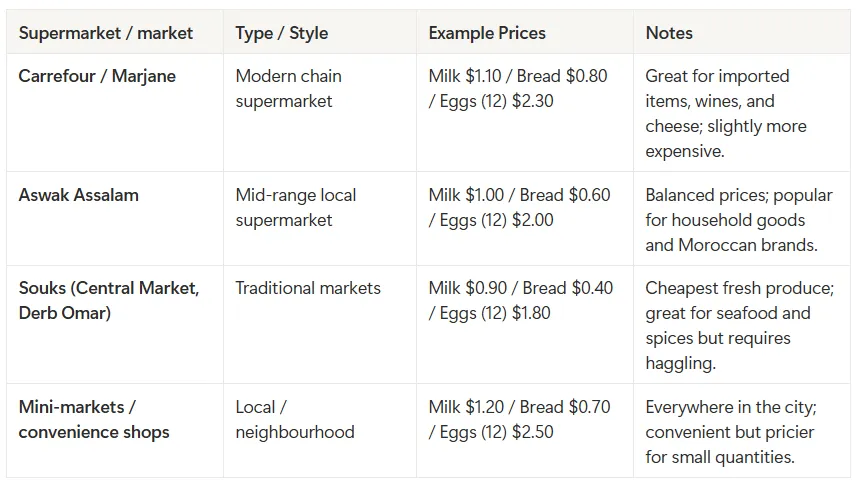
As Morocco’s largest city, Casablanca has the widest variety of supermarkets, from global chains to traditional souks. Prices vary depending on whether you shop local or imported.

__wf_reserved_inherit

People living in Gauthier, Racine, and Anfa tend to split shopping between Carrefour (for international goods) and neighbourhood markets for produce. Those in less central areas like Hay Hassani or Sidi Maarouf often rely more on Aswak Assalam or local shops.

Utilities costs in Casablanca

Casablanca, as Morocco’s economic capital, has a slightly higher cost of living than other cities, and utilities are no exception. Still, the prices are reasonable compared to major global cities, and expats find them manageable once they settle in.

Electricity

Electricity use varies depending on the season. Coastal breezes keep Casablanca cooler than inland cities like Marrakech, so you’ll spend less on air conditioning, though heating might be needed during the damp winter months.

  • Average monthly cost for a 1–2 bedroom apartment: $35–65
  • Tips: Energy-efficient bulbs and unplugging appliances when not in use can help keep bills low. Electricity is billed monthly by ONEE, Morocco’s national provider.

Water

Water costs are moderate. Casablanca’s water supply is managed by Lydec, and most apartments have reliable access. Some landlords include water in the rent, especially for furnished flats.

  • Average monthly cost: $12–25
  • Tip: Always check whether your rental includes water and sewer fees, as billing can vary.

Gas

Most homes use bottled gas for cooking and hot water, just like in other Moroccan cities. Delivery is quick and easy to arrange through local vendors.

  • Cost: Around $8–15 per month
  • Tip: Keep an extra bonbon de gaz at home, especially during colder months or if you cook frequently.

Internet

Casablanca has Morocco’s best internet infrastructure, with fast fibre-optic connections widely available in neighbourhoods like Maarif, Racine, and Gauthier.

  • Average monthly cost: $25–50 for fibre (~200–500 Mbps)
  • Tip: Maroc Telecom, Inwi, and Orange are the main providers. Installation is usually quick, especially in newer buildings.

Mobile/cell phone

Mobile data plans are affordable and efficient, ideal for both short-term and long-term stays.

  • Average monthly cost: $10–20 for 10–20 GB data
  • Tip: Prepaid SIMs are widely available at airports, malls, and convenience stores. Coverage in Casablanca is excellent across all providers.
__wf_reserved_inherit

Healthcare in Casablanca

As Morocco’s largest and most cosmopolitan city, Casablanca offers some of the country’s best healthcare facilities. Expats will find both public and private options, with the private system being the preferred choice for quality care, shorter wait times, and multilingual staff.

Public healthcare

Public hospitals in Casablanca are suitable for basic care and emergencies but not ideal for specialised or ongoing treatments.

  • Cost: Low or free for residents; small fees for consultations or prescriptions
  • Pros: Inexpensive and widely available
  • Cons: Long waits, limited English-speaking staff, and varying service quality

Private healthcare and insurance

Casablanca’s private healthcare sector is modern, reliable, and significantly more affordable than in Europe or North America. The city is home to several excellent hospitals and clinics, such as Clinique Littorale, Clinique Jerrada, and Clinique Yasmine, which cater to both locals and foreigners.

  • Basic consultation (without insurance): $25–50
  • Specialist visit: $50–90
  • Hospital stay (per night, private room): $120–250

Private hospitals usually offer bilingual (French-English) services and well-equipped facilities. For peace of mind, most expats opt for private health insurance that covers both outpatient and inpatient care.

__wf_reserved_inherit

Many expats pay cash for smaller visits since local consultation fees are quite affordable. Pharmacies are abundant throughout Casablanca, especially in central districts like Maarif and Gauthier, and most medications are available without a prescription.

Average living costs in Casablanca

Casablanca is more expensive than most Moroccan cities, but still far cheaper than major Western capitals. Your living costs will depend largely on your neighbourhood and lifestyle choices.

__wf_reserved_inherit

You can live comfortably in Casablanca on around $1,800–2,000 per month, though costs rise significantly if you prefer a central neighbourhood or dine out often.

Earning abroad, living well in Casablanca

Casablanca blends Morocco’s coastal charm with a fast-paced urban rhythm — where business meets culture and the Atlantic breeze meets city lights.

With Grey, you can receive international payments in USD, GBP, or EUR, exchange when the rates are best, and withdraw MAD directly to a Moroccan bank account. Seamless, transparent, and made for people who live globally but spend locally.

Open your Grey account today and focus on growing your life in Casablanca and not worrying about cross-border transfers.

‍

Arrow (up)

Back to top