<script type="application/ld+json" data-schema-version="grey-blog-v4"> [{"@context":"https://schema.org","@type":"BlogPosting","@id":"https://grey.co/blog/11-must-have-tools-for-freelancers-in-2024#article","headline":"11 must-have tools for freelancers in 2024","description":"Struggling to stay organised and productive as a freelancer? Discover 11 essential tools in 2024 to boost your efficiency and client satisfaction!","inLanguage":"en","url":"https://grey.co/blog/11-must-have-tools-for-freelancers-in-2024","mainEntityOfPage":{"@id":"https://grey.co/blog/11-must-have-tools-for-freelancers-in-2024#webpage"},"datePublished":"2024-04-24T09:38:41.077Z","dateModified":"2026-06-15T19:33:35.283Z","author":{"@type":"Person","@id":"https://grey.co/authors/toluwani-omotesho#person","name":"Toluwani Omotesho","url":"https://grey.co/authors/toluwani-omotesho"},"publisher":{"@type":"Organization","@id":"https://grey.co/#organization","name":"Grey","url":"https://grey.co","logo":{"@type":"ImageObject","url":"https://cdn.prod.website-files.com/6360022338a81bd6fdbb1145/6564ae1077a67e39d3c491a6_Grey%20Logo%20Lockup%20Black.svg"}},"image":{"@type":"ImageObject","@id":"https://grey.co/blog/11-must-have-tools-for-freelancers-in-2024#primaryimage","url":"https://cdn.prod.website-files.com/636a85d290ee58e70c17e1c0/6a301ab3d61be9a66a762a93_6a301ab22c10b65f942b11ce_11-must-have-tools-for-freelancers-in-2024__header-image.webp","contentUrl":"https://cdn.prod.website-files.com/636a85d290ee58e70c17e1c0/6a301ab3d61be9a66a762a93_6a301ab22c10b65f942b11ce_11-must-have-tools-for-freelancers-in-2024__header-image.webp","width":1200,"height":675}},{"@context":"https://schema.org","@type":"WebPage","@id":"https://grey.co/blog/11-must-have-tools-for-freelancers-in-2024#webpage","url":"https://grey.co/blog/11-must-have-tools-for-freelancers-in-2024","name":"11 must-have tools for freelancers in 2024","description":"Struggling to stay organised and productive as a freelancer? Discover 11 essential tools in 2024 to boost your efficiency and client satisfaction!","inLanguage":"en","primaryImageOfPage":{"@id":"https://grey.co/blog/11-must-have-tools-for-freelancers-in-2024#primaryimage"},"breadcrumb":{"@id":"https://grey.co/blog/11-must-have-tools-for-freelancers-in-2024#breadcrumb"}},{"@context":"https://schema.org","@type":"BreadcrumbList","@id":"https://grey.co/blog/11-must-have-tools-for-freelancers-in-2024#breadcrumb","itemListElement":[{"@type":"ListItem","position":1,"name":"Home","item":"https://grey.co/"},{"@type":"ListItem","position":2,"name":"Blog","item":"https://grey.co/blog"},{"@type":"ListItem","position":3,"name":"11 must-have tools for freelancers in 2024","item":"https://grey.co/blog/11-must-have-tools-for-freelancers-in-2024"}]},{"@context":"https://schema.org","@type":"ItemList","@id":"https://grey.co/blog/11-must-have-tools-for-freelancers-in-2024#list","name":"11 must-have tools for freelancers in 2024","numberOfItems":11,"itemListElement":[{"@type":"ListItem","position":1,"name":"Grey"},{"@type":"ListItem","position":2,"name":"Notion","url":"https://www.notion.so/product"},{"@type":"ListItem","position":3,"name":"Asana"},{"@type":"ListItem","position":4,"name":"Trello"},{"@type":"ListItem","position":5,"name":"Freedom","url":"https://freedom.to/"},{"@type":"ListItem","position":6,"name":"Toggl","url":"https://toggl.com/"},{"@type":"ListItem","position":7,"name":"Grammarly"},{"@type":"ListItem","position":8,"name":"Hemingway Editor"},{"@type":"ListItem","position":9,"name":"Google Docs","url":"https://www.google.com/docs/about/"},{"@type":"ListItem","position":10,"name":"Slack","url":"https://slack.com/"},{"@type":"ListItem","position":11,"name":"Google Meet"}]}] </script>

11 must-have tools for freelancers in 2024

Toluwani Omotesho

TABLE OF CONTENT

SHARE THIS POST

As a freelancer, you have complete autonomy over how and when you work. However, a major downside of this freedom is it can be challenging to stay focused and productive, which can lead to missed deadlines, burnout, and poor-quality work.

Thankfully, there are ways around this. In this post, we’ll guide you through some freelancing tools that can help automate parts of your work and increase your efficiency and productivity.

Payment tools

Grey:

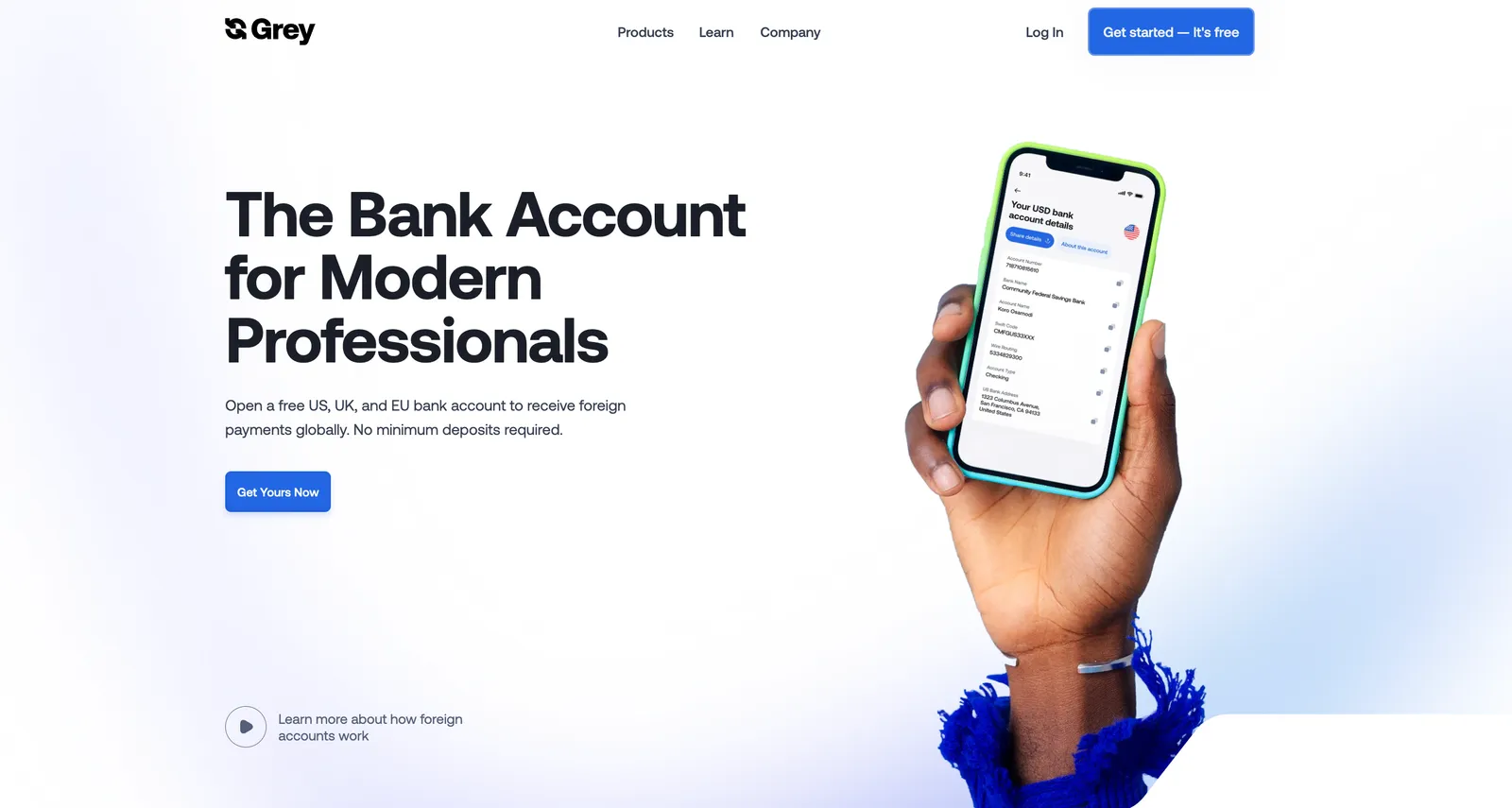
Grey is a must-have for every freelancer. Our virtual EU, GBP, and US bank accounts simplify global payments, ensuring you never miss out on international gigs and roles.

Grey must have freelance tool for payment in 2024

Additionally, Grey has an invoicing feature that allows you to create and send invoices in any currency directly to your client with just a few clicks. Sign up for free today and get started!

Also read: 8 Must-Have Tools for Digital Nomads in 2024

Project management tools:

Notion:

Notion is a project management and productivity tool that serves as an all-in-one solution for managing tasks, organising information, and collaborating with team members. Its ability to adapt to a person’s specific needs is one of the reasons behind it’s growing popularity amongst freelancers and organisations.

Some key features of Notion include:

  • Custom databases and tables that you can filter in terms of priority, deadline, type, and status to help you keep track of your tasks and projects.
Notion project management tool for freelancers in 2024
  • Integrations with other tools and services like Asana, Slack, GitHub, Figma, and Framer, among others.
  • Real-time collaboration on documents with team members
  • Notion wikis help you document policies, goals, and project details all in one central place.
  • Extensive colors, layouts, and icons allow you to personalise and customise your workspace.

Asana:

This popular project management tool gives you a bird’s eye view of your tasks, projects, deadlines, and collaborators. Asana’s simplicity makes it easier to track progress and ensures task visibility, which improves boosts teamwork and productivity.

Asana project management tool for freelancers in 2024

Similar to Notion, you can also directly collaborate with team members on tasks and integrate tools like Slack, Dropbox, and Google Drive for seamless data sharing. Asana is free for use by up to 10 people, and there are different paid plans for teams and organisations looking to access premium features.

Trello:

Trello uses the Kanban-style design, i.e., a card-based system, to seamlessly organise tasks and projects. You create lists and cards that contain information about the task, due date, description, and collaborators, helping you to visually manage your tasks.

Trello offers over 200 integrations with third-party apps to automate repetitive tasks and improve your overall efficiency.

Focus & time tracking:

Freedom:

As a freelancer, you depend on the internet for your income, but it can also be a big source of distractions. These days, it’s common to go from researching a work-related term to laughing at memes two hours later. However, with Freedom, you can eliminate distractions and have focused work sessions.

Freedom effectively blocks distracting apps and websites, helping you stay focused and productive. You can schedule your Freedom sessions in advance and sync them across all your devices to completely block distractions.

Toggl:

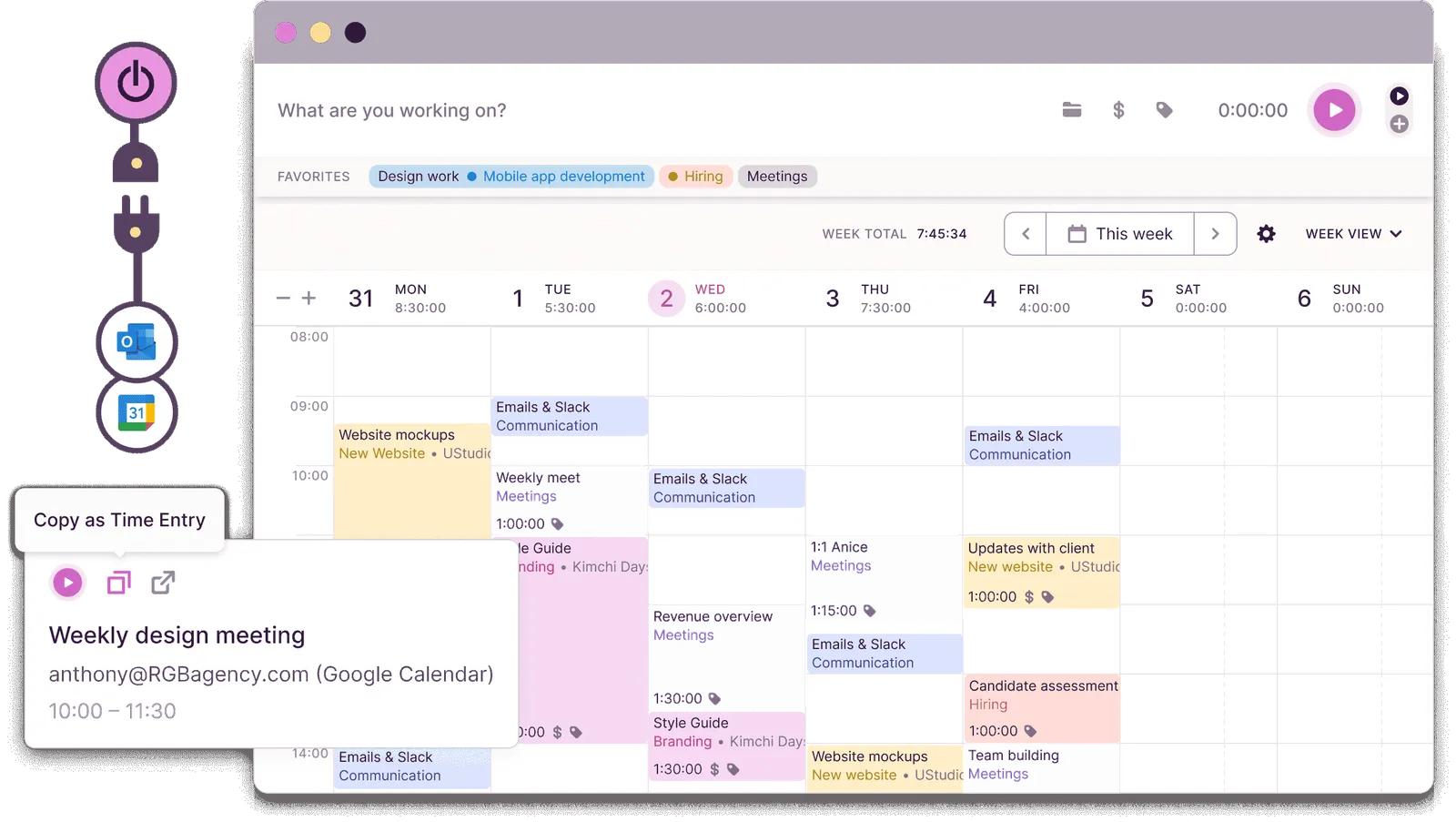
Toggl is a time-tracking tool that can help you acuurately monitor and manage the time you spend on different tasks and projects.

Toggl time tracking tool for freelancers in 2024

It has a user-friendly interface and is a valuable tool for freelancers looking to log their activities and generate reports for time audits, analysis, and billing purposes.

Grammarly:

This tool works as a writing assistant that helps check your grammar, spelling, and punctuation.

It also checks your writing style, ensuring your messages are clear and professional. You can use Grammarly for free to check basic grammar and spelling. But, for features like plagiarism detection, vocabulary enhancement, and citation suggestions, you have to subscribe to the premium version, billed at $30 monthly and $144 annually.

Hemingway Editor:

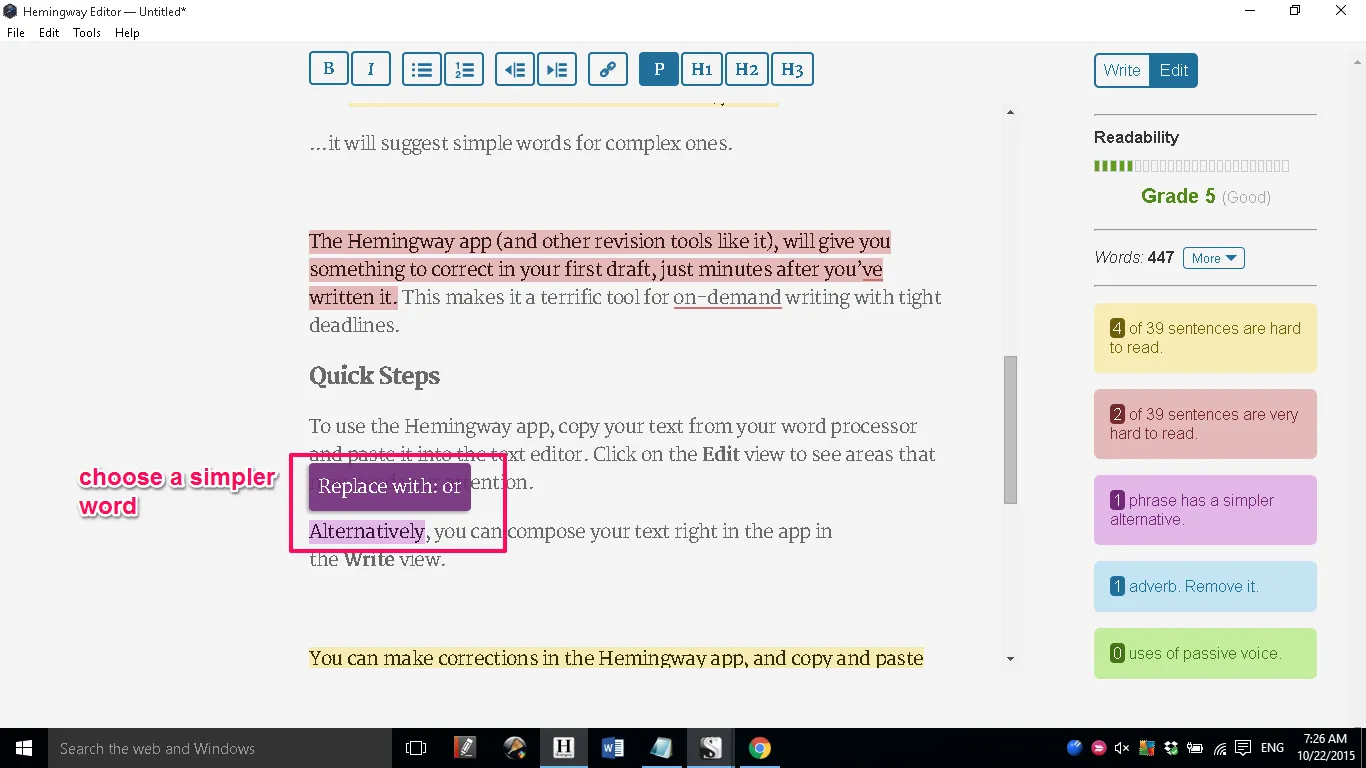
Unlike Grammarly, Hemmingway Editor doesn’t offer spelling or grammar checks; it instead focuses on improving the readability and clarity of your message by:

  • Highlighting wordy sentences
  • Flagging excessive adverbs and passive voice sentences
  • Suggesting simpler words and breaking complex sentences
Heminway Editor writing tool for freelancers in 2024

Hemingway’s online version is completely free for all standard browsers, but the desktop version is available for a one-time payment of $19.99

Google Docs:

Many freelancers, teams, and companies are rapidly choosing Google Docs as their default writing tool over the standard Microsoft Word for several reasons:

  • Your work is saved automatically, and version history allows you to review or revert to previous versions of the document.
  • You can collaborate with your team members in real-time by working on the same document simultaneously and effect feedback immediately.
  • With Google Docs, you can work on documents anywhere and from any device, i.e., computer, tablet, or phone.

Google Docs is free; you only need a Google account to start writing.

Communication tools:

Slack:

Slack is a valuable communication and collaboration tool for freelancers and remote teams. You can talk with clients, team members, and freelancers in real time.

Slack has channels created for specific projects or tasks, making it easy to stay organised and find information quickly.

Slack communication tool for freelancers in 2024

You can also integrate it with other tools like Google Drive, Trello, Miro, and Notion to receive notifications and updates in one place.

Google Meet

Google Meet is a handy tool for freelancers to have virtual meetings, consultations, and presentations with clients or colleagues regardless of location. It offers high-quality video and audio calls, screen sharing, and interactive features like Q&A sessions. You can schedule meetings easily through Google Calendar and join from any device.

Google Meet prioritises security with encryption and meeting controls, ensuring privacy during virtual meetings. It’s also a cost-effective solution — all you need is a Google account, making it an excellent choice for freelancers looking to improve their productivity and communication.

Wrapping up

Juggling projects and clients as a freelancer can be tasking, but having the right tools can help to significantly increase your efficiency, productivity, and overall success.

‍

Last updated:

October 2, 2026

Open a free Grey account to get startedJoin 1 million digital nomads
IF YOU ENJOYED THIS, CHECK THESE OUT

How to budget in foreign currencies using the Grey card

•

•

2 min read

Budgeting used to be simple. You earned money, spent money, and tracked what was left. At that time, you had only one account with one currency, which required just one mental model.

Then remote work happened.

Now you might earn in EUR, pay for tools in USD, and travel in between. Discipline isn’t enough for budgeting anymore; you also need structure because, without proper structure, even the most careful spender can lose track of where their money is going.

Your Grey card is a practical budgeting tool for people who live, work, earn, and spend across borders. I’ll explain.

Why budgeting in multiple currencies breaks down so easily

Many people who overspend don't do so because they’re irresponsible. But because their money isn’t organised in a way that reflects how they live.

It’s pretty common to be juggling subscriptions in USD, running ads in EUR, buying coffee in GBP, and somehow all on the same card. Eventually, everything blurs together. You can no longer track your Netflix renewal, that Facebook ad campaign, the flight you booked last week, or the coworking space membership. Then one day you check your balance and think, “Where did all that money go?” You know you spent it. You just can’t figure out where, or why, it felt like so much more than you expected.

It’s not that you’re careless. It’s that your money isn’t organised in a way that matches how you actually live and work. And once things start blurring, it’s nearly impossible to untangle without spending an hour combing through statements, converting currencies in your head, and still not feeling certain you’ve caught everything.

At that point, your budget is broken.

Also read: How to use your Grey card to manage all your subscriptions

What should budgeting look like when you earn and spend globally?

Clarity, separation, and control are the most crucial factors when budgeting across multiple currencies. You should be able to:

  • See exactly what each type of spending is costing you.
  • Stop or pause spending instantly when needed.
  • Protect one part of your budget from another.
  • Make changes without disrupting everything else.

The Grey card is designed around solving these exact needs.

How does the Grey card help with budgeting?

Use multiple cards to separate your spending

One of the most effective budgeting habits is separation. Instead of using a single card for everything, you can create multiple cards with clear purposes. Your Grey virtual card helps you structure your spending as such.

For example, you can create:

  • One card for subscriptions and recurring tools
  • One card for ads and growth experiments
  • One card for travel or everyday spending
  • One card per client or project

Each card acts like its own budget lane, pulling from the same balance. You don’t need to guess where the money went because you already know.

This is especially useful if you freelance, manage ads, or run multiple income streams. When spending is separated, budgeting becomes more straightforward.

Also read: How to pay for ads easily with your Grey card

Freeze cards instantly when spending goes off-track

Budgets fail when you can’t act fast enough.

With the Grey card, you can instantly freeze or unfreeze any card in the app. If a digital ad campaign starts burning through too cash, freeze the card. If a subscription you forgot about renews unexpectedly, freeze the card. If you’re travelling and want to lock down non-essential spending, freeze the card.

Freezing a card doesn’t affect your other cards or balances. It simply stops that specific spending lane, which is precisely how budgeting should work.

Set limits that protect your budget

Budgets can fail when they’re too rigid. Grey’s spending limits work more like guardrails.

You can set daily or monthly limits per card, receive alerts when you’re approaching your limit, and still stay flexible. The goal isn’t to punish spending. I mean, who wants that? It’s to keep you aware before things drift too far.

For shared cards or subscriptions, limits are especially useful. You know exactly how much can be spent, and nothing sneaks past unnoticed.

Track spending clearly in one place

When you’re budgeting across currencies, visibility matters more than perfection. Every Grey card transaction appears clearly in your app, linked to the card you used. That means you’re not just seeing how much you spent, but why you spent it.

When budgeting time comes around, you’re not sitting there trying to remember what that mysterious €47 charge was three weeks ago or why your USD balance dropped. Everything’s already categorised. The structure did the work for you.

Spend confidently across borders

Trust helps with budgeting too. When you’re shopping internationally, paying for ads, or travelling, declined payments and unexpected charges can throw everything off. The Grey Card works across global merchants and even supports Apple Pay and Google Pay, so everyday spending feels normal, even when you’re far from home.

A quick note on protection when spending abroad

An often-overlooked aspect of budgeting is preparing for contingencies in case things go wrong.

When you pay with your Grey card, you have access to Visa benefits, including purchase protection, extended warranties, and price protection, depending on the transaction and your activation status. It’s not something you think about daily, but it adds a layer of reassurance when you’re buying electronics, booking travel, or shopping internationally.

It’s one less thing to worry about while managing money across borders.

Also read: How to claim your Visa card benefits

What budgeting in foreign currencies is like with the Grey card

When your card and your accounts are aligned, budgeting stops being guesswork. You know what you’re spending, which currency your spend is coming from and more importantly, when something changes.

Instead of constantly reacting to your balance, you’re now making decisions with clarity. And that’s what good budgeting should be like, whether you’re at home, travelling, or working remotely.

If you’re ready to make your budget work wherever you are, create or update your Grey card today and start spending and budgeting in the ways that matter to you.


‍

How creators receive payouts from international platforms

•

•

2 min read

I remember my first international payout like it was yesterday. I’d spent months building an audience, finally hit the YouTube monetisation threshold, and eagerly waited for the payment from Google AdSense. When the notification came through saying the money had been sent, I felt brilliant. Proper creator now, getting paid for my work. “Tell Mr Beast to come outside!” I said.

When I checked my account, the platform had sent the money, yes, but somewhere between California and my bank account, a part of it just vanished.

That moment taught me that understanding how you get paid is just as crucial as understanding how to create content people want to watch. Over the years, I’ve learned the hard way how international payouts actually work, where money gets lost, and how to structure things so you keep more of what you earn. This is what I wish someone had told me before that first disappointing payout.

Also read: How remote employees receive salaries from abroad

How international platforms actually pay creators

Platforms don’t just send money directly to your bank account like a friend transferring you a tenner. They use intermediaries called payout processors because they’re dealing with millions of creators across dozens of countries, all expecting payment, some even in their local currency.

YouTube pays through Google AdSense. TikTok uses various regional processors. Patreon, Twitch, and Substack all rely on third-party systems to handle the actual movement of money across borders. This makes sense from their perspective. They can’t open bank accounts in every country or navigate every local banking regulation themselves.

LDMAG1

The most common payout methods

I’ve used nearly every payout method available to creators, and each has taught me something different.

Direct bank transfers

Direct bank transfers via wire seemed more professional when I started getting larger payments. But international wire transfers involve multiple banks, each charging fees. I once received a $2,000 payment that cost me nearly $90 in combined bank charges and poor exchange rates. The sender paid $25, an intermediary bank took $20, my bank charged a receiving fee, and then converted USD at a rate significantly worse than the mid-market rate. It added up fast.

Platform-specific systems

Platform-specific systems like Payoneer work better for creators on freelance marketplaces. Payoneer integrates smoothly with platforms like Upwork and Fiverr, and it’s cheaper than PayPal. I still lost 1-2% on currency conversion, though, and withdrawal fees applied depending on how I accessed the money.

Multi-currency fintech accounts

The breakthrough for me came when I discovered multi-currency fintech accounts. Services like Wise, Revolut, and Grey offer virtual bank accounts in multiple currencies, such as USD, EUR, and GBP, so you can receive payments easily. This changed everything for me.

Also read: How Nigerians working remotely protect income from FX swings

How smart creators structure their payout systems

After years of losing money unnecessarily, I finally sorted out a proper system, and it made an immediate difference.

First, I opened a multi-currency account that let me receive USD, EUR, and GBP without forced conversion. I went with Grey because it gave me proper banking details with an account number, sort code, and routing number so that platforms and clients could pay into it directly.

Next, I updated my payout details across every platform. YouTube, Patreon, freelance platforms, and direct clients, I gave them all my new account details. Some platforms required verification periods, others had specific payout cycles. But once everything was switched over, the difference was clear.

Finally, I started converting currency strategically instead of immediately. If I’m not spending the money right away, I hold it in USD until the exchange rate improves. Sometimes this saves me 2-3%, which compounds significantly over months.

Also read: How to budget in foreign currencies using the Grey card

How Grey simplifies international payouts

I’m not here to give you a sales pitch, but I do want to explain why Grey made such a difference for me specifically.

Grey gives you virtual bank accounts in USD, EUR, and GBP with proper banking details. When a platform or client pays you, the funds are deposited directly into the relevant currency account. There’s no forced conversion, no intermediary banks taking unexpected fees, and no waiting two weeks for international wires to clear.

The exchange rates are transparent. Whenever I convert, I know exactly what I’m paying, as there are no hidden fees buried in exchange-rate spreads.

For creators earning from multiple countries and platforms, having one system that handles everything is genuinely valuable. I used to juggle different platforms, but now everything flows into Grey, and I manage it all in one place.

The clarity this provides also makes tax filing significantly easier. I have clean records of what I earned, in which currency, and when.

Also read: Switching from banks to global accounts: What to know

Getting paid is part of the strategy

Treating your payout infrastructure as part of your overall creator strategy isn’t boring back-office admin. It’s keeping more of the money you’ve worked hard to earn. It’s having control over your finances instead of just accepting whatever arrives in your account. It’s being professional about your business.

The platforms will keep paying you, but they won’t optimise how you receive that money. That’s your job. Understand the fees, use the right tools, and structure your systems intelligently. Your future self will thank you.

Open your free Grey account or download the app and start receiving international payouts transparently, efficiently, and without losing money you’ve already earned.

‍

How to pay online and in stores worldwide with your phone

•

•

2 min read

I was halfway through buying coffee in Lisbon when I patted my pockets looking for my wallet and realised I’d left it in my hotel room. I wasn’t moved in the slightest. A worthy, some would even argue, better alternative — my phone — was already hovering over the card reader to complete the payment.

That was a moment of realisation of how much things had changed. A few years ago, travelling required carrying multiple cards, worrying about foreign transaction fees, and hoping the ATM wouldn’t “swallow” my card in some random city. Now I pay for nearly everything with my phone. Subscriptions, flights, groceries in foreign countries, late-night takeaway orders, anything in fact.

How does it work?

How paying with your phone actually works

When I first started using mobile payments, I assumed my phone was doing something complicated and vaguely magical. In a way, I was right.

Your phone can store your card details securely in a digital wallet. Apple Pay if you’re on iPhone, Google Pay on Android, or other regional options, depending on where you are. When you pay, your phone communicates with the payment terminal via NFC (Near Field Communication), the same technology that powers contactless cards.

You authenticate the payment using Face ID, fingerprint, or a passcode, and the transaction goes through. The money comes out of whichever card or account is linked to that digital wallet. From the merchant’s perspective, it looks like a normal card payment. From your perspective, it’s faster and more convenient than fumbling for a physical card.

Online payments work similarly. When checking out, you can use Apple Pay or Google Pay instead of typing in card details. Your phone authenticates using biometrics, and the payment processes are instant. No manually entering sixteen-digit card numbers, expiry dates, or security codes.

The convenience is brilliant. But convenience doesn’t mean cost-free.

Also read: How to budget in foreign currencies using the Grey card

Paying online from anywhere in the world

I spend a lot of money online, honestly, probably more than I should, and most of it involves foreign currencies. Subscriptions to US software services. European design tools. UK-based platforms. Occasionally, buying something from an online shop halfway across the world because it’s not available locally.

For years, I paid for everything with a local bank card and didn’t think twice about it. Every transaction went through, so I assumed it was working fine. Then I started looking at my statements more carefully and realised how much I was losing.

When you pay for something online in a foreign currency using a regular bank card, three things usually happen. Your bank converts the currency at its exchange rate, which is almost always 2 - 4% worse than the real mid-market rate. They might charge a foreign transaction fee, sometimes 2 - 3% of the purchase. And if the merchant offers to convert the currency for you at checkout (something called dynamic currency conversion), that’s usually even worse.

On a $100 subscription, you might lose $5 - $7 just to fees and poor conversion rates. Multiply that across every international payment you make in a year, and it adds up fast. I calculated mine once, it was over $600 annually. Six hundred quid, gone, for no reason other than using the wrong card.

Also read: How to use your Grey card to manage all your subscriptions

Paying in physical stores globally

Paying with your phone in physical stores works the same way contactless cards do, just more conveniently. You tap your phone on the terminal, authenticate, and the payment goes through. It’s particularly useful when travelling because you don't have to worry about carrying the right physical cards or whether a shop accepts your card network.

I’ve paid for coffee in Berlin, groceries in Dubai, transport in Tokyo and dinners in Cape Town, all with my phone. It’s seamless, and merchants barely look up because contactless payments are standard nearly everywhere now.

But again, the ease of payment doesn’t mean you’re paying efficiently. Every time I tapped my phone abroad using my regular bank card, I was getting hit with foreign transaction fees and terrible exchange rates. The transaction felt instant and painless, but my bank was quietly taking 4 - 5% every time.

The worst part is you don't see it happening. The payment just says "approved." You don't get a breakdown of fees or exchange rate markups. You only notice when you check your statement later and realise that €50 dinner somehow cost you £47 instead of £43.

LDMAG1

Why your card setup matters

If you link a regular bank card with high foreign transaction fees and poor exchange rates, your mobile payments will still cost you money. The phone is just the interface. The financial infrastructure behind it, meaning the card, the account and the currency handling, is what actually matters.

I realised this after a trip to France. I’d paid for everything with my phone, felt very modern and efficient, then checked my statement and saw I’d lost nearly £80 to conversion fees and markups over one week. My phone wasn’t the problem. My card was.

That’s when I started looking for a better setup, something designed for people who regularly spend money internationally and don’t want to lose a percentage of every transaction to avoidable fees.

Also read: How tax-free shopping works for international travellers

How Grey makes global phone payments easier

Apple Pay and Google Pay are brilliant. They make payments faster and more secure. But they don’t solve the underlying problem of whether you’re paying efficiently or expensively.

Grey changed how I think about paying with my phone because it solved the card problem, not just the payment method.

When you open a Grey account, you get USD, GBP and EUR multi-currency accounts.

The Grey card connects directly to these accounts.

What really impressed me was the control. Grey lets you create multiple cards. I've got one for subscriptions, one for travel, and one for general spending. If a card is compromised or I'm worried about a particular merchant, I can instantly freeze it in the app and create a new one in seconds. I can set spending limits, track exactly where my money is going, and budget more intelligently by separating spending categories across different cards.

For someone who earns in multiple currencies or regularly spends internationally, this setup makes a material difference. I’m not losing money every time I tap my phone. I’m spending efficiently, with full visibility and control.

The right card changes everything

I love paying with my phone. It’s faster, more secure, and more convenient than carrying a wallet full of cards.

But payments are only as good as the card linked to them. If you’re paying with your phone but using a card with high fees and poor exchange rates, you’re still losing money on every transaction. The tap is convenient, but the cost is hidden.

The right card makes mobile payments genuinely efficient, not just convenient. That’s the difference between losing hundreds annually to avoidable fees and keeping the money you earn.

Get it right by opening a free Grey account today and getting the card that works globally and transparently.

‍

How to shop in the US or Europe with your Grey card

•

•

2 min read

A few months ago, I was eyeing a pair of sneakers on a US website for weeks. Then the store started running sales and I decided to buy them (hashtag #YOLO), but my bank card declined the payment.

Not once, not twice… but four times!.

The same card that worked perfectly in Nigeria where I live, and the same details I’d used for years. I tried to get another card, but by then, sales had ended, and the sneakers were out of stock. It was annoying, but I just had to accept my L.

If you’ve ever tried to shop internationally, on sites like ASOS UK, Amazon US, Zara EU, or even the Apple Store, you may already be familiar with this pain. Sometimes the website rejects your card. Sometimes your bank blocks the transaction. Sometimes the currency conversion takes too long, and the payment times out.

It shouldn’t be this difficult to buy something online in big 2026… yet for many people, it still is.

But if you use a Grey card, you'll eliminate the uncertainty of thoughts like, “Will this payment go through?”, and transform your international shopping into a simple and predictable process.

Why shopping abroad is often frustrating

Shopping from US or European stores usually comes with these hurdles:

1. Many foreign merchants decline local cards

Some US/UK online stores automatically reject certain African-issued cards, even if you have more than enough balance.

2. Stores bill strictly in USD, GBP, or EUR

If your card requires manual currency conversion, it can cause payment delays that may result in declines.

3. Banks block “suspicious” international transactions

This usually happens when the merchant is unfamiliar.

4. Conversion errors and hidden fees

Some cards convert long after the purchase, leading to surprises on your statement.

These problems are common, but they’re also exactly what Grey card is built to avoid.

How your Grey card makes shopping internationally easy

Smart spending across multiple currencies and USDC

Your Grey card doesn’t require you to pick or switch wallets before paying. Instead, it automatically spends from your balances. Your USD account is debited first; if that’s empty, your USDC, and then the highest of your remaining balances.

This means your payment goes through as long as you have funds available in your account, without requiring you to consider currencies at checkout.

Works across major US and European stores

Your Grey card is an international spend card, so you can pay at 150 million merchants worldwide.

Use Apple Pay and Google Pay

For stores that support mobile wallets, you can simply add your Grey Visa card to Apple Pay or Google Pay. This is more secure and makes for much faster checkouts.

Create multiple cards for better organisation

If you shop frequently or mix personal and business purchases, you can:

  • Use one card for personal shopping
  • another for business imports
  • another for gift purchases

It keeps your spending clean and easy to track.

Freeze and unfreeze anytime

You can always freeze your cards to control your spending.

Better protection for online transactions

You receive real-time notifications, card controls, and instant limits - everything you need for peace of mind when buying from foreign sites.

LDMAG1

How to shop in the US or Europe with your Grey card

1. Request your Grey visa card

Create a Grey account and go to the cards section of your Grey app to request a Grey card for $5.

2. Add your card to the store’s checkout

Enter your card details or simply pay through Apple Pay/Google Pay.

3. Make your purchase normally

Shipping, duties, and taxes will be displayed as they are for every other international shopper.

4. Track everything in your Grey app

Every charge, refund, or verification appears instantly, so there are no surprises later.

Tips for smarter international shopping

  • Use a separate card for business or bulk purchases so you can easily track expenses.
  • Keep a bit extra in your wallet for shipping fees and taxes.
  • Use Apple Pay/Google Pay when available. It’s the most seamless way to tap and pay, and also supports contactless payments.

Shopping abroad doesn’t have to be stressful

Your Grey card helps you shop with confidence. There are no random declines or conversion drama. Ahead of your next international purchase, you can create your Grey card and enjoy a smoother, more predictable shopping experience.

‍

Can foreigners open a UK bank account without proof of address?

•

•

2 min read

If you’re planning to move to the UK, study there, or work remotely for UK clients, you almost certainly will need a UK bank account. For most people, they’ll quickly contact a few UK banks to open an account, and almost immediately, they hit the same wall: “Do you have proof of UK address?”

Most people don’t.

This could be because you’re not living in the UK yet, or you’re based abroad but need UK banking access. After explaining this, the conversation usually ends there. The bank says they can’t help without proof of address. You’ve failed before you’ve even started. Okay, maybe saying you’ve failed is a bit of an exaggeration, but you get my point.

So, can foreigners open a UK bank account without proof of address? Yes, but only if you know what to do.

Let's explain why UK banks require proof of address, your realistic options, and how to navigate UK banking as a foreigner without the usual documentation.

Why do UK banks ask for proof of address?

UK banks aren’t asking for proof of address to be difficult. I know, I know it can be a bit annoying. They’re in fact required by law to verify customer identities and addresses as part of KYC (Know Your Customer) and AML (Anti-Money Laundering) regulations.

These regulations exist to prevent financial crime, especially across borders. Banks must confirm you are who you say you are and that you have a verifiable connection to the address you’ve provided. This helps prevent fraud, money laundering, and identity theft.

For people already living in the UK, this is straightforward. You can provide a utility bill, council tax statement, or rental agreement showing your name and UK address. For foreigners who don’t live in the UK yet, or who live abroad permanently but need UK banking, these requirements pose a barrier.

LDMAG1

Can foreigners open a UK bank account without proof of address?

Technically, yes, but it depends entirely on which type of account you’re trying to open and with whom.

Traditional high-street banks almost always require proof of address in the UK. Their systems and compliance processes are built around this expectation. Applying to these banks without a UK address usually results in automatic rejection.

Some traditional banks offer international or expat banking services for high-net-worth individuals or specific professional categories (students, employees of multinational companies). These accounts sometimes accept foreign proof of address, but they often come with high minimum balance requirements, monthly fees, or qualifying restrictions.

Digital banks and fintech companies operate differently. Many were built specifically to serve people who don’t meet traditional banking criteria, including foreigners without UK addresses. These companies use technology to verify identity without always requiring physical UK residency.

Also read: Choosing the right payment setup for UK freelancers

Digital banks and fintech alternatives

Digital banks and fintech companies built their businesses around serving people that traditional banks aren't capable of serving.

These services typically verify your identity using your passport or national ID card, along with proof of address from your home country. They don’t require you to live in the UK. Once verified, you receive UK banking details that function as traditional UK bank accounts for receiving and sending payments.

However, they don’t offer full high-street bank services like mortgages, loans, or overdrafts (though some are expanding into these areas) and physical branch access (because they’re fully digital)

For foreigners who need UK banking access but do not live in Britain, these alternatives are often the only realistic options.

Also read: How to create US and UK bank accounts as a migrant worker in the UK

How does Grey help you open UK accounts?

If you live and work outside the UK but earn money from UK clients, or run a business that needs UK banking, or simply need UK account details without moving to the UK, Grey provides a practical solution.

You don’t need UK proof of address to open a Grey account. Verification is done using your existing identity documents and proof of address from where you currently live. Once verified, you receive UK banking details (sort code and account number) that your clients, employers, or customers can pay into as if you had a traditional UK bank account.

Grey also offers GBP, EUR, and USD accounts, meaning you can receive payments in multiple currencies without forced conversion. You control when to convert money and at what rates. For freelancers, remote workers, and businesses operating internationally, this flexibility matters.

Grey isn’t trying to replace your local bank. It’s a layer that sits alongside your existing banking, giving you access to UK (and other) banking infrastructure without needing to physically live in those countries.

Also read: How Grey differs from a UK bank

Can foreigners open a UK bank account without proof of address?

If you need UK banking to receive payments, hold pounds, and manage money digitally, fintech alternatives work well.

Grey gives you GBP, EUR, and USD accounts with UK banking details, no UK address required. Verify your identity using documents from your home country, receive your UK sort code and account number, and start enjoying truly inclusive global banking

Open your free Grey account today or download the app and access the UK banking infrastructure you need, without the residency requirements you don’t have.

‍

How to budget in foreign currencies using the Grey card

•

•

2 min read

Budgeting used to be simple. You earned money, spent money, and tracked what was left. At that time, you had only one account with one currency, which required just one mental model.

Then remote work happened.

Now you might earn in EUR, pay for tools in USD, and travel in between. Discipline isn’t enough for budgeting anymore; you need structure. Without the right structure, even the most careful spender can lose track of where their money is going.

The Grey card comes in as a practical budgeting tool for people who live and spend across borders. I’ll explain.

Why budgeting in multiple currencies breaks down so easily

Most people don’t overspend because they’re irresponsible. Rather, they overspend because their money isn’t organised in a way that reflects how they live.

Here’s what usually goes wrong.

You’re spending across platforms, clients, and countries, but everything is tied to one card. Subscriptions, ads, one-off purchases, and travel expenses all blur together. When something goes wrong, such as a spike in ad spend or an unexpected renewal, it’s challenging to pinpoint the cause quickly.

Add foreign currencies to the mix, and it gets worse. The charges don’t always settle immediately, and these small amounts seem harmless until they quietly add up.

At that point, your budget is broken.

Also read: How to use your Grey card to manage all your subscriptions

What should budgeting look like when you earn and spend globally?

Clarity, separation, and control are the most crucial factors when budgeting across multiple currencies. You should be able to:

  • See exactly what each type of spending is costing you.
  • Stop or pause spending instantly when needed.
  • Protect one part of your budget from another.
  • Make changes without disrupting everything else.

The Grey card is designed around solving these exact needs.

How does the Grey card help with budgeting?

Use multiple cards to separate your spending

One of the most effective budgeting habits is separation. Instead of using a single card for everything, you can create multiple cards with clear purposes.

For example, you can create:

  • One card for subscriptions and recurring tools
  • One card for ads and growth experiments
  • One card for travel or everyday spending
  • One card per client or project

Each card acts like its own budget lane. You don’t need to guess where the money went; you already know.

This is especially useful if you freelance, manage ads, or run multiple income streams. When spending is separated, budgeting becomes more straightforward.

Also read: How to pay for ads easily with your Grey card

Freeze cards instantly when spending goes off-track

Budgets fail when you can’t act fast enough.

With the Grey card, you can instantly freeze or unfreeze any card in the app. If an ad campaign starts burning cash, freeze the card. If a subscription you forgot about renews unexpectedly, freeze the card. If you’re travelling and want to lock down non-essential spending, freeze the card.

Freezing a card doesn’t affect your other cards or balances. It simply stops that specific spending lane, which is precisely how budgeting should work.

Set limits that protect your budget

Budgets can fail when they’re too rigid. Grey’s spending limits work more like guardrails.

You can set daily or monthly limits per card, receive alerts when you’re approaching your limit, and still stay flexible. The goal isn’t to punish spending. I mean, who wants that? It’s to keep you aware before things drift too far.

For shared cards or subscriptions, limits are especially useful. You know exactly how much can be spent, and nothing sneaks past unnoticed.

Track spending clearly in one place

When you’re budgeting across currencies, visibility matters more than perfection. Every Grey card transaction appears clearly in your app, linked to the card you used. That means you’re not just seeing how much you spent, but why you spent it.

When budgeting time comes around, you’re no longer reconstructing your month from memory. The structure is already there.

Spend confidently across borders

Trust helps with budgeting too. When you’re shopping internationally, paying for ads, or travelling, declined payments and unexpected charges can throw everything off. The Grey Card works across global merchants and even supports Apple Pay and Google Pay, so everyday spending feels normal, even when you’re far from home.

LDMAG1

A quick note on protection when spending abroad

An often-overlooked aspect of budgeting is preparing for contingencies in case things go wrong.

When you pay with your Grey card, you have access to Visa benefits, including purchase protection, extended warranties, and price protection, depending on the transaction and your activation status. It’s not something you think about daily, but it adds a layer of reassurance when you’re buying electronics, booking travel, or shopping internationally.

It’s one less thing to worry about while managing money across borders.

Also read: How to claim your Visa card benefits

What budgeting in foreign currencies is like with the Grey card

When your card and your accounts are aligned, budgeting stops being guesswork. You know what you’re spending, which currency it’s coming from and more importantly, when something changes.

Instead of constantly reacting to your balance, you’re now making decisions with clarity. And that’s what good budgeting should be like, whether you’re at home, travelling, or working remotely.

If you’re ready to make your budget work wherever you are, create or update your Grey card and start spending and budgeting in the ways that matter to you.

‍

Arrow (up)

Back to top