
<script type="application/ld+json" data-schema-version="grey-blog-v4"> [{"@context":"https://schema.org","@type":"BlogPosting","@id":"https://grey.co/blog/how-to-receive-and-convert-foreign-currencies-to-usdc-in-cameroon#article","headline":"How to receive and convert foreign currencies to USDC in Cameroon","description":"Find out how Grey helps freelancers and remote workers in Cameroon quickly convert foreign currencies to USDC.","inLanguage":"en","url":"https://grey.co/blog/how-to-receive-and-convert-foreign-currencies-to-usdc-in-cameroon","mainEntityOfPage":{"@id":"https://grey.co/blog/how-to-receive-and-convert-foreign-currencies-to-usdc-in-cameroon#webpage"},"datePublished":"2024-11-19T20:41:57.627Z","dateModified":"2026-06-15T18:08:52.590Z","author":{"@type":"Person","@id":"https://grey.co/authors/tunde-aladeloba#person","name":"Tunde Aladeloba","url":"https://grey.co/authors/tunde-aladeloba","jobTitle":"Content Writer","sameAs":["https://ng.linkedin.com/in/aladeloba-babatunde-b1114b100"]},"publisher":{"@type":"Organization","@id":"https://grey.co/#organization","name":"Grey","url":"https://grey.co","logo":{"@type":"ImageObject","url":"https://cdn.prod.website-files.com/6360022338a81bd6fdbb1145/6564ae1077a67e39d3c491a6_Grey%20Logo%20Lockup%20Black.svg"}},"image":{"@type":"ImageObject","@id":"https://grey.co/blog/how-to-receive-and-convert-foreign-currencies-to-usdc-in-cameroon#primaryimage","url":"https://cdn.prod.website-files.com/636a85d290ee58e70c17e1c0/6a30193a291eb1c9096236f8_6a3019388693c6a5eb41d532_how-to-receive-and-convert-foreign-currencies-to-usdc-in-cameroon__header-image.webp","contentUrl":"https://cdn.prod.website-files.com/636a85d290ee58e70c17e1c0/6a30193a291eb1c9096236f8_6a3019388693c6a5eb41d532_how-to-receive-and-convert-foreign-currencies-to-usdc-in-cameroon__header-image.webp","width":1200,"height":675}},{"@context":"https://schema.org","@type":"WebPage","@id":"https://grey.co/blog/how-to-receive-and-convert-foreign-currencies-to-usdc-in-cameroon#webpage","url":"https://grey.co/blog/how-to-receive-and-convert-foreign-currencies-to-usdc-in-cameroon","name":"How to receive and convert foreign currencies to USDC in Cameroon","description":"Find out how Grey helps freelancers and remote workers in Cameroon quickly convert foreign currencies to USDC.","inLanguage":"en","primaryImageOfPage":{"@id":"https://grey.co/blog/how-to-receive-and-convert-foreign-currencies-to-usdc-in-cameroon#primaryimage"},"breadcrumb":{"@id":"https://grey.co/blog/how-to-receive-and-convert-foreign-currencies-to-usdc-in-cameroon#breadcrumb"}},{"@context":"https://schema.org","@type":"BreadcrumbList","@id":"https://grey.co/blog/how-to-receive-and-convert-foreign-currencies-to-usdc-in-cameroon#breadcrumb","itemListElement":[{"@type":"ListItem","position":1,"name":"Home","item":"https://grey.co/"},{"@type":"ListItem","position":2,"name":"Blog","item":"https://grey.co/blog"},{"@type":"ListItem","position":3,"name":"How to receive and convert foreign currencies to USDC in Cameroon","item":"https://grey.co/blog/how-to-receive-and-convert-foreign-currencies-to-usdc-in-cameroon"}]},{"@context":"https://schema.org","@type":"DefinedTermSet","@id":"https://grey.co/blog/how-to-receive-and-convert-foreign-currencies-to-usdc-in-cameroon#terms","name":"How to receive and convert foreign currencies to USDC in Cameroon glossary","hasDefinedTerm":[{"@type":"DefinedTerm","name":"USDC","description":"a stable digital currency tied to the U.S. dollar","inDefinedTermSet":{"@id":"https://grey.co/blog/how-to-receive-and-convert-foreign-currencies-to-usdc-in-cameroon#terms"}}]}] </script>

How to receive and convert foreign currencies to USDC in Cameroon

Tunde Aladeloba

TABLE OF CONTENT

SHARE THIS POST

For freelancers in Cameroon,  having a simple way to handle international payments is essential. With USD Coin (USDC), a stable digital currency tied to the U.S. dollar, freelancers can securely receive payments from global clients, keep their earnings stable, and convert them to CFA francs when needed.

This guide shows how freelancers in Cameroon can use Grey to receive foreign payments in USDC and access their earnings easily, making global transactions as seamless as ever.

Also read: How to receive and convert foreign currencies to USDC

Who can convert currencies to USDC in Cameroon?

  • Remote workers: Cameroonians working for international companies can receive payments in foreign currencies and convert them to USDC for stability, and secure financial management.
  • Freelancers: From graphic designers to writers, freelancers in Cameroon can get paid by global clients, convert earnings to USDC, and protect themselves from local currency fluctuations.
  • Business owners: Entrepreneurs exporting products or offering services to global clients can receive payments in foreign currencies and convert them to USDC for easier cross-border transactions.

Why convert foreign payments to USDC Cameroon?

  • Stability: Economic fluctuations can affect the CFA franc, however, USDC, tied to the US dollar, ensures your earnings remain stable.
  • Low fees: USDC offers a cost-effective way to manage international payments, with lower fees and fast access to your funds compared to traditional banking.
  • Access to global finance: With USDC, you can tap into global opportunities like investments, crypto lending, and digital financial services.
  • Flexible conversion: Hold USDC and convert to CFA francs when exchange rates are favourable or you need cash, giving you more financial control.

Receiving and converting foreign currency to USDC with Grey

At Grey, we’re focused on making global transactions easy for freelancers, digital nomads, and remote workers. With our latest update, you can convert foreign currency to USDC and transfer it directly to your crypto wallet in over 40 countries. Here's how it works:

  1. Open the Grey app: Log in to your Grey account through the mobile or web app.
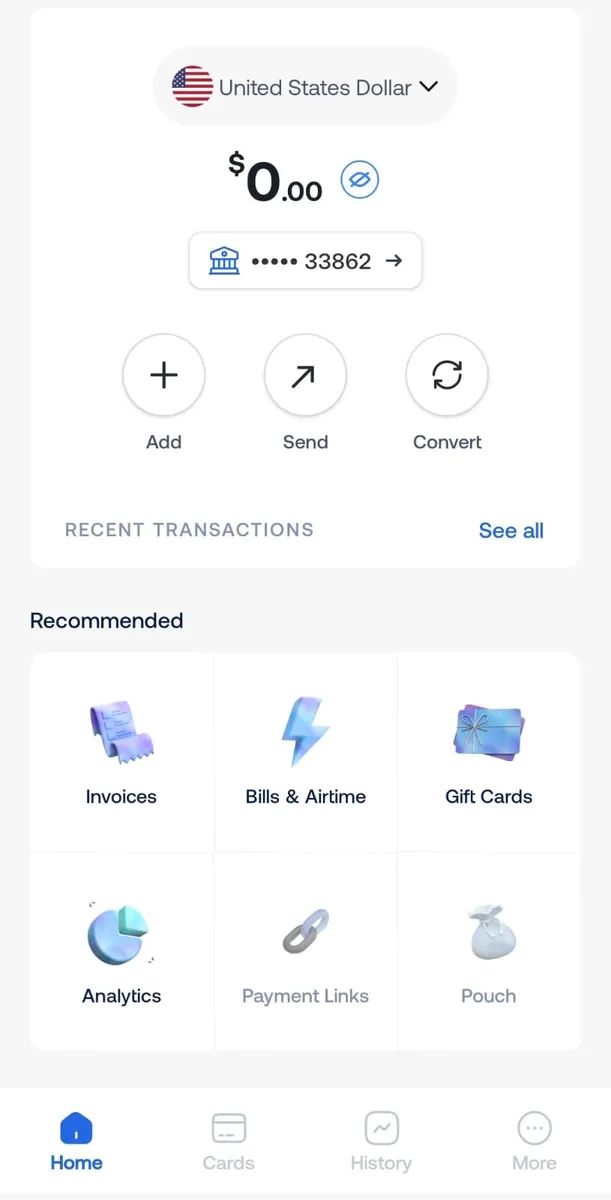
  2. Select your USD balance: Navigate to the “Accounts” section and select your USD balance, which is essential for initiating USDC transfers.
__wf_reserved_inherit
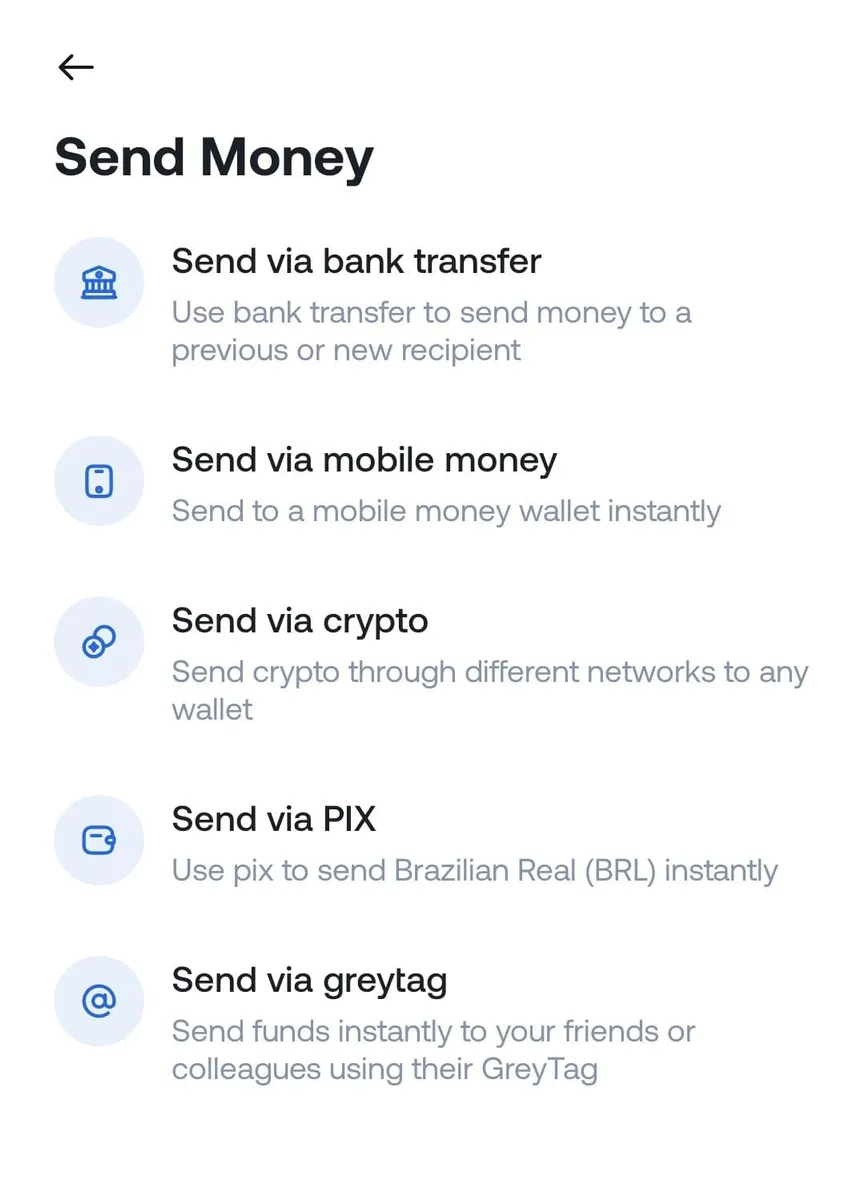
  1. Tap “Send via crypto”: Choose the “Send money” option, then select “Send via crypto” to begin sending USDC.
__wf_reserved_inherit
  1. Enter transaction details: Carefully fill in the recipient’s wallet address. Choose the correct network, Grey supports Solana (SOL) and Binance Smart Chain (BEP-20) — for successful transfer processing.
__wf_reserved_inherit
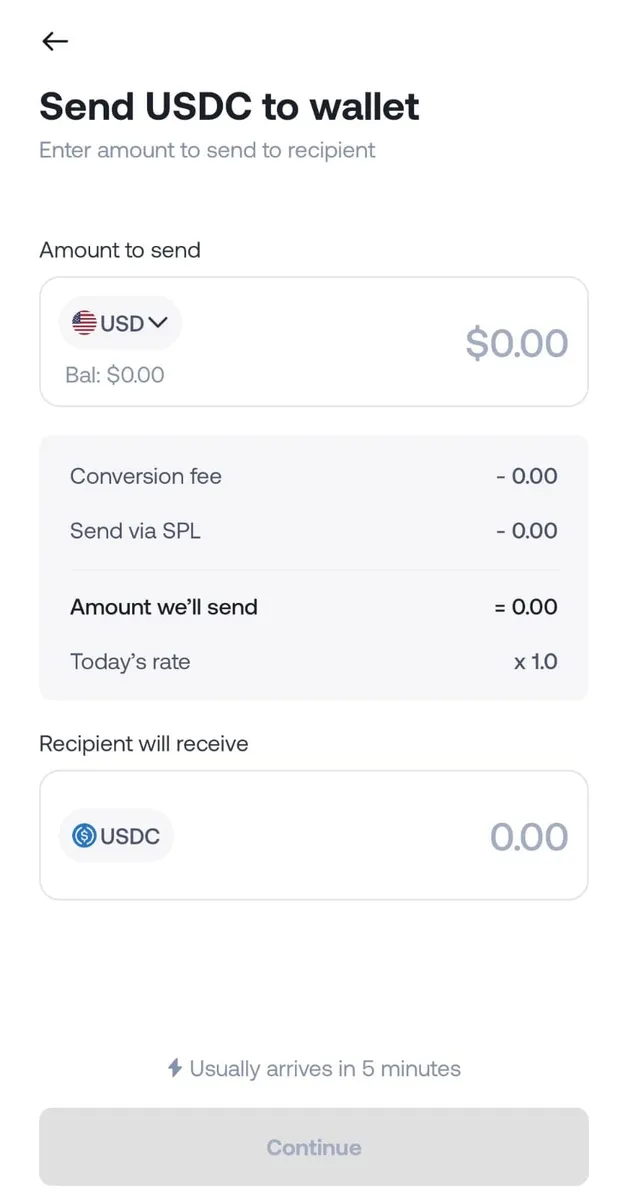
  1. Input the transfer amount and review details: Enter the amount to be sent. Double-check all information, including wallet address and network, to avoid transaction errors.
__wf_reserved_inherit
  1. Confirm and complete the transfer: Once satisfied with the correct details, tap “Send.” Grey will prompt you to enter your two-factor authentication (2FA) code, adding an extra layer of security.
  2. Transaction success: The USDC will arrive in the recipient’s wallet after processing. They can keep the USDC, convert it into local currency, or use it as they wish.

Why choose Grey for USDC payouts?

  • Instant transfers: Your USDC transactions are sent instantly, so your funds arrive without delay.
  • No extra charges: We don’t charge extra withdrawal charges. You are only required to pay the network fee.‍
  • Secure and reliable: Your funds are always protected with industry-standard measures.
  • Global accessibility: You can send USDC to over 40 countries, making it easier to manage your finances globally.

You can now send money instantly and securely with USDC to over 40 countries with Grey

How does Grey secure USDC transactions?

Grey secures your USDC transactions by partnering with trusted providers, supporting well-established blockchain networks, and requiring two-factor authentication (2FA) for all transactions. These measures help protect user funds and safeguard account access.

Whether you’re managing business payments or freelance earnings, Grey makes managing global transactions effortless. With our new USDC feature, you can enjoy smooth, borderless banking and keep your funds secure. To get started, open your free Grey account today.

‍

Last updated:

October 2, 2026

Open a free Grey account to get startedJoin 1 million digital nomads
IF YOU ENJOYED THIS, CHECK THESE OUT

Do you need an LLC to freelance in the US?

•

•

2 min read

An old classmate of mine started freelancing in the US a couple of years ago. At first, it was a few small projects, and he got paid in his personal account, with nothing formal in place. He’s always had a great work ethic, so it wasn’t surprising to see his business take on getting steady clients, bigger contracts, and subsequently, a large, sustainable income that had grown massively.

During one of our catch-up calls, I got to understand that, as a sole proprietor, his business and personal finances are legally one and the same, so a dispute or debt on the business side could generally reach his personal savings. He’d been thinking about whether he needed an LLC. We researched together and found that the answer depended on his risk, income, and his clients, not on a legal rule.

This guide details our findings and covers what an LLC does, what it costs, and when it’s worth forming.

Typically, you don’t need an LLC to freelance in the US. Most freelancers start as sole proprietors and can work legally without one. You should consider an LLC once you want liability protection, have more to lose, or want a more professional setup. It generally separates your personal and business assets.

Do freelancers need an LLC?

No. You do not need an LLC to freelance in the US. If you do freelance work without registering any other business structure, you are automatically treated as a sole proprietor.

That is the default for most freelancers, and it is simple. There is no formation filing, no separate business entity, and no annual state fee to maintain one. Your business income is reported on your personal tax return, and you pay self-employment tax on your profits.

The trade-off is that a sole proprietorship is not separate from you. The SBA says sole proprietors can be held personally liable for the business’s debts and obligations. If a client sues you or a business debt goes unpaid, your personal savings and property may be exposed.

Being a sole proprietor does not mean you can ignore the paperwork. Depending on your city, state, and line of work, you may still need a business licence or permit, and you may need to register a trade name if you work under a name other than your own. Check with your state and local offices.

For a side-by-side look at the two options, read our guide to LLC vs sole proprietorship. If you are new to the default option, we also explain what a sole proprietorship is.

Benefits of an LLC for freelancers

The main benefit of an LLC for a freelancer is liability protection: it creates a separate legal entity, so your personal assets are generally shielded from the business’s debts and lawsuits. That is not the only advantage. Here are the benefits worth weighing:

  • Liability protection
    The SBA says LLCs protect you from personal liability in most instances, so your personal assets are generally not at risk if the LLC is sued or cannot pay its debts. The protection has limits. It does not usually cover debts you personally guaranteed, fraud, or your own wrongful acts. Professional insurance is a separate layer of protection, and many freelancers use it with or without an LLC.
  • Separate business and personal money
    An LLC gives you a reason to run a dedicated business bank account, which makes your records cleaner at tax time. Keeping the two apart is also generally expected if you want the liability protection to hold up.
  • Credibility
    “Jane Doe Design LLC” immediately looks more established to some clients than an individual name, and some larger clients prefer to contract with a registered business.
  • Simple pass-through taxation by default
    The SBA says LLC profits and losses can pass through to your personal income without facing corporate taxes. For income tax purposes, the IRS treats a single-member LLC as a disregarded entity separate from its owner unless it elects otherwise.
  • Tax options later
    An LLC can file Form 8832 to elect to be taxed as a corporation, and a qualifying LLC can elect S corporation status. These elections change how the business is taxed and add filing requirements, so they are worth discussing with a tax professional before you commit. See the IRS guidance on LLCs filing as a corporation or partnership.

One thing an LLC does not do by default is cut your tax bill. The SBA notes that LLC members are considered self-employed and pay self-employment tax contributions toward Social Security and Medicare, just as sole proprietors do.

Downsides and costs

The main downsides of an LLC are the costs and the admin: you pay a state filing fee to form it, and most states charge fees or taxes to keep it active. Weigh these against the benefits above:

  • Filing fees: Every state charges a fee to form an LLC, and the amount varies widely.
  • Ongoing costs: Many states require an annual or biennial report, and some charge a yearly fee or tax on top.
  • More paperwork: You need a registered agent, a filing with your state, and, in many cases, an operating agreement. You also need to keep business and personal money apart.
  • No automatic tax savings: A single-member LLC is taxed like a sole proprietorship by default, and self-employment tax still applies.
  • Protection is not absolute: Personal guarantees, fraud, and your own wrongful acts can still put your personal assets at risk.

Costs depend heavily on where you form the LLC. These examples come from state agencies, and you should check the current figures before you file:

  • Wyoming: a $100 filing fee for Articles of Organisation, and an annual report fee that starts at $60.
  • Florida: $125 to file, made up of a $100 filing fee and a $25 registered agent designation fee, plus a $138.75 annual report.
  • Texas: a $300 filing fee for the certificate of formation.
  • California: an $800 annual tax for every LLC doing business or organised in the state, and an extra fee once California income passes $250,000. The California Franchise Tax Board sets out the details.

The gap between states can be large. A freelancer in a low-fee state pays far less to keep an LLC than one in a state with a high annual tax, and an LLC formed in one state may need to register in another if you work from there. For a state-by-state breakdown, see our guide to how much it costs to start an LLC.

When should a freelancer form an LLC?

A freelancer should form an LLC when the risk of losing personal assets or of a client’s requirements outweighs the yearly cost of maintaining one. If you are asking at what income level you need an LLC, there is no income threshold that makes one mandatory. It is a judgment about risk, not a legal threshold.

These signs suggest it may be time:

  • You have more to protect: A home, savings, or other assets are all exposed if you are sued or owe a business debt as a sole proprietor.
  • Your work carries real risk: If a mistake could cost a client a lot of money or cause injury or damage, the stakes rise.
  • Your clients are getting bigger: Larger clients may prefer or require a registered business, and their contracts often carry more liability.
  • You are hiring or subcontracting: Working with other people adds risk and paperwork.
  • You are taking on debt or signing leases:. Contracts like these are where limited liability matters most.
  • Your income is steady: If the business is no longer a side project, the annual cost is easier to justify.

There are also good reasons to wait. If you are just starting out, earn little, do low-risk work, or live in a state with a high annual tax, staying a sole proprietor and using clear written contracts may be enough. Many freelancers start that way and convert later.

The SBA’s guide to choosing a business structure is a useful starting point. It notes that ownership rules, liability, taxes, and filing requirements vary by state, and that LLCs can have a limited life in many states, so check the rules where you live.

This is general guidance, not professional tax advice. Consult a certified tax professional for your specific situation. It is also not legal advice, so speak to a qualified lawyer about your liability.

Getting paid as a freelancer

Whatever structure you choose, you get paid by sending clear invoices and giving clients an easy way to pay. Both matter more when your clients are overseas.

Start with the paperwork. A written agreement that sets out the scope, rate, due date, and payment method prevents most disputes. Our guide to writing a freelance contract covers the key clauses. On each invoice, state the currency, the due date, and exactly how the client should pay.

Payment is where freelancers often lose time. Overseas clients may pay by international wire, which can come with intermediary fees and unclear exchange rates. If you form an LLC, you will also want your client payments to land in a separate business account, not your personal one.

Grey can help with the money side. You can open a USD account with Grey, a multi-currency account that lists no account opening fees, no maintenance charges, and no minimum deposit. That gives you a place to receive and hold your freelance income. Grey also lets you get paid from the US and move the money onward: fund a transfer from a US bank account by ACH or wire, then check the exchange rate and fee before you confirm. If you support family or a team in Nigeria, for example, you can send money from the US to Nigeria, and the recipient does not need a Grey account.

Transfer times and fees depend on the destination, the funding method, and the recipient’s bank, so check the details on Grey before you send.

Frequently asked questions

Do I need an LLC to freelance?

No. You can legally freelance in the US as a sole proprietor without forming a business entity. An LLC is optional and mainly adds liability protection.

When should I form one?

Form an LLC when the risk of losing personal assets or a client's requirements outweighs the annual cost of maintaining one. Common triggers are bigger clients, higher-risk work, hiring help, signing leases or taking on debt, and having more assets to protect.

How much does an LLC cost?

It depends on the state. For example, Wyoming charges $100 to form an LLC and at least $60 for its annual report, while Florida charges $125 to form one and $138.75 for the annual report. California charges every LLC an $800 annual tax. Check your state's Secretary of State for current fees.

Can I freelance as a sole proprietor?

Yes. If you do freelance work without registering another structure, you are a sole proprietor by default. You may still need a local business licence or permit, and you are personally liable for business debts.

Does an LLC save tax?

Not by itself. A single-member LLC is taxed like a sole proprietorship by default, and self-employment tax still applies. An LLC can elect corporate or S corporation treatment, which may change your tax, so speak to a tax professional first.

How do I get paid by overseas clients?

Agree on the currency and payment method in your contract, then state them on every invoice. Clients can pay by bank transfer, and a multi-currency account such as Grey's can provide a place to receive and hold the funds. Check the rate and fee before you move it.

Ready to collect your freelance income without the wire-fee headaches? Get paid as a freelancer with Grey.

Grey is a financial technology company, not a bank. Exchange rates, fees, limits, and transfer times vary by destination and are subject to change.


How South African YouTubers receive YouTube payments in 2026

•

•

2 min read

YouTube is now considered one of the most popular search engines in the world, and South African creators are taking full advantage of it, with over 25 million South Africans actively using the platform. This shows that there’s a huge market for you as a creator. And you can, of course, make money from it.

How?

First, you create videos that people watch worldwide; next, your account gets monetised, and then the money accumulates in your AdSense account. After that, you can withdraw and then start spending.

Except... I’ve spoken to many creators who waited weeks for transfers, lost significant portions of their earnings due to unfavourable exchange rates, or had payments rejected because their bank didn’t accept international wire transfers. None of those stories need to be yours. Below, I’ll explain how YouTube pays, the pain points most South Africans face, and most importantly, practical, step-by-step options to receive your money quickly and with minimal fees.

Also read: Send US dollars to South Africa from anywhere

Why do USD earnings matter for South African creators?

As a South African creator, your payments from YouTube are made in US dollars. Earning in USD gives your income more global value. Great yeah? Well, most local bank accounts in South Africa can’t receive USD directly. For those that do, when your earnings are converted into South African Rand (ZAR), they often take a significant cut due to high transfer fees and unfavourable exchange rates.

Sometimes, currency fluctuations can make this worse. Your income’s real value may drop the moment it’s converted. By holding part of your earnings in USD, you can protect yourself from these swings and preserve the value of what you’ve earned.

Earning in a stable foreign currency helps you stay in control by keeping more of your money, allowing you to decide when to convert it, and ultimately, getting paid on your own terms.

How does YouTube pay?

Before you can cash out your earnings, it’s important to understand how YouTube’s payment system works.

1. Join the YouTube Partner Program (YPP)

You can only start earning from ads once you’re part of the YouTube Partner Program (YPP). To qualify, your channel needs to meet one of YouTube’s monetisation thresholds within the past 12 months:

  • Option 1: 1,000 subscribers and 4,000 valid public watch hours, or
  • Option 2: 1,000 subscribers and 10 million valid public Shorts views

Once your channel is approved, you’ll be able to monetise through ads, channel memberships, Super Chats, Super Stickers, and YouTube Premium revenue. Essentially, every view or engagement can start earning you money, as long as it happens on monetised content.

2. Set up a Google AdSense account

YouTube doesn’t send money directly to your bank. All payments are processed through Google AdSense, so setting it up is a crucial step.

Here’s what you’ll need to do:

  1. Create or link an AdSense account to your YouTube channel.
  2. Submit your tax information. This ensures compliance with YouTube’s global payment policies.
  3. Choose your preferred payout method, such as direct bank transfer or wire transfer.

Your AdSense dashboard is where you’ll monitor your estimated earnings, payment history, and any deductions for taxes or invalid activity.

3. Reach the payment threshold

YouTube doesn’t pay out every time you make a few dollars; it works on a minimum payment threshold system. You’ll need to earn at least $100 in your AdSense account before Google processes a payout.

If your earnings for the month fall short, the amount will simply roll over to the next month until you reach the threshold. Once you cross that mark and your account is verified, YouTube will automatically schedule your payment in the next payment cycle.

For most creators, payments will be sent around the 21st of each month, covering your total earnings up to the end of the previous month. So, if you hit $100 in March, you’ll typically get paid in April.

4. Understand the payment timeline

So, let's talk more about the payment cycle. The payment system runs on a monthly cycle, but payments aren’t instant. There’s a short delay while your earnings are verified and processed.

Here’s how it works:

  • Earnings are finalised between the 3rd and 10th of the following month. During this time, YouTube reviews your ad revenue to confirm everything’s valid.
  • Payments are processed between the 21st and 26th, once your balance reaches the $100 threshold.
  • You’ll only receive your payout if there are no payment holds, such as missing tax information or pending account verification.

So, for example, if you earned $200 in April, those funds will appear in your AdSense account in early May, but you’ll actually receive the money later in May. Once Google processes that month’s payouts.

It’s a simple system. Once you understand the rhythm, you just need a bit of patience between creating the content and seeing the cash hit your account.

Also read: How to pay for subscriptions in US dollars from South Africa

How to receive USD from YouTube in South Africa with Grey

Grey allows South African YouTubers to open a USD account effortlessly, all without leaving the country.

1. Create your Grey account

Visit the Grey website or download the app. Sign up and complete your KYC verification.

2. Access your USD account details

After approval, you’ll get your account information, including a US routing number, account number, and SWIFT code.

3. Connect your Grey USD account to AdSense

Log in to AdSense, select “Add payment method,” and enter your Grey account details.

4. Receive payments in USD

YouTube will deposit your earnings directly into your Grey account in USD, eliminating the need for automatic currency conversion.

5. Convert whenever you want

Use Grey’s in-app exchange to convert USD to ZAR at competitive rates or hold your USD in your account if you prefer.

Also read: How to send and receive British pounds in South Africa

What other ways can South African YouTubers boost earnings?

Once you’ve set up a reliable payment method, you can turn your channel into a sustainable income source. The most successful creators don’t rely on just one revenue stream; they layer multiple income sources to protect against dips in views or ad rates.

Here’s how you can do the same:

Channel memberships

Offer loyal fans exclusive perks like members-only videos, live Q&As, or custom emojis in exchange for a monthly subscription. This builds community and gives you a predictable monthly income.

Super chat & super stickers

These features allow viewers to pay to have their messages highlighted or to send animated stickers during live chats, providing a fun way for fans to support you in real-time.

Affiliate marketing

By adding affiliate links in your video descriptions, you can earn a commission every time someone buys a product you recommend. This works well if you review gear, software, or services your audience already needs.

Brand sponsorships

You can partner with companies to feature their products or services in your content. Sponsored deals often pay far more than ad revenue, especially if you have a niche audience that brands want to reach.

Also read: How to get paid as a creator on social media from anywhere in the world

At the end of the day, the more diverse your income streams, the more stable your creator career will be. If ad rates drop or one revenue source slows down, your other income channels keep you afloat.

Why Grey is the best option for South African creators

Now to the solution. Grey is built to accommodate how modern creators work, earn, and spend across borders. If you’re a South African YouTuber, influencer, or freelancer receiving international payments, Grey removes the friction that usually comes with getting paid from abroad.

Free USD account setup

Grey lets you open a USD account, providing you with the same payment details (routing and account numbers) that US-based creators typically use.

Low, transparent FX rates

Grey offers competitive exchange rates that are visible upfront, so you know exactly how much you’ll receive before confirming a transfer.

Multi-currency accounts to grow your income

With Grey, you can also hold EUR, GBP and USD, which is perfect if you land brand deals in Europe or work with clients in the UK.

Fast, reliable payouts

You no longer need to wait weeks for your money to clear. Grey processes transfers quickly, so you can move your earnings to your local bank account without delay, helping you maintain a steady cash flow.

Built with creators in mind

Every feature is designed to make life easier for people who get paid globally, so you can focus on making content instead of chasing payments. This makes it easier to keep more of your hard-earned YouTube income and avoid the usual international payment frustrations.

Being a YouTuber in South Africa is a great way to share your voice with the world and earn a living from it. By setting up a USD account with Grey, you can receive your YouTube earnings quickly, securely, and without incurring losses due to unfavourable exchange rates.

Create your free Grey account today or download the app to make your creator journey easier, smarter, and borderless.

‍

Best way to receive USD in Nigeria without PayPal

•

•

2 min read

PayPal personal accounts in Nigeria have been send-only for years. No receiving. No withdrawals to Nigerian bank accounts. No Verve card support. Even PayPal Business accounts require linking a foreign bank account to receive payments, and the platform has a documented history of freezing Nigerian accounts that trigger its fraud detection. For freelancers who depend on getting paid, this is not a minor inconvenience. It is a dealbreaker.

The gap PayPal left has been filled. In 2026, Nigerian freelancers have at least five distinct ways to receive USD from international clients, each with different fee structures, speeds, and trade-offs. Some are cheaper than PayPal ever was. Some are faster. A few even give you US bank details so your client can send a standard bank transfer without needing to know or care which platform you use on the receiving end.

This guide breaks down each option with actual fee numbers, processing times, and a clear framework for choosing the right one based on how you earn and who pays you.

Why does PayPal not work for receiving USD in Nigeria?

Nigerian personal PayPal accounts are restricted to sending payments and shopping online. You cannot receive money from other PayPal users or from clients. PayPal Business accounts can technically receive payments, but they require linking a foreign bank account or a virtual USD account to function. Even then, you cannot withdraw PayPal funds directly to a Nigerian bank account.

Wise, another commonly suggested option, suspended USD transfers to Nigeria in November 2022. The platform re-enabled naira payouts in September 2024, but only for GBP-to-NGN transfers. The Wise card is not available to Nigerian residents. If your clients pay in USD, Wise is not a viable receiving option for Nigeria.

These limitations leave Nigerian freelancers with a gap: global clients want to pay via standard methods (ACH, wire transfer, sometimes PayPal), but the most well-known platforms either do not support receiving in Nigeria or do not support withdrawing to Nigerian banks. The alternatives below fill that gap.

Also read: How Nigerians receive USD from international clients

Option 1: Multi-currency fintech accounts

This is the most common solution for Nigerian freelancers in 2026. Platforms like Grey, Cleva, and Geegpay (now Raenest) provide virtual foreign-currency account details in USD, GBP, and EUR. You share these details with your client, they send a standard bank transfer, and the money arrives in your account.

The mechanics are straightforward. You sign up, complete KYC with your Nigerian ID, and receive US bank details (a routing number and account number). Your client sends an ACH transfer, FedNow payment, or wire using those details. The funds land in your USD wallet, typically within 1 to 3 business days for ACH, instantly for FedNow (where the sending bank supports it), and same-day for wires. You then convert to naira when the exchange rate suits you and withdraw the funds to your Nigerian bank account.

The key advantage over PayPal is that your client does not need to use any special platform. They send a standard bank transfer from their US bank, just as they pay their local vendors. There is zero friction on the client side, which matters when you are competing for contracts.

Grey

Grey provides virtual foreign accounts in USD, GBP, and EUR, making it easier to receive and manage international payments.

Account features and fees

  • ACH/FedNow deposits: 0.8% fee (minimum $2, maximum $10) for individuals and $2 flat for businesses via FedNow. FedNow deposits settle instantly, 24/7, where the sending bank supports it.
  • Currency conversion (USD to naira): 1% fee, capped at $6 per transaction.
  • Withdrawals: supported to Nigerian bank accounts (₦35 instant).
  • Virtual cards: $5 creation fee, no monthly charge.
  • Stablecoins: supported for deposits and withdrawals.
  • Invoicing tool: built directly into the app.

Grey is regulated by FinCEN in the US and FINTRAC in Canada.

Best for: Freelancers who receive payments from multiple countries and currencies (USD, GBP, EUR) and want everything in one account. The $6 cap on conversion fees is particularly useful for larger payments.

Cleva

Cleva provides a dedicated USD account that supports both ACH and wire transfers. Also offers:

  • Stablecoins (USDT and USDC) deposits.
  • A virtual dollar card is available for online and in-store spending.
  • Zero-fee on Upwork deposits.

Best for: Upwork freelancers specifically, due to the zero-fee deposit promotion. Also strong for freelancers who want a CBN-licensed platform.

You may also like: Receiving dollar payments in Nigeria

Geegpay (Raenest)

Geegpay, now rebranded as Raenest, supports multi-currency accounts (USD, GBP, and EUR) and has a user base of over 700,000. Raenest offers:

  • Direct Upwork deposits
  • Crypto deposits.
  • Deposits: zero fees for up to 4 free deposits per month (announced late 2025).

It is a Y Combinator-backed (Winter 2024) cross-border payment solution.

Best for: Freelancers who want low deposit fees and direct Upwork integration. The 4-free-deposits-per-month model works well for freelancers with a small number of high-value clients.

Option 2: Payoneer

Payoneer is the legacy option. It has been serving Nigerian freelancers longer than any fintech alternative and is deeply integrated with freelance marketplaces. Upwork, Fiverr, Envato, Amazon, and dozens of other platforms support direct payouts to Payoneer.

The main trade-off is cost.

  • Currency conversion: approximately 2% exchange rate markup.
  • Withdrawals to Nigerian banks: $2-$3 per transaction.
  • Receiving payments from clients: 1% fee.
  • Annual maintenance fee: $29.95 (applies if your income is less than $2,000 over 12 months).

All things considered, a freelancer receiving $5,000 per month could lose $150 to $200 in total fees before the funds reach their Nigerian bank account.

Payoneer also offers a Mastercard prepaid card for online payments, in-store purchases, and ATM withdrawals (a $3.15 fee per transaction).

Best for: Freelancers already locked into Payoneer through marketplace integrations who do not want to change their payout method.

Option 3: Domiciliary accounts

A domiciliary account is a USD-denominated bank account held at a Nigerian commercial bank. GTBank, Access Bank, Zenith, UBA, First Bank, and most other major banks offer them. Your client sends a wire transfer using the bank's SWIFT code, and the funds land in your domestic account in dollars.

Advantages

  • Funds are held in a licensed and regulated Nigerian bank
  • Accounts are governed by CBN regulations
  • Suitable for large, infrequent transfers (e.g. salaries or contract payments above $10,000).

Trade-offs

  • Account setup requires a branch visit, documentation, and sometimes a minimum balance.
  • Wire transfer fees include $25 to $50 from the sender's bank, plus the receiving bank's charges.
  • The exchange rate is typically the bank rate, which may be less favourable than fintech rates.
  • Processing takes 2 to 5 business days.

Best for: Freelancers receiving large, infrequent payments who want institutional banking. Many freelancers use both: a dom account for large transfers and a fintech account for day-to-day payments.

Also read: Nigeria taxes for international payments in 2026

Option 4: Stablecoins (USDC and USDT)

For clients comfortable with crypto, stablecoins offer a fast, borderless option. USDC and USDT are pegged to the US dollar, so there is no price volatility. Your client sends stablecoins to your wallet address, and you receive the equivalent minus a small network fee.

The practical workflow: generate a receiving address from a wallet (Grey, Cleva, and Raenest all natively support stablecoin deposits). Your client sends USDC or USDT over a low-fee network like Solana, Base, TRON, or Polygon. The transfer settles in minutes. You then convert to naira through your fintech platform or a peer-to-peer exchange.

The limitation is client willingness. Most traditional US or European clients do not pay in crypto. This option works best with tech-forward clients, Web3 companies, or clients where banking infrastructure makes traditional transfers difficult.

Best for: Freelancers working with crypto-native clients or Web3 companies. Also useful as a backup when bank transfers are delayed.

Option 5: Direct wire transfer to a Nigerian bank

Your client can send a wire transfer directly to your regular Nigerian bank account using the bank's SWIFT/BIC code. This does not require a domiciliary account. The bank converts the USD to naira and credits your naira account.

The problems are:

  • The exchange rate is set by the bank (typically the official CBN rate, which can be 5% to 15% below market)
  • Transferred funds pass through one or more intermediary banks, with each bank charging $10-30 before reaching the destination.
  • Receiving fees may apply
  • Processing takes 3 to 7 business days
  • Some transfers may be flagged for compliance checks.
  • The client's bank also charges $25 to $50 for outgoing wire transfers.

Best for: Last resort when other methods are unavailable. Not recommended for regular freelance payments.

Receiving USD in Nigeria: comparison table

Fees are approximate and current as of early 2026.

Method Deposit Fee Conversion Speed Currencies Best For
Grey 0.8% ($2 min, $10 max); FedNow: instant 1% (cap $6) 1-3 days (ACH); instant (FedNow) USD, GBP, EUR Multi-currency freelancers
Cleva Free (Upwork 2026); varies otherwise Varies 1-3 days (ACH) USD Upwork freelancers
Raenest 4 free/month; then varies Varies 1-3 days (ACH) USD, GBP, EUR Low-volume, high-value
Payoneer 1% on receiving ~2% markup 2-5 days USD, GBP, EUR+ Marketplace freelancers
Dom Account Bank wire fees CBN official rate 2-5 days USD, GBP, EUR Large, infrequent
Stablecoins Network fee only P2P or platform Minutes USDC, USDT Crypto-native clients
Direct Wire $25-50 sender + bank Bank rate (poor) 3-7 days USD Last resort

Which method is right for you

You are a freelancer with direct clients who pay via bank transfer: A multi-currency fintech account (Grey, Cleva, or Raenest) is the strongest option. You share your USD account details on your invoice, the client sends a standard ACH, FedNow, or wire transfer, and the money arrives without the client needing to download any app.

You earn through Upwork or Fiverr: Cleva (zero-fee Upwork deposits in 2026), Raenest (4 free deposits per month), or Payoneer (deepest marketplace integration), depending on your platform and fee sensitivity.

You receive large, infrequent payments ($10,000+): Consider a domiciliary account for the institutional security, supplemented by a fintech account for day-to-day payments.

Your clients are comfortable with crypto: Stablecoin payments via USDC or USDT on a low-fee network. Several Nigerian fintech platforms accept stablecoin deposits directly.

You want one platform that handles everything: Grey covers USD, GBP, and EUR receiving, currency conversion, naira withdrawal, virtual cards, stablecoin deposits, and invoicing. It is not the cheapest in every fee category, but having all functions in a single account reduces complexity.

How to receive USD in Nigeria with Grey

Download the Grey app (iOS or Android) or sign up at grey.co. Complete KYC verification with your Nigerian ID and a selfie. Once verified, navigate to your USD account to find your US bank details: a routing number and account number.

Receive ACH, FedNow, or wire payments

Share these details with your client or add them to your invoice. ACH transfers typically arrive within 1 to 3 business days. FedNow deposits settle instantly where the sending bank supports it. ACH/FedNow fee: 0.8% (minimum $2, maximum $10) for individuals; $2 flat for businesses via FedNow. Wire transfers are also supported and usually arrive the same day.

Convert USD to naira

Go to the exchange section in the app. The conversion rate is shown before you confirm. Conversion fee: 1% (capped at $6). After converting, withdraw to any Nigerian bank account. Grey supports GTBank, Access Bank, Zenith, UBA, First Bank, and all other major banks.

Spend or hold your USD

Keep your USD balance instead of converting. Grey offers a virtual card for spending directly in USD. Virtual card fee: $5 creation.

Note: Exchange rates on Grey are variable and include a margin over the mid-market rate. Deposit fees: 0.8% for ACH/SEPA/FPS (min $2/£2/€2, max $10/£10/€10). GBP deposits via BACS: £15 flat; via CHAPS: £25 flat. Conversion fee: 1%, capped at $6. Always review the rate before confirming.

Also read: Foreign currency accounts available to Nigerians

Frequently asked questions

Can I receive money on PayPal in Nigeria?

PayPal personal accounts in Nigeria are send-only. You cannot receive money. PayPal Business accounts can receive payments if linked to a foreign bank account or a virtual USD account from a provider like Grey. However, you still cannot withdraw PayPal funds directly to a Nigerian bank account. For most freelancers, using a multi-currency fintech account is simpler and cheaper.

Does Wise work for receiving USD in Nigeria?

Wise suspended USD transfers to Nigeria in November 2022. The platform re-enabled naira payouts in September 2024, but only for GBP-to-NGN transfers. The Wise card is not available to Nigerian residents. If your clients pay in USD, Wise is not a viable option. Grey, Cleva, and Raenest fill this gap by supporting USD accounts for ACH, FedNow, and wire deposits.

What is the cheapest way to receive USD in Nigeria?

For Upwork freelancers, Cleva's zero-fee deposit promotion (running through 2026) is the cheapest option for receiving deposits. For direct client payments via ACH or FedNow, Grey's 0.8% deposit fee (capped at $10) plus 1% conversion fee (capped at $6) means a $5,000 payment costs approximately $16 total to receive and convert.

How long does it take to receive USD in Nigeria through a fintech account?

ACH transfers take 1 to 3 business days. FedNow settles instantly where the sending bank supports it. Wire transfers arrive the same day or the next business day. Converting to naira and withdrawing to your Nigerian bank is typically minutes to a few hours.

Do I need a domiciliary account if I have a fintech USD account?

Not necessarily. A fintech USD account handles the same core function: receiving, holding, and converting USD. Fintech accounts offer faster setup, lower fees, and market-rate exchange rates. A domiciliary account makes sense for very large amounts or if a sender requires a SWIFT wire to a Nigerian bank.

Is it safe to use fintech platforms to receive USD in Nigeria?

The major platforms are regulated. Grey is regulated by FinCEN (US) and FINTRAC (Canada). Cleva holds a CBN IMTO licence. Raenest is Y Combinator-backed. Fintech platforms are not banks, and deposits are not NDIC-insured. For large balances, consider distributing across platforms or moving funds to a bank account.

Ready to start receiving USD in Nigeria? Sign up at grey.co or download the Grey app to get your USD account details in minutes. Share them with your client and get paid via standard bank transfer.

From Delhi to Dallas: How the Indian gig economy is booming and what you can do to get in on it

•

•

2 min read

It used to be just a side gig. A few hours after work. A design tweak here, a quick edit there. But somewhere between late-night coffee and back-to-back client calls, India’s gig economy lit up.

Now, it’s a full-blown movement.

Today, India is home to around 15 million freelancers, making it the world's second fastest-growing freelance economy. By 2030, the country is expected to have 23.5 million gig workers, representing a major leap from today’s 1.5 per cent share of the total national workforce. That’s not growth. That’s lift-off.

Indian writers are editing podcasts for startups in New York. Developers in Pune are pushing code for Berlin tech firms. Designers in Kerala are shaping brand identities for London agencies. All from the comfort of home.

How exactly are they doing it? What’s powering this rise? And more importantly, how can you be part of it?

This article unpacks India’s freelance boom, the smart strategies freelancers are using to grow, and how you can get paid from anywhere in the world.

What is fuelling this rise?

Behind every freelance success story in India is a mix of skill, opportunity and timing. But there is more at play driving this boom. These are the forces reshaping how and where Indians work.

  • Freelancing has exploded, with software development and tech roles dominating the Indian freelance market, followed by creative and multimedia positions, and writing/translation jobs.
  • Global freelance platforms like Upwork, Fiverr, and LinkedIn have made it easier than ever for Indian freelancers to pitch, win, and manage international gigs. Over 1.6 million Indians use Upwork alone, making India the platform’s second-largest talent base after the U.S.
  • This shift is no longer confined to major cities. Professionals from smaller towns like Indore, Bhubaneswar, and Surat are successfully competing for international projects and building sustainable freelance careers.

India’s gig economy is evolving into a powerful engine for innovation, independence, and global connection. And for those ready to jump in, the timing has never been better.

Also read: Grey launches faster rupee payouts for Indians earning globally

Why Indian freelancers are expanding beyond borders

India’s freelance market is thriving, and many professionals are now reaching beyond their home country for new opportunities. And it is not just about earning more — it is about growing faster, learning more, and working on their own terms.

Here is why so many Indian freelancers are choosing to go global:

Higher pay for the same work

International clients often offer significantly better compensation compared to local clients. Indian freelancers can earn more for their time and skills, helping them reach financial goals more quickly.

Exposure to diverse industries and projects

Working with clients from around the world means exposure to different industries, cultures, and business models. This variety keeps the work interesting and helps freelancers expand their expertise.

Steady work and long-term contracts

Global clients often hire for ongoing roles or long-term projects. This consistency brings more financial stability and makes it easier to plan for the future.

Global careers, local lifestyle

With remote work, freelancers can live in any part of India and still access international jobs. They can be close to family, avoid relocation costs, and still work with leading global companies.

A path to personal growth and independence

Going global allows freelancers to build stronger portfolios, increase their confidence, and grow their networks. For many, it is also a step toward full independence and entrepreneurship.

Why global clients are choosing freelancers from India

When companies around the world look for freelance talent, India keeps showing up at the top of their list.

This preference isn’t just about affordability. It’s about value. Indian freelancers consistently deliver a combination of technical expertise, communication skills, and cultural adaptability that makes them stand out in a crowded global market.

Here’s what makes Indian professionals especially attractive to international clients:

High-quality work at competitive rates

Indian freelancers offer world-class skills, often at a fraction of the talent costs in North America or Europe. This balance of affordability and quality is hard to beat.

Strong English proficiency and communication

With English widely spoken and taught from an early age, Indian freelancers are able to collaborate seamlessly with clients across the globe. That clarity builds trust and helps projects move faster.

Time zone advantages

Indian time zones allow for round-the-clock productivity. Many Western clients appreciate waking up to progress updates or deliverables, thanks to this natural overlap.

Adaptability and professionalism

Cultural flexibility, strong work ethic, and a results-oriented mindset are qualities many clients cite when recommending Indian freelancers. They’re easy to work with, quick to learn, and committed to meeting expectations.

Tech-savvy, future-ready talent

India’s massive, digitally skilled workforce is constantly learning and evolving. From AI tools to the latest no-code platforms, Indian freelancers stay ahead of trends and bring modern solutions to the table.

Dominance across freelance platforms

Whether on Upwork, Fiverr, Freelancer.com, or LinkedIn, Indian professionals maintain a strong presence. Many are Top Rated, Level 2 sellers, or part of exclusive talent pools, which is a testament to their consistent delivery and client satisfaction.

What Indian freelancers are getting right

The success of Indian freelancers isn’t accidental. Those doing well share a few smart habits and strategies. Here’s what you can learn from them:

  • They specialise

Generalists may land occasional gigs, but specialists build sustainable freelance careers. Successful freelancers are focusing on niches like SaaS content writing, UI/UX design, Shopify development, and AI-related services — areas with global demand and room for premium pricing.

  • They show outcomes, not just skills

It’s no longer enough to say you “build websites” or “write content.” Top freelancers show results: how they helped increase conversions, reduce churn, improve UX, or drive SEO traffic. They present case studies, testimonials, and portfolios with real-world value.

  • They know where to be seen

Indian freelancers dominate many online platforms but invest in LinkedIn visibility, cold outreach, and personal websites. They engage in communities, speak on podcasts, and position themselves as experts, not just service providers.

  • They think globally about money

While many new freelancers struggle with international payments, the experienced ones know better. They avoid high fees and poor exchange rates by using modern tools designed for global work.

Going global as a freelancer isn’t about doing more. It’s about working smarter, choosing your lane, and setting yourself up with systems that scale. Start small, stay focused, and let your work speak for itself.

You may also like: How to receive money from UK clients in India

The hidden challenges of getting paid globally

Landing international clients is only part of the equation for Indian freelancers. The real challenge often begins when it’s time to get paid.

Despite the booming global demand for Indian talent, many freelancers still face barriers that can delay or reduce their earnings. These include:

  • Slow international transfers
  • Payments from clients abroad can take several business days to arrive, often passing through multiple intermediary banks along the way.
  • High transaction and conversion fees
  • Banks and payment platforms charge service fees and apply unfavourable exchange rates, meaning freelancers lose a chunk of their hard-earned money in the process.
  • Limited payout options
  • Many freelance platforms restrict how funds can be withdrawn, often limiting flexibility or requiring extra verification steps.
  • Lack of transparency
  • Freelancers are not always shown the exact fees or exchange rates upfront, making it difficult to predict what they will receive in Indian rupees.
  • Tax and compliance complexity
  • Managing foreign payments can be confusing without clear guidance on documentation, GST, or income tax reporting for overseas earnings.

How Grey can help

Designed for freelancers and remote workers earning from abroad, Grey makes it easy to receive, hold, convert, and withdraw international payments from one seamless platform.

The smart way to go global

India’s gig economy is growing rapidly, and freelancers are no longer limited by geography. With the right skills and the right tools, you can build a global career from wherever you are.

Grey gives you the freedom to receive payments from international clients without delays or unfair charges.

Ready to unlock your international earning potential?

Create your Grey account today and take the stress out of global payments.

‍

How Grey helps you spend less time chasing payments

•

•

2 min read

Imagine having to micro-manage every digital tool you need for your daily activities. The sound of this feels so exhausting. Payment delays can be frustrating and time-consuming, especially when a pressing need arises. You end up spending your productive hours querying payment services and refreshing your mobile app every hour, like it's a doctor’s prescription.

Grey simplifies international payment by offering remarkable transfer processing speed and transparent processing. This article explores how Grey helps you spend less time chasing payments to boost your productivity, minimise stress, and avoid being financially stranded.

Also read: Grey vs traditional banks: which saves you more time

Why people have to chase their payments

The time and resources spent chasing payment cannot be regained. Unfortunately, many freelancers, digital nomads and international students managing cross-border payments still don’t enjoy seamless payments. Several issues contribute to this:

  • Client or sponsor delays – Freelancers and contractors often face clients who push back deadlines or forget to process payments. Students abroad may wait for family members or sponsors who rely on lengthy transfer methods.
  • Banking restrictions – Traditional banks are not designed for fast global transfers. Many require additional documentation, manual approvals, or lengthy settlement times, forcing you to follow up repeatedly.
  • Unclear transfer processes – Payment platforms sometimes involve multiple intermediaries. Funds may be held up at any stage, leaving recipients uncertain about where their money is.
  • Currency mismatches – Getting paid in a foreign currency without access to a matching account often leads to delays or rejections, prolonging the wait for funds.

These hassles create unnecessary back-and-forth with clients, employers, or family members. Instead of focusing on work or studies, many people end up spending valuable time tracking down payments.

Why chasing payments is a problem

Late or delayed payments aren’t just frustrating. They can impact financial planning, budgeting, and even client trust. Chasing payments can lead to:

  • Loss of productive time: Back-and-forths with your payment platform is time-wasting. Traditional banks may require you to visit the banking hall in person from time to time to follow up on transactions. Waiting in line to speak with support staff is also frustratingly slow.
  • Hidden charges: Unexpected fees from intermediary banks or payment platforms reduce the final amount received.
  • Exchange rate issues: While waiting for a transaction to be concluded, the exchange rate might no longer be favourable. This could impact your budgeting and reduce your earnings.
  • Distrust: When transactions aren’t completed early enough, you might get suspicious that the client is trying to pull a fast one on you. This could breed unnecessary distrust between you and your client. Meanwhile, the problem is with your bank.
  • Work delays: For payments triggered by milestones, you might be unable to proceed to the next phase of the project without receiving the payment. Having to chase down payments can also affect time-sensitive deadlines, such as paying tuition or completing a business transaction.
  • Disrupted financial plans: You are unsure of when your payments arrive if your payment process is uncertain. This disrupts your financial plans.

These challenges leave people repeatedly following up with clients or banks, waiting for funds to clear, and adjusting their budgets around payment uncertainties.

Also read: The hidden time costs of managing multiple accounts abroad

How Grey helps you spend less time chasing payments

The implications of chasing payments are far-reaching. Grey helps you spend less time chasing payments by streamlining and automating the process of sending invoices and receiving international transfers.

Streamlines your invoicing

Automated invoicing makes it much easier for freelancers to track payments. With Grey’s free invoicing tool, you can quickly create and send professional invoices. You can link your Grey account details, so clients know exactly how to pay you. Invoices go straight to your client’s email or a secure link, and you get a notification as soon as you’re paid.

Simplifies international payments

Grey offers foreign accounts in major currencies like USD, EUR, and GBP. This allows your international clients to pay you as if they are making a local transfer. Using a foreign account avoids the hassles and delays often associated with cross-border payments. There are no intermediary banks that add more waiting time.

Eliminates conversion delays

Since your clients can pay you directly in their local currency, you receive the funds in your Grey account quickly. You can then choose when to convert it to your local currency, avoiding poor exchange rates and delays.

Manages and tracks transactions

You receive real-time updates for every transaction. This means you know the moment a payment arrives, so you don’t have to constantly check your account. The platform automatically tracks and records your payment history. This provides a clear record of who has paid and who still owes you, so you can follow up only with outstanding payments.

Swift Grey-to-Grey transfers

It gets even better. For clients who also use Grey, you can receive payments instantly and for free using a "GreyTag" instead of sharing your banking details.

Grey offers more than ‘time-saving’

Grey does more than just speed up international payments and save you time. It also offers affordable, transparent fees, good exchange rates, and financial flexibility with multi-currency accounts and a virtual USD debit card. You can set up your account in just a few clicks.

Get started on Grey today to simplify your international transactions.

‍

Grey vs traditional banks: which saves you more time

•

•

2 min read

The global digital evolution has not left the banking sector untouched. A fast-paced generation requires fast transactions. Many employees now work with clients they’ve never met, living in foreign countries they’ve never visited. The educational sector is seeing a growing number of international students. Digital nomads work remotely while hopping from country to country. Businesses are expanding, with growing cross-border trade. Our banking needs are evolving. We now need seamless and swift borderless payment solutions at the lowest cost possible.

Fintech companies like Grey offer solutions that fit today’s needs and help solve problems that traditional banks haven’t fixed.

In this article, we compare the new and the old, Grey vs. traditional banks, and examine where each stands in terms of time conservation.

Also read: Global accounts vs traditional banks: What remote workers should know

How Grey works

With Grey, you can open international bank accounts and manage money across borders easily. It’s made for freelancers, expats, and remote workers. You can open an account in just a few minutes, all online, with no need to visit a branch or fill out lots of paperwork. Grey offers:

  • Multi-currency support: Receive, send, hold, and convert between USD, GBP, EUR, and local currencies.
  • Swift conversions and transfers: Currency conversions and international transfers are completed within minutes to a few hours.
  • Additional feature: Grey also offers automated invoicing, expense tracking, and virtual USD debit cards for seamless online payments.
  • Security: Grey is fully regulated by FINTRAC and FinCEN, ensuring that your funds and data are adequately protected.

Unlike traditional banks, which are often constrained by regulatory hurdles and official bottlenecks, Grey leverages digital provisions to enable faster processing.

Also read: Global accounts vs traditional exchange houses: which is better?

How traditional banks work

Traditional banks, such as Chase and HSBC, as well as local branches in various countries, offer a wide array of banking services, including savings accounts, loans, mortgages, and investment advice. They operate through physical branches, ATMs, and digital platforms. They offer more robust banking services compared to emerging fintechs. However, many traditional banks remain traditional in practice, with lengthy paperwork and cumbersome processes, such as waiting in lines, scheduling appointments, or dealing with international money transfer delays, in a fast-paced economy.

Grey vs traditional banks: Which saves you more time

Fintechs like Grey don’t replace traditional banks, but they do some things differently. Let’s see which one saves you more time by looking through important banking processes.

1. Account opening

The onboarding process of a banking system basically shows you what to expect from them. This is why many strive for a streamlined account opening process. Now, let’s compare Grey and traditional banks.

  • Grey: Signing up and verifying your identity on Grey is a seamless process that takes only a few minutes. The process is entirely through the app or website and doesn’t require a physical branch visit or mailing documents. You simply need to upload a valid ID, proof of residence, and a selfie for Know Your Customer (KYC) compliance. Accounts in USD, GBP, or EUR can be opened from anywhere in the world, making it ideal for non-residents or travellers.
  • Traditional banks: Opening an account typically involves visiting a branch, filling out forms, providing multiple documents (e.g., proof of address, income statements), and waiting for approval, which can take days to weeks. For international accounts, additional hurdles, such as residency requirements or embassy verifications, may extend this to several months.

Grey takes the show here, with a swift account opening and verification process, with the ease of opening an account remotely without visiting a physical bank branch.

2. Transactions and money transfers

Transaction processing speed is crucial during emergencies, such as paying bills. Delayed payments can leave you stranded.

  • Grey: Transactions on Grey are swift, usually completed within minutes to a few hours using networks like SEPA or ACH. Users receive real-time notifications, and the app handles everything without the need for intermediary banks.
  • Traditional banks: Transfers, especially international ones (via SWIFT), can take 1-5 business days due to the involvement of multiple intermediaries, compliance checks, and banking hours. Even domestic transactions may require branch visits or phone confirmations, which can increase wait times.

With Grey, cross-border payments are done much faster, often saving you days compared to traditional banks.

3. Currency exchange and management

Many people now deal with different currencies, especially remote workers, students abroad, expats, and global businesses. Managing money across several banks or apps can take a lot of time, and converting currencies isn’t always quick.

  • Grey: Conversions occur within seconds in the app at competitive rates, with no hidden fees. Users can manage multiple currencies on a single platform, track expenses, and automate invoicing to streamline client payments.
  • Traditional banks: Exchanges often require branch visits or calls, with markups on exchange rates and fees. Processing may take hours or days, and managing multiple accounts requires logging into separate systems or handling paperwork for each currency.

Grey simplifies international finance management with multi-currency accounts and swift conversions.

4. Customer support and issue resolution

How quickly can your banking solution resolve your payment crisis? What mechanisms are available?

  • Grey: As a digital-first payment service, Grey offers fully digital support services that avoid phone queues. and features like language switching enhance accessibility. However, as a fintech, it may lack the depth required for complex issues, such as loans.
  • Traditional banks: Support involves calling hotlines with uncertain waiting times, visiting branches, or scheduling appointments. Traditional banks are evolving to offer 24/7 digital support through chats.

Grey generally offers faster initial responses and saves time on routine queries. Traditional banks offer a wide range of support, whether you visit a bank branch or use one of their remote options.

Also read: How to switch from traditional banking to Grey for remote work payments

Swift transactions with Grey

Grey is a payment solution designed for a fast-paced era, offering swift processing compared to traditional banks. From instant account openings to quick transfers and seamless multicurrency support, Grey removes the need for physical visits, paperwork, and delays.

Get started on Grey today for faster international transactions.

‍

Arrow (up)

Back to top