<script type="application/ld+json" data-schema-version="grey-blog-v4"> [{"@context":"https://schema.org","@type":"BlogPosting","@id":"https://grey.co/blog/how-to-open-us-and-uk-bank-accounts-in-ghana#article","headline":"How to open US and UK bank accounts in Ghana","description":"“Discover how Ghanaians can open US and UK bank accounts online with Grey to manage international finances, receive payments, and stay connected to the global market”","inLanguage":"en","url":"https://grey.co/blog/how-to-open-us-and-uk-bank-accounts-in-ghana","mainEntityOfPage":{"@id":"https://grey.co/blog/how-to-open-us-and-uk-bank-accounts-in-ghana#webpage"},"datePublished":"2024-11-04T13:16:34.760Z","dateModified":"2026-06-15T19:13:48.568Z","author":{"@type":"Person","@id":"https://grey.co/authors/tunde-aladeloba#person","name":"Tunde Aladeloba","url":"https://grey.co/authors/tunde-aladeloba","jobTitle":"Content Writer","sameAs":["https://ng.linkedin.com/in/aladeloba-babatunde-b1114b100"]},"publisher":{"@type":"Organization","@id":"https://grey.co/#organization","name":"Grey","url":"https://grey.co","logo":{"@type":"ImageObject","url":"https://cdn.prod.website-files.com/6360022338a81bd6fdbb1145/6564ae1077a67e39d3c491a6_Grey%20Logo%20Lockup%20Black.svg"}},"image":{"@type":"ImageObject","@id":"https://grey.co/blog/how-to-open-us-and-uk-bank-accounts-in-ghana#primaryimage","url":"https://cdn.prod.website-files.com/636a85d290ee58e70c17e1c0/6a3019b1db937e572b44216c_6a3019b05791d7338740abf5_how-to-open-us-and-uk-bank-accounts-in-ghana__header-image.webp","contentUrl":"https://cdn.prod.website-files.com/636a85d290ee58e70c17e1c0/6a3019b1db937e572b44216c_6a3019b05791d7338740abf5_how-to-open-us-and-uk-bank-accounts-in-ghana__header-image.webp","width":1200,"height":675}},{"@context":"https://schema.org","@type":"WebPage","@id":"https://grey.co/blog/how-to-open-us-and-uk-bank-accounts-in-ghana#webpage","url":"https://grey.co/blog/how-to-open-us-and-uk-bank-accounts-in-ghana","name":"How to open US and UK bank accounts in Ghana","description":"“Discover how Ghanaians can open US and UK bank accounts online with Grey to manage international finances, receive payments, and stay connected to the global market”","inLanguage":"en","primaryImageOfPage":{"@id":"https://grey.co/blog/how-to-open-us-and-uk-bank-accounts-in-ghana#primaryimage"},"breadcrumb":{"@id":"https://grey.co/blog/how-to-open-us-and-uk-bank-accounts-in-ghana#breadcrumb"}},{"@context":"https://schema.org","@type":"BreadcrumbList","@id":"https://grey.co/blog/how-to-open-us-and-uk-bank-accounts-in-ghana#breadcrumb","itemListElement":[{"@type":"ListItem","position":1,"name":"Home","item":"https://grey.co/"},{"@type":"ListItem","position":2,"name":"Blog","item":"https://grey.co/blog"},{"@type":"ListItem","position":3,"name":"How to open US and UK bank accounts in Ghana","item":"https://grey.co/blog/how-to-open-us-and-uk-bank-accounts-in-ghana"}]}] </script>

How to open US and UK bank accounts in Ghana

Tunde Aladeloba

TABLE OF CONTENT

SHARE THIS POST

Ghanaians now have a unique opportunity to connect globally by opening US and UK bank accounts online through Grey. As Ghana's economy becomes more open to global trade, remittances, and remote work, having easy access to international banking is a game-changer. With Grey, Ghanaians can receive payments from clients or family abroad, send money worldwide, and manage foreign currency accounts—all from the comfort of home.

In this guide, we’ll explore the benefits of Grey’s global banking services and the steps to get started, so you can make the most of Ghana’s growing international connections.

Benefits of a US or UK bank account for Ghanaians

  1. Easy access to international payments: A US or UK account allows Ghanaians to receive payments directly in USD or GBP, making it easier for freelancers and remote workers to handle international transactions without high conversion fees.
  2. Protect against currency fluctuations: Keeping your funds in stable currencies like USD or GBP can help protect against Ghanaian cedi depreciation, preserving the value of your earnings.
  3. Convenient global transactions: With a US or UK bank account, Ghanaians can pay for international services, shop online from global retailers, and transfer money abroad.

Also read: How to receive US Dollars in Ghana with Grey

Who would benefit from a US or UK account in Ghana?

  1. Freelancers – Professionals who work with international clients can receive payments easily and avoid high conversion fees.
  2. Students abroad – Ghanaians studying in the US or UK can manage tuition payments and receive funds from family without hassle.
  3. Online shoppers – Those who frequently shop from international retailers can make purchases directly in foreign currencies, avoiding local transaction limits.
  4. Business owners – Entrepreneurs importing goods or selling products abroad can simplify transactions with international suppliers and clients.
  5. Travellers – People who travel frequently can enjoy the convenience of using a local currency account abroad, reducing ATM fees and currency conversion costs.

Steps to open a Grey account

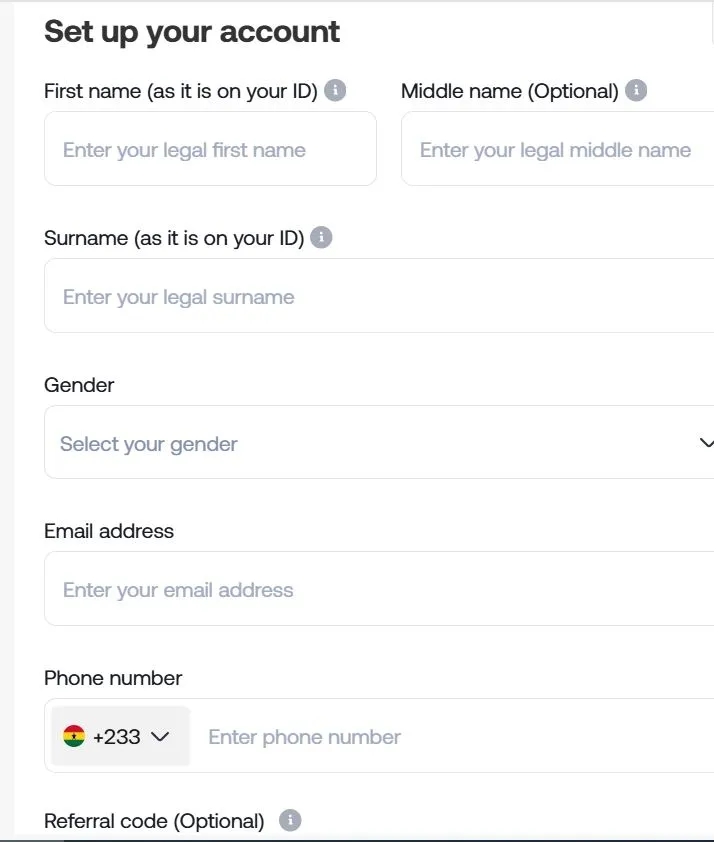
Creating a Grey account is simple and only takes a few steps.

  1. First, go to grey.co and register with your email address. Follow the instructions and enter your details accurately for a smooth setup.
__wf_reserved_inherit

2. Follow the instructions and ensure your details are entered accurately.

__wf_reserved_inherit

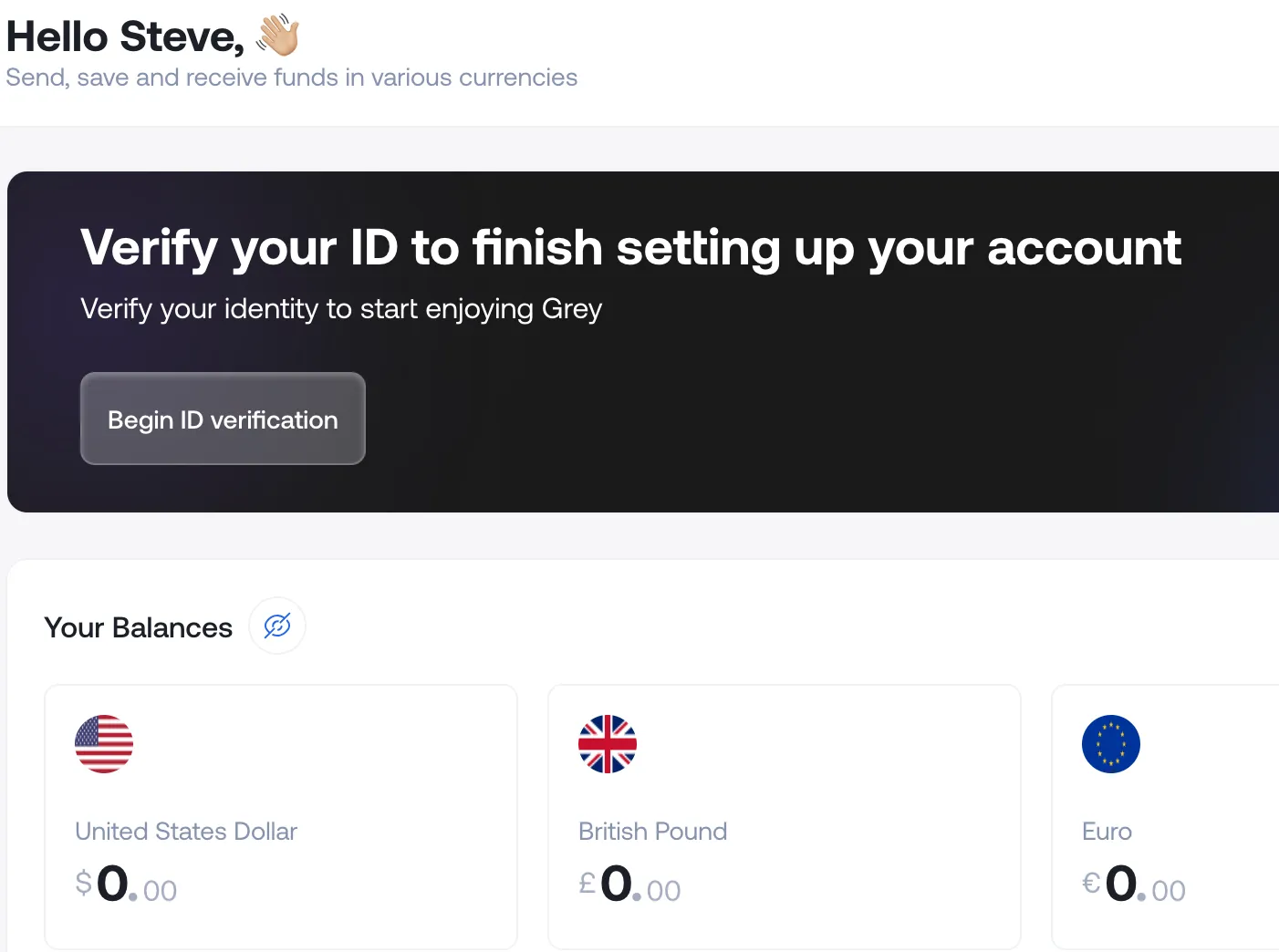
3. Verify your identity by providing a government-issued ID (such as a passport) and proof of address (like a utility bill or bank statement). This is essential for security and regulatory compliance, especially for non-U.S. residentsGrey will review your documents within minutes or up to 24 hours. Submitting clear and valid documents can help speed up the process

__wf_reserved_inherit
  1. Grey will review your documents within minutes or up to 24 hours. Submitting clear and valid documents can help speed up the process.

Important tips for Ghanaians

  1. Pick the right platform: Grey is the perfect choice for Ghanaians looking to have US or UK bank accounts without travelling abroad.
  2. Stay informed about international tax rules: Make sure you’re aware of any US or UK tax obligations that might apply to foreign account holders.
  3. Utilise multi-currency support: Grey’s multi-currency features allow you to handle transactions from different regions, making international payments much easier.

Once verified, your Grey account will give you access to US and UK banking, simplifying global transactions and helping you manage your international earnings from Ghana. Create your free account today to get started.

__wf_reserved_inherit

Last updated:

October 2, 2026

Open a free Grey account to get startedJoin 1 million digital nomads
IF YOU ENJOYED THIS, CHECK THESE OUT

Top digital nomad hotspots in Morocco for remote workers

•

•

2 min read

Morocco is a favourite destination for digital nomads and remote workers for many reasons. The North African nation is the only place in the world with both the Atlantic and Mediterranean coastlines. You also get the Sahara Desert and a ski resort in the Atlas Mountains. Morocco offers a diverse culture, adventure, and lifestyle, complemented by affordable living costs and an impressive digital infrastructure.

Picking the best digital nomad spots in Morocco wasn’t easy, since there are so many great places to choose from. Here’s what we considered when making this list:

  • Internet reliability
  • Living cost
  • Coworking spaces and nomad communities
  • Accessibility and transportation
  • Cultural and leisure appeal.

Let’s jump into the list.

Also read: How to exchange currency safely when visiting Morocco

Marrakech

__wf_reserved_inherit

Marrakech is an emerging hub for digital nomads and one of Morocco's imperial cities. It offers a blend of rich cultural background and modern amenities at a low cost of living. There is a growing digital nomad and expat community, along with great coworking spaces offering fast internet speeds. From the labyrinthine souks of its medina to Jardin Majorelle, Bahia Palace, and Yves Saint Laurent Museum, Marrakech has a lot to explore when you are off work.

Essaouira

__wf_reserved_inherit

If you want a more laid-back city by the Atlantic, Essaouira is the perfect place for you. It is a port town with many beautiful beaches, art galleries, and the UNESCO-listed 18th-century medina. Sample the local cuisine and exquisite seafood options. Everything about Essaouira inspires creativity. Its serenity and clean air create the perfect environment for productivity. There are workspaces and cafes with great internet access and the appropriate comfort to get work done.

Taghazout

‍

This is a small fishing village near Agadir with a vibrant surfing culture. While it isn’t as popular as the bigger cities on this list, digital nomads flock to Taghazout for its calm, golden beaches, yoga studios, and excellent accommodation options. You also get many coworking spaces scattered across the village, surf camps, yoga retreats, and a growing community of remote workers. The locals are very welcoming, and it is a great town for networking. The natural pools, waterfalls, and mountain villages of Paradise Valley are a must-see. You can also explore the Atlas Mountains, view the town from a cable car, or sandboard during your leisure hours.

Also read: Top virtual banking solutions for freelancers in Morocco

Casablanca

__wf_reserved_inherit

The economic centre of Morocco is home to many remote workers, who work and explore the beauty of the coastal city. Casablanca is Morocco’s largest city, offering an urban landscape, great digital infrastructure, and some cultural exposure. If you are a fan of a bustling city, you get all that a modern city anywhere in the world has to offer, even the traffic in Casablanca. Its vibrant nightlife and efficient transportation system make it an ideal city for adventure. The magnificent view of Hassan II Mosque, fine dining at Rick’s Cafe, and La Corniche’s waterfront promenade will make you look forward to your leisure hours.

Rabat

__wf_reserved_inherit

Rabat offers a delicate balance between the bustling Casablanca, the laidback Essouira, and the historical Marrakech. The capital city boasts a coastal landscape with exquisite beaches and is home to historic sites such as the Kasbah of the Udayas, the Royal Palace of Rabat, the Mausoleum of Mohammed V, and the iconic Hassan Tower. There are many parks, such as the Andalusian Gardens and the Rabat Zoo (Jardin Zoologique de Rabat), for outdoor relaxation. As the political and administrative nexus of Morocco, Rabat has a budding community of expats and digital nomads with a strong sense of community. Compared to other capital cities in the world, Rabat is very affordable with co-working spaces, diverse accommodation options, and robust modern infrastructure.

Also read: How to receive and convert foreign currencies to USDC in Morocco

Managing your finances in Morocco

Morocco has so much to offer, but you’ll want a reliable way to manage your money while you’re there. Grey makes it easy with multi-currency accounts, fast payments, low fees, and competitive exchange rates. You also get a virtual USD debit card for easy online payments.

Get started with Grey today and enjoy true financial freedom whenever you travel.

Why financial admin is the #1 killer of freelancer creativity

•

•

2 min read

Freelancers live for creativity. You sit down to create, ideas flowing, momentum building, then suddenly you remember that invoice you haven’t sent, or that overdue client payment. Just like that, the spark fizzles.

Bad financial admin essentially hijacks your creativity. That’s why you need to manage it well, to give you more time to focus on creativity.

Also read: How Grey helps you spend less time chasing payments

The hidden weight of financial admin

Before writing this article, I conducted a thorough study to determine what freelancers find most difficult. One of the most common answers was “sorting out finances.” Okay, looking back now, maybe asking a couple of my freelancer friends shouldn’t count as a “thorough study,” but you get the point.

You can also try it. Ask any freelancer what they dread most, and chances are “chasing payments” will rank near the top. Add in tracking expenses, converting currencies, and worrying about tax season, and you’ve got a recipe for constant distraction.

Switching between “creative brain” and “spreadsheet brain” is exhausting. Every time you break focus to send a reminder email or check an exchange rate, you lose momentum. That lost flow is harder to get back than the admin was worth.

Also read: Why freelancers lose productivity chasing late payments

Why do creativity and admin clash?

Creativity thrives on freedom, exploration, and uninterrupted focus. Admin is its opposite: rigid, repetitive, and structured. Trying to balance the two can be a problem.

The problem isn’t that admin exists, it’s that it constantly interrupts the creative process. And the more interruptions, the less space your brain has to experiment, imagine, and innovate.

The real cost for freelancers

When admin creeps into your creative hours, three things happen:

  • Lost time: Hours spent sending invoices or calculating fees are not spent creating or earning.
  • Lost money: Late payments, hidden transaction fees, or missed deductions quietly reduce your income.
  • Lost opportunities: Stress kills creativity. The more admin weighs you down, the harder it is to produce your best work, leading to burnout.

Also read: Payout delays: how they affect mental health and productivity

Smarter ways to handle financial admin

A few simple shifts can free up your time and protect your energy:

  • Automate where you can: Use invoicing tools, auto-reminders, and payment platforms that streamline the process.
  • Outsource what drains you: Bookkeeping or tax prep might be worth delegating.
  • Create admin zones: Block out specific hours for financial tasks instead of letting them spill into your creative time.

Also read: How Grey reduces stress for international students managing money

Reclaiming your creative freedom

Your creativity is your biggest asset as a freelancer. The goal isn’t to eliminate financial admin — that’s impossible — but to manage it in a way that lets your creativity thrive.

Because at the end of the day, clients don’t hire you for your invoicing skills. They hire you for the fresh ideas, the bold designs, and the creative spark that only you can bring. Don’t let financial admin snuff that out.

With Grey, you can open multi-currency accounts, have instant conversions, and enjoy stress-free payments. We take the admin off your plate so you can focus on what you do best, creating.

Open a Grey account today or download the app to make freelancing simpler, smarter, and more rewarding.

‍

How global work culture is changing the way we live and earn

•

•

2 min read

We finally made it.

If you were one of those who used to argue for remote work and all its endless possibilities long before the pandemic and the hype, then you know exactly what I mean. Our moment has arrived. And it’s changing not just how we work, but everything around us.

The rise of remote work culture has untied careers from postcodes. Work has expanded across borders, redefined itself digitally, and reshaped how millions think about life and income.

Talent beyond geography

The internet has made geography negotiable. I’m in Brazil, writing for a US-based company alongside colleagues living in Nigeria, Morocco, Canada and the UK. A designer in Nairobi can shape the brand of a startup in Berlin. A developer in Rabat can debug code for a team in San Francisco. And a strategist in Cairo can run campaigns for an e-commerce store in London.

Borders are still there, but now in the form of time zones, currency conversions, and international contracts. And culturally, something shifted. Instead of asking, “Where do you live?” more people now ask, “What do you do?”

Also read: Best apps for remote workers and global freelancers

Time zones are the new office walls

If you think about it, the old fixed office schedule was built for a world where everyone worked in the same building. That’s not true anymore.

Global teams now stretch across continents, which means deadlines, meetings, and collaboration happen around the clock. For some, this creates flexibility: you might start your day when someone else is ending theirs, handing over tasks like runners in a relay. For others, it introduces challenges, early morning and midnight calls, or the constant mental math of “What time is it over there?”

The upside is that you’re no longer confined to opportunities in your own country’s time zone. Work is now continuous, and income can be, too.

New money habits for a global workforce

Here’s the part people don’t always talk about: once work went global, money had to follow.

That same designer in Nairobi isn’t paid in Berlin’s euros. That developer in Rabat isn’t always receiving US dollars directly into a local bank. And the strategist in Cairo might get paid in British pounds before converting them back home.

Earning globally means changing money habits and learning to live in different currencies, exchange rates, and platforms. It has given rise to an entire ecosystem of tools, from multi-currency accounts to crypto wallets, that make it easier for people to actually access the money they work for.

You may also like: Global accounts vs traditional banks: What remote workers should know

Remote work culture is becoming part of our identity

When you can work from anywhere, the boundaries between work and life blur. That has downsides (answering emails at dinner, never fully “logging off”), but also upsides.

For many people, global work has become a way to fund a digital nomad lifestyle. You can take your laptop to Bali, work from a co-working hub in Mexico City, or split your year between Cape Town and Lisbon.

The story isn’t only about digital nomads, though. Even expatriates and locals working remotely for foreign companies are rethinking what career stability looks like. Flexibility and choice now sit much higher on the list than climbing a corporate ladder.

Culture is blending in real time

Workplaces have become microcosms of cultural exchange.

Maybe this is the most underrated part of global work. In a single day, you might brainstorm with someone in New Delhi, send deliverables to Paris, and attend a virtual coffee chat with a client in New York.

Over time, this changes how people think, communicate, and live. Global slang spreads faster, humour travels across borders, and working styles evolve.

Also read: The best currencies to hold for global freelancers

So, where does this leave us?

Global work culture is changing how we think about success, how we structure our days, how we handle money, and how we see the world.

For me, this moment is about designing a life that connects my career, my income, and the freedom to live how (and where) I want.

Grey was built to make it easier to embrace this new way of living. You can get paid in dollars, euros, or pounds, manage multiple balances in one place, and spend easily wherever your work takes you.

I encourage you to sign up on Grey today and start building your life without borders.

‍

How remote teams build culture without an office

•

•

2 min read

When you walk into a physical office, you see culture everywhere: the buzz of conversations, the posters on the walls, even the way people queue at the coffee machine. But when our “office” is a Zoom link and a Slack thread, culture has to be something you intentionally design.

For those of us working from different countries, culture almost feels like a passport that makes us feel like we belong, gives a shared identity, and helps everyone work together even when we’re scattered across the world.

Why culture matters more in remote work

While researching this topic, I found that companies with strong cultures actually see up to four times more revenue growth than those that don’t. It really shows how much culture matters. I’d say it’s basically the glue that holds people together across time zones and continents.

One more thing that came up, which is curious but not so surprising, is that people working fully remotely often report being more engaged with their work, but also struggle more with stress and isolation. This shows why emotional and social support is important.

So, yes, building a strong culture matters more than we sometimes give it credit for.

Related: Best apps for remote workers and global freelancers

What thriving remote teams do differently

To build belonging without physical walls, remote-first companies experiment with practices replicating (and sometimes improving) the office experience. Here are some patterns that stand out:

1. They write everything down

People naturally absorb culture in an office by overhearing conversations, watching how decisions are made, or noticing meeting dynamics. Remote teams don’t have that luxury, so they turn to documentation as their backbone. They create living handbooks, playbooks, and culture decks that explain everything from how feedback is given to how holidays are celebrated.

Instead of leaving culture unspoken, remote-first companies document expectations, values, and processes in a shared source. This clarity makes onboarding smoother, reduces ambiguity, and helps everyone feel included and aligned.

Also read: Nomad vs expat vs remote worker: What’s the difference?

2. They invest in connection

Remote companies know that trust has to be built. That’s why many of them budget for home office setups, co-working passes, or in-person retreats. Day to day, they use rituals like virtual coffee chats, Slack channels for non-work interests, or online competitions to spark organic bonds.

Culture shows up in these small, consistent moments. Weekly all-hands calls, monthly AMAs, async video updates, or even shared playlists give people ways to connect. These rhythms help maintain a sense of team identity and belonging, even without a shared office.

3. They balance async with face time

Remote teams thrive when they avoid the trap of “always online.” Instead, they balance asynchronous tools, like shared docs, Loom videos, and written updates, with live touchpoints for collaboration. This approach respects time zones and reduces burnout while still leaving space for real-time brainstorming when it matters.

Intentional communication is the key. Casual spaces like random coffee pairings or hobby channels replicate watercooler chats, while structured video calls keep big-picture discussions alive. The balance ensures that work moves forward efficiently without sacrificing human connection.

You may also like: What cities are attracting global talent in 2025?

4. They invest in well-being

Without the commute and in-office perks, remote culture shifts toward supporting the whole person. Companies often provide home office stipends, wellness budgets, or mental health days, recognising that healthy employees will surely result in stronger teams.

This emphasis reflects a culture that values people’s lives outside of work, ensuring they have the energy and support to thrive professionally and personally.

5. They put transparency front and centre

In distributed teams, it’s easy for people to feel left out if information doesn’t flow. That’s why remote-first companies embrace radical transparency, from company-wide updates to open Q&As with leadership. The goal is to build trust through openness.

Instead of “management by walking around,” leaders focus on visibility and honesty. When employees feel informed about decisions, they’re more likely to feel empowered, trusted, and engaged in contributing to the company’s success.

Also read: How to save in USD as a remote worker

Built for the borderless

Remote culture is designed. By documenting clearly, balancing communication styles, investing in connection, prioritising transparency, and creating rituals, remote teams prove you don’t need an office to feel like a team.

At Grey, we understand borderless work because we’re built for it. Expatriates, freelancers, and remote workers can easily earn, save, and spend across currencies wherever they are.

You can sign up on Grey today to see just how much simpler your money life can get.

‍

How to keep your money safe during international relocation

•

•

2 min read

Keeping your money safe at any given time can be challenging, and when you’re relocating or travelling internationally, it becomes even trickier. Carrying too much cash is risky, so it’s smarter to rely on secure banking options like international accounts or multi-currency cards. Trusted money transfer services and strong online security measures, like two-factor authentication, also go a long way in preventing fraud.

In this article, we’ll share practical tips on how to safeguard your money while moving abroad. From avoiding common scams to choosing the safest transfer methods, you’ll learn how to protect your finances and travel with peace of mind.

Read also: Expat banking 101: Opening an account before relocation

Key benefits of relocating abroad for modern workers

1. Broader career opportunities

Relocating exposes you to global job markets, giving access to roles, projects, and industries that may not exist in your home country. It opens doors to unique experiences, promotions, and skill-building opportunities that accelerate your career growth.

2. Cultural intelligence

Living in a new country teaches you to understand and navigate different cultures. You gain empathy, adaptability, and communication skills, which are invaluable in today’s diverse and interconnected workplaces.

3. Personal growth

Relocation challenges you to step out of your comfort zone. You build independence, resilience, and confidence, learning to handle unexpected situations and adapt to change effectively.

4. Expanded professional network

Working abroad helps you connect with professionals from different industries and backgrounds. These connections provide mentorship, collaboration opportunities, and insights that can enhance your career and open doors worldwide.

Read also: Currency conversion traps to avoid when relocating

Proven tips to keep your money safe while relocating abroad

1. Password-protect devices

Always secure your phones, tablets, and laptops with strong passwords or biometric locks. Enable two-factor authentication on banking apps and email accounts to prevent unauthorised access. If a device is lost or stolen, remote wipe features can protect sensitive financial information from being compromised.

2. Avoid isolated ATMs

When withdrawing cash, choose well-lit, busy ATMs in safe locations such as banks or shopping centres. Isolated machines increase the risk of theft or skimming devices. Staying vigilant reduces the chances of fraud or robbery, keeping your money and card details safer while you navigate a new city.

3. Spread your money

Don’t keep all your cash or cards in one place. Use a combination of wallets, travel pouches, or secure bags to distribute funds. Spreading money reduces risk; if one stash is lost or stolen, you’ll still have access to other funds for emergencies and daily expenses.

4. Keep money discreet

Avoid flashing cash or expensive cards in public. Use slim wallets or hidden pouches under clothing. Being discreet minimises attention from pickpockets or opportunistic thieves, helping you move through unfamiliar areas safely without drawing unnecessary attention to your valuables.

5. Be attentive with bags

Always keep bags and backpacks close, ideally in front of you or secured to your body. Choose anti-theft bags with lockable zippers. Being attentive and cautious in crowded areas reduces the risk of snatching or accidental loss, keeping your belongings and money safe while you travel.

Simplify relocation with Grey

Relocating comes with lessons, opportunities, and the responsibility of keeping your money safe. From learning adaptability as a modern worker to staying vigilant with your finances, every step matters. With Grey, you can move funds securely, access multiple currencies, and settle in with ease.

Sign up or download the app today.

‍

Cross-border transfers: USD, USDC and everything in between

•

•

2 min read

Moving money across borders has always been tricky. If you’ve ever tried sending dollars from one country to another, you’ll know the story too well. Delays, high fees, confusing exchange rates, and sometimes even failed transfers. But things are changing. With digital banking, fintech platforms, and the rise of crypto-based assets like USDC, cross-border transfers are becoming more accessible.

Today, freelancers, businesses, and everyday professionals are discovering new ways to move money faster, cheaper, and smarter.

In this article, I’ll explain how USD and USDC transfers work, what sets them apart, where they overlap, and how to choose the right option for your needs.

Also read: How to accept payments in USDC as a digital nomad

Why do cross-border transfers matter more than ever?

The internet, not borders, now defines opportunity. However, many payment systems still trail a bit in their development. Transfers can take days and often pass through outdated banking systems that weren’t built for the pace of the current digital economy.

This is why new forms of money movement have become more common. The US dollar remains the foundation of international trade. At the same time, USDC, a digital stablecoin pegged 1:1 to the dollar, is redefining what’s possible by offering near-instant, low-cost transfers without relying on traditional banking rails.

Together, USD and USDC are shaping a new era of cross-border payments that’s faster, more flexible, and better suited to how people and businesses work today.

USD transfers: The familiar option

The US dollar has long been the backbone of international trade. In fact, more than 80% of global forex transactions involve USD, making it the most trusted and widely accepted currency for cross-border payments. Whether you’re a freelancer invoicing a client abroad or a company paying international suppliers, USD will likely be the default choice.

When you send money in dollars, there are a few common routes. The most traditional is the SWIFT network, the global messaging system connecting banks. It’s reliable and secure, but transfers can take several days and incur hefty fees.

Then there are fintech platforms like Grey, Wise, or Payoneer, which use more innovative infrastructure to speed things up and reduce costs, making USD transfers more accessible for everyday professionals.

For bigger transactions, businesses often still rely on bank-to-bank wires, which get the job done but aren’t always friendly to smaller amounts thanks to steep charges and hidden exchange markups.

The strength of USD transfers lies in their universal acceptance. It’s a stable, recognised currency that works seamlessly for individuals and businesses. But that familiarity comes with trade-offs. Transfers via banks can be expensive, with fees that quietly reduce earnings, and delays that turn a simple payment into a waiting game. For anyone relying on regular cross-border income, these inefficiencies can be discouraging.

Also read: How USDC is revolutionising international money transfers

USDC transfers: The new way to send money

Unlike volatile cryptocurrencies such as Bitcoin or Ethereum, USDC is a stablecoin designed to mirror the value of the US dollar 1:1. Every USDC in circulation is backed by equivalent dollar reserves, which means its price doesn’t swing up and down. You get the speed of crypto without the drama of speculation.

The real magic of USDC lies in its movement. Instead of waiting days for a SWIFT transfer to crawl through banking rails, a USDC transaction can land in someone’s wallet within minutes, no matter where they are. Payments move across blockchain networks like Ethereum, Solana, or Binance Smart Chain. A client in London could send you USDC at midnight, and you’d see it in your wallet almost instantly.

From there, you have options. You could hold it as digital dollars, spend it with platforms that accept USDC directly, or automatically receieve it as USD with Grey. For freelancers and businesses, this means fewer middlemen, lower costs, and much faster access to funds compared to traditional banking.

That said, USDC isn’t without potential drawbacks. To use it confidently, you need at least a basic understanding of how crypto wallets and transfers work. And while sending and receiving is simple, converting it into spendable cash usually requires exchanges or fintech platforms, which adds an extra step. Grey lets you receive USDC as USD, allowing you to receive funds without needing a manual exchange or a third-party platform.

Finally, the regulation of stablecoins is still evolving worldwide. The status isn’t crystal clear in some countries.

Still, for anyone tired of waiting days and losing money to hidden fees, USDC offers a glimpse into the future of borderless money: fast, cheap, and globally accessible.

Also read: USDC vs. other stablecoins: what's best for global transactions?

USD vs. USDC: Which should you use?

It’s not really an either-or situation as they play different roles in the cross-border ecosystem, but the smartest creators and businesses are learning to use them side by side.

If you’re dealing with corporate clients or large organisations, they’ll likely stick to what they know: USD via bank transfer. It’s the default language of global commerce, universally recognised, and often required for official contracts and large invoices. The small trade-off is speed and cost.

On the flip side, if your income comes from digital-first platforms, startups, or international freelancers, you’ll start to see more USDC in the mix. These players care about speed and efficiency. With USDC, you could receive funds in minutes, often at a fraction of the cost. That means faster access to cash flow, essential for independent creators and small businesses that can’t afford delays.

The real edge comes when you’re able to manage both. Having accounts that can handle USD and USDC gives you maximum flexibility. You can accept traditional corporate client transfers while tapping into the new, faster rails of stablecoins without missing a beat.

What to watch out for in cross-border transfers

Here are significant things you shouldn’t overlook when making cross-border payments:

Conversion fees

This is the silent killer of international payments. Banks and some platforms often hide markups on the exchange rate, meaning you lose money every time you convert. Always compare the offered rate against the mid-market rate before hitting send. Grey shows transparent FX rates so you know exactly what you’re paying.

Transfer speed

‍This depends on your situation. A corporate payment in USD via SWIFT might take several business days, while a USDC transfer could land in your wallet in minutes. If cash flow is critical, say paying contractors or covering ad spend, opting for faster rails can make a big difference.

Security and compliance

‍Money moves fastest when it’s trusted. Using regulated platforms like Grey that follow AML (Anti-Money Laundering) and KYC (Know Your Customer) rules ensures your transfers aren’t flagged, delayed, or frozen.

Scalability

‍A one-off transfer is easy to manage, but what happens when you pay 20 freelancers monthly or receive recurring payments from multiple clients? Look for solutions that offer bulk payouts, automated reporting, and clean transaction histories. The focus is on making your business operations sustainable as you grow.

Also read: How to send and receive USDC directly in your USD account

Grey makes USD and USDC transfers seamless

Grey bridges the gap between traditional banking and modern money. With Grey, you can:

  • Open a real USD account to send and receive payments directly.
  • Send and receive USDC payments globally with no hidden fees or delays.
  • Convert to local currency at competitive rates.

Also read: How to send and receive USDC payments in Nigeria

The future of cross-border transfers

Cross-border payments are moving toward hybrid models. USD may remain the anchor for stability, while USDC and other stablecoins will bring speed and efficiency. According to a report by PwC, more than 60% of financial institutions are exploring blockchain solutions for payments.

For freelancers and businesses, the takeaway is simple: don’t box yourself into one method. The smartest professionals are already combining both currencies, holding USD for big client contracts while leveraging USDC for quick transfers or digital-first clients.

The global economy is moving fast; the winners will be those who can adapt, choose the right platforms, and keep more of what they earn. One of such platforms is Grey, which gives you the freedom to earn, hold, and transfer in the way that suits your global work life best.

Create your free Grey account today or download the app  to enjoy inclusive global banking designed to carry your dreams across borders.

‍

Arrow (up)

Back to top