
<script type="application/ld+json" data-schema-version="grey-blog-v4"> [{"@context":"https://schema.org","@type":"BlogPosting","@id":"https://grey.co/blog/how-to-create-us-and-uk-bank-accounts-for-migrant-workers-and-expatriates#article","headline":"How to create US and UK bank accounts for migrant workers and expatriates","description":"A complete guide for migrant workers and expatriates on creating US and UK bank accounts remotely. Learn the benefits, requirements, and steps involved with platforms like Grey.","inLanguage":"en","url":"https://grey.co/blog/how-to-create-us-and-uk-bank-accounts-for-migrant-workers-and-expatriates","mainEntityOfPage":{"@id":"https://grey.co/blog/how-to-create-us-and-uk-bank-accounts-for-migrant-workers-and-expatriates#webpage"},"datePublished":"2025-01-29T07:20:11.470Z","dateModified":"2026-06-15T17:12:46.769Z","author":{"@type":"Person","@id":"https://grey.co/authors/adeolu-titus-adekunle#person","name":"Adeolu Titus Adekunle","url":"https://grey.co/authors/adeolu-titus-adekunle","jobTitle":"Content Writer","sameAs":["https://www.linkedin.com/in/titusadeoluadekunle/"]},"publisher":{"@type":"Organization","@id":"https://grey.co/#organization","name":"Grey","url":"https://grey.co","logo":{"@type":"ImageObject","url":"https://cdn.prod.website-files.com/6360022338a81bd6fdbb1145/6564ae1077a67e39d3c491a6_Grey%20Logo%20Lockup%20Black.svg"}},"image":{"@type":"ImageObject","@id":"https://grey.co/blog/how-to-create-us-and-uk-bank-accounts-for-migrant-workers-and-expatriates#primaryimage","url":"https://cdn.prod.website-files.com/636a85d290ee58e70c17e1c0/6a30161f375175d0e8b1a884_6a30161eb988008f82e16614_how-to-create-us-and-uk-bank-accounts-for-migrant-workers-and-expatriates__header-image.webp","contentUrl":"https://cdn.prod.website-files.com/636a85d290ee58e70c17e1c0/6a30161f375175d0e8b1a884_6a30161eb988008f82e16614_how-to-create-us-and-uk-bank-accounts-for-migrant-workers-and-expatriates__header-image.webp","width":1200,"height":675}},{"@context":"https://schema.org","@type":"WebPage","@id":"https://grey.co/blog/how-to-create-us-and-uk-bank-accounts-for-migrant-workers-and-expatriates#webpage","url":"https://grey.co/blog/how-to-create-us-and-uk-bank-accounts-for-migrant-workers-and-expatriates","name":"How to create US and UK bank accounts for migrant workers and expatriates","description":"A complete guide for migrant workers and expatriates on creating US and UK bank accounts remotely. Learn the benefits, requirements, and steps involved with platforms like Grey.","inLanguage":"en","primaryImageOfPage":{"@id":"https://grey.co/blog/how-to-create-us-and-uk-bank-accounts-for-migrant-workers-and-expatriates#primaryimage"},"breadcrumb":{"@id":"https://grey.co/blog/how-to-create-us-and-uk-bank-accounts-for-migrant-workers-and-expatriates#breadcrumb"}},{"@context":"https://schema.org","@type":"BreadcrumbList","@id":"https://grey.co/blog/how-to-create-us-and-uk-bank-accounts-for-migrant-workers-and-expatriates#breadcrumb","itemListElement":[{"@type":"ListItem","position":1,"name":"Home","item":"https://grey.co/"},{"@type":"ListItem","position":2,"name":"Blog","item":"https://grey.co/blog"},{"@type":"ListItem","position":3,"name":"How to create US and UK bank accounts for migrant workers and expatriates","item":"https://grey.co/blog/how-to-create-us-and-uk-bank-accounts-for-migrant-workers-and-expatriates"}]}] </script>

How to create US and UK bank accounts for migrant workers and expatriates

Adeolu Titus Adekunle

TABLE OF CONTENT

SHARE THIS POST

Migrant workers and expatriates often face challenges with international transactions. From sending remittances and receiving salaries, to making investments, covering travel expenses and managing their savings, navigating financial systems across multiple countries can be complex and frustrating.

However, having US and UK bank accounts makes this easier. It offers greater convenience and financial flexibility. With reliable cross-border payment platforms like Grey, you can now create US and UK bank accounts remotely, without needing to visit these countries physically. This allows you manage your international financial transactions quicker and without breaking a sweat.

This article provides a step-by-step guide on how migrant workers and expatriates can create US and UK bank accounts.

Why migrant workers and expatriates need US and UK bank accounts

Many US and UK bank accounts can help migrant workers and expatriates in many ways, including:

  • Efficient remittances: While living abroad, you can easily send money to your loved ones in your home country using US and UK bank accounts with lower transaction fees.
  • Direct access to salaries: Receive payments from employers or international clients directly in USD or GBP without losing money to conversion fees.
  • Simplified financial management: Hold and manage multiple currencies in one place to improve your bookkeeping.
  • Access to global financial services: Using a multi-currency account helps manage international payment platforms like PayPal, Stripe, or Wise seamlessly.
  • Save on currency conversions: Avoid losing money to unfavourable exchange rates when dealing with USD or GBP by opening a US and UK bank account.

Step-by-step guide to creating US and UK bank accounts with Grey

You can create US and UK bank accounts with Grey in these quick steps in a few minutes.

First, sign up on Grey

Getting started with Grey is simple:

Sign up on Grey to create US and UK bank accounts for migrant workers and expatriates
  • Register your account: Provide your name, email, and phone number.
  • Create a password: Use a strong password to ensure account security. Your password should be a minimum of eight characters, including upper and lowercase letters, a number and a special character.
set up your passward to create US and UK bank accounts for migrant workers and expatriates
  • Verify your email: Enter the OTP sent to your registered email address to activate your account.

Next, complete the verification process

In compliance with global financial regulations and to protect you, Grey requires that you complete the Know Your Customer (KYC) verification process to gain complete access to your account. This requires you to:

  • Upload a valid ID: Submit a photo or scanned copy of your international passport, national ID, or any valid government-issued identification.
  • Provide proof of address: Upload a utility bill, rental agreement, or bank statement showing your residential address.
  • Upload your picture: Upload a clear picture of yourself.
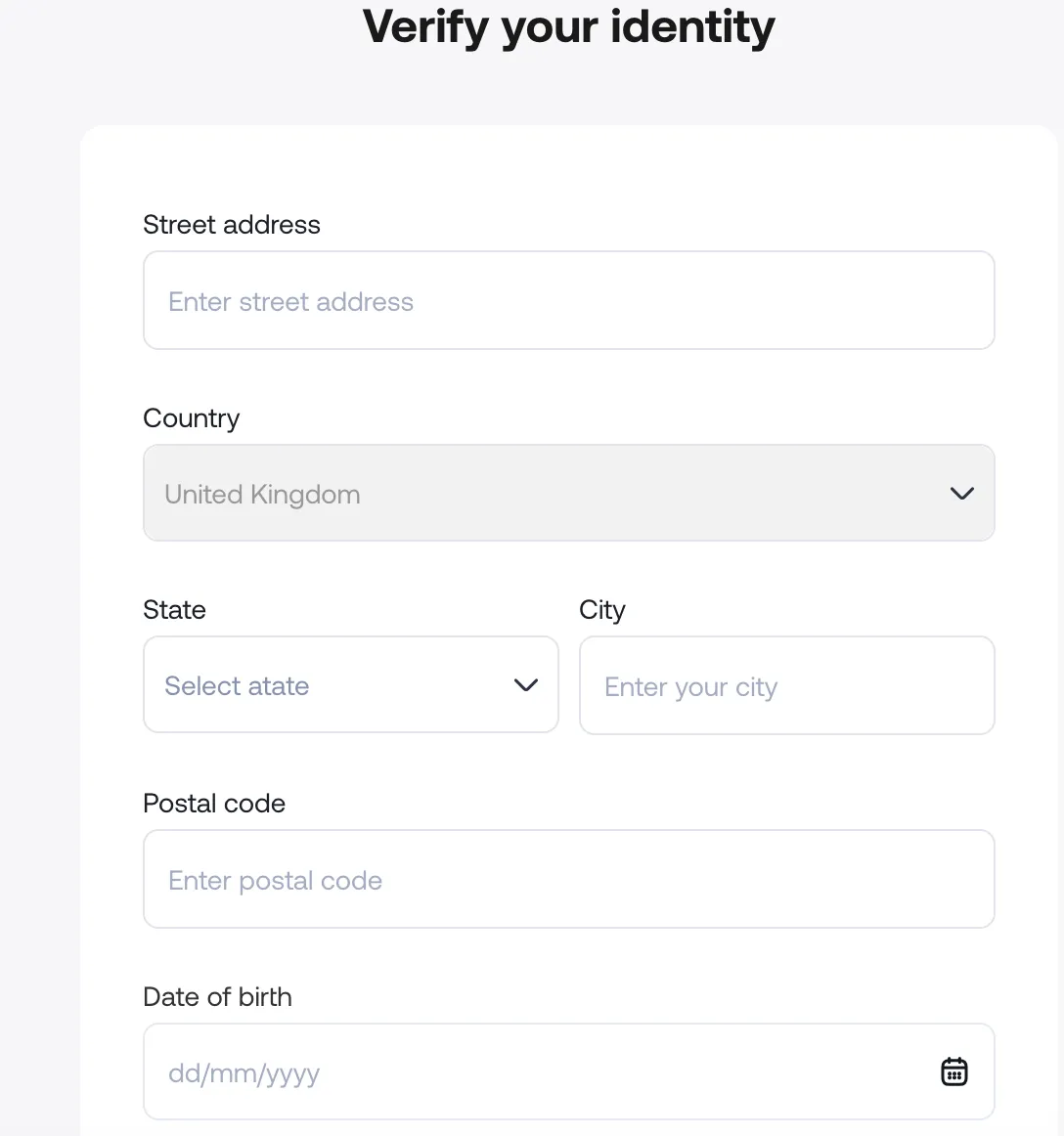
  • Submit your details: Fill in your address and other information on the KYC form to complete the process.
Grey requires that you complete the Know Your Customer(KYC) verification process to create US and UK bank accounts for migrant workers and expatriates

The verification process should only take a short while unless there are issues with the validity or clarity your uploaded documents.

Once verified, request your US and UK accounts

Once your KYC verification is approved:

  • Go to your dashboard: Log in to your Grey account and navigate to the “Bank accounts” section.
  • Select the currency accounts: Choose “USD” for a US bank account and “GBP” for a UK bank account.
  • Receive account details: Grey will provide your US and UK account numbers, including routing codes or sort codes for seamless banking.

Finally, start using your accounts

Once you have your account details, you can:

  • Receive payments: Share your US or UK account details with employers, clients, or family members.
  • Send funds: Transfer money internationally at competitive exchange rates.
  • Withdraw locally: Move funds from your Grey account to your local bank or e-wallet.

Final thoughts

Managing international transactions used to be a tough nut to crack for migrant workers and expatriates anywhere in the world. However, with Grey, creating US and UK bank accounts has never been easier. You can enjoy simplified cross-border financial management, access to global banking services, and lower transaction fees when you use Grey.

Ready to take control of your finances? Sign up on Grey today!

‍

Last updated:

October 2, 2026

Open a free Grey account to get startedJoin 1 million digital nomads
IF YOU ENJOYED THIS, CHECK THESE OUT

Revolut business account: Fees, features and who it suits

•

•

2 min read

Running a business across borders used to mean opening multiple bank accounts, waiting days for international payments and juggling expensive transfer fees. Today, business owners expect one platform that can receive payments, pay suppliers, manage team expenses and hold multiple currencies without unnecessary complexity. That's why digital business accounts have become increasingly popular with freelancers, startups and growing companies.

Among the biggest names in this space is Revolut Business. Built for modern businesses, it combines multi-currency accounts, international transfers, expense management and accounting software integrations into a single platform. For many companies, it has become an attractive alternative to traditional business banking.

But is Revolut Business the right fit for your company? The answer depends on how you get paid, where your customers are and which features you actually use. This guide explains Revolut Business fees, key features, limitations and the types of businesses that benefit most from the platform.

What is Revolut Business and who is it for?

Businesses no longer need separate banking tools for receiving payments, paying suppliers and managing multiple currencies. As more companies sell internationally, the demand has shifted towards digital platforms that simplify cross-border finance. Revolut Business was created to meet that need, giving businesses one place to manage global payments and day-to-day financial operations.

Revolut Business is a digital financial platform designed for freelancers, small businesses, startups and larger companies. It allows businesses to hold, exchange and transfer money in more than 30 currencies, while sending payments to suppliers in over 150 countries. It is available in several markets, including the United Kingdom, the European Economic Area (EEA), the United States, Australia, Singapore and India, with availability depending on your business location.

In the United Kingdom, Revolut is regulated by the Financial Conduct Authority (FCA) for relevant financial services. Rather than replacing every traditional banking service, Revolut Business serves as a central platform for managing international transactions, multi-currency balances, corporate spending and cross-border business payments from one account.

Key features of a Revolut Business account

Revolut Business combines banking, payments and expense management into one platform, helping businesses manage domestic and international finances more efficiently.

  • Multi-currency accounts: Hold, receive and exchange more than 30 currencies from one account, making it easier to work with international clients, suppliers and business partners across different markets.
  • International transfers: Send payments to businesses and suppliers in over 150 countries, with competitive exchange rates and faster cross-border transfers than many traditional business banking services.
  • Expense cards: Issue physical and virtual expense cards to employees, set spending limits, monitor transactions in real time and maintain better control over company expenses.
  • Accounting integrations: Connect directly with Xero and QuickBooks to automatically sync transactions, simplify bookkeeping and reduce the amount of manual financial administration required.
  • Payment links: Create secure payment links that allow customers to pay online without requiring a website, making it easier for businesses to collect payments from anywhere.
  • Bulk payments: Upload multiple payments at once instead of sending them individually, saving time when paying suppliers, contractors, employees or other business expenses.

Revolut Business account fees and pricing plans

Revolut Business offers four pricing plans, with each tier increasing your free allowances for transfers, foreign exchange and business features before additional fees apply.

Feature Basic Grow Scale Enterprise
Best for Freelancers and
small businesses
Growing businesses Established businesses Large organisations
Monthly fee
£10 £30 £90 Custom
Free local transfers 10/month 100/month 1,000/month Bespoke
Free international transfers 0/month 5/month 25/month Bespoke
Free FX exchange
Up to £1,000/month Up to £15,000/month Up to £60,000/month Negotiated limits

Additional fees

Fee Charge
Excess local transfers £0.20 per transfer
Excess international transfers £5.00 per transfer (or local currency equivalent)
Excess FX exchange 0.6% markup above your monthly allowance
Weekend currency exchange 1.0% markup
ATM cash withdrawals 2% fee

Revolut Business reviews: What real users actually think

Revolut Business receives strong ratings on independent review platforms, but user experiences are far more balanced once you look beyond marketing pages.

The positives

  • Excellent user experience: Many users describe the mobile and web apps as intuitive, modern and easy to navigate, making day-to-day banking straightforward.
  • Strong multi-currency features: Businesses that work internationally value the ability to hold, exchange and spend multiple currencies from one account.
  • Fast onboarding: Many reviewers report opening an account quickly and sending or receiving international payments without the lengthy setup associated with traditional banks.

The negatives

  • Account freezes: The most common criticism is automated compliance reviews that can temporarily freeze accounts or funds after unusually large or unexpected transactions.
  • Customer support delays: Users on forums such as Reddit frequently mention difficulty reaching specialist compliance teams, especially when urgent account issues arise.
  • Extra charges: Some businesses report unexpected costs after exceeding monthly allowances for transfers or foreign exchange, making it important to understand the pricing structure before choosing a plan

Also read: Best USD Accounts for UK Residents: 7 Options Compared

Who should use Revolut Business?

Revolut Business works best for companies operating in supported markets with regular international payments.

Best suited for

  • UK and EU freelancers earning from overseas clients and managing payments in multiple currencies.
  • Startups with international customers in developed markets that need fast cross-border payments and multi-currency business accounts.
  • Small teams looking for employee expense cards, spending controls and accounting integrations in one platform.

May not be the best fit

  • Businesses operating in or regularly paying into markets ****where Revolut's business services and local payment capabilities are more limited such as Nigeria, Pakistan and Egypt, .
  • Companies needing broader emerging-market coverage, particularly those with customers, suppliers or contractors in countries where Revolut Business has limited support or functionality.

Best alternatives to Revolut Business

Platform Inbound fee Currency conversion fee Weekend FX penalty Best for
Grey Business 0.8% (capped at $10) 1.0% (capped at $6) None Businesses receiving and sending money across Africa, Asia and other emerging markets with predictable, low-cost pricing
Revolut Business Free (with paid plan) 0.6% after free allowance 1.0% Teams needing corporate cards, expense management and banking in supported markets
Wise Business Variable 0.4%–0.5% (uncapped) None Businesses making frequent international contractor and supplier payments
Payoneer 1.0% 0.5%–2.0% None Sellers receiving payments from global marketplaces like Amazon, Fiverr and Upwork

Also read: Grey Business vs Grey personal banking

Frequently asked questions

Does Revolut Business support all countries?

No. Revolut Business is available only in selected markets and primarily supports businesses incorporated in countries such as the United Kingdom, the European Economic Area (EEA), the United States, Australia, Singapore and India. If your business is registered outside supported regions, you may need to consider an alternative provider.

What is the cheapest Revolut Business plan?

The Basic plan is Revolut Business's lowest-priced option, costing £10 per month. It includes limited free local transfers, no free international transfers and a small monthly foreign exchange allowance. Businesses with higher transaction volumes may find better value in one of the higher-tier plans.

Can sole traders use Revolut Business?

Yes. Revolut Business is available to eligible freelancers, sole traders and self-employed professionals, allowing them to separate business and personal finances. Users can receive international payments, hold multiple currencies, issue invoices and manage business spending from a dedicated account.

Does Revolut Business charge for incoming international transfers?

Incoming transfers are not always free. Costs depend on the payment method, currency and your pricing plan. Some transfer types are included within monthly allowances, while others may attract additional charges after you exceed your plan's limits. Always review the latest pricing before receiving payments.

Is Revolut Business safe?

Yes. Revolut Business operates under financial regulations in the markets where it is licensed and uses encryption, fraud monitoring and security controls to protect customer accounts. Like other regulated financial platforms, it also carries out compliance checks that may occasionally require additional account verification.

What is the best Revolut Business alternative for emerging markets?

If your business regularly sends or receives payments across Africa or Asia, Grey Business is an ideal alternative. It provides global accounts for receiving foreign currencies, transparent pricing and cross-border payment tools without requiring your business to be incorporated in Western markets.

Choosing the right business account depends on where your customers are, how you receive payments and the markets you serve. If your business operates across Africa, Asia or other global markets, open a Grey Business account to simplify cross-border payments and manage foreign currencies seamlessly.

9 best platforms to earn US dollars in India

•

•

2 min read

You do not need to relocate to earn in dollars. Thousands of Indians are already doing it, working remotely for US companies, freelancing on global platforms, selling digital products, and teaching online. The platforms exist. The demand for Indian talent exists. The only question is how you set yourself up to earn, receive, and keep more of that income.

This guide covers the best platforms to earn US dollars in India, the types of work that pay in USD, and how to withdraw your earnings to your Indian bank account without incurring steep conversion fees or slow bank transfers.

Why earning in USD makes sense for Indians

The Indian rupee has depreciated consistently over the past decade, and inflation continues to pressure salaries and savings. At the same time, global demand for digital services in development, design, writing, marketing, and education continues to grow. Earning in a stable currency like USD gives you a structural advantage.

Beyond currency stability, dollar income gives you stronger purchasing power for international tools, courses, and subscriptions. It gives you better returns when saving or investing. And it gives you more control over when and how you convert, so you can time your conversions around exchange rate movements instead of being forced into bad rates by your bank.

What kind of work pays in USD from India?

Indians are earning dollars in more ways than most people realise. Some of the most common paths include:

  • Freelancing: Writing, web development, video editing, translation, graphic design, and digital marketing on platforms that connect you with international clients.
  • Remote contract jobs: Especially with US-based startups that hire globally for engineering, product, operations, and customer support roles.
  • Online tutoring and teaching: Conversational English, test prep (SAT, GRE, GMAT), and academic subjects through platforms that pay per session or per minute in USD.
  • Content creation: YouTube ad revenue via AdSense, Instagram Reels bonuses, podcast sponsorships, and newsletter monetisation.
  • Selling digital products: Online courses, design templates, printables, stock photography, and music through global marketplaces.
  • Affiliate marketing and dropshipping: Promoting international products and earning commissions in USD.
  • User testing and surveys: Getting paid to review websites, apps, and prototypes for US companies.

Whatever your skill set, there is likely a global market for it, and platforms to help you access it. If you are freelancing for international clients, Grey also lets you invoice clients abroad directly from the app.

Top platforms to earn US dollars in India

Here are 9 platforms Indians use to get paid in USD, with practical details on how each works.

1. Upwork

Upwork is one of the largest freelance marketplaces globally, and Indian professionals regularly secure contracts with US and European clients across fields such as software development, writing, design, data analysis, and virtual assistance. Upwork pays in USD and lets you withdraw via direct bank transfer, PayPal, Payoneer, or wire transfer.

The platform takes a sliding service fee: 20% on the first $500 with each client, dropping to 10% after that, and 5% after $10,000. Long-term contracts are where the real value is. Once you build a relationship with a client and move past the initial fee bracket, Upwork becomes significantly more cost-effective than other platforms.

Best for: Developers, writers, designers, VAs, and marketers with at least some portfolio work to show.

2. Fiverr

Fiverr works differently from Upwork. Instead of bidding on projects, you list fixed-price services ("gigs") and buyers come to you. This suits creatives and service providers who prefer packaging their skills into clear deliverables, such as logo design, video editing, voiceover work, social media management, or website builds.

Fiverr takes a flat 20% commission on every order. Earnings are in USD and can be withdrawn via PayPal, bank transfer, or Fiverr Revenue Card. The key to earning well on Fiverr is niche positioning and strong reviews. Generic gigs get buried.

Best for: Designers, video editors, voiceover artists, and anyone who can package a service into a clear deliverable.

3. Toptal

Toptal is a premium platform that accepts only the top 3% of applicants in software engineering, design, and finance. The vetting process is rigorous (multiple interviews and a test project), but the payoff is access to high-quality, well-paying contracts with major companies. Rates are significantly higher than general freelance platforms, often $60-$150+/hour depending on the role.

Best for: Experienced developers, designers, and finance professionals who can pass the vetting process and want premium rates.

4. Amazon KDP (Kindle Direct Publishing)

If you can write, Amazon KDP lets you self-publish eBooks, paperbacks, and low-content books (journals, planners, workbooks) and earn royalties in USD. Royalties range from 35% to 70%, depending on pricing and distribution. The income is passive once a book is published, and some Indian authors have built meaningful monthly income streams with a catalog of 10-20 books in specific niches.

Best for: Writers, educators, and anyone willing to learn self-publishing. Works well as a side income that compounds over time.

5. YouTube Partner Program

Once your channel hits 1,000 subscribers and 4,000 watch hours (or 10 million Shorts views), you can monetise through Google AdSense. Ad revenue is paid in USD. Indian creators in English-language niches (tech reviews, personal finance, education, productivity) tend to earn higher CPMs than Hindi-language content because advertisers pay more for English-speaking audiences.

Best for: Creators with a niche, consistency, and willingness to build an audience over 6-12 months before meaningful income kicks in.

6. Cambly

Cambly pays you to teach conversational English to learners worldwide. There is no lesson prep required; you simply have conversations. Pay is $0.17/minute ($10.20/hour), paid weekly via PayPal. The sessions are casual and unstructured, which makes it one of the lowest-effort ways to earn USD if you are a fluent English speaker.

Best for: Fluent English speakers looking for flexible, low-commitment side income. Particularly popular with students and professionals with flexible schedules.

7. Teachable and Gumroad

If you have expertise in any subject, you can package it as an online course (Teachable) or as a digital product, such as templates, guides, or design assets (Gumroad). Both platforms serve a global audience and pay in USD. Earning potential scales with your audience and your marketing. Some Indian creators earn $1,000-$5,000+/month from a single well-positioned course.

Best for: Subject matter experts, designers, and educators who can build or already have an audience to sell to.

8. UserTesting and TryMyUI

These platforms pay you to test websites and apps and share your feedback via screen recording. Each test takes 15-20 minutes and pays $4-$10 (UserTesting pays $10 for most tests). Availability depends on your demographic profile matching what companies need, so it works best as supplemental income rather than a primary source of income.

Best for: Anyone with clear English communication skills and a computer with a microphone. Good for side income between other work.

9. Etsy

Even without shipping physical products, you can sell digital downloads on Etsy: printable planners, resume templates, wedding invitations, digital art, and social media templates. Etsy charges a $0.20 listing fee plus a 6.5% transaction fee. Earnings are in USD. The platform has a built-in audience of buyers searching for these products, so you do not need to drive your own traffic.

Best for: Designers and creatives who can produce templates or digital art. Works well as passive income once listings are live.

Also read: Best way to receive euros in India

How to actually receive your USD earnings in India

Landing a client or getting approved on a platform is only half the problem. Withdrawing your earnings to India is where most people lose money.

Traditional Indian banks typically charge 1.5-3% on foreign currency conversion, add wire transfer fees of $15-$30 per transaction, offer exchange rates 2-4% worse than the mid-market rate, take 3-5 business days to process, and require paperwork that slows everything down. PayPal is faster but takes a 3-4% cut when converting USD to INR, in addition to withdrawal fees.

How Grey works for USD earnings in India

Grey gives you a free USD account with US bank details (routing number and account number). You can share these details with clients, connect them to freelance platforms, or use them to receive payments from any US-based source.

Here is how the flow works:

  1. Receive USD: Share your Grey US bank details with your client or platform. Payments arrive as standard ACH transfers.
  2. Hold or convert: Your USD sits in your Grey wallet. No forced conversion. You decide when to move it to INR based on the exchange rate.
  3. Withdraw to India: When you are ready, send to any Indian bank account using the recipient's IFSC code and account number. Grey charges a 1% conversion fee on USD to INR.
  4. Spend in USD: Need to pay for tools, subscriptions, or courses in dollars? Use your Grey virtual USD card to pay directly without converting first.

For a detailed walkthrough with screenshots, see the step-by-step guide to sending money to India. For a full breakdown of costs, check Grey's fees and charges.

Grey vs other ways to receive USD in India

Method Conversion Cost Speed Hold USD?
Grey 1% conversion fee Same day to 1 business day Yes, convert when you choose
Indian bank wire 1.5–3% + wire fee ($15–30) 3–5 business days Requires separate forex account
PayPal 3–4% total (conversion + withdrawal) 1–3 business days Limited, auto-converts
Payoneer Up to 2% + withdrawal fee 2–5 business days Yes, but fees on holding

You can check the current USD-to-INR rate and see the exact amount you would receive using Grey's fee calculator.

Also read: How to receive British pounds in India

Tips to maximise your USD earnings from India

Work directly with clients when possible

Platforms like Upwork and Fiverr take 10-20% in service fees. Once you have built a relationship with a client, consider moving to direct contracts with invoicing. You save the platform fee and get paid faster.

Time your conversions

The USD/INR rate fluctuates daily. If you can hold your dollars in your Grey account and convert when the rate is favourable, you keep more of your earnings. Watch exchange rate trends and convert in batches rather than converting every payment immediately.

Diversify your income sources

Relying on a single platform or client is risky. Combine freelancing with passive income (KDP, digital products) or side income (tutoring, user testing) to stabilise your cash flow.

Track everything

Use a simple Google Sheet or Notion database to track invoices, payment dates, conversion rates, and net INR received. This helps you understand your effective hourly rate across platforms and makes tax filing easier.

Understand the tax implications

Income earned in USD is taxable in India. Freelance income falls under "Income from Business and Profession" and is subject to your applicable income tax slab. You can deduct legitimate business expenses (software, equipment, and internet). If your gross receipts exceed Rs 50 lakh, you may need a tax audit. Consult a CA who understands freelance and foreign income if you regularly earn in USD.

This article is intended for general guidance and does not replace professional tax advice. Readers should consult a chartered accountant for personalised recommendations.

Start earning and receiving USD today. Open a free Grey account and get US bank details you can share with clients and platforms immediately.

Frequently asked questions

How can I earn US dollars from India?

You can earn USD from India through freelancing platforms (Upwork, Fiverr, Toptal), teaching English online (Cambly), selling digital products (Amazon KDP, Gumroad, Etsy), content creation (YouTube), and user testing (UserTesting). Most of these platforms pay in USD and allow you to withdraw to an Indian bank account or a USD account like Grey.

How do I receive USD payments in India?

You can receive USD payments through a Grey USD account, which gives you US bank details (routing number and account number) to share with clients or platforms. When you are ready to withdraw, you can send the funds to any Indian bank account using the recipient's IFSC code and account number. Grey charges a 1% conversion fee.

Is it legal to earn in USD from India?

Yes. Earning foreign currency for services rendered from India is legal under FEMA (Foreign Exchange Management Act) guidelines. You are required to declare the income for tax purposes, and it is taxable under the Indian income tax law based on your slab rate.

Which platform pays the most for freelancers in India?

Toptal pays the highest rates (often $60-$150+/hour) but only accepts the top 3% of applicants. For most freelancers, Upwork offers the best balance of volume and rate, especially once you move past the initial 20% fee bracket with repeat clients.

How do I avoid losing money on USD to INR conversion?

Avoid using traditional bank wires (1.5-3% markup) or PayPal (3-4% total cost). Use a platform like Grey that charges a transparent 1% conversion fee and lets you hold USD until the exchange rate is favourable. Check the exact amount you would receive using the fee calculator before converting.

Can NRIs use Grey to receive USD?

Grey provides USD accounts that NRIs can use to receive payments from US clients or employers. You can hold dollars in the account and send INR to any Indian bank account when you need to transfer money home.

More from Grey:

The best way to receive euros in Algeria

•

•

2 min read

A freelancer has just finished a project for a client in Paris, and a message comes in: payment sent in euros. For a moment, it feels like everything has worked.

By the next morning, a different question takes over. How does that €300 or €500 actually reach Algeria without being reduced from what was originally sent?

That question is not unusual. It reflects a wider reality for many people working remotely in Algeria today, especially those earning from Europe, where getting paid is straightforward, but receiving the money locally is not always as smooth.

This article explains the best ways to receive euros in Algeria, what affects the amount you keep, and how to avoid unnecessary losses during the process.

Challenges of receiving Euros from Algeria

Receiving euros in Algeria is often more complex than it appears. While international payments are possible, individuals and freelancers frequently face structural barriers that affect how quickly, and how much, they actually receive.

Official vs. black market rates

One of the most significant challenges is the gap between official exchange rates and the informal “square” market rate. When euros are processed through official banking channels, they are converted at the government-regulated rate, which can be up to 30% lower in real purchasing power compared to the parallel market. This creates a hidden loss for recipients, especially freelancers and remote workers who depend on foreign income. While the official system is legal and secure, the financial trade-off often feels substantial and discouraging.

Also read: The ultimate digital bank account for freelancers in Algeria

Currency conversion pressure

In many cases, euros sent into Algerian bank accounts are automatically converted into Algerian Dinars (DZD) upon arrival. This means recipients may not have the flexibility to hold or manage their funds in foreign currency. For individuals working with international clients, this reduces financial control and limits the ability to save in a stable currency. It also exposes earnings to local inflation and exchange rate fluctuations, which can affect long-term financial planning and stability.

Bureaucracy and delays

Bank transfers in Algeria are often subject to strict regulatory checks, which can result in long processing times. It is not uncommon for payments to be delayed for weeks or even months while banks request documentation such as invoices, contracts, or proof of income source. Although these measures are designed to prevent fraud and ensure compliance, they can create frustration for recipients who rely on timely payments for living expenses or business operations. The uncertainty can also make cash flow planning difficult.

Limited receiving options

Another key challenge is the limited range of formal channels available for receiving euros. Many international payment platforms either do not operate fully in Algeria or offer restricted services. As a result, individuals often rely on traditional bank transfers, which are slower and less flexible. This lack of diversified payment infrastructure reduces choice and can push users towards informal or less secure alternatives. It also slows down the integration of Algerian freelancers into the global digital economy.

Platforms to receive euros from Algeria

Receiving euros in Algeria is increasingly possible through digital platforms that simplify cross-border payments, reduce friction, and give users more control over how they access and convert funds.

Grey

Grey allows users to receive euros into a digital account with virtual European banking details, making it suitable for freelancers and remote workers. Deposit channels such SEPA, and FPS typically attract a 0.8% fee, with a minimum charge of €2 and a maximum cap of €10, depending on transaction size. When converting euros to Algerian dinars, a 1% conversion fee is applied. This structure makes costs relatively predictable, while still giving users flexibility to hold euros before converting. Processing times are generally fast, supporting quicker access to funds compared to traditional banks.

Paysera

Paysera provides users with a European IBAN, enabling direct receipt of euros via SEPA transfers from clients or businesses across Europe. Incoming payments are generally charged between €3 and €4 for transactions below €10,000, making it cost-effective for moderate inflows. Users can keep funds in euros within the account, avoiding automatic conversion and giving more control over timing. However, additional fees may apply when withdrawing or transferring funds to other currencies. The platform is widely used for its stability, though verification requirements and compliance checks can extend onboarding time.

Wise

Wise supports multi-currency accounts, allowing users to receive, hold, and convert euros at low and transparent costs. SEPA transfers into Wise accounts are usually free, making it attractive for regular euro inflows. Currency conversion to Algerian dinars typically carries a low fee of around 0.4%, applied transparently using mid-market exchange rates. Users benefit from clear pricing without hidden spreads, helping them understand exact costs before transactions. However, full account functionality may require a European address and proof of residency, which can be a limitation for some users in Algeria.

Afriex

Afriex is designed for fast, low-cost international transfers, particularly across Africa and diaspora payment routes. Most transfers are free, though a small fee of around $1 may apply depending on the transaction type or corridor used. The platform focuses on speed, with many transactions processed almost instantly or within a few hours. Conversion rates are generally competitive, with costs embedded in the exchange spread rather than explicit charges. While convenient and accessible, features may vary based on user verification level and regional availability.

Comparing platforms to receiving euros in Algeria

__wf_reserved_inherit

When do you need Euros in Algeria?

There are several practical situations in Algeria where holding or receiving euros becomes important, especially for individuals engaged in global work, financial planning, or cross-border transactions.

International expenses

You need euros when paying for international services such as online subscriptions, foreign tuition fees, software tools, or freelance platforms. Many global companies price their services in EUR or USD, making local currency conversion unavoidable. Holding euros helps reduce repeated conversion costs and gives more control over timing payments when exchange rates are favourable. It also ensures smoother payments without delays or card failures when transacting on global platforms regularly.

Portfolio diversification

Euros are useful for diversifying savings beyond the Algerian dinar, which can be exposed to inflation and currency volatility. By holding part of your income in euros, you spread financial risk across currencies. This approach is especially valuable for freelancers and remote workers who earn internationally and want to protect long-term purchasing power. It also provides financial stability during periods of local currency instability and supports better long-term planning for savings and investments.

Wealth preservation

In uncertain economic conditions, euros can serve as a stable store of value amid local currency fluctuations. Many individuals save in euros to preserve wealth and shield themselves from inflation pressures within the broader African economic environment. It also provides flexibility for travel, investment, or future relocation plans.

Also read: Algeria visa requirements for EU citizens

How to optimise euro payments in Algeria

Optimising euro payments in Algeria requires more than just selecting a platform; it involves building habits that improve consistency and reduce financial leakage over time.

Hold euros before converting

Use platforms that allow you to store euros instead of forcing immediate conversion. This gives you more control over timing and helps you decide when exchange rates are most favourable. Instead of converting at the point of receipt, you can monitor market movements and convert when the rate works better for your income. Over time, this simple flexibility can make a noticeable difference in how much you actually retain from international payments, especially if you are earning consistently in euros.

Consolidate payments

Instead of receiving multiple small payments, try to combine invoices where possible. Each transaction often comes with a fee, and when payments are split, those charges repeat unnecessarily. By consolidating your earnings into fewer, larger payments, you reduce the number of times fees are applied. This improves overall cost efficiency and also makes it easier to track income, manage cash flow, and plan expenses more accurately. It is a small operational change that can significantly improve how much you keep over time.

Compare platforms regularly

Payment platforms are not static. Fees, exchange rates, and processing speeds can change, and new competitors often enter the market with better terms. Regularly reviewing your options ensures you are not locked into outdated or expensive systems. A platform that was cost-effective last year may no longer be the best choice today. By comparing periodically, you stay informed and positioned to move to better options that improve your overall earnings retention and reduce unnecessary losses.

Separate spending and savings

Keep a portion of your income in euros for stability while converting only what you need for local expenses. This approach helps you reduce exposure to currency fluctuations and protects your earnings from sudden naira depreciation. It also encourages better financial discipline by separating operational spending from long-term value storage. Over time, this balance gives you more control, smoother budgeting, and a stronger buffer against inflation risks.

Frequently asked questions

Can I legally receive euros in Algeria through digital platforms?

Yes, you can receive euros in Algeria through regulated digital platforms and international transfer services. However, funds are often subject to local banking rules, documentation checks, and currency controls. While the platforms are legal, the way funds are converted or accessed may still depend on Algerian financial regulations.

Why do I lose money when receiving euros through banks in Algeria?

Losses usually come from currency conversion and exchange rate differences. Banks often apply the official rate, which is lower than the parallel market value. In addition, hidden service fees and automatic conversion to dinars reduce overall value. This gap creates a real difference in purchasing power for recipients.

Is it better to hold euros or convert immediately to dinars?

Holding euros is often more financially strategic, especially during inflation or currency instability. Euros maintain stronger global value compared to local currency fluctuations. However, immediate conversion may be necessary for daily expenses. The best approach depends on your financial goals, urgency of spending, and risk tolerance.

Why are international transfers sometimes delayed in Algeria?

Delays often result from strict compliance checks, anti-money laundering regulations, and documentation requirements. Banks may request invoices, contracts, or proof of income source before releasing funds. While these processes ensure security, they can significantly slow down payments, especially for freelancers who receive frequent international transactions.

Receiving EUR payments from Algeria

Managing international payments from Europe is now easier for freelancers and remote workers in Algeria. Grey provides users with  EUR accounts, complete with European banking details that allow clients to send payments as if they were making a local transfer within the SEPA network. This eliminates unnecessary friction and significantly simplifies cross-border transactions.

You can also manage multiple currencies, including EUR and GBP, all within the same platform, giving you greater control over your earnings. With competitive exchange rates and flexible conversion options, you can decide when and how to convert your funds.

Sign up on Grey and download the app to get your EUR banking details within minutes.

Grey charges fees on deposits, conversions, and withdrawals. Deposits via ACH, SEPA, or FPS incur a 0.8% fee (minimum $2/€2/£2, maximum $10/€10/£10). Currency conversions are charged at 1%, capped at $6. Withdrawal fees vary by currency: ₦35 for NGN, 0.5% for EUR/GBP (minimum €2/£2, maximum €10/£10), and $0.50-$0.65 for KES/UGX/TZS. Cross-border card transactions (non-USD purchases on a USD card) incur a 2% fee plus $0.50. Exchange rates are variable and include a margin over the mid-market rate. Always review fees and the rate before confirming a transaction. Visit grey.co/pricing for current rates.

How to pay for subscriptions in US dollars from South Africa

•

•

2 min read

We understand the struggles of subscribing to services that charge in US dollars from South Africa. Between the high conversion rate, card declines, location restrictions and delayed confirmations, paying for subscriptions in USD from South Africa can be frustrating. Fortunately, with Grey, you now have a more flexible and affordable way to manage your subscriptions in USD from South Africa.

This article explores the easiest way to pay for subscriptions in US dollars with Grey and how to get started.

Also read: How to receive your Shopify earnings in South Africa

Common challenges with subscription payments

Some of the challenges you might experience when managing subscription payments in USD in South Africa include:

  • Card restrictions: Local cards are often rejected for international or recurring USD payments.
  • High conversion fees: Traditional banks often have unfavourable exchange rates and high charges.
  • Location restrictions: Some platforms restrict payments for subscriptions to US cards registered to a US address. This inevitably restricts people in South Africa.
  • Inconsistent payment success: Payments may fail due to bank restrictions or fraud detection.
  • Unreliable transaction approvals: Many payment methods are not reliable, especially with recurrent subscriptions. Future transactions can still be declined for various reasons, including bank-imposed restrictions or automated fraud detection systems.

Platforms requiring USD payment

Many international streaming services, SaaS tools, hosting platforms, cloud storage, and global learning platforms often charge in US dollars. Whether for work, entertainment or learning, here are some popular platforms in South Africa that require payment in USD.

  • Streaming services: Netflix, Hulu, Disney+
  • Creative and productivity tools: Adobe Creative Cloud, Canva Pro, Microsoft 365
  • E-commerce and marketplaces: Amazon Prime, Shopify, GoDaddy
  • Learning and educational platforms: Coursera, Udemy, MasterClass
  • AI and cloud-based tools: ChatGPT Plus, Google Workspace, Dropbox

Also read: Best ways to receive international wire transfers in South Africa

How Grey helps you pay for USD subscriptions

Grey simplifies USD subscription payments for South Africans by offering flexible and affordable payment methods. Grey helps you pay for USD subscriptions without breaking a sweat by offering:

1. Virtual USD card

Most platforms accept Grey’s virtual USD debit card, bypassing card incompatibility and geo-blocking. It supports recurring payments for uninterrupted access.

2. Affordable fees

Grey offers low charges on transactions and currency conversions with no hidden fees.  ****

3. Seamless platform integration

Grey integrates well with many payment platforms, offering ease in managing subscriptions.

4. USD accounts

Grey allows you to open and manage USD accounts from South Africa with straightforward funding options. With this account, users can pay for subscriptions via bank transfers.

How to pay for subscriptions in US dollars from South Africa

To pay for subscriptions in US dollars from South Africa using Grey, follow these steps:

  • Sign up for Grey: Visit Grey’s website or download the app on your mobile device. Create an account using your details (name, email, phone number).
  • Verify your identity: Complete the Know Your Customer (KYC) process by uploading a valid South African ID (national ID, driver’s license, or passport) and proof of address (e.g., utility bill or bank statement). This ensures compliance with regulations.
  • Request a USD account: Once verified, request a USD account through the Grey app or website. You’ll receive US bank account details (e.g., account number, routing number) that function like a US-based bank account.
  • Create a virtual USD card: Navigate to the “Card” tab in your Grey dashboard. Pay a one-time card creation fee of $4 and add at least $1 to activate the virtual USD card. This card is globally accepted and works for USD-based subscriptions.
  • Fund your account: Deposit money into your Grey USD account via bank transfer, mobile money, or other supported currencies (e.g., ZAR, GBP, EUR). Convert funds to USD within the Grey platform at competitive exchange rates with no hidden fees.
  • Pay for subscriptions: Use your Grey virtual USD card to subscribe to platforms like Netflix, Adobe Creative Cloud, Spotify, or Coursera. Enter the card details at checkout as you would with any debit or credit card. The card works seamlessly for one-time or recurring payments without regional restrictions.

Why you should opt for Grey for your USD subscriptions in South Africa

Grey is your surest bet for managing USD subscriptions in South Africa.

  • Global acceptance: The virtual USD card is accepted by major platforms, avoiding issues with local South African cards that may be declined due to geo-blocking or currency restrictions.
  • Transparent fees: Grey offers competitive exchange rates and no hidden charges, unlike traditional banks that may impose high FX fees.
  • Ease of use: The setup is quick, digital, and manageable from your phone, with a user-friendly interface.
  • Reliability: Ensures uninterrupted subscriptions with no declined payments or delays, ideal for services like streaming, productivity tools, or online courses.

Hassle-free USD subscriptions with Grey

Grey is a reliable digital payment solution that simplifies international transactions and helps users manage USD subscriptions from South Africa. By addressing common payment challenges, Grey ensures reliable access to streaming, productivity, e-commerce, educational, and AI platforms. Users enjoy the flexibility of managing subscriptions via their USD bank account or a versatile virtual USD card.

Sign up on Grey’s website or download the app to start managing subscriptions in USD without breaking a sweat.

‍

How to receive payments from the US marketplaces as a Ghanaian seller

•

•

2 min read

As technology continues to simplify intercontinental trade, there is a growing opportunity for Ghanaian sellers to reach millions of US buyers on platforms like Amazon, eBay, Etsy, and Walmart Marketplace. Selling your products on global platforms and earning in USD significantly boost your profit margins and exposes your brand to a larger customer pool.

However, receiving payments in USD and converting them to Ghanaian Cedi (GHS) can be a hurdle. Sellers have to battle unfavourable exchange rates, expensive transaction fees, and slow processing times.

Managing USD payments requires a reliable and affordable platform designed for Ghanaian entrepreneurs. This guide explores the best ways to receive payments from US marketplaces, ensuring you keep more of your hard-earned money while simplifying the process.

Also read: How to receive Amazon payments in Ghana

Available US payment solutions for Ghanaian sellers

Here are some effective methods for receiving USD payments from US marketplaces as a Ghanaian seller, along with their pros and cons.

Grey (Recommended)

Grey is a reliable fintech solution that offers a USD account to Ghanaian sellers. The platform integrates seamlessly with major marketplaces, allowing you to receive payments effortlessly. Users can convert funds to GHS at competitive rates and withdraw them to their local Ghanaian bank account in no time.

Pros:

  • Low, transparent fees that prioritise your profits.
  • Real-time exchange rates for USD-to-GHS conversions, minimising losses.
  • Swift transfers.
  • Supports receiving payments on major marketplaces.
  • Intuitive app and top-notch support.
  • Virtual USD card for online purchases or reinvesting in your business.
  • Withdrawals to local bank accounts for instant access to funds.

How to use it:

  1. Sign up and verify your identity on Grey.
  2. Access your USD account details.
  3. Link these details to your US marketplace or freelance platform.
  4. Receive payments, convert them at excellent rates, and withdraw to your Ghanaian account.

Also read: How to receive payments on Etsy as a seller in Ghana

Wise

Wise offers virtual USD accounts, enabling Ghanaian sellers to receive payments as if they were based in the US. It’s a solid choice for marketplaces that support direct bank account payouts.

Pros:

  • Low fees compared to traditional banks.
  • Mid-market exchange rates for cost-effective USD-to-GHS conversions.
  • Multicurrency account to hold USD, GBP, and more.
  • Transfers are typically completed in 1–2 business days.

Cons:

  • Some marketplaces may not fully support Wise directly.
  • The verification process can be rigorous for new users.

Payoneer

International sellers and freelancers widely use Payoneer. It provides virtual USD receiving accounts that can be linked to marketplaces like Amazon, Walmart, and Fiverr.

Pros:

  • Direct integration with major platforms.
  • Multicurrency support.
  • Withdraw to Ghanaian bank accounts.

Cons:

  • Delayed payment.
  • Slightly higher withdrawal fees.
  • Limited support for mobile money withdrawal in Ghana.

Traditional bank transfers (SWIFT)

SWIFT transfers send USD directly from the marketplace’s bank to your Ghanaian bank account, ideal for large, infrequent transactions.

Pros:

  • Secure and reliable for high-value payments.
  • Supported by major banks in Ghana, such as Stanbic and Ecobank.

Cons:

  • Hefty fees due to intermediary banks.
  • Slow processing times, often 3–7 days.
  • Poor exchange rates from local banks reduce profits.

Choosing the smartest payment method

Selecting the best payment solution depends on your business model and priorities:

  • Transaction size and frequency: Some payment platforms restrict deposits and withdrawals. Ensure this restriction favours your expected transaction size.
  • Cost efficiency: Review transfer fees and compare exchange rates. Look out for hidden fees and mark-ups, especially with traditional banks.
  • Marketplace compatibility: Verify that the payment platform supports receiving payments from the US marketplace.
  • Speed and convenience: Opt for swift and convenient payment platforms.

Receiving USD payments with Grey

Grey is a recommended choice for Ghanaian sellers. The platform offers free multicurrency accounts (USD, GBP and EUR), affordable transaction fees, competitive exchange rates, and swift processing. You can get a USD account within minutes by following these steps.

  • Create a Grey account: Sign up on Grey’s website or download the mobile app. Submit your details and verify your identity with a Ghanaian ID or passport.
  • Get a USD account: Grey provides USD account details (account number, routing number) that work like a US bank account.
  • Connect to your marketplace: In your marketplace account (e.g., Amazon, eBay, Etsy), add Grey’s USD account details in the payment settings.
  • Receive USD payments: Payments from the marketplace are deposited into your Grey account, with instant notifications.
  • Convert and withdraw: You can hold funds in USD or convert to GHS at the best rates and withdraw to your Ghanaian bank account.

For Ghanaian sellers looking to break into the US marketplaces, Grey is the best tool to streamline payments. Its USD accounts, low-cost conversions, and mobile money withdrawals make it a perfect fit for Ghana’s digital economy. The platform empowers you to keep more of your profits while accessing funds quickly. Whether you’re selling crafts on Etsy or textiles on Amazon, Grey’s seamless integration and user-friendly design make it the smartest choice.

Get started with Grey today to manage payments from US marketplaces seamlessly as a Ghanaian seller.

‍

The best way to receive payments from European clients

•

•

2 min read

Choosing the right payment method is crucial for freelancers, small businesses, consultants or entrepreneurs working with European clients. It can be a struggle to juggle payment apps in search of a reliable, affordable, and efficient option. With various options available, each with its benefits and drawbacks, understanding the best approach can streamline your financial operations.

This article explores the most effective methods for receiving payments from European clients, focusing on convenience, cost, speed, and security.

Also read: How international banking works for freelancers and independent contractors

Why choosing the right payment method matters

Receiving international payments involves navigating exchange rates, transaction fees, and processing times. For European clients, factors such as the Single Euro Payments Area (SEPA), currency conversion, and compliance with local regulations play a significant role. Selecting a method that balances low costs with fast and secure transactions ensures you maintain a healthy cash flow and strong client relationships.

Key considerations for receiving payments

Before exploring specific methods, consider the following factors when selecting a payment option.

  • Transaction fees: High fees and hidden charges can eat into your profits.
  • Exchange rates: Favourable rates are essential if payments are made in euros or other European currencies.
  • Speed: Faster transfers reduce delays in accessing funds.
  • Security: Robust fraud protection is critical for peace of mind and protecting your data.
  • Ease of use: Both you and your client should find the process straightforward.
  • Accessibility: The method should be widely accepted across European countries.

Top payment methods for European clients

Here are some of the best options for receiving international payments from Europe.

1. Grey (Recommended)

Grey is a top recommendation for receiving international payments from European clients. The platform is designed for freelancers and businesses, offering EUR and GBP accounts. Grey is ideal for freelancers, remote workers, consultants and creatives who earn in EUR or GBP.

Why Grey?

It offers:

  • Multicurrency accounts: Get an EUR (IBAN) or GBP account (sort code + account number) to receive money seamlessly from anywhere. You can hold funds in foreign currencies or convert at real-time exchange rates.
  • Swift processing: From sign-up to your first completed transaction, Grey offers seed and convenience. You can also withdraw money to your local bank within minutes.
  • Affordable fees: Grey offers transparent and low-cost transactions. This ensures you can maximise your earnings.
  • Virtual USD debit card: Grey’s virtual dollar card is ideal for paying for subscriptions and online purchases.
  • Automated invoicing: Streamline your finances by automating your invoices with Grey.

2. Wise

Wise is a fintech offering multicurrency accounts that let you receive and manage over 40 currencies, including EUR and GBP. You get local bank details (IBANs and sort codes), making it easy for clients to pay you like a local.

Pros:

  • Transparent mid-market exchange rates
  • Multicurrency accounts in GBP and EUR
  • Low conversion fees

Cons:

  • No mobile wallet withdrawals in some African countries
  • Requires more onboarding steps for some regions

3. SEPA bank transfers

SEPA enables fast, low-cost euro transfers within 31 European countries, including all EU member states, the UK, Switzerland, Norway, Iceland, Liechtenstein, and Monaco. This is ideal for businesses or freelancers in the EU or SEPA zone that receive regular euro payments. To use SEPA, provide your client with your IBAN and bank identification code (BIC). Ensure your bank supports SEPA to avoid additional fees.

Pros:

  • Low fees (often free within the EU).
  • Fast processing (typically 1–2 business days).
  • Secure and regulated by EU standards.

Cons:

  • Limited to euro transactions.
  • Requires both parties to have SEPA-compatible bank accounts.

4. International bank transfers (SWIFT)

For non-euro payments or clients outside the SEPA zone, SWIFT transfers are a traditional option. These are processed through a global network of banks.

Pros:

  • Widely available for multiple currencies.
  • Suitable for large transactions.

Cons:

  • Higher fees
  • Slower processing
  • Exchange rate markups can increase costs

5. Payoneer

Payoneer is commonly used by freelancers and businesses receiving payments from marketplaces, platforms, and corporate clients in Europe. It provides virtual EUR and GBP accounts that you can share with clients or link to platforms like Upwork or Fiverr.

Pros:

  • Integrated with global marketplaces
  • Virtual receiving accounts in EUR, GBP, USD, and more
  • Withdraw to your local bank in local currency

Cons:

  • Longer processing times (3–5 days)
  • Higher withdrawal fees compared to newer platforms like Grey

Payooner is ideal for freelancers using platforms like Fiverr, Upwork, and Airbnb and agencies working with large clients.

6. Cryptocurrency payments

Cryptocurrencies and stablecoins are gaining traction for cross-border payments, especially for tech-savvy users.

Pros:

  • Low fees for large transactions.
  • Fast transfers (minutes to hours).
  • No currency conversion for global cryptocurrencies.

Cons:

  • Volatility in crypto prices (Stablecoins are, however, stable).
  • Limited adoption among European clients.
  • Requires technical knowledge for secure handling.

Best practices for smooth payments

Transacting in foreign currencies can be challenging, especially for newbies. Here are some tips to help you navigate managing international payments better.

  • Clarify payment terms upfront: Specify the currency, method, and any fees your client will cover in your contract or invoice.
  • Use multicurrency accounts: Platforms like Grey allow you to hold and convert euros, GBP, or other currencies at low cost.
  • Automate invoicing: Tools like Stripe or FreshBooks reduce manual work and ensure timely payments. With Grey, you have an invoicing app and payment platform in one place, streamlining your work process.
  • Monitor exchange rates: For non-euro payments, use services with mid-market rates to avoid losses.
  • Ensure compliance: Verify that your payment method adheres to EU regulations, such as anti-money laundering rules.
  • Communicate clearly: Provide detailed payment instructions (e.g., IBAN, BIC, or PayPal email) to avoid delays.

How to receive payments from European clients using Grey

Setting up an account on Grey is very straightforward. Follow these quick steps to experience stress-free cross-border payment.

  1. Create your account: Visit Grey’s website or mobile app and sign up.
  2. Verify your identity: Upload a valid national ID or passport and proof of address.
  3. Generate your EUR or GBP account: Get local European account details (IBAN or sort code).
  4. Share with your client: Send your account details to the client for payment via SEPA or UK Faster Payments. If you are using an online marketplace or freelancing platform, you can easily integrate your account on the platform to receive payments directly.
  5. Receive payment: Get notified when the funds arrive in your Grey account.

Also read: How to convert and send USD to Euro online

Receiving payments from European clients with ease

Choosing the best method for receiving payments from European clients depends on your business needs, the currencies involved, and your clients’ preferences. Using a reliable payment platform like Grey saves you from the worries of unfavourable conversion rates, high transaction fees and delayed processing. With Grey, users enjoy multicurrency accounts that allow them to receive payments in GBP and EUR and convert to local currencies.

Get started with Grey today to receive payments from European clients with ease.

‍

Arrow (up)

Back to top